
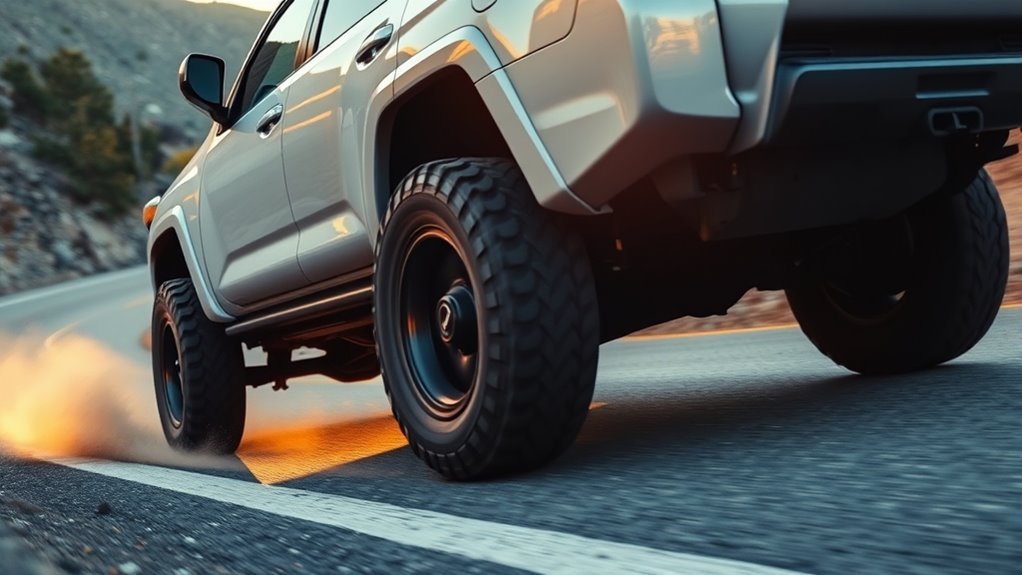
Wider tires can make a Toyota 4Runner feel more planted, but tire width alone is not a shortcut to better handling. The real answer depends on your tire size, wheel width, offset, load rating, suspension setup, alignment, tire pressure, and where you drive most: pavement, sand, mud, rocks, rain, or snow.
Quick Answer
Wider tires can improve 4Runner grip and stability in some dry-road and off-road conditions, but the gain is usually modest unless the tires are matched with the right wheels, alignment, pressure, and suspension. They can also reduce MPG, add noise, slow steering response, and create rubbing or hydroplaning issues.
Key Takeaways
- Wider tires can add lateral support and off-road flotation, but they do not automatically fix body roll.
- The best handling gains come from the whole system: tire model, wheel width, offset, alignment, shocks, springs, sway bars, and tire pressure.
- A 35×12.50R17 is about 22.5 mm wider in nominal section width than a 295 mm tire, but that is not the same as tread-width gain.
- Bigger and wider tire packages can cost fuel economy, add road noise, increase tramlining, and require trimming or suspension changes.
- For most daily-driven 4Runners, a well-supported 285 or 295 is usually easier to live with than jumping straight to 35s.
Do Wider Tires Actually Improve 4Runner Handling?
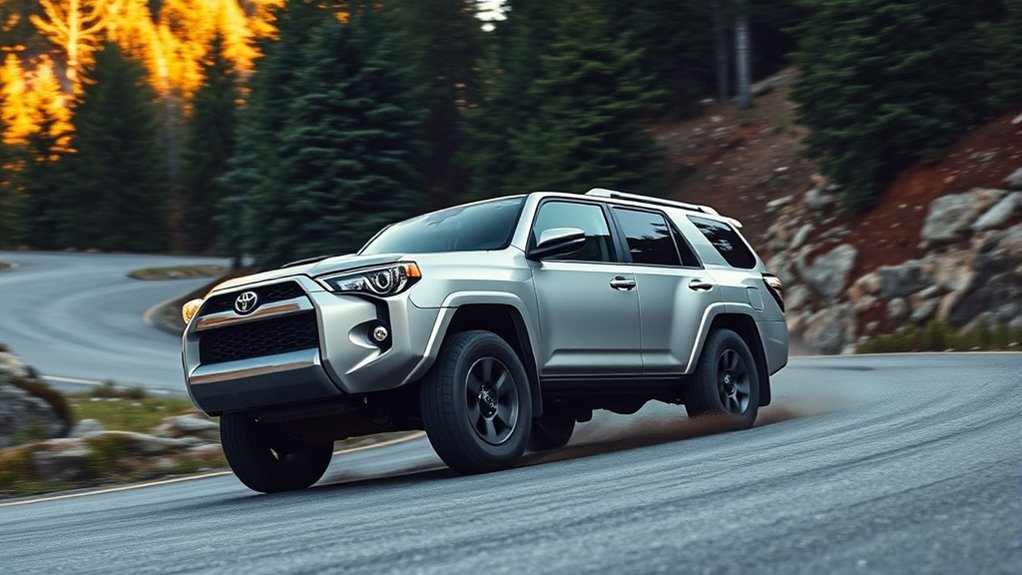
Yes, wider tires can improve 4Runner handling in the right setup, but the improvement is not automatic. Wider rubber can create a broader footprint shape, better sidewall support on a properly sized wheel, and more lateral grip on dry pavement or loose terrain. But tire compound, tread pattern, tire pressure, wheel width, offset, and alignment can matter more than width alone.
The common “wider equals more contact patch” idea needs a little discipline. Tire width changes the shape of the contact patch, but load, inflation pressure, casing design, tread design, and road surface all decide how much useful grip you actually get. That is why two tires with the same size can feel completely different on the same 4Runner.
Width also does not cure body roll. A 4Runner is a tall, body-on-frame SUV. Wider tires may make it feel more stable at turn-in, but the lean you feel in a corner is mainly controlled by center of gravity, spring rate, sway bars, shock tuning, suspension geometry, and load placement. NHTSA’s rollover discussion of Static Stability Factor ties rollover resistance to track width and center-of-gravity height, not tire width by itself: NHTSA SSF report.
Warning: Do not choose a wider tire only because it looks better. Confirm load index, wheel width range, offset, brake clearance, full-lock steering clearance, suspension compression clearance, spare-tire fit, and alignment before driving at highway speed or off-road.
Contact Patch, Pressure, and Alignment Matter More Than Width Alone
A wider tire needs the right pressure to work. Overinflate it and you may shrink useful contact and wear the center. Underinflate it on the road and you add heat, flex, sluggish handling, and uneven wear. NHTSA tells drivers to use the vehicle placard, certification label, or owner’s manual for the correct tire size, pressure, and load limits, and to consult a tire dealer when unsure: NHTSA tire safety guide.
Alignment matters just as much. Wider tires can make bad toe, poor caster, worn bushings, or weak shocks more obvious. They can also follow grooves in the road more than stock tires, especially if your wheel offset changes. Tire Rack notes that wider or plus-size wheel-and-tire packages often use different offsets, and large offset changes can affect how road forces feed through the tire and suspension: Tire Rack on tramlining.
Pro Tip: After installing wider tires, get a fresh alignment and ask for a printout. On many 4Runner builds, enough positive caster helps keep the tire away from the body mount and improves straight-line tracking.
Where Your Handling Gains Really Come From
Your biggest handling gains come from matching the tire to the whole vehicle. Wider tires are one lever. The other levers are suspension control, wheel fitment, tire construction, and alignment.
For street handling, stiffer or better-controlled shocks, healthy bushings, correct toe, and proper caster can make a wider tire feel sharper. For trail use, the answer may be different: a tire with a stronger sidewall and an aggressive tread can matter more than a few extra millimeters of width.
Toyota’s factory approach proves the point. The 2025+ 4Runner Trailhunter and TRD Pro use 33-inch Toyo tires, but Toyota pairs those tires with grade-specific suspension hardware such as Old Man Emu or TRD-tuned FOX shocks rather than relying on tire size alone: Toyota 2025 4Runner release. The fifth-generation 2024 TRD Pro also paired its all-terrain tires with TRD-tuned FOX suspension and TRD-tuned front springs: Toyota 2024 4Runner brochure.
That is the real lesson: if you want your 4Runner to handle better, do not treat width as the upgrade. Treat it as one part of a tuned package.
The MPG, Noise, and Wear Costs on a 4Runner
Wider tires can cost you fuel economy, but there is no honest one-size-fits-all MPG number. The loss depends on tire weight, tread design, rubber compound, rolling resistance, diameter, gearing, pressure, road surface, speed, and driving style. NHTSA’s TPMS research explains that poor inflation can reduce fuel economy, create sluggish handling, increase stopping distance, and add heat stress to the tire: NHTSA TPMS and tire-pressure report.
Weight is the other cost. A wide LT all-terrain or mud-terrain tire can be much heavier than a stock P-metric tire. Add a heavier wheel and the 4Runner has more rotating mass to accelerate, stop, and control. Tire Rack warns that maximum plus-size SUV and truck applications can become significantly heavier than original equipment and may contribute to longer stopping distances plus more suspension and brake wear: Tire Rack on plus sizing.
Noise also changes. A wider highway-terrain tire may stay quiet, while a wide mud-terrain can hum, wander, and feel heavy on long interstate drives. Wear can also speed up if toe is off, tire pressure is wrong, or the wheel offset pushes the tire outside the suspension’s happy range.
Off-Road vs. Street: When Width Helps and Hurts
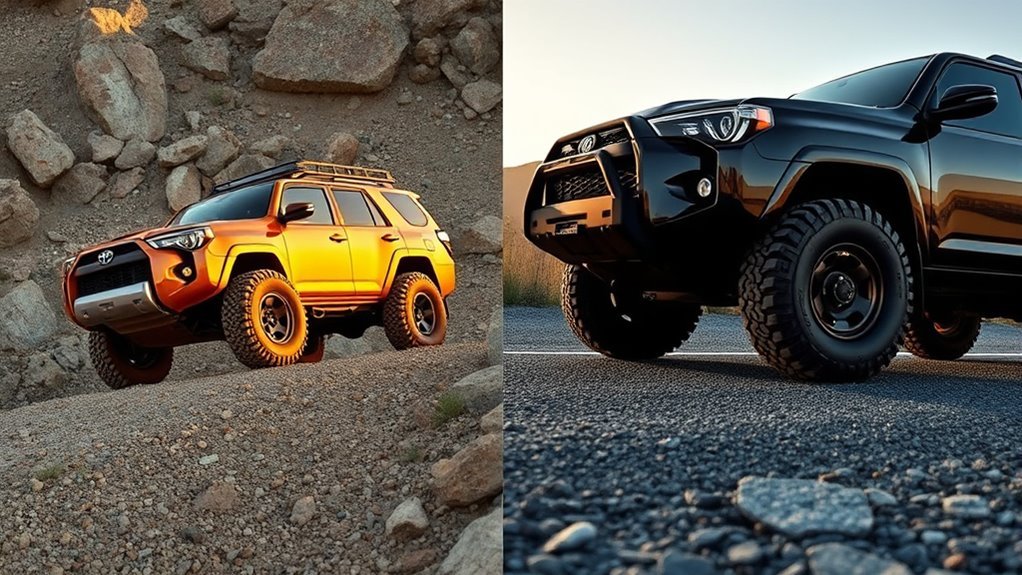
Off-road, width helps most when flotation matters. Sand, loose dirt, and some mud conditions can reward a wider tire because the vehicle’s weight spreads over more surface area, especially when you air down correctly. That can help the tire stay on top instead of digging.
On rocks, the answer is more mixed. A wider tire can add sidewall bulge and grip, but it can also expose the sidewall to damage if the wheel is too narrow, the pressure is too low, or the tire sticks out past the body. In ruts, a very wide tire may climb the side of the rut instead of tracking cleanly.
On pavement, wider tires are best when the tire is well-supported and the rest of the suspension can control the added grip. Without that control, you may get more steering effort, more road-following, more rubbing, and a heavier feel without a meaningful improvement in emergency handling.
Rain and snow deserve extra caution. Tire Rack explains that hydroplaning speed depends on water depth, speed, vehicle weight, tire width, tread depth, and tread design: Tire Rack on hydroplaning. Wider tires can move more water and may hydroplane sooner if tread depth or water evacuation is poor. On snow and ice, tread compound and winter rating usually matter more than width.
285 vs. 295 vs. 35s: Picking Your 4Runner’s Tire Width
The jump from 285 to 295 to 35s is not just a width decision. It changes diameter, sidewall height, gearing feel, speedometer reading, rubbing risk, spare fit, and sometimes braking feel.
| Common Size | Nominal Width | Approx. Diameter | Best Use Case |
| 285/70R17 | 285 mm section width | About 32.7 in. | Balanced daily/trail setup with manageable fitment on many builds. |
| 295/70R17 | 295 mm section width | About 33.3 in. | More footprint and height than 285s, but higher rubbing and weight risk. |
| 35×12.50R17 | 12.50 in. / about 317.5 mm section width | About 35 in. nominal | Aggressive trail build where trimming, lift, alignment, and clearance work are expected. |
The 35×12.50R17 is about 22.5 mm wider in nominal section width than a 295 mm tire, but do not call that a guaranteed tread-width gain. Actual tread width depends on the tire model. Some 295s have a wide tread; some 35s have rounded shoulders and less usable tread than the sidewall number suggests.
Also remember that 35s are usually taller, not just wider. Taller tires can improve ground clearance and approach/breakover feel, but they can raise the vehicle’s center of gravity and make the 4Runner feel heavier unless suspension, gearing, and alignment are set up for them.
[Products Worth Considering]

Adam’s Pro Tire Hex Grip applicators are molded foam sponges designed for precise, even tire dressing application. The ergonomic grip helps you spread product without overapplying, reducing sling that can splash onto paint and helping keep your hands clean during wheel and trim detailing. They’re durable, washable, and reusable for repeated detailing sessions.
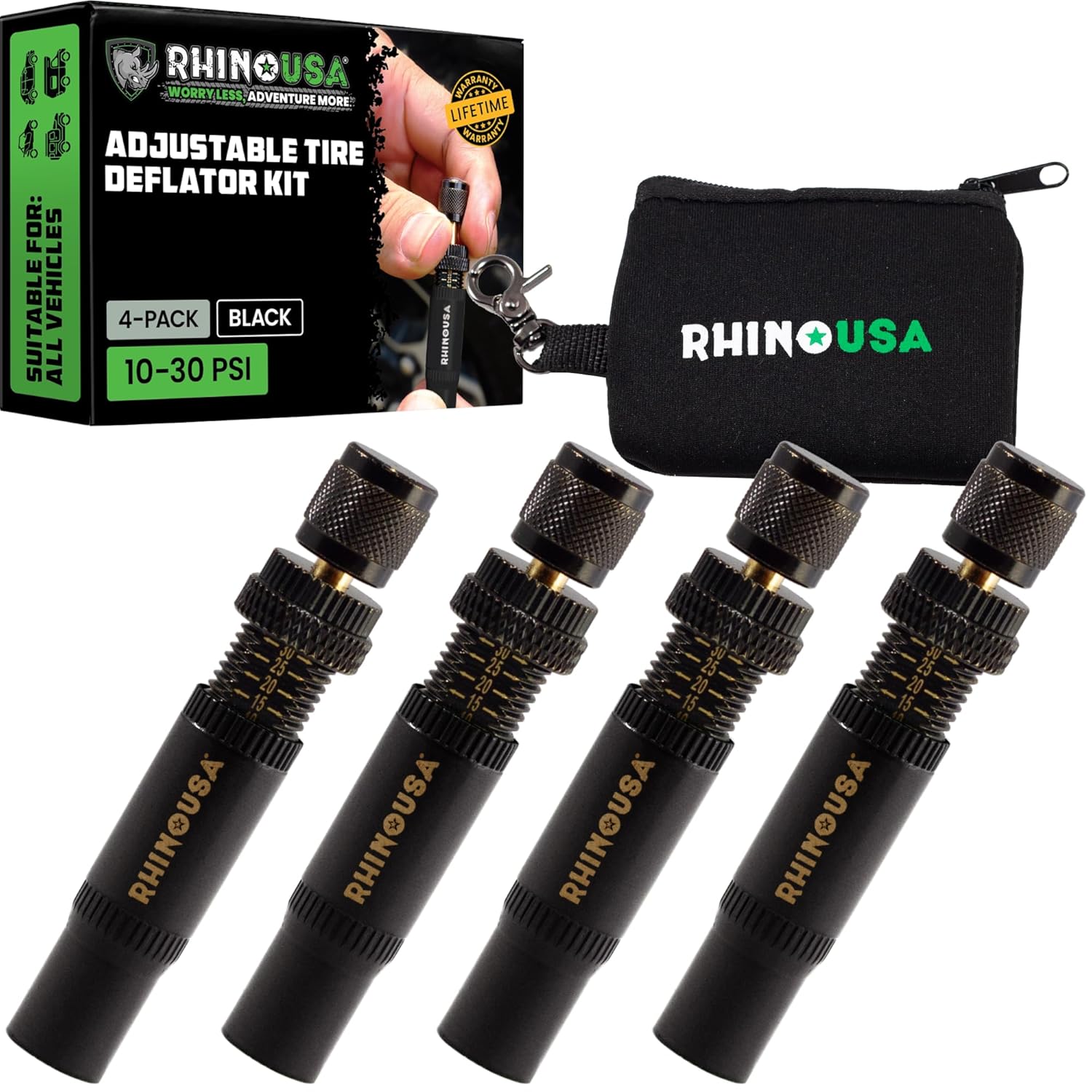
Use the Rhino USA adjustable tire deflators to air down all four tires at once by screwing one deflator onto each valve stem, letting you step away while the tires reach your preset pressure. Each deflator independently adjusts across a 10–30 PSI range with laser-etched indicators for quick setup and verification, making it ideal for beach, sand, and rocky off-road trails.

Keep your tires properly inflated with this analog VONDIOR tire pressure gauge, designed for fast, easy readings without batteries. The swiveling, two-axis hose and large glow dial help you measure at any tire angle with instant visibility. Built with a protective rubber shield, it supports durable, low-maintenance use for cars and trucks.
How to Choose the Best Width for Your 4Runner
Choose tire width by mission, not by the biggest size that fits.
- Mostly daily driving: Stay close to stock width or choose a conservative upgrade. You will usually get better steering, braking, noise control, and MPG.
- Daily driving plus trails: A 285-size all-terrain is often the sweet spot because it adds capability without pushing every fitment limit.
- More aggressive trail use: A 295 can make sense if your wheel width, offset, lift, and alignment support it.
- 35-inch build: Plan for more than tires. Expect clearance checks, trimming or body mount work on many setups, spare-tire planning, possible gearing concerns, and more wear on steering and suspension parts.
Note: Fitment varies by 4Runner generation, trim, suspension height, wheel offset, tire model, and alignment. A size that clears on one 4Runner can rub badly on another.
[Products Worth Considering]

The TYAMATE TM8 solar-powered wireless TPMS delivers real-time tire pressure and temperature monitoring with six alarm modes for safer driving. A vibrant color LCD display shows readings clearly while windshield mounting keeps it hands-free and easy to read. With a wide 0–87 PSI range, strong 433.92 MHz signal transmission, and quick sensor pairing, it’s ideal for RV, sedan, SUV, MPV, and truck use.

Measure tire tread depth quickly and accurately with this LUMITECO dial gauge that reads in 1/32" increments up to 14/32". The color-coded green/yellow/red zones make it easy to judge tire wear and know when replacement is needed. A rugged, compact design with a protective pouch helps keep the gauge ready for use on cars, trucks, motorcycles, and more.

The SAFELIFE dial tire tread depth gauge measures tread depth in 1/32 inch increments with clear, easy-to-read 2-inch dial face. Color zones using a traffic light system help you quickly judge whether tread is low, marginal, or ample for safer driving. Built with a durable zinc cast body and a metal detect probe for precise, comfortable use across cars, motorcycles, trucks, and buses.
Fitment Checklist Before Buying Wider Tires
Before you order wider tires, check these items:
- Load index: Match or exceed the load capacity your 4Runner needs.
- Approved rim width: Use the tire manufacturer’s approved wheel-width range.
- Offset and backspacing: Too much poke can increase rubbing, bearing load, and tramlining.
- Full-lock clearance: Check both directions while parked and while flexed.
- Compression clearance: Make sure the tire clears the fender liner, body mount, bumper, mud flap, and upper control arm.
- Spare fit: Confirm whether the spare fits under the vehicle or needs a different carrier.
- Speedometer and systems: Larger diameter tires can change speedometer reading and shift feel.
- Alignment: Schedule an alignment after installation, especially if you changed tire size, wheel offset, suspension height, or upper control arms.
[Products Worth Considering]

These aluminum alloy tire valve stem caps with an O-ring seal help protect valve stems from corrosion while adding a clean, stylish look to your vehicle. The universal fit works across cars, trucks, motorcycles, bicycles, and more, making them an easy upgrade for everyday driving and off-road use. Installation is quick, and the included four-pack keeps all your tires dressed and protected.

This ALL-TOP auto-stop tire deflator valve kit lets you air down off-road tires quickly without watching pressure, automatically stopping when your preset PSI is reached. Each valve is individually calibrated for reliable performance with an acceptable +/- 2 PSI tolerance. The adjustable deflator range covers 10 to 30 PSI and includes four valves plus valve caps and a zipper pouch for easy setup on trucks, SUVs, RVs, UTVs, and powersports.

The ETENWOLF T600 digital tire pressure gauge delivers precise, manually calibrated readings to ANSI B40.7 Grade 2A standards with ±0.5% PSI accuracy. Its 360° rotating nozzle and display hold make it easy to check pressures from any angle, while a bleed button helps dial tires to the perfect level. With a 0–250 PSI range and support for PSI, BAR, and KPA, it’s a convenient tool for maintaining tire performance across many vehicles and seasons.
Frequently Asked Questions
What is the best wheel width for a 4Runner?
For many 285-series 4Runner tires, an 8- to 9-inch wheel is a practical range, but the best answer is the tire manufacturer’s approved rim-width range for the exact tire. A 35×12.50 tire often needs a wider wheel than a stock-size tire. Do not guess based on tire size alone.
Do wider tires reduce body roll on a 4Runner?
Not by themselves. Wider tires may make the 4Runner feel more planted, but body roll is mainly controlled by center of gravity, springs, shocks, sway bars, suspension geometry, and cargo weight. For less lean, look at suspension control before chasing more width.
Will wider tires hurt 4Runner MPG?
They can. Wider and heavier tires often add rolling resistance and rotating mass, especially with aggressive all-terrain or mud-terrain tread. The actual MPG change depends on tire weight, tread design, tire pressure, diameter, gearing, speed, and driving style.
Are 35s better than 295s for handling?
Usually not for street handling. A 35-inch tire can add off-road clearance and footprint, but it also adds height, weight, steering load, rubbing risk, and gearing change. A 295 is often easier to tune for mixed street and trail use.
Do I need an alignment after installing wider tires?
Yes, it is strongly recommended. Wider tires make toe and caster issues easier to feel, and they can rub if alignment is not dialed in. An alignment is especially important after changing wheel offset, lift height, upper control arms, or tire diameter.
Conclusion
Wider tires can improve your 4Runner’s grip, stance, and off-road flotation, but they are not a silver bullet. Width works best when it is part of a complete setup: the right tire model, wheel width, offset, pressure, alignment, and suspension. For most owners, the smartest upgrade is not the widest tire possible. It is the widest tire your 4Runner can clear, control, stop, and wear evenly without giving up the daily drivability you still need.
Sources
- Toyota USA Newsroom: 2025 4Runner — factory 33-inch tire and suspension context for sixth-generation 4Runner.
- Toyota 2024 4Runner Brochure — fifth-generation TRD Pro tire and suspension context.
- NHTSA Tire Safety Guide — tire size, pressure, load limits, tread, alignment, and safe maintenance guidance.
- NHTSA Static Stability Factor Report — track width, center-of-gravity height, and rollover-resistance context.
- Tire Rack: Plus Size Wheels & Tires — diameter, load capacity, weight, braking, and wear trade-offs.
- Tire Rack: Hydroplaning Factors — tire width, tread depth, water depth, speed, and wet-road risk.

