
Can You Mix Tire Brands on a Toyota RAV4? Expert Advice
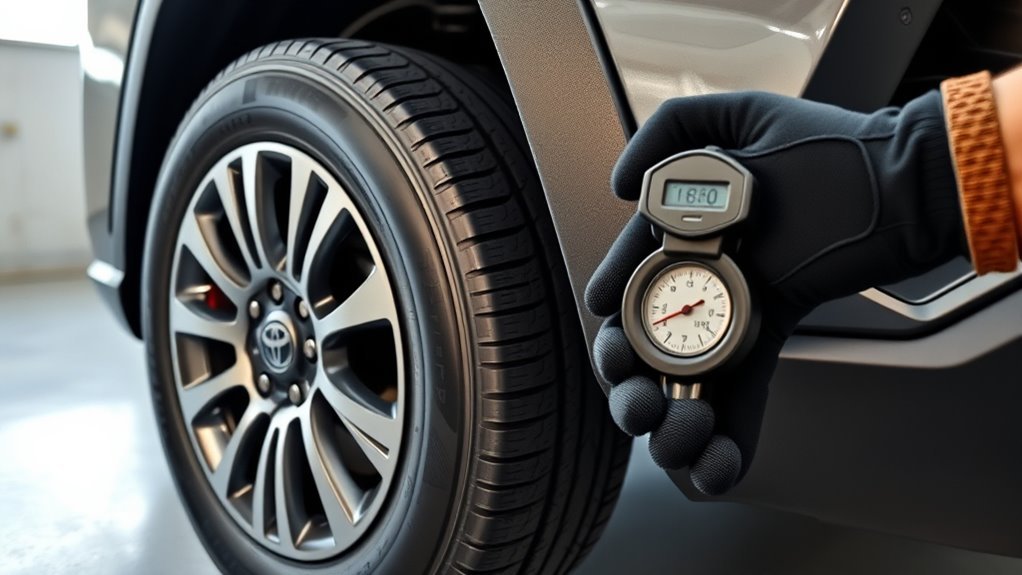
You shouldn’t mix tire brands on a Toyota RAV4 unless the replacement exactly matches size, load/speed rating, tread depth (within 2–4/32″), and overall circumference (within ~1/4–1/2″) because mismatches can degrade traction, ABS/TCS response and, on AWD models, stress the transfer case and differentials. If you must fit one or two tires short‑term, match the axle and confirm circumferences. Follow manufacturer guidance and measure tread and circumference—keep going for practical checks, safe short‑term fixes and replacement options.
Short Answer: Can You Mix Tire Brands on a Toyota RAV4?
Can you mix tire brands on a Toyota RAV4? You can, but you shouldn’t casually. Mixing brands creates measurable disparities in tire performance and handling characteristics because tread design and rubber compounds differ; that variance can reduce traction and compromise stability. You want freedom on the road, but liberation depends on predictable, safe equipment. If you must replace a single tire, match size, load rating, and preferably tread pattern to the others, and avoid pairing front-to-rear brand mismatches on AWD models. Unequal tread depths or diameters can place strain on the AWD system and lead to accelerated wear or driveline stress. Manufacturer guidance typically recommends replacing all four tires simultaneously to preserve uniform performance. Before you act, consult the owner’s manual for specific tire specifications and follow local regulations. Prioritize consistent tires to maintain ideal control, avoid added mechanical risk, and keep your RAV4’s dynamics steady and reliable.
Why Matching Tires Matters for AWD RAV4 Drivetrains
If you fit tires with different circumferences on a RAV4, the AWD system will see constant speed differentials that increase wear on the center differential and transfer components. That mismatch forces the drivetrain to compensate, raising temperatures and accelerating gear, bearing, and coupling fatigue. For safety and longevity, you should use tires with matching circumference and tread specifications to minimize drivetrain stress.
Equal Tire Circumference
Because the RAV4’s center differential constantly compensates for front-to-rear speed differences, you need all four tires to have nearly identical circumferences to avoid undue drivetrain strain. You’ll protect tire performance and understand circumference importance by keeping tread depths within about 2/32–4/32 inch and overall circumferences within the manufacturer-recommended 1/4–1/2 inch. Mismatched diameters create differing rolling radii that force continuous differential correction, increasing wear and risking driveline damage. Inspect tread depth regularly, rotate tires per schedule, and replace tires in matched sets when discrepancies exceed limits. Practically, measure circumference or diameter after mounting and inflation; don’t guess. This disciplined approach frees you from unexpected failures and keeps your AWD RAV4 reliable and mechanically sound.
AWD Drivetrain Stress
When tire brands differ in tread pattern or diameter, your RAV4’s AWD system has to compensate constantly, which increases stress on the center differential and associated components. You’ll force torque redistribution as the system corrects mismatched rolling circumferences, reducing drivetrain efficiency and creating heat and wear in clutch packs or viscous couplers. That continuous micro-adjustment accelerates component fatigue, risks binding, and undermines tire longevity through uneven wear patterns. To protect the AWD hardware and preserve liberated mobility, keep all four tires matched in size, tread depth, and design so rolling circumference stays within the 1/4–1/2 inch tolerance. Matching tires maintains stability, minimizes repair risk, and optimizes performance for responsible, empowered driving.
Mixing Brands on FWD vs AWD RAV4: Real Risks
On a FWD RAV4, mixing tire brands can compromise traction control and ABS performance because differing tread and compounds produce inconsistent grip and braking response. On an AWD RAV4, mismatched tires can create unequal rolling diameters that place stress on the transfer case and differentials, risking mechanical binding and expensive repairs. Follow manufacturer guidance and use identical brand, model, and size tires to preserve handling, stability, and drivetrain integrity.
FWD Handling And Safety
Mixing tire brands on a front-wheel drive RAV4 can noticeably degrade handling and safety because different tread patterns and compounds respond unevenly to steering, braking, and traction-control interventions. You’ll feel variability in tire performance and reduced handling stability when fronts differ. That variability interferes with ABS/TCS calibration and raises the risk during panic maneuvers or wet exits.
- Match fronts: keep the front pair identical to preserve steering response and braking balance.
- Monitor wear: mixed brands accelerate uneven wear, creating feedback issues and noise that can mask faults.
- Follow specs: tire size, load, and tread depth must meet manufacturer guidelines to avoid drivability shudder and compromised control.
You want freedom on the road—protect it by prioritizing matched tires for predictable, safe performance.
AWD Drivetrain Strain
Because an AWD RAV4 ties all four wheels into power distribution, mismatched tire brands that differ in circumference or tread depth can quickly introduce driveline binding and uneven torque transfer that strain components. You’ll see uneven rolling diameters confuse the AWD control logic and mechanically stress axles, especially because the RAV4 lacks a true center differential. That stress accelerates differential wear, increases risk of axle windup during turns, and degrades tire performance across the set. To protect drivetrain longevity, you should avoid mixing brands or models and match tire circumference, load rating, and tread depth precisely. Follow manufacturer guidance: replace all four tires when sizes or wear differ substantially, and prioritize uniformity for reliable, liberating vehicle control.
Tire Specs That Must Match (Size, Circumference, Load, Speed)
If you want predictable handling and to avoid drivetrain stress on your RAV4, make sure each tire matches in size (width, aspect ratio, wheel diameter), overall circumference within about 1/4–1/2 inch, and comparable load-index and speed ratings. You’re responsible for tire specifications to maintain performance consistency and prevent mechanical strain. Match these elements precisely.
- Size: identical width, aspect ratio, and wheel diameter to preserve steering geometry and ABS calibration.
- Circumference: keep overall diameter/circumference within 0.25–0.5″ to protect AWD differentials and transfer cases.
- Load & Speed Ratings: use equal or higher load-index and the same speed-rating to maintain stability under load and at speed.
Also monitor tread depth; keep variations within 2/32–4/32″ for balanced traction. Mismatched specs increase wear, risk mechanical failure, and negate your freedom to drive confidently. When in doubt, consult vehicle placard or a tire professional and replace to the strictest matching standard.
Don’t Mix Winter, Summer, and All‑Season Tires
When you fit different tire types on the same RAV4, the vehicle’s traction, braking, and stability systems can no longer rely on predictable grip and rolling resistance. You’ll introduce variable tire performance across axles: winter tires remain pliant and bite in cold, summer tires stiffen and lose traction, and all‑seasons sit between—this mismatch degrades predictable handling and increases stopping distances. For an AWD RAV4, the system expects matched characteristics; mixing types can confuse torque distribution and stress differentials, creating safety concerns and potential drivetrain damage. Consult your owner’s manual and follow manufacturer guidance—don’t improvise to chase short‑term convenience. If you want freedom on varied roads, plan seasonal switches: fit a full set of winter tires for cold months and a matched summer or all‑season set for warm months. That disciplined approach preserves consistent tire performance, protects vehicle integrity, and keeps you in control when conditions demand it.
How Brand Differences Lead to Uneven Wear and Handling Loss
Although tire brands may look similar at a glance, their tread patterns, compound formulations, and sidewall constructions often differ enough to produce uneven wear and unpredictable handling, so you should avoid mixing them on a RAV4. You’ll notice varying wear rates and rolling diameters when brands differ, which degrades straight-line stability and cornering predictability. Use tread wear analysis regularly to spot emerging mismatches and follow tire maintenance tips to preserve control.
- Different compounds and tread geometry — cause uneven wear, reduced grip, inconsistent steering response.
- Varied sidewall stiffness and diameter — create handling imbalances and accelerate localized tread degradation.
- Inconsistent performance under load — amplifies wear asymmetry and compromises vehicle stability.
You want freedom on the road; that requires precise, uniform contact patches. Fit identical brand/model tires to maintain predictable handling, extend service life, and minimize mechanical strain. Prioritize inspections and prompt replacement when tread wear analysis signals divergence.
How Mismatched Tires Affect ABS, TCS, and AWD Systems
If you fit mismatched tires, the ABS and TCS can receive inconsistent wheel-speed signals and misapply braking or traction interventions. You’ll also force the RAV4’s adaptive AWD to compensate for differing tire diameters and tread grip, which increases mechanical load and heat in the drivetrain. For safety and longevity, match tire brand, size, and tread so electronic controls and the center differential operate within their designed parameters.
ABS And TCS Interference
Because different tire brands often have varying rolling circumferences and tread depths, your RAV4’s ABS and TCS can receive conflicting wheel-speed signals that impair braking and stability control. You’ll notice degraded tire performance and immediate safety implications if sensors register mismatched rotation rates. Maintain uniform tires to prevent false ABS/TCS activations and erratic brake modulation.
- False signals: varying tread depth triggers inconsistent wheel-speed readings, causing premature TCS intervention.
- Braking impact: ABS may misapply pulsing, increasing stopping distances under emergency braking.
- Wear and feedback: repeated corrective interventions accelerate tire wear and mask true vehicle feedback.
You want freedom on the road; prioritize uniform tire specs so electronic controls function predictably and you stay in control.
AWD Drivetrain Strain
When your RAV4 runs tires with different rolling circumferences or tread depths, the AWD system and its ABS/TCS sensors get mismatched speed inputs that force unequal torque distribution and can induce axle windup or driveline binding. You’ll notice the control modules compensate by modulating brakes or engine torque, but persistent compensation stresses differentials, transfer case seals, and CV joints. To protect drivetrain longevity, keep rolling radii within manufacturer tolerances—typically within 1/4 to 1/2 inch—and match tread patterns where possible. Mismatched tire performance degrades ABS and TCS accuracy, reduces stability, and accelerates component wear. Act proactively: measure tire circumference, replace tires in compatible sets, and avoid mixing brands or tread depths if you want reliable control and fewer repairs.
Practical Checks: Measure Tread Depth and Circumference Yourself
Start by checking each tire’s tread depth and circumference yourself to catch mismatches before they stress the RAV4’s drivetrain. Use a tread depth gauge or the penny test: insert Lincoln head‑first; if you see all of his head, replace that tire. Measure circumference with a flexible tape around the tire’s outer edge and record inches.
- Use a tire gauge or tread depth gauge at multiple points across each tread; confirm depths remain within 2/32–4/32 inches of each other for AWD safety.
- Wrap a flexible measuring tape snugly around each tire to get circumference; aim for differences no greater than 1/4–1/2 inch across tires to avoid drivetrain strain.
- Log readings and compare front-to-rear and side-to-side; regular checks free you from unexpected failures and costly repairs.
Be methodical, wear gloves, work on level ground, and repeat checks after any replacement so your RAV4 stays reliable and under your control.
Safe Short‑Term Fixes: Rotate, Match Axles, or Shave Tires
After you’ve logged tread depths and circumferences, take three practical short‑term steps to keep a mixed set safe: rotate tires frequently to even out wear, mount identical brands and similar depths on each axle to limit driveline mismatch, and consider shaving new tires to match the remaining tread height of worn ones. You should schedule tire rotation at intervals no longer than manufacturer recommendations or every 5,000–7,500 miles when running mixed brands to reduce differential strain. Keep detailed records of tread depth at each corner and never let axle differences exceed about 2/32–4/32 inch. Fit identical tires in pairs on the same axle—same brand, model, and similar tread depth—to preserve predictable handling and reduce stress on the AWD system. If you install one or two new tires, have a professional shave them to match circumference precisely. These measures buy time safely; they’re tactical, controlled actions that let you maintain freedom of mobility while you plan a permanent tire strategy.
Replace All Four or Stagger? Choosing Tires and Questions to Ask Your Shop
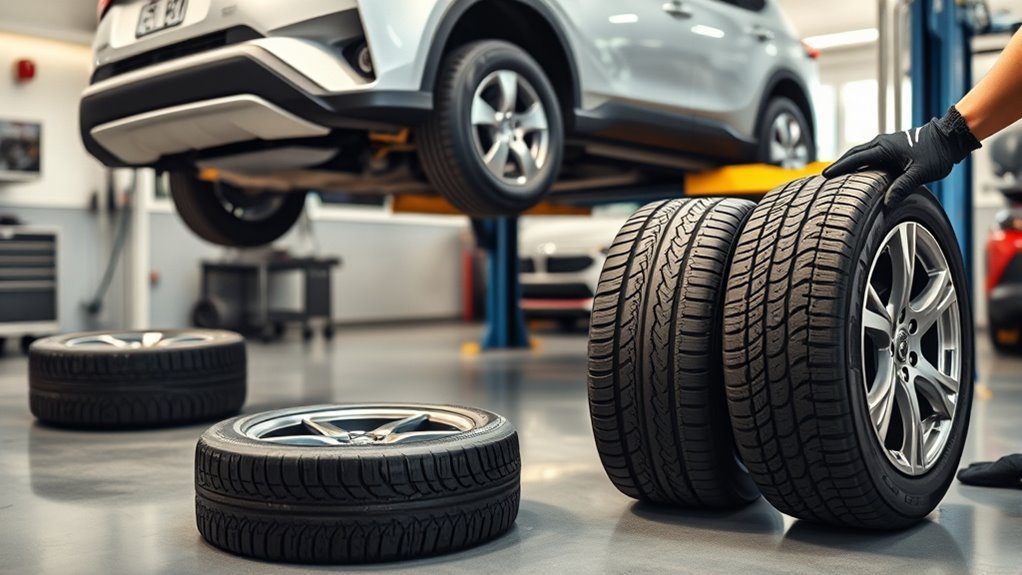
Because uneven tire grip and circumference can stress an AWD RAV4 and degrade handling, you should prioritize replacing all four tires whenever possible; if budget or availability forces you to replace only two, fit them on the rear axle and match brand, model, size, and tread depth to the front pair. You’re protecting drivetrain components and preserving predictable behavior across varied driving conditions.
- Ask your shop: will mixed brands or tread patterns alter my RAV4’s handling, ABS/traction calibration, or tire longevity?
- Confirm exact-match options: same model and size maintain uniform rolling circumference and response; if staggered sizes are offered, verify compatibility with your drivetrain and owner’s manual.
- Request a tread-depth measurement and installation plan: shops should place newer tires on the rear, balance precisely, and document expected wear under your typical driving conditions.
Make decisions that free you from uncertainty—prioritize safety, uniformity, and documented shop guidance to maximize tire longevity and vehicle control.
Frequently Asked Questions
Can I Mix Tires Temporarily While Waiting for an Exact Match?
Yes — you can temporarily mix tires while awaiting a match, but you’ll monitor tire tread differences and expect modest performance impact; prioritize matching sizes, axle placement, and replace as soon as possible to maintain safe, liberated driving.
Will Mixing Tire Brands Void My Rav4’s Warranty?
Better safe than sorry: you won’t automatically void vehicle coverage, but tire warranty implications and brand compatibility concerns matter; you should document temporary mixes, follow load/speed specs, and consult dealer to protect warranty rights and freedom.
How Do Tire Pressure Differences Affect Mixed-Brand Performance?
You’ll experience uneven tire performance and compromised handling stability if pressures differ; underinflation increases flex and wear, overinflation reduces grip, and imbalance prompts steering twitch—maintain exact manufacturer pressures for predictable, safe freedom.
Can Spare/Full-Size Mismatched Tires Damage AWD Components?
Yes — using a mismatched spare or full-size tire can damage AWD components. You’ll cause uneven tire wear and traction issues, stressing differentials and driveshafts; replace mismatched tires promptly to maintain safety and mechanical freedom.
Do Aftermarket Wheels Change Risks of Mixing Tire Brands?
Yes — aftermarket wheels can change risks: you’ll affect aftermarket safety and wheel compatibility, altering load, offset, and tire fit. Guarantee precise matchups, proper sizing, and torque to avoid handling, AWD stress, or sensor faults.
Conclusion
You can mix tire brands in a RAV4 for short trips, but treat it like a temporary workaround, not a fix. Matching size, circumference, load and speed ratings is essential; mismatches can strain AWD, ABS and traction control. Don’t pair winter with summer tires. Measure tread depth and circumference before driving, and prioritize replacing all four or at least matching axles. If you must mix, rotate frequently, avoid high speeds, and consult a shop — safety comes first, like a seatbelt you shouldn’t skip.

Related Articles
Upsizing Wheels on a Toyota RAV4: Pros, Cons, and Considerations
Boost your Toyota RAV4's performance with larger wheels, but discover the hidden trade-offs that could impact your ride before you decide.
Read More
Can I Change Tire Size on My Toyota RAV4? Rules and Recommendations
Are you considering changing the tire size on your Toyota RAV4? Discover the essential rules and recommendations before making a decision.
Read More
What to Do If the TPMS Light Comes On in Your RAV4
Understand the steps to take when the TPMS light illuminates in your RAV4, as overlooking it could lead to serious tire problems.
Read More