Choosing the right tires for your Toyota Tundra Limited matters because they directly affect your truck’s safety, towing stability, ride comfort, and fuel efficiency. The best choice starts with the size, load index, speed rating, and wheel diameter printed on your current tire or door placard, then narrows by how you drive.
This guide highlights dependable all-terrain and light-truck tire options that make sense for Tundra Limited owners who want better traction for commuting, towing, gravel roads, winter travel, or occasional trail use. Always confirm your exact fitment before buying, because Tundra Limited tire sizes vary by model year, wheel package, trim equipment, and prior wheel changes.
Quick Verdict
Best overall: Cooper Discoverer Road and Trail AT if you want the best balance of daily comfort, all-terrain grip, and year-round usefulness.
Best for toughness: Goodyear Wrangler Adventure Kevlar if you tow, haul, or drive on rough gravel and want stronger sidewall protection.
Best winter-focused option: Thunderer Ranger ATR if you want an all-terrain tire with stud-ready features and you have confirmed that studs are legal where you drive.
Top Picks
|
Category |
Product |
Best For |
Action |
|---|---|---|---|
|
🏆 Best Overall |
Cooper Discoverer |
Balanced daily driving, trail use, wet roads, and year-round traction |
|
|
💪 Most Durable |
Goodyear Wrangler |
Drivers who tow, haul, or spend time on gravel and rough roads |
|
|
❄️ Best Winter-Focused Option |
Thunderer Ranger |
Snow-prone areas where stud-ready tire features may be useful |
[Products Worth Considering]

These aluminum alloy tire valve stem caps with an O-ring seal help protect valve stems from corrosion while adding a clean, stylish look to your vehicle. The universal fit works across cars, trucks, motorcycles, bicycles, and more, making them an easy upgrade for everyday driving and off-road use. Installation is quick, and the included four-pack keeps all your tires dressed and protected.

These universal tire valve stem caps help protect valve cores from dust, debris, and moisture while helping maintain stable tire pressure. The corrosion-resistant metal construction and sealed design provide reliable protection in road grime, mud, and winter conditions. Twist-on installation makes them quick to fit on cars, SUVs, trucks, and motorcycles.

The 22800 wheel stud installer makes replacing wheel studs quick and secure, saving time and effort during tire service. It uses a ratchet or impact wrench to pull new studs firmly into place, helping when existing studs are too long. Compatible with most automotive wheels and light-duty truck wheel studs, it’s designed for easy, tool-assisted installation.
How We Chose
You need tires that fit the Tundra Limited’s actual wheel size and load needs while giving you the traction and durability your driving demands. We prioritized tire type, size clarity, load index, tread design for wet and dry roads, and construction features that matter when you tow, carry weight, or drive on rougher roads.
Ride comfort, road noise, treadwear expectations, winter usefulness, and long-term value were also considered. The goal is to help you choose a tire that matches real Tundra use cases: commuting, highway trips, towing, winter roads, gravel, and occasional off-road driving.
Fitment Notes Before You Buy
Before choosing any tire, confirm the exact size on your current tire sidewall and the tire placard inside your driver-side door jamb. Toyota Tundra Limited models can vary by year, trim package, wheel size, drivetrain, and optional equipment, so do not rely on the model name alone.
Check the tire size, rim diameter, load index, speed rating, load range, sidewall type, and clearance around the fenders and suspension. If you tow or haul, pay close attention to load capacity and inflation requirements, and have a tire professional confirm the final fit before mounting.
[Products Worth Considering]
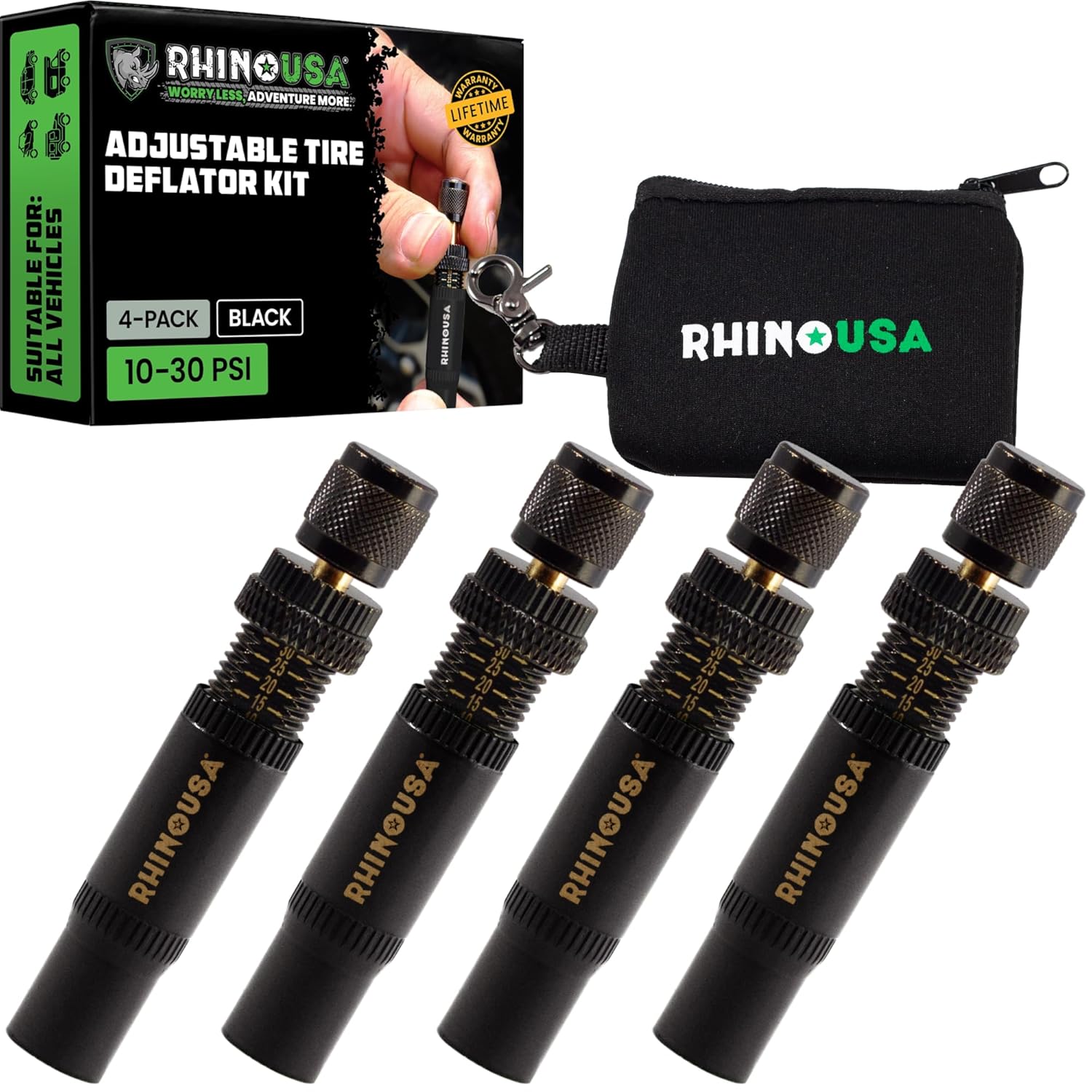
Use the Rhino USA adjustable tire deflators to air down all four tires at once by screwing one deflator onto each valve stem, letting you step away while the tires reach your preset pressure. Each deflator independently adjusts across a 10–30 PSI range with laser-etched indicators for quick setup and verification, making it ideal for beach, sand, and rocky off-road trails.

Upgrade your Toyota’s wheels with durable aluminum alloy valve stem caps that help protect valve cores from corrosion and direct exposure to road grime, clay, water, and snow. Rubber rings improve sealing to help prevent air leakage and maintain stable tire pressure for safer driving. These caps are easy to install or remove without tools and add a unique, stylish look to your car.

Vigorder rubber cement glue delivers superior adhesion and cures quickly within about 30 seconds for seamless rubber bonding. Once cured, it helps provide a strong, durable, waterproof seal that holds up to vehicle weight, pressure, and heat. Suitable for cars, motorcycles, trucks, bicycles, and off-road tires, it’s designed for emergency patch and maintenance repairs.
Before You Click Buy
- Match the full tire size, including width, aspect ratio, and rim diameter.
- Confirm the load index meets or exceeds your truck’s requirement.
- Check whether the listing is for one tire or a full set.
- Confirm local rules before choosing studs for winter use.
- Plan for professional mounting, balancing, TPMS service, and alignment checks.
Cooper Discoverer
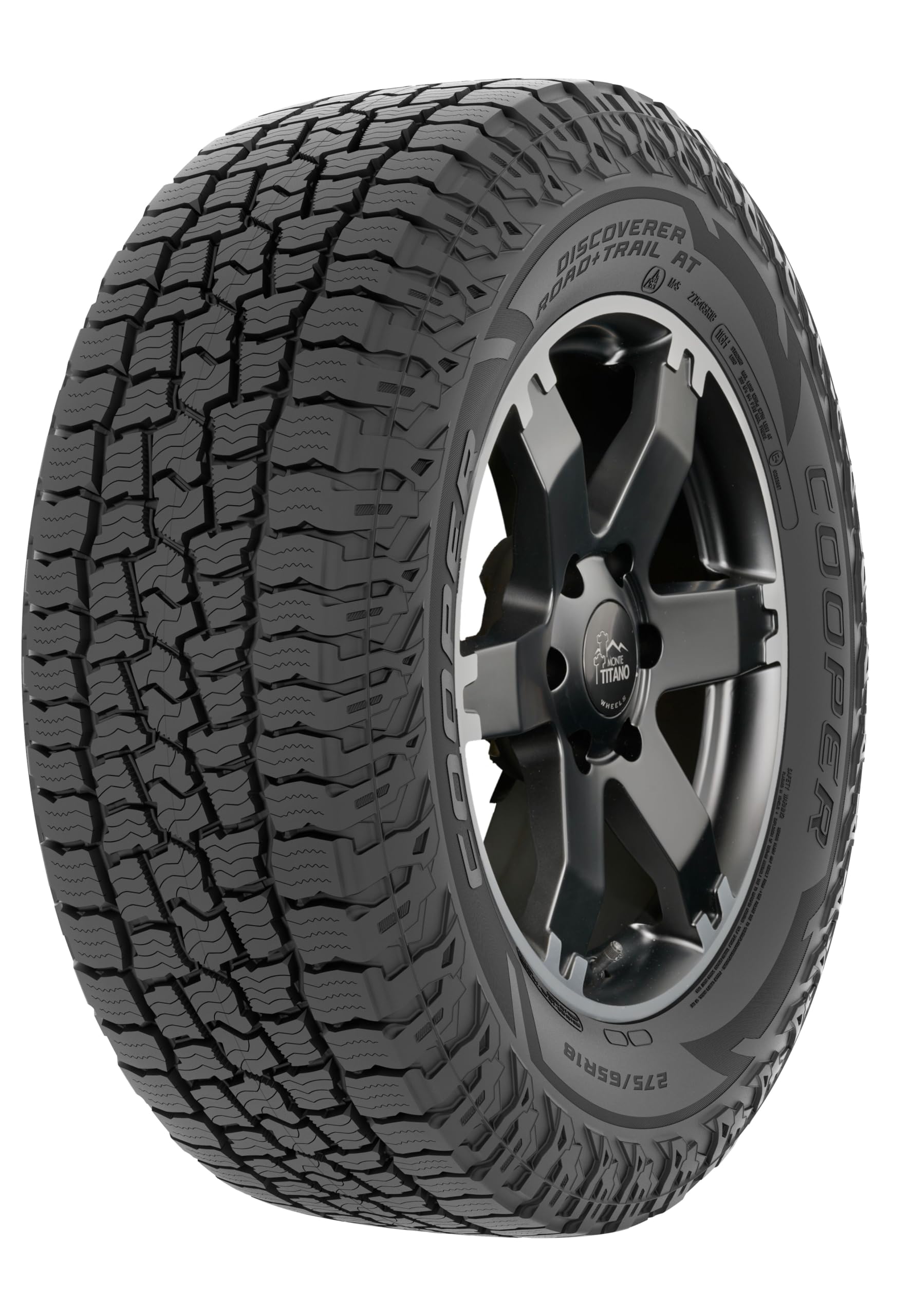
All-terrain tire with extended sidewall tread, interlocking blocks, and connected center lugs for stability; built to balance everyday road manners with light-trail traction and winter-road usefulness.
Check Product DetailsYou are looking for a tire that handles daily miles and weekend trails without constant swapping, and the Cooper Discoverer fits that need. Its tread design wraps further down the sidewall for extra grip on softer surfaces, while interlocking tread blocks and connected center lugs help maintain control across wet, snowy, and uneven terrain.
This is the most balanced pick in the roundup because it blends trail usefulness, winter-road confidence, and highway manners without leaning too far into any one specialty.
Best For
- Tundra Limited owners who want one well-rounded all-terrain tire
- Drivers who split time between commuting, towing, wet roads, snow, and light trails
- Buyers who want a smoother ride than many aggressive all-terrain tires offer
Consider Before Buying
- Confirm the 265/60R18 size and 114H rating against your truck’s required tire specs.
- If you drive only on highways, a touring or highway-terrain tire may be quieter.
- If you regularly drive deep mud or sharp rocks, a more aggressive tire may be more appropriate.
What To Check In Reviews
Look for long-term feedback about snow traction, ride comfort, road noise, treadwear, balance quality, and performance on trucks with similar weight and tire pressure requirements.

Long-Term Value
Even wear characteristics and sturdy construction can stretch the usable life of the tire when it is installed correctly and maintained with regular rotations, pressure checks, balancing, and alignment service.
Return on Investment
You get a single, versatile set that covers commuting, towing, winter roads, and recreational off-road use, reducing the need for multiple specialized tires in mild-to-moderate conditions.
Where It Works
|
Situation |
How It Helps |
|---|---|
|
Snowy Roads |
Connected center lugs and the tread design can help improve bite and stability when roads are snowy or slushy. |
|
Soft Surfaces |
Tread that extends further down the sidewall increases usable grip on sand and soft dirt. |
|
Highway Travel |
The tread pattern is designed to reduce vibration and noise for a more comfortable daily commute or long trip. |
|
Trail Driving |
Reinforced tread and interlocking blocks help resist cutting and tearing while maintaining traction on uneven trails. |
Versatility
This tire handles a wide range of conditions from paved highways to light-to-moderate trails, making it a strong single-set option if you want to avoid seasonal swaps in milder climates.
Durability
Designed to resist cutting and uneven wear, the construction aims to deliver reliable service when you encounter rougher terrain.
Practicality
Fitment for common truck sizes and a quieter on-road experience make routine maintenance straightforward when the tire matches your wheel package.
Problem Solving
It solves the common dilemma of choosing between a trail tire and a highway tire by offering a balanced compromise that performs credibly in both roles.
Eco Friendliness
It is not explicitly eco-focused, but longer service life and fewer premature replacements can reduce waste compared with lower-durability alternatives.
Key Benefits
- Sidewall-wrapping tread for soft-surface grip
- Interlocking tread blocks for consistent control
- Connected center lugs for snow stability
- Engineered for quieter, smoother rides
Bottom Line
Choose the Cooper Discoverer if you want the best overall balance of highway comfort, winter traction, light off-road grip, and everyday usefulness.
Goodyear Wrangler

Versatile all-terrain tire with Kevlar reinforcement and Durawall Technology for added toughness, plus biting edges and open shoulder blocks for wet-road, gravel, dirt, and light snow traction.
Best for towing, hauling, and rough roads
Check Product DetailsYou want a tire that feels planted on the highway but will not hold you back when the road turns rough, and the Goodyear Wrangler Adventure Kevlar sits squarely in that middle ground. It pairs Kevlar reinforcement and sidewall protection with an all-terrain tread aimed at predictable handling on pavement and added confidence on gravel, dirt, and rougher jobsite roads.
For everyday commuting, long trips, towing, and occasional backroad detours, this is a dependable all-rounder that leans toward toughness without giving up too much comfort. Do not assume every size has the same winter rating; check the exact listing and sidewall markings before buying if severe snow performance is a priority.
Best For
- Tundra owners who tow, haul, or drive on rough roads
- Drivers who want sidewall toughness without moving to a mud-terrain tire
- Mixed highway and light off-road use
Consider Before Buying
- Confirm the 255/70R18 size works with your Tundra Limited wheel package.
- All-terrain tires can create more road noise than highway-terrain tires.
- If you drive mostly on pavement, a highway-terrain tire may ride more quietly.
What To Check In Reviews
Focus on comments about treadwear, balance, towing stability, wet traction, and noise after several thousand miles, not just first impressions.

Long-Term Value
A reinforced design can help reduce the risk of damage from gravel, potholes, and rough surfaces. The best long-term value will come from matching the load rating to your truck and keeping the tire rotated and aligned.
Return on Investment
You recoup value through durability, confidence under load, and fewer compromises between weekday commuting and weekend hauling. It is especially appealing if your Tundra sees more than clean pavement.
Where It Works
|
Situation |
How It Helps |
|---|---|
|
Highway Driving |
Stable construction and an all-terrain tread pattern support comfortable daily driving and long-distance trips. |
|
Light Off-Road |
Kevlar reinforcement and durable tread features help resist damage on gravel, packed dirt, and uneven roads. |
|
Towing |
Stable sidewalls and proper load matching help maintain control when hauling trailers or gear. |
|
Seasonal Transitions |
The all-terrain design gives you broader traction coverage than a basic highway tire when weather changes. |
Versatility
This tire adapts well to daily commutes, work use, and weekend adventures, making it a good single-set solution if you prefer not to change tires seasonally.
Durability
With Kevlar reinforcement and sidewall-focused protection, it is built for buyers who put a higher priority on puncture resistance and rough-road confidence.
Practicality
You get straightforward fitment when the tire size matches your wheel package. Routine pressure checks, rotations, and alignment checks remain important for even wear.
Problem Solving
The Wrangler addresses common needs like sidewall protection, load stability, and everyday drivability, reducing the compromise between comfort and ruggedness.
Eco Friendliness
It is not positioned as an eco tire, but a durable tire that wears evenly can reduce replacement frequency compared with a poorly matched option.
Key Benefits
- Kevlar-reinforced construction for puncture resistance
- Stable highway performance
- Sidewall-focused toughness
- Balanced on- and off-road capability
Bottom Line
Choose the Goodyear Wrangler if your Tundra Limited spends time towing, hauling, or driving on rougher surfaces and you want a tougher all-terrain option.
Thunderer Ranger
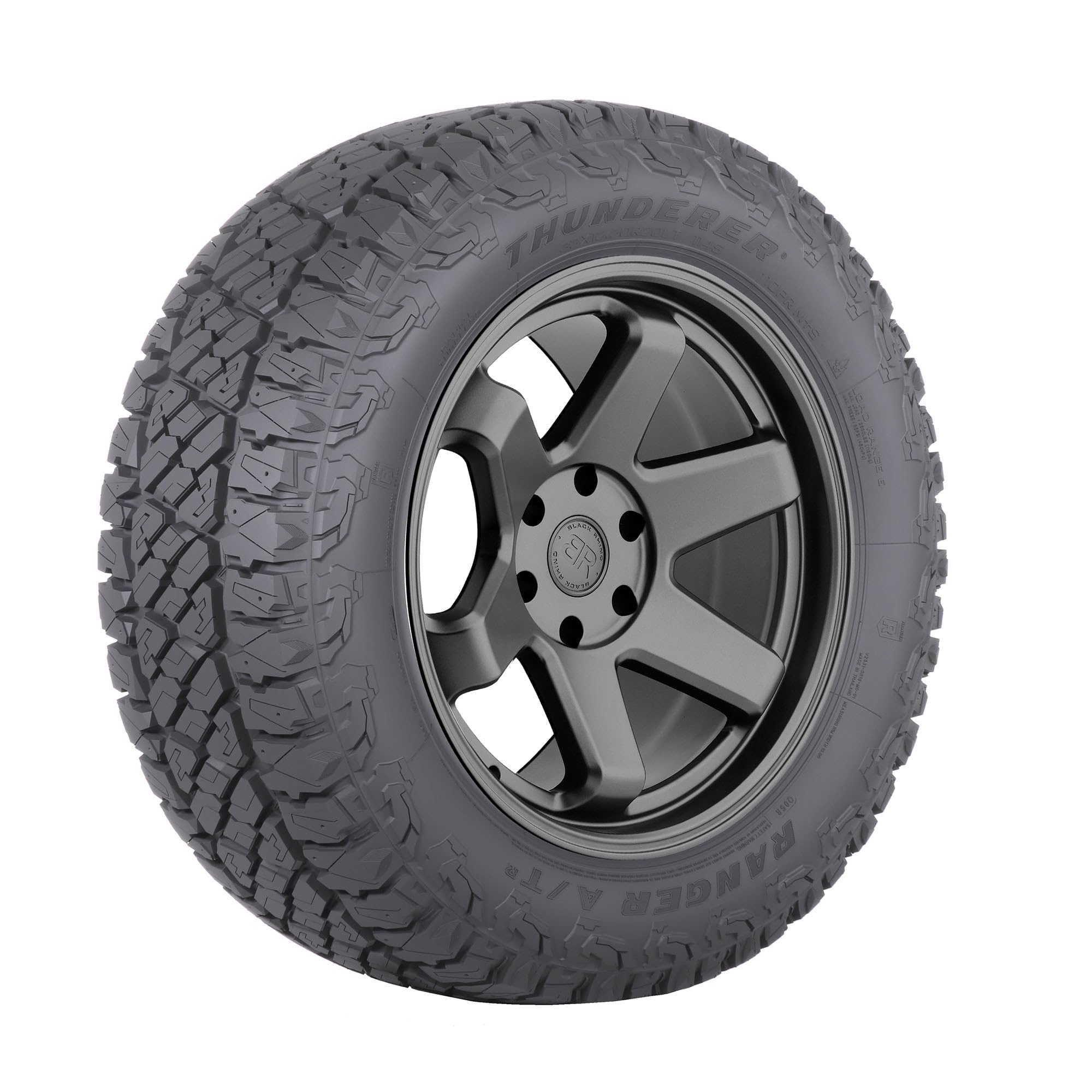
Tough all-terrain tire for light trucks and SUVs, with a stud-ready design, optimized compound, full nylon overwrap, 3D sipes, and rigid tread blocks.
Best for winter-focused all-terrain use
Check Product DetailsYou want a tire that can handle both highway miles and winter weather without feeling too specialized, and the Thunderer Ranger is built for that middle ground. Its all-terrain pattern and siping make it a practical choice for wet roads, packed snow, dirt roads, and occasional trail use.
The stud-ready design may be useful if you live where studs are legal and winter roads get icy. If you mostly drive on dry pavement, remember that studs can add noise and are not allowed everywhere, so check your local rules before choosing that setup.
Best For
- Drivers who want an all-terrain tire with winter-focused features
- Tundra owners who split time between pavement, gravel, and snow-prone roads
- Buyers who want one tire style for most year-round driving
Consider Before Buying
- Confirm the 265/60R18 size, load index, and speed rating against your door placard.
- Stud use depends on local law and may increase noise on dry pavement.
- This is not a dedicated mud-terrain or severe rock-crawling tire.
What To Check In Reviews
Look for owner feedback about snow grip, wet braking, balance quality, road noise, and treadwear on trucks close to your Tundra’s weight and wheel size.

Long-Term Value
The Ranger’s reinforced construction makes it a sensible option if you want more toughness than a basic highway tire. As with any all-terrain tire, rotation, alignment, and proper inflation will have a major impact on how long it lasts.
Return on Investment
You get value from seasonal versatility and added traction confidence. The main payoff is avoiding a tire that feels too mild for winter roads or too aggressive for daily highway use.
Situational Benefits
|
Situation |
How It Helps |
|---|---|
|
Snow and Ice |
Stud-ready design and 3D sipes can help when winter traction is a priority. |
|
Light Off-Road |
Rigid tread blocks and all-terrain construction provide grip on dirt and gravel without turning the tire into a dedicated mud tire. |
|
Highway Driving |
The all-terrain design aims to balance grip with everyday drivability for commuting and long trips. |
|
Towing and Heavy Loads |
The XL load rating may help support heavier use when it matches your Tundra’s required specifications. |
Versatility
The Ranger works well as a broad-use tire for drivers who see changing weather, salted winter roads, and weekend dirt or gravel. It is best viewed as a practical all-terrain option rather than a specialty winter, mud, or rock tire.
Durability
The full nylon overwrap and reinforced construction are useful features if you frequently carry weight or drive on rougher surfaces. Regular rotations are still essential to control uneven wear.
Practicality
Installation should be straightforward when the size matches your wheel package. Check TPMS compatibility, final tire pressure requirements, and clearance before driving away from the installer.
Problem Solving
This tire addresses common owner concerns like winter traction, wet-road confidence, and light off-road grip. It is a good fit if you want a more capable tire without jumping to an aggressive mud-terrain pattern.
Eco Friendliness
The Ranger is not positioned as an eco-focused tire, but choosing a durable tire and maintaining it properly can reduce premature replacement waste.
Key Benefits
- Stud-ready winter prep
- Reinforced construction for heavier use
- Good wet and light-off-road traction focus
- More practical for daily driving than a dedicated mud tire
Bottom Line
Choose the Thunderer Ranger if winter traction and all-terrain versatility matter more than having the quietest highway-focused tire.
How to Choose Tires for a Toyota Tundra Limited
Start with fitment, not brand name. Match the size printed on your current tires or the placard on your truck, then confirm the load index and speed rating meet or exceed the requirement for your Tundra Limited.
Next, match the tread style to your driving. Highway-terrain tires are usually quieter for commuting, all-terrain tires give you more gravel and snow capability, and mud-terrain tires are better for deep mud but often louder and rougher on pavement.
- For daily commuting: prioritize quiet ride, wet braking, and even wear.
- For towing: prioritize load rating, sidewall stability, and heat control.
- For winter roads: prioritize siping, snow traction, legal stud use, and the correct sidewall rating.
- For off-road use: prioritize tread depth, shoulder protection, and puncture resistance.
[Products Worth Considering]

Orange Seal regular formula tubeless sealant quickly seals punctures and forms a durable bond inside your tire to help reduce flats. Made with natural latex, it adheres effectively to rubber and seals from the inside out, including the critical bead-to-rim interface for a reliable ride. It seals punctures up to 1/4 inch, slices up to 3/4 inch, and performs in temperatures as low as 11°F across MTB, road, cyclocross, gravel, and e-bike applications.

Upgrade your ride with a 2-pack set of 26x1.95 folding mountain bike tires built for dependable traction on mud, rocks, and trail surfaces. A reinforced puncture-resistant layer helps protect against sharp debris, while included butyl inner tubes provide strong sealing and shock absorption. Ready for fast swaps with included tire levers and universal sizing for most bikes.
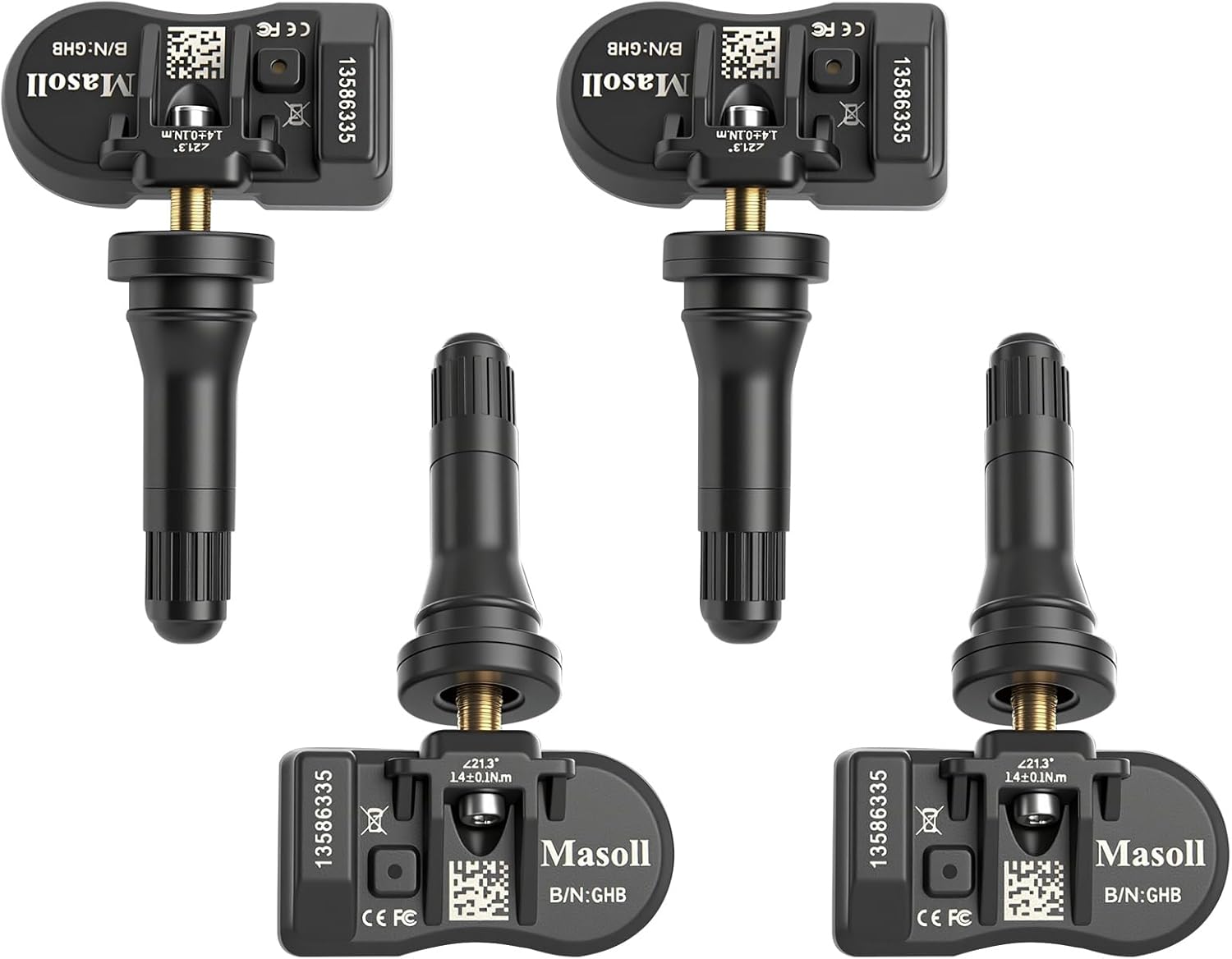
Masoll TPMS sensors are designed for most GM vehicles after 2006, helping you clear tire pressure warnings with OEM-level 315/433MHz compatibility. The 4-pack includes pre-programmed sensors, but re-learning is required after installation using a GM TPMS relearn tool or scan tool. Built with a dual-antenna design and a long-life CR2050 battery, these sensors deliver reliable performance in extreme temperatures with corrosion-resistant valve construction.
FAQ
Will These Tires Fit My Tundra Limited?
You should match the tire size, load index, and speed rating to the numbers on your truck’s door placard or owner’s manual, since Tundra Limited models can come with different wheel packages. Confirm rim diameter and clearance for larger tread blocks, and check that your TPMS sensors are compatible.
When in doubt, have a tire professional verify fitment and perform mounting and balancing so the tires track and wear correctly.
Are These Tires Suitable For Winter And Studding?
Some all-terrain tires are pre-drilled for studs or designed with winter-focused siping, which can help if you need extra bite on ice and compacted snow. Check the tire’s specific features and local laws before adding studs, because studs can increase road noise, affect dry-road comfort, and are restricted in some places.
If you want winter-ready performance without studs, look for deep sipes and the correct winter or snow marking on the exact tire size you are buying. Consider switching to dedicated winter tires when conditions are consistently severe.
How Long Will These Tires Last And How Do I Maintain Them?
Treadlife varies by model, road surface, load, driving style, and maintenance. You will get the most life by keeping pressures correct, rotating tires every 5,000 to 8,000 miles, and fixing alignment or balance issues promptly.
Heavy towing or frequent off-road use speeds up wear, so choose a tire with the appropriate load range and inspect sidewalls and tread for damage after rough trips.
Should I Choose XL Or LT Tires For A Tundra Limited?
XL tires can work well for many drivers when they match the factory requirements, while LT tires are often built for heavier-duty use and may have stiffer sidewalls. LT tires can feel firmer, so choose them when the added load support or durability makes sense for your towing, hauling, or terrain needs.
What Tire Type Is Best If I Mostly Drive On Highways?
If your Tundra Limited mostly sees pavement, a mild all-terrain or highway-terrain tire may be the better choice. More aggressive all-terrain tires can improve dirt, gravel, and snow traction, but they may add road noise and reduce ride softness compared with a highway-focused tire.
What Should I Check Before Clicking Buy?
Check tire size, wheel diameter, load index, speed rating, load range, sidewall type, return policy, installation options, and whether the tire is sold as a single tire or a set. Also confirm whether the listing matches the exact product shown in the article.
Wrapping Up
If you want a balanced, dependable choice for everyday driving and occasional trails, the Cooper Discoverer is the strongest overall pick. If durability and reinforced construction are your priority because you tow or encounter rough terrain, the Goodyear Wrangler with Kevlar is built for that kind of work.
If winter capability and stud-ready design matter most, the Thunderer Ranger gives you a practical snow-focused all-terrain option. Whatever you choose, confirm fitment before buying so the tire matches your exact Tundra Limited wheel package.
| Product | Tread | Load Index | Load | Action |
|---|---|---|---|---|
 Cooper Discoverer Road and Trail AT All-Terrain Tire, 265/60R18 XL 114H |
Asymmetrical | 114 | 2601 Pounds | Check Price on Amazon |
 Goodyear Wrangler Adventure Kevlar 255/70R18 113 T Tire |
Symmetrical | 113 | 2535 Pounds | Check Price on Amazon |
 Thunderer Ranger ATR All Terrain 265/60R18 114T XL Passenger Tire |
Asymmetrical | 114 | 2601 Pounds | Check Price on Amazon |
This Roundup is reader-supported. When you click through links we may earn a referral commission on qualifying purchases.