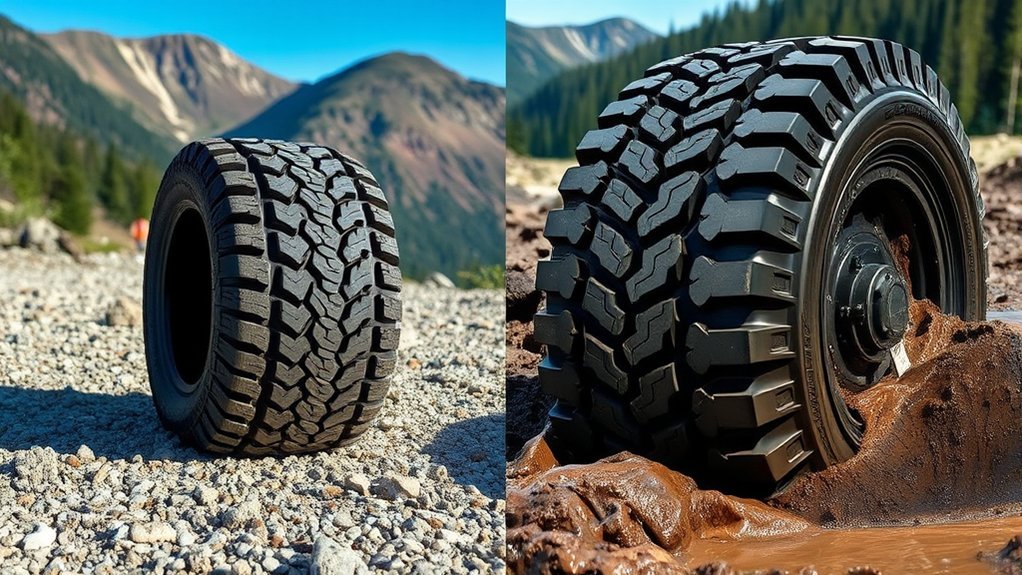
Choosing between all-terrain tires and mud-terrain tires comes down to how you actually drive. If most of your miles happen on pavement with occasional gravel, dirt roads, snow, or light trails, all-terrain tires usually make more sense. If you spend serious time in deep mud, ruts, loose rock, or remote trails, mud-terrain tires give you the extra bite you need, but they bring more road noise and daily-driving trade-offs.
Quick Answer
Choose all-terrain tires if you want one tire for commuting, rain, gravel, mild snow, and weekend trails. Choose mud-terrain tires if you regularly drive through deep mud, rocky trails, ruts, or off-road terrain where self-cleaning tread and sidewall toughness matter more than quiet highway comfort.
Key Takeaways
- All-terrain tires are the better fit for most daily drivers because they balance paved-road comfort with light to moderate off-road traction.
- Mud-terrain tires work best for frequent off-road use, especially deep mud, loose rock, ruts, and uneven trails.
- Mud-terrain tires usually create more highway noise and may reduce fuel economy because of deeper, heavier, more aggressive tread designs.
- For winter driving, look beyond “M+S” markings. A 3PMSF symbol means the tire met a minimum packed-snow acceleration test, but it does not guarantee ice braking or cornering performance.
- Always match tire size, load rating, speed rating, and inflation pressure to your vehicle and driving conditions.
All-Terrain vs. Mud-Terrain Tires: Key Features and Benefits
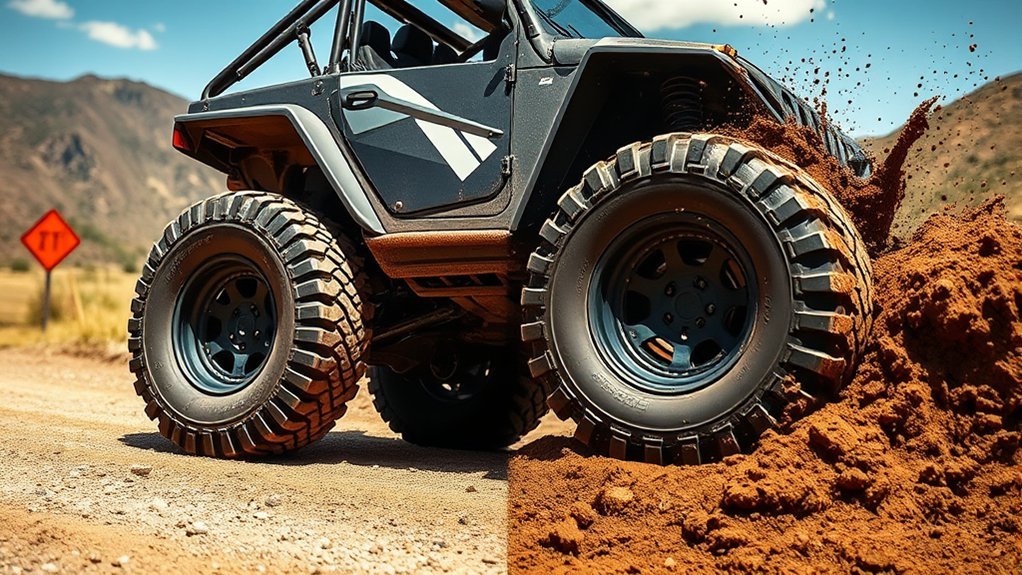
All-terrain tires, often called A/T tires, are built to handle both paved roads and uneven surfaces. They usually use a moderately open tread pattern, reinforced construction, and enough siping to help with wet roads, gravel, dirt, and mild snow. Tire Rack describes all-terrain tires as a category designed to balance off-road capability with on-road comfort, making them popular for trucks, SUVs, Jeeps, and AWD crossovers.
Mud-terrain tires, often called M/T tires, sit on the more aggressive end of the off-road tire range. They use larger tread blocks, wider voids, and stronger sidewall features to help claw through deep mud, loose soil, rocky trails, and rutted paths. Tire Rack classifies these as off-road maximum traction tires because they focus on serious trail grip more than quiet street manners.
The main trade-off is simple: all-terrain tires give you more balance, while mud-terrain tires give you more off-road bite. If you commute every day and only hit trails on weekends, an A/T tire is usually the smarter choice. If your truck spends more time in mud holes, hunting trails, construction sites, or technical off-road terrain, an M/T tire may be worth the noise and wear trade-offs.
| Category | All-Terrain Tires | Mud-Terrain Tires |
| Best Use | Daily driving, gravel, dirt roads, mild trails, mixed weather | Deep mud, ruts, loose rock, remote trails, off-road-heavy use |
| Tread Design | Moderately aggressive tread with more road-friendly spacing | Large lugs, wide voids, strong shoulder and sidewall features |
| Highway Comfort | Usually quieter and smoother | Usually louder and rougher, especially at highway speed |
| Wet and Snow Use | Often better for daily wet roads and light snow, especially with 3PMSF models | Can struggle on slick pavement if the tread has fewer biting edges or less siping |
| Long-Term Cost | Often lower for mixed daily use because wear and fuel impact are usually easier to manage | Often higher because of purchase price, faster wear on pavement, and possible fuel-economy impact |
[Products Worth Considering]

Secure your vehicle during transport with this 4-pack of heavy-duty tire tie down straps designed for trailers and hauling. The ratchet system with flat hooks and D-rings helps you tension the straps quickly, while the wheel-friendly design protects tires. With high break strength and corrosion-resistant hardware, these straps provide reliable, confidence-inspiring tie-down security for cars, trucks, and UTVs.
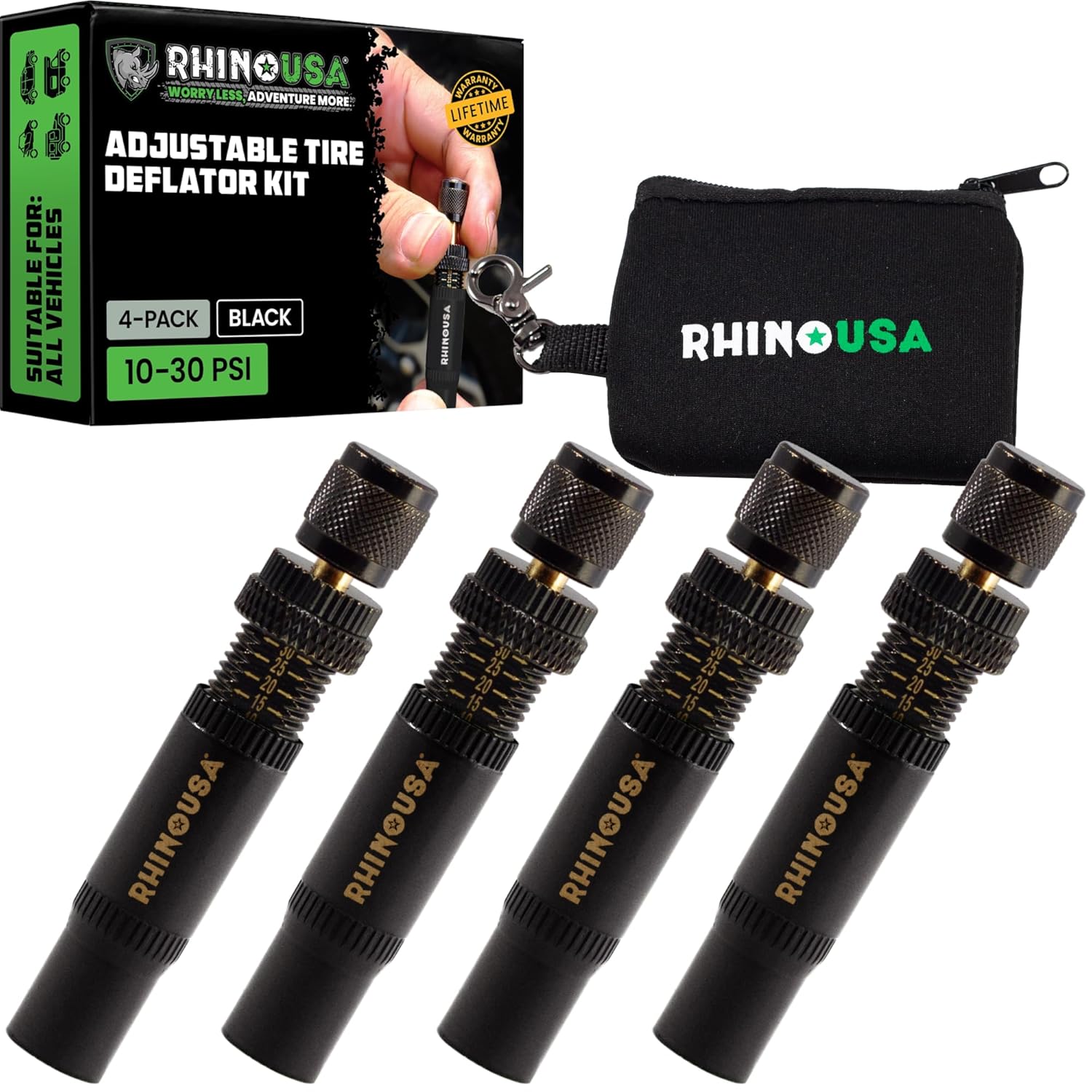
Use the Rhino USA adjustable tire deflators to air down all four tires at once by screwing one deflator onto each valve stem, letting you step away while the tires reach your preset pressure. Each deflator independently adjusts across a 10–30 PSI range with laser-etched indicators for quick setup and verification, making it ideal for beach, sand, and rocky off-road trails.

This ALL-TOP auto-stop tire deflator valve kit lets you air down off-road tires quickly without watching pressure, automatically stopping when your preset PSI is reached. Each valve is individually calibrated for reliable performance with an acceptable +/- 2 PSI tolerance. The adjustable deflator range covers 10 to 30 PSI and includes four valves plus valve caps and a zipper pouch for easy setup on trucks, SUVs, RVs, UTVs, and powersports.
Discovering the Benefits of Mud-Terrain Tires
Mud-terrain tires earn their place when traction matters more than comfort. Their large tread lugs and open voids help the tire clear mud instead of packing it into the tread. That self-cleaning action gives you more usable grip in deep mud, wet clay, loose dirt, and rutted trails.
M/T tires also tend to use stronger shoulder and sidewall designs than mild all-terrain tires. That helps when you drive over rocks, roots, uneven trail edges, or debris that can damage a weaker tire. If you air down for off-road use, the extra sidewall strength can also help the tire conform to obstacles, though you should always stay within the tire and wheel manufacturer’s safe limits.
The drawbacks show up on pavement. Mud-terrain tires usually make more road noise, ride firmer, and wear faster when most miles happen on highways. Their deeper, blockier tread can also increase rolling resistance, which may reduce fuel economy. The exact impact depends on the tire model, size, vehicle weight, inflation pressure, load, gearing, and driving style.
Warning: Do not choose a larger or heavier A/T or M/T tire only for appearance. Oversized tires can rub, affect braking, change speedometer accuracy, add stress to suspension parts, and reduce fuel economy. Confirm clearance, load rating, speed rating, and fitment before buying.
Performance Comparison: All-Terrain vs. Mud-Terrain on Different Terrains
Performance changes with the surface. A tire that feels excellent on dry pavement may feel weak in deep mud, and a tire that claws through ruts may feel loud and vague on the highway. Use your normal driving mix as the starting point.
- Pavement: All-terrain tires usually feel more stable, quieter, and easier to live with for commuting, highway driving, and errands. Mud-terrain tires can feel heavier and louder because of their open tread and large lugs.
- Gravel and dirt roads: All-terrain tires handle these surfaces well for most drivers. They offer more cut resistance and grip than highway tires while keeping better road manners than most M/T tires.
- Deep mud: Mud-terrain tires have the clear advantage. Their open tread pattern helps clear mud and maintain traction where an A/T tire may pack up.
- Rocks and ruts: Mud-terrain tires often provide better grip and sidewall toughness, especially on technical trails. More aggressive A/T and hybrid tires can work well for moderate rock use.
- Sand: Tire pressure, flotation, vehicle weight, and driving technique matter as much as tread type. Many drivers prefer less aggressive tread in soft sand because overly aggressive lugs can dig down if you use too much throttle.
- Snow and ice: Some all-terrain tires work well in light snow, especially models with the three-peak mountain snowflake symbol. For frequent ice, packed snow, or severe winter roads, dedicated winter tires remain the safer choice.
A/T tires are usually the better “one set for everything” choice. M/T tires are the better “maximum off-road grip” choice.
[Products Worth Considering]

Add style while helping protect your tire valve stems with handmade crystal rhinestone caps and a durable plastic insert. These caps resist corrosion and help keep out rain, snow, and muddy water, extending tire life. Textured non-slip design makes them easy to grip for quick install and removal when checking tire pressure.
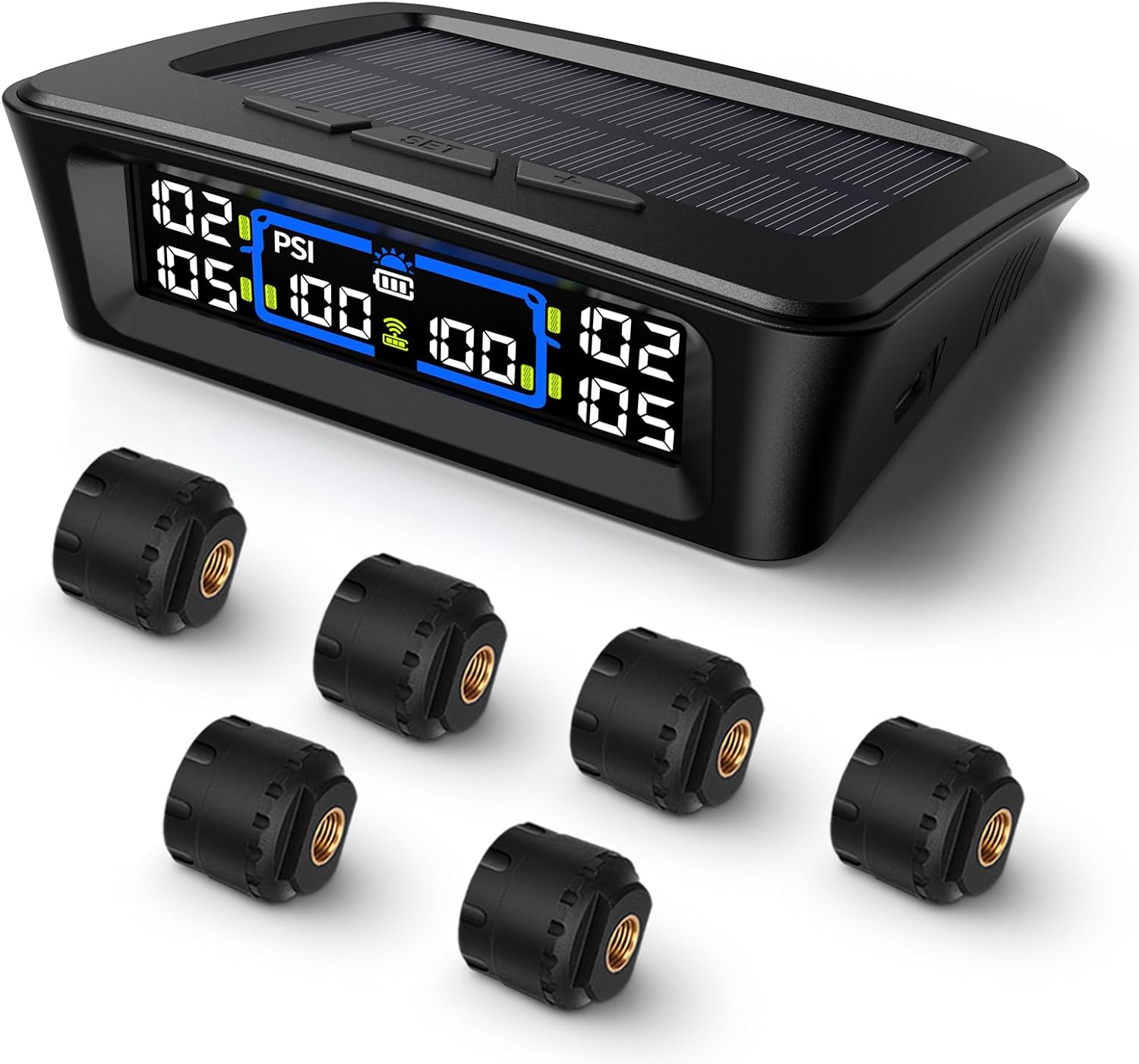
The Tymate TM12 RV TPMS delivers real-time tire pressure and temperature monitoring with a stable 433Hz display for safer long-distance driving. It supports simultaneous monitoring across vehicle and trailer zones, includes six alarm modes for pressure, temperature, leakage, battery, and signal loss, and features easy DIY installation with auto calibration. Power is supplied via USB-C charging or solar recharging, with a wide 0–144 PSI range and up to 50 ft signal coverage for RVs and towable trailers.

Keep your tires properly inflated with this analog VONDIOR tire pressure gauge, designed for fast, easy readings without batteries. The swiveling, two-axis hose and large glow dial help you measure at any tire angle with instant visibility. Built with a protective rubber shield, it supports durable, low-maintenance use for cars and trucks.
Noise Levels and Comfort: Which Tire Is Quieter?
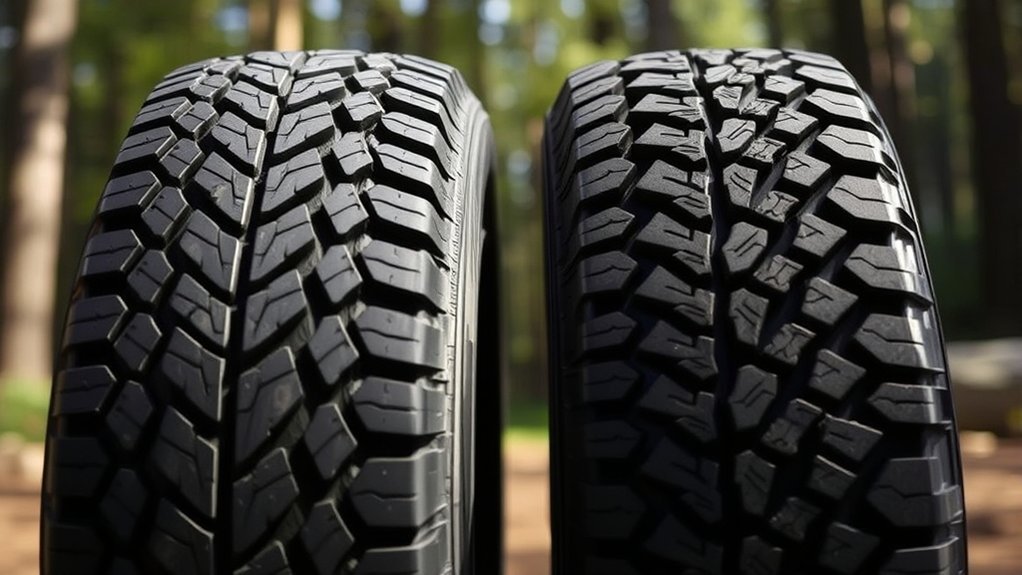
If you drive long highway miles, noise and ride comfort should sit near the top of your list. All-terrain tires usually use smaller tread blocks, tighter spacing, and more road-focused tread designs than mud-terrain tires. That often gives you a quieter ride and less vibration through the cabin.
Mud-terrain tires create more pattern noise because their tread blocks are larger and spaced farther apart. You may hear a steady hum at city speeds and a louder drone on highways. Some modern M/T and hybrid tires use variable-pitch tread designs to reduce sound, but most still cannot match the comfort of a mild A/T tire.
Comfort also depends on load range. Many truck tires come in LT sizes with stronger construction for towing, hauling, and off-road use. A heavier LT tire may ride firmer than a passenger-rated tire, even within the same tread category.
Cost Comparison: All-Terrain vs. Mud-Terrain Tires
Exact tire prices change constantly, so it is better to compare the factors that drive total cost. Mud-terrain tires often cost more in the same size because they use heavier construction, deeper tread, stronger sidewalls, and more aggressive designs. They can also wear faster if most of your miles happen on pavement.
All-terrain tires often make more financial sense for mixed use. Many A/T models offer mileage warranties, better everyday comfort, and lower rolling-resistance impact than more aggressive M/T options. That does not mean every A/T tire is cheaper or longer lasting, but the category is usually easier to justify for daily driving.
Before buying, compare the tire’s current price, treadwear warranty, load rating, weight, expected use, road hazard coverage, and installation cost. A cheap tire that wears quickly or performs poorly in your normal conditions can cost more over time than a better-matched option.
How Weather Impacts Your Tire Decision
Weather should shape your tire choice as much as trail use. Hot pavement, heavy rain, freezing mornings, snow, and ice all stress tires in different ways. If you live somewhere with changing seasons, all-terrain tires often provide the best year-round compromise, but the exact model matters.
Kansas City Seasonal Weather Example
Kansas City is a useful example because drivers deal with hot summers, cold winters, heavy rain, and occasional snow. The National Weather Service’s Kansas City precipitation records show long-term annual precipitation near the upper 30-inch range, depending on the station and climate-normal period. That makes wet-road traction and proper tread depth important for daily driving.
In summer, heat and underinflation can increase tire stress. In winter, cold air lowers tire pressure and can reduce grip if the compound is not designed for cold conditions. A/T tires with strong wet performance and a 3PMSF symbol can be a good fit for light to moderate winter use, but drivers who often face ice or severe snow should consider dedicated winter tires.
Rain and Snow Conditions
On wet pavement, tread design, siping, compound, tread depth, and speed all affect grip. Many all-terrain tires offer better wet-road manners than mud-terrain tires because they use more road-friendly tread blocks and biting edges. Mud-terrain tires can still perform acceptably in rain, but the most aggressive designs may feel less stable on slick pavement.
The 3PMSF symbol helps you identify tires that meet a minimum packed-snow acceleration traction standard. It is stronger evidence than an “M+S” marking alone, but it does not test ice traction, braking, or turning. If winter safety is your main concern, compare actual winter test results and consider a dedicated winter tire.
Pro Tip: Check tire pressure at least monthly and before long trips. NHTSA notes that TPMS is not a replacement for regular pressure checks because underinflated tires can be hard to spot by sight alone.
The Hybrid Tire Option: A Balanced Choice
If all-terrain tires feel too mild but mud-terrain tires feel too aggressive, a hybrid or rugged-terrain tire may be the middle ground. These tires use a more aggressive look and stronger off-road features than many mild A/T tires, while trying to keep better highway comfort than a full M/T tire.
The Nitto Ridge Grappler is one example. Nitto describes it as a hybrid terrain tire that combines mud-terrain and all-terrain characteristics, with a variable-pitch tread pattern designed to support a quieter highway ride and shoulder grooves meant to clear mud and maintain traction.
Versatility Across Terrains
Hybrid tires work well for drivers who split time between pavement and tougher trails. They can provide stronger sidewall presence, more off-road grip, and a more aggressive look than many standard A/T tires. At the same time, they usually avoid some of the loudest and roughest traits of a full mud-terrain tire.
They are not magic, though. A hybrid tire can still be louder, heavier, and less fuel-efficient than a mild A/T tire. If you mainly commute, a road-focused A/T may still be better. If you regularly drive deep mud, a true M/T tire may still be better.
Noise Reduction Benefits
Many hybrid and rugged-terrain tires use variable-pitch tread blocks to reduce repetitive tread noise. This can make them more comfortable on the highway than traditional mud-terrain tires. Still, noise varies by tire model, size, vehicle, road surface, inflation pressure, and tread wear.
Choosing Between All-Terrain and Mud-Terrain Tires
Use your real driving habits, not the most extreme trip you might take once a year. The right tire should match your normal roads, weather, load, towing needs, and off-road plans.
- Choose all-terrain tires if you drive mostly on pavement, want better comfort, need wet-road confidence, travel gravel or dirt roads, and only off-road occasionally.
- Choose mud-terrain tires if you frequently drive through deep mud, ruts, loose rock, remote trails, job sites, or hunting land where maximum traction matters more than highway noise.
- Choose hybrid or rugged-terrain tires if you want more off-road grip and a tougher look than a mild A/T tire, but you still drive enough pavement to care about comfort.
Also check the tire’s load index, load range, speed rating, diameter, width, wheel size, and manufacturer-approved rim width. If you tow, haul, or run larger tires, ask a qualified tire professional to confirm that the setup fits your vehicle and use case.
Note: New tires should be balanced during installation, and regular alignment checks help prevent uneven wear. NHTSA recommends monthly tire maintenance inspections that include inflation pressure, treadwear, and tire damage checks.
[Products Worth Considering]

This digital tire pressure gauge with built-in inflator helps you accurately check and adjust tire pressure for safer driving and better fuel efficiency. It supports multiple units (PSI, KPA, BAR, KG/CM²) and reads within 1% for reliable results. The 3-in-1 design inflates, deflates, and measures, with a quick-connect air chuck and compatible hose setup for cars, trucks, SUVs, RVs, and motorcycles.

ETENWOLF T300 is a calibrated digital tire pressure gauge for accurate readings from 3 to 200 PSI across light and heavy-duty vehicles. It includes thermal compensation for reliable performance in extreme cold or heat, with an auto shut-off to extend battery life and an LED for easier reading. The sturdy design supports rugged everyday use, making it ideal for pickups, RVs, and industrial applications.

Black Magic Tire Wet delivers a deep wet-look shine that makes tires appear dark, rich, and freshly detailed. Its long-lasting formula helps resist rain, dust, and road grime for weeks of glossy protection, not days. Apply by spraying onto clean, dry tires—no buffing or wiping required—with a low-sling design to reduce splatter on paint and wheels.
Frequently Asked Questions
How do tire sizes affect performance between A/T and M/T tires?
Larger tires can improve ground clearance and off-road presence, but they can also add weight, reduce acceleration, affect braking, change speedometer readings, and cause rubbing. Wider or taller M/T tires may increase road noise and rolling resistance. Always confirm size, load rating, wheel width, and clearance before changing from the factory size.
Can I use M/T tires for daily commuting?
Yes, you can use mud-terrain tires for commuting, but they are not ideal for every driver. Expect more road noise, a firmer ride, possible fuel-economy loss, and faster wear if you mainly drive on pavement. If you only off-road occasionally, an A/T or hybrid tire is usually easier to live with.
What is the lifespan difference between A/T and M/T tires?
All-terrain tires often last longer in mixed daily use because their tread designs are usually less aggressive and more road-focused. Mud-terrain tires may wear faster on pavement because of their larger lugs and softer off-road-focused compounds. Actual tread life depends on tire model, rotation, alignment, inflation pressure, load, road surface, and driving style.
Do A/T or M/T tires provide better traction on snow?
Many all-terrain tires perform better than mud-terrain tires on packed snow because they often have more siping and smaller tread blocks. Look for the 3PMSF symbol if snow traction matters. For frequent ice, heavy snow, or severe winter driving, dedicated winter tires are usually the safest choice.
How does tire pressure impact performance for A/T and M/T tires?
Correct tire pressure supports braking, handling, tread life, fuel economy, and load carrying. Underinflation can increase heat and wear, while overinflation can reduce the contact patch and ride comfort. Use the vehicle placard pressure for normal road use unless your tire, vehicle, or off-road setup requires a professionally confirmed adjustment.
Are hybrid tires better than all-terrain tires?
Hybrid tires are better only if you need more off-road grip and toughness than a mild A/T tire provides. For mostly pavement, rain, gravel, and light trails, a road-friendly A/T tire may ride quieter and wear better. For deep mud and frequent trail use, a true M/T tire may still offer more traction.
What does 3PMSF mean on an all-terrain tire?
The three-peak mountain snowflake symbol means the tire met a minimum traction threshold in a packed-snow acceleration test. It is useful when comparing tires for light snow, but it does not guarantee ice grip, braking performance, or cornering performance in all winter conditions.
Conclusion
For most truck and SUV owners, all-terrain tires are the better everyday choice because they handle pavement, gravel, rain, and light trails without giving up too much comfort. Choose mud-terrain tires when deep mud, rocks, ruts, and serious off-road traction matter more than quiet highway driving.
If you sit between those two needs, consider a hybrid or rugged-terrain tire. Whatever you choose, match the tire to your vehicle, load, weather, and real driving habits. The best tire is not the most aggressive one. It is the one that gives you the safest, most useful performance for the roads and trails you actually drive.
Sources
- Tire Rack — All-Terrain Tires — supports the A/T category definition and on-road/off-road balance.
- Tire Rack — Off-Road Maximum Traction Tires — supports mud-terrain tire use cases and aggressive off-road design traits.
- Tire Rack — Three-Peak Mountain Snowflake Symbol — explains what 3PMSF means and what the test does not cover.
- NHTSA TireWise — supports tire pressure, TPMS, alignment, balancing, and tire maintenance guidance.
- National Weather Service Kansas City Annual Precipitation — supports the Kansas City precipitation context.
- Nitto Ridge Grappler — supports the hybrid-terrain tire example and manufacturer-stated design features.