
Spare Tire Safety: 50 MPH Limits & When to Use One
When to Use a Spare Tire
What’s in This Article
- Quick Answer: When to Use a Spare Tire
- Types of Spare Tires and Their Limits
- When Not to Use a Spare Tire
- Immediate Situations That Call for a Spare Tire
- Safety Checklist Before Using a Spare Tire
- How Far and How Fast You Can Drive on a Spare Tire
- After Using a Spare: Inspection, Repair, and When to See a Pro
- Frequently Asked Questions
A flat tire can turn a normal drive into a safety problem fast. Your spare can help you reach a safer place, but only if you treat it as a short-term fix. This guide explains when to use a spare tire, when to avoid one, and how to drive safely until you can repair or replace the damaged tire.
Quick Answer: When to Use a Spare Tire
Quick Answer
Use a spare tire after a flat, blowout, major leak, or visible tire damage makes your regular tire unsafe. Drive slowly to a repair shop or safe location, then replace the spare with a regular tire as soon as you can. Compact spare tires usually require slower speeds and short trips only.
Key Takeaways
- Use a spare tire only when your regular tire becomes unsafe to drive on.
- Check the spare tire’s air pressure, tread, sidewalls, and age before you mount it.
- Keep compact spare tires under the speed and distance limits in your owner’s manual.
- Avoid compact spare tires in heavy rain, snow, ice, or other poor road conditions.
- Repair or replace the damaged tire as soon as possible after using the spare.
When you get a flat, put on your spare if the regular tire can’t hold air or looks unsafe. Drive cautiously to a repair shop or home, then swap it for a regular tire as soon as possible. Check your owner’s manual for your vehicle’s exact spare tire limits.
Treat the spare as a temporary system component. Confirm inflation, secure mounting, and limit speed. Compact spares often require about 60 PSI, while full-size spares should match the pressure listed for your vehicle.
Use the spare only when road conditions let you stay in control. Avoid heavy rain, snow, or ice because reduced tread and different construction can cut traction and handling. Pack spare tire essentials, including a pressure gauge, lug wrench, jack, wheel chocks, gloves, and a flashlight.
Types of Spare Tires and Their Limits
Spare tires all help you regain mobility, but each type has different limits. Know the operational envelope for your spare before you need it.
- Compact spares: Use these short-term tires only within the speed and distance limits in your owner’s manual. Many compact spares carry a 50 mph limit and need about 60 PSI.
- Full-size spares: Treat these like regular tires only when they match your other tires in size, load rating, tread type, and condition.
- Run-flat tires: These tires use reinforced sidewalls to help you keep driving after pressure loss. Follow the tire maker’s distance, speed, and repair limits.
Compact spares can affect braking, steering, suspension, and drivetrain parts if you use them too long. Full-size spares can serve longer, but you still need to inspect and rotate them. Run-flat tires need a tire pressure monitoring system (TPMS) so you know when pressure drops.
When Not to Use a Spare Tire
Don’t use a spare tire when its condition raises safety concerns. Leave it off the vehicle if you see cracks, bulges, dry rot, low tread, rim damage, or valve damage. Many tire makers advise replacing tires around six to ten years of age, even when the tread still looks usable.
Warning: Don’t drive on a compact spare at highway speeds or for long distances unless your owner’s manual allows it.
Avoid using a compact spare during heavy rain, snow, ice, or strong crosswinds. Its smaller size and reduced tread can make the vehicle harder to control. Call for roadside help or towing if weather, traffic, distance, or spare condition makes the drive unsafe.
Don’t treat any spare as a permanent tire. Plan prompt repair or replacement of the original tire. A short delay can turn a manageable tire issue into a more costly safety problem.
Immediate Situations That Call for a Spare Tire
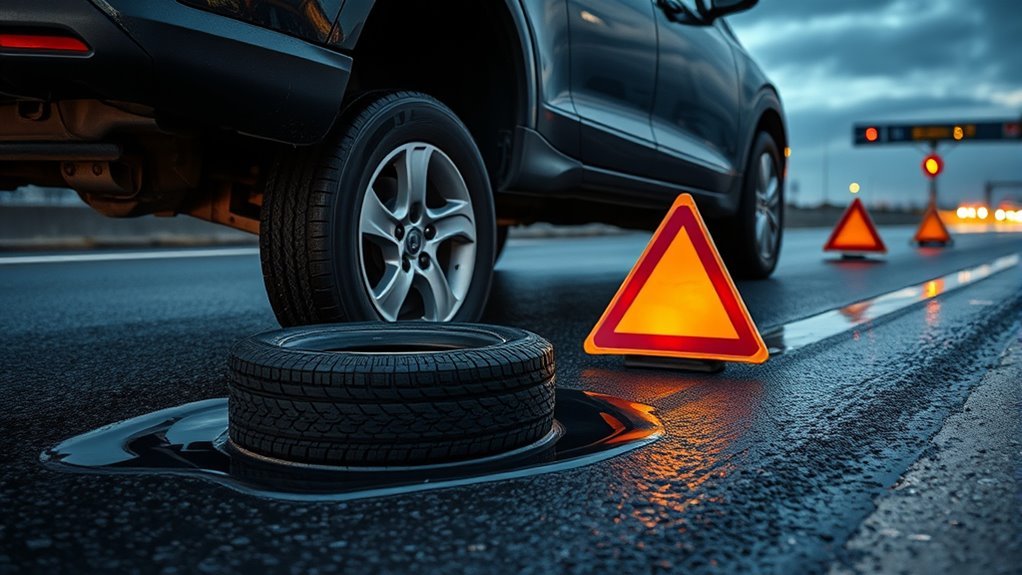
Use a spare when your tire can no longer support safe driving. Pull over to a safe, level place away from traffic before you inspect the tire. Install the spare only when you can do the job without putting yourself in danger.
Safe Pull-Over Locations
If you get a flat, steer toward a secure, well-lit spot. A parking lot, rest area, or wide shoulder gives you more room to work. Signal early, slow down, and turn on your hazard lights.
- Choose a parking lot or rest area with room to work and a clear exit path.
- Use a wide shoulder or low-speed area only when no safer place exists.
- Set the parking brake and use wheel chocks when you have them.
Don’t stop in an active traffic lane. If you can’t reach a safe place, call roadside help instead of trying to change the tire beside fast traffic.
Visible Tire Damage
Visible tire damage means you should stop driving on that tire. Look for cuts, bulges, deep punctures, cracks, dry rot, exposed cords, or rim contact. If you drove on the tire while flat, treat it as unsafe until a professional checks it.
Check tread depth if you can do it safely. A tire at or below 2/32 inch of tread has reached the legal wear limit in many places and needs replacement. After a crash or hard curb strike, install the spare only if the wheel and mounting area still look safe.
Immediate Travel Needs
After you confirm the tire is unsafe, decide whether you need the spare to reach help. Consider the distance to shelter, traffic speed, weather, and repair options. Use the spare for controlled travel to a service point, not for a normal trip.
- Install the spare when you’re far from help and the tire can’t hold air.
- Use a tire repair kit only when the damage fits the kit instructions.
- Follow the compact spare’s speed and distance limits before you drive.
Safety Checklist Before Using a Spare Tire
Before you mount a spare, check its pressure, condition, type, and tools. Compact spares often need about 60 PSI, but your tire sidewall and owner’s manual give the right number. Inspect the tread, sidewalls, valve stem, and wheel for cuts, bulges, cracks, leaks, or age-related damage.
Set up the vehicle before you lift it. Park on firm, level ground, turn on hazards, shift into park or gear, and set the parking brake. Place wheel chocks opposite the flat tire when possible.
- Gather the jack, lug wrench, wheel lock key, gloves, flashlight, and pressure gauge.
- Find the correct jacking point in your owner’s manual.
- Loosen the lug nuts slightly before you lift the vehicle.
- Raise the vehicle only high enough to remove the flat tire.
- Install the spare and hand-start each lug nut.
- Tighten the lug nuts in a star pattern after the tire touches the ground.
- Recheck the lug nuts with a torque wrench as soon as you can.
Pro tip: Check your spare tire pressure during normal tire checks so it works when you need it.
How Far and How Fast You Can Drive on a Spare Tire
After you install the spare, follow its limits so you don’t create a second problem. Many compact “donut” spares carry a 50 mph limit and a short-distance use limit. Check the label on the spare and your owner’s manual before you drive.
Full-size spares can let you drive farther when they match your vehicle’s other tires. They still need the right pressure, tread depth, load rating, and condition. Monitor the vehicle’s handling and avoid hard braking, sharp turns, and heavy loads.
- Check the spare’s inflation and condition before each use.
- Keep compact spare trips short and slow.
- Increase following distance and avoid sudden steering inputs.
- Drive straight to a repair shop, tire store, or safe place.
Reduced traction in bad weather increases the risk of skids. Slow down more than usual if you must drive in rain. Stop and call for help if the vehicle pulls, shakes, or feels unstable.
After Using a Spare: Inspection, Repair, and When to See a Pro
After you use a spare, inspect it before you store it again. Look for cuts, cracks, sidewall bulges, unusual wear, or air loss. Refill it to the pressure listed on the tire or in your owner’s manual.
Record the date, mileage, cause, and wheel position. This note helps a tire shop check for hidden damage, wheel alignment issues, or suspension problems. Ask a professional to inspect the damaged tire and wheel as soon as possible.
Replace the spare if it shows structural damage or age-related cracking. Store the jack, lug wrench, wheel cover, and other tools securely. A complete kit helps you handle the next emergency with less stress.
Frequently Asked Questions
What Are the Limitations of a Spare Tire?
A spare tire limits speed, distance, traction, handling, and load capacity, especially when it’s a compact spare. Full-size spares handle more like regular tires when they match your vehicle’s tire size and condition. Always check your owner’s manual before you drive on any spare.
Can I Drive on a Spare Tire for 2 Weeks?
You shouldn’t drive on a compact spare for two weeks. It can reduce handling and strain vehicle parts if you use it like a regular tire. Repair or replace the damaged tire as soon as possible.
Can You Put a Spare Tire on the Front Wheel?
You can mount a spare on the front wheel when your owner’s manual allows it, but many vehicles handle better with the compact spare on the rear. Front-wheel-drive vehicles may have special guidance because the front wheels steer, brake, and deliver power. Follow the vehicle maker’s instructions.
Why Do Compact Spare Tires Need Higher Pressure?
Compact spares are smaller than regular tires, so they often need higher pressure to carry the vehicle’s load. Many compact spares list about 60 PSI on the sidewall. Use the pressure printed on your spare, not the pressure from your regular tires.
Should You Repair the Flat or Replace the Tire?
A tire shop can often repair a small tread puncture if the tire wasn’t driven flat. Sidewall damage, large punctures, exposed cords, and severe tread wear usually require replacement. Ask a professional to inspect the tire from the inside before you rely on it again.
Conclusion
A spare tire gives you a safe way to reach help, but it should not become your everyday tire. Use it when a flat, leak, blowout, or visible damage makes the regular tire unsafe. Check the spare first, drive slowly, and go straight to a repair shop or safe location.
After the trip, inspect the spare and repair or replace the original tire. A ready spare, a basic tool kit, and a clear plan can keep a tire problem from turning into a roadside emergency.
References
- Tires — National Highway Traffic Safety Administration
- Tire Safety: Everything Rides on It — National Highway Traffic Safety Administration
- Tire Safety — U.S. Tire Manufacturers Association

Related Articles
Why Put a Plastic Bottle on Your Tire? The Viral Trick Explained
Mysterious plastic bottle on your tire? Discover the viral trick’s surprising truth and what it really means before you assume it’s protecting your car.
Read More
What Happens When a Tire Blows Out at Highway Speed? Full Guide
Buckle up to discover what really happens when a tire blows out at highway speed, and why your next move could change everything.
Read More
What Does V Mean on a Tire? Load, Speed & Rating Guide
Need to know what “V” means on a tire and how load and speed ratings affect safety?
Read More