
What Is Fender Trimming on a Toyota Tacoma for Bigger Tires
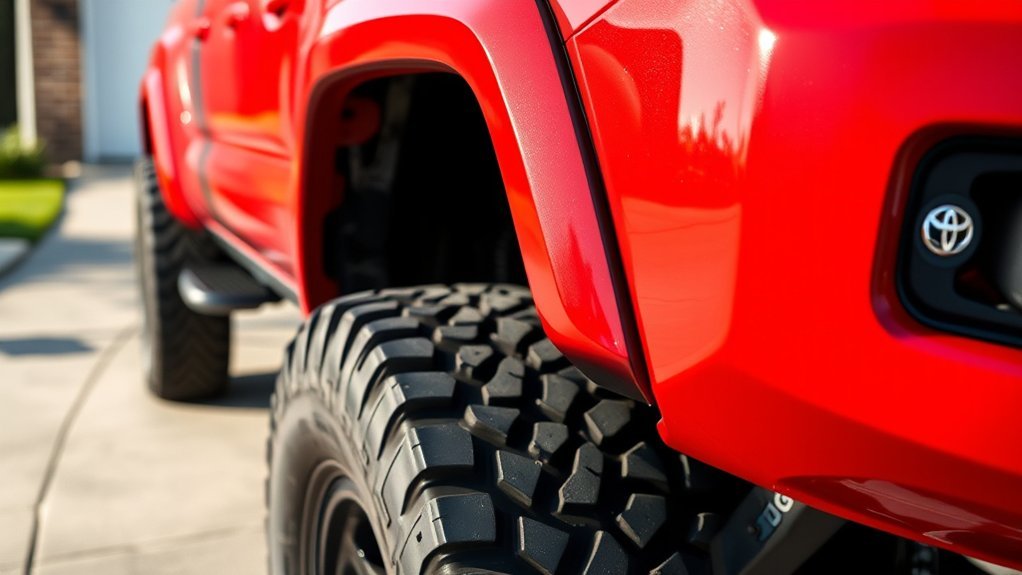
Fender trimming can help stop tire rubbing on a Toyota Tacoma, but you should not start cutting simply because you installed a certain tire size. Tacoma clearance varies by model year, trim, wheel width, wheel offset, alignment, suspension setup, load and the tire’s actual measured dimensions. Inspect the truck at full steering lock and through its suspension travel first, then modify only the material that is causing contact.
Quick Answer
Trim a Tacoma’s fender liner or bumper plastic only after you have identified an exact rubbing point. Mark the contact area, inspect behind it, remove the smallest amount of non-structural material possible, smooth the edge and retest at full steering lock and suspension compression. Leave body mounts, metal panels, wiring, hoses and sensor components to a qualified professional.
Key Takeaways
- Tire diameter alone does not determine whether your Tacoma will rub.
- Wheel offset, wheel width, caster, suspension travel and load can change the contact point.
- This DIY procedure is intended for bumper plastic and removable fender-liner material, not structural metal.
- Cut only after locating witness marks at full steering lock and checking the space behind the panel.
- After the work, confirm alignment, tire pressure, fasteners, TPWS operation and clearance under real driving conditions.
At a Glance
| Time Required | About 1–3 hours for inspection and minor plastic trimming; complex clearance work may take longer |
| Difficulty | Moderate for removable plastic; professional-level for metal or body-mount work |
| Tools Needed | Painter’s tape, marker, measuring tape, trim tools, 10 mm socket, controlled cutting tool, file or sandpaper, eye protection and gloves |
| Cost | Usually limited to tools, replacement clips and edge finishing for plastic work; fabrication and alignment cost more |
Warning: Do not cut a body mount, pinch weld, structural panel, crash component, brake hose, wiring harness or sensor bracket as part of this basic procedure. If the tire contacts metal or a safety-related component, stop and have the truck inspected by an experienced off-road alignment or fabrication shop.
Why Fender Trimming May Be Needed for Bigger Tires
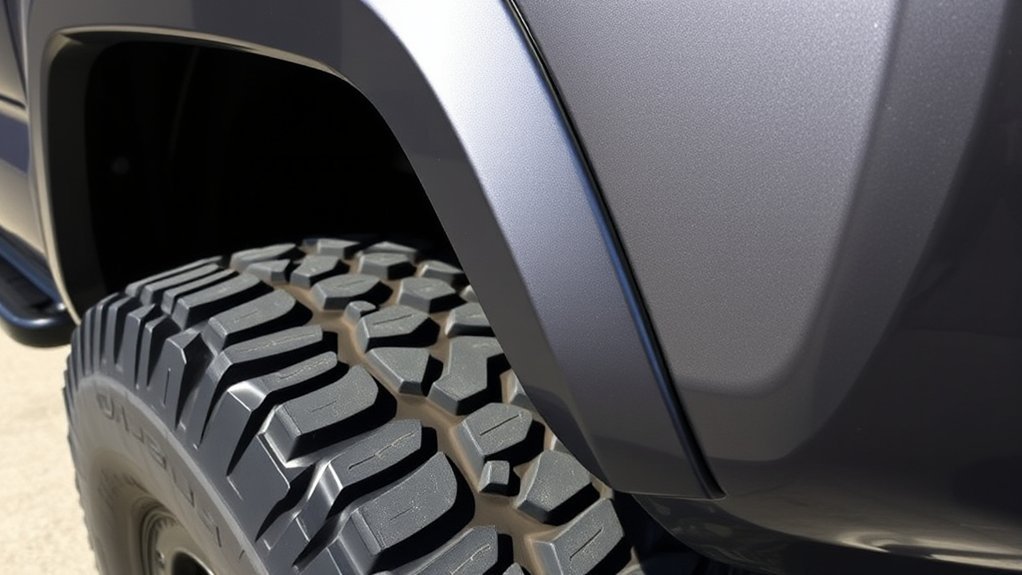
When you install larger or wider tires on a Toyota Tacoma, the tire may contact the inner fender liner, mud flap, bumper edge or another nearby surface during turns. Contact may become worse when the suspension compresses, the truck carries cargo or the wheel is pushed outward by its offset.
A suspension lift does not automatically solve every clearance problem. A lift increases the truck’s resting height, but the tire may still travel toward the same bodywork when the suspension reaches full compression. Alignment settings can also move the tire forward or backward within the wheel opening.
Minor trimming can be appropriate when the contact is limited to non-structural plastic. The goal is not to create the largest possible opening. The goal is to remove the smallest amount needed to maintain clearance throughout steering and suspension travel.
Toyota’s original tire and wheel specifications vary by Tacoma configuration. Confirm your factory specification in the owner’s manual and on the Tire and Loading Information label before evaluating an aftermarket setup. Toyota’s published 2024 specifications, for example, include several different 17-inch and 18-inch combinations rather than one universal Tacoma tire size.
[Products Worth Considering]

Universal magnetic jack pad with aluminum grooved design to protect vehicle pinch welds during lifting. Durable nylon pad inserts are upgraded and secured with screws to resist damage and keep in place. Designed to fit most single vehicle pinpoint welds for safer, stable jacking when changing tires, repairs, or performing oil changes.

This VEVOR tire bead breaker uses a slide-hammer impact and wedge tip to separate tire beads from rims quickly and efficiently without damaging hub surfaces. The long handle and sturdy steel construction help reduce user strain while providing reliable, portable tire changing for cars, trucks, and more. Ideal for home mechanics and repair shops handling multiple vehicle tire sizes.

Camco Trailer Aid Plus tandem tire ramp lifts your trailer for quick, safe tire changes with ample clearance from its 5 1/2-inch lift. It helps you change a flat tire without unloading cargo, making roadside and routine maintenance more efficient. The heavy-duty, waterproof and rustproof polymer design supports up to 15,000 lb and is built for easy portability and storage.
Confirm Your Fitment Before Cutting
Record the complete setup before modifying the truck. Two Tacomas with the same advertised tire diameter may have very different clearance because of their wheels, alignment or suspension components.
| Item to Record | Why It Matters |
|---|---|
| Tacoma model year and trim | Bodywork, factory wheels, suspension and safety systems vary by generation and configuration. |
| Tire brand, model and complete size | Two tires carrying the same nominal size can have different measured widths and diameters. |
| Wheel diameter and width | Wheel width changes the tire’s mounted shape and sidewall position. |
| Offset or backspacing | This determines how far inward or outward the wheel and tire sit. |
| Suspension components and lift height | Control arms, shocks, springs and lift methods can change usable travel and inner clearance. |
| Alignment measurements | Caster and toe can change where the tire sits and how it moves during steering. |
| Typical vehicle load | Passengers, armor, a winch, a camper or cargo can reduce available clearance. |
Pro Tip: Apply painter’s tape or washable chalk to suspected contact areas. Turn the steering from lock to lock, move the truck slowly and inspect the tape for fresh witness marks. This shows where contact occurs before you remove material.
Tire Sizes That Can Cause Clearance Issues
Larger diameter and greater section width increase the chance of contact, but no tire size guarantees a particular modification. Use nominal size only as a starting point.
| Example Size | Approximate Nominal Diameter | What to Check |
|---|---|---|
| 255/85R16 | About 33.1 inches | Bumper plastic, mud flap, liner, wheel width and inner suspension clearance |
| 285/75R17 | About 33.8 inches | Outer fender area, body-mount area, frame clearance, caster and wheel offset |
| Nominal 35-inch tire | Varies by manufacturer and wheel | Full suspension compression, steering sweep, body mount, firewall area, gearing and braking performance |
| Nominal 37-inch tire | Varies by manufacturer and wheel | Extensive clearance, suspension, gearing, steering, braking and fabrication requirements |
A 285/75R17 does not automatically require a cab-mount chop. Some builds contact the liner or mud flap, while others reach the body-mount area because of wheel offset, caster, tire construction or suspension geometry. A body-mount modification should be evaluated and completed by a qualified fabricator.
Do not assume that a tire described online as a “33,” “35” or “37” has that exact mounted diameter. Check the tire manufacturer’s measured diameter, section width, approved wheel-width range, load index and speed rating.
Diagnose the Rubbing Location
Listen for when the contact occurs and inspect the wheel well for polished plastic, missing paint, rubber transfer or damaged fasteners.
| When It Rubs | Likely Area | First Check |
|---|---|---|
| At full steering lock on level ground | Front bumper edge, mud flap or rear of liner | Inspect offset, caster and visible witness marks. |
| While reversing and turning | Rear section of front wheel opening | Check liner clips, mud flap and body-mount proximity. |
| Over bumps or off-road articulation | Upper liner, fender lip or suspension component | Test suspension compression safely and inspect load-related clearance. |
| Only after adding cargo | Upper wheel well or rearward liner | Evaluate spring condition, bump-stop engagement and loaded ride height. |
| Against the frame or control arm | Inner sidewall | Check wheel offset, wheel width and alignment before trimming outer bodywork. |
Step-by-Step Guide to Fender Trimming
This process is suitable for minor trimming of removable fender-liner or bumper plastic. Do not use it as instructions for cutting a body mount or structural sheet metal.
- Park safely. Work on a level surface, apply the parking brake and keep the truck from moving. If a wheel must be removed, follow the owner’s manual lifting procedure and use properly rated support stands.
- Inspect at full steering lock. Turn the steering fully left and right while checking the front, rear, inner and upper sides of the tire.
- Check loaded and compressed clearance. Include the cargo and accessories you commonly carry. Use a safe professional method if suspension compression must be simulated.
- Find the witness mark. Look for polished plastic, rubber transfer, displaced clips or a mark on painter’s tape.
- Inspect behind the panel. Confirm that no wiring, hose, sensor, bracket or metal support sits behind the planned cut.
- Remove or loosen the liner. Use the correct trim tool and socket for the installed clips and fasteners. Do not assume every Tacoma uses the same fastener arrangement.
- Mark a conservative cut line. Follow the shape of the wheel opening and leave enough material to retain fasteners and liner strength.
- Cut gradually. Use a controlled cutting tool suitable for the material. Make several small cuts rather than one large cut.
- Finish the edge. Smooth sharp or uneven plastic with a file, deburring tool or sandpaper.
- Reposition and secure the liner. Use suitable automotive fasteners or replacement clips. Keep the liner away from the tire, suspension and hot components.
- Retest before road use. Repeat the full steering sweep and clearance inspection before driving.
- Complete a low-speed test. Drive slowly in a safe area, turn in both directions and reinspect for fresh contact.
Successful trimming is measured by verified clearance through the truck’s operating range, not by how much material you remove.
Tools You’ll Need for Fender Trimming
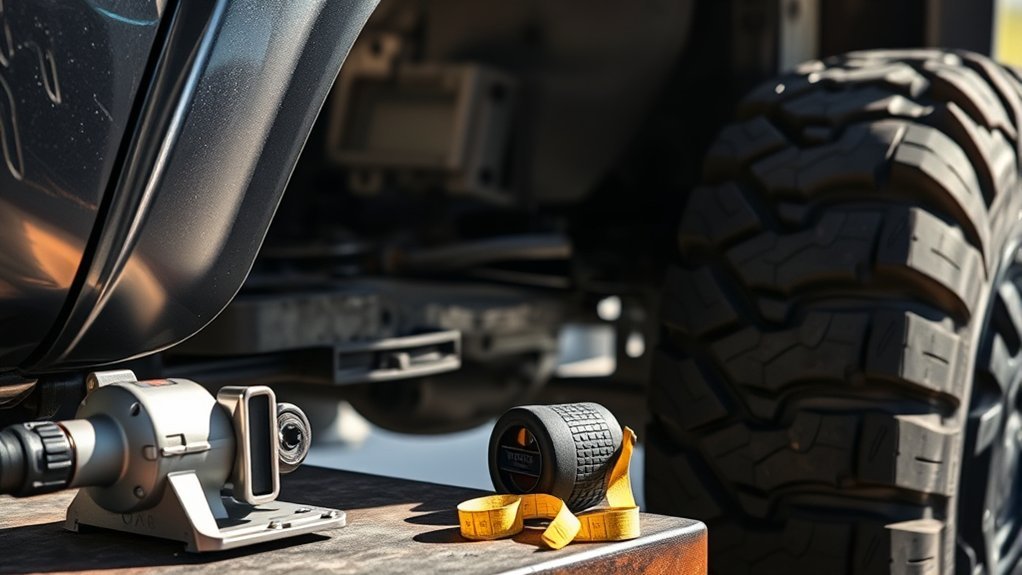
- Impact-rated safety glasses: Protect your eyes from plastic fragments, dirt and broken fasteners.
- Work gloves: Protect your hands from sharp plastic and unfinished edges.
- Painter’s tape or washable chalk: Helps reveal contact points and creates a visible cut guide.
- Measuring tape and marker: Used to compare both sides and create a controlled line.
- Trim-removal tools: Reduce damage to reusable plastic clips.
- Socket and ratchet set: A 10 mm socket is common on many areas, but verify every fastener before removal.
- Oscillating multi-tool, rotary tool or fine-tooth cutting tool: Choose a tool that you can control without reaching hidden components.
- File, deburring tool or sandpaper: Smooths the cut edge.
- Replacement automotive clips and fasteners: Replace damaged or loose hardware rather than relying on a temporary attachment.
- Work light: Makes wiring, brackets and hidden obstructions easier to see.
Note: A rotary or oscillating tool can throw debris toward your face. Wear properly fitted eye protection, keep both hands controlled and follow the tool manufacturer’s instructions.
Safety Precautions When Modifying Your Tacoma
Clearance work affects an area containing moving tires, suspension components and, on some configurations, wiring or sensor-related equipment. Treat the inspection as seriously as the cutting.
Proper Gear Usage
- Wear impact-rated safety glasses with side coverage and suitable work gloves.
- Use hearing protection when required by the cutting tool.
- Keep loose clothing, cords and hair away from the tool and tire area.
- Use a sharp, undamaged cutting accessory intended for the material.
- Maintain a well-lit and uncluttered workspace.
- Keep a first-aid kit and fire extinguisher accessible.
Inspection Before Modification
Check both front wheel openings because one side may have different tolerances, fastener positions or prior repairs. Inspect the tire sidewall for damage caused by rubbing. A cut, exposed cord, bulge or deep abrasion requires professional tire evaluation rather than additional driving.
Verify that the planned cut will not weaken the liner mounting points. Check behind the material with the liner loosened whenever possible. Never cut blindly through an installed panel.
Measure ground clearance and tire clearance with the truck at normal operating load. If the setup includes aftermarket upper control arms, spacers, a preload collar, a body lift or a nonstandard alignment, document those components before deciding what to alter.
Real User Experiences With Fender Trimming
Online Tacoma builds can help you identify possible rubbing areas, but another owner’s result does not prove that your truck will fit the same tire. A reported 33-inch, 35-inch or 37-inch setup may use a different tire model, wheel width, offset, alignment, suspension, bumper or body modification.
Some owners eliminate light contact by removing or reshaping a mud flap and adjusting the liner. Others need alignment changes or professional metal fabrication. The difference is usually the complete combination of parts rather than tire diameter alone.
[Products Worth Considering]

Make hard-to-reach areas easier to access with the MAXXHAUL truck tire service step featuring an adjustable width and height. The foldable design stores compactly, while the serrated non-slip platform provides secure footing for tire-related maintenance. It fits most stock tire sizes up to 31-inch diameter with a 300-lb capacity.

This tire repair kit provides fast emergency puncture repair without removing the tire from the rim, helping you get back on the road quickly. Its screw plug system is designed for punctures in both tread and sidewall and includes a complete patch plug tool set with essential accessories. A portable storage bag makes it easy to carry for cars, trucks, SUVs, motorcycles, and heavy-duty applications.
Common Modifications Required
- Fender-liner repositioning: Moves flexible plastic away from the tread while retaining protection for the wheel well.
- Minor bumper-plastic trimming: Removes a verified outer contact point without cutting structural material.
- Mud-flap adjustment or removal: May resolve contact near the rear of the front wheel opening, subject to local requirements and paint protection needs.
- Alignment correction: Caster and toe adjustments may improve the tire’s position, provided the settings remain appropriate for safe handling and tire wear.
- Wheel or tire change: A narrower tire or more suitable wheel offset may solve the underlying fitment problem.
- Professional fabrication: Required when clearance involves a body mount, pinch weld or other metal structure.
Tire Size Limitations
Many Tacoma owners describe nominal 33-inch tires as a moderate upgrade, but even this category may rub on some trucks. Nominal 35-inch tires generally require more careful planning for clearance, braking, steering, gearing and suspension travel. Nominal 37-inch tires create an even larger clearance envelope and should be treated as a comprehensive vehicle build rather than a simple fender-trimming project.
Do not rely on claims that a 37-inch tire is easier to fit than a 35-inch tire. Individual examples can differ because the trucks are not configured identically. Compare exact tire dimensions, wheel specifications, alignment measurements and completed modifications.
Alternatives to Fender Trimming
Trimming may not be the best first correction. Consider the contact location before choosing an alternative.
- Choose a narrower or slightly smaller tire: This often provides the most predictable improvement while reducing stress on related components.
- Use a more suitable wheel offset: A different offset can move the tire away from an inner component or pull it inward from the outer fender.
- Correct the alignment: Appropriate caster and toe can improve clearance and tire wear, but alignment should remain within safe specifications for the installed components.
- Reposition the fender liner: Moving and securely fastening flexible material may provide clearance without removing much material.
- Install a properly engineered high-clearance liner: Confirm compatibility with your Tacoma’s model year and installed equipment.
- Review suspension and bump-stop travel: A qualified shop can determine whether excessive compression or incorrect components are contributing to contact.
- Use wheel spacers only after measurement: A spacer may improve clearance from the frame or control arm by moving the tire outward, but it can worsen contact with the fender or bumper edge.
A suspension lift can increase static separation, but it does not guarantee clearance when the wheel moves upward. Evaluate full compression rather than judging the truck only while parked.
Maintenance Tips After Trimming
- Inspect the finished edge: Confirm that no sharp plastic can cut or abrade the tire.
- Check every fastener: Replace broken clips and verify that the liner cannot move into the tire.
- Look for new witness marks: Inspect after the first short drive, after highway driving and after off-road articulation.
- Clean the wheel well: Remove packed mud or debris that may push the liner toward the tire.
- Inspect the tire: Look for cuts, grooves, exposed material or unusual sidewall wear.
- Check alignment: Uneven wear, steering pull or an off-center steering wheel should be corrected promptly.
- Confirm tire pressure: Start with the vehicle placard and obtain professional pressure guidance when the replacement tire construction or load requirements differ.
- Initialize the TPWS when required: Follow the owner’s manual after changing tire size, pressure settings, wheels or transmitters.
- Recheck loaded clearance: Cargo, armor, towing tongue weight or a camper can change available space.
If you cut exposed metal during professional fabrication, the finished surface needs suitable corrosion protection. Follow the repair material manufacturer’s preparation and coating instructions.
Enhancing Performance With the Right Tire Setup
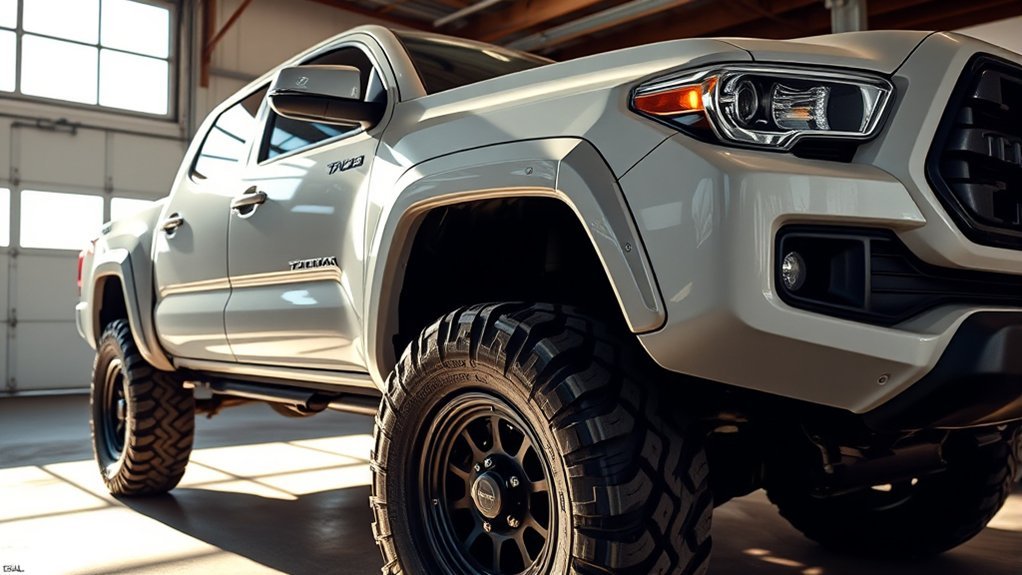
The best setup balances traction, clearance, braking, steering feel, load capacity and durability. Increasing tire size also changes effective gearing and may affect acceleration, fuel use, braking distance, speedometer accuracy and spare-tire compatibility.
- Confirm that the replacement tire’s load capacity is not below the vehicle’s requirement.
- Use a wheel width approved for the tire.
- Check inner clearance at the upper control arm, frame and suspension components.
- Check outer clearance at the bumper, liner, fender and mud flap.
- Carry a spare that is operationally compatible with the installed setup.
- Confirm lug-nut torque using the specification for your Tacoma and wheel type.
- Recalibrate or account for speedometer error when the overall diameter changes materially.
Products such as Nitto Ridge Grappler tires, Method 703 wheels or Westcott preload-collar systems appear on some Tacoma builds, but a brand or model name does not guarantee clearance. Verify exact dimensions and compatibility before purchasing or cutting.
For replacement tires, compare the required size, load index and speed designation with the owner’s manual, vehicle placard and professional fitment guidance. Do not use the maximum pressure printed on the tire sidewall as an automatic everyday pressure target.
Troubleshooting Rubbing After Trimming
Rubbing Continues at Full Lock
Identify whether the remaining contact is at the front or rear of the wheel opening. Recheck caster, wheel offset and liner position. Do not continue removing material without confirming the new contact point.
Rubbing Happens Only Over Bumps
The tire may be contacting the upper liner or fender during compression. Check suspension travel, bump stops, spring condition and loaded ride height. Static parking-lot clearance may not represent full-travel clearance.
The Tire Contacts the Frame or Control Arm
Outer-fender trimming will not solve inner contact. Review wheel offset, wheel width, tire width and alignment with a qualified tire or suspension shop.
The Liner Keeps Coming Loose
Replace damaged clips, repair torn mounting holes and use proper automotive fasteners. A loose liner can move into the tire at highway speed.
The Truck Pulls or the Steering Wheel Is Off-Center
Obtain an alignment inspection. A clearance modification should not be used to hide an alignment or damaged-suspension problem.
The TPWS Warning Remains On
Check all cold tire pressures and follow the model-year-specific initialization or transmitter-registration procedure in the owner’s manual. A tire-size change, new wheel set or unregistered transmitter may require additional steps.
Frequently Asked Questions
How much wider should the fenders be than the tires?
There is no universal rule requiring a Tacoma fender to extend one or two inches beyond the tire. The tire needs safe clearance throughout steering and suspension travel, and the tread or tire coverage must comply with the laws where the truck is registered and driven.
How big of a tire can you put on a Toyota Tacoma?
No single maximum applies to every Tacoma. The practical limit depends on model year, trim, wheel dimensions, offset, suspension, alignment, load and the amount of professional modification you are willing to perform. Even a nominal 33-inch tire can rub on some combinations.
Does a lift kit stop Tacoma tire rubbing?
Not always. A lift increases static ride height, but the wheel may still move toward the same bodywork at full compression. Offset, caster, tire width and liner position may continue to cause contact.
Does a 285/75R17 Tacoma tire require a cab-mount chop?
Not automatically. That tire size is about 33.8 inches in theoretical diameter, but actual fitment depends on its measured dimensions, wheel offset, alignment, suspension and Tacoma generation. Inspect the body-mount area at full lock before deciding that metal fabrication is necessary.
Can wheel spacers prevent tire rubbing?
They can improve clearance from an inner frame or suspension component by moving the wheel outward. However, that same movement can increase rubbing at the outer fender, liner or bumper. Measure both sides of the clearance envelope before using spacers.
What is the most luxurious Toyota Tacoma trim?
The Limited is generally positioned as a comfort-focused Tacoma trim, although equipment changes by model year and market. Trim luxury does not determine tire clearance, so verify the factory wheel, suspension and body configuration for the exact truck.
Should you trim both sides equally?
Compare both sides, but do not remove extra material solely for symmetry. Manufacturing tolerances, prior repairs and component placement may create different contact points. Trim only where testing confirms that clearance is needed.
Conclusion
Fender trimming can solve minor Toyota Tacoma tire rubbing when the contact is limited to bumper plastic or removable liner material. It should come after fitment measurement, full-lock testing and inspection through the truck’s usable suspension travel.
A careful result removes as little material as possible, keeps every safety-related component intact and leaves the liner securely fastened. When the tire contacts a body mount, metal panel, wiring, hose, frame or suspension component, use alignment, wheel-fitment or professional fabrication expertise rather than continuing to cut.
Sources
- Toyota 2024 Tacoma Owner’s Manual: Maintenance Data — factory tire sizes, wheel specifications, pressures and wheel-nut torque examples.
- Toyota 2024 Tacoma Owner’s Manual: Items to Initialize — TPWS initialization following pressure, tire-size or wheel-related changes.
- National Highway Traffic Safety Administration TireWise — vehicle placard, tire sizing and general tire-safety guidance.
- U.S. Tire Manufacturers Association: Replacing Tires — replacement size, load-index and speed-rating guidance.
- CDC/NIOSH Eye Safety for Workers — protection from tool-thrown particles and debris.

Related Articles
How Tire Weight Affects Toyota Tacoma Performance
How does tire weight influence your Toyota Tacoma's performance and efficiency? Discover the surprising effects that could change your driving experience.
Read More
Tire Noise Levels by Tire Type on a Toyota Tacoma
A comprehensive look at how tire types affect noise levels in your Toyota Tacoma reveals surprising insights that could enhance your driving experience.
Read More
How To Choose Tires for a Dual Use Toyota Tacoma
Unlock the secrets to selecting the perfect tires for your dual-use Toyota Tacoma, ensuring optimal performance and comfort on every adventure. Discover more inside!
Read More