
Toyota Tacoma Uneven Tire Wear Causes and Solutions
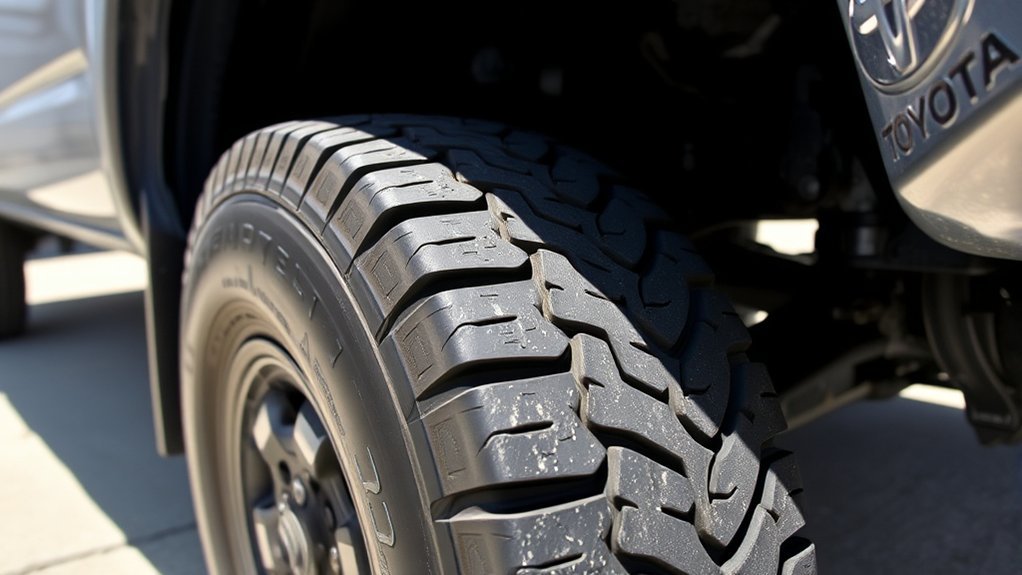
Uneven tire wear on a Toyota Tacoma usually means one or more basics are off: tire pressure, wheel alignment, tire balance, suspension condition, rotation schedule, or load. Start with a cold tire-pressure check, then inspect the tread pattern closely. The pattern often tells you whether the problem points to underinflation, overinflation, toe or camber alignment, worn shocks, bad ball joints, or hard off-road use.
Quick Answer
Toyota Tacoma uneven tire wear is most often caused by incorrect cold tire pressure, poor alignment, skipped rotations, worn suspension parts, tire imbalance, overloading, or changes after a lift or leveling kit. Check the door-placard PSI, measure tread depth, rotate on schedule, and get an alignment or suspension inspection if wear keeps returning.
Key Takeaways
- Shoulder wear often points to low pressure, hard cornering, or alignment issues.
- Center wear often points to overinflation, especially if both shoulders still look deeper.
- One-sided or feathered wear usually means the Tacoma needs an alignment check.
- Cupping or scalloping often points to tire imbalance, worn shocks, worn struts, or loose suspension parts.
- Use the cold PSI on your driver-side Tire and Loading Information Label, not the maximum PSI molded into the tire sidewall.
- Replace tires that reach 2/32 inch tread, show cords, bulges, sidewall damage, or severe irregular wear.
At a Glance
| Time Required | 10 to 20 minutes for a driveway inspection; longer if a shop checks alignment or suspension |
| Difficulty | Easy for pressure and tread checks; moderate to professional for alignment, balance, and suspension diagnosis |
| Tools Needed | Accurate tire-pressure gauge, tread-depth gauge or penny, flashlight, gloves, and your Tacoma owner’s manual |
| Cost | Often free for basic checks; shop costs vary for alignment, road-force balancing, suspension parts, or tire replacement |
Understanding Tire Wear Patterns in Your Tacoma
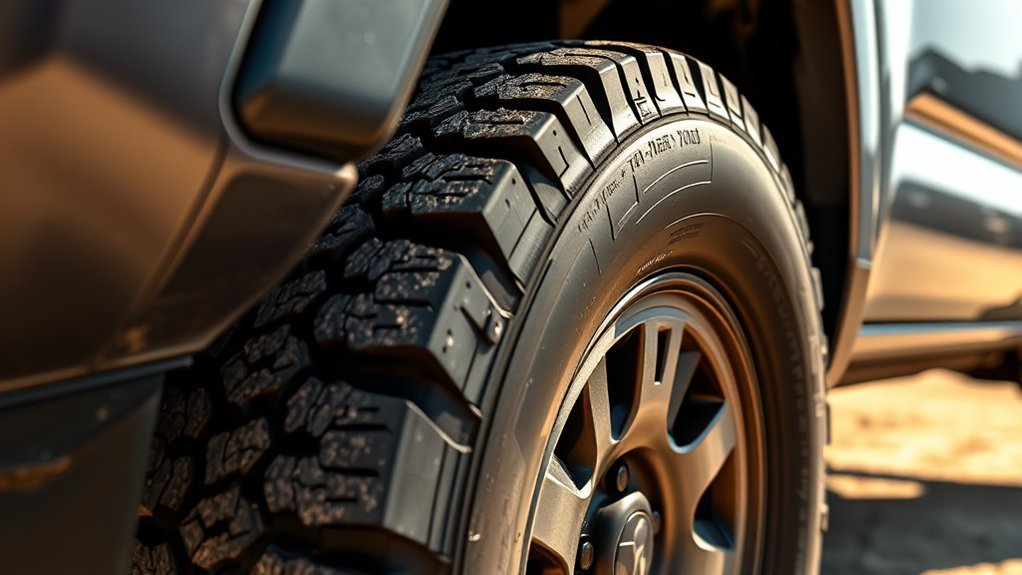
Your Tacoma’s tires leave clues. A clean, even tread pattern usually means pressure, alignment, balance, and suspension are working together. Uneven tread means the tire is not contacting the road evenly, or it is bouncing, dragging, scrubbing, or carrying load incorrectly.
Use the table below as a first-pass guide. It does not replace a professional inspection, but it can help you decide what to check next.
| Wear Pattern | What It Looks Like | Likely Cause | What to Do |
|---|---|---|---|
| Both shoulders worn | Outer edges are lower than the center | Low pressure, heavy load, hard cornering, or alignment issue | Check cold PSI, inspect load habits, and check alignment if wear continues |
| Center wear | Middle of tread is lower than both shoulders | Overinflation or tire/load mismatch | Set pressure to the door-label cold PSI and recheck after several drives |
| One-sided wear | Inner or outer edge wears faster across the tire | Camber, toe, axle position, or worn parts | Schedule an alignment and suspension inspection |
| Feathered wear | Tread blocks feel sharp one way and smooth the other | Toe alignment problem | Check toe settings and rotate tires if still usable |
| Cupping or scalloping | Dips or chopped patches around the tire | Imbalance, worn shocks, worn struts, loose bearings, or worn suspension parts | Road-balance the tires and inspect suspension before installing new tires |
| Patchy wear | Random high and low areas | Balance issue, damaged tire, bent wheel, or loose component | Have the tire and wheel inspected on a balancer |
Michelin’s irregular tire wear guidance also connects one-sided wear with alignment that is out of specification and recommends checking alignment and worn parts. That advice applies well to a Tacoma because suspension geometry has a direct effect on how each tire sits on the road.
[Products Worth Considering]

EVOULTES heavy duty tire inflator with an integrated gauge delivers accurate pressure readings from 10–120 PSI, helping you inflate, deflate, and check tires in one tool. The 16.5-inch extended dual-head air chuck with swivel base reaches hard-to-access dual wheel valves on trucks and RVs. A brass trigger core and side-mounted air release valve make operation smooth, with standard 1/4" NPT threading and quick-connect compatibility for easy setup.

The JACO FlowPro Tire Inflator measures, inflates, and airs down tires up to 100 PSI with battery-free operation and ±2% accuracy after calibration. It features a glowing pressure dial for night visibility, a heavy-duty steel build with a hybrid hose, and a precision push-to-inflate thumb trigger. The patented Lightning Air Chuck locks on for a secure seal, and the kit includes quick-connect hardware for easy inline use with your air compressor.
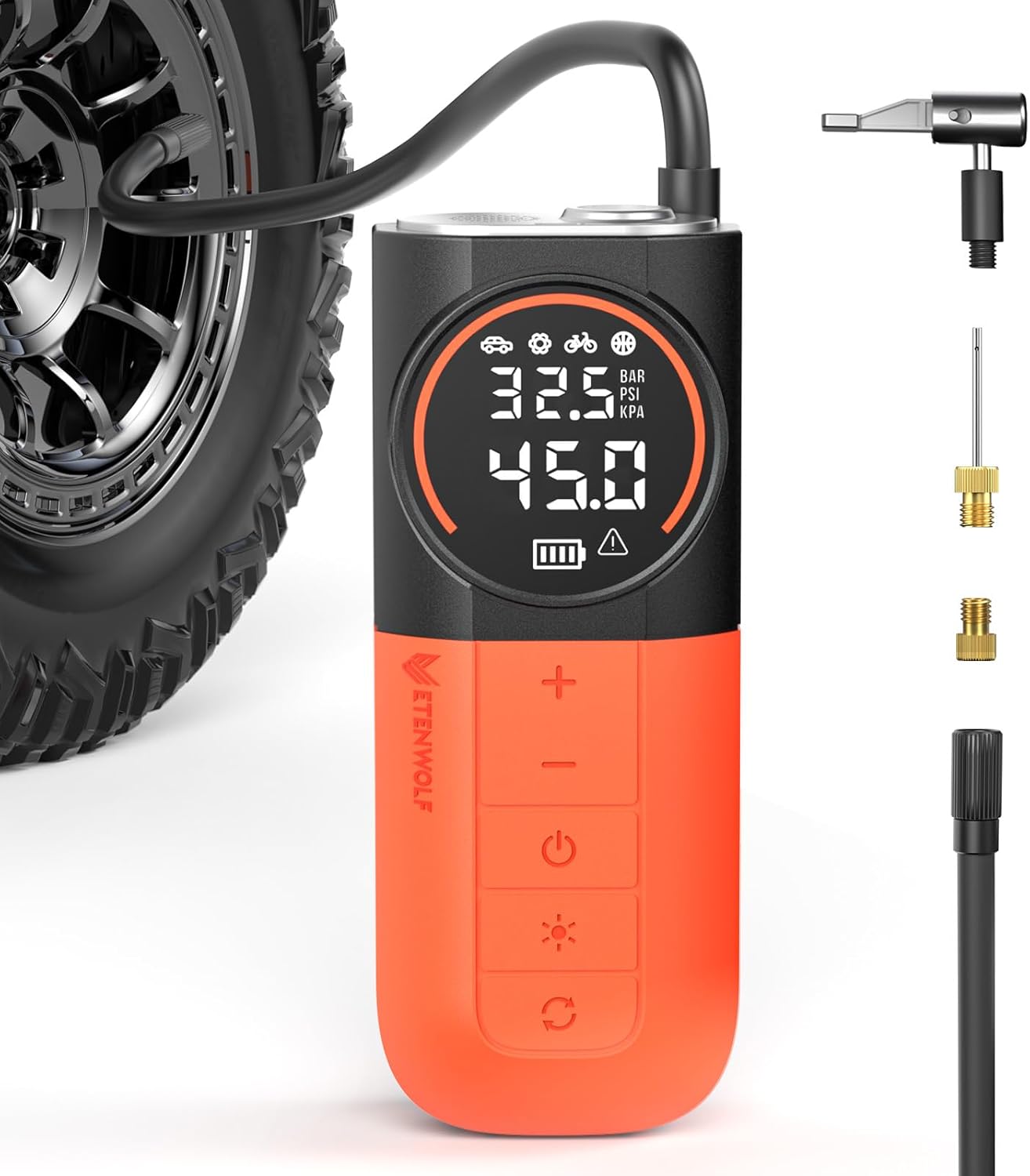
The ETENWOLF S1 cordless tire inflator delivers ultra-fast inflation with up to 160 PSI and a 20 L/min airflow for quicker tire top-offs. Its 5200mAh battery and cooling system support inflating many tires and sports balls on a single charge, while the digital pressure gauge and multi-unit display help you reach the right pressure accurately. With preset modes, pressure memory, an auto-stop feature, and an LED flashlight, it’s built for easy roadside and everyday use.
What Causes Uneven Tire Wear?
Uneven tire wear usually comes from a small problem that continues for thousands of miles. A few PSI low, a small toe-angle error, a worn shock, or a missed rotation may not feel dramatic at first. Over time, that small issue can ruin a tire long before the tread should be worn out.
Tire Pressure Issues
Incorrect tire pressure is the first thing to check because it is quick, cheap, and common. The National Highway Traffic Safety Administration says proper tire pressure affects safety, tire durability, and fuel use. It also says the correct cold tire pressure is listed on the driver-side Tire and Loading Information Label or in the owner’s manual, not on the tire sidewall.
Check pressure when the tires are cold, meaning the truck has been parked for at least three hours. Include the spare if your Tacoma has one. If the truck has larger aftermarket tires, a lift, a heavy bumper, a camper shell, or frequent towing duty, ask a qualified tire shop or Toyota service department whether your setup needs a pressure adjustment.
Note: The maximum PSI printed on the tire sidewall is not the normal daily driving pressure for your Tacoma. Use the vehicle label or owner’s manual first, unless a qualified technician gives you setup-specific guidance.
Misalignment Factors
Wheel alignment controls how the tire points and sits on the road. If toe, camber, or caster is out of range, the tire can scrub instead of roll cleanly. That scrubbing creates one-sided wear, feathering, steering pull, or an off-center steering wheel.
Common Tacoma alignment triggers include pothole impacts, curb hits, off-road use, worn control-arm bushings, worn ball joints, bent steering parts, sagging springs, and suspension changes. A leveling kit or lift kit can also change the alignment enough to wear tires quickly if the truck is not aligned afterward.
Suspension and Balance Problems
Suspension parts keep the tire planted. When shocks, struts, bearings, ball joints, tie rods, or bushings wear out, the tire can bounce or shift instead of tracking smoothly. That often shows up as cupping, scalloping, vibration, or a loose steering feel.
Balance problems can also mimic wear from suspension issues. If the steering wheel shakes at highway speed, or if the vibration changes after rotating the tires, ask for a tire balance or road-force balance before assuming the alignment is the only problem.
Load, Towing, and Off-Road Use
A Tacoma that often carries tools, rooftop gear, a camper shell, off-road armor, or trailer tongue weight can wear tires differently than a lightly loaded truck. Extra rear weight can increase shoulder wear, heat buildup, and tread stress if the tires are underinflated for the load.
Off-road driving adds another layer. Rocks, ruts, washboard roads, and airing down can create cuts, chunking, sidewall damage, and irregular wear. After a hard trail day, inspect every tire before returning to highway speed.
Identifying and Diagnosing Tire Wear Issues
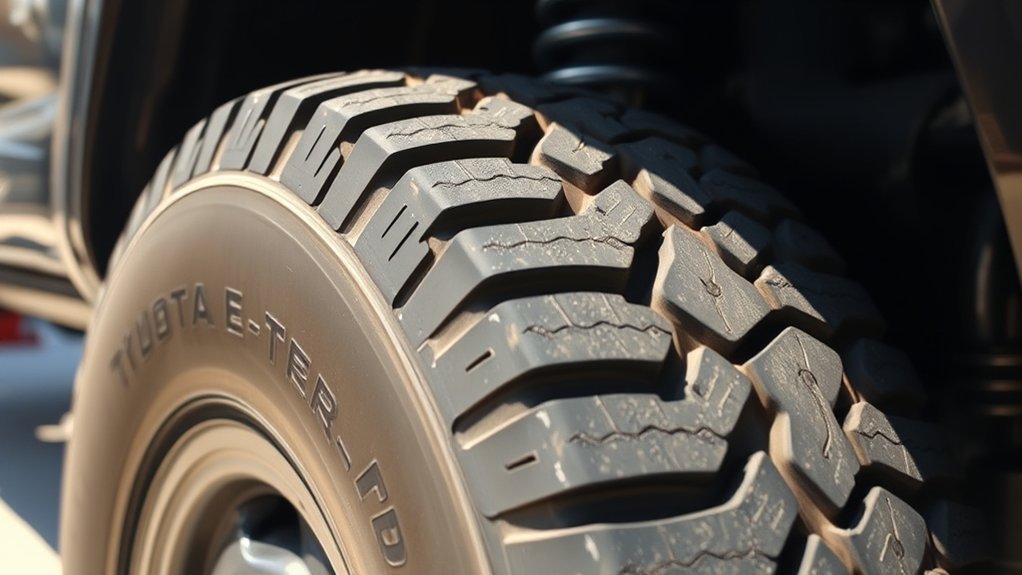
Diagnosing uneven wear works best when you check the tires in a set order. Do not start by replacing tires unless the tire is unsafe. If the root cause remains, the new tires can wear the same way.
Step-by-Step Tire Wear Check
- Park safely on level ground. Let the tires cool for at least three hours before checking pressure.
- Check cold tire pressure. Compare each tire to the PSI on the driver-side label or owner’s manual.
- Measure tread depth. Use a tread-depth gauge across the inner, center, and outer tread ribs.
- Feel for feathering. Run your hand lightly across the tread in both directions. A saw-tooth feel often points to toe alignment.
- Look for cupping. Check for chopped dips, diagonal patches, or scalloped areas around the tire.
- Inspect sidewalls and shoulders. Look for cuts, bulges, cracking, exposed cords, or impact damage.
- Check driving symptoms. Note pulling, vibration, steering wander, or an off-center steering wheel.
- Inspect the suspension. Have a qualified technician check ball joints, tie rods, control-arm bushings, shocks, struts, bearings, and steering parts.
Warning: Do not keep driving on a tire with exposed cords, a bulge, a separated tread, a sidewall puncture, rapid air loss, or tread worn to 2/32 inch. Replace the tire or have it inspected before highway driving.
Common Wear Patterns
Shoulder wear, center wear, feathering, one-sided wear, and cupping each point to different likely causes. The pattern matters because guessing can waste money. For example, an alignment will not fix a tire that is cupping because of a weak shock, and new tires will not last if a worn ball joint still lets the wheel move.
If all four tires wear the same way, pressure, rotation schedule, load, or tire choice may be the main issue. If only one tire shows severe wear, look harder at that corner for a bent wheel, stuck brake, bad bearing, damaged tire, or worn suspension part.
Key Diagnostic Indicators
- Truck pulls left or right: possible alignment issue, tire pull, brake drag, or road crown.
- Steering wheel sits off-center: possible toe alignment problem or steering adjustment issue.
- Vibration at speed: possible imbalance, bent wheel, separated tire, or worn suspension component.
- Clunking over bumps: possible ball joint, bushing, shock, strut, or steering component wear.
- TPMS light: at least one tire may be significantly underinflated, or the TPMS system may need service.
- Repeated air loss: possible puncture, valve-stem leak, bead leak, wheel corrosion, or tire damage.
The Role of Suspension and Alignment in Tire Wear
Alignment and suspension work together. Alignment sets the wheel angles. Suspension parts hold those angles while the truck turns, brakes, hits bumps, carries load, and drives off pavement. If the parts are loose or worn, the alignment may test fine on a rack but change while driving.
Pay special attention after a lift, leveling kit, new upper control arms, new tires, hard off-road trip, pothole impact, curb hit, or collision. Any of these can change geometry or reveal a weak part.
Focus on these areas during inspection:
- Toe settings: Bad toe often causes feathered wear and fast tread scrub.
- Camber: Incorrect camber can cause inner-edge or outer-edge wear.
- Control-arm bushings: Worn bushings can let the wheel move under load.
- Ball joints and tie rods: Loose joints can create wander, clunks, and irregular wear.
- Shocks and struts: Weak dampers can let the tire hop, causing cupping.
- Wheel bearings: Bearing play can create noise, vibration, and uneven contact.
Pro Tip: If you replace suspension parts, install new tires, or change ride height, get the alignment checked afterward. A fresh alignment protects the new parts and helps prevent the same wear pattern from returning.
How Tire Pressure Affects Wear
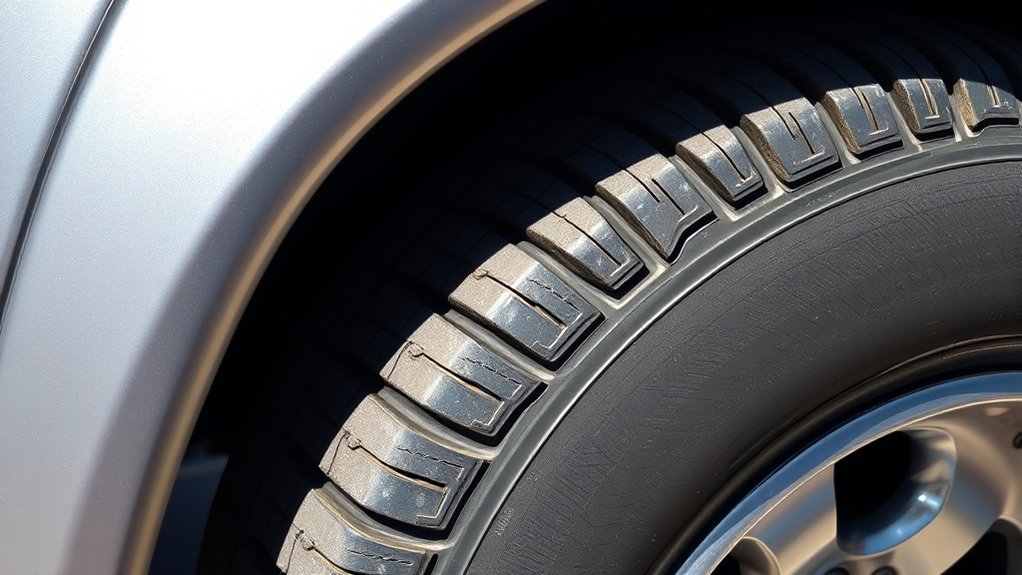
Tire pressure changes the shape of the tire’s contact patch. Low pressure can let the shoulders carry too much load. High pressure can make the center of the tread carry too much load. Either condition can reduce tire life and hurt handling.
Use this simple pressure routine:
- Find the cold PSI on the driver-side Tire and Loading Information Label or in your Tacoma owner’s manual.
- Check all tires before driving, or after the truck has been parked for at least three hours.
- Add or release air until each tire matches the recommended cold pressure.
- Recheck pressure monthly and before long highway trips, trail trips, towing, or heavy hauling.
- Do not ignore the TPMS light. It can warn you that a tire is significantly underinflated, but it does not replace monthly gauge checks.
NHTSA reports that proper tire inflation can extend the average life of a tire by 4,700 miles, while rotation, balance, and alignment also help tires last longer.
Signs Your Tacoma Needs Immediate Attention
Some tire-wear problems are maintenance issues. Others are safety issues. Stop and inspect the truck as soon as possible if you notice any of these signs:
- Visible cords or belt material: The tire is no longer safe for normal driving.
- Bulges or bubbles: These can indicate internal tire damage.
- Sidewall puncture or shoulder damage: The Tire Industry Association says puncture repairs are limited to the center tread area, and shoulder or sidewall damage is not repairable.
- Severe vibration: This may point to a separated tire, bent wheel, balance issue, or suspension problem.
- Rapid air loss: Do not keep driving on a tire that cannot hold pressure.
- Tread at 2/32 inch: NHTSA says tires are not safe and should be replaced when tread reaches 2/32 inch.
- Truck pulls hard after impact: A pothole, curb, or trail impact may have bent a wheel or knocked alignment out.
[Products Worth Considering]
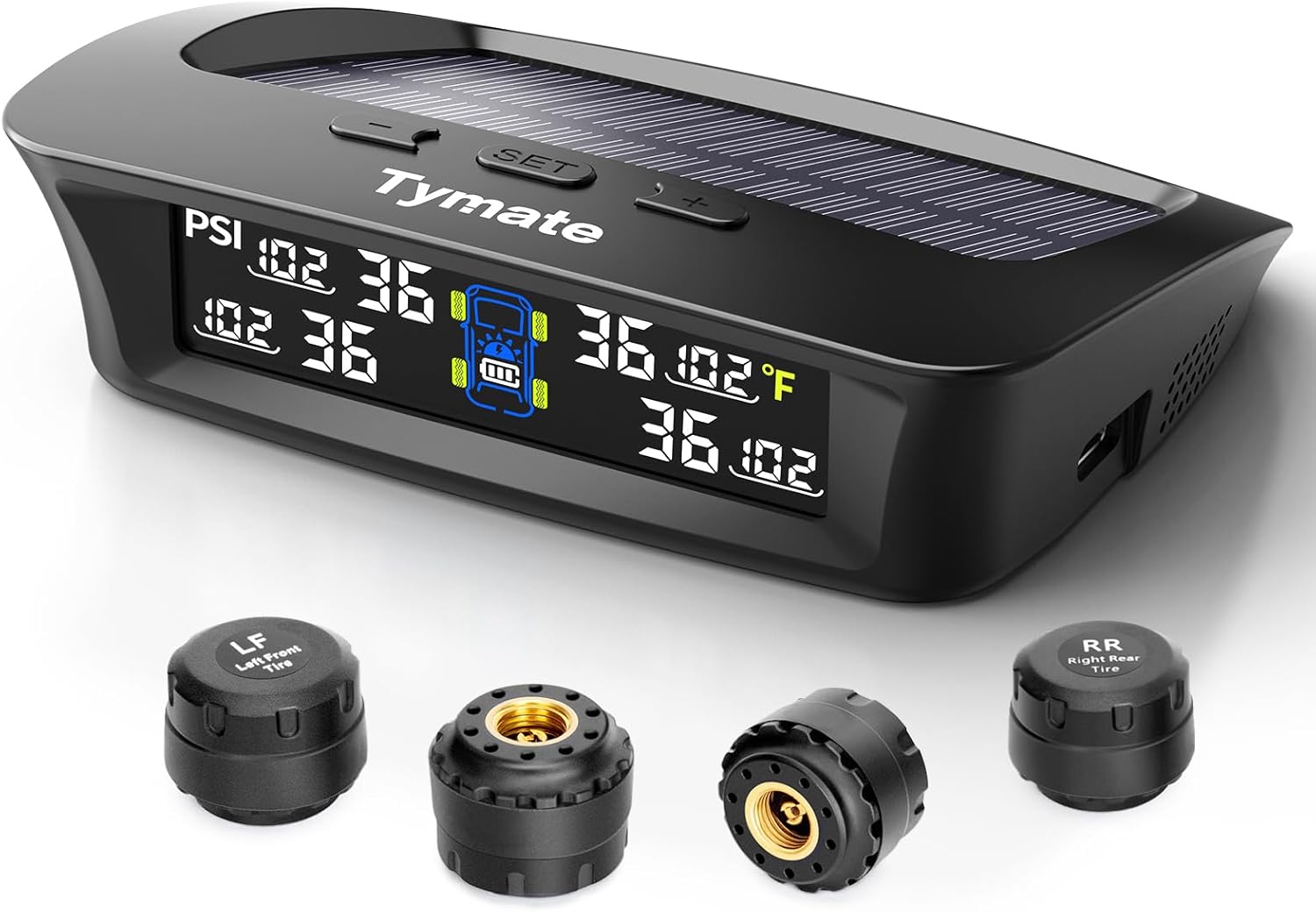
The Tymate TM3 RV TPMS delivers real-time tire pressure monitoring from 0 to 144 PSI with accurate readings and dependable wireless communication. It includes four external sensors with pre-pairing, six alarm modes for rapid leak, pressure extremes, temperature, and signal loss, plus an easy-reference setup for alert thresholds. Solar and USB-C charging help keep the display powered, while the color LCD and adaptive backlight improve visibility for safer driving and towing.

This portable cordless tire inflator delivers fast, efficient inflation for cars, motorcycles, bikes, and sports balls with a digital pressure gauge. Use the one-click PSI preset with auto shut-off for accurate, hands-free topping to your target pressure up to 150 PSI. It’s compact and rechargeable with a built-in emergency LED light plus valve adapters and accessories for quick, ready-to-go use.
What to Do When You Notice Uneven Tire Wear
When you notice uneven tire wear, act before the pattern gets worse. The goal is to find the cause, not just hide the symptom.
| Action | When to Do It | Why It Matters |
|---|---|---|
| Check cold tire pressure | Monthly, before long trips, and any time wear looks uneven | Incorrect pressure is one of the easiest causes to correct |
| Measure tread depth | Monthly or during pressure checks | Shows whether the tire is still safe and whether one rib is wearing faster |
| Rotate tires | Follow your owner’s manual; NHTSA notes 5,000 to 8,000 miles when recommended | Helps reduce irregular wear and spreads load across the set |
| Balance tires | When vibration, patchy wear, or cupping appears | Reduces shake and helps prevent chopped tread patterns |
| Check alignment | After impacts, tire replacement, suspension work, lift kits, or one-sided wear | Corrects tire scrub and steering pull |
| Inspect suspension | When wear returns, the truck clunks, or steering feels loose | Prevents worn parts from ruining new tires |
Toyota’s public ToyotaCare material says Toyota recommends service every 6 months or 5,000 miles for many vehicles, with model-specific differences noted in the maintenance guide. Older Toyota maintenance guidance also states that rotating tires every 5,000 to 7,500 miles helps equalize wear, depending on driving habits and road surface conditions. Always follow the maintenance guide for your Tacoma’s model year, trim, tire type, and drivetrain.
Tire Longevity Maintenance Tips
Good tire life comes from consistent small checks. You do not need to wait for a vibration or bald edge to start caring for the tires.
- Check pressure cold. Do it monthly and before trips, towing, or trail driving.
- Rotate on schedule. Follow the Tacoma owner’s manual and tire manufacturer guidance, especially if your tires are directional or different front-to-rear sizes.
- Measure tread across the full width. Compare inner, center, and outer tread depth on each tire.
- Balance when needed. Vibration or patchy wear is a reason to check balance.
- Align after changes. Get an alignment after suspension work, ride-height changes, steering repairs, or strong impacts.
- Do not overload the truck. Respect payload, towing, and tire load limits.
- Inspect after off-road driving. Look for cuts, chunking, embedded rocks, bent wheels, or sidewall damage.
- Fix the cause before buying tires. New tires can wear quickly if alignment, pressure, or suspension problems remain.
When to Replace Rather Than Repair
Uneven wear does not always mean the tire can be saved. Replace the tire if tread depth is at 2/32 inch, cords are visible, the tire has a bulge, the tread is separating, the sidewall is damaged, or the tire has a shoulder puncture. A patch or plug is not a safe long-term fix for shoulder or sidewall damage.
If one tire needs replacement but the other tires still have good tread, ask a tire professional whether replacing one, two, or all four tires is safest for your Tacoma’s drivetrain and tire setup. Matching tire size, load rating, speed rating, and tread depth matters more on some drivetrains and tire combinations than others.
Frequently Asked Questions
What causes excessive uneven tire wear on a Toyota Tacoma?
Excessive uneven tire wear usually comes from incorrect tire pressure, poor alignment, skipped rotations, worn suspension parts, tire imbalance, heavy loads, off-road impacts, or ride-height changes. Read the tread pattern first, then check pressure, alignment, balance, and suspension condition.
Why are my Tacoma tires wearing on the inside edge?
Inside-edge wear often points to camber or toe alignment that is out of specification. It can also come from worn control-arm bushings, ball joints, tie rods, or changes after a lift or leveling kit. Have the alignment and front suspension inspected before installing new tires.
How often should I rotate Toyota Tacoma tires?
Follow the maintenance guide for your Tacoma’s exact model year and tire setup. NHTSA says to check your owner’s manual and notes that, when recommended by the manufacturer, rotation is commonly done every 5,000 to 8,000 miles or sooner if uneven wear appears.
Can low tire pressure cause uneven wear?
Yes. Low tire pressure can make the shoulders carry too much load, which can cause shoulder wear, extra heat, poor handling, and higher failure risk. Check pressure cold and use the PSI listed on your Tacoma’s driver-side Tire and Loading Information Label.
Will an alignment fix cupped tires?
Not always. Cupped or scalloped tires often point to imbalance, worn shocks, worn struts, loose bearings, or worn suspension parts. Alignment may help if the wheel angles are also wrong, but the tire may stay noisy or rough if the cupping is already severe.
Should I replace a Tacoma tire with uneven wear?
Replace it if tread depth is at 2/32 inch, cords are visible, the tire has a bulge, the sidewall is damaged, or the wear is severe enough to cause vibration or poor traction. If the tire still has safe tread, fix the cause first and ask a tire professional whether rotation can help even out future wear.
Conclusion
Uneven tire wear on your Toyota Tacoma is a warning sign, not just a cosmetic issue. Start with cold tire pressure, tread depth, and the visible wear pattern. Then check rotation history, alignment, balance, suspension condition, load habits, and any recent lift, leveling, towing, or off-road use.
Fix the cause before buying new tires. That one step can save money, improve steering feel, reduce vibration, and help your next set of Tacoma tires last longer.
Sources
- NHTSA TireWise: Tire Safety Ratings and Awareness — tire pressure, tread depth, balance, alignment, rotation, TPMS, and replacement safety guidance
- ToyotaCare No Cost Maintenance Plan PDF — Toyota service interval reference and tire-rotation service coverage information
- Toyota Scheduled Maintenance Guide PDF — tire rotation interval guidance and maintenance context
- Michelin Irregular Tire Wear 101 — wear-pattern interpretation and alignment-related tire wear causes
- Tire Industry Association: Tire Repair — repair limits for tread, shoulder, and sidewall damage

Related Articles
How Tire Weight Affects Toyota Tacoma Performance
How does tire weight influence your Toyota Tacoma's performance and efficiency? Discover the surprising effects that could change your driving experience.
Read More
Tire Noise Levels by Tire Type on a Toyota Tacoma
A comprehensive look at how tire types affect noise levels in your Toyota Tacoma reveals surprising insights that could enhance your driving experience.
Read More
How To Choose Tires for a Dual Use Toyota Tacoma
Unlock the secrets to selecting the perfect tires for your dual-use Toyota Tacoma, ensuring optimal performance and comfort on every adventure. Discover more inside!
Read More