
Toyota Tacoma TPMS Light On After Tire Rotation Fix
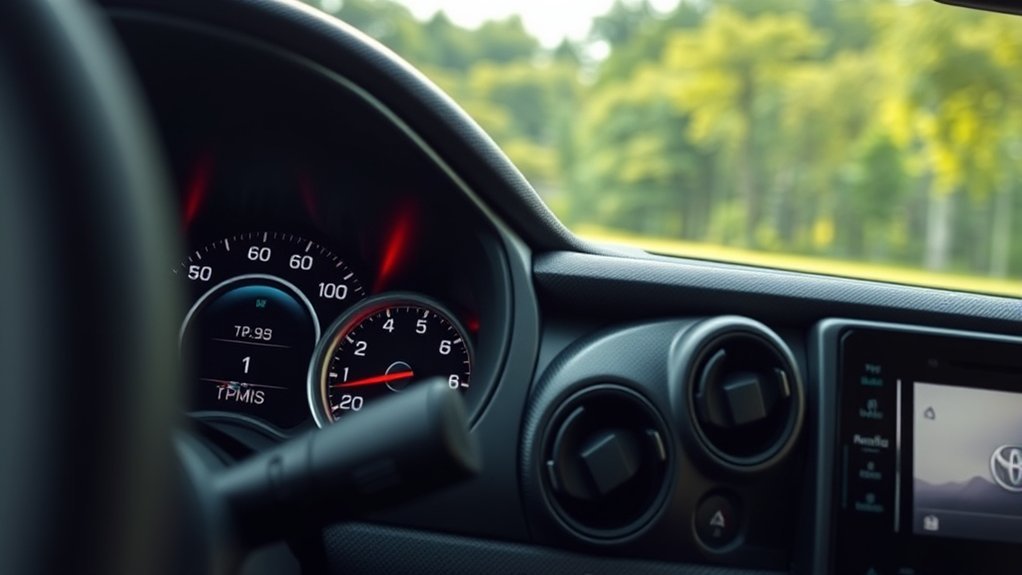
If your Toyota Tacoma’s TPMS light comes on after a tire rotation, start with the basics before you reset anything. Check each tire when it is cold, inflate it to the PSI listed on your driver-side tire placard or owner’s manual, then follow the reset or relearn method for your Tacoma’s model year. A light that stays on after correct inflation may point to a sensor, valve-stem, or registration issue.
Quick Answer
A Tacoma TPMS light after tire rotation usually means one tire is below the placard PSI, the system needs a reset or relearn, or a TPMS sensor was disturbed during service. Do not assume 32 psi is correct for every Tacoma. Use your door placard or owner’s manual first.
Key Takeaways
- Check cold tire pressure before resetting the TPMS light.
- Use the PSI on your Tacoma’s Tire and Loading Information Label, not the number printed on the tire sidewall.
- A solid TPMS light usually means low pressure; a flashing light that turns solid often means a system malfunction.
- Some Tacoma years use a reset switch, while others may use a dashboard menu or require a scan tool after sensor work.
- If the light returns after correct inflation and a drive cycle, have the sensors checked by a Toyota dealer or qualified tire shop.
At a Glance
| Time Required | 10 to 30 minutes for pressure checks and reset; longer if a sensor relearn or shop diagnosis is needed. |
| Difficulty | Easy for pressure checks; moderate if your Tacoma needs sensor registration. |
| Tools Needed | Accurate tire pressure gauge, air compressor, owner’s manual, and TPMS scan tool if sensors were replaced. |
| Cost | Usually free for DIY pressure checks; tire shops may charge for sensor testing, relearn, or replacement. |
Warning: Do not reset the TPMS light to make the warning disappear before checking the tires. If a tire looks flat, has a sidewall bulge, loses air quickly, or the truck pulls hard, stop driving and get the tire inspected.
Understanding TPMS and Its Importance for Tacoma Owners

The Tire Pressure Monitoring System, or TPMS, helps warn you when tire pressure drops too low. On modern light trucks, TPMS is required to alert drivers when one or more tires become significantly underinflated under federal standards.
Your Tacoma may show a simple tire-pressure symbol, a message, or individual tire pressures, depending on model year and trim. Some systems identify tire position. Others only warn that one or more tires need attention. That is why the first fix should always be a manual pressure check with a good gauge.
For correct inflation, use the Tire and Loading Information Label on the driver-side door area or your owner’s manual. Do not use the maximum PSI molded into the tire sidewall as your target pressure.
[Products Worth Considering]

EVOULTES heavy duty tire inflator with an integrated gauge delivers accurate pressure readings from 10–120 PSI, helping you inflate, deflate, and check tires in one tool. The 16.5-inch extended dual-head air chuck with swivel base reaches hard-to-access dual wheel valves on trucks and RVs. A brass trigger core and side-mounted air release valve make operation smooth, with standard 1/4" NPT threading and quick-connect compatibility for easy setup.

The AstroAI 2 pack air chucks provide a heavy-duty, closed-flow locking design that helps keep air flowing during inflation while securely attaching to the valve stem. Built with 250 PSI rated brass components and compatible with Schrader valves, they feature 1/4" female NPT threads for a wide fit with common inflators. The straight tip and locking clip make filling tires and monitoring pressure more convenient.

This solid brass tire inflation hose adapter screws into your inflator and uses a locking press clip to securely clamp onto the tire valve stem. It helps reduce air leakage for fast, efficient pumping and is designed for reliable performance with a wide range of vehicles and inflator setups.
What Triggers Your TPMS Light After Tire Rotation?
A tire rotation can expose a TPMS problem that was already close to happening. The work may also disturb a valve-stem sensor, change wheel positions on a system that tracks location, or reveal one tire that was already low.
Common Causes Explained
- Low pressure after service: One tire may have been set below the recommended cold pressure.
- Warm pressure readings: If the tires were checked hot, they may read higher than they will the next morning.
- Sensor position confusion: Some systems need time or a relearn to match wheel position after rotation.
- Damaged valve-stem sensor: Tire service can disturb an aging sensor or valve stem.
- Sensor battery failure: TPMS sensor batteries can fail with age and usually require sensor replacement.
- Replacement sensor not registered: A new sensor may need ID registration with a scan tool.
Solid vs. Flashing TPMS Light
A solid TPMS light usually means at least one tire is significantly underinflated. Pull over when safe, inspect the tires, and check pressure with a gauge.
A flashing TPMS light that later stays solid often points to a system malfunction. The National Highway Traffic Safety Administration explains that TPMS is not a substitute for regular tire maintenance, so you should still check pressure manually and schedule inspection if the warning continues.
Note: A tire can look normal and still be underinflated. Check pressure with a gauge at least once a month and before long trips.
Why Tire Pressure Matters After Rotation
After a tire rotation, pressure matters because each tire may now carry slightly different loads and road forces. Proper cold inflation helps your Tacoma brake, steer, and wear its tires evenly.
Pressure Consistency Importance
Keep pressure consistent with the placard values for your specific Tacoma. Some vehicles use the same PSI front and rear, while others may vary by tire size or load setup.
- Even tire wear: Correct inflation helps prevent shoulder wear, center wear, and irregular patterns.
- Better fuel economy: FuelEconomy.gov says underinflated tires can lower gas mileage by about 0.2% for every 1 PSI drop in the average pressure of all tires.
- Safer handling: Underinflation can increase heat buildup and tire stress.
Safety and Performance Impact
Low tire pressure can affect steering response, braking feel, tread life, and fuel use. NHTSA reports that poor tire maintenance, including low pressure and skipped rotations, can contribute to flats, blowouts, or tread separation.
Proper tire pressure is not just a fuel-economy habit. It is a safety check that helps your Tacoma stay predictable on the road.
Before You Reset the TPMS Light
Run through this checklist before pressing any reset switch or menu option:
- Park on level ground and let the tires cool for at least three hours if possible.
- Find the recommended cold PSI on the driver-side placard or in the Toyota owner’s manual.
- Check all four road tires with a reliable gauge.
- Inspect for nails, cuts, cracks, valve-stem leaks, and sidewall bulges.
- Inflate or deflate each tire to the listed cold pressure.
- Recheck the pressure after adding air.
- Only reset the TPMS after the tires are correctly inflated.
Pro Tip: Write down each tire’s pressure before and after inflation. If the same tire drops again within a day or two, you may have a slow leak rather than a TPMS problem.
How to Reset Your TPMS Light: A Step-by-Step Guide
Reset steps vary by Tacoma year, trim, and TPMS setup. Use these general steps as a safe workflow, then confirm the exact procedure in the Toyota owner’s manual for your vehicle.
- Confirm pressure first: Inflate all tires to the cold PSI listed on your Tacoma’s placard.
- Turn the ignition on: Use the ON position or ready mode, depending on your model, without moving the truck.
- Find the reset method: Some Tacoma models use a TPMS reset switch near the lower dash. Others use a vehicle settings menu.
- Start initialization: Follow the manual’s reset instructions. On models with a switch, you may need to press and hold it until the tire-pressure light blinks.
- Drive normally: A short drive may help the system update. If the light does not clear, continue troubleshooting instead of repeating resets.
- Check for malfunction behavior: If the light flashes and then stays on, have the TPMS inspected.
Troubleshooting Persistent TPMS Light Issues

If the TPMS light stays on after the pressure is correct, do not keep resetting it blindly. Work through the likely causes in order.
If the Light Stays Solid
- Recheck the pressure when the tires are cold.
- Make sure you used the placard PSI, not the tire sidewall maximum.
- Inspect for a slow leak around the tread, bead, or valve stem.
- Check whether the light turns off after a normal drive.
If the Light Flashes, Then Stays On
- Suspect a TPMS system malfunction.
- Ask a tire shop or Toyota dealer to scan each sensor.
- Confirm that every sensor ID is registered to the truck.
- Replace failed sensors as needed.
If Tires or Sensors Were Replaced
A tire rotation usually keeps the same sensors on the truck. A sensor replacement is different. If a shop installed a new TPMS sensor, the truck may need sensor ID registration or a relearn with a TPMS scan tool.
When to Seek Professional Help for TPMS Issues
Get professional help when pressure is correct but the warning stays on, flashes, or returns quickly. A qualified tire shop or Toyota dealer can scan sensor IDs, battery status, pressure readings, and signal response.
- Flashing warning: A flashing light followed by a solid light often indicates a malfunction.
- Missing tire pressure readings: Dashes or blank readings can point to sensor or communication failure.
- Recent tire repair: A damaged valve stem, bead leak, or unregistered sensor may appear after service.
- Repeated low tire: A slow leak needs repair even if the TPMS resets temporarily.
If you recently paid for a rotation, ask the shop to verify the sensor readings and valve stems. Many TPMS issues after service are easier to fix right away.
[Products Worth Considering]

This portable cordless tire inflator delivers fast, efficient inflation for cars, motorcycles, bikes, and sports balls with a digital pressure gauge. Use the one-click PSI preset with auto shut-off for accurate, hands-free topping to your target pressure up to 150 PSI. It’s compact and rechargeable with a built-in emergency LED light plus valve adapters and accessories for quick, ready-to-go use.

The JACO FlowPro Tire Inflator measures, inflates, and airs down tires up to 100 PSI with battery-free operation and ±2% accuracy after calibration. It features a glowing pressure dial for night visibility, a heavy-duty steel build with a hybrid hose, and a precision push-to-inflate thumb trigger. The patented Lightning Air Chuck locks on for a secure seal, and the kit includes quick-connect hardware for easy inline use with your air compressor.
DIY Maintenance Tips for Your Tacoma’s TPMS
Good TPMS maintenance starts with tire maintenance. Keep a pressure gauge in your Tacoma and check pressures when tires are cold. NHTSA recommends monthly pressure checks because TPMS only warns after pressure drops far enough to trigger the system.
- Check pressure monthly and before highway trips.
- Use the driver’s door placard or manual for PSI.
- Replace missing valve caps to help keep dirt and moisture out.
- Ask for TPMS-safe service when mounting or replacing tires.
- Do not use tire sealant unless it is compatible with TPMS sensors and your tire situation requires it.
How Weather Conditions Affect Tire Pressure and TPMS
Cold weather can make a borderline tire drop below the TPMS warning threshold. NHTSA notes that a TPMS light may come on during cold mornings and turn off after tires warm through driving or outside temperatures rise.
That does not mean you should ignore it. A light that turns off after driving can still warn you that the tire was too low when cold. Check the cold pressure and adjust it to the placard value.
Engaging With the Tacoma Community for Solutions and Tips
Tacoma owner forums and groups can help you spot common patterns by model year, but use them as a starting point rather than your final authority. Reset-button locations, menu names, and sensor behavior can change across generations.
When you ask for help, include your Tacoma year, trim, tire size, whether sensors were replaced, whether the light is solid or flashing, and the cold PSI readings from all four tires. That information helps other owners and technicians give better advice.
Frequently Asked Questions
Do you need to reset TPMS after tire rotation on a Toyota Tacoma?
Sometimes. If the same wheels and sensors stayed on the truck, a simple pressure correction and drive cycle may clear the light. If your Tacoma has a reset switch or menu initialization, follow the owner’s manual after setting cold pressure correctly.
Is it normal for the TPMS light to come on after tire rotation?
It can happen, but you should still check it. The light may mean one tire is low, the system needs initialization, a sensor was disturbed, or a replacement sensor was not registered.
What PSI should Toyota Tacoma tires be after rotation?
Use the cold PSI listed on the Tire and Loading Information Label on your driver-side door area or in your owner’s manual. Do not rely on a generic 32 PSI recommendation unless your Tacoma’s placard confirms it.
Why does my Tacoma TPMS light flash before staying on?
A flashing TPMS light that becomes solid often points to a TPMS malfunction, such as a dead sensor battery, damaged sensor, or unregistered sensor ID. Check tire pressure first, then have the system scanned if the warning remains.
Can cold weather trigger the Tacoma TPMS light?
Yes. Cold morning temperatures can lower tire pressure enough to trigger the warning. Even if the light turns off after driving, check and adjust the cold pressure to the placard value.
Can I drive with the TPMS light on?
You can drive only after confirming the tires are not visibly damaged and are inflated correctly. If a tire is flat, losing air, bulging, or the light flashes, stop driving and get the tire or TPMS system inspected.
Conclusion
A Tacoma TPMS light after tire rotation is usually fixable, but you should treat it as a tire-safety warning first and a reset task second. Check cold pressure, use the placard PSI, inspect the tires, and follow the reset method for your model year. If the light flashes, returns, or refuses to clear after correct inflation, have the sensors scanned by a qualified tire shop or Toyota dealer.
Sources
- Toyota Owners Manuals and Warranties – backs up using the correct Toyota owner’s manual for model-specific procedures.
- Toyota Warning Lights – backs up consulting the owner’s manual or Toyota service for warning-light details.
- NHTSA TireWise Tire Safety – backs up monthly tire pressure checks, TPMS limitations, cold-weather warnings, and tire-safety guidance.
- 49 CFR 571.138, Tire Pressure Monitoring Systems – backs up federal TPMS underinflation warning requirements.
- FuelEconomy.gov, Keeping Your Vehicle in Shape – backs up fuel-economy effects of underinflated tires.

Related Articles

How Tire Weight Affects Toyota Tacoma Performance
How does tire weight influence your Toyota Tacoma's performance and efficiency? Discover the surprising effects that could change your driving experience.
Read More
Tire Noise Levels by Tire Type on a Toyota Tacoma
A comprehensive look at how tire types affect noise levels in your Toyota Tacoma reveals surprising insights that could enhance your driving experience.
Read More
How To Choose Tires for a Dual Use Toyota Tacoma
Unlock the secrets to selecting the perfect tires for your dual-use Toyota Tacoma, ensuring optimal performance and comfort on every adventure. Discover more inside!
Read More