
Does Tire Rotation Extend Tire Life on a Toyota Tacoma
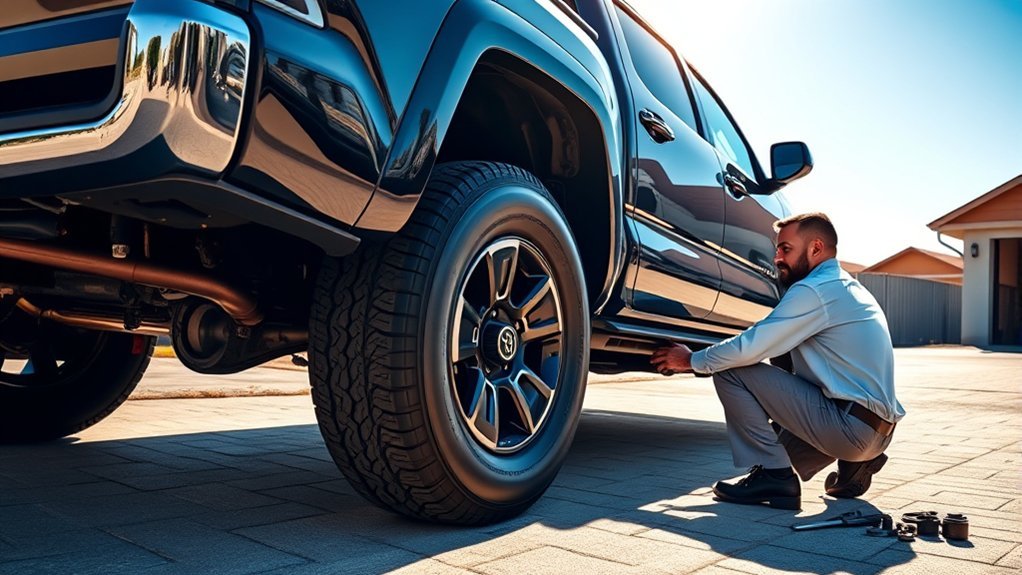
Yes, tire rotation can help extend the life of your Toyota Tacoma’s tires because it spreads wear more evenly across all four tire positions. It also gives you a regular chance to check tread depth, tire pressure, sidewall damage, lug nuts, and early signs of alignment or suspension trouble.
Quick Answer
Tire rotation can extend Toyota Tacoma tire life by helping each tire wear at a similar rate. Many Tacoma maintenance schedules include tire rotation about every 5,000 miles or six months, but the right pattern depends on tire type, wheel size, drivetrain, and your owner’s manual.
Key Takeaways
- Rotate Tacoma tires on the schedule in your owner’s manual, often around every 5,000 miles or six months for routine maintenance.
- Do not assume one rotation pattern fits every Tacoma. Directional tires, same-size tires, 2WD, 4WD, and full-size spare setups can change the pattern.
- Check tire pressure, tread depth, sidewall damage, and uneven wear every time you rotate the tires.
- Do not rotate damaged, badly worn, mismatched, or unsafe tires just to keep them in service. Replace or repair them first.
Why Tire Rotation Matters for Your Tacoma

Tire rotation matters because your Tacoma does not load every tire the same way. Front tires handle most steering and a large share of braking force. Rear tires handle drive force, especially on rear-wheel-drive and four-wheel-drive models. Off-road use, towing, hauling, hard braking, and low tire pressure can make the wear difference worse.
Toyota’s tire rotation guidance explains that rotation helps preserve tire tread life, optimize vehicle performance, and keep a regular check on tire pressure, tread depth, and balance. NHTSA TireWise also notes that tire rotation can reduce irregular wear and help tires last longer.
That does not mean rotation fixes every tire problem. If one tire is cupped, feathered, bald on one edge, or wearing much faster than the others, you may also need an alignment, wheel balance, suspension inspection, or pressure correction.
Note: Use the tire pressure listed on your Tacoma’s driver-side door label or owner’s manual, not the maximum pressure molded on the tire sidewall.
[Products Worth Considering]

EVOULTES heavy duty tire inflator with an integrated gauge delivers accurate pressure readings from 10–120 PSI, helping you inflate, deflate, and check tires in one tool. The 16.5-inch extended dual-head air chuck with swivel base reaches hard-to-access dual wheel valves on trucks and RVs. A brass trigger core and side-mounted air release valve make operation smooth, with standard 1/4" NPT threading and quick-connect compatibility for easy setup.

The JACO FlowPro Tire Inflator measures, inflates, and airs down tires up to 100 PSI with battery-free operation and ±2% accuracy after calibration. It features a glowing pressure dial for night visibility, a heavy-duty steel build with a hybrid hose, and a precision push-to-inflate thumb trigger. The patented Lightning Air Chuck locks on for a secure seal, and the kit includes quick-connect hardware for easy inline use with your air compressor.

Upgrade your Toyota tire setup with these corrosion-resistant, leak-proof valve stem caps designed to help protect the valve core from water, snow, and road grime. The caps feature a snug rubber seal and durable copper alloy construction to resist rust and oxidation while maintaining stable tire pressure. Ideal for replacing worn original caps and keeping your wheels looking clean and stylish.
How Often Should You Rotate Tacoma Tires?
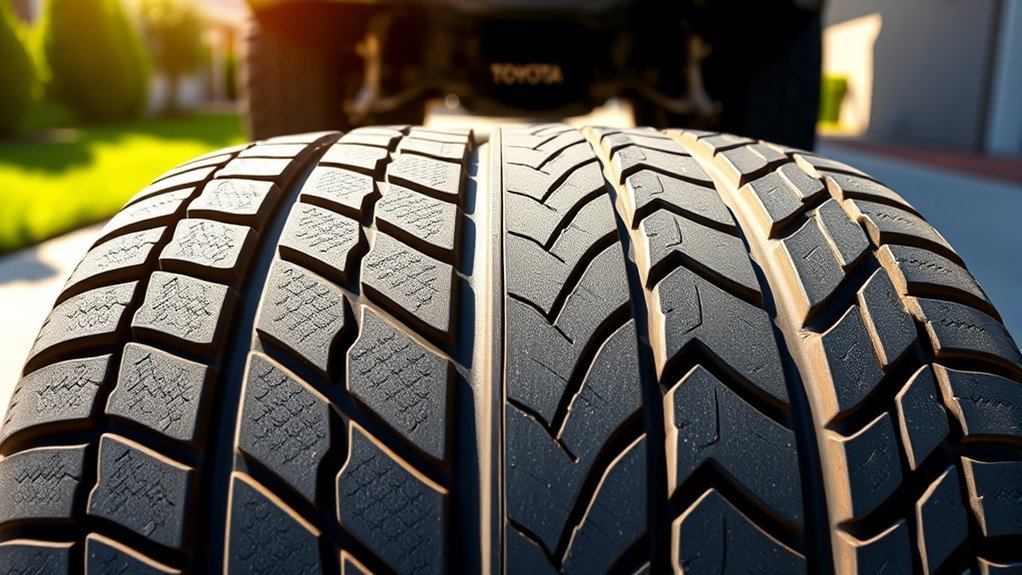
For many Toyota Tacoma models, a smart baseline is to rotate the tires at scheduled maintenance, often around every 5,000 miles or six months. Toyota’s current Tacoma maintenance guide uses 5,000 miles or six months as the scheduled maintenance rhythm, and tire rotation is a common maintenance item when front and rear wheels are the same size.
NHTSA gives a broader tire-safety range of 5,000 to 8,000 miles when the vehicle manufacturer recommends rotation. Your exact schedule can vary by model year, tire type, trim, tire warranty, and driving conditions, so always confirm the interval in your Tacoma owner’s manual or maintenance guide.
You may need to rotate or inspect sooner if you often:
- Drive on gravel, mud, rocks, or washboard roads.
- Tow trailers or haul heavy payloads.
- Use aggressive all-terrain or mud-terrain tires.
- Notice pulling, vibration, humming, cupping, or uneven tread depth.
- Drive with frequent hard braking or tight low-speed turns.
Rotate on schedule, but inspect sooner after hard off-road use. Uneven wear is a reason to act early, not a reason to wait for the next mileage interval.
Recommended Tacoma Tire Rotation Patterns
The best rotation pattern depends on your tires and your Tacoma setup. Do not use a front-to-back pattern automatically just because the truck has 4WD. Directional tires must stay on the same side, while many same-size, non-directional tires on RWD or 4WD vehicles use a cross pattern unless Toyota or the tire maker says otherwise.
| Tacoma Setup | Common Rotation Pattern | Important Note |
|---|---|---|
| Directional tires | Front-to-rear on the same side | Do not cross directional tires unless they are dismounted and remounted correctly. |
| Non-directional, same-size tires on 2WD/RWD | Rear tires move straight forward; front tires cross to the rear | This rearward-cross pattern is common for rear-drive vehicles. |
| Non-directional, same-size tires on 4WD | Crisscross or manufacturer-specified pattern | Matching tread depth helps support balanced traction and driveline health. |
| Full-size matching spare included | Five-tire pattern from the owner’s manual or tire maker | Only include the spare if it is the same size, type, load rating, and condition. |
| Different front and rear tire sizes | May not be rotatable front-to-rear | Follow the owner’s manual and tire manufacturer instructions. |
Most Tacoma owners have same-size tires front and rear, but you should still check. Some aftermarket wheel and tire setups, lift kits, directional tread designs, and mismatched spares change the safe rotation pattern.
Pro Tip: Mark each tire’s starting position with chalk before you remove the wheels. It keeps the pattern clear and helps you spot which corner is wearing fastest.
Directional vs. Non-Directional Tires
Non-directional tires can usually rotate in more than one pattern because the tread is not designed to roll in only one direction. This gives you more flexibility for cross patterns that spread wear between the steering and drive axles.
Directional tires have a one-way tread pattern, usually marked by an arrow on the sidewall. These tires should stay on the same side of the Tacoma during normal rotation. Move the left front to the left rear and the right front to the right rear, unless a tire professional dismounts and remounts the tires for a different setup.
All-terrain tires can be directional or non-directional, so do not guess by tread aggressiveness alone. Check the sidewall markings and your tire manufacturer’s guidance.
Identifying Signs of Uneven Tire Wear
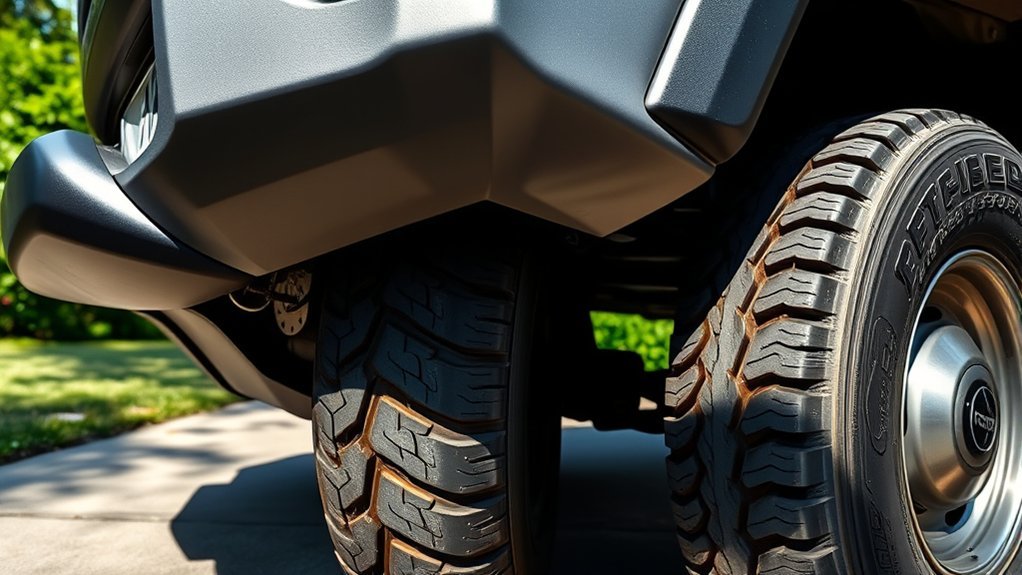
Regular tread checks help you catch problems before they shorten tire life. Look for bald spots, cupping, feathering, cracks, bulges, cuts, embedded objects, or heavy wear on one shoulder. These patterns can point to low pressure, overinflation, misalignment, worn shocks, loose suspension parts, or a wheel-balance problem.
NHTSA says tires should be replaced when tread depth reaches 2/32 inch. You can also use the penny test: place a penny into the tread with Lincoln’s head upside down and facing you. If you can see the top of Lincoln’s head, the tire is too worn for safe service.
- Center wear: often points to overinflation or tire/load mismatch.
- Both-edge wear: often points to underinflation or repeated heavy cornering.
- One-edge wear: often points to alignment or suspension trouble.
- Cupping or scalloping: often points to balance, shocks, struts, or suspension wear.
- Vibration after rotation: may point to imbalance, wheel damage, or a tire issue that moved to a new position.
Warning: Do not rotate a tire with cords showing, a sidewall bulge, severe cracking, exposed steel, or tread worn to the replacement point. Replace unsafe tires before you rotate.
Benefits of Regular Tire Rotation and Maintenance
Regular tire rotation helps your Tacoma stay safer, smoother, and more predictable. It also protects your budget because tires that wear evenly usually last longer than tires that wear heavily on one corner.
| Benefit | What It Means | Why It Helps Your Tacoma |
|---|---|---|
| More even wear | Each tire spends time on different corners | Helps extend tire life |
| Better traction balance | Tread depth stays closer across all four tires | Supports braking, cornering, and 4WD traction |
| Smoother ride | Irregular wear is easier to catch early | Can reduce vibration and tire noise |
| Fuel-efficiency support | Tires stay properly inflated and inspected | Helps reduce wasted rolling resistance |
| Lower long-term cost | Premature replacement becomes less likely | Protects your tire investment |
When Not to Rotate Your Tacoma Tires
Tire rotation is not always the right next step. Sometimes it hides a problem instead of fixing it. Stop and inspect before rotating if you see severe uneven wear, a sidewall bubble, exposed cords, deep cuts, or a tire that keeps losing air.
You should also avoid a standard four-tire rotation if your Tacoma has mismatched tire sizes, mismatched load ratings, different tread designs on the same axle, or a temporary spare. If your front and rear wheels are not the same size, front-to-rear rotation may not apply.
If the tread depth differs a lot between tires on a 4WD Tacoma, ask a tire professional before moving tires around. Keeping tread depth reasonably matched helps support balanced traction and can reduce stress on driveline components.
[Products Worth Considering]

These universal tire valve stem caps help protect your valve core from dust, debris, moisture, and corrosion, supporting more stable tire pressure. The aluminum alloy design resists long-term wear, while the sealing construction helps help prevent air leakage. They twist on easily for quick installation and help safeguard driving safety across cars, SUVs, trucks, and motorcycles.

Universal magnetic jack pad with aluminum grooved design to protect vehicle pinch welds during lifting. Durable nylon pad inserts are upgraded and secured with screws to resist damage and keep in place. Designed to fit most single vehicle pinpoint welds for safer, stable jacking when changing tires, repairs, or performing oil changes.
DIY Tire Rotation: Tips and Tools You Need
At a Glance
| Time Required | 45 to 90 minutes for a careful DIY rotation |
| Difficulty | Moderate, because safe lifting and proper lug-nut torque matter |
| Tools Needed | Rated floor jack, rated jack stands, wheel chocks, lug wrench or breaker bar, torque wrench, tire pressure gauge, gloves, and chalk |
| Cost | Free if you already own the tools; otherwise, tool cost varies by quality and load rating |
You can rotate Tacoma tires at home if you have the right tools, a safe work area, and confidence lifting the truck. If you do not have rated jack stands, a torque wrench, or a flat surface, let a tire shop or Toyota service center do the job.
Warning: Never work under or around a Tacoma supported only by a jack. Use properly rated jack stands on solid ground, chock the wheels, and follow the jack points in your owner’s manual.
DIY Tacoma Tire Rotation Steps
- Park safely. Choose a flat, solid surface. Set the parking brake and chock the wheels that stay on the ground.
- Check the pattern first. Confirm whether your tires are directional or non-directional and whether all four tires are the same size.
- Mark tire positions. Use chalk to mark LF, RF, LR, and RR before removing the wheels.
- Loosen lug nuts slightly. Break them loose while the tires are still touching the ground. Do not remove them yet.
- Lift at approved jack points. Use your Tacoma owner’s manual for the correct lifting points.
- Support the truck. Place rated jack stands securely before removing any wheel.
- Inspect each tire. Check tread depth, sidewalls, embedded objects, valve stems, and uneven wear.
- Move tires to the correct positions. Follow the pattern that matches your tire type and drivetrain.
- Hand-start lug nuts. Thread each lug nut by hand to avoid cross-threading.
- Snug in a star pattern. Tighten the lug nuts evenly before lowering the truck.
- Torque to spec. Use a torque wrench and the lug-nut torque specification for your model year and wheel type.
- Set tire pressure cold. Inflate to the pressure on the door label or owner’s manual.
- Check the TPMS light. If your system requires a reset or relearn, follow the owner’s manual.
- Test drive carefully. Listen for noise, feel for vibration, and recheck lug-nut torque if your manual or wheel maker recommends it.
After-Rotation Checklist
A good tire rotation is more than moving wheels. Use the job as a quick inspection routine.
- Confirm every lug nut is torqued to the correct specification.
- Set all tire pressures when the tires are cold.
- Check tread depth across the inner, center, and outer tread ribs.
- Look for cuts, bulges, nails, cracked rubber, and uneven wear.
- Make sure valve-stem caps are installed.
- Watch for TPMS warnings after the first drive.
- Schedule alignment or balancing if the truck pulls, shakes, or wears tires unevenly.
Off-Road, Towing, and Heavy-Load Considerations
Off-road driving can put extra stress on Tacoma tires. Rocks can chip tread blocks, gravel can accelerate wear, and low-pressure trail driving can scuff sidewalls if done carelessly. Towing and hauling also increase load and heat, which makes proper inflation more important.
After a hard trail day, check your tires before normal highway driving. Look for sidewall cuts, missing tread chunks, bent wheels, bead leaks, and pressure loss. If you aired down for traction, reinflate to the correct road pressure before driving at highway speed.
If your Tacoma wears tires unevenly after off-road trips, do not simply rotate and ignore it. Inspect alignment, suspension, wheel balance, and tire pressure. Rotation helps spread normal wear, but it cannot correct a bent wheel, damaged tire, or loose suspension part.
Frequently Asked Questions
How often should you rotate tires on a Tacoma?
Many Toyota Tacoma maintenance schedules use a rotation rhythm around every 5,000 miles or six months, but your exact interval depends on model year, tire type, tire warranty, and driving conditions. Check your owner’s manual and rotate sooner if uneven wear appears.
What tire rotation pattern should I use on a 4WD Tacoma?
Use the pattern in your owner’s manual first. For many same-size, non-directional 4WD tire setups, a crisscross pattern is common. Directional tires usually move front-to-rear on the same side only.
Can tire rotation fix uneven wear?
Tire rotation can help prevent normal uneven wear, but it will not fix the root cause of severe edge wear, cupping, vibration, or pulling. Those symptoms may need alignment, balancing, pressure correction, or suspension repair.
Should I include the spare tire in a Tacoma rotation?
Include the spare only if it is a full-size matching tire with the same size, type, load rating, tread pattern, and safe condition. Do not include a temporary, mismatched, old, or damaged spare in a normal rotation.
Do I need an alignment every time I rotate Tacoma tires?
No. Tire rotation and alignment are different services. Rotate tires on schedule, but get an alignment check if your Tacoma pulls to one side, the steering wheel sits off-center, or the tires show one-edge wear.
Conclusion
Tire rotation is a small maintenance job that can make a real difference in Toyota Tacoma tire life. It helps spread normal wear, protects traction balance, and gives you a regular chance to catch tire damage before it becomes a bigger problem.
The key is using the right schedule and the right pattern. Rotate around your Tacoma’s recommended maintenance interval, check your owner’s manual, inspect every tire, and do not ignore uneven wear. A careful rotation routine can help your tires last longer and keep your Tacoma driving smoothly.
Sources
- Toyota Tire Rotation Guide — supports Toyota’s guidance that tire rotation helps preserve tread life and should follow the vehicle manual.
- 2026 Toyota Tacoma Warranty & Maintenance Guide — supports the 5,000-mile or six-month scheduled maintenance rhythm.
- NHTSA TireWise — supports tire rotation, pressure, tread-depth, TPMS, and tire-safety guidance.
- Michelin Tire Rotation Guide — supports rotation-pattern guidance for RWD, AWD/4WD, directional tires, and staggered setups.
- Toyota Manuals and Warranties — source for checking the correct Tacoma owner’s manual and model-specific procedures.

Related Articles

How Tire Weight Affects Toyota Tacoma Performance
How does tire weight influence your Toyota Tacoma's performance and efficiency? Discover the surprising effects that could change your driving experience.
Read More
Tire Noise Levels by Tire Type on a Toyota Tacoma
A comprehensive look at how tire types affect noise levels in your Toyota Tacoma reveals surprising insights that could enhance your driving experience.
Read More
How To Choose Tires for a Dual Use Toyota Tacoma
Unlock the secrets to selecting the perfect tires for your dual-use Toyota Tacoma, ensuring optimal performance and comfort on every adventure. Discover more inside!
Read More