
Tire Pressure in Hot Weather: Expansion Risks Explained
Hot weather can make tire pressure look higher than usual, but that does not always mean your tires are dangerously overinflated. Air expands as it warms, and tires also heat up while you drive, so a hot reading can be several PSI above the cold pressure listed on your vehicle’s door placard. The safest move is to check pressures cold, use the vehicle manufacturer’s recommended PSI, and avoid bleeding air from hot tires unless there is a clear safety problem.
Quick Answer
Tire pressure commonly rises about 1 PSI for every 10°F increase in temperature, plus extra pressure from driving heat. Check tires cold, compare them with the PSI on the driver-side door placard, and do not deflate hot tires to the cold spec unless a professional or your owner’s manual tells you to.
Key Takeaways
- Use the vehicle placard PSI, not the maximum PSI molded on the tire sidewall.
- Check tire pressure when tires are cold: before driving or after the vehicle has been parked for at least three hours.
- A hot reading a few PSI above the placard is usually normal and temporary.
- Do not rely only on TPMS; it is mainly designed to warn about significant underinflation.
- Bulges, cracks, repeated pressure loss, vibration, or exposed cords mean the tire needs professional inspection right away.
At a Glance
| Time Required | 5–10 minutes |
| Difficulty | Easy |
| Tools Needed | Accurate tire pressure gauge, air compressor if pressure is low, valve caps |
| Cost | Usually $5–$25 for a basic gauge; many air stations are free or low cost |
How Heat Affects Tire Pressure
Heat raises tire pressure because the air inside the tire expands as temperature rises. A practical rule for passenger vehicles is that tire pressure changes by about 1 PSI for every 10°F change in ambient temperature. Driving adds more heat because the tire flexes, the tread contacts hot pavement, and friction builds temperature inside the tire.
A tire set to 32 PSI on a cool 70°F morning may read around 35 PSI later in the day if the temperature reaches 100°F, even before accounting for extra heat from driving.
This is why a hot tire reading can look high even when the cold pressure is correct. The pressure rise is not a reason to panic by itself. What matters is whether the tire was set correctly when cold, whether it stays within safe limits, and whether the tire is in good condition.
Typical Tire Pressure Changes on Hot Days
The exact PSI increase depends on starting pressure, tire size, vehicle load, road temperature, speed, and how long you have been driving. Use the table below as a practical guide, not as a replacement for your owner’s manual.
| Condition | Typical Change | What It Means |
|---|---|---|
| Ambient temperature rises 10°F | About +1 PSI | Normal temperature effect |
| Ambient temperature rises 30°F | About +3 PSI | Common during summer day-to-night swings |
| After highway driving | Often several PSI higher | Driving heat makes readings temporary |
| One tire is much higher or lower than the others | Varies | Check for a leak, damage, uneven load, or measurement error |
Note: The PSI printed on the tire sidewall is usually the tire’s maximum cold inflation pressure, not the recommended pressure for your specific vehicle. For everyday inflation, use the tire information placard on the driver-side door jamb or your owner’s manual.
Should You Let Air Out of Hot Tires?
In most normal situations, no. If the tires are hot from sun exposure or driving, do not bleed them down to the cold placard PSI. When the tires cool, the pressure will drop, and you may end up underinflated. The National Highway Traffic Safety Administration recommends measuring pressure when tires are cold or compensating for the extra pressure in warm tires.
If a hot tire reads a few PSI above the placard, treat that as provisional. Recheck it the next morning before driving. If the cold reading is still too high, then release air slowly until it matches the vehicle placard.
Warning: Never ignore a tire that is bulging, cracked, smoking, vibrating, losing pressure repeatedly, or reading above the tire sidewall’s maximum cold pressure. Stop driving when safe and get professional help.
Cold PSI vs. Hot PSI: Which Reading Matters?
The cold reading matters most because vehicle manufacturers set recommended tire pressure as a cold inflation pressure. “Cold” means the vehicle has not been driven for at least three hours or has only been driven a very short distance at low speed. Checking cold removes the temporary heat effect and gives you the most accurate baseline.
A hot reading is still useful for spotting obvious problems. For example, if one tire is 8 PSI lower than the others after the same drive, that tire may have a leak or damage. But hot PSI should not be used as the main number for routine adjustment unless your owner’s manual gives a specific hot-check procedure.
Why Overinflation Matters: Handling, Wear, and Safety
Overinflation reduces the tire’s contact patch, which can hurt grip, braking, and ride comfort. It can also cause the center of the tread to wear faster than the shoulders. In hot weather, an overinflated tire that is already old, damaged, overloaded, or driven hard may face extra stress.
That does not mean every hot PSI increase is dangerous. Modern tires are designed to handle normal pressure growth from driving and temperature changes. The bigger risk is poor maintenance: starting with the wrong cold PSI, ignoring visible damage, overloading the vehicle, or driving at highway speed on weakened tires.
- Use the placard PSI for cold inflation.
- Inspect the tread and sidewalls at least monthly.
- Keep valve caps installed to reduce dirt and moisture at the valve stem.
- Do not overload the vehicle beyond the placard or owner’s manual limits.
- Replace tires with bulges, exposed cords, severe cracks, or unsafe tread depth.
When High PSI Can Contribute to Blowouts
High PSI alone is rarely the only reason a tire fails. Blowouts usually happen when several problems stack together: heat, underinflation or overinflation, old rubber, road damage, excessive load, high speed, worn tread, or internal separation.
Pressure Alone Rarely Breaks a Healthy Tire
A healthy tire can normally tolerate the temporary pressure rise that comes from summer heat and driving. The key word is “healthy.” Cuts, sidewall bubbles, severe age cracking, exposed cords, and previous impact damage reduce the tire’s safety margin.
Heat and Tire Age
Heat accelerates stress on rubber and tire structure. Older tires may harden, crack, or lose flexibility, even when tread depth looks acceptable. If your tires show sidewall cracks, dry rot, repeated air loss, or vibration at speed, have them inspected before your next long drive.
Driving Stress and Damage
High speed, heavy loads, potholes, hard braking, aggressive cornering, and hot pavement all add stress. If a tire is already damaged or improperly inflated, that stress can turn a manageable issue into a roadside failure.
Pro Tip: Before a summer road trip, check tire pressure cold, inspect all four tires plus the spare if your vehicle has one, and confirm the vehicle load limit on the tire placard.
How to Check Tire Pressure in Summer
Checking tire pressure is simple, but timing matters. Follow this method for the most reliable reading.
- Check in the morning. Measure pressure before driving or after the vehicle has been parked for at least three hours.
- Find the correct PSI. Look for the tire information placard on the driver-side door jamb or check the owner’s manual.
- Use an accurate gauge. Digital, dial, and quality stick gauges can all work if they are in good condition.
- Measure each tire. Press the gauge firmly onto the valve stem until the hissing stops and the reading stabilizes.
- Adjust slowly. Add air if the tire is low. If it is high while cold, release air in short bursts and recheck.
- Replace the valve cap. A cap helps keep dirt and moisture away from the valve core.
- Recheck before long trips. Hot weather, heavy cargo, and highway driving make correct inflation even more important.
[Products Worth Considering]

EVOULTES heavy duty tire inflator with an integrated gauge delivers accurate pressure readings from 10–120 PSI, helping you inflate, deflate, and check tires in one tool. The 16.5-inch extended dual-head air chuck with swivel base reaches hard-to-access dual wheel valves on trucks and RVs. A brass trigger core and side-mounted air release valve make operation smooth, with standard 1/4" NPT threading and quick-connect compatibility for easy setup.
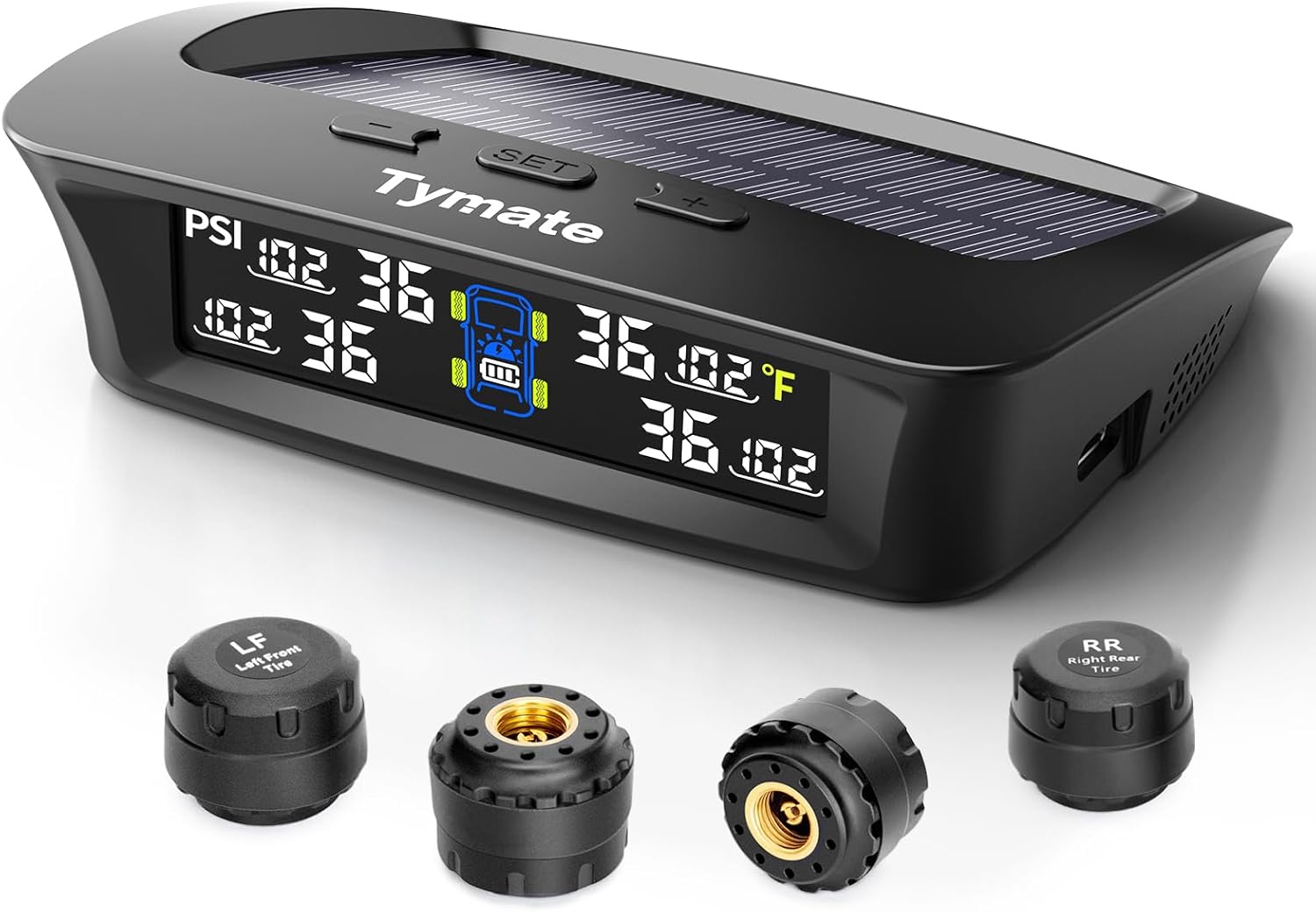
The Tymate TM3 RV TPMS delivers real-time tire pressure monitoring from 0 to 144 PSI with accurate readings and dependable wireless communication. It includes four external sensors with pre-pairing, six alarm modes for rapid leak, pressure extremes, temperature, and signal loss, plus an easy-reference setup for alert thresholds. Solar and USB-C charging help keep the display powered, while the color LCD and adaptive backlight improve visibility for safer driving and towing.

The JACO FlowPro Tire Inflator measures, inflates, and airs down tires up to 100 PSI with battery-free operation and ±2% accuracy after calibration. It features a glowing pressure dial for night visibility, a heavy-duty steel build with a hybrid hose, and a precision push-to-inflate thumb trigger. The patented Lightning Air Chuck locks on for a secure seal, and the kit includes quick-connect hardware for easy inline use with your air compressor.
What to Do If You Can Only Check Hot Tires
If you are on the road and can only check hot tires, do not assume the number is your true baseline. Write down the reading, compare all four tires, and look for one tire that is clearly different from the rest.
- If all tires are a few PSI above the placard after driving, recheck them cold later.
- If one tire is much lower than the others, inspect for a puncture, valve issue, or sidewall damage.
- If one tire is much higher than the others, check whether it was overfilled, overloaded, exposed to unusual heat, or measured incorrectly.
- If pressure is near or above the tire sidewall maximum, stop when safe and let the tire cool before reassessing.
Roadside Fixes if Hot Tires Feel Overinflated
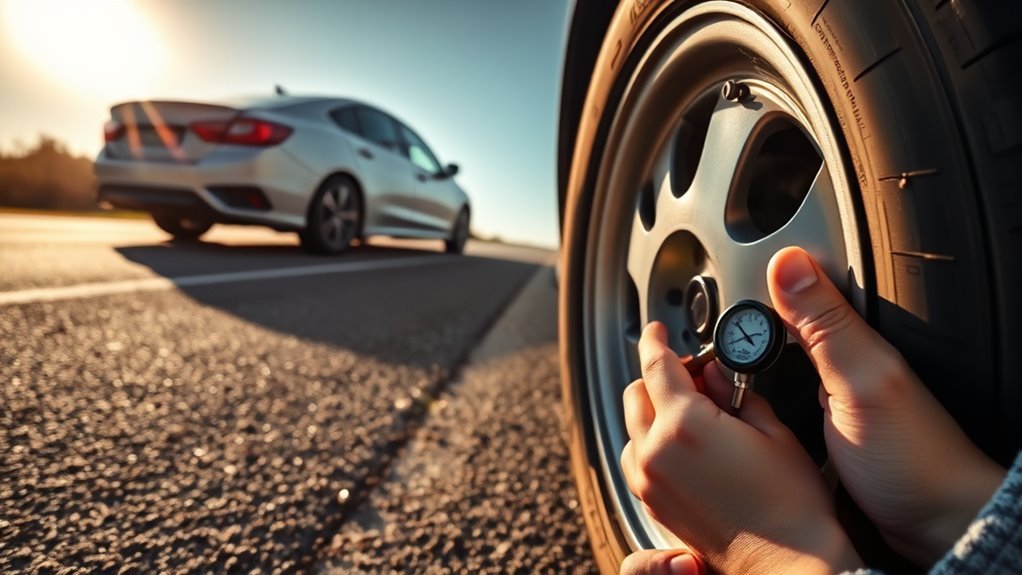
If your vehicle feels harsh, skittish, or unstable on a hot day, pull over somewhere safe before checking the tires. Pressure may be part of the problem, but tire damage, overloading, alignment issues, or road conditions can feel similar.
Use this safe roadside process:
- Park safely. Choose level ground away from traffic and turn on hazard lights if needed.
- Look before touching anything. Check for bulges, cracks, exposed cords, smoke, unusual smell, or a tire that looks distorted.
- Measure all tires. A single odd reading is more concerning than four similar hot readings.
- Do not bleed down to placard PSI while hot. Wait for the tires to cool if the situation is not urgent.
- Drive gently if readings are only mildly elevated. Avoid high speeds, hard braking, and heavy cornering until you can recheck cold.
- Call roadside assistance if there are warning signs. Do not continue at highway speed on a visibly damaged tire.
Seasonal Tire Maintenance Checklist
Summer tire care is mostly about consistency. A five-minute check can prevent uneven wear, poor handling, and many avoidable roadside problems.
- Check tire pressure cold at least once a month and before long trips.
- Use the vehicle placard PSI, not the sidewall maximum.
- Inspect tread for uneven wear, low tread depth, cuts, embedded objects, and exposed cords.
- Inspect sidewalls for cracks, bubbles, impact damage, or dry rot.
- Confirm valve caps are installed and valve stems are not cracked.
- Rotate tires according to your vehicle or tire manufacturer’s schedule.
- Check the spare tire if your vehicle includes one.
- Keep loads within the vehicle’s stated weight limits.
[Products Worth Considering]

This portable cordless tire inflator delivers fast, efficient inflation for cars, motorcycles, bikes, and sports balls with a digital pressure gauge. Use the one-click PSI preset with auto shut-off for accurate, hands-free topping to your target pressure up to 150 PSI. It’s compact and rechargeable with a built-in emergency LED light plus valve adapters and accessories for quick, ready-to-go use.
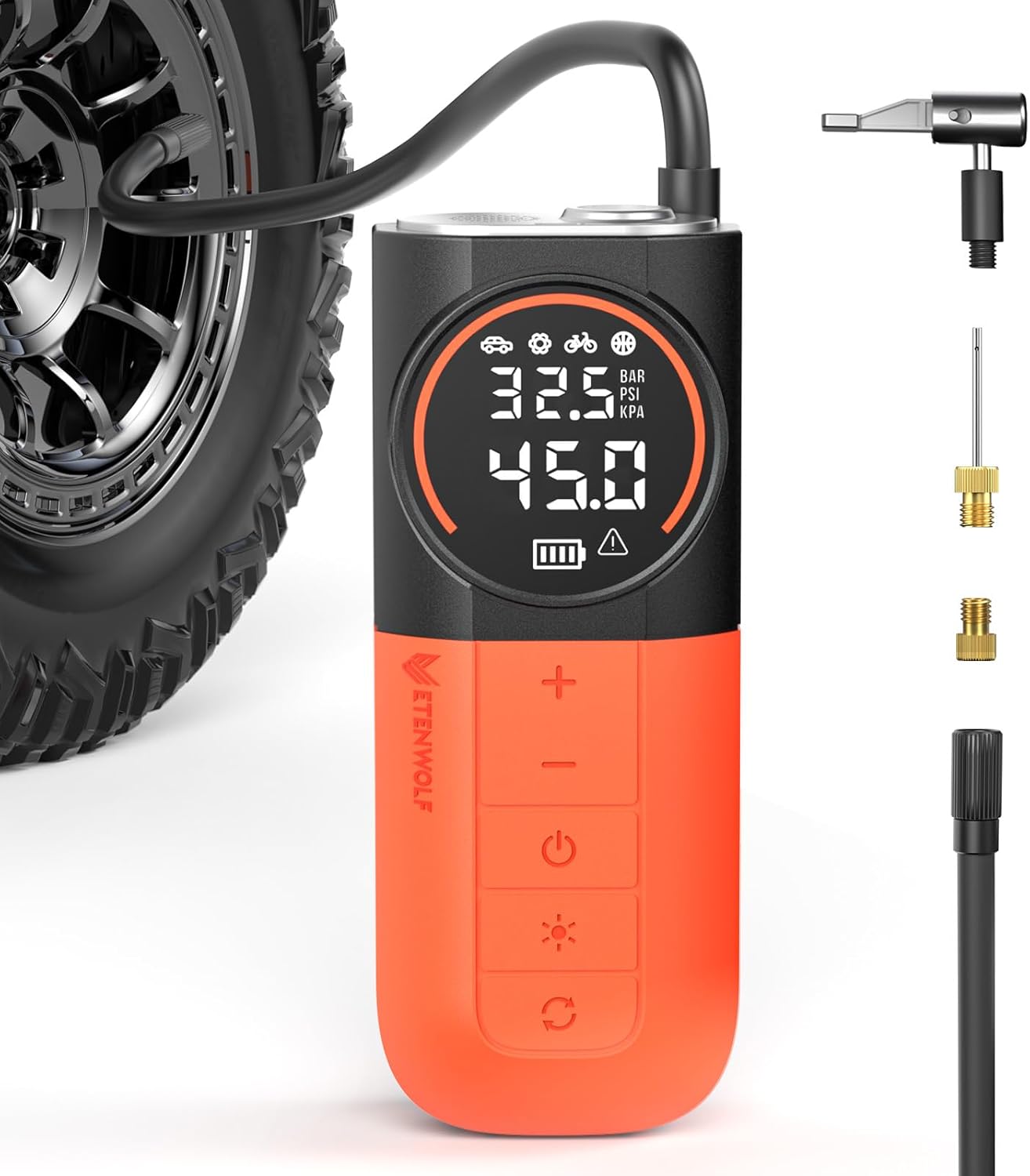
The ETENWOLF S1 cordless tire inflator delivers ultra-fast inflation with up to 160 PSI and a 20 L/min airflow for quicker tire top-offs. Its 5200mAh battery and cooling system support inflating many tires and sports balls on a single charge, while the digital pressure gauge and multi-unit display help you reach the right pressure accurately. With preset modes, pressure memory, an auto-stop feature, and an LED flashlight, it’s built for easy roadside and everyday use.
Do TPMS Lights Warn You About Hot Overinflation?
Most tire pressure monitoring systems are designed mainly to warn about significant underinflation, not to replace manual pressure checks. Under U.S. federal rules, TPMS must warn when one or more tires fall to 25% or more below the vehicle manufacturer’s recommended cold inflation pressure, or below a minimum pressure specified in the standard, whichever is higher.
Some vehicles may also display individual tire pressures or high-pressure warnings, but not all systems behave the same way. Read your owner’s manual so you know what your TPMS does and what each warning means.
Note: A TPMS light that turns off after driving still deserves attention. Heat can temporarily raise pressure enough to change the warning status, but the tire may still be low when cold.
Nitrogen vs. Regular Air in Hot Weather
Nitrogen-filled tires can lose pressure more slowly in some conditions, but nitrogen does not remove the need for pressure checks. Nitrogen and regular air both respond to temperature changes, so the same basic rule applies: check pressure cold, use the vehicle placard, and inspect the tire condition.
For most drivers, correct pressure and regular inspection matter far more than whether the tire is filled with nitrogen or standard compressed air.
When to See a Pro or Replace a Tire
Get a professional inspection as soon as possible if you notice any of these warning signs:
- Bulges or bubbles: These can indicate internal damage and should not be ignored.
- Sidewall cracks or dry rot: Cracking can signal age-related weakness.
- Repeated pressure loss: A slow leak may come from a puncture, valve stem, bead issue, or wheel damage.
- Uneven tread wear: Center wear, shoulder wear, cupping, or feathering can point to inflation, alignment, or suspension problems.
- Vibration at speed: This may indicate imbalance, separation, damage, or wheel issues.
- Exposed cords or very low tread: Replace the tire instead of trying to stretch its life.
- Pressure above safe limits: If a tire is at or above the maximum pressure molded on the sidewall, stop driving and let a professional assess it.
Frequently Asked Questions
How much does tire pressure increase when hot?
A common rule is about 1 PSI for every 10°F rise in air temperature. Tires can also gain several PSI from driving heat, especially at highway speed or on very hot pavement.
Is it bad if my tire pressure is 5 PSI high on a hot day?
A hot reading 5 PSI above the placard can be normal after heat and driving. Do not automatically release air while the tire is hot. Recheck the pressure cold the next morning and adjust only if the cold reading is high.
Should I inflate tires to the sidewall PSI?
No. The sidewall number is usually the tire’s maximum cold inflation pressure. For normal driving, use the recommended PSI on the vehicle’s tire information placard or in the owner’s manual.
Can hot weather cause a tire blowout?
Hot weather can contribute to tire failure, especially when combined with underinflation, overloading, high speed, old rubber, worn tread, or existing damage. Heat alone is usually not the only cause.
Why does my TPMS light turn on and off with temperature changes?
Tire pressure changes with temperature. A tire that is low when cold may warm up while driving and temporarily rise enough for the warning to turn off. Always confirm with a cold manual pressure check.
How often should I check tire pressure in summer?
Check tire pressure at least once a month and before long road trips. During extreme heat, heavy travel, or large temperature swings, checking more often is a smart safety habit.
Conclusion
Hot tire pressure can look alarming, but a moderate PSI rise on a summer day is usually normal. The safest routine is simple: check tires cold, use the vehicle placard PSI, avoid bleeding air from hot tires to the cold spec, and inspect for damage before long drives. If pressure stays high when cold, one tire behaves differently from the rest, or you see cracks, bulges, vibration, or repeated pressure loss, get the tire inspected before continuing at highway speed.
Sources
- NHTSA TireWise — tire pressure, placard guidance, cold-pressure checks, tire maintenance, and safety basics.
- NHTSA Tire Safety Checklist — monthly tire pressure checks, inspection points, and load-limit reminders.
- Bridgestone Proper Tire Inflation — temperature-related PSI change and cold-check timing.
- AAA: How Temperature Changes Affect Tire Pressure — practical pressure-check timing and gauge guidance.
- 49 CFR § 571.138 — federal TPMS performance requirements for significant underinflation warnings.

Related Articles
Why Put a Plastic Bottle on Your Tire? The Viral Trick Explained
Mysterious plastic bottle on your tire? Discover the viral trick’s surprising truth and what it really means before you assume it’s protecting your car.
Read More
What Happens When a Tire Blows Out at Highway Speed? Full Guide
Buckle up to discover what really happens when a tire blows out at highway speed, and why your next move could change everything.
Read More
What Does V Mean on a Tire? Load, Speed & Rating Guide
Need to know what “V” means on a tire and how load and speed ratings affect safety?
Read More