
When To Upgrade From Stock Tires on a Toyota Tacoma
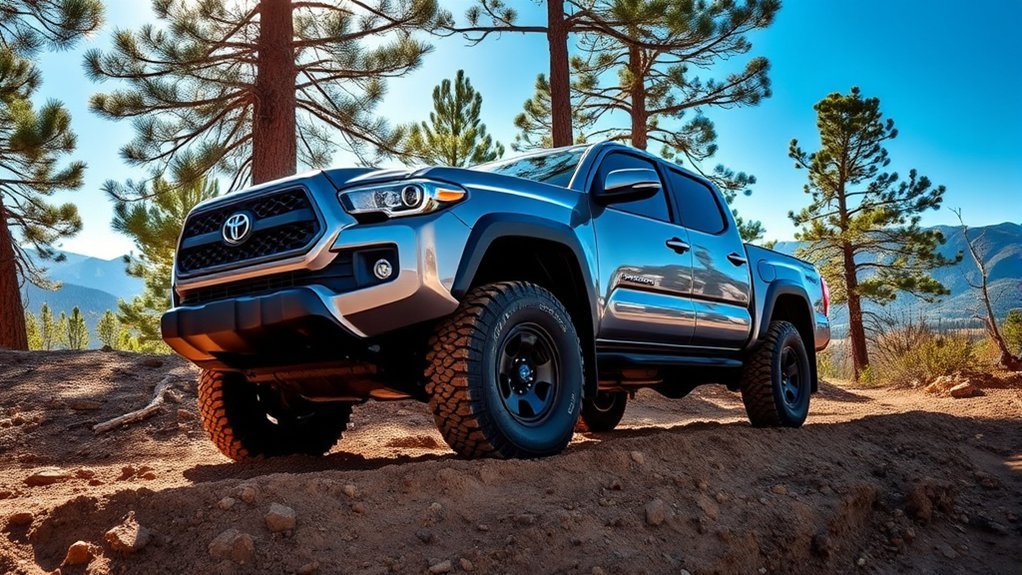
It is time to upgrade your Tacoma tires when your current tires are worn, damaged, losing traction, or no longer match how you use your truck. A daily-driven Tacoma, a weekend trail rig, and an overlanding build do not need the same tire. The right upgrade should improve grip and confidence without creating rubbing, poor ride quality, weak load capacity, or unnecessary fuel-economy loss.
Quick Answer
Upgrade your Tacoma tires when tread depth reaches 2/32 inch, the sidewalls show cracks or bulges, traction drops in rain or off-road conditions, or your driving needs change. Before upsizing, confirm the tire size, load rating, pressure, wheel offset, and clearance against your Tacoma’s door placard and owner’s manual.
Key Takeaways
- Replace Tacoma tires immediately when the tread is worn to 2/32 inch, when wear bars are flush with the tread, or when you see bulges, deep cuts, cracking, or uneven wear.
- Stock tire sizes vary by Tacoma year, trim, wheel size, and package, so always check the Tire and Loading Information Label on the driver-side doorjamb before buying.
- All-terrain tires are usually the best upgrade for mixed highway, gravel, and trail driving; mud-terrain tires make more sense for frequent mud, rocks, and low-speed off-road use.
- Larger tires can improve ground clearance and stance, but they may also reduce mpg, change speedometer accuracy, add road noise, and require a lift, trimming, or alignment work.
At a Glance
| Time Required | 30–60 minutes to inspect and compare sizes; professional mounting, balancing, and alignment usually take longer. |
| Difficulty | Easy for inspection; moderate to advanced for upsizing decisions; professional help recommended for non-stock sizes. |
| Tools Needed | Tread-depth gauge, tire-pressure gauge, flashlight, tape measure, owner’s manual, and your driver-side doorjamb tire placard. |
| Cost | Varies by tire size, brand, load rating, wheels, lift needs, mounting, balancing, alignment, and any trimming or re-gearing work. |
How to Know When It’s Time to Upgrade Your Tacoma Tires?
You should upgrade or replace your Tacoma tires when they are no longer safe, no longer performing well, or no longer suited to your driving. Start with tread depth. The National Highway Traffic Safety Administration says tires are not safe and should be replaced when tread is worn down to 2/32 inch. A tread-depth gauge is the most accurate tool, but the penny test can help in a pinch: if you can see the top of Lincoln’s head, the tire is ready to replace.
Also inspect each tire for sidewall cracks, bulges, exposed cords, deep cuts, puncture repairs near the shoulder, cupping, feathering, or uneven tread wear. Uneven wear can point to underinflation, overinflation, worn suspension parts, or bad alignment. If your Tacoma shakes at highway speed, pulls to one side, hydroplanes more easily, or struggles for traction on trails it used to handle, the tires deserve a closer look.
Warning: Do not judge tire safety by tread depth alone. A tire with plenty of tread can still be unsafe if it has sidewall damage, cracking, bulges, vibration, repeated air loss, or an old DOT date. Have questionable tires inspected by a tire professional before your next highway trip or trail run.
Driving conditions matter, too. If you have moved from mostly pavement to regular gravel roads, snow, mud, rocks, or overlanding routes, your stock tires may not be the best match anymore. In that case, an upgrade is not only about looks; it is about choosing a tire pattern, sidewall strength, and load rating that match the work your Tacoma actually does.
[Products Worth Considering]

EVOULTES heavy duty tire inflator with an integrated gauge delivers accurate pressure readings from 10–120 PSI, helping you inflate, deflate, and check tires in one tool. The 16.5-inch extended dual-head air chuck with swivel base reaches hard-to-access dual wheel valves on trucks and RVs. A brass trigger core and side-mounted air release valve make operation smooth, with standard 1/4" NPT threading and quick-connect compatibility for easy setup.

This portable cordless tire inflator delivers up to 160 PSI with fast 17 L/min airflow to help you quickly top up tires and get back on the road. It features dual power mode, running on a 21V rechargeable battery or a 12V DC adapter for convenient roadside use. An automatic shut-off with digital pressure gauge helps prevent overinflation, and a built-in LED light improves visibility in low-light conditions.

The JACO FlowPro Tire Inflator measures, inflates, and airs down tires up to 100 PSI with battery-free operation and ±2% accuracy after calibration. It features a glowing pressure dial for night visibility, a heavy-duty steel build with a hybrid hose, and a precision push-to-inflate thumb trigger. The patented Lightning Air Chuck locks on for a secure seal, and the kit includes quick-connect hardware for easy inline use with your air compressor.
Why Upgrade From Stock Tires?
Stock Tacoma tires are designed to balance comfort, cost, fuel economy, noise, and everyday traction. That balance works well for commuting and light-duty use, but it can feel limiting if you regularly drive washboard roads, loose gravel, slick job sites, snow, mud, or rocky trails.
Upgrading from stock tires can give your Tacoma better bite in loose terrain, stronger sidewalls, improved puncture resistance, and a more planted feel when the tire is matched to the conditions. For mixed highway and trail use, an all-terrain tire is often the sweet spot because it offers a compromise between road manners and off-road capability. For example, the BFGoodrich All-Terrain T/A KO3 is a current all-terrain option for trucks and SUVs, includes a 3 Peak Mountain Snowflake rating, and carries a 50,000-mile limited mileage warranty in many fitments.
Note: The BFGoodrich KO2 may still be available in some sizes, but the KO3 is the newer BFGoodrich all-terrain model. Always compare the exact size, load range, speed rating, warranty, and snow rating before buying.
Larger tires can also add ground clearance and create a more aggressive stance. The tradeoff is that bigger and heavier tires can affect acceleration, braking feel, steering response, fuel economy, road noise, and speedometer accuracy. You may also be able to sell your take-off OEM tires if they are nearly new, but do not count on a dealership credit or private resale value when budgeting your upgrade.
Top Tire Size Choices for Tacoma Owners
The right Tacoma tire size depends on the model year, trim, wheel size, suspension setup, wheel offset, and how much trimming you are willing to do. Toyota Tacoma factory tire sizes vary by year and package, so the safest starting point is always the Tire and Loading Information Label on the driver-side doorjamb and the Toyota owner’s manual tire-pressure guidance. NHTSA also recommends checking the owner’s manual or tire label when choosing the correct tire size.
Warning: Never install a tire with a lower load index or load-carrying capacity than the original tire listed on your Tacoma’s placard or owner’s manual. Replacement tires should meet or exceed the original size, load index, and speed-rating requirements unless a qualified tire professional confirms the alternative fitment is safe.
| Tire Size | Common Use | Fitment Notes |
|---|---|---|
| Stock sizes such as 245/70R17, 265/70R17, 265/65R17, 265/65R18, or 265/70R16 | Daily driving, factory ride quality, predictable mpg | Best for owners who want easy replacement with minimal fitment risk. Confirm your exact OEM size on the door placard. |
| 265/70R17 | Mild all-terrain upgrade on many Tacoma setups | Often considered a conservative upgrade, but clearance still depends on generation, wheel offset, and trim. |
| 275/70R17 | Slightly taller, more aggressive stance | May fit many builds with the right wheel offset, but check full-lock turning, mud flaps, fender liners, and suspension compression. |
| 285/70R17 | Popular off-road look and added clearance | Commonly needs a 2–3 inch lift, proper wheel offset, alignment adjustment, and possible trimming. Not a guaranteed bolt-on size. |
| 255/85R16 | Tall, narrow overland-style tire | Can improve clearance and cut through loose surfaces, but requires compatible 16-inch wheels and careful clearance checks. |
Do not choose tire size by appearance alone. A tire that looks perfect in photos may rub on your Tacoma because of a different wheel offset, suspension height, cab mount clearance, bumper shape, mud flap position, or alignment setting.
Key Considerations Before Upgrading Tacoma Tires
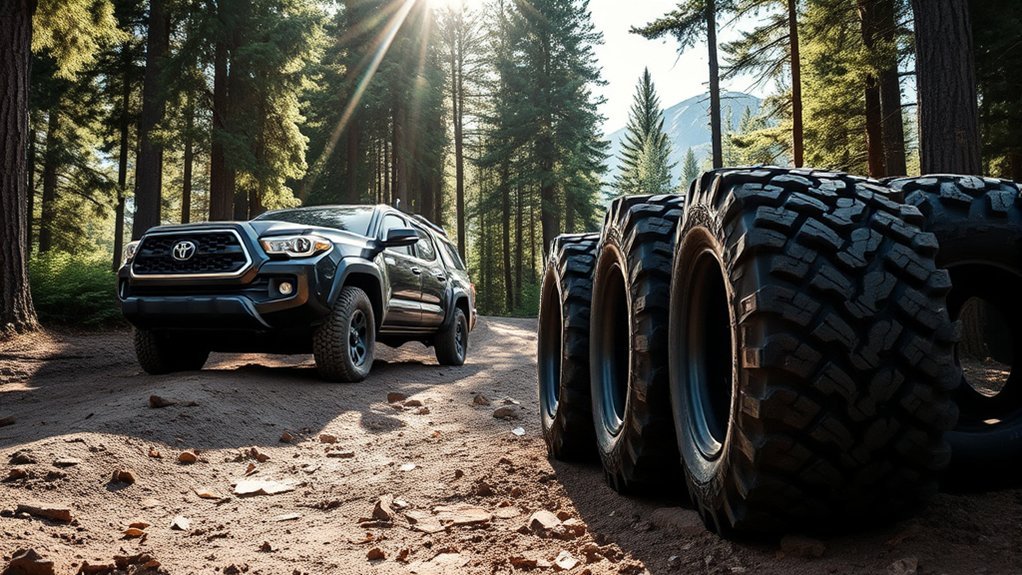
Before buying new Tacoma tires, decide what problem you are solving. A worn-out street tire, a noisy mud tire, a poor winter performer, and a too-small trail tire all call for different solutions. Here is a clearer way to match the tire to your driving:
| Driving Use | Recommended Tire Type | Key Benefits |
|---|---|---|
| Daily Driving | Highway, touring, or all-season tires | Quiet ride, comfort, predictable mpg, long tread life |
| Mixed Highway and Trails | All-terrain tires | Better gravel, dirt, light mud, and trail grip while keeping decent road manners |
| Frequent Mud or Rocks | Mud-terrain tires | Aggressive tread, stronger off-road bite, improved self-cleaning in mud |
| Snow, Ice, or Severe Winter | Winter tires or 3PMSF-rated all-weather/all-terrain tires | Better cold-weather traction than a tire chosen only for mud or appearance |
Also factor in tire weight, load range, sidewall stiffness, wheel width, wheel offset, and spare-tire storage. A heavier E-load tire may be strong, but it can also ride firmer on a lightly loaded Tacoma. A larger spare may not fit in the factory spare location without checking clearance.
How to Choose the Right Tacoma Tire Type
For mostly pavement, choose a highway or all-season truck tire. It will usually be quieter, lighter, and more efficient than a heavy off-road tire. For daily driving with occasional dirt roads, a mild all-terrain tire is a better balance than a mud-terrain tire.
For regular trail use, look for an all-terrain tire with stronger sidewalls, good wet-road performance, and the right load rating. If you drive in snow, check whether the tire has the 3 Peak Mountain Snowflake symbol. A mud-and-snow marking alone does not mean the tire is a true winter tire.
For frequent mud, deep ruts, rocks, and low-speed off-road driving, mud-terrain tires can make sense. Just know the tradeoffs: more road noise, faster wear in some highway use, heavier steering feel, and weaker ice performance than a proper winter tire.
Pro Tip: Before ordering oversized tires, test the space you already have. Turn the steering wheel fully left and right, inspect the mud flaps and fender liners, and measure clearance near the upper control arm, cab mount area, bumper, and rear of the front wheel well.
[Products Worth Considering]

This portable cordless tire inflator delivers fast, efficient inflation for cars, motorcycles, bikes, and sports balls with a digital pressure gauge. Use the one-click PSI preset with auto shut-off for accurate, hands-free topping to your target pressure up to 150 PSI. It’s compact and rechargeable with a built-in emergency LED light plus valve adapters and accessories for quick, ready-to-go use.

This AUTOWN flat tire repair kit is designed for quick, reliable puncture repairs using a plug kit and spiral probe tool to simplify installation. Built for durability and safe handling, it offers strong adhesion and flexibility to help maintain tire air tightness. With a portable storage case and a multi-vehicle approach, it’s suitable for cars, motorcycles, ATVs, tractors, lawn mowers, RVs, jeeps, and trucks.
Essential Tips for Upgrading Your Tacoma Tires
Choosing the right tires can improve your Tacoma’s grip, stance, and trail confidence, but the best upgrade is the one that fits your truck without creating new problems. Keep these tips in mind:
The best Tacoma tire upgrade is not always the biggest tire. It is the tire that fits your driving, clears your suspension, carries the right load, and keeps the truck safe on the road.
- Start with safety: Replace tires at 2/32 inch tread depth or sooner if they are damaged, cracking, wearing unevenly, or performing poorly in wet conditions.
- Check the placard first: Use the driver-side doorjamb label and owner’s manual to confirm original tire size, inflation pressure, and load requirements.
- Match the tire to the terrain: Choose highway tires for pavement, all-terrain tires for mixed use, mud-terrain tires for regular mud and rocks, and winter or 3PMSF-rated tires for severe snow.
- Be realistic about size: A 275/70R17 or 285/70R17 may look great, but actual fitment depends on wheel offset, suspension height, alignment, and trimming.
- Plan for supporting work: Larger tires may require a lift, fender-liner trimming, mud-flap changes, alignment, speedometer correction, or re-gearing on some builds.
- Do not ignore the spare: If you upsize, make sure your spare tire is compatible and fits in the spare location or on your carrier.
What to Check After Installing New Tacoma Tires
After your new tires are installed, do not assume the job is finished. Have the tires mounted and balanced, then check cold tire pressure using the pressure listed by Toyota for your specific Tacoma setup. The number on the tire sidewall is the tire’s maximum rating, not the recommended daily pressure for your truck.
Next, check for rubbing. Turn the steering wheel fully left and right while parked, then drive slowly over a driveway or uneven surface to listen for contact under light suspension compression. Recheck lug-nut torque after the first short drive if your installer recommends it, and schedule an alignment if you changed tire size, lift height, wheels, or suspension parts.
Finally, watch for warning lights or odd behavior. A tire-pressure monitoring system alert, vibration, pulling, rubbing sound, or sudden mpg drop is a sign that something needs attention. Bigger tires can be worth it, but only when the whole setup works together.
Frequently Asked Questions
When to get new tires in Tacoma?
Get new tires for your Tacoma when tread depth reaches 2/32 inch, the wear bars are flush with the tread, traction drops in rain or dirt, or you see sidewall cracks, bulges, exposed cords, uneven wear, repeated air loss, or vibration. Replace sooner if you tow, drive in snow, or go off-road often.
What size tires can I put on a Tacoma without a lift?
The safest no-lift choice is the factory tire size listed on your door placard. Mild upgrades such as 265/70R17 or similar sizes may work on many Tacoma setups, but there is no universal answer because year, trim, wheel offset, suspension condition, and alignment all affect clearance.
Do I need a lift for 285/70R17 tires on a Tacoma?
Many Tacoma builds need a 2–3 inch lift, proper wheel offset, alignment adjustment, and possible trimming to run 285/70R17 tires without rubbing. Some setups may still rub depending on wheels, mud flaps, fender liners, and suspension compression, so test fitment before committing.
Will bigger tires hurt Tacoma gas mileage?
They can. Larger or heavier tires can increase rolling resistance and rotating weight, which may reduce fuel economy and make acceleration feel slower. Tire tread design, inflation pressure, wheel weight, driving speed, and alignment also affect mpg.
Are all-terrain tires better than mud-terrain tires for a Tacoma?
For most Tacoma owners, yes. All-terrain tires usually offer a better balance of highway comfort, wet traction, tread life, and off-road grip. Mud-terrain tires are better for frequent mud, rocks, and deep ruts, but they are often louder and less comfortable for daily driving.
Conclusion
Upgrading your Tacoma tires is worth it when your current tires are worn, unsafe, or mismatched to your driving style. For a daily driver, that may mean replacing old tires with a quieter highway or all-season set. For trail use, it may mean moving to a stronger all-terrain tire. For a more aggressive build, it may mean larger tires with the right lift, wheel offset, alignment, and trimming.
The smartest upgrade starts with the basics: check tread depth, inspect for damage, confirm the factory tire size and pressure, and make sure the new tires meet or exceed the correct load rating. Do that first, and your Tacoma will get the traction, stance, and confidence you want without sacrificing safety.
Sources
- NHTSA TireWise — supports tread-depth replacement guidance, tire-pressure checks, tire-size label guidance, and tire maintenance safety.
- Toyota Tacoma Owner’s Manual: Tire Inflation Pressure — supports checking Toyota’s model-specific tire-pressure guidance.
- Toyota Tacoma Owner’s Manual: Tire Information — supports tire-size, DOT/TIN, treadwear indicator, and tire-label interpretation guidance.
- U.S. Tire Manufacturers Association: Replacing Tires — supports using the recommended size, load index, and speed rating for replacement tires.
- Tire Industry Association: Tire Replacement — supports consulting a tire professional when changing tire and wheel packages from placard specifications.
- BFGoodrich All-Terrain T/A KO3 — supports current KO3 all-terrain tire details, 3PMSF rating, and warranty information.

Related Articles
How Tire Weight Affects Toyota Tacoma Performance
How does tire weight influence your Toyota Tacoma's performance and efficiency? Discover the surprising effects that could change your driving experience.
Read More
Tire Noise Levels by Tire Type on a Toyota Tacoma
A comprehensive look at how tire types affect noise levels in your Toyota Tacoma reveals surprising insights that could enhance your driving experience.
Read More
How To Choose Tires for a Dual Use Toyota Tacoma
Unlock the secrets to selecting the perfect tires for your dual-use Toyota Tacoma, ensuring optimal performance and comfort on every adventure. Discover more inside!
Read More