
How To Measure Wheel Offset on a Toyota Tacoma
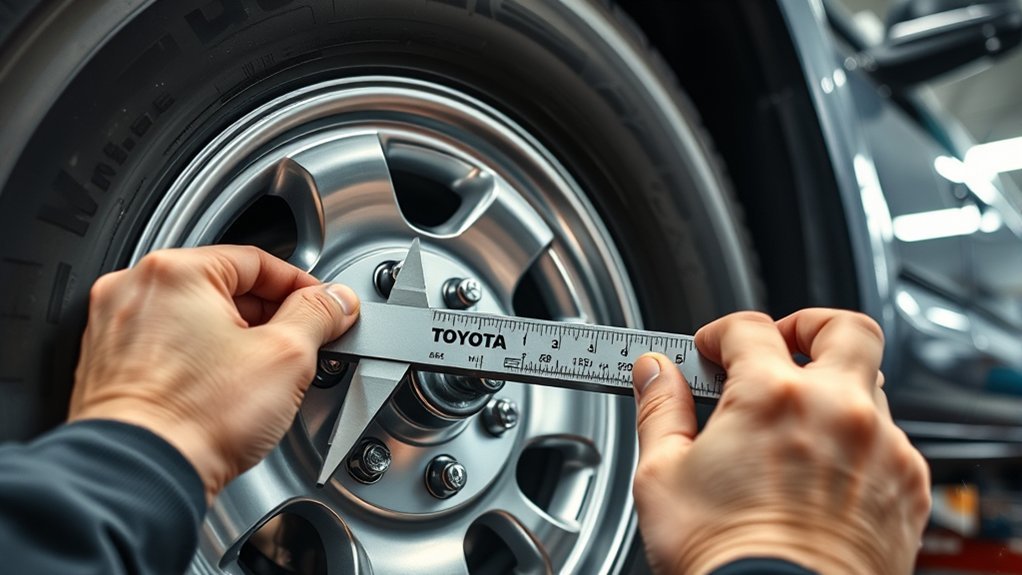
Measuring wheel offset on a Toyota Tacoma is not hard, but the formula has to be right. Offset tells you how far the wheel’s hub mounting pad sits from the wheel’s centerline, while backspacing tells you how much room the wheel takes up toward the suspension. If you are checking stock wheels, comparing aftermarket wheels, or trying to avoid tire rub, measure both carefully before buying parts.
Quick Answer
To measure Tacoma wheel offset, place the wheel face down, measure backspacing from the hub mounting surface to a straightedge across the rear lip, then subtract the wheel centerline. Use this formula: Offset (mm) = (Backspacing − Centerline) × 25.4. A positive number means positive offset; a negative number means negative offset.
Key Takeaways
- Use the correct formula: offset equals backspacing minus centerline, then multiplied by 25.4.
- Do not confuse labeled width with overall width: an 8.5-inch wheel is measured between bead seats, while the outer lip-to-lip width is usually about 1 inch wider.
- Offset alone does not guarantee fitment: tire size, suspension lift, upper control arms, brake clearance, alignment, and fender clearance also matter.
- Check your exact Tacoma year and trim: factory offset varies by generation and wheel, especially on 2024–2026 fourth-generation Tacomas.
At a Glance
| Time Required | 10–20 minutes per wheel |
| Difficulty | Easy to moderate |
| Tools Needed | Tape measure or caliper, rigid straightedge, calculator, notepad, and safe wheel-removal tools if the wheel is still installed |
| Cost | Usually $0 if you already have basic measuring tools |
How to Measure Wheel Offset on Your Tacoma
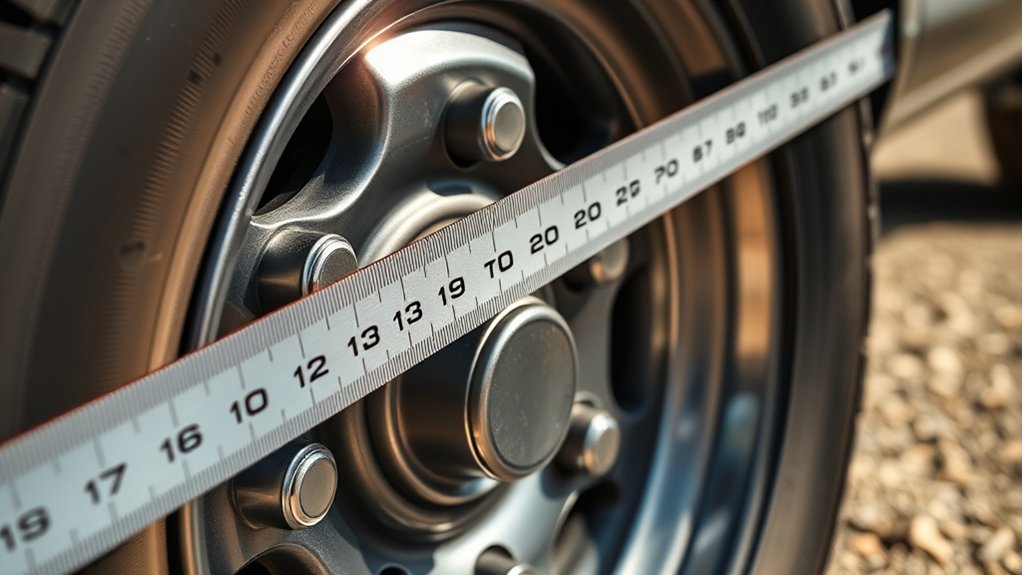
Wheel offset is the distance from the wheel’s hub mounting surface to the wheel’s centerline. According to Tire Rack, offset is measured in millimeters and can be positive, zero, or negative. Discount Tire explains that backspacing is the distance from the mounting surface to the back lip of the wheel and is usually measured in inches.
For a Tacoma, the measurement matters because it changes where the wheel and tire sit in the fender well. More positive offset usually tucks the wheel inward toward the suspension. Less positive or negative offset pushes the wheel outward toward the fender. Either direction can cause rubbing if the wheel, tire, suspension, and alignment are not matched correctly.
Warning: If you remove a wheel from your Tacoma, support the truck safely with the correct jack points and jack stands. When reinstalling the wheel, use the lug nut style and torque specification listed for your exact Tacoma and wheel type in the owner’s manual or service information.
[Products Worth Considering]

Replace worn wheelchair rear tires with a universal 24x1 no-flat polyurethane foam option designed to mount tightly on 24-inch rims without the tire falling off. Installation is made easier with included tools and multiple methods, including using a pry bar or softening the tire in hot water to reduce resistance. The package includes two tires plus tie ropes for convenient fitting and handling.

These aluminum alloy tire valve stem caps with an O-ring seal help protect valve stems from corrosion while adding a clean, stylish look to your vehicle. The universal fit works across cars, trucks, motorcycles, bicycles, and more, making them an easy upgrade for everyday driving and off-road use. Installation is quick, and the included four-pack keeps all your tires dressed and protected.

Upgrade your wheels with MIKKUPPA M12x1.5 mag seat lug nuts built for secure, corrosion-resistant performance. These closed-end chrome lug nuts are a direct replacement for select Toyota models, including Camry, Corolla, RAV4, Sienna, Avalon, Highlander, Matrix, Venza, and Prius. Triple-chromium plating and cold-forged, heat-treated steel help deliver strength for daily driving and replacement needs.
Tools You Need for Measuring Wheel Offset
You only need a few simple tools to measure offset accurately:
- Rigid straightedge: A metal ruler, level, or flat board long enough to span the rear wheel lip.
- Tape measure or caliper: A tape measure works for most DIY measurements; a caliper gives more precision.
- Calculator: You will subtract centerline from backspacing and multiply by 25.4.
- Notepad or phone: Write down each measurement before calculating.
- Safe wheel-removal tools: Only needed if the wheel is still on the truck.
Pro Tip: Before measuring, check the back of the wheel spokes or barrel. Many wheels have the offset stamped as “ET,” such as ET25, ET55, or ET-12. If that stamping is clear and matches the wheel model, you may not need to calculate it manually.
Step-by-Step: Measuring Wheel Offset
The most accurate DIY method is to measure the wheel off the vehicle. A tire can stay mounted, but the straightedge must rest flat across the wheel’s rear lip, not on the tire sidewall.
1. Place the Wheel Face Down
Set the wheel face down on cardboard, carpet, or another soft surface so you do not scratch the wheel face. The hub mounting surface should face upward. Make sure the wheel sits flat and does not rock.
2. Measure the Overall Wheel Width
Measure from the outer edge of the inner lip to the outer edge of the outer lip. This is the wheel’s overall width. Do not confuse this with the labeled wheel width. A wheel labeled 17×8.5 is 8.5 inches wide between the bead seats, but the actual outside lip-to-lip width is usually about 9.5 inches.
If you cannot measure the overall width directly, a practical approximation is:
Approximate overall width = labeled wheel width + 1 inch
3. Find the Wheel Centerline
Divide the overall width by 2. That number is the centerline measurement you will use in the offset formula.
Example: if a 17×8.5 wheel measures about 9.5 inches lip-to-lip, the centerline is:
9.5 ÷ 2 = 4.75 inches
4. Measure Backspacing
Lay the straightedge across the rear lip of the wheel. Measure straight down from the underside of the straightedge to the hub mounting surface. That distance is your backspacing.
Measure at a right angle. If the tape is tilted, the number will be too long and your offset calculation will be wrong.
5. Calculate Offset
Use this corrected formula:
Offset (mm) = (Backspacing in inches − Centerline in inches) × 25.4
Here is a simple example:
| Labeled wheel size | 17×8.5 |
| Approximate overall width | 9.5 inches |
| Centerline | 4.75 inches |
| Measured backspacing | 5.25 inches |
| Calculation | (5.25 − 4.75) × 25.4 = +12.7 mm |
In this example, the wheel is about +13mm offset.
Convert Measurements to Millimeters
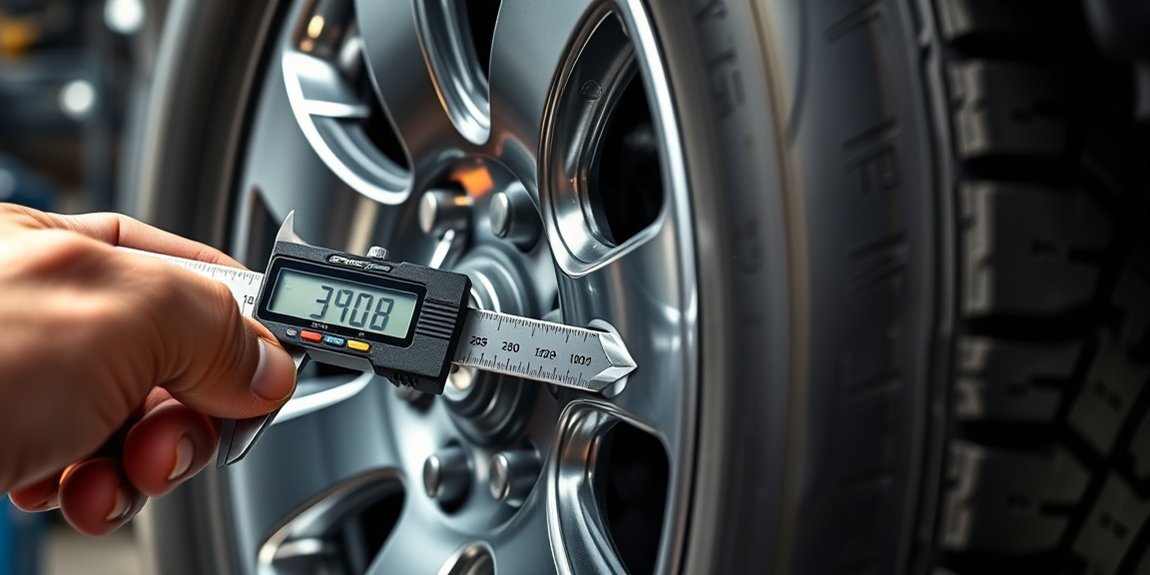
Offset is normally listed in millimeters, so any inch result must be multiplied by 25.4. For example:
- +0.50 inch × 25.4 = +12.7 mm
- +0.47 inch × 25.4 = +11.9 mm, which is commonly rounded to +12mm
- -0.50 inch × 25.4 = -12.7 mm
The sign matters. A positive result means the mounting surface is outward of the wheel centerline, which usually tucks the wheel inward. A negative result means the mounting surface is inward of the wheel centerline, which pushes the wheel outward.
What Offset Does to Tacoma Fitment
Offset affects both sides of the wheel opening:
- More positive offset: More wheel and tire move inward, which can reduce clearance to the upper control arm, suspension, frame, or brake components.
- Zero offset: The mounting surface lines up with the wheel centerline.
- Negative offset: More wheel and tire move outward, which can improve inner clearance but increase fender poke and outer-edge rubbing.
For Tacoma owners, this is especially important because common fitment advice changes by generation. Many 2nd- and 3rd-generation Tacoma aftermarket setups use offsets around +0 to +25mm for a mild stance or around 0 to -12mm for a more aggressive off-road look. However, 2024–2026 fourth-generation Tacoma factory wheel data can be much more positive, with fitment databases such as Wheel-Size commonly listing 2025 OEM-style offsets around ET55–60 depending on wheel and trim. Always verify your exact year, trim, wheel size, and tire size before assuming a range.
Note: Your Tacoma’s tire placard and owner information help confirm tire size and pressure, but wheel offset may need to be checked on the wheel stamping, dealer parts data, or a reliable vehicle-specific fitment database. Toyota’s official owner information is available through Toyota Owners.
Top Mistakes to Avoid When Measuring Wheel Offset
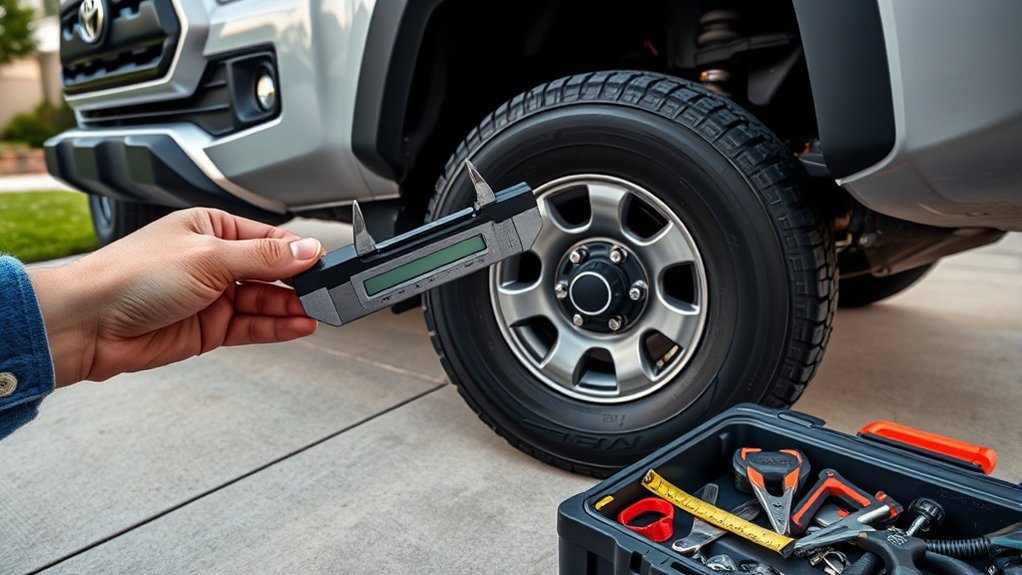
A small measuring mistake can change the final offset by several millimeters. Avoid these common errors:
- Using the wrong formula: Do not subtract backspacing from centerline. The correct order is backspacing minus centerline.
- Measuring tire sidewall instead of wheel lip: The straightedge must sit on the wheel’s rear lip, not on the tire.
- Confusing bead-seat width with overall width: A 17×8.5 wheel is not 8.5 inches wide lip-to-lip.
- Tilting the tape measure: Measure straight down from the straightedge to the hub pad.
- Assuming one Tacoma offset fits every Tacoma: Factory offset varies by generation, trim, and wheel package.
- Ignoring tire size: The same offset can fit differently with 265, 275, and 285-width tires.
[Products Worth Considering]

These M14x1.5 closed-end chrome lug nuts are a one-piece replacement designed for secure fitment on compatible GM, Ford, and select Chrysler/Dodge models. Featuring a 60-degree conical seat and anti-rust chrome plating, they help resist corrosion and maintain a bright look for everyday driving. Built for long-term durability, they include OEM-style part references and are backed by 12 months of support.
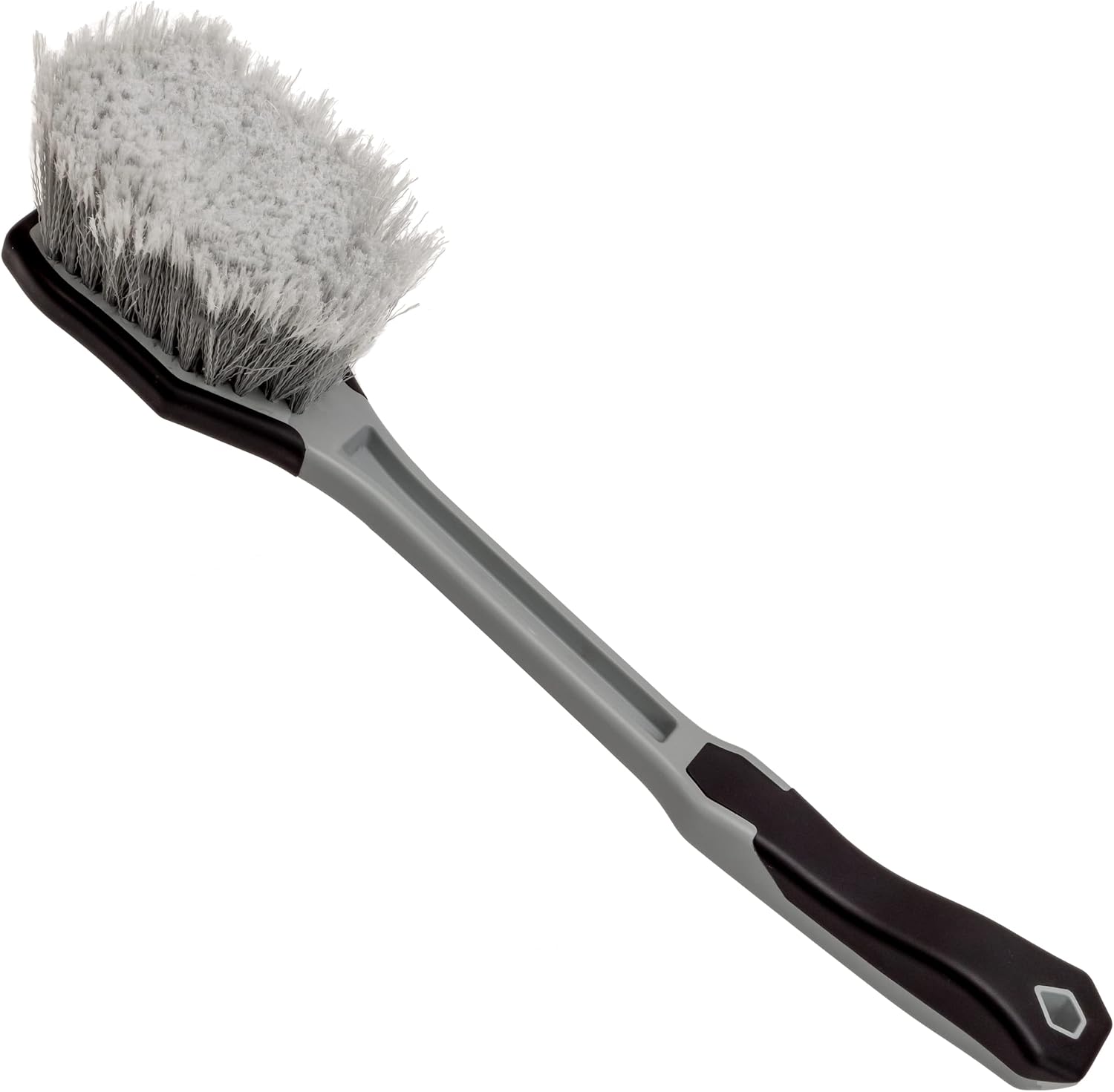
Clean grills, fenders, fender flares, bumpers, and wheel wells with a long-handled brush built for detailed car washing. The soft, triple-flagged bristles and dense scrub coverage help lift dirt gently while making coverage fast and easy. Use it with your favorite car wash soap for tires and exterior surfaces, and it also works for bike, motorcycle, boat, or RV cleaning.

This 3-piece wheel brush set makes it easy to clean wheels and tires with soft, scratch-free brushes designed for lifting brake dust and grime. The flexible rim brush bends up to 360 degrees to reach hard-to-access areas for a thorough clean, while the comfortable grip helps control during detailing. A dedicated detailing brush supports gentle cleaning for sensitive surfaces, including interior use.
How to Use Your Offset Measurement for Wheel Selection
Once you know your current wheel’s offset and backspacing, compare it with the new wheel before buying. The safest approach is to compare both inner clearance and outer poke.
- If the new wheel has more backspacing: It moves closer to the suspension and upper control arm.
- If the new wheel has less backspacing: It moves outward and may poke past the fender.
- If the new wheel is wider: Some of the added width moves inward and some outward, depending on offset.
- If the tire is taller or wider: It may rub even if the wheel offset looks reasonable on paper.
For example, a 17×8.5 wheel with -12mm offset may work well on some lifted or modified Tacoma builds, but it can add noticeable poke and may still require fender liner adjustment, alignment changes, trimming, or upper control arm clearance checks. A 17×8.5 wheel with +25mm offset usually keeps the wheel more tucked, but tire and suspension clearance still need to be verified.
Troubleshooting Your Measurement
What if the Wheel Has Offset Stamped on It?
If the wheel is stamped ET25, ET55, or ET-12, that number is the offset in millimeters. “ET” is commonly used for wheel offset. Still, confirm that all four wheels match, especially if you bought the truck used.
Can You Measure Offset With the Tire Mounted?
Yes, but it is easier to make mistakes. The tire sidewall can block the wheel lip or make the straightedge sit too high. If the tire is mounted, make sure the straightedge contacts the wheel lip, not the tire.
Why Does My Calculated Number Not Match the Stamping?
Small differences usually come from using approximate overall width, measuring at an angle, or reading the tape from the wrong side of the straightedge. Recheck the overall lip-to-lip width and backspacing before assuming the wheel is mislabeled.
What Else Should I Check Before Buying Wheels?
Check bolt pattern, center bore, lug nut seat type, brake caliper clearance, load rating, tire size, suspension lift, alignment, and whether your setup needs trimming. Offset is only one part of the fitment equation.
Frequently Asked Questions
What is the factory offset for a 2025 Tacoma?
There is not one universal factory offset for every 2025 Tacoma. It depends on trim, wheel size, and wheel package. Current fitment databases commonly list several 2025 Tacoma OEM-style wheels around ET55–60, so do not assume +0 to +25mm is factory for a 2025 model. Check the wheel stamping, dealer parts data, or a trusted fitment database for your exact truck.
What does +35 offset mean on a rim?
A +35mm offset means the wheel’s hub mounting surface is 35mm outward from the wheel centerline. In practical terms, a +35mm wheel usually sits more tucked than a +0mm or -12mm wheel of the same width.
Is wheel offset the same as backspacing?
No. Offset measures the mounting surface compared with the wheel centerline and is listed in millimeters. Backspacing measures from the mounting surface to the rear wheel lip and is usually listed in inches. They describe the same wheel position from different reference points.
What offset is best for a Toyota Tacoma?
The best offset depends on your Tacoma generation, wheel width, tire size, suspension height, alignment, and how much poke you want. Many older Tacoma aftermarket builds use +0 to +25mm for mild fitment or 0 to -12mm for a more aggressive stance, but newer factory setups can be much more positive. Always compare the new wheel to your current wheel before buying.
Can the wrong offset damage my Tacoma?
The wrong offset can cause rubbing, poor clearance, extra stress on wheel bearings and steering parts, or contact with suspension and brake components. Severe rubbing can also damage tires or fenders. Test fit carefully and consult a wheel professional if you are making a large change.
Does changing offset change alignment?
Changing offset does not directly adjust alignment angles, but it changes the tire’s position and scrub radius. If you combine new offset with larger tires, lift parts, or upper control arms, a professional alignment is strongly recommended.
Conclusion
To measure wheel offset on your Toyota Tacoma, measure the wheel’s overall width, divide it by two to find the centerline, measure backspacing, then use the corrected formula: Offset (mm) = (Backspacing − Centerline) × 25.4. That number helps you compare wheels, but it is only one part of Tacoma fitment. Always confirm tire size, suspension clearance, brake clearance, bolt pattern, center bore, lug hardware, and your exact model-year specs before installing new wheels.
Sources
- Tire Rack — What Is Wheel Offset? — supports offset definition, positive/zero/negative offset, and backspacing basics.
- Discount Tire — Wheel Offset & Backspacing — supports offset/backspacing definitions and fitment-clearance impact.
- Engineer Fix — How to Measure Wheel Backspacing and Offset — supports backspacing measurement method and corrected offset formula.
- Wheel-Size — 2025 Toyota Tacoma Wheel & Tire Sizes — supports current 2025 Tacoma fitment reference data.
- Toyota Owners — 2025 Tacoma Tire Information — supports checking official Toyota owner information for tire-related specifications.
[Products Worth Considering]

This professional wheel and rim cleaning brush set lifts brake dust, grime, and dirt with soft, scratch-free microfiber and synthetic wool fibers. The rim brush bends up to 360 degrees for easy access to hard-to-reach areas around spokes, lips, and faces. Ideal for thorough cleaning of car, truck, motorcycle, bicycle, RV, and more wheel and tire surfaces.

The Trivd Frol 1/2" air impact wrench delivers high performance torque up to 1500 ft-lbs with a twin hammer impact mechanism for strong, balanced blows. It features an ergonomic grip, compact lightweight design, and quick-stop control with 3 forward speeds up to 8000 RPM plus a reverse speed. Built for demanding automotive repair and tire shop work, the rear exhaust helps keep debris away from the surface.

This metal-free wheel and tire cleaning brush uses dense, fluffy synthetic wool to safely clean rims, spokes, fenders, and engine areas without worrying about damaging surfaces. Its flexible, comfortable design helps you reach detailed areas while maintaining durability, and the extra absorbent fibers work well with wheel spray cleaners for faster cleanup. Reusable and washable performance helps prevent grime and build-up for cleaner vehicles and easier maintenance at home.

Related Articles
How Tire Weight Affects Toyota Tacoma Performance
How does tire weight influence your Toyota Tacoma's performance and efficiency? Discover the surprising effects that could change your driving experience.
Read More
Tire Noise Levels by Tire Type on a Toyota Tacoma
A comprehensive look at how tire types affect noise levels in your Toyota Tacoma reveals surprising insights that could enhance your driving experience.
Read More
How To Choose Tires for a Dual Use Toyota Tacoma
Unlock the secrets to selecting the perfect tires for your dual-use Toyota Tacoma, ensuring optimal performance and comfort on every adventure. Discover more inside!
Read More