
How To Check Wheel Bearings on a Toyota Tacoma
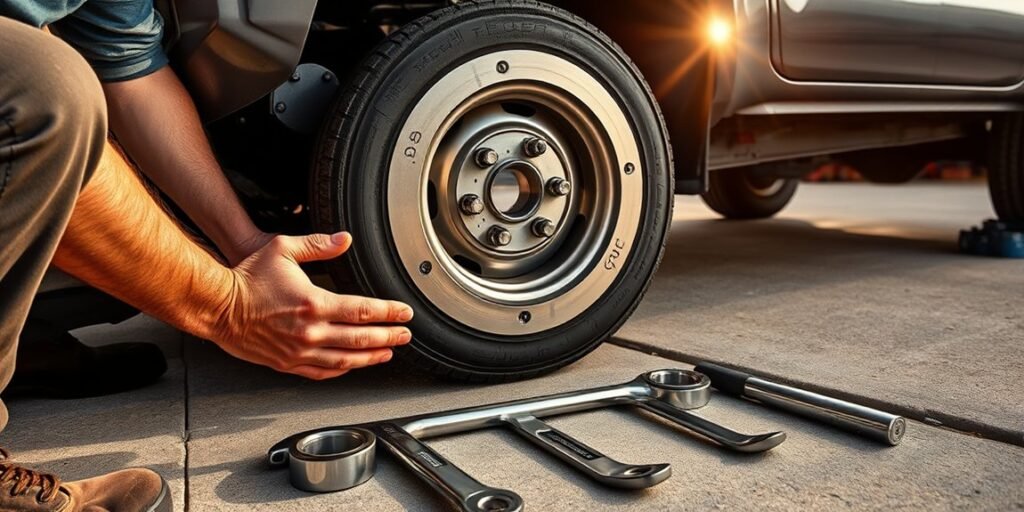
A worn wheel bearing on a Toyota Tacoma can start as a faint hum and turn into vibration, steering looseness, ABS warnings, or unsafe wheel movement. The best way to check it is to combine a careful road test with a safe lifted-wheel inspection. Use the steps below to narrow down the problem before deciding whether the bearing, hub, tire, brake, or suspension needs attention.
Quick Answer
To check Tacoma wheel bearings, listen for humming, rumbling, or grinding that changes with speed or turning. Then lift the truck safely on jack stands, spin the wheel by hand, and check for looseness by rocking the tire. Any play, roughness, vibration, ABS warning, or grinding noise needs prompt diagnosis.
Key Takeaways
- A bad Tacoma wheel bearing often makes a humming, growling, grinding, or rumbling noise that changes with speed or when the truck turns.
- Always use wheel chocks and jack stands; never rely on a jack alone while checking a wheel bearing.
- Wheel play can also come from ball joints, tie rods, lug nuts, or suspension parts, so do not assume the bearing is the only possible cause.
- Most noisy or loose wheel bearings are replaced, not “adjusted” as a quick fix.
- Exact parts, torque specs, and repair difficulty vary by Tacoma year, trim, drivetrain, and whether the issue is front or rear.
At a Glance
| Time Required | 30–60 minutes for a basic inspection |
| Difficulty | Moderate DIY diagnosis; replacement may require professional tools |
| Tools Needed | Wheel chocks, floor jack, jack stands, lug wrench, gloves, safety glasses, flashlight, torque wrench, optional mechanic’s stethoscope or dial indicator |
| Cost | Inspection can be free if you have tools; professional Tacoma wheel bearing replacement averages about $531–$917 before taxes and location-based fees, according to RepairPal |
Why Wheel Bearings Matter in Your Tacoma
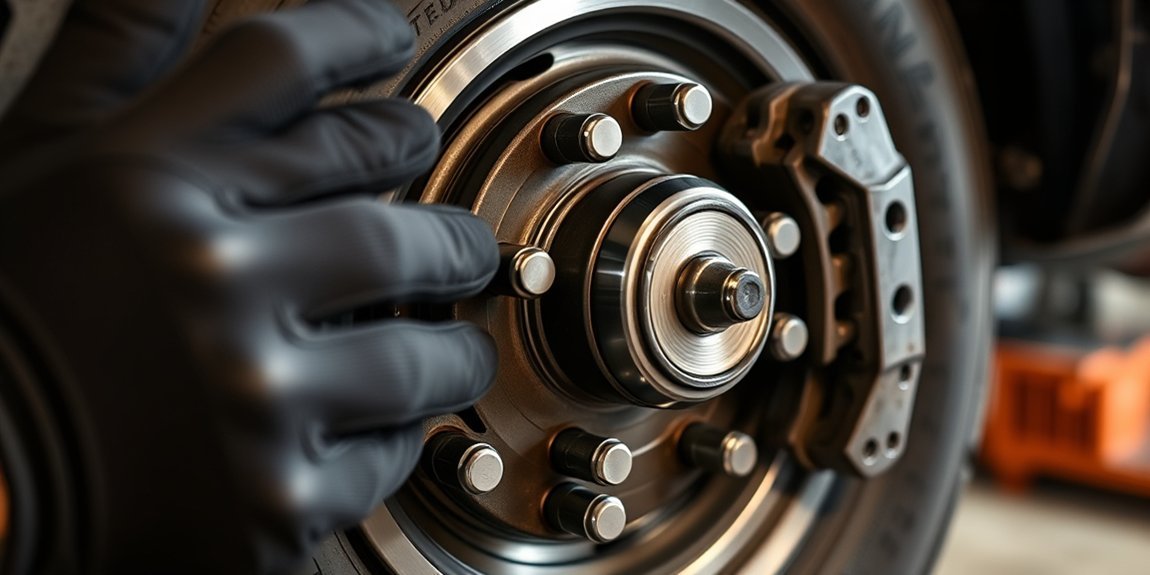
Wheel bearings allow each wheel on your Toyota Tacoma to rotate smoothly while supporting vehicle weight and road forces. When a bearing wears out, the wheel can develop noise, vibration, excess heat, or looseness. Left alone, the problem can damage the hub, tire, brakes, ABS sensor, or nearby suspension parts.
There is no single mileage where every Tacoma wheel bearing must be replaced. Some last a very long time; others wear early because of potholes, water intrusion, mud, off-road impacts, heavy loads, incorrect installation, or improper torque. Toyota recommends scheduled maintenance every 5,000 miles or six months, and those service visits are a good time to listen for wheel noise, check tires, and inspect the wheel area.
Note: Tacoma wheel bearing design and repair steps vary by model year, front or rear axle, 2WD or 4WD, and trim. Use your exact Toyota service information for torque specs and part selection.
[Products Worth Considering]

Universal magnetic jack pad with aluminum grooved design to protect vehicle pinch welds during lifting. Durable nylon pad inserts are upgraded and secured with screws to resist damage and keep in place. Designed to fit most single vehicle pinpoint welds for safer, stable jacking when changing tires, repairs, or performing oil changes.

This roadside assistance kit helps drivers and passengers in urgent situations after an accident or breakdown, providing practical support while waiting for help. It includes a lightweight, compact tire inflator for fast inflation of standard vehicle tires, plus reinforced jumper cable protection for safer handling. Ideal for winter weather, road trips, camping, and travel, with everything stowed neatly in a trunk bag.

Secure your parked vehicle quickly with AFA Tooling 4T rubber wheel chocks in a 4-pack for two dual-wheel sets. The ribbed design and textured base grip fast without pounding, so you can chock tires on trailers, RVs, ATVs, and work vehicles with confidence. EZ rustproof handles with rope ties keep the pair together for easy placement and removal, while nylon-reinforced rubber stands up to dirt, ice, salt, and harsh weather.
Signs Your Tacoma Needs a Wheel Bearing Check
A failing wheel bearing usually gives several clues before it becomes severe. The most common symptoms are noise, vibration, steering looseness, and changes in how the truck feels during turns.
Unusual Noises While Driving
Listen for a humming, growling, rumbling, grinding, or clanking sound near one wheel. Bearing noise often increases with vehicle speed. It may become louder when the truck’s weight shifts during a turn. A noise that gets louder while turning left can point toward the right-side bearing because that side is loaded more, while a noise that gets louder while turning right can point toward the left-side bearing. This load test is helpful, but it is not perfect because sound can travel through the frame.
Vibration or Shaking Issues
A worn bearing can create vibration in the steering wheel, floorboard, or seat. The vibration may change with speed or when the truck turns. If the steering feels vague or the wheel wobbles, stop driving until the truck is inspected.
Difficulty Making Turns
Grinding or rumbling during turns can come from a wheel bearing, but it can also come from tires, brakes, CV joints, ball joints, tie rods, or other suspension parts. If the Tacoma pulls to one side, wanders, or feels loose while turning, inspect the entire wheel end instead of replacing the bearing blindly.
Warning: Do not keep driving a Tacoma with severe grinding, visible wheel wobble, smoke, burning smell, or major looseness. A badly failed bearing can damage the hub and, in extreme cases, allow the wheel assembly to become unsafe.
How to Perform a Basic Wheel Bearing Check
Start with a road test, then do a safe lifted-wheel check. This order helps you confirm whether the noise appears under load before you inspect the wheel off the ground.
Step 1: Road-Test the Tacoma Safely
- Choose a quiet road with little traffic and a smooth surface.
- Drive at low to moderate speeds and listen for humming, growling, or grinding.
- Gently steer left and right within your lane to shift weight from one side to the other.
- Note whether the sound changes with speed, turning direction, braking, or road surface.
- Do not perform aggressive swerves or high-speed testing.
Pro Tip: Tire noise often changes with pavement texture. Wheel bearing noise is more likely to rise with speed and stay present across different road surfaces.
Step 2: Lift the Wheel Safely
Park on level ground, set the parking brake, place the transmission in Park or in gear for a manual transmission, and chock the wheels that will stay on the ground. Loosen the lug nuts slightly before lifting, then raise the Tacoma at the correct jack point and support it with properly rated jack stands.
Warning: A jack is for lifting, not supporting the truck while you work. Toyota’s owner information says to use a jack stand if it is necessary to get under the vehicle. Keep your body out from under the truck unless it is securely supported.
Step 3: Check for Wheel Play
Hold the tire at the 12 and 6 o’clock positions and rock it in and out. Then repeat at the 3 and 9 o’clock positions. A good wheel bearing should not have obvious clunking or looseness. Any movement needs more diagnosis because play at 12 and 6 can also point to ball joints, while play at 3 and 9 can also point to tie rods or steering components.
Step 4: Spin the Wheel by Hand
Rotate the wheel slowly and listen for scraping, grinding, or roughness from the hub area. On some Tacoma setups, brake drag or drivetrain resistance can make the wheel harder to spin, so compare side to side. If one wheel feels rougher or sounds louder than the opposite wheel, the bearing or hub deserves closer inspection.
Step 5: Visually Inspect the Wheel Area
Remove the wheel if needed and inspect the hub, brake rotor, caliper, dust shield, ABS wiring, and nearby suspension parts. Look for grease leakage, rust trails, heat discoloration, damaged seals, loose hardware, uneven tire wear, or a brake dust shield touching the rotor.
| Inspection Step | What to Look or Listen For | What It May Mean |
|---|---|---|
| Road test | Hum, growl, or rumble that changes with speed or turning | Possible wheel bearing, tire, or drivetrain noise |
| 12 and 6 o’clock play test | Clunking or looseness | Possible bearing, ball joint, or hub issue |
| 3 and 9 o’clock play test | Side-to-side movement | Possible tie rod, steering, or bearing issue |
| Spin test | Grinding, roughness, or vibration | Possible worn bearing, brake drag, or rotor/dust-shield contact |
| Visual inspection | Grease leak, rust, heat marks, uneven tire wear, damaged ABS wire | Possible bearing, hub, seal, brake, tire, or sensor issue |
Tools You’ll Need for Inspecting Tacoma Wheel Bearings
Gather your tools before lifting the truck. A basic inspection does not require a hydraulic press, but replacement may require special tools depending on the Tacoma’s axle and bearing design.
- Wheel chocks: Prevent the truck from rolling while lifted.
- Floor jack and jack stands: Lift and support the Tacoma safely.
- Lug wrench or impact-rated socket: Remove the wheel if visual access is needed.
- Torque wrench: Reinstall lug nuts and fasteners to the proper specification.
- Safety glasses and gloves: Protect your hands and eyes from debris.
- Flashlight: Helps inspect seals, brake components, and ABS wiring.
- Mechanic’s stethoscope: Optional tool for isolating hub noise.
- Dial indicator: Optional tool for measuring hub play when service specs are available.
A noisy bearing is not just an annoyance. Wheel-end play, vibration, or grinding should be treated as a safety issue until the cause is confirmed.
What You Can Fix—and What You Cannot
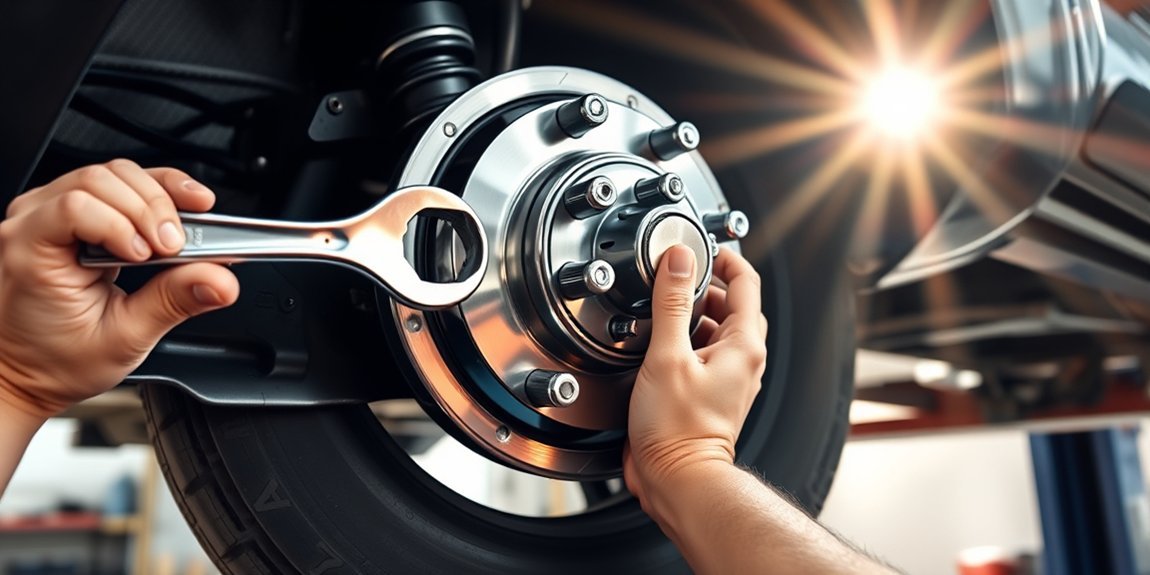
There are a few simple problems you can correct during inspection, but a damaged wheel bearing usually needs replacement. You can fix loose lug nuts by torquing them correctly, remove a small rock caught behind a brake dust shield, or correct a dust shield that is lightly touching the rotor. You can also identify tire cupping, brake drag, or steering looseness before spending money on a bearing.
Do not treat bearing noise with grease spray, random preload adjustment, or extra torque on a fastener. Timken’s wheel hub guidance notes that improper bearing retention and incorrect axle-nut torque can contribute to vibration, noise, and accelerated wear. Always follow the Toyota service procedure for your exact model.
Problems That Can Mimic a Bad Wheel Bearing
Before replacing parts, rule out other common Tacoma wheel-end issues:
- Cupped or uneven tires: Can sound like a wheel bearing, especially at highway speed.
- Brake drag: A stuck caliper, damaged rotor, or bent dust shield can grind or scrape.
- Loose lug nuts: Can cause wobble, noise, and unsafe wheel movement.
- Bad ball joints or tie rods: Can create play that feels like a loose bearing.
- CV axle or driveline noise: Can click, clunk, or rumble during acceleration or turns.
- Differential or transfer-case noise: Can be mistaken for a rear wheel bearing.
- ABS sensor or wiring damage: Can trigger warning lights near the hub area.
Note: If the noise disappears after tire rotation, suspect tire wear first. If it changes while braking, inspect brakes before blaming the bearing.
Next Steps After Finding Faulty Wheel Bearings
If your Tacoma has grinding, roughness, measurable play, repeated hub noise, or wheel-end vibration, plan for repair soon. A worn bearing can damage the hub, ABS sensor, brake rotor, tire, and suspension components.
- Stop driving if the wheel has visible wobble, loud grinding, smoke, or a burning smell.
- Check your exact Toyota service information for the correct bearing, hub, seals, fasteners, and torque specs.
- Replace one failed bearing if the opposite side checks good, unless a mechanic finds matching wear on both sides.
- Use a new axle nut or other one-time-use hardware when Toyota’s service procedure requires it.
- After repair, torque the wheel properly and take a short, careful test drive to confirm the noise is gone.
[Products Worth Considering]

Camco Trailer Aid Plus tandem tire ramp lifts your trailer for quick, safe tire changes with ample clearance from its 5 1/2-inch lift. It helps you change a flat tire without unloading cargo, making roadside and routine maintenance more efficient. The heavy-duty, waterproof and rustproof polymer design supports up to 15,000 lb and is built for easy portability and storage.

This spare tire tool kit is designed for the 2004 to 2018 Ford F-150 to help you loosen and tighten wheel lug nuts and manage the spare tire and provided jack functions from underneath the vehicle. It includes the lug nut wrench and extension pieces plus a convenient storage carrying case for organized transport. The jack itself is not included.
Choosing Quality Wheel Bearings for Your Tacoma
Choose parts that match your exact Tacoma year, drivetrain, axle, and trim. Toyota says Toyota owner manuals and maintenance guides help owners find vehicle-specific maintenance information, and Toyota’s warranty guide says Toyota Genuine Parts are designed to fit the vehicle’s exact specifications. Quality aftermarket bearings can also work well when they come from reputable manufacturers and match the correct application.
Before buying, confirm whether you need a complete hub assembly, a pressed bearing, a seal kit, ABS-related hardware, or rear axle bearing components. Pressed bearings can require a shop press, bearing adapters, and careful support of the knuckle or axle shaft. If you do not have the right tools, paying a professional is usually safer than damaging a new bearing during installation.
When to Seek Professional Help for Wheel Bearing Issues
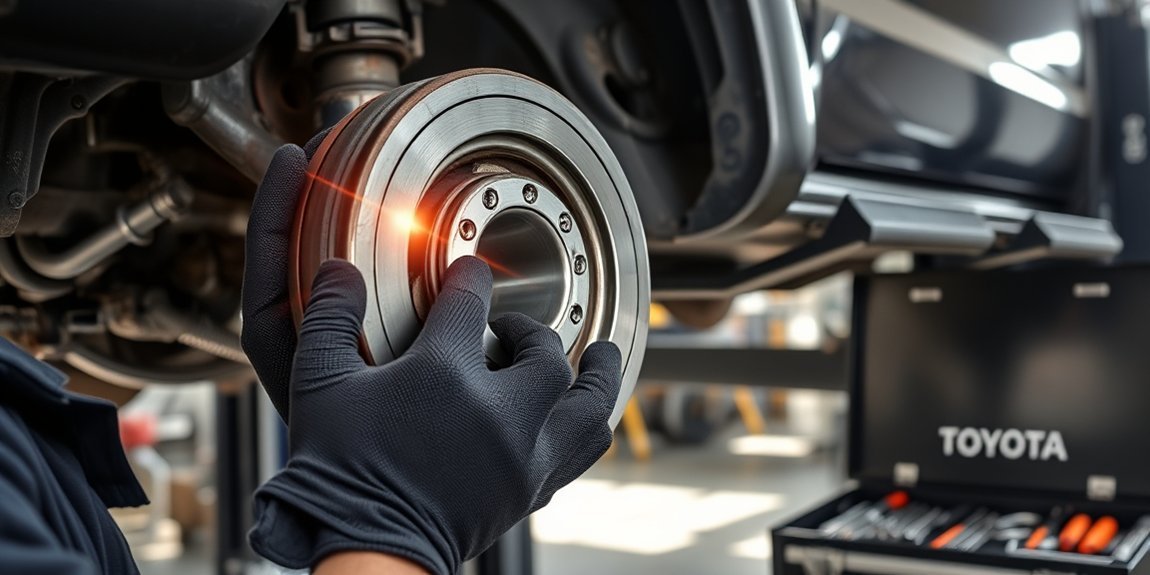
Get professional help if you cannot isolate the noise, if the wheel has obvious play, if the bearing is pressed into the knuckle or axle, or if the ABS light appears after wheel-end work. A mechanic can road-test the truck, inspect the lift points, check hub play, compare all four corners, and verify whether the bearing is truly the fault.
Professional diagnosis is especially smart after deep water, mud, heavy off-road use, curb impacts, large potholes, or recent hub work. Improper installation can shorten bearing life, so the correct tools and torque specs matter.
Tips for Maintaining Your Tacoma’s Wheel Bearings
Wheel bearings are not normally serviced like engine oil, but you can reduce premature wear with smart maintenance habits:
- Listen for new wheel noise during normal driving.
- Inspect the wheel area during tire rotations and scheduled maintenance.
- Wash mud, sand, and road salt from the wheel wells after off-road driving.
- Avoid striking curbs, deep potholes, and obstacles at speed.
- Do not exceed the Tacoma’s payload or towing limits.
- Use the correct torque when installing lug nuts, axle nuts, and hub hardware.
- Repair torn seals, damaged ABS wiring, and brake issues promptly.
Frequently Asked Questions
How often should I check my Tacoma’s wheel bearings?
Check them whenever you hear wheel noise, feel vibration, notice uneven tire wear, or see an ABS warning. Also use tire rotations and Toyota’s scheduled maintenance visits as a chance to listen for roughness and inspect the wheel area. After mud, deep water, hard off-road use, or a curb impact, check sooner.
Can I drive with bad wheel bearings?
Do not drive far with a bad wheel bearing. A mild hum should be inspected soon, while grinding, wobble, heat, smoke, or major looseness means the Tacoma should be parked and towed or repaired immediately. Driving on a failed bearing can damage the hub, brakes, tires, and suspension.
What tools are essential for replacing wheel bearings?
For diagnosis, you need wheel chocks, a jack, jack stands, a lug wrench, safety gear, and a flashlight. For replacement, you may also need a torque wrench, bearing adapters, a shop press, pullers, new seals, and new one-time-use hardware. The exact tool list depends on your Tacoma’s year, axle, and bearing design.
How much does it cost to replace wheel bearings?
RepairPal estimates Toyota Tacoma wheel bearing replacement at about $531 to $917 on average, before taxes, fees, location differences, and related repairs. Older models, rear axle bearings, hub assemblies, rust, or damaged ABS parts can change the final price.
Are aftermarket wheel bearings reliable for my Tacoma?
Good aftermarket wheel bearings can be reliable when they match your exact Tacoma and come from a reputable brand. Avoid unknown bargain parts for a safety-critical wheel-end repair. Toyota Genuine Parts are also a strong option because they are designed to fit Toyota specifications.
Can a bad wheel bearing trigger an ABS light?
Yes. Some hub and bearing assemblies are close to or integrated with wheel-speed sensor components. Bearing play, sensor damage, wiring damage, or incorrect installation can trigger ABS-related warnings. Scan the system and inspect the sensor area before replacing parts.
Conclusion
Checking Toyota Tacoma wheel bearings is a safety-first job: listen during a careful road test, lift the truck only with proper support, check for play, spin the wheel, and inspect the hub, brakes, tires, and suspension. If you find grinding, roughness, looseness, or heat, do not look for a shortcut. Confirm the diagnosis and replace the failed bearing or hub with the correct parts and torque specs.
Sources
- Toyota Owners Manuals and Warranties — vehicle-specific owner manual and maintenance guide access
- 2026 Toyota Tacoma Warranty & Maintenance Guide — scheduled maintenance cadence, service guidance, and Toyota Genuine Parts information
- MOOG Diagnosis of Worn Wheel End Bearings — symptoms and basic wheel-end diagnostic checks
- Timken Wheel Hub Damage Analysis Guide — bearing retention, torque, noise, vibration, and hub damage guidance
- RepairPal Toyota Tacoma Wheel Bearing Replacement Cost Estimate — Tacoma-specific cost range
- Kelley Blue Book Toyota Wheel Bearing Replacement FAQ — warning signs, no fixed replacement schedule, and driving-risk context

Related Articles
How Tire Weight Affects Toyota Tacoma Performance
How does tire weight influence your Toyota Tacoma's performance and efficiency? Discover the surprising effects that could change your driving experience.
Read More
Tire Noise Levels by Tire Type on a Toyota Tacoma
A comprehensive look at how tire types affect noise levels in your Toyota Tacoma reveals surprising insights that could enhance your driving experience.
Read More
How To Choose Tires for a Dual Use Toyota Tacoma
Unlock the secrets to selecting the perfect tires for your dual-use Toyota Tacoma, ensuring optimal performance and comfort on every adventure. Discover more inside!
Read More