
How Toyota Hilux Tires Handle Snow and Ice
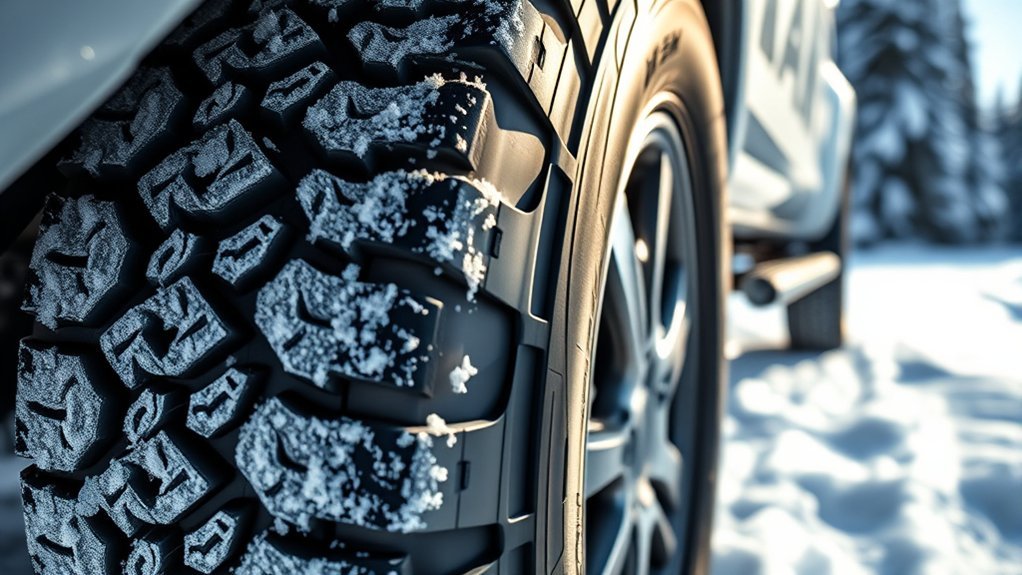
A Toyota Hilux can be a capable winter truck, but snow and ice performance depends more on tire choice, speed, tire pressure, load placement, and drive mode than on the Hilux badge alone. The safest setup is a full set of winter-rated tires, a properly maintained vehicle, and smooth driving inputs that match the road surface.
Quick Answer
Winter tires can greatly improve a Toyota Hilux in snow and cold weather because their tread and rubber compound are designed to stay flexible and grip better. For ice, choose dedicated winter tires when possible, slow down, use 4WD only where appropriate, and never assume 4WD shortens braking distance.
Key Takeaways
- Winter tires matter most: Look for the three-peak mountain snowflake symbol for severe snow service, and use dedicated winter tires if you regularly drive on ice.
- 4WD helps you move, not stop: A 4×4 Hilux can launch and climb better in snow, but braking and cornering still depend on tire grip and speed.
- Ballast must be secured: Extra weight can help rear traction on a 4×2 or lightly loaded pickup, but it must be low, tied down, and within payload limits.
- Drive smoothly: Brake before turns, avoid sudden steering, leave extra space, and do not use cruise control on snow or ice.
At a Glance
| Time Required | 15–30 minutes to check tires, pressure, load, and drive-mode settings before a winter trip |
| Difficulty | Easy for basic checks; tire mounting and balancing should be done by a tire shop |
| Tools Needed | Tire pressure gauge, tread-depth gauge, snow brush, emergency kit, and secure tie-downs if carrying ballast |
| Cost | Usually the cost of four winter-rated tires plus fitting; pressure and tread checks cost little or nothing |
The Importance of Winter Tires for the Toyota Hilux
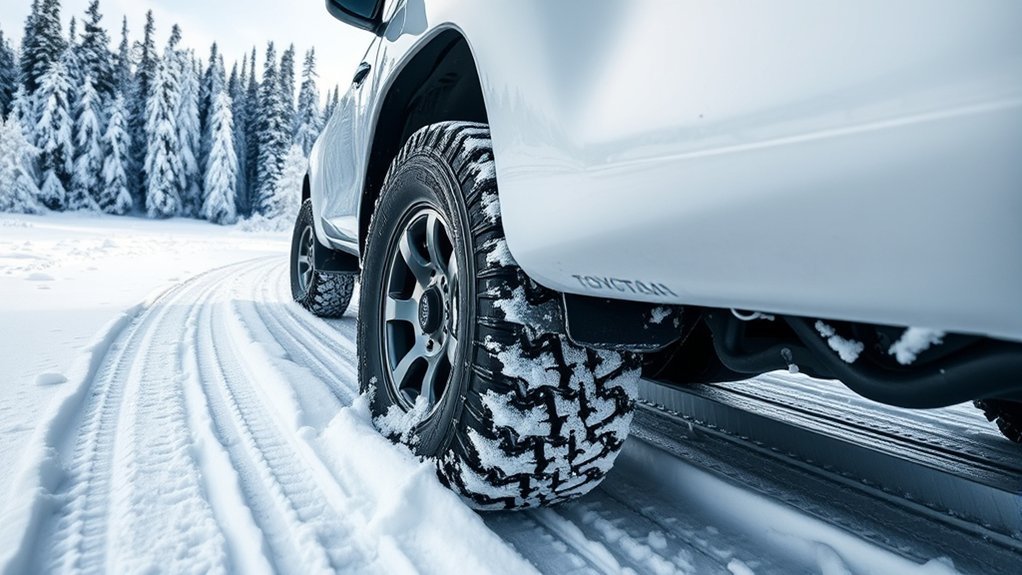
When temperatures drop, the right tires make the biggest difference to how your Toyota Hilux feels on snow, slush, and ice. Transport Canada advises drivers to look for the peaked mountain with snowflake symbol because those tires meet specific snow-traction performance requirements and are designed for severe snow conditions.
Winter tires use cold-weather compounds and tread designs that stay more flexible than many all-season or summer tires. That helps the tire conform to the road surface and create more biting edges in packed snow. According to TRAC, winter tires can provide stopping distances as much as 30% shorter than all-season tires in some near-freezing winter conditions.
The biggest winter upgrade for a Hilux is not 4WD by itself. It is four matching tires that can grip the road in cold, snowy, and icy conditions.
Warning: Winter tires improve grip, but they do not remove the need to slow down. On glare ice, every vehicle needs much longer stopping distance, even with 4WD and premium winter tires.
[Products Worth Considering]

EVOULTES heavy duty tire inflator with an integrated gauge delivers accurate pressure readings from 10–120 PSI, helping you inflate, deflate, and check tires in one tool. The 16.5-inch extended dual-head air chuck with swivel base reaches hard-to-access dual wheel valves on trucks and RVs. A brass trigger core and side-mounted air release valve make operation smooth, with standard 1/4" NPT threading and quick-connect compatibility for easy setup.

This portable cordless tire inflator delivers up to 160 PSI with fast 17 L/min airflow to help you quickly top up tires and get back on the road. It features dual power mode, running on a 21V rechargeable battery or a 12V DC adapter for convenient roadside use. An automatic shut-off with digital pressure gauge helps prevent overinflation, and a built-in LED light improves visibility in low-light conditions.

The JACO FlowPro Tire Inflator measures, inflates, and airs down tires up to 100 PSI with battery-free operation and ±2% accuracy after calibration. It features a glowing pressure dial for night visibility, a heavy-duty steel build with a hybrid hose, and a precision push-to-inflate thumb trigger. The patented Lightning Air Chuck locks on for a secure seal, and the kit includes quick-connect hardware for easy inline use with your air compressor.
Best Tire Types for Snow and Ice
The best tire for a Hilux depends on where you drive. A truck that spends most winter on icy paved roads needs a different tire than a Hilux used on snowy farm tracks, gravel roads, or mountain trails. Always match the tire size, load rating, and speed rating to your Hilux placard and owner’s manual.
Dedicated Winter Tires vs. All-Terrain Tires
| Tire Type | Best For | Hilux Winter Notes |
|---|---|---|
| Dedicated winter tires | Cold pavement, packed snow, slush, and icy commuting | Best choice for regular ice and winter highway use. Choose LT-rated sizes where your Hilux requires them. |
| 3PMSF all-terrain tires | Mixed paved roads, snow, gravel, and light off-road use | Options such as the BFGoodrich All-Terrain T/A KO2, Toyo Open Country A/T III, and Falken Wildpeak A/T3W can work well in snow, but they are not the same as dedicated ice-focused winter tires. |
| Rugged-terrain or hybrid tires | Mud, dirt, rocks, deep snow, and off-road traction | Great tread voids can help in deep snow, but large tread blocks may be less confident on polished ice. Verify the snow rating for the exact size before buying. |
How to Read 3PMSF and M+S Markings
The three-peak mountain snowflake symbol, often shortened to 3PMSF, means a tire meets industry severe-snow traction requirements. The USTMA severe-snow definition is based on standardized snow-traction testing. That is helpful, but it does not mean every 3PMSF tire is equally strong on wet ice, black ice, or steep frozen roads.
The M+S mark stands for mud and snow, but it is a less complete winter-performance signal than 3PMSF. For a Hilux that regularly faces cold winter roads, choose a tire with 3PMSF at minimum, and consider a true winter tire if ice is common.
Note: A tire model can vary by size, load range, and market. Confirm the exact Hilux size you are buying carries the rating you want.
How Tire Tread Patterns Affect Performance
Tread design changes how a Hilux grips snow, clears slush, and resists hydroplaning. Deeper grooves help move loose snow and water away from the contact patch. Small slits called sipes add biting edges that can grip packed snow and icy patches. A winter compound also matters because rubber that stays flexible in the cold can grip better than rubber that hardens.
Tread Design Variability
A more open all-terrain tread can dig into deep snow and soft surfaces, which is useful for off-road work. A dedicated winter tire usually has more siping and a compound focused on cold pavement, which is why it often feels better on icy streets and highways. The best choice depends on whether your Hilux spends more time on roads, trails, or job sites.
Traction Versus Hydroplaning
Snow traction and hydroplaning resistance are related, but they are not identical. Big voids and channels help clear slush and standing water. Fine siping helps create edges on packed snow. On ice, however, speed, tire compound, tread depth, and road temperature all matter. No tread design can overcome driving too fast for the conditions.
- For packed snow: choose 3PMSF-rated tires with strong siping.
- For deep snow: choose tread blocks and voids that can dig and self-clean.
- For icy roads: favor dedicated winter tires and reduce speed early.
- For slush: maintain tread depth and avoid worn tires that cannot evacuate water.
Pro Tip: Fit four matching winter-rated tires. Mixing tire types, tread depths, or ratings can make the Hilux less predictable when braking or turning on snow.
Weight Distribution and Traction
A lightly loaded pickup can feel nervous in snow because there is less weight over the rear tires. Adding modest ballast can help a rear-wheel-drive or 4×2 Hilux gain rear traction, but it must be done safely. Place weight low in the bed, ahead of or near the rear axle, and between the wheel wells. Secure it so it cannot slide during braking or a crash.
If you use sandbags, traction mats, or other ballast, keep the total within the Hilux payload rating and do not load the truck so heavily that the front tires feel light. Steering and braking need front-tire grip. A balanced, secured load is safer than simply throwing weight into the bed.
Warning: Never carry loose concrete blocks, tools, or unsecured ballast in the bed for winter traction. In a sudden stop, sliding cargo can damage the truck or injure people nearby.
Driving Techniques for Snowy Conditions
Good winter driving is slow, smooth, and planned. Before setting off, check the weather, clear all windows and lights, and set tire pressure to the manufacturer’s cold-pressure recommendation. NHTSA advises drivers to prepare the vehicle for winter weather and pay special attention to tire condition and inflation pressure.
- Slow down early: Enter corners slower than normal and brake before turning, not halfway through the turn.
- Use gentle inputs: Accelerate, brake, and steer smoothly so the tires are not asked to do too much at once.
- Leave more space: Increase following distance because stopping distance can grow quickly on snow and ice.
- Use ABS correctly: If your Hilux has anti-lock brakes, press the brake pedal firmly and keep steering. Do not pump ABS brakes.
- Recover from a skid calmly: Ease off the accelerator, look where you want to go, and steer gently in that direction.
- Avoid cruise control: Do not use cruise control on snow, ice, or slush because the truck may add throttle when grip is already low.
Practice in an empty, legal, low-speed area if you are new to snow driving. Learn how the Hilux responds before you meet traffic, hills, or black ice.
[Products Worth Considering]
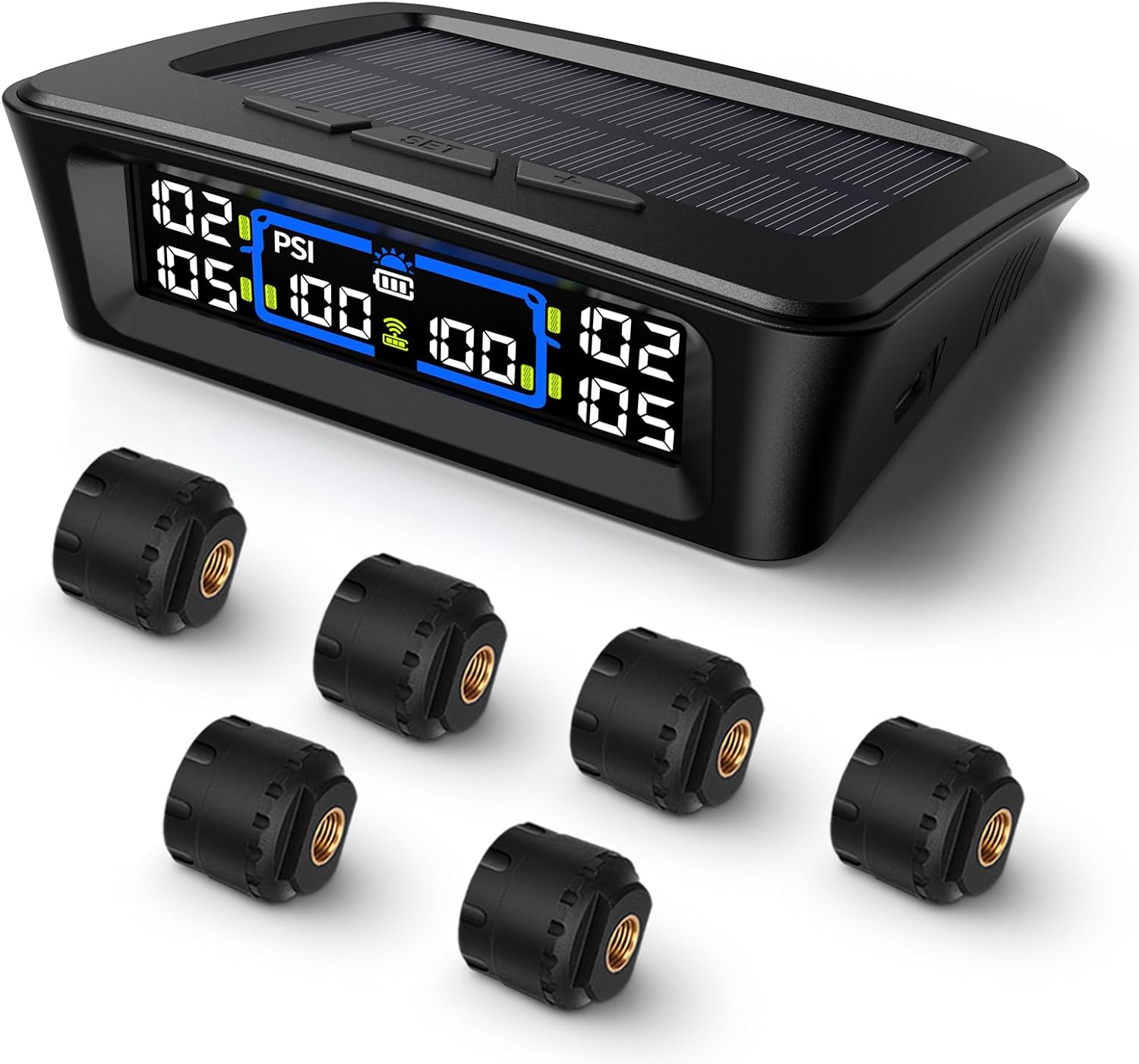
The Tymate TM12 RV TPMS delivers real-time tire pressure and temperature monitoring with a stable 433Hz display for safer long-distance driving. It supports simultaneous monitoring across vehicle and trailer zones, includes six alarm modes for pressure, temperature, leakage, battery, and signal loss, and features easy DIY installation with auto calibration. Power is supplied via USB-C charging or solar recharging, with a wide 0–144 PSI range and up to 50 ft signal coverage for RVs and towable trailers.

This portable cordless tire inflator delivers fast, efficient inflation for cars, motorcycles, bikes, and sports balls with a digital pressure gauge. Use the one-click PSI preset with auto shut-off for accurate, hands-free topping to your target pressure up to 150 PSI. It’s compact and rechargeable with a built-in emergency LED light plus valve adapters and accessories for quick, ready-to-go use.
Evaluating 4×2 vs. 4×4 for Winter Driving
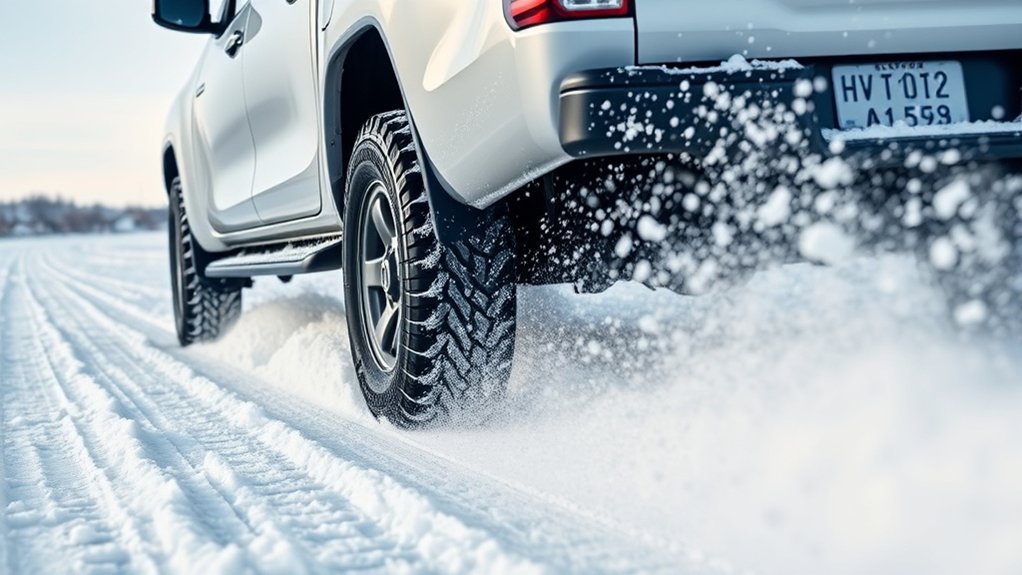
A 4×4 Hilux has a clear advantage when you need to pull away from a stop, climb a snowy grade, or move through deeper snow. That does not mean it stops faster on ice. Michelin explains that AWD helps with acceleration on snowy roads, but tires determine how well a vehicle grips, brakes, and handles.
| Setup | Advantages | Limits on Snow and Ice |
|---|---|---|
| Hilux 4×2 | Lower cost, simpler drivetrain, acceptable for mild winter roads with excellent tires | Can struggle to start on hills or deep snow, especially when the bed is empty |
| Hilux 4×4 | Better forward traction, better hill starts, more useful in deep snow and off-road conditions | Does not overcome poor tires, high speed, or ice; can encourage overconfidence |
Best 4×4 Mode for Snow and Ice
On Hilux models with selectable 4WD, use the high-range 4WD mode such as H4 or 4H only when the road is loose, snowy, icy, muddy, or slippery enough to allow tire slip. Use low range only for slow, difficult conditions such as deep snow, steep off-road climbs, or recovery situations. On models equipped with Toyota Multi-Terrain Select, newer V-Active variants include Deep Snow in high range, according to Toyota Australia.
Note: Drive-mode names and shift rules vary by Hilux year, market, and trim. Follow your owner’s manual before switching between 2WD, high-range 4WD, and low-range 4WD.
Common Winter Driving Mistakes to Avoid
Even a well-equipped Hilux can slide if the driver asks too much from the tires. Avoid these common winter mistakes:
- Assuming 4WD makes the truck stop faster: It helps you move, but braking grip still comes from the tires.
- Driving on worn tires: Low tread depth reduces snow and slush performance long before the tire looks completely bald.
- Ignoring tire pressure: Cold weather can lower inflation pressure, so check tires when they are cold.
- Turning too sharply or braking late: Brake before the corner, then steer smoothly through it.
- Using the wrong tire for the job: Mud-terrain or rugged-terrain tires may look aggressive but can be weaker on polished ice than dedicated winter tires.
- Switching off traction control too quickly: Leave it on for normal winter driving. Only consider temporary changes if you are stuck and the manual recommends it.
- Carrying unsecured ballast: Weight helps only when it is controlled, secured, and within payload limits.
Frequently Asked Questions
Does the Toyota Hilux have traction control?
Many modern Toyota Hilux models have traction control and stability-control systems, but features vary by year, market, and trim. These systems can reduce wheelspin and help stability, but they cannot create grip if the tires are wrong for snow or ice.
Is it better to drive a Hilux in 4WD or 2WD on ice?
Use 4WD only where the surface is slippery enough and your owner’s manual allows it. 4WD can help the Hilux get moving, but it does not make the truck stop faster on ice. On icy roads, tire quality, lower speed, and smooth braking matter more than drivetrain mode.
Should I turn off traction control in snow or ice?
For normal driving, leave traction control on. If you are stuck in deep snow and the wheels need limited spin to rock the vehicle free, your manual may allow a temporary traction-control change. Turn it back on once you are moving again.
What is the best 4×4 mode for snow and ice?
For most snow-covered roads, high-range 4WD such as H4 or 4H is the usual choice where equipped and where the manual allows it. Low-range 4WD is for slow, difficult conditions such as deep snow, steep off-road tracks, or recovery situations.
Are all-terrain tires good enough for a Hilux in winter?
Some all-terrain tires with the 3PMSF symbol are good for mixed snow, gravel, and off-road use. However, if you often drive on ice, compacted snow, or winter highways, dedicated winter tires are usually the safer choice.
Should I add weight to the bed of a Hilux for snow?
A small amount of secured ballast can help rear traction on a lightly loaded pickup, especially a 4×2. Keep it low, secure it firmly, place it near the rear axle area, and never exceed the truck’s payload rating.
Conclusion
A Toyota Hilux can handle winter roads well when it is set up correctly. Start with four matching winter-rated tires, keep tire pressure and tread depth in check, secure any bed ballast, and use 4WD only when conditions call for it. Most importantly, drive as if grip is limited—because on snow and ice, it always is.
Sources
- Transport Canada — Using winter tires — backs up 3PMSF guidance and cold-weather tire behavior.
- NHTSA — Winter driving tips — backs up winter vehicle preparation, tire pressure, and road-safety cautions.
- Tire and Rubber Association of Canada — Why winter tires — backs up the conditional “as much as 30% shorter” winter stopping-distance claim.
- USTMA — Severe snow tire service bulletin — backs up what the severe-snow tire designation means.
- Michelin — AWD vs winter tires — backs up the point that AWD/4WD helps acceleration but does not replace tire grip for braking and turning.
- Toyota Australia — HiLux V-Active technology — backs up Hilux Multi-Terrain Select and Deep Snow mode context where equipped.

Related Articles
Toyota Hilux Run-Flat Tires: What You Need to Know
Take control of your safety with Toyota Hilux run-flat tires; discover their benefits and hidden costs that could change your driving experience forever.
Read More
Effects of Underinflated Tires on the Toyota Hilux
Inadequate tire pressure in your Toyota Hilux can lead to serious safety issues and costly repairs; discover how to avoid these pitfalls.
Read More
The Risks of Overinflating Toyota Hilux Tires
Overinflating your Toyota Hilux tires can lead to dangerous blowouts and uneven wear, but understanding the risks is crucial for your safety.
Read More