
Hydroplaning Resistance in Toyota Hilux Tires Explained
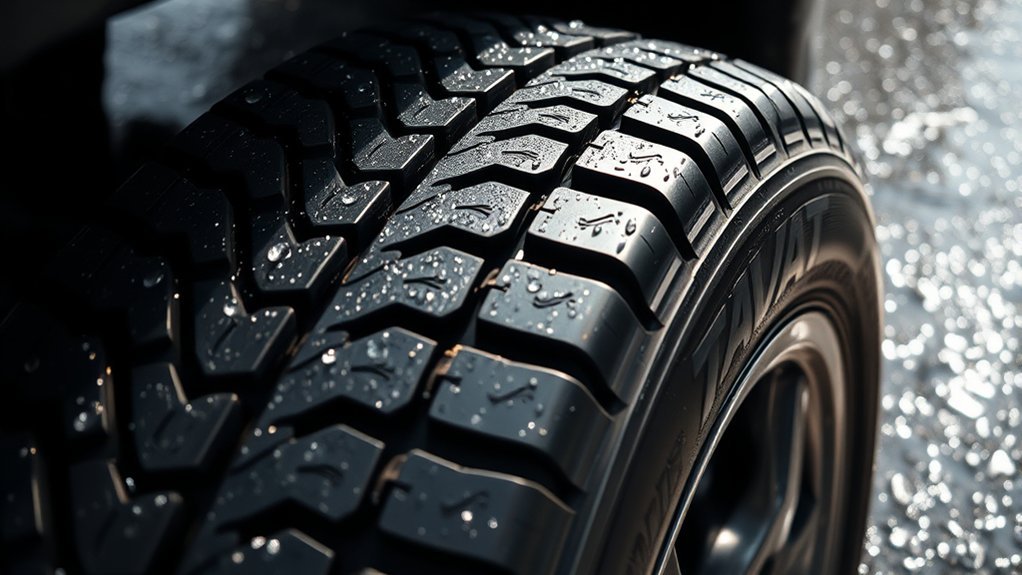
Toyota Hilux tires can help reduce hydroplaning risk, but they cannot prevent it by themselves. In heavy rain, your safety depends on the tire’s tread depth, tread design, inflation pressure, load, speed, and the amount of standing water on the road. A well-maintained Hilux with suitable wet-road tires gives you a much better chance of staying in control than a Hilux running worn, underinflated, or overloaded tires.
Quick Answer
Toyota Hilux tires resist hydroplaning only when they have enough tread depth, correct cold pressure, and tread grooves that can move water away from the contact patch. For wet-road safety, replace tires before they are badly worn, slow down in rain, avoid standing water, and never assume 4WD or ABS can overcome hydroplaning.
Key Takeaways
- Hydroplaning happens when water lifts the tire away from the road, reducing steering and braking control.
- For wet roads, 4/32 inch of tread is a smart replacement warning point, while 2/32 inch is already worn out and unsafe for normal use.
- Use the Hilux tire placard or owner’s manual for the correct cold tire pressure, not the maximum pressure printed on the tire sidewall.
- Slow down in rain, increase following distance, avoid cruise control, and do not make sharp steering or braking inputs.
- If your Hilux hydroplanes, ease off the accelerator, look where you want to go, steer gently, and avoid slamming on the brakes.
At a Glance
| Time Required | 5–10 minutes before a wet-weather trip |
| Difficulty | Easy for most drivers |
| Tools Needed | Accurate tire pressure gauge, tread depth gauge, flashlight, and your Hilux tire placard or owner’s manual |
| Cost | Usually $0 if you already have a gauge; about $5–$20 for a basic tread or pressure gauge |
What Is Hydroplaning and Its Impact on Driving?
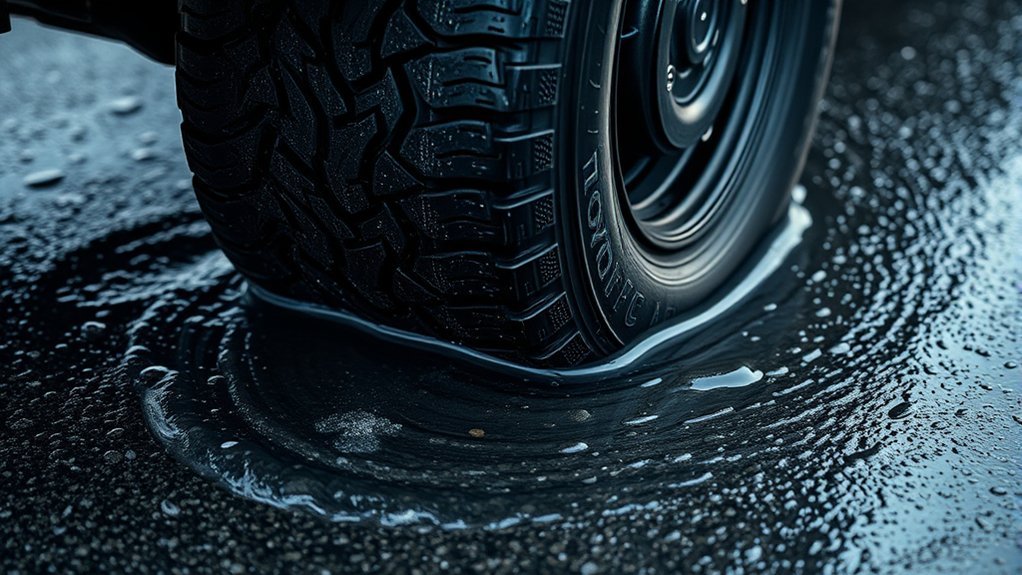
Hydroplaning happens when a tire rides on a layer of water instead of gripping the road. When that happens, the contact patch can no longer create normal traction, so your Hilux may feel light, vague, or slow to respond when you steer or brake. Bridgestone explains that hydroplaning is affected by road water depth, vehicle speed, tread depth, and vehicle weight.
The risk rises quickly when water builds up on the road. Hydroplaning can begin at speeds as low as about 35 mph, depending on the tires and the amount of water present, and deeper standing water makes the problem worse. That is why a Hilux can feel stable one moment and suddenly lose grip when it crosses a puddle, rut, or poorly drained lane.
U.S. road-weather data from the Federal Highway Administration shows that more than 77% of weather-related crashes happen during rain or mist conditions, based on 2019–2023 averages.
[Products Worth Considering]

EVOULTES heavy duty tire inflator with an integrated gauge delivers accurate pressure readings from 10–120 PSI, helping you inflate, deflate, and check tires in one tool. The 16.5-inch extended dual-head air chuck with swivel base reaches hard-to-access dual wheel valves on trucks and RVs. A brass trigger core and side-mounted air release valve make operation smooth, with standard 1/4" NPT threading and quick-connect compatibility for easy setup.

The JACO FlowPro Tire Inflator measures, inflates, and airs down tires up to 100 PSI with battery-free operation and ±2% accuracy after calibration. It features a glowing pressure dial for night visibility, a heavy-duty steel build with a hybrid hose, and a precision push-to-inflate thumb trigger. The patented Lightning Air Chuck locks on for a secure seal, and the kit includes quick-connect hardware for easy inline use with your air compressor.
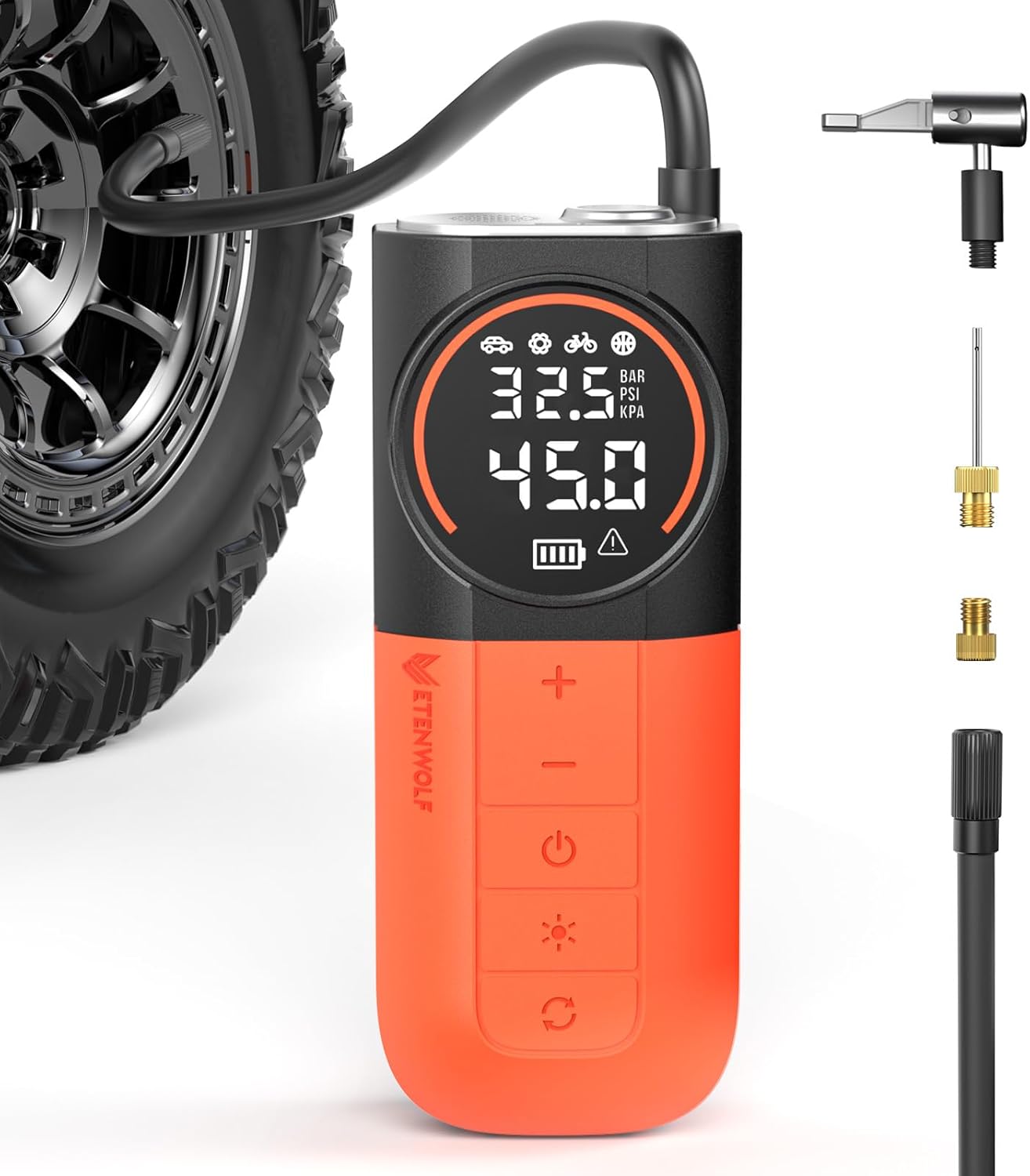
The ETENWOLF S1 cordless tire inflator delivers ultra-fast inflation with up to 160 PSI and a 20 L/min airflow for quicker tire top-offs. Its 5200mAh battery and cooling system support inflating many tires and sports balls on a single charge, while the digital pressure gauge and multi-unit display help you reach the right pressure accurately. With preset modes, pressure memory, an auto-stop feature, and an LED flashlight, it’s built for easy roadside and everyday use.
Can Toyota Hilux Tires Prevent Hydroplaning?
No tire can fully prevent hydroplaning in enough water at enough speed. What good Toyota Hilux tires can do is reduce the risk by moving water out from under the tread before the tire loses contact with the road.
The important point is that “Toyota Hilux tires” are not one single tire design. Your Hilux may be fitted with original-equipment highway tires, all-terrain tires, commercial-rated tires, or replacement tires chosen by a previous owner. Each tire can behave differently in rain. A new, properly inflated tire with deep water channels will usually handle wet roads better than a worn tire, a tire with poor wet traction, or a tire that is underinflated.
Warning: Four-wheel drive, traction control, stability control, and ABS do not make a Hilux immune to hydroplaning. These systems can help in some loss-of-traction situations, but they cannot create grip if the tires are floating on water.
Tire Features That Help Reduce Hydroplaning
When choosing or inspecting tires for a Toyota Hilux, focus on wet-road performance rather than looks alone. The best tire for rain depends on your mix of highway driving, towing, payload, off-road use, and climate.
- Deep circumferential grooves: Long grooves around the tire help move water away from the contact patch.
- Lateral channels: Side-to-side channels help push water outward instead of trapping it under the tread.
- Siping: Small cuts in the tread blocks can improve wet grip by creating more biting edges.
- Wet-traction rating: For replacement tires, compare the tire’s wet traction information and choose a tire suited to rain, not only off-road appearance.
- Correct size and load rating: A Hilux used for towing, tools, camping gear, or work loads needs tires that meet the correct load rating and size for the vehicle.
- Even tread wear: Uneven wear can reduce the tire’s ability to clear water and may point to alignment, suspension, or inflation problems.
Aggressive mud-terrain tires may look tough, but they are not always the best choice for wet paved roads. Some all-terrain and highway-terrain tires provide better wet braking and water evacuation. Match the tire to how you actually drive your Hilux.
Why Tire Maintenance Matters in Wet Conditions
Tire maintenance matters because hydroplaning resistance falls as tread wears down and as tire pressure moves away from the recommended setting. NHTSA TireWise advises drivers to check tire pressure, tire tread, rotation, balance, alignment, and tire condition as part of tire safety.
Tread Depth for Wet Roads
For wet-weather driving, treat 4/32 inch as a serious warning point. AAA’s all-season tire testing found that tires worn to 4/32 inch showed much longer wet stopping distances and reduced wet handling compared with new tires. In many U.S. contexts, 2/32 inch is the wear-indicator threshold where tires are considered worn out, but waiting that long is a poor plan for regular rain driving.
Use a tread depth gauge for the most accurate reading. Measure several grooves across each tire and at several points around the tire. If one shoulder is much lower than the center or the opposite shoulder, the problem may be alignment, pressure, or suspension wear rather than normal tread wear.
Tire Pressure for Hilux Wet-Weather Driving
Check pressure when the tires are cold, ideally before driving or after the Hilux has been parked for several hours. Use the recommended pressure on the tire placard or in the owner’s manual, not the maximum pressure molded into the tire sidewall. NHTSA notes that Tire Pressure Monitoring Systems warn only when a tire is significantly underinflated, so a monthly manual pressure check is still important.
Rotation, Alignment, and Tire Condition
Rotate your Hilux tires according to the owner’s manual. As a general guideline, NHTSA says rotation may be recommended every 5,000–8,000 miles, or sooner if uneven wear appears. Also inspect for cuts, cracks, bulges, exposed cords, punctures, old repairs, and vibration. A tire with plenty of tread can still be unsafe if it is damaged or aging.
How to Check Your Hilux Tires Before Heavy Rain
- Park safely on level ground. Let the tires cool before checking pressure.
- Find the recommended pressure. Use the Hilux tire placard or owner’s manual for your exact tire size, load, and model year.
- Check all tires, including the spare. A spare with low pressure may not help if you need it during a storm.
- Measure tread depth. Use a tread depth gauge and check multiple grooves on each tire.
- Look for uneven wear. Feathering, cupping, shoulder wear, or one low tire can reduce wet-road grip.
- Inspect the sidewalls. Replace tires with bulges, deep cracks, exposed cords, or serious cuts.
- Check the load. Heavy cargo, tools, trailers, and roof loads change braking and handling. Stay within the Hilux’s rated limits.
- Replace tires before they become a wet-road risk. If tread is near 4/32 inch and you drive in rain often, start shopping now rather than waiting for the wear bars.
Note: Tire pressure can vary by Hilux model, tire size, market, and load. If your Hilux has aftermarket wheels, upgraded tires, or a constant heavy load, ask a qualified tire professional or Toyota service department to confirm the correct setup.
Driving Tips to Prevent Hydroplaning
Good tires help, but your driving style matters just as much. AAA’s wet-weather driving guidance recommends slowing down, avoiding hard braking, avoiding sharp turns, and allowing extra stopping distance in rain.
- Slow down before standing water. The faster you drive, the less time the tread has to push water away.
- Increase following distance. Wet roads increase stopping distance, especially if your tread is worn.
- Avoid cruise control in rain. You need full control of throttle response if the tires begin to lose grip.
- Drive in the tracks of the vehicle ahead when safe. Those tracks may have less standing water than the rest of the lane.
- Avoid sudden inputs. Brake, steer, and accelerate smoothly. Do not combine hard braking with sharp turning.
- Watch for ruts and puddles. Water often collects in low spots, lane grooves, bridge approaches, and poorly drained intersections.
- Use headlights and wipers early. Better visibility gives you more time to spot water buildup and slow down.
Pro Tip: If rain starts after a dry spell, be extra gentle for the first 10–20 minutes. Oil, dust, and rubber residue can mix with water and make the road slick before steady rain washes the surface cleaner.
[Products Worth Considering]

These 4 prank tire valve stem caps glow in the dark to catch attention and create a fun reaction, making an ideal gag gift for friends or coworkers. Simply place them over existing valve stems for a quick, lossless installation without removing the original caps. Beyond the prank, the caps help block water, dust, and sand while supporting reliable tire protection.

Blackline Blackout is a water-based trim and tire dressing that restores rubber, vinyl, and plastic with a rich satin, blackout look. Its no-sling formula dries quickly and helps prevent messy transfer onto paint. The coating repels water and offers UV protection to help prevent fading, cracking, and discoloration for a clean, long-lasting finish.
What to Do If You Experience Hydroplaning in Your Hilux?
Experiencing hydroplaning in your Toyota Hilux can be alarming, but panic inputs make it worse. The goal is to let the tires reconnect with the road without upsetting the vehicle’s balance.
- Stay calm and look where you want to go. Your hands usually follow your eyes.
- Ease off the accelerator. Do not suddenly lift in a way that jolts the vehicle; smoothly reduce power.
- Hold the steering wheel steady. Steer gently in the direction you want the Hilux to travel.
- Do not slam on the brakes. Hard braking can make a skid worse. If braking is unavoidable and your Hilux has ABS, apply firm, steady pressure and let the system pulse.
- Wait for grip to return. Recovery may take a few seconds. Avoid sudden steering corrections when the tires reconnect.
- Slow down after recovery. Leave more space, avoid the same water path, and reassess road conditions.
After a serious hydroplaning event, inspect your tires when it is safe to stop. If the Hilux hit a pothole, curb, or flooded debris, check for sidewall damage, wheel damage, vibration, pulling, or a low tire warning before continuing at normal speed.
When to Replace or Upgrade Hilux Tires for Wet Roads
Replace or upgrade your Hilux tires if wet-road grip feels poor, stopping distance feels longer than normal, or the tread is close to 4/32 inch and you regularly drive in rain. Do not wait until the tire is down to the wear bars if your driving includes highway speeds, heavy loads, towing, or frequent storms.
When shopping for replacement tires, choose the correct tire size, load index, and speed rating for your Hilux. Then compare wet traction, tread design, braking reviews, and suitability for your driving. A work Hilux carrying tools every day may need a different tire from a family Hilux used mainly on highways, and both may need a different tire from an off-road Hilux used in mud and gravel.
Frequently Asked Questions
What is the weakness of the Toyota Hilux in heavy rain?
The Hilux’s main wet-road weakness is not the truck itself; it is the same weakness any pickup or ute has: grip depends heavily on tire condition, speed, load, and standing water. A lightly loaded rear end, worn tires, underinflation, or sudden steering and braking can make the vehicle easier to unsettle on wet pavement.
Does 4WD stop a Toyota Hilux from hydroplaning?
No. Four-wheel drive can help with traction when accelerating on loose or slippery surfaces, but it does not stop the tires from riding on water. Hydroplaning is a tire-to-road contact problem, so speed, tread depth, pressure, and water depth matter more than the drivetrain.
What tread depth is best for Hilux tires in wet weather?
New tires usually provide the best wet-road water evacuation. For practical safety, start planning replacement around 4/32 inch if you drive in rain often. At 2/32 inch, tires are worn out and should be replaced, especially before highway driving or stormy weather.
Should I brake if my Hilux starts hydroplaning?
Avoid slamming on the brakes. Ease off the accelerator, keep the steering steady, and look where you want to go. If braking is necessary and your Hilux has ABS, use firm, steady pressure rather than pumping the pedal.
Are all-terrain tires good for preventing hydroplaning?
Some all-terrain tires perform well in rain, but not all of them do. Look for wet-traction performance, water-channeling tread design, correct load rating, and even wear. A tire chosen only for aggressive off-road looks may not be the safest option for frequent wet highway driving.
Conclusion
Hydroplaning safety in a Toyota Hilux comes down to tire condition, tire choice, speed, and smooth driving. Deep tread grooves, correct inflation, and good wet-road tire design help move water away from the contact patch, but they do not guarantee grip in standing water. Check tread depth and pressure regularly, replace tires before wet performance becomes poor, slow down in rain, and remember that 4WD and ABS cannot override the physics of hydroplaning.
Sources
- NHTSA TireWise — tire pressure, tread depth, tire rotation, TPMS, and tire maintenance guidance.
- Federal Highway Administration Road Weather Management — U.S. weather-related crash statistics and rain/mist crash data.
- AAA Wet Weather Driving Tips — hydroplaning prevention, speed, braking, steering, and following-distance advice.
- AAA All-Season Tire Testing Report — wet stopping and handling performance of new tires versus tires worn to 4/32 inch.
- Bridgestone Hydroplaning Guide — hydroplaning causes, water depth, speed, tread depth, and vehicle-weight factors.
- Toyota Australia Owners Hub — official owner resources for vehicle-specific manuals, servicing, and model guidance.

Related Articles
Toyota Hilux Run-Flat Tires: What You Need to Know
Take control of your safety with Toyota Hilux run-flat tires; discover their benefits and hidden costs that could change your driving experience forever.
Read More
Effects of Underinflated Tires on the Toyota Hilux
Inadequate tire pressure in your Toyota Hilux can lead to serious safety issues and costly repairs; discover how to avoid these pitfalls.
Read More
The Risks of Overinflating Toyota Hilux Tires
Overinflating your Toyota Hilux tires can lead to dangerous blowouts and uneven wear, but understanding the risks is crucial for your safety.
Read More