
Toyota Hilux Center Bore Diameter: What You Need to Know
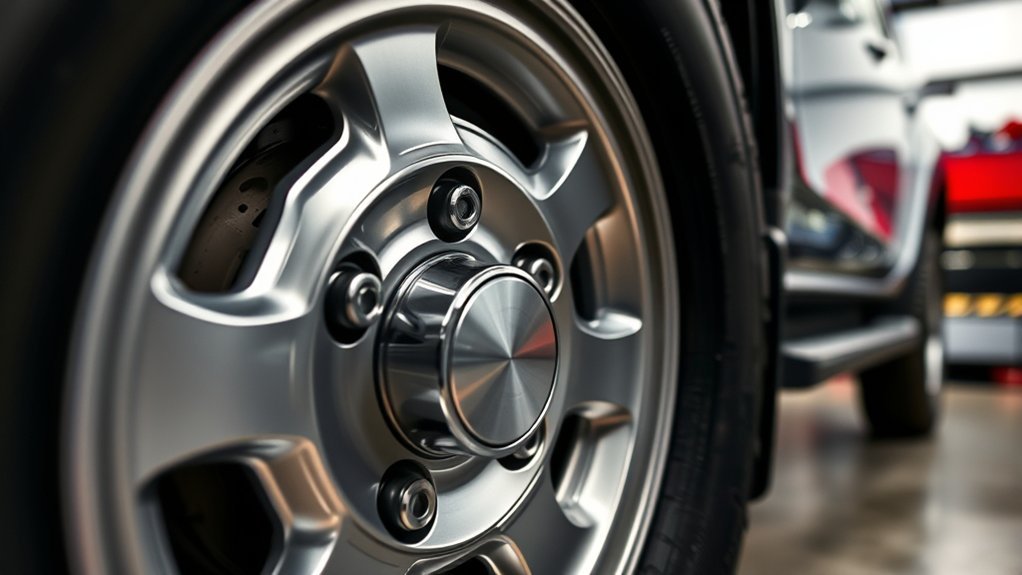
The Toyota Hilux center bore is not one-size-fits-all across every market, trim, and drivetrain. Many 6-stud 4WD and Hi-Rider Hilux models use a 106.0 mm to 106.1 mm center bore, often rounded to 106 mm in wheel listings. However, some 5-stud 2WD variants use a 60.1 mm center bore. Before buying wheels, confirm your exact Hilux year, market, drivetrain, bolt pattern, hub bore, offset, load rating, and lug nut seat type.
Quick Answer
Most 6-stud Toyota Hilux 4WD and Hi-Rider models use a 106.0 mm to 106.1 mm center bore with a 6×139.7 bolt pattern. Some 5-stud 2WD Hilux variants use a 60.1 mm bore with a 5×114.3 bolt pattern. Always verify your exact model before ordering wheels or hub rings.
Key Takeaways
- Use 106.0 mm or 106.1 mm only when your Hilux is a matching 6-stud 4WD, Hi-Rider, or equivalent model.
- Do not assume all Hilux models share the same hub bore; some 2WD 5-stud models use 60.1 mm.
- A wheel center bore can be equal to or larger than the vehicle hub bore, but it should not be smaller.
- If the wheel bore is larger than the hub, use hub-centric rings sized from the wheel bore down to the Hilux hub bore.
- Center bore is only one fitment check. You must also confirm bolt pattern, offset, brake clearance, load rating, thread size, and lug nut seat type.
At a Glance
| Time Required | 10 to 20 minutes if a wheel is already off the vehicle |
| Difficulty | Easy, but accuracy matters |
| Tools Needed | Digital calipers, clean rag, wheel spec sheet, and your Hilux model details or VIN |
| Cost | Free if you already have calipers; hub rings are usually a low-cost add-on when needed |
How to Choose the Right Center Bore Diameter for Your HiLux
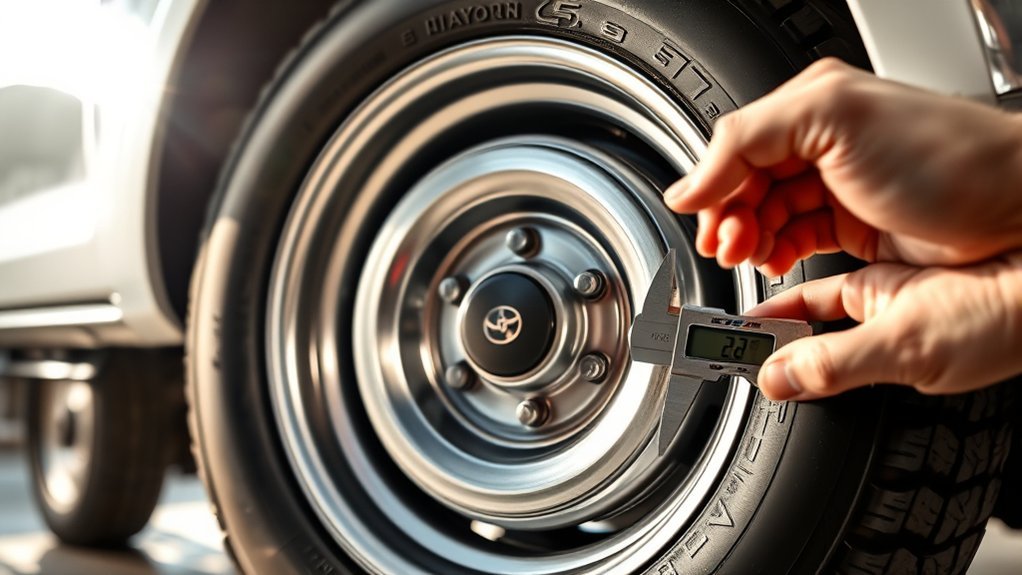
Choosing the right center bore diameter for your Toyota HiLux starts with identifying which Hilux you actually have. A 6-stud 4WD or Hi-Rider model is commonly listed with a 106.0 mm to 106.1 mm hub bore and a 6×139.7 bolt pattern. Some 2WD low-rider variants are different, commonly listed with a 60.1 mm hub bore and a 5×114.3 bolt pattern. Fitment databases such as TireWheelGuide’s 2010 Hilux data and TireWheelGuide’s 2018 Hilux data show why the drivetrain and market matter.
The safest approach is simple: match the wheel to the vehicle, not just to the name “Hilux.” Check your model year, generation, body style, drivetrain, wheel bolt pattern, and factory wheel size before ordering aftermarket wheels.
Warning: Never force a wheel with a smaller center bore onto your Hilux hub. If the bore is too small, the wheel may not sit flat against the mounting face. That can cause unsafe clamping, vibration, wheel damage, or loosening.
Use these steps before buying wheels:
- Confirm the bolt pattern first. Many Hilux 4WD and Hi-Rider models use 6×139.7, while some 2WD variants use 5×114.3.
- Confirm the hub bore. Many 6-stud Hilux models use 106.0 mm to 106.1 mm; some 5-stud 2WD variants use 60.1 mm.
- Check the wheel center bore. It must be equal to or larger than the vehicle hub bore.
- Use hub-centric rings when needed. If the wheel bore is larger than the hub, use rings that step the wheel bore down to the Hilux hub size.
- Verify the rest of the fitment. Offset, brake clearance, wheel load rating, tyre size, lug nut seat, and thread size all matter.
Why Center Bore Matters for Wheel Fitment
The center bore is the machined hole in the back of the wheel that locates the wheel on the vehicle hub. Tire Rack explains that this opening helps center the wheel as the lug hardware is torqued down, reducing the chance of vibration.
Importance of Proper Alignment
A correct center bore helps the wheel sit concentrically on the hub. When the wheel is centered before tightening, the lug nuts can clamp the wheel evenly against the mounting face. That is especially important on a ute like the Hilux, which may carry tools, tow trailers, or run heavier off-road tyres.
If the center bore is too large and no hub ring is used, the wheel may still bolt on, but it can be harder to center perfectly during installation. If the center bore is too small, the wheel should not be installed unless the wheel manufacturer or a qualified wheel specialist confirms a safe machining solution.
Ensuring Hub-Centric Fit
A hub-centric fit means the wheel is centered by the hub pilot, not only by the lug nuts. For many 6-stud Hilux models, that hub pilot is listed as 106.0 mm to 106.1 mm. For some 5-stud 2WD Hilux variants, it is listed as 60.1 mm. The exact number you use should match your specific vehicle and the wheel maker’s fitment data.
Note: Catalogs may list 106.0 mm or 106.1 mm for the same common Hilux hub size. Use the wheel manufacturer’s recommended ring size and verify with a physical measurement when possible.
Preventing Vibration Issues
One of the most common symptoms of poor centering is steering wheel or body vibration after a wheel change. Balancing can help with tyre and wheel imbalance, but it will not fix every centering problem. If your aftermarket wheels have a larger bore than the Hilux hub, properly sized hub rings can help the wheels sit centered during installation.
Wheel Pros notes that hub-centric rings adapt the wheel’s center bore to the vehicle hub and may reduce ride disturbance, but the rings do not carry the vehicle load. They are a centering aid, not a cure for the wrong bolt pattern, wrong offset, weak wheel load rating, or incorrect lug nuts.
What You Need to Know About HiLux N70 and N80 Specs
The N70 and N80 Hilux generations are popular for wheel upgrades, but they should not be reduced to one universal bore size. The 106 mm figure is useful only when it is tied to the correct 6-stud variant.
| Hilux type | Common center bore | Common PCD | Fitment notes |
|---|---|---|---|
| N70 / Vigo 4WD, many 6-stud models | 106.0 mm to 106.1 mm | 6×139.7 | Check offset, brake clearance, wheel load rating, and lug nut seat before fitting aftermarket wheels. |
| N70 / Vigo 2WD, some 5-stud models | 60.1 mm | 5×114.3 | Do not buy 6-stud 106 mm wheels for these variants unless a qualified specialist confirms a complete and legal conversion. |
| N80 / Revo 4WD and many Hi-Rider 6-stud models | 106.0 mm to 106.1 mm | 6×139.7 | Factory offsets vary by wheel size and market. Common examples include ET30, ET45, and ET50 depending on trim. |
| N80 / Revo 2WD, some 5-stud low-rider models | 60.1 mm | 5×114.3 | Verify by VIN, wheel placard, current wheel stampings, or dealer fitment data before purchasing. |
Toyota also changes specifications by market, trim, and model update. For current vehicles, the safest source is your owner’s manual, Toyota dealer, and the wheel manufacturer’s fitment guide. Toyota Australia’s May 2026 HiLux specification sheet states that specifications and accessory fitment can change and should be confirmed at the time of ordering.
Measuring Center Bore Diameter
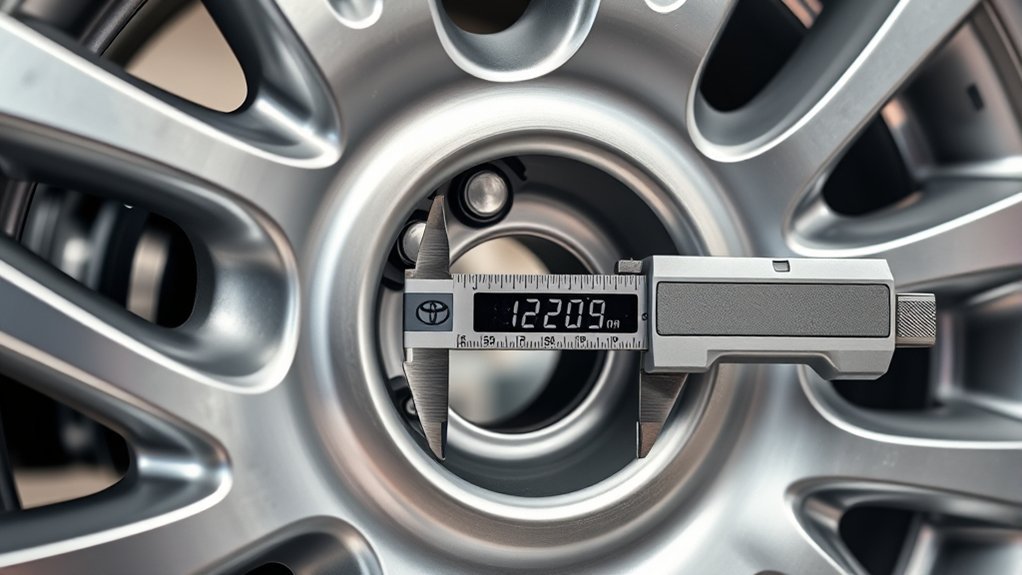
Measuring the center bore diameter is the best way to avoid a bad wheel purchase. The important detail is that you may need two measurements: the vehicle hub pilot diameter and the wheel center bore diameter.
Importance of Accurate Measurement
For a 6-stud Hilux, a small catalog difference such as 106.0 mm versus 106.1 mm usually points to the same general fitment family, but the ring or wheel still needs to match in practice. A loose ring may not center the wheel properly, while a ring that is too tight may not seat fully.
Measure with the wheel removed and the mounting surface clean. Rust, dirt, paint, or powder coating can affect the measurement enough to cause confusion.
Tools for Measuring Diameter
Use digital calipers if possible. A ruler or tape measure is not accurate enough for hub-centric ring sizing.
- Clean the hub pilot. Wipe the raised circular lip at the center of the hub.
- Measure the hub pilot outside diameter. This is the vehicle-side number, such as 106.1 mm or 60.1 mm.
- Measure the wheel center bore inside diameter. Measure the machined hole on the back of the wheel.
- Measure twice at different angles. If the numbers do not agree, clean the surface and measure again.
- Record both numbers. Hub rings are sized from the wheel bore down to the vehicle hub bore.
Pro Tip: When ordering hub rings, the larger number is the wheel bore and the smaller number is the vehicle hub. For example, a 110.1 mm aftermarket wheel bore on a 106.1 mm Hilux hub needs a 110.1 to 106.1 hub ring.
Center Bore Compatibility Factors
Center bore compatibility is only one part of the wheel fitment system. Before installing aftermarket wheels, confirm all of the following:
- Center bore: equal to the hub size, or larger with the correct hub ring.
- PCD / bolt pattern: commonly 6×139.7 on many Hilux 4WD and Hi-Rider models, but not all Hilux variants.
- Thread size: many Hilux listings use M12x1.5, but always verify your exact vehicle and lug nut type.
- Offset and backspacing: affects inner suspension clearance, outer guard poke, and steering feel.
- Brake clearance: depends on wheel diameter, barrel shape, spoke design, and offset.
- Load rating: choose wheels rated for your Hilux’s axle loads, payload, towing use, and off-road use.
- Lug nut seat type: tapered, ball, and flat-seat hardware are not interchangeable unless the wheel maker specifies it.
Common Issues With Aftermarket Wheels and Center Bore
Aftermarket wheels can improve the look and stance of your Toyota Hilux, but only if the fitment is correct. The center bore, PCD, offset, and hardware must work together.
| Issue | What can happen | Best fix |
|---|---|---|
| Wheel bore is smaller than the hub | Wheel may not seat flat or may not fit at all | Do not install; choose the correct wheel or consult a wheel specialist |
| Wheel bore is larger than the hub | Possible vibration if the wheel is not centered during installation | Use accurately sized hub-centric rings |
| Wrong bolt pattern | Wheel cannot be safely mounted | Buy wheels with the correct PCD for your exact Hilux |
| Wrong offset or backspacing | Tyre rubbing, poor steering feel, excessive guard poke, or suspension contact | Check the wheel maker’s Hilux-specific fitment guide and test fit before driving |
| Wrong lug nut seat | Uneven clamping or loose wheel hardware | Use the lug nuts specified by the wheel manufacturer |
| Wheel load rating is too low | Wheel fatigue or failure risk under payload, towing, or off-road loads | Choose wheels rated for your Hilux’s axle loads and intended use |
How to Choose Hub Rings for Optimal Fitment
Hub rings are used when the aftermarket wheel’s center bore is larger than the Hilux hub. They fill the gap so the wheel is centered on the hub during installation.
To choose the correct hub ring, you need two numbers:
- Outer diameter: the aftermarket wheel’s center bore.
- Inner diameter: your Hilux hub bore.
For example, if your 6-stud Hilux hub measures 106.1 mm and the aftermarket wheel has a 110.1 mm center bore, the ring size is 110.1 mm to 106.1 mm. If your Hilux is a 5-stud 2WD model with a 60.1 mm hub, the ring size must step down to 60.1 mm instead.
Hub rings are commonly made from aluminum or quality polymer. Aluminum can be durable, but it may corrode or seize if neglected. Polymer rings are light and resist corrosion, but they should be replaced if damaged, melted, cracked, or loose. Whichever material you choose, the ring should sit flush and snug without forcing it.
Note: Hub rings help center the wheel; they do not correct an unsafe wheel. They cannot fix the wrong PCD, weak load rating, poor offset, incorrect lug nuts, or inadequate brake clearance.
The Impact of Center Bore on Vehicle Performance
Although the center bore looks like a small measurement, it can affect how smooth the Hilux feels after a wheel change. A correctly centered wheel is less likely to create vibration through the steering wheel, seat, or body. It also helps the wheel clamp evenly once the lug nuts are tightened to the specified torque.
A correct center bore does not make a wheel “stronger,” but it helps the wheel sit centered on the hub so the mounting hardware can clamp it evenly.
If you feel vibration after fitting new wheels, do not assume the center bore is the only cause. Check tyre balance, wheel runout, tyre condition, mud inside the rim, damaged rings, loose hardware, and uneven mounting surfaces. If the vibration started immediately after changing wheels, hub-centric ring fitment is one of the first things to inspect.
Understanding Compatibility With Larger Brake Calipers
Center bore and brake caliper clearance are related to wheel fitment, but they are not the same measurement. A wheel can have the correct 106.1 mm center bore and still rub a brake caliper if the barrel shape or spoke profile is wrong.
When fitting larger brake calipers, upgraded brakes, or aggressive aftermarket wheels, check:
- Wheel diameter: larger brakes may need a larger wheel diameter.
- Barrel clearance: the inside of the wheel must clear the caliper body.
- Spoke clearance: the back of the spokes must clear the caliper face.
- Offset and backspacing: these affect where the wheel sits relative to the brakes and suspension.
- Wheel template: many brake and wheel brands provide printable clearance templates.
Toyota’s current Hilux documents also show that wheel equipment varies by trim and market. The Toyota Europe Hilux product guide, for example, lists trim-specific wheel equipment such as 17-inch steel wheels on some grades. Always check the exact wheel and brake package you are working with.
Common Wheel Fitment Questions Before You Buy
Before buying wheels for a Toyota Hilux, ask the seller for a full fitment specification, not just the rim diameter and width. You should receive the wheel size, PCD, center bore, offset, load rating, compatible lug nut seat, and brake clearance notes.
If the seller only says “fits Hilux,” ask which Hilux: N70 or N80, 2WD or 4WD, 5-stud or 6-stud, low-rider or Hi-Rider, and which market. That one question can prevent an expensive return.
Frequently Asked Questions
What size is the hub bore on a Toyota Hilux?
Many 6-stud Toyota Hilux 4WD and Hi-Rider models use a 106.0 mm to 106.1 mm hub bore. Some 5-stud 2WD Hilux variants use a 60.1 mm hub bore. Check your exact model, market, drivetrain, and bolt pattern before buying wheels or hub rings.
Are all Hilux stud patterns the same?
No. Many Hilux 4WD and Hi-Rider models use a 6×139.7 bolt pattern, but some 2WD variants use a 5×114.3 bolt pattern. Do not order wheels from the Hilux name alone; verify the exact PCD on your vehicle.
Can I fit wheels with a larger center bore on my Hilux?
Yes, if the bolt pattern, offset, brake clearance, load rating, and lug hardware are also correct. When the wheel center bore is larger than the Hilux hub, use accurately sized hub-centric rings to center the wheel during installation.
What hub ring size do I need for a 106.1 mm Hilux hub?
You need a ring with an inner diameter that matches the Hilux hub, such as 106.1 mm, and an outer diameter that matches the aftermarket wheel bore. For example, a 110.1 mm wheel bore on a 106.1 mm hub needs a 110.1 to 106.1 ring.
Does center bore affect brake caliper clearance?
Not by itself. Center bore controls how the wheel centers on the hub. Brake clearance depends more on wheel diameter, inner barrel shape, spoke profile, offset, and the caliper design. Always test fit or use a brake clearance template.
Are plastic or aluminum hub rings better?
Both can work when correctly sized. Aluminum rings are durable but can corrode or seize if neglected. Quality polymer rings resist corrosion and are easy to remove, but they should be replaced if cracked, melted, loose, or damaged.
Conclusion
The safest Toyota Hilux center bore answer is specific, not universal. If your Hilux is a common 6-stud 4WD or Hi-Rider model, the hub bore is usually listed as 106.0 mm to 106.1 mm. If it is a 5-stud 2WD variant, it may use 60.1 mm instead. Measure your hub, confirm your PCD, and check the wheel maker’s full fitment data before buying.
When the wheel bore is larger than the hub, use the correct hub-centric rings. When the bore is smaller than the hub, do not force the wheel on. A smooth, safe Hilux wheel upgrade depends on the full package: center bore, PCD, offset, brake clearance, load rating, tyre size, lug nut seat, and correct installation.
Sources
- Toyota Australia HiLux Specification Sheet, May 2026 — supports the note that current specifications and accessory fitment can change and should be confirmed.
- Toyota Europe Hilux Product Guide, April 2025 — supports current trim and wheel-equipment variation by market.
- Tire Rack: What Is a Wheel Centerbore? — supports the explanation of center bore, hub centering, and vibration reduction.
- Wheel Pros: What Are Hub-Centric Rings? — supports the role and limitation of hub-centric rings.
- TireWheelGuide: 2010 Toyota Hilux wheel and tyre sizes — supports older Hilux 4WD and 2WD center bore and bolt-pattern differences.
- TireWheelGuide: 2018 Toyota Hilux wheel and tyre sizes — supports N80-era 4WD, Hi-Rider, and 2WD center bore and bolt-pattern differences.

Related Articles
Toyota Hilux Run-Flat Tires: What You Need to Know
Take control of your safety with Toyota Hilux run-flat tires; discover their benefits and hidden costs that could change your driving experience forever.
Read More
Effects of Underinflated Tires on the Toyota Hilux
Inadequate tire pressure in your Toyota Hilux can lead to serious safety issues and costly repairs; discover how to avoid these pitfalls.
Read More
The Risks of Overinflating Toyota Hilux Tires
Overinflating your Toyota Hilux tires can lead to dangerous blowouts and uneven wear, but understanding the risks is crucial for your safety.
Read More