
How to Reset the Tire Pressure Light on a Toyota Hilux
When the tire pressure light comes on in a Toyota Hilux, do not reset it first. Check the tire pressures, inspect the tires for damage, inflate them to the pressure shown on the driver-side door placard, and then reset the TPMS only if the light stays on. The exact reset method depends on your Hilux model year, trim, and market.
Quick Answer
To reset the tire pressure light on a Toyota Hilux, first set all cold tire pressures to the recommended PSI on the driver-side door placard. Then use either the TPWS menu in the multi-information display or the physical SET/TPMS reset button, depending on your model. If the light flashes or returns, check for a leak or sensor fault.
Key Takeaways
- Never reset the TPMS before checking tire pressure with a gauge.
- Use the PSI on the Hilux door placard or owner’s manual, not the maximum PSI printed on the tire sidewall.
- Some Hilux models reset through the dashboard TPWS menu; others use a physical SET or TPMS reset button.
- A solid light usually points to low pressure; a flashing light can point to a TPMS sensor or system fault.
- If the warning comes back after reset, inspect for a slow leak, valve-stem leak, damaged tire, or failed sensor.
At a Glance
| Time Required | 5–15 minutes for pressure checks and reset; longer if you need to inflate tires or diagnose a leak |
| Difficulty | Easy if the tires are undamaged and you can find the correct TPWS reset control |
| Tools Needed | Tire pressure gauge, air compressor or service-station air pump, owner’s manual if available |
| Cost | Usually free if you already have a gauge and air access; repair costs apply for leaks, valve stems, or TPMS sensors |
What Is the Tire Pressure Monitoring System (TPMS) and Why Is It Important?
The Tire Pressure Monitoring System, often called TPMS or Toyota’s TPWS, helps warn you when one or more tires are significantly under-inflated. On many Hilux models, sensors in the wheels send pressure information to the vehicle. On the dashboard, the warning symbol usually looks like a horseshoe-shaped tire with an exclamation mark.
TPMS is a safety aid, not a replacement for tire checks. A tire can look normal and still be low, especially on a pickup with taller sidewalls. Low tire pressure can reduce handling, increase tire heat, shorten tire life, and hurt fuel economy. FuelEconomy.gov says proper tire inflation can improve gas mileage by 0.6% on average and up to 3% in some cases.
Note: Hilux TPMS features vary by market, model year, and trim. Some models show individual tire pressures in the display, while others only show a warning light. Always follow the owner’s manual for your exact Hilux.
[Products Worth Considering]

EVOULTES heavy duty tire inflator with an integrated gauge delivers accurate pressure readings from 10–120 PSI, helping you inflate, deflate, and check tires in one tool. The 16.5-inch extended dual-head air chuck with swivel base reaches hard-to-access dual wheel valves on trucks and RVs. A brass trigger core and side-mounted air release valve make operation smooth, with standard 1/4" NPT threading and quick-connect compatibility for easy setup.

This portable cordless tire inflator delivers up to 160 PSI with fast 17 L/min airflow to help you quickly top up tires and get back on the road. It features dual power mode, running on a 21V rechargeable battery or a 12V DC adapter for convenient roadside use. An automatic shut-off with digital pressure gauge helps prevent overinflation, and a built-in LED light improves visibility in low-light conditions.

The JACO FlowPro Tire Inflator measures, inflates, and airs down tires up to 100 PSI with battery-free operation and ±2% accuracy after calibration. It features a glowing pressure dial for night visibility, a heavy-duty steel build with a hybrid hose, and a precision push-to-inflate thumb trigger. The patented Lightning Air Chuck locks on for a secure seal, and the kit includes quick-connect hardware for easy inline use with your air compressor.
Before Resetting, Check Your Tire Pressure
Before you reset the tire pressure light, make sure the tires are actually at the correct pressure. Resetting the system without correcting the pressure can hide a real safety problem.
- Park safely on level ground and let the tires cool if possible.
- Find the recommended PSI on the tire placard inside the driver-side door opening or in your owner’s manual.
- Check each tire with a gauge, including the spare only if your Hilux monitors the spare tire.
- Inflate or deflate each tire to the recommended cold pressure.
- Inspect for damage, including nails, screws, cuts, bulges, cracks, and leaking valve stems.
Warning: Do not keep driving on a tire that is visibly flat, badly damaged, bulging, or losing air quickly. Fit the spare if it is safe to do so, call roadside assistance, or have the tire inspected before driving farther.
Recommended PSI Guidelines
The correct tire pressure is not the maximum PSI printed on the tire sidewall. Use the vehicle’s recommended pressure on the Hilux door placard or in the owner’s manual. That pressure is designed for the tire size, vehicle weight, and load rating Toyota specified for your truck.
Check pressure when the tires are cold. A cold tire is one that has been parked long enough for heat from driving to dissipate. AAA recommends checking when the vehicle has not been driven for at least three hours. If you check after driving, the reading may be temporarily higher.
Temperature Effects Explained
Temperature changes can trigger the tire pressure warning light even when there is no puncture. As outside temperature drops, the air inside the tire contracts. A practical rule is that tire pressure changes by about 1 PSI for every 10°F change in temperature.
This is why the light often appears after a cold night or during seasonal changes. Do not simply reset the warning and ignore it. Check the tire pressures, correct them to the door-placard PSI, and then reset the TPMS only if needed.
Using a Tire Gauge
Use a simple stick, dial, or digital tire pressure gauge. Remove the valve cap, press the gauge firmly onto the valve stem, and read the PSI. If air hisses out, reposition the gauge and try again. Replace the valve cap when you are done to help keep dirt and moisture away from the valve.
If one tire is repeatedly lower than the others, look for a slow leak. Common causes include a nail in the tread, a cracked valve stem, corrosion around the bead, wheel damage, or a TPMS sensor seal leak.
Viewing Tire Pressure on Your Dashboard
Some Toyota Hilux models let you view tire pressure information through the multi-information display. Use the steering wheel arrow buttons to move through the vehicle information screens. Look for a vehicle, tire, warning, or settings icon. If your Hilux shows individual tire pressures, compare each reading with a manual gauge and the pressure placard.
If your Hilux does not show individual PSI readings, it may only warn you when pressure is low or when the TPMS has a fault. In that case, use a gauge instead of guessing by sight.
Pro Tip: Keep a tire pressure gauge in the glove box. A dashboard TPMS warning tells you there may be a problem, but a gauge tells you the actual PSI.
Step-by-Step Guide to Resetting the Low Tire Pressure Light
After all tires are set to the recommended pressure, choose the reset method that matches your Hilux. Do not use both methods unless your owner’s manual specifically tells you to.
Method 1: Reset Through the TPWS Menu
- Turn the ignition to ON without starting the engine, or switch the vehicle to the accessory/ignition-on mode if equipped with push-button start.
- Use the steering wheel controls to open the settings menu on the multi-information display.
- Look for Vehicle Settings, TPWS, Tire Pressure Warning System, or a similar tire-pressure menu.
- Select the tire pressure warning reset or pressure-setting option.
- Press and hold OK until the display confirms the reset or the warning light blinks, depending on your model.
- Drive normally for a short distance if the light does not clear immediately, as some systems need a short learning period.
Method 2: Reset With the SET or TPMS Button
- Set all tires to the recommended cold pressure first.
- Turn the ignition to ON without starting the engine.
- Find the SET, TPMS, or tire-pressure reset button. It may be under the dashboard, near the steering column, or on a lower switch panel.
- Press and hold the button until the tire pressure warning light blinks slowly, often three times on Toyota-style systems.
- Release the button and wait a few minutes.
- Drive the Hilux for a short distance if the system needs time to relearn the pressure setting.
Note: If you recently rotated tires, replaced wheels, fitted new sensors, or changed tire sizes, a simple reset may not be enough. The sensors may need registration with a Toyota dealer or qualified tire technician.
What the Tire Pressure Warning Light Means
The tire pressure light can point to different problems depending on how it behaves. Use the light pattern as your first clue, then confirm with a pressure gauge.
| Light Behavior | Most Likely Meaning | What To Do |
|---|---|---|
| Solid light | One or more tires may be low | Stop safely, check all tire pressures, inflate to the placard PSI, and inspect for damage. |
| Flashing, then solid | Possible TPMS malfunction or sensor issue | Check pressure first. If pressure is correct and the light keeps flashing, have the system scanned. |
| Light returns after reset | Slow leak, pressure change, unregistered sensor, or system fault | Recheck pressure the next morning and inspect the tire, valve stem, wheel, and TPMS sensor. |
When to Seek Professional Help With Your TPMS
Get professional help if the tire pressure warning light comes back after you set the correct PSI and complete the reset. You should also book an inspection if the light flashes, a tire loses pressure repeatedly, a sensor was replaced, or the warning started after new tires or wheels were installed.
A Toyota dealer or qualified tire technician can scan the TPMS, confirm sensor IDs, check sensor batteries, test valve stems, inspect the tire bead area, and find leaks that may not be visible during a quick driveway check.
[Products Worth Considering]
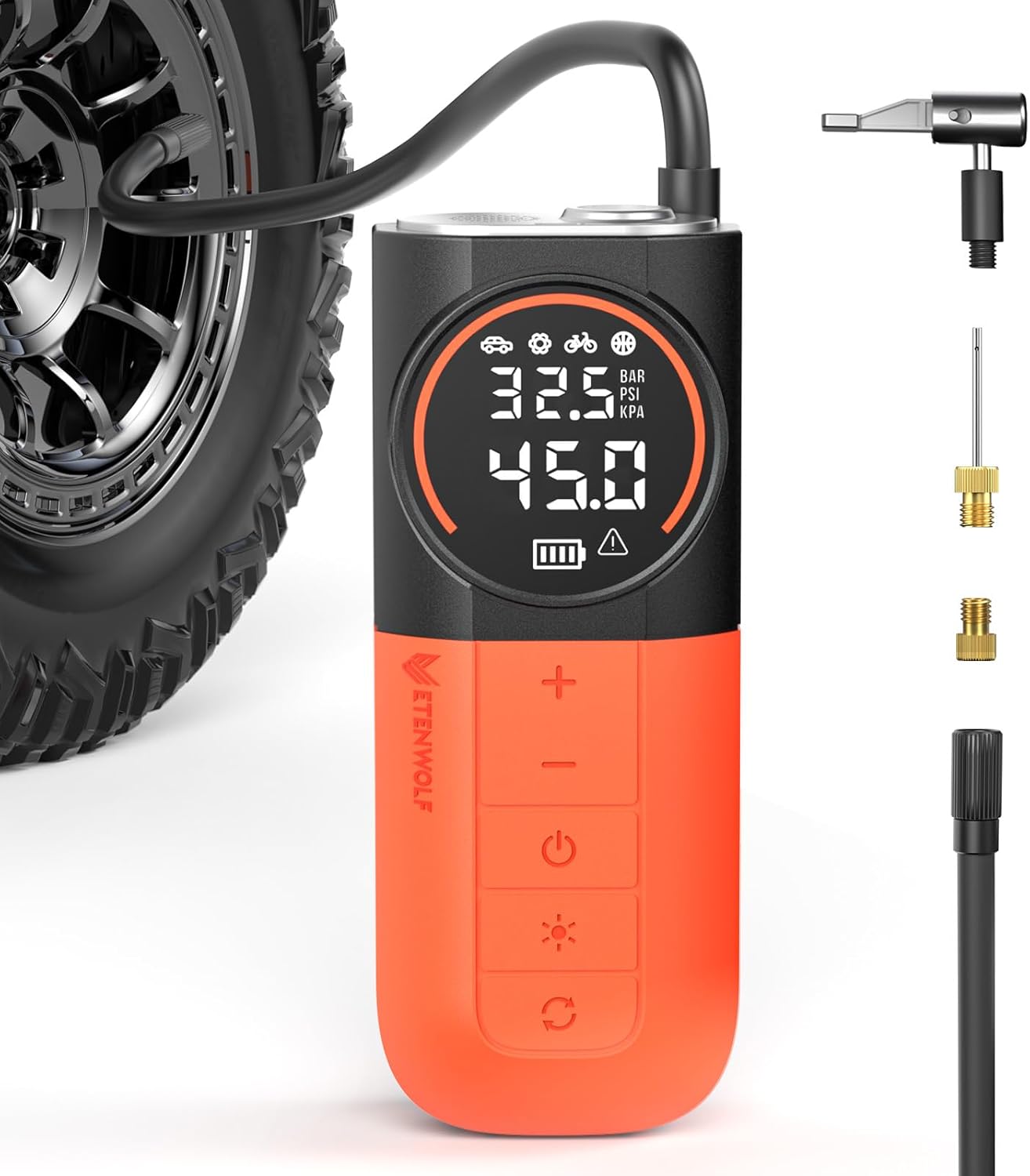
The ETENWOLF S1 cordless tire inflator delivers ultra-fast inflation with up to 160 PSI and a 20 L/min airflow for quicker tire top-offs. Its 5200mAh battery and cooling system support inflating many tires and sports balls on a single charge, while the digital pressure gauge and multi-unit display help you reach the right pressure accurately. With preset modes, pressure memory, an auto-stop feature, and an LED flashlight, it’s built for easy roadside and everyday use.

This portable cordless tire inflator delivers fast, efficient inflation for cars, motorcycles, bikes, and sports balls with a digital pressure gauge. Use the one-click PSI preset with auto shut-off for accurate, hands-free topping to your target pressure up to 150 PSI. It’s compact and rechargeable with a built-in emergency LED light plus valve adapters and accessories for quick, ready-to-go use.
Warning Light Reappears
If the warning light reappears after resetting, treat it as a real issue until proven otherwise. Common causes include a slow puncture, leaking valve stem, damaged wheel, incorrect pressure, failed TPMS sensor, or sensor registration problem.
- Uneven tire wear can point to alignment, rotation, or inflation problems.
- Repeated pressure loss often points to a leak rather than a reset issue.
- A flashing TPMS light can mean the system cannot read one or more sensors.
Slow Leak Diagnosis
A slow leak can be hard to spot because the tire may still look full. Check the same tire again the next morning while it is cold. If it has dropped noticeably, the tire needs inspection.
| Slow Leak Sign | Recommended Action | Professional Help Needed? |
|---|---|---|
| One tire keeps dropping PSI | Check tread, sidewall, valve stem, and bead area | Yes, if pressure keeps falling |
| Nail, screw, cut, or bulge | Do not just reset the TPMS; repair or replace the tire | Yes |
| Hissing sound near valve | Inspect the valve core and valve stem | Usually yes |
| Light flashes after startup | Check pressure, then have TPMS scanned if pressure is correct | Yes |
| Vibration while driving | Stop and inspect the tire; check for damage, imbalance, or separation | Yes |
Why Regular Tire Maintenance Matters
Regular tire maintenance helps your Hilux brake, steer, carry loads, and use fuel as intended. A TPMS warning light is useful, but it should not be your only tire-maintenance habit.
Use these checks as part of your routine:
- Check tire pressure monthly and before long trips.
- Check pressure when tires are cold for the most accurate reading.
- Inspect tread depth and wear pattern so you can catch alignment, rotation, or suspension problems early.
- Rotate tires on schedule according to your owner’s manual or service plan.
- Do not overload the vehicle, especially when towing or carrying heavy work gear.
Proper inflation is one of the simplest ways to protect tire life, vehicle handling, and fuel economy.
What Triggers the Tire Pressure Warning Light?
The tire pressure warning light can turn on for several reasons. The most common cause is low pressure, but it is not the only one.
- Low tire pressure: One or more tires have dropped below the safe range.
- Cold weather: A temperature drop can lower PSI enough to trigger the light.
- Slow leak: A puncture, bead leak, or valve leak may let air escape over hours or days.
- Recent tire work: Rotation, wheel replacement, or new sensors can require reset or sensor registration.
- Sensor fault: A TPMS sensor battery or communication issue can trigger a flashing warning.
- Wrong pressure setting: The TPMS may have been initialized when the tires were not set correctly.
How to Keep Your Tire Pressure Light Off
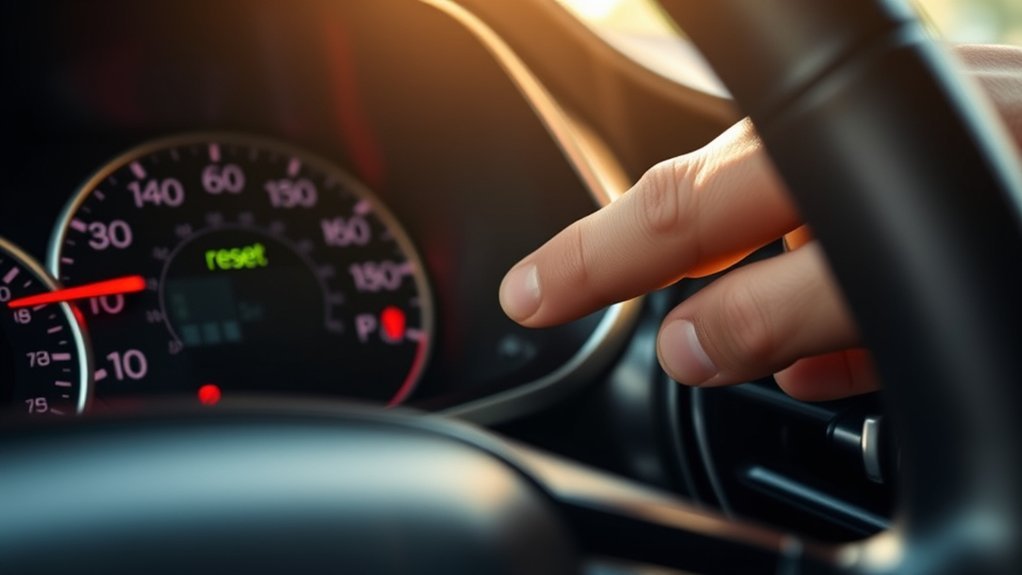
To keep your tire pressure light off, make tire pressure part of your normal maintenance routine. Waiting for the light to come on means the pressure may already be well below the recommended level.
- Check pressures monthly with a gauge.
- Check before long drives, towing, off-road trips, or heavy loads.
- Adjust pressure after major temperature changes.
- Use the door-placard PSI unless your owner’s manual gives a different pressure for heavy load conditions.
- Inspect tires visually during weekly walk-arounds.
- Reset TPMS only after the pressure has been corrected.
Frequently Asked Questions
Why is my Toyota Hilux saying low tire pressure but the tire looks full?
A tire can look full and still be low by several PSI, especially on a pickup tire with a tall sidewall. Check it with a gauge. If the pressure is correct, the warning may be caused by temperature change, a slow leak, a sensor issue, or a TPMS reset that was not completed correctly.
Can I drive my Hilux with the tire pressure light on?
You can usually drive a short distance to a safe place or air pump if the tire is not visibly flat or damaged. Avoid high speeds, heavy loads, and long trips until you check the pressure. If the tire is flat, bulging, or losing air quickly, do not keep driving.
Where is the Toyota Hilux TPMS reset button?
On Hilux models that have a physical reset button, it is often under the dashboard, near the steering column, or on a lower switch panel. Some models do not use a separate button and instead reset through the TPWS menu in the multi-information display.
Why does the TPMS light flash before staying on?
A flashing tire pressure light can indicate a TPMS malfunction, such as a sensor battery problem, damaged sensor, unregistered sensor, or communication fault. Check the tire pressure first. If pressure is correct and the light keeps flashing, have the system scanned.
Do I need to reset TPMS after inflating tires?
Sometimes. Some Hilux systems clear the warning after the correct pressure is restored and the vehicle is driven. Other models need a manual reset. If the light stays on after all tires are correctly inflated, follow the TPWS reset method for your model.
Conclusion
Resetting the tire pressure light on a Toyota Hilux is simple once the real tire pressure problem has been handled. Start with a gauge, set every tire to the recommended cold PSI, inspect for damage, and then use the TPWS menu or physical reset button that matches your model. If the warning light flashes, returns, or one tire keeps losing pressure, stop treating it as a reset issue and have the tire or TPMS inspected.
Sources
- Toyota Owners — Warning Lights — supports checking the owner’s manual for model-specific warning-light details.
- eCFR — 49 CFR 571.138 Tire Pressure Monitoring Systems — supports TPMS warning thresholds, malfunction behavior, and owner-manual tire-pressure guidance.
- NHTSA TireWise — supports tire safety, pressure checks, tread checks, and maintenance importance.
- FuelEconomy.gov — Keeping Your Vehicle in Shape — supports proper tire inflation, fuel economy, and using the door placard or owner’s manual for PSI.
- AAA Club Alliance — How Temperature Changes Affect Tire Pressure — supports the 1 PSI per 10°F rule of thumb and cold-pressure checking advice.

Related Articles

Toyota Hilux Run-Flat Tires: What You Need to Know
Take control of your safety with Toyota Hilux run-flat tires; discover their benefits and hidden costs that could change your driving experience forever.
Read More
Effects of Underinflated Tires on the Toyota Hilux
Inadequate tire pressure in your Toyota Hilux can lead to serious safety issues and costly repairs; discover how to avoid these pitfalls.
Read More
The Risks of Overinflating Toyota Hilux Tires
Overinflating your Toyota Hilux tires can lead to dangerous blowouts and uneven wear, but understanding the risks is crucial for your safety.
Read More