
How to Check Tire Tread Depth on Your Toyota Hilux
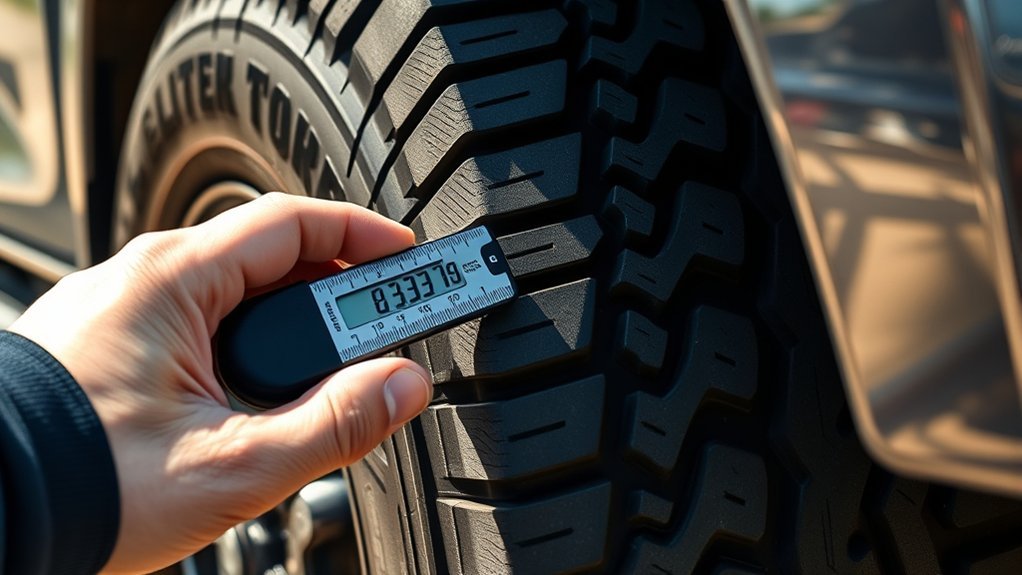
Checking the tire tread depth on your Toyota Hilux is a quick safety check that can help you spot worn tires before they reduce grip in rain, snow, gravel, or emergency braking. The most accurate method is a tread depth gauge, but the penny test and built-in tread wear indicators can also tell you when your tires are near the replacement point.
Quick Answer
Check your Toyota Hilux tire tread by parking on level ground, measuring the inner, center, and outer grooves on every tire with a tread depth gauge, and confirming the lowest reading. Replace tires at 2/32 inch (1.6 mm) or when wear bars are flush; consider replacing sooner for heavy rain or winter use.
Key Takeaways
- A tread depth gauge gives the most reliable reading; the penny test is a useful quick check.
- At 2/32 inch (1.6 mm), the tire is at the common U.S. replacement threshold and should be replaced.
- If you drive often in heavy rain, rough tracks, or winter conditions, do not wait until the tire reaches the legal minimum.
- Check every tire, including the spare if your Hilux has one, and measure more than one groove because tires can wear unevenly.
At a Glance
| Time Required | 5 to 10 minutes for all four tires |
| Difficulty | Easy |
| Tools Needed | Tire tread depth gauge, or a U.S. penny for a quick rough check |
| Cost | Free with a coin; low cost for a basic tread depth gauge |
How to Check Tire Tread Depth for Your Toyota Hilux
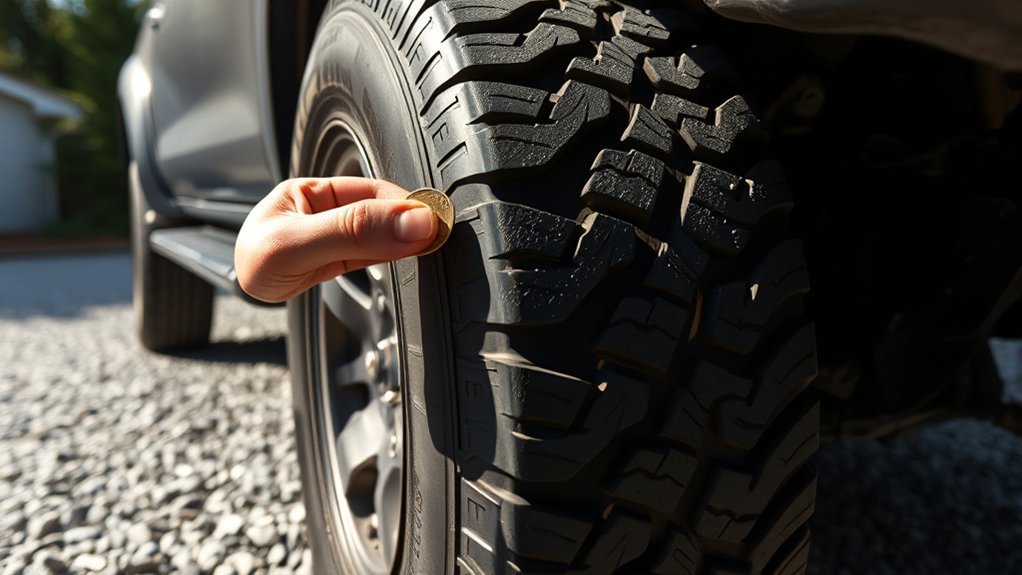
Start by parking your Toyota Hilux on level ground, switching off the engine, setting the parking brake, and turning the front wheels slightly if you need better access to the tread. Wipe away mud, stones, or packed snow so you can see the grooves clearly.
The most accurate way to check tread depth is with a tire tread depth gauge. Insert the probe into a main tread groove, press the gauge base flat against the tread blocks, and read the depth. Measure the inner, center, and outer grooves on each tire, then repeat at a few points around the tire. Use the lowest reading as the tire’s real condition because uneven wear can leave one area unsafe even when another looks fine.
You can also use the penny test recommended by NHTSA as a quick check: place a U.S. penny into the tread with Lincoln’s head upside down. If the top of Lincoln’s head is visible, the tire is at or below the common 2/32-inch replacement threshold and needs attention.
Finally, look for built-in tread wear indicator bars inside the tire grooves. When those bars are flush with the surrounding tread, the tire has reached the wear limit and should be replaced. Toyota Hilux tire sizes, pressures, and rotation guidance can vary by model year, market, trim, load rating, and tire type, so also check your door placard and the official Toyota HiLux owner’s manual for vehicle-specific guidance.
Warning: Do not keep driving on tires with exposed cords, bulges, deep cracks, sidewall damage, or tread worn to the wear bars. A tire can be unsafe even if one part of the tread still measures above 2/32 inch.
How to Perform the Penny Test for Tire Tread Depth
The penny test is simple and useful when you do not have a tread gauge nearby. It is not as precise as a gauge, but it quickly shows whether the tire is near the 2/32-inch limit.
- Hold a U.S. penny with Lincoln’s head pointing down.
- Place the penny into one of the main tread grooves.
- Look at the top of Lincoln’s head.
- If you can see the top of his head, the tread is too low and the tire should be replaced.
- Repeat the test on the inner, center, and outer tread grooves of all four tires.
If your country does not use U.S. coins, use a tread depth gauge instead. A gauge avoids guesswork and lets you compare your tire depth in both inches and millimeters.
Note: The penny test only tells you whether the tread is close to 2/32 inch. It does not tell you whether the tire still has enough wet-weather, snow, towing, or off-road traction for your driving conditions.
Checking Tread Depth With a Gauge
A tire tread depth gauge is the best tool for checking tread wear on your Toyota Hilux because it gives an actual measurement instead of a pass/fail result. Place the probe into the groove, push the shoulders of the gauge flat against the tread, and read the number.
For the best result, measure each tire in at least three places across the tread:
- Outer groove: helps spot shoulder wear from underinflation, hard cornering, or alignment issues.
- Center groove: helps identify center wear, often linked to overinflation or tire/load mismatch.
- Inner groove: helps catch hidden wear from alignment or suspension problems.
Write down the lowest reading for each tire. If one tire is much lower than the others, or if one side of a tire is wearing faster, have the pressure, alignment, rotation pattern, and suspension checked. NHTSA’s TireWise guidance also recommends checking tire pressure monthly and using the vehicle manufacturer’s pressure from the tire placard or owner’s manual, not the maximum pressure molded on the tire sidewall.
Pro Tip: Measure tread depth before long trips, before towing, after off-road driving, and before the rainy or winter season. A Hilux that carries heavy loads or spends time on gravel can wear tires faster than a lightly used road vehicle.
Identifying Tread Wear Indicators and Their Significance
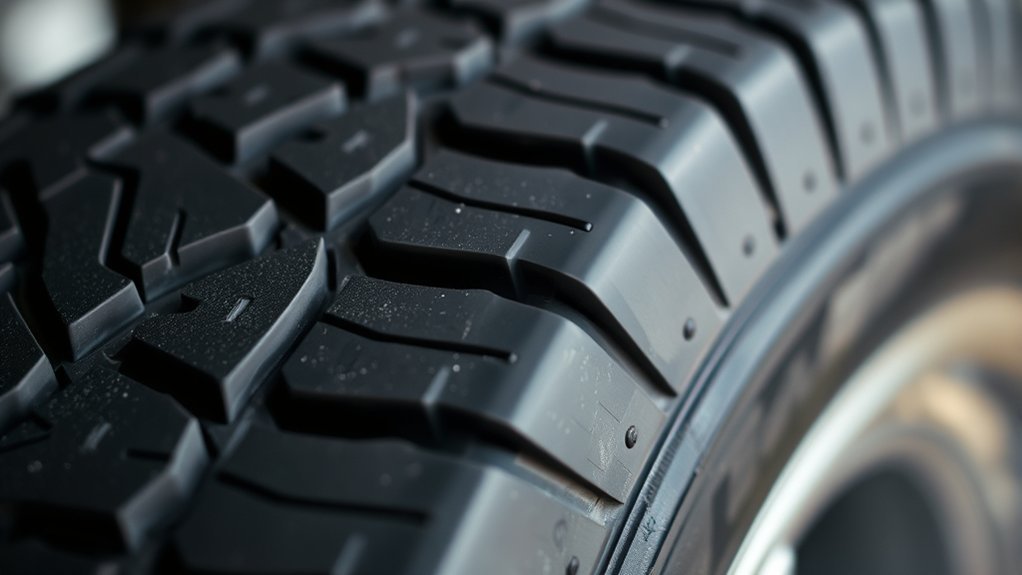
Tread wear indicators, also called wear bars, are small raised rubber bars molded into the tire’s main grooves. They are designed to become level with the surrounding tread when the tire has reached its wear limit. Continental explains that if the indicators are flush with the tread, the tire should be replaced.
Here’s how to use them:
- Look inside the main tread grooves for small rubber bars running across the groove.
- Check several spots around the tire, not just the easiest one to see.
- If the tread surface is level with the wear bar, replace the tire.
- If the wear bars are close but not flush, measure with a tread gauge and plan replacement before wet or winter driving.
Toyota Hilux Tread Depth Chart: What Your Reading Means
Use this chart as a practical guide, then follow your local tire laws, your tire manufacturer’s instructions, and your Hilux owner’s manual. Different countries may state legal limits in millimeters instead of 32nds of an inch.
| Tread Reading | What It Means | Recommended Action |
| 6/32 inch or more | Generally usable tread for normal road driving, assuming the tire is not old, damaged, underinflated, or unevenly worn. | Keep checking monthly and before long trips. |
| 4/32 inch | Wet-road performance is reduced compared with new tires. Michelin notes that replacing at 4/32 inch can give a meaningful safety buffer for frequent heavy rain. | Plan replacement soon if you drive in heavy rain, tow, carry loads, or travel at highway speeds. |
| About 4 mm for winter tires | Continental recommends winter tires with the Alpine symbol and at least 4 mm of tread for winter conditions. | Use proper winter tires where snow or ice is common; do not rely only on all-terrain tread. |
| 2/32 inch / 1.6 mm | Common U.S. replacement threshold; wear bars are usually flush at this point. | Replace the tire now. |
AAA testing found that, on wet pavement at highway speeds, tires worn to 4/32 inch increased average stopping distance by 43%—an additional 87 feet—compared with new tires.
What Uneven Tread Wear Means on a Hilux
Do not judge a tire by the deepest-looking groove. A tire is only as safe as its most worn area. Uneven wear can also point to a mechanical or maintenance problem that will damage the next set of tires if it is not fixed.
- Both outer shoulders worn: often linked to underinflation, heavy loads, or hard cornering.
- Center tread worn faster: often linked to overinflation or using a pressure/load setup that does not match the vehicle’s use.
- One edge worn faster: often points to wheel alignment, camber, toe, or suspension issues.
- Cupping or scalloping: can indicate worn shocks, poor balance, or suspension problems.
- Patchy or diagonal wear: may come from a mix of alignment, balance, rotation, or suspension issues.
If you see uneven wear, measure the lowest point and have the Hilux inspected before replacing the tires. New tires can wear out quickly if the root cause is still there.
[Products Worth Considering]

【EXTENDED REACH DUAL HEAD】LUMITECO 12" pencil-style pressure gauge is designed with the Integrated Straight foot air chuck and 30°reverse chuck. Ideal for dual wheels and other difficult reached valves. Your good choice for checking tire pressure as well as a great father's day gift.

Enhanced Visibility in Low Light: Features a green backlit LCD screen and integrated flashlight, allowing for clear reading of tire pressure even in dark or dimly light conditions.

1. LONG ZINC ALLOY DUAL HEAD DESIGN : Straight foot air chuck are deisghed for inner wheels or difficult reached valve as well as the 30°reverse chuck are for outer wheels.A good choice for testing your tire pressure also a great father's day gift
When to Replace Your Tires: Recognizing Worn Tread
Replace your Toyota Hilux tires when the tread reaches 2/32 inch (1.6 mm), when the wear bars are flush, or when the tire has unsafe damage. You should also replace tires sooner if your driving conditions demand more tread, such as frequent rain, towing, heavy payloads, snow, or off-road travel.
Do a full tire check, not just a tread check. Look for:
- Bulges, blisters, cracks, cuts, or exposed cords
- Punctures in the shoulder or sidewall
- Vibration, pulling, or new road noise
- Uneven tread depth between tires on the same axle
- Old tires, including a spare tire that looks unused but has aged
NHTSA advises checking tires at least once a month and before long road trips, including the tread, sidewalls, and spare tire if equipped. If you are unsure about any tire damage, take the vehicle to a qualified tire professional before driving long distances.
[Products Worth Considering]
👩💼【size specification】:1.0 tires Outer diameter 55mm/2.2in, width 25mm/0.98in. plastics1.0 wheels Hex 7mm/0.28in
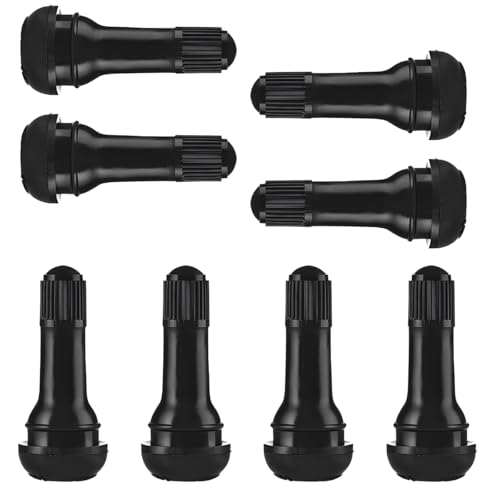
【High-Quality Material】: The car tire valve stems are meticulously crafted from high-quality rubber and zinc alloy materials, featuring excellent anti-rust and anti-corrosion properties. It remains stable and reliable even in high-temperature environments and has strong tear resistance. The overall structure is solid and stable, making it extremely rugged. It can withstand external pressure shocks and complex and harsh weather conditions, and is not prone to breakage even after long-term use.

Advanced Vehicle Protection: YHTAUTO's first-rate cover wheel splash guards for cars are the perfect solution to protect your vehicle from dirt, debris, and other elements that can damage your paint and wheels
Choosing the Right Tread Pattern for a Toyota Hilux
Hilux tire tread pattern matters because this vehicle is often used for mixed driving: commuting, towing, job sites, gravel roads, mud, sand, and touring. Choose tires by how you actually drive, not just by the most aggressive-looking tread.
- Highway-terrain tires: best for mostly paved roads, lower road noise, and steady everyday handling.
- All-terrain tires: a balanced choice for drivers who split time between pavement, gravel, light mud, and camping tracks.
- Mud-terrain tires: useful for frequent mud and rough off-road work, but often louder and less refined on wet pavement.
- Winter or snow-rated tires: best where snow, ice, and cold weather are common; look for the three-peak mountain snowflake symbol where winter performance is needed.
Always match the tire size, load rating, and speed rating to your Hilux’s placard, owner’s manual, and local regulations. This is especially important if your Hilux carries tools, tows, uses aftermarket wheels, or runs light-truck construction tires.
[Products Worth Considering]


Frequently Asked Questions
How often should I check my Toyota Hilux tire tread depth?
Check tread depth at least once a month and before long trips. Also check before towing, off-road driving, rainy-season travel, or winter driving. Measure all four tires and the spare if your Hilux has one.
Can I check tread depth in winter conditions?
Yes, but clear away snow, ice, mud, and stones first so the gauge touches the bottom of the tread groove. For winter driving, tread depth is only one part of safety; use the correct winter-rated tire where snow and ice are common.
What are the consequences of worn tire tread?
Worn tread reduces the tire’s ability to move water, mud, or snow away from the contact patch. That can increase stopping distance, reduce steering control, and raise the risk of hydroplaning on wet roads.
Are there specific tread patterns for my Hilux?
Yes. Highway-terrain tires suit mostly paved driving, all-terrain tires suit mixed road and light off-road use, mud-terrain tires suit frequent mud or rough tracks, and winter-rated tires suit snow and ice. Always match the size and load rating to the Hilux placard and owner’s manual.
Where can I buy a tread depth gauge?
You can buy a tread depth gauge at auto parts stores, tire shops, hardware stores, and online retailers. Choose one that reads in 32nds of an inch and millimeters so you can compare results with both U.S. and metric guidance.
Should I check the spare tire too?
Yes. A spare tire can age, crack, lose pressure, or become unsafe even if it has plenty of tread. Check its pressure, tread, sidewall condition, and age before long trips or remote-area driving.
Does low tire pressure affect tread wear?
Yes. Underinflation can wear the outer shoulders, overinflation can wear the center faster, and incorrect pressure can increase heat and stress. Check pressure when tires are cold and use the Hilux tire placard or owner’s manual pressure, not the maximum pressure printed on the tire.
Conclusion
Checking your Toyota Hilux’s tire tread depth is simple: use a tread depth gauge for accuracy, confirm with the penny test if needed, and inspect the wear bars and sidewalls. Replace tires at 2/32 inch (1.6 mm), sooner if your driving conditions require more wet, winter, towing, or off-road grip. The payoff is real: AAA testing found that tires worn to 4/32 inch took 43% longer to stop on wet pavement than new tires in its highway-speed test. A few minutes of checking can help you avoid poor traction, longer stopping distances, and unexpected tire problems on the road.
Sources
- NHTSA Summer Driving & Road Trip Tips — monthly tire inspection, 2/32-inch tread guidance, penny test, uneven wear, and spare tire checks.
- NHTSA TireWise — tire pressure, tire placard guidance, treadwear indicators, tire rotation, and tire maintenance basics.
- Michelin Tire Tread Depth Guide — 2/32-inch legal threshold, penny test, gauge use, wet-weather buffer, and hydroplaning explanation.
- Continental Tread Depth Guide — tread wear indicators, gauge method, lowest-reading rule, wet/snow braking concerns, and tire damage checks.
- Continental Winter Tire Markings — 3PMSF winter tire identification and 4 mm winter tread-depth recommendation.
- AAA Worn Tires Wet-Braking Study — stopping-distance impact of tires worn to 4/32 inch on wet pavement.

Related Articles
Toyota Hilux Run-Flat Tires: What You Need to Know
Take control of your safety with Toyota Hilux run-flat tires; discover their benefits and hidden costs that could change your driving experience forever.
Read More
Effects of Underinflated Tires on the Toyota Hilux
Inadequate tire pressure in your Toyota Hilux can lead to serious safety issues and costly repairs; discover how to avoid these pitfalls.
Read More
The Risks of Overinflating Toyota Hilux Tires
Overinflating your Toyota Hilux tires can lead to dangerous blowouts and uneven wear, but understanding the risks is crucial for your safety.
Read More