
Decoding Toyota Hilux Tire Sidewall Markings
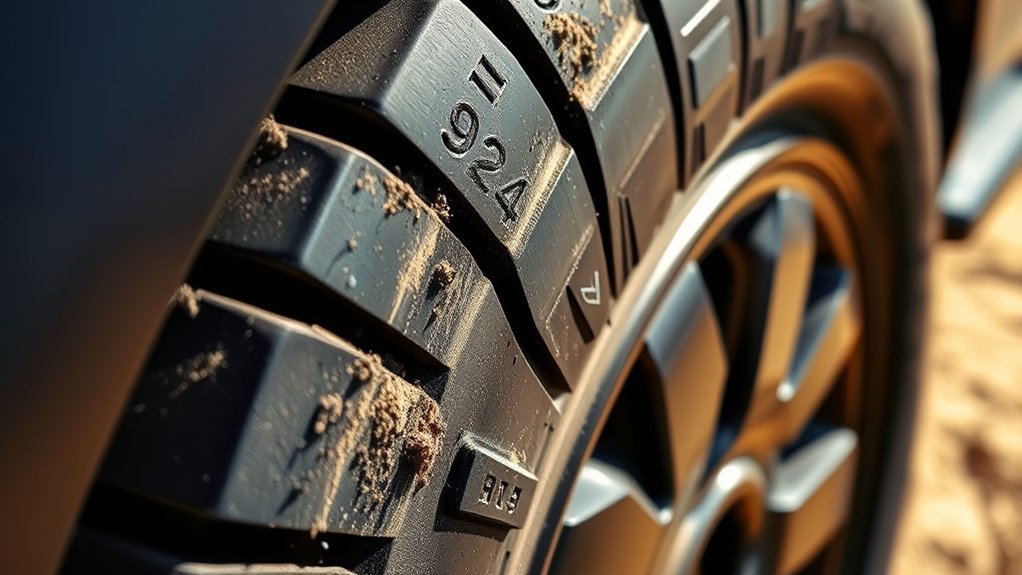
Decoding your Toyota Hilux tire sidewall markings helps you choose the right replacement tires, avoid overloading, keep the correct pressure, and spot an old or unsafe tire before it causes trouble. The key is to read the markings in order: tire type, size, construction, rim diameter, load index, speed symbol, DOT/TIN date code, and condition markings.
Quick Answer
Toyota Hilux tire sidewall markings tell you the tire’s width, sidewall height, rim size, construction type, load capacity, speed rating, age, and weather capability. Use the door placard or owner’s manual first, then make sure any replacement tire matches or exceeds the required size, load index, speed symbol, and load rating.
Key Takeaways
- A code such as 265/65R17 means 265 mm tire width, 65% aspect ratio, radial construction, and a 17-inch rim diameter.
- The number and letter after the size, such as 112S, are the load index and speed symbol. Match or exceed the Hilux’s original requirement.
- M+S means mud and snow design intent, while 3PMSF or the Alpine snowflake symbol means the tire meets a severe-snow traction standard.
- The DOT/TIN date code uses the last four digits for modern tires: the first two are the week and the last two are the year of manufacture.
- The pressure molded on the sidewall is a maximum tire limit, not your Toyota Hilux’s recommended cold tire pressure.
At a Glance
| Time Required | 5–10 minutes per tire |
| Difficulty | Easy |
| Tools Needed | Tire pressure gauge, tread depth gauge or coin, flashlight, and your Hilux tire placard or owner’s manual |
| Cost | Free if inspecting visually; usually under $15 for a basic pressure gauge or tread gauge |
Tire markings are not just buying information. The National Highway Traffic Safety Administration reported 511 deaths in tire-related crashes in 2024, making proper tire selection and maintenance a real safety issue.
Start With the Hilux Tire Placard Before Reading the Sidewall
Before you buy or upgrade tires, check the Toyota Hilux tire placard, owner’s manual, or Toyota dealer information for your exact year, market, trim, cab style, and wheel package. The sidewall tells you what is on the tire now; the placard tells you what Toyota specified for the vehicle.
This matters because Hilux tire sizes and ratings vary. For example, Toyota Australia’s current HiLux specification material lists 265/65R17 on some variants, but Toyota also warns that specifications can change and should be confirmed before relying on them. Use the sidewall as a decoder, not as the only authority.
Warning: Never fit a tire with a lower load index, lower speed symbol, lower load range, or unsuitable construction unless Toyota or a qualified tire professional confirms it is safe and legal for your exact Hilux. This is especially important if you tow, carry heavy loads, drive off-road, or run accessories such as a canopy, bull bar, drawers, or larger fuel tank.
[Products Worth Considering]

EVOULTES heavy duty tire inflator with an integrated gauge delivers accurate pressure readings from 10–120 PSI, helping you inflate, deflate, and check tires in one tool. The 16.5-inch extended dual-head air chuck with swivel base reaches hard-to-access dual wheel valves on trucks and RVs. A brass trigger core and side-mounted air release valve make operation smooth, with standard 1/4" NPT threading and quick-connect compatibility for easy setup.

The AstroAI 2 pack air chucks provide a heavy-duty, closed-flow locking design that helps keep air flowing during inflation while securely attaching to the valve stem. Built with 250 PSI rated brass components and compatible with Schrader valves, they feature 1/4" female NPT threads for a wide fit with common inflators. The straight tip and locking clip make filling tires and monitoring pressure more convenient.

The JACO FlowPro Tire Inflator measures, inflates, and airs down tires up to 100 PSI with battery-free operation and ±2% accuracy after calibration. It features a glowing pressure dial for night visibility, a heavy-duty steel build with a hybrid hose, and a precision push-to-inflate thumb trigger. The patented Lightning Air Chuck locks on for a secure seal, and the kit includes quick-connect hardware for easy inline use with your air compressor.
Decoding Tire Size: Width, Aspect Ratio, and Diameter
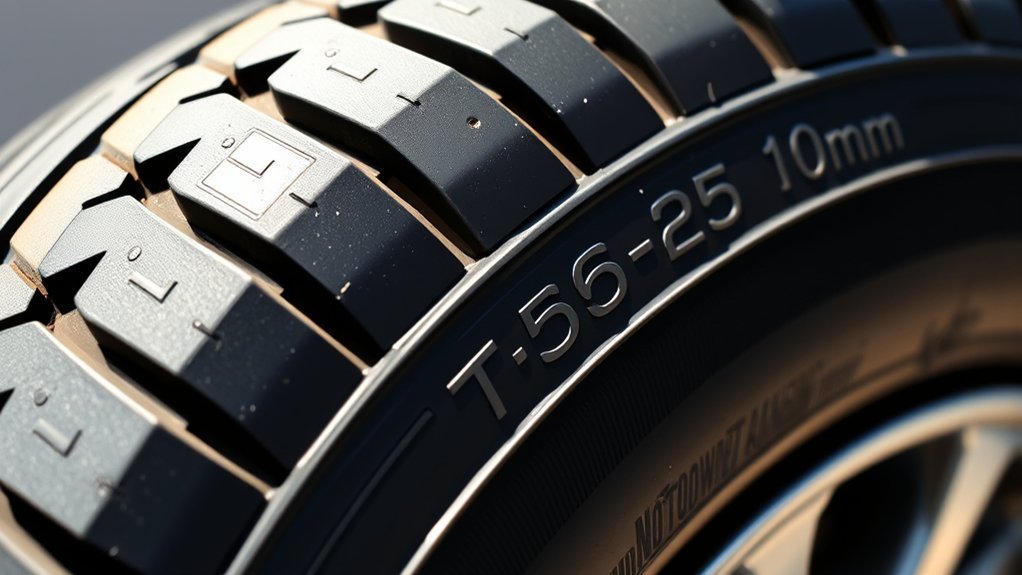
A Hilux-style tire size such as 265/65R17 breaks down into four main parts:
- 265 — the nominal tire section width in millimeters, measured from sidewall to sidewall.
- 65 — the aspect ratio. The sidewall height is 65% of the tire’s width.
- R — radial construction, the standard construction type for modern passenger and light-truck tires.
- 17 — the rim diameter in inches. This must match the wheel diameter.
A wider tire can increase the contact patch and change steering feel, but it can also affect clearance, road noise, fuel use, mudguard clearance, speedometer accuracy, spare-wheel fitment, and legal compliance. A taller sidewall can improve ride comfort and rim protection on rough tracks, while a lower sidewall can sharpen steering response on pavement.
Note: The tire’s overall diameter matters as much as the printed size. If you change tire size, confirm clearance at full steering lock, suspension compression, and full load before driving at speed.
Understanding Tire Types and Designations for the Hilux
The letters before or after the size tell you the tire’s intended use and load capability. On a Toyota Hilux, these markings are especially important because the vehicle may be used as a daily driver, work truck, tow vehicle, or off-road ute.
| P | Passenger tire. Common on many SUVs and light vehicles, but not always suitable for heavy Hilux work or towing use. |
| LT | Light Truck tire. Built for higher load and tougher use than many passenger tires, often chosen for towing, payload, and off-road durability. |
| C | Commercial or cargo-rated tire marking in many markets. Often used where higher load capacity is required. |
| XL, HL, Reinforced | Higher-load versions of a tire size. Match these only when they meet the Hilux’s required load capacity and pressure range. |
| No prefix | Often Euro-metric sizing. Do not assume it has the same load capacity as a P-metric, LT, C, or reinforced tire of similar size. |
The “R” in the size code means radial construction. Other construction markings are uncommon on modern Hilux replacement tires, but if you see a non-radial marking, do not mix it with radial tires without professional advice.
Load Index and Tire Speed Ratings Explained
The load index and speed symbol usually appear immediately after the tire size. In a service description such as 112S, 112 is the load index and S is the speed symbol. The load index is a code that corresponds to the maximum load one tire can carry when properly inflated. The speed symbol is the maximum speed capability under specified test conditions.
For example, a load index of 97 corresponds to 730 kg / 1,609 lb per tire. Many Hilux fitments require higher load indexes than passenger cars, so do not buy based on size alone.
| Marking | What it means | Hilux buying rule |
| Load index | Maximum load per tire when inflated correctly. | Match or exceed the original placard/manual rating. |
| Speed symbol | Maximum tested speed capability, such as S, T, H, or V. | Match or exceed the Toyota requirement unless local law and Toyota guidance allow otherwise. |
| Load range / ply rating | Indicates the tire’s load-carrying class and pressure capability, especially on LT tires. | Important for towing, work loads, and off-road use. |
Speed symbols such as H and V are not decoration. An H speed symbol indicates a tire rated up to 210 km/h / 130 mph under specified conditions, while V indicates up to 240 km/h / 149 mph. Your real-world safe speed is still limited by road conditions, load, temperature, tire condition, and local speed limits.
M+S, 3PMSF, and Off-Road Tire Markings
Many Hilux owners look for tires that handle gravel, mud, rain, and snow. Sidewall weather markings can help, but they are often misunderstood.
- M+S, M/S, or M&S means the tire is designed for mud and snow conditions according to manufacturer or industry criteria. It does not automatically mean the tire is a true severe-winter tire.
- 3PMSF, also called the three-peak mountain snowflake or Alpine symbol, indicates the tire meets a defined severe-snow traction performance requirement.
- A/T usually means all-terrain. It is useful for mixed road and trail use, but not every A/T tire has the same wet braking, snow, mud, or load performance.
- M/T usually means mud-terrain. It can improve mud traction but may increase road noise, wet-road stopping distance, and wear.
Pro Tip: If you drive a Hilux in snow country, look for the 3PMSF/Alpine symbol rather than relying on M+S alone. If you mostly drive hot highways with occasional dirt roads, an all-terrain tire with strong wet-braking performance may be safer than an aggressive mud tire.
What’s Your DOT Tire ID Number Telling You?
The DOT Tire Identification Number, often called the TIN, identifies the tire for compliance, registration, recalls, and age checks. On modern tires made for the U.S. market, the final four digits of the TIN are the date code. The first two digits identify the week of manufacture, and the last two identify the year.
For example, a date code ending in 2524 means the tire was manufactured in the 25th week of 2024. A date code ending in 0109 means the first full calendar week of 2009.
Do not rely on old three-digit date-code advice for modern tires. If a tire has an old three-digit date code, unclear markings, cracks, bulges, exposed cords, repeated air loss, or unknown history, have it inspected by a tire professional before using it on your Hilux.
DOT/TIN information also matters after purchase. Registering tires helps the manufacturer contact you if there is a safety recall. If you buy used tires, the TIN and tire condition are especially important because tread depth alone does not prove the tire is safe.
[Products Worth Considering]
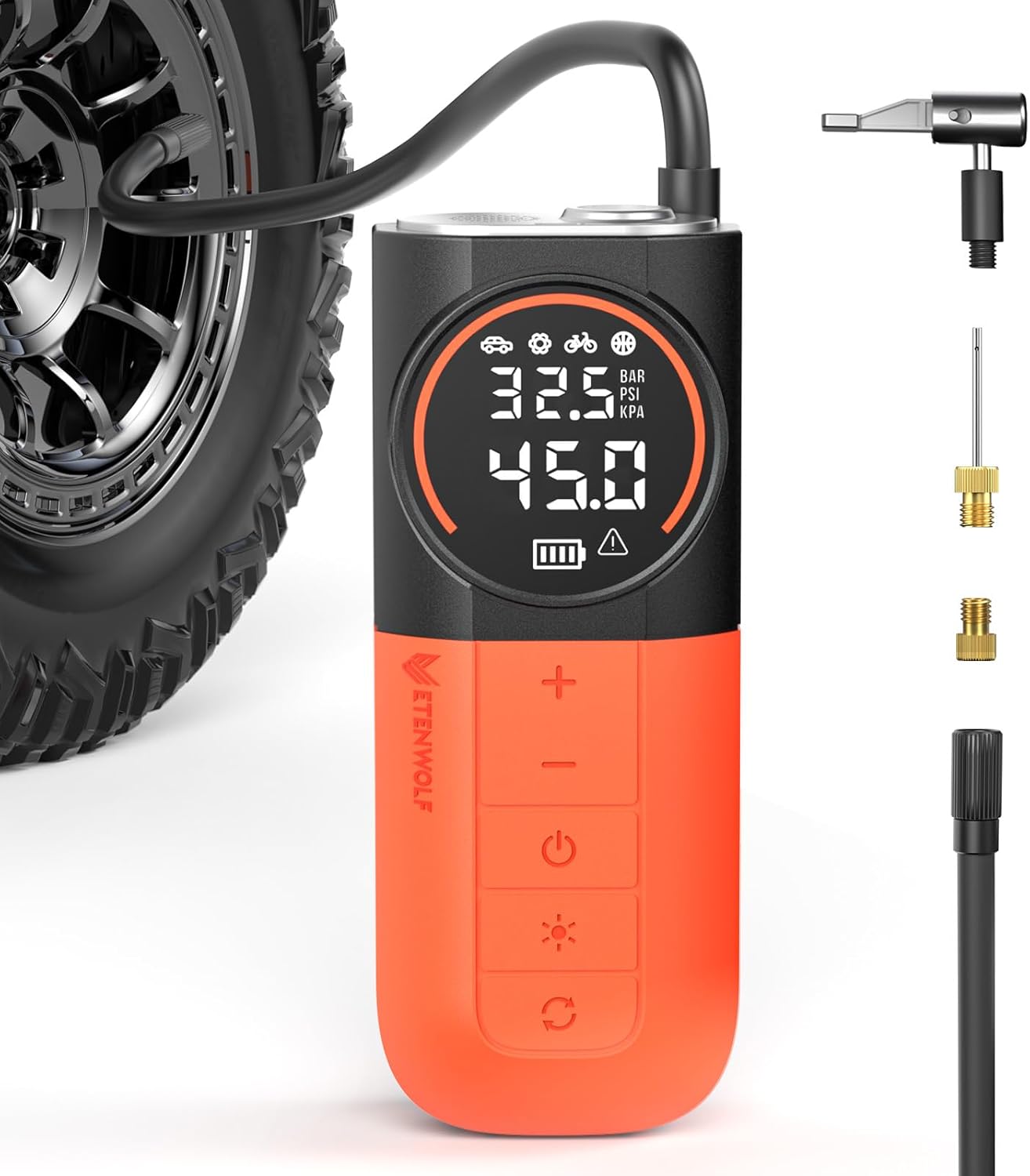
The ETENWOLF S1 cordless tire inflator delivers ultra-fast inflation with up to 160 PSI and a 20 L/min airflow for quicker tire top-offs. Its 5200mAh battery and cooling system support inflating many tires and sports balls on a single charge, while the digital pressure gauge and multi-unit display help you reach the right pressure accurately. With preset modes, pressure memory, an auto-stop feature, and an LED flashlight, it’s built for easy roadside and everyday use.

This portable cordless tire inflator delivers fast, efficient inflation for cars, motorcycles, bikes, and sports balls with a digital pressure gauge. Use the one-click PSI preset with auto shut-off for accurate, hands-free topping to your target pressure up to 150 PSI. It’s compact and rechargeable with a built-in emergency LED light plus valve adapters and accessories for quick, ready-to-go use.
MAX LOAD, MAX PRESS, and UTQG Markings
Sidewall markings such as MAX LOAD and MAX PRESS show the tire’s maximum limits. They are not the same as your Hilux’s recommended cold tire pressure. For normal use, use the tire placard or owner’s manual pressure for your load condition, then adjust only within Toyota’s guidance and the tire maker’s limits.
You may also see UTQG markings on some passenger tires. The Uniform Tire Quality Grading system covers treadwear, traction, and temperature ratings for many passenger tires sold in the United States. These ratings help compare tires, but they do not replace the Hilux’s required size, load index, speed symbol, or pressure specification.
- Treadwear is a comparative wear rating within a controlled test system.
- Traction indicates wet straight-line stopping performance under the UTQG test.
- Temperature indicates resistance to heat buildup.
Essential Tire Maintenance Tips for Longevity
Maintaining your tires is essential for safety, performance, fuel economy, and tire life. The four basics are pressure, tread, rotation, and alignment.
- Check cold tire pressure at least monthly. Use the placard pressure, not the sidewall maximum. Check before long trips, towing, or carrying heavy loads.
- Inspect tread depth. Replace tires at or before 2/32 inch / 1.6 mm, and consider earlier replacement if you drive often in heavy rain, mud, snow, or on rough gravel.
- Use the treadwear bars. When the wear bars are level with the tread, the tire has reached its minimum legal tread depth in many places.
- Rotate regularly. Follow Toyota’s schedule. If no schedule is specified, the U.S. Tire Manufacturers Association recommends rotation every 5,000 to 8,000 miles.
- Inspect for damage. Look for cuts, bulges, sidewall cracks, exposed cords, punctures, irregular wear, embedded stones, and air loss.
- Check the spare. A full-size spare can age out even if it has never been used.
- Get alignment checked. Pulling, vibration, steering-wheel shake, or uneven tread wear can signal alignment, balance, suspension, or tire damage issues.
Toyota Hilux Tire Replacement Checklist
Before buying replacement tires, run through this checklist:
- Confirm your exact tire size on the Hilux placard, owner’s manual, or Toyota dealer source.
- Match the wheel diameter exactly.
- Match or exceed the required load index and speed symbol.
- Confirm LT, C, XL, reinforced, or load range requirements if your Hilux carries heavy loads or tows.
- Choose tread type based on real use: highway, all-terrain, mud-terrain, winter, or commercial load work.
- Check DOT/TIN date before purchase, especially on discounted or used tires.
- Confirm spare-wheel compatibility if changing size.
- Check clearance, speedometer impact, local road rules, and insurance implications before upsizing.
- After installation, set cold pressure to Toyota’s specification and recheck wheel-nut torque according to the installer’s instructions.
Frequently Asked Questions
What do the numbers on the side wall of a tire mean?
The main numbers show tire size and service rating. In 265/65R17 112S, 265 is width in millimeters, 65 is sidewall height as a percentage of width, R means radial, 17 is rim diameter in inches, 112 is load index, and S is the speed symbol.
What do the letters on my tire sidewall mean?
Letters can identify tire type, construction, weather capability, and speed rating. P usually means passenger tire, LT means light truck, R means radial, M+S means mud and snow, and 3PMSF means severe-snow performance. The final letter after the load index is the speed symbol.
What does the letter H mean on the sidewall of a tire?
When H appears as the speed symbol after the load index, it means the tire is rated up to 210 km/h / 130 mph under specified test conditions. It does not mean you should drive at that speed. Load, heat, tire wear, road surface, and legal speed limits still matter.
Does the DOT date code mean my tire is expired?
The DOT/TIN date code tells you when the tire was made, not a universal expiration date. Age becomes more important on full-size spares, low-mileage vehicles, used tires, and tires exposed to heat, sunlight, heavy loads, or poor storage. Follow the tire and vehicle manufacturer’s service-life guidance and replace any tire with cracking, bulges, exposed cords, or repeated air loss.
Are M+S tires the same as winter tires?
No. M+S means the tire is intended for mud and snow conditions, but it does not prove severe-snow traction performance. For verified severe-snow performance, look for the 3PMSF or Alpine snowflake symbol on the sidewall.
Can I fit bigger tires on a Toyota Hilux?
Sometimes, but do not choose bigger tires by appearance alone. Check overall diameter, width, load rating, wheel offset, suspension clearance, steering clearance, spare fitment, speedometer error, braking effect, insurance terms, and local road rules before upsizing.
Conclusion
Your Toyota Hilux’s tire sidewall markings tell you far more than the tire size. They show fitment, construction, load capacity, speed capability, tire age, winter certification, pressure limits, and wear information. Read the sidewall together with the Hilux tire placard, not instead of it. When the size, load index, speed symbol, pressure, tread depth, and DOT/TIN date all check out, your Hilux is better prepared for daily driving, towing, work loads, and off-road travel.
Sources
- NHTSA TireWise: Tire Safety Ratings and Awareness — tire safety, UTQG, tire maintenance, and tire-related crash context.
- Tire Industry Association: Reading a Tire Sidewall — size code, tire type, construction, load index, speed symbol, and DOT/TIN basics.
- eCFR 49 CFR 574.5: Tire Identification Requirements — modern DOT/TIN date-code requirements.
- eCFR 49 CFR 571.139: New Pneumatic Radial Tires — severe-snow tire definition and Alpine symbol requirement.
- U.S. Tire Manufacturers Association: Tire Care Essentials — pressure checks, tread depth, rotation interval, and alignment guidance.
- Toyota Australia HiLux Specification Table — current example HiLux tire fitments and Toyota’s reminder to confirm specifications.

Related Articles
Toyota Hilux Run-Flat Tires: What You Need to Know
Take control of your safety with Toyota Hilux run-flat tires; discover their benefits and hidden costs that could change your driving experience forever.
Read More
Effects of Underinflated Tires on the Toyota Hilux
Inadequate tire pressure in your Toyota Hilux can lead to serious safety issues and costly repairs; discover how to avoid these pitfalls.
Read More
The Risks of Overinflating Toyota Hilux Tires
Overinflating your Toyota Hilux tires can lead to dangerous blowouts and uneven wear, but understanding the risks is crucial for your safety.
Read More