Steel vs Alloy Wheels for Tundra Winter Tires: Weight, Cost, and Durability

When deciding between steel and alloy wheels for your Tundra’s winter tires, weigh the cost, weight, and durability. Steel wheels are more affordable at around $125 CAD, offering great durability and traction in harsh conditions. They’re heavier, which helps maintain stability on slippery roads. Alloy wheels, priced at roughly $170 CAD, provide better handling but are more susceptible to damage. You’ll want to take into account your driving environment and preferences to find the best fit for your needs. Explore more insights to make an informed choice.
Key Differences Between Steel and Alloy Wheels for Winter Use
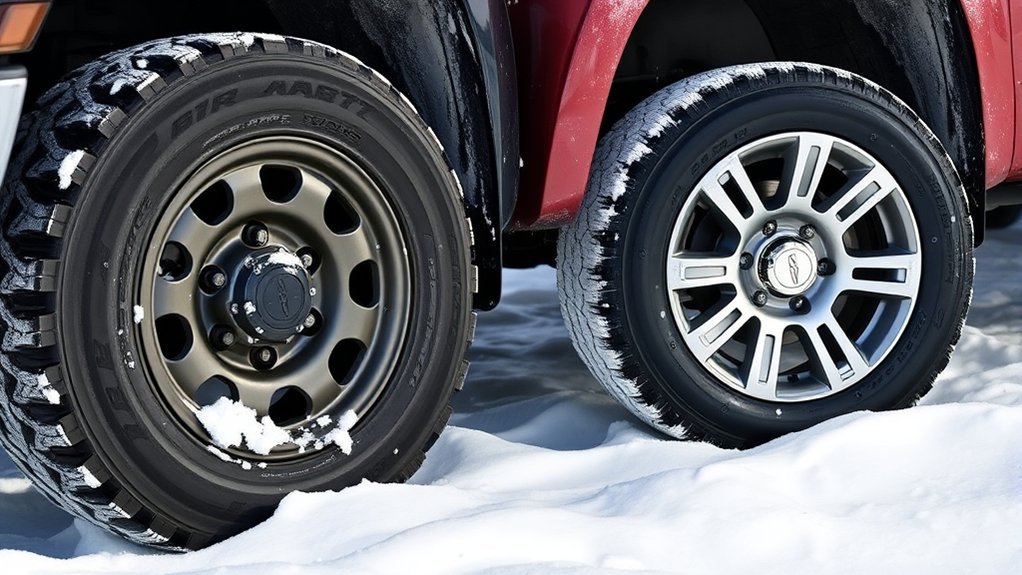
When choosing between steel and alloy wheels for your Tundra’s winter tires, it’s essential to understand their key differences. Steel wheels are generally more durable and cost-effective, priced around $125 CAD each. They excel in harsh winter conditions, resisting bending and cracking, which makes them ideal for areas with heavy road salt. On the other hand, alloy wheels, costing about $170 CAD each, offer lighter weight and slightly improved handling but are more prone to cracking under harsh impacts.
While steel wheels may lack in wheel aesthetics, they prioritize toughness and resilience. If you want to maintain the appearance of alloy wheels, regular protective coatings are necessary to combat oxidation. Ultimately, your choice will hinge on balancing performance factors and aesthetics, ensuring you’re well-equipped for winter’s challenges without sacrificing style.
The Importance of Weight in Winter Tires
Understanding the weight of your wheels is essential for optimizing winter tire performance. Heavier steel wheels can provide better traction balance in icy conditions, thanks to increased weight pressing down on your tires. This weight distribution enhances stability, which is vital when maneuvering slippery roads. While lighter alloy wheels improve handling and ride quality due to reduced unsprung weight, their advantages may not outweigh the durability benefits of steel.
In winter driving, durability is key; steel wheels resist deformation from potholes and rough terrain, ensuring your tires maintain their grip. Additionally, lighter wheels might yield slight gains in fuel efficiency, but the trade-offs in performance and stability can be significant. Ultimately, your choice should reflect a balance between the aesthetic appeal of alloys and the robust performance of steel, allowing you to traverse winter conditions confidently.
Cost Comparison: Winter Tire Options for Steel vs Alloy Wheels
When it comes to winter tire options for your Tundra, understanding the cost differences between steel and alloy wheels is essential. Steel wheels typically offer a more budget-friendly price at around $125 CAD each, while alloy wheels average about $170 CAD. However, consider the long-term costs, as steel wheels require less maintenance, while alloy wheels can last longer if properly maintained.
Price of Steel Wheels
Steel wheels offer an appealing budget-friendly option for winter tires, typically priced around $125 CAD each. When you consider buying three additional steel wheels for winter, you’re making a smart move, especially if you already have a spare.
Here’s a quick comparison to help with your budget considerations:
| Wheel Type | Average Price (CAD) | Durability |
|---|---|---|
| Steel Wheels | $125 | High |
| Alloy Wheels | $170 | Moderate |
| Used OEM Wheels | Varies | Variable |
While used OEM alloy wheels might seem cheaper, they can lead to higher replacement costs if damaged. Plus, the durability of steel wheels saves you future expenses, making them a practical choice for winter driving.
Alloy Wheel Expenses
While steel wheels provide a cost-effective choice for winter driving, alloy wheels bring their own set of advantages that can influence your decision. Here’s a quick cost comparison:
- Initial Costs: Steel wheels average around $125 CAD each, while alloy wheels typically cost about $170 CAD each.
- Long-Term Value: Despite their higher price, alloy wheels’ durability and aesthetic appeal can save you money on replacements.
- Used Options: Consider purchasing used OEM alloy wheels, which may cost less than new steel wheels.
Factor in additional expenses like new TPMS sensors necessary for both steel and alloy options. With various alloy wheel brands available, you’ll find features that suit your style and performance needs, making the investment worth considering.
Long-Term Cost Analysis
Choosing between steel and alloy wheels for your Tundra winter tires involves more than just initial costs; it’s essential to evaluate long-term financial implications. A cost benefit analysis reveals that steel wheels, priced around $125 CAD, are a budget-friendly choice, requiring less maintenance and easier repairs. This durability translates to fewer expenses over time, especially in harsh winter conditions where road salt can corrode alloy wheels. While alloys, at approximately $170 CAD, may offer better aesthetic appeal and potentially longer life spans, their higher replacement costs can offset those benefits. Ultimately, for investment longevity, steel wheels often stand out as the smarter choice for winter setups, balancing affordability and durability without sacrificing performance.
Durability Showdown: Which Wheels Are Tougher for Winter?
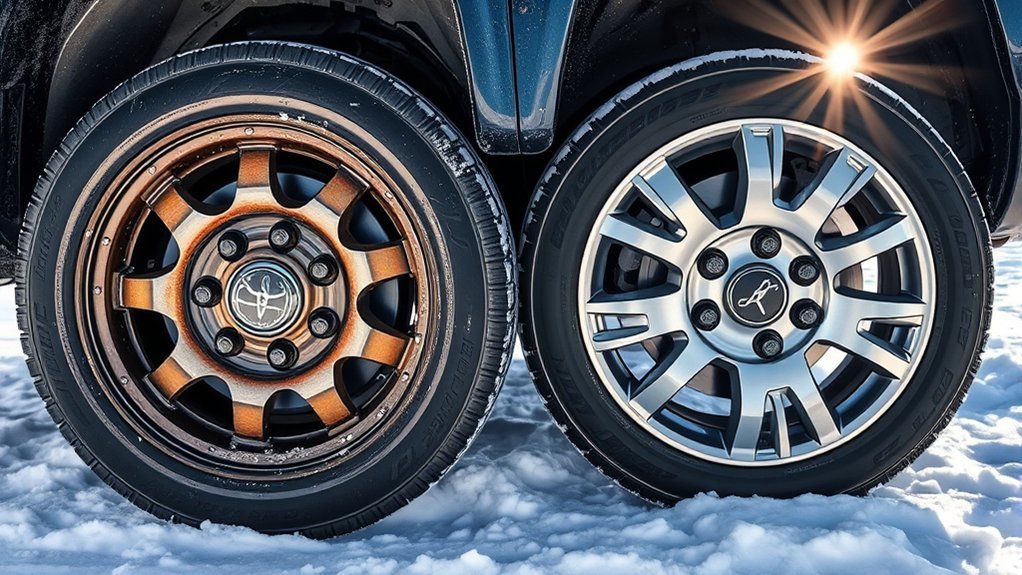
When it comes to winter driving, the durability of your wheels can make all the difference. Steel wheels stand out for their resilience, bending rather than cracking under stress, while alloy wheels can be more vulnerable to damage from potholes and ice. Understanding these differences helps you choose the right option for tackling harsh winter conditions.
Steel Wheel Resilience
Steel wheels stand out for their remarkable resilience in harsh winter conditions, making them a top choice for Tundra winter tires. Their steel wheel advantages are evident in several ways:
- Durability: They bend under impact without cracking, ideal for potholes and rough roads.
- Maintenance: Minor scratches are less concerning, requiring fewer refinishing efforts compared to alloys.
- Traction: Their heavier weight enhances traction in snowy conditions, boosting winter driving performance.
While steel wheels can rust in salt-heavy environments, their low-carbon steel construction offers resilience against freeze-thaw cycles. If you value toughness and reliability during winter, steel wheels provide the necessary durability to tackle any challenge nature throws your way.
Alloy Wheel Vulnerability
While alloy wheels are often praised for their sleek appearance and lightweight design, they come with notable vulnerabilities that can be a concern during winter driving. Their alloy wheel weaknesses, particularly their lower impact resistance, make them susceptible to cracking from potholes. In contrast, steel wheels can bend without breaking, offering better resilience against harsh winter conditions.
| Feature | Alloy Wheels | Steel Wheels |
|---|---|---|
| Weight | Lighter | Heavier |
| Impact Resistance | Lower; prone to cracking | Higher; bends instead |
| Corrosion Resistance | Susceptible if not maintained | Resistant with care |
| Precision | Less uniform | More rugged |
| Maintenance | Requires frequent upkeep | Easier to maintain |
Choosing the right wheel can make a significant difference in your winter driving experience.
Driver Insights on Winter Tire Choices
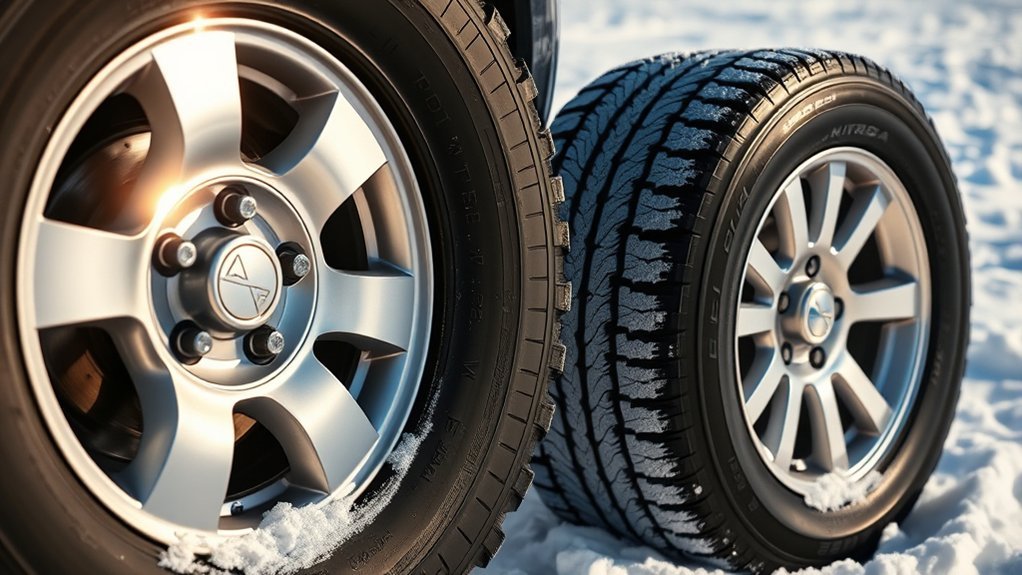
What drives Tundra owners to choose steel wheels for their winter tires? For many, it’s a blend of durability, cost, and practical driver experiences in harsh conditions. Steel wheels shine in winter performance, making them a preferred choice. Here’s why:
- Cost-Effective: Priced around $125 CAD per wheel, they’re a budget-friendly option compared to $170 CAD for alloys.
- Durability: Steel wheels resist bending and cracking, handling potholes and rough roads with ease.
- Low Maintenance: When cared for properly, they resist rust, especially in areas with heavy road salt.
While some drivers appreciate the aesthetic of alloy wheels, they often prioritize the toughness and affordability of steel wheels. Ultimately, it’s about making a practical choice that enhances winter driving confidence.
Maintenance Tips for Steel and Alloy Wheels in Winter
As winter weather sets in, maintaining your wheels becomes essential to guarantee safe and reliable driving. Regular wheel cleaning is vital, so rinse both steel and alloy wheels frequently to prevent salt buildup and corrosion. For steel wheels, applying a rust-converter primer and paint enhances their resistance to rust, especially in salt-belt areas. Alloy wheels, on the other hand, can benefit from a ceramic spray that offers protection against oxidation, preserving their finish through harsh conditions.
Don’t forget about tire pressure; check it weekly. Fluctuating temperatures can lead to under-inflation, risking damage to both wheel types. While steel wheels often require less refinishing, staying proactive with maintenance guarantees that both options remain in top shape throughout winter. By following these tips, you’ll extend the lifespan of your wheels and enjoy a safer driving experience.
Environmental Impact: Steel vs Alloy
Maintaining your wheels not only guarantees safety but also has implications for the environment. When evaluating steel versus alloy wheels, it’s crucial to assess their environmental impact through sustainability practices and manufacturing processes. Here are key points to reflect on:
- Corrosion Resistance: Alloy wheels resist rust better than steel, extending their lifespan in milder climates.
- Manufacturing Impact: Steel wheels require less energy to produce, but their susceptibility to corrosion can lead to more waste over time.
- Maintenance Benefits: Regular upkeep, like rinsing and applying protective coatings, can enhance the durability of steel wheels, minimizing their environmental footprint.
In harsh winter conditions, the practicality of steel wheels often outweighs the aesthetic appeal of alloys. By choosing wisely and maintaining your wheels, you can contribute positively to sustainability while ensuring your vehicle’s safety.
Making the Right Choice: Which Wheels Are Best for You?
When considering wheels for your Tundra’s winter tires, it’s essential to ask: which option aligns best with your needs? If budget is a priority, steel wheels are generally more cost-effective, averaging around $125 CAD each. They offer superior durability and traction performance in harsh winter conditions, making them a solid choice for rugged terrain. However, if you value wheel aesthetics and lighter weight, alloy wheels might appeal to you, despite their higher average cost of $170 CAD.
Keep in mind that while alloys can enhance your truck’s look, they may not justify the price when performance is concerned. Also, consider your local climate — steel is prone to rust in salty environments, while alloys require careful maintenance. Ultimately, weigh your priorities, whether it’s cost, durability, or style, to make the best choice for your winter driving needs.
Frequently Asked Questions
Can I Use Steel Wheels Year-Round for My Tundra?
Yes, you can use steel wheels year-round for your Tundra. They offer solid winter handling, but consider their weight and aesthetics. For best year-round performance, you might explore alloy wheels for lighter, stylish options.
How Do Steel and Alloy Wheels Affect Fuel Efficiency?
Fuel efficiency can drop by up to 10% with heavier steel wheels. Alloy wheels improve wheel performance, especially in varying temperatures, allowing for better handling and reduced rolling resistance, ultimately enhancing your Tundra’s efficiency.
Do Alloy Wheels Corrode More Easily in Winter?
Yes, alloy wheels can corrode more easily in winter due to road salt. To enhance corrosion resistance, you should regularly clean them and apply protective coatings. Following these maintenance tips keeps your wheels looking great and lasting longer.
Are There Specific Brands Recommended for Winter Steel Wheels?
You’ll find brands like Method, Black Rhino, and Vision excel with winter steel wheels. Their advantages include strength and cost-effectiveness, ensuring you navigate icy roads confidently without sacrificing performance or breaking the bank.
How Often Should I Inspect Winter Wheels for Damage?
You should inspect your winter wheels for damage every few weeks during the season. Look for damage indicators like cracks, dents, or rust. Regular wheel maintenance guarantees safety and performance throughout the winter months.
Conclusion
In the epic battle of steel versus alloy wheels for your Tundra’s winter tires, the stakes are sky-high! Steel wheels might be your trusty sidekick, offering unbeatable durability and cost-effectiveness. But don’t underestimate alloy wheels; they bring style and lighter weight to the snowy battlefield. Ultimately, choosing the right wheel is like picking your winter warrior—make sure it’s equipped to tackle icy roads and fierce storms. So, gear up wisely, and conquer winter with confidence!

Related Articles
Load Range D vs E for Tundra Towing: Do You Really Need E-Rated Tires?
Want to know if Load Range E tires are essential for your Tundra towing? Discover the key differences that could impact your hauling experience!
Read More
18-Inch vs 20-Inch Tires on a Tundra: Ride Quality and Off-Road Differences
How do 18-inch and 20-inch tires affect your Tundra's ride quality and off-road performance? Discover the key differences that could change your driving experience.
Read More
P-Metric vs LT Tires on a Toyota Tundra: Strength, Ride, and Load Compared
Discover the crucial differences between P-metric and LT tires for your Toyota Tundra—understanding these can transform your driving experience completely. What will you choose?
Read More