
All-Terrain vs All-Season Tires for a Tundra: Which Makes More Sense?
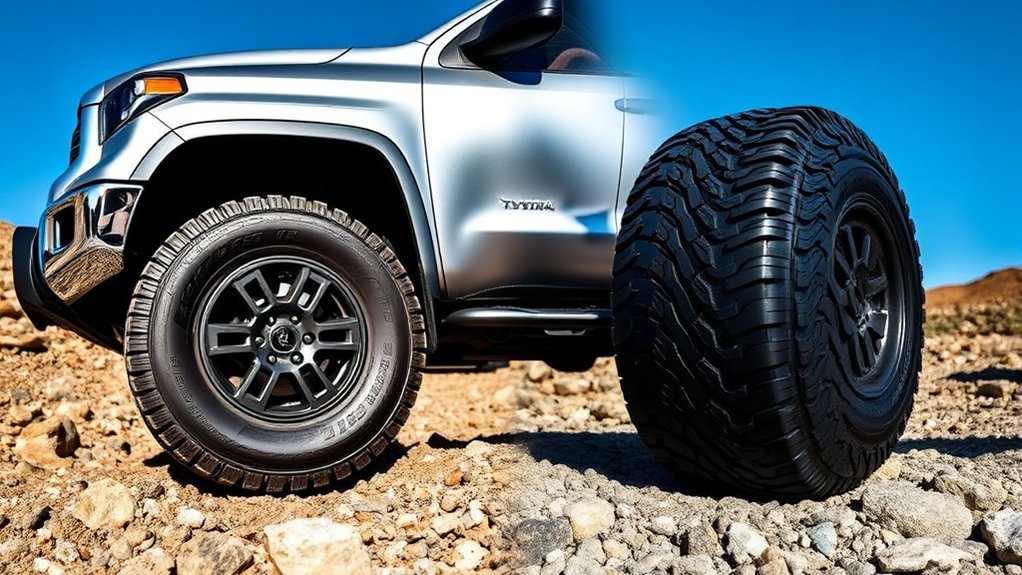
When choosing between all-terrain (A/T) and all-season (A/S) tires for your Tundra, think about your driving needs. A/T tires excel in off-road conditions and snowy terrains, providing excellent traction but can wear faster on highways. On the other hand, A/S tires offer better fuel efficiency and durability for daily driving on paved roads. They handle wet conditions well but lack the off-road capability of A/T tires. Want to explore which tire suits you best?
All-Terrain vs. All-Season: Key Benefits and Drawbacks
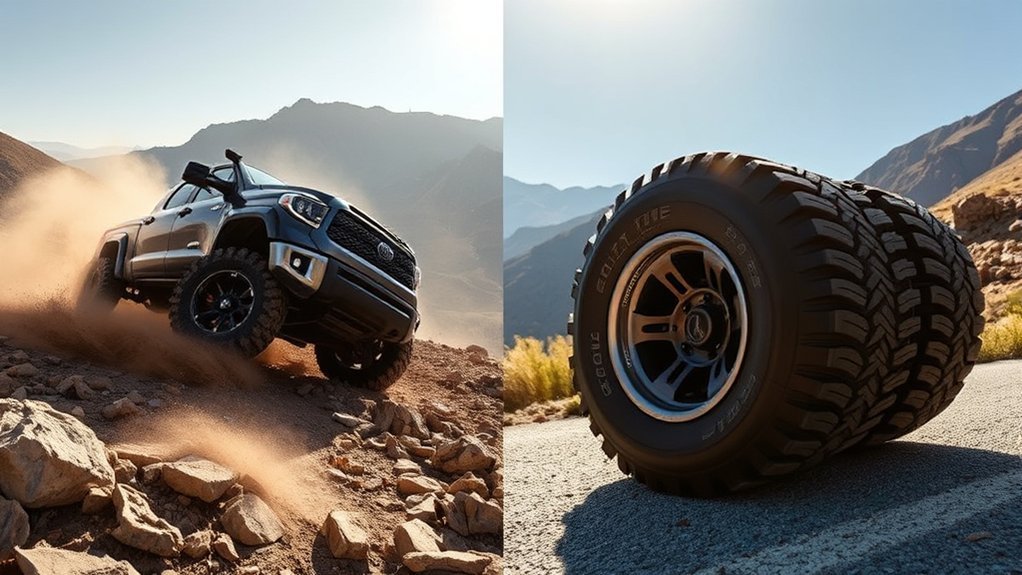
When you’re choosing between all-terrain (A/T) and all-season (AS) tires for your Tundra, it’s essential to understand their key benefits and drawbacks. A/T tires excel in traction performance on off-road trails and during snowy conditions, featuring a knobby tread design that grips mud effectively. However, this design can lead to increased road noise and lower fuel efficiency on highways, impacting tire longevity. In contrast, AS tires are optimized for on-road stability, providing better performance on icy and wet surfaces with their siping features. While they’re durable for mixed driving, A/T tires may wear faster on paved roads, making AS tires more cost-effective for daily use. If you prioritize off-road adventures, A/T tires could be your choice, but if you mainly drive on highways, AS tires may offer the best balance of performance and longevity. Choose wisely based on your driving habits and terrain needs.
Why All-Season Tires Excel in Daily Driving
All-season tires shine in daily driving by delivering enhanced on-road performance and versatile weather handling. Their unique design not only improves grip in various conditions but also boosts your fuel efficiency, saving you money at the pump. If you’re traversing city streets or tackling light off-roading, these tires offer a practical, cost-effective solution without sacrificing essential performance.
Enhanced On-Road Performance
Although many drivers seek versatility in their tires, those who prioritize daily driving will find that all-season tires truly shine in on-road performance. Engineered specifically for this purpose, they feature a balanced tread design that enhances tire traction on both wet and dry pavement. The siping in all-season tires improves grip on icy and rainy roads, ensuring superior road stability compared to all-terrain options. Additionally, these tires are designed for durability, making them a cost-effective choice for city streets and highways. Optimized rubber compounds perform consistently across a wide temperature range, eliminating the hassle of seasonal changes. In short, if daily driving is your focus, all-season tires deliver the performance you crave.
Better Fuel Efficiency
Fuel efficiency plays an essential role in daily driving, and that’s where all-season tires stand out. With a smoother tread design and softer rubber compounds, they offer lower rolling resistance, enhancing fuel efficiency considerably. This reduced weight and less aggressive tread pattern improve aerodynamics, especially on highways, contributing to potential fuel economy gains of up to 10% compared to all-terrain tires.
While all-terrain tires shine off-road, they often generate more road noise and friction, negatively impacting fuel efficiency on paved surfaces. By maintaining proper tire inflation with all-season tires, you can maximize their longevity and efficiency. Choosing all-season tires not only liberates you from frequent fuel stops but also guarantees a quieter, smoother ride in your daily adventures.
Versatile Weather Handling
When it comes to managing unpredictable weather conditions, all-season tires truly shine, providing a reliable solution for daily drivers. Their exceptional weather adaptability guarantees you’re prepared for anything, from wet roads to light snowfall. With a tread design featuring siping, these tires enhance grip on icy surfaces, delivering stability that all-terrain tires struggle to match during winter months. Plus, their lower rolling resistance means better fuel efficiency and a quieter ride on highways. Designed to wear evenly under mixed driving conditions, all-season tires promise a longer lifespan. Many even carry the Mountain/Snowflake symbol, proving their capability in winter performance. Embrace the freedom of seamless seasonal changes with all-season tires, making every drive a confident one.
Performance: All-Terrain vs. All-Season Tires in Various Conditions
When it comes to tire performance, understanding how All-Terrain (A/T) and All-Season (AS) tires stack up in various conditions is essential. A/T tires shine in off-road scenarios and deep snow, while AS tires provide better grip on icy roads and smoother handling on highways. Each tire type has its strengths and weaknesses, so let’s break down how they perform in snow, off-road, and on paved surfaces.
Performance in Snow Conditions
While you might think all tires handle snow similarly, the truth is that All-Terrain (A/T) and All-Season (AS) tires perform quite differently in winter conditions. A/T tires excel in deep snow, boasting aggressive tread patterns that considerably boost snow traction. On the other hand, AS tires focus on stability, using siping for better grip on slick roads. However, A/T tires may wear faster on pavement, potentially compromising their snow performance over time, while AS tires offer greater tire durability for mixed driving. Although A/T tires may have higher rolling resistance affecting fuel efficiency, if you’re looking for peak winter handling, dedicated winter tires are still your best bet in extreme conditions. Choose wisely for your Tundra!
Off-Road Capabilities Comparison
Snow performance isn’t the only factor to contemplate when choosing tires for your Tundra; off-road capabilities play a significant role too. All-Terrain (A/T) tires shine in rugged terrains, offering superior traction differences that allow you to conquer mud, gravel, and deep snow with ease. Their aggressive tread design enhances grip, making them ideal for off-road adventures. In contrast, All-Season (AS) tires prioritize on-road stability, providing a balanced tread pattern that excels in dry and wet conditions but lacks the same terrain adaptability. While A/T tires perform better off-road, they may struggle on icy surfaces and wear faster on highways. If you crave freedom in diverse conditions, weigh these traction differences to find the right fit for your Tundra.
Highway Handling Differences
How do All-Terrain and All-Season tires stack up when it comes to highway handling? If you’re primarily driving on paved roads, All-Season tires are likely your best bet. They offer superior highway stability and cornering performance compared to All-Terrain tires. Here’s how they compare:
- Tread Design: A/T tires have knobbier patterns, which can compromise handling and create noise.
- Rolling Resistance: A/T tires often lead to higher resistance, affecting fuel efficiency on highways.
- Wet Conditions: A/S tires feature siping for better grip on icy or wet pavement.
- Durability: A/T tires may wear faster on highways, while A/S tires provide a longer lifespan for mixed driving.
Choosing wisely can enhance your driving experience!
Are All-Terrain Tires Worth the Investment? Cost Considerations
Are all-terrain tires really worth the higher price tag? While they offer enhanced performance on rugged terrain and snow, their premium cost—sometimes nearly $400 each—may not justify the investment if you rarely venture off-road. A thorough cost analysis reveals that all-terrain tires can wear faster on highways, leading to increased replacement costs over time. In contrast, all-season tires generally provide better fuel efficiency and quieter rides, potentially saving you money in both fuel and wear.
If you live in an area with harsh winters, investing in dedicated winter tires might be more cost-effective, as all-terrain options can struggle on icy surfaces. User feedback indicates mixed satisfaction with all-terrain tires regarding tire longevity and overall performance, suggesting that for daily driving needs, they may not deliver significant benefits. Ultimately, weigh your driving habits and terrain against the costs to determine if all-terrain tires make sense for you.
User Feedback: All-Terrain vs. All-Season Tire Choices for Tundra
When choosing tires for your Tundra, user feedback reveals a clear divide between all-terrain (A/T) and all-season (A/S) options. Many Tundra owners share their user experiences, highlighting key differences based on driving needs:
- Traction: A/T tires excel in deep snow and rugged terrains, while A/S tires offer balanced performance for urban driving.
- Cost-Effectiveness: A/S tires are often seen as a more budget-friendly choice for daily commuting.
- Wet Conditions: Some users report dissatisfaction with factory-installed A/T tires, noting that high-quality A/S tires perform better in rain.
- Longevity: A/T tires may wear faster on highways, impacting both longevity and fuel efficiency.
These insights underscore the importance of tire maintenance and selection tailored to your driving habits. Ultimately, the choice between A/T and A/S tires depends on your unique driving conditions and preferences.
How to Choose the Best Tire for Your Lifestyle and Budget?
Choosing the best tire for your lifestyle and budget involves carefully balancing performance needs with financial considerations. Start by evaluating your driving conditions. If you tackle off-road terrains or deep snow, all-terrain (A/T) tires are ideal. For daily commutes, all-season (A/S) tires might be more cost-effective.
Consider the longevity of the tires, as A/T tires can wear faster on highways. Analyzing seasonal needs is essential; if you experience extreme winters, dedicated winter tires or A/T tires with winter ratings are better than A/S tires.
Here’s a quick comparison to guide your choice:
| Feature | All-Terrain Tires | All-Season Tires |
|---|---|---|
| Traction | Superior in off-road | Good on paved roads |
| Longevity | May wear faster | Typically lasts longer |
| Seasonal Use | Excellent for winter | Versatile year-round |
Don’t forget tire maintenance tips and seasonal tire changes to extend their life!
Frequently Asked Questions
What Are the Best Tires to Put on a Toyota Tundra?
For your Toyota Tundra, consider the Michelin Defender LTX M/S for durability or Falken WILDPEAK for mud terrain. Prioritize tire longevity with regular maintenance to guarantee peak performance and safety in all conditions.
Is There a Downside to All-Terrain Tires?
Absolutely, all-terrain tires can compromise fuel efficiency and increase tread wear. Their knobby designs often lead to more road noise and less stability, making your ride less comfortable, especially on long highway journeys.
Conclusion
Choosing between all-terrain and all-season tires for your Tundra isn’t just about tread patterns; it’s about your lifestyle. Picture yourself traversing city streets with the comfort of all-season tires, then imagine tackling rugged trails with all-terrain grips beneath you. Each option has its perks, but the right choice hinges on where you drive most. Assess your daily routes and adventures, and you’ll find the perfect tires that make your journeys smoother and more exhilarating.

Related Articles

Wheel Bearing Noise vs Tire Noise on a Tundra: How to Tell the Difference
How can you distinguish between wheel bearing noise and tire noise on your Tundra? Discover the key differences that every driver should know.
Read More
Tire Blowout on a Tundra: Common Causes and How to Prevent One
Just how can you prevent tire blowouts on your Tundra? Discover essential tips to keep your vehicle safe and reliable.
Read More
Stripped Lug Nut on a Toyota Tundra: How to Remove It Without Damage
A comprehensive guide on removing stripped lug nuts from your Toyota Tundra without damage reveals techniques that could save you time and money. Discover them now!
Read More