Toyota Tundra Tire Rotation Pattern for 4WD: Front-to-Back vs X-Pattern

When rotating tires on your 4WD Toyota Tundra, you have two main options: front-to-back rotation or the modified X-pattern. The front-to-back method keeps rear tires in place while moving front tires straight to the back, ideal for light-load usage. In contrast, the modified X-pattern crosses front tires to the rear and fits best for larger loads and towing. Regular tire rotation enhances performance and extends tire life—there’s much more to explore about maintaining your Tundra’s tires.
How to Properly Rotate Tires on Your Tundra
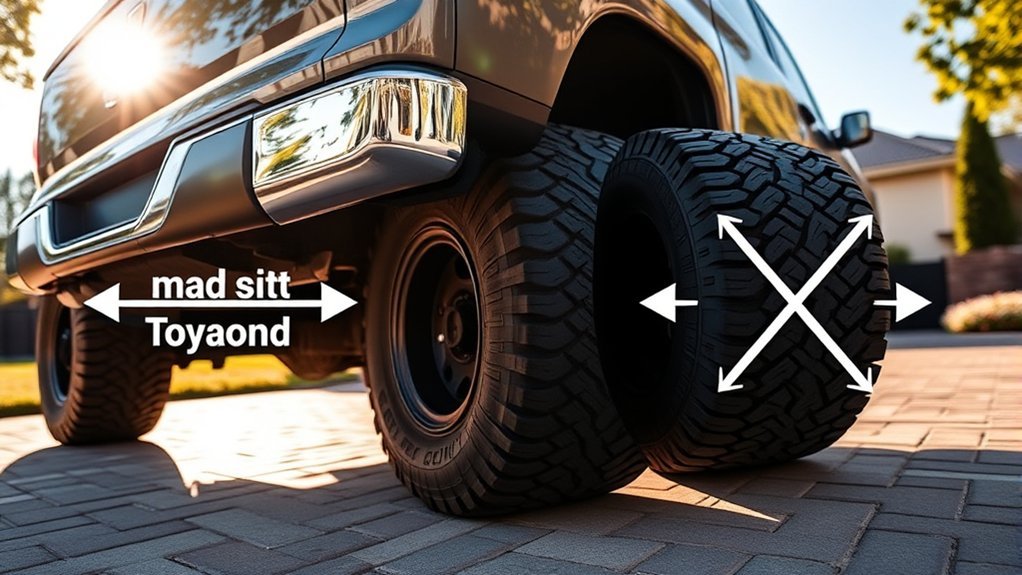
To properly rotate the tires on your Toyota Tundra, start by verifying you have the right tools and a safe workspace. You’ll need tire tools like a jack, jack stands, and a torque wrench. Begin by lifting the vehicle and removing the lug nuts. For a 4WD Tundra, follow the modified X-pattern: move the rear tires straight to the front and cross the front tires to the rear.
It’s essential to perform this rotation every 5,000 to 10,000 miles to prevent uneven wear, debunking common rotation myths. After rotation, always check your Tire Pressure Monitoring System (TPMS) to maintain peak safety. Misalignment can negate the benefits of rotation, so verify your alignment is correct before starting. Finally, use the torque wrench to tighten the lug nuts to the manufacturer’s specifications, making sure everything is secure for your next drive.
Front-to-Back Rotation: How It Works and Its Benefits
The front-to-back rotation method serves as a practical alternative to the more complex patterns, especially for Toyota Tundra owners. This technique involves moving the front tires straight to the rear while keeping the rear tires in their current positions. By doing so, you help distribute tire wear evenly, which is essential for heavier vehicles like the Tundra that experience increased front tire wear due to steering and braking forces.
Regularly applying this method can extend tire life by relieving the front tires from their position. It’s simple, requiring minimal rotation tools, and you can perform it every 5,000 to 10,000 miles for peak performance.
| Action | Benefit | Recommended Frequency |
|---|---|---|
| Rotate Front to Back | Even tire wear | 5,000 – 10,000 miles |
| Keep Rear Tires | Consistent performance | Every rotation |
| Extend Tire Life | Cost-effective maintenance | Regular intervals |
The Modified X-Pattern: A Comprehensive Guide
The modified X-pattern rotation offers significant benefits for your Toyota Tundra, particularly in managing uneven tire wear. By moving the rear tires straight to the front and crossing the front tires to the rear, you help maintain even wear and extend tire life. It’s recommended to follow this rotation every 5,000 to 10,000 miles to optimize traction and handling.
Benefits of Modified X-Pattern
While regular tire rotation is essential for maintaining your Toyota Tundra’s performance, using the modified X-pattern offers distinct advantages. This method involves moving the rear tires straight to the front while crossing the front tires to the rear, promoting even wear across all tires. By minimizing front tire wear—often exacerbated by your truck’s weight distribution and driving habits—you can enhance overall tread life. The modified X-pattern effectively prevents heel and toe wear, which can greatly impact handling. Regularly applying this rotation technique every 5,000 to 10,000 miles guarantees balanced performance and traction, making it particularly beneficial for 4WD vehicles like the Tundra, accommodating unique handling and wear patterns associated with off-road driving.
Rotation Frequency Recommendations
Regularly rotating your tires is vital for maximizing the performance and lifespan of your Toyota Tundra. For the modified X-pattern, it’s recommended to follow frequency guidelines of rotating your tires every 5,000 to 10,000 miles, or during oil change intervals. This approach helps guarantee even wear, especially important for 4WD vehicles where uneven weight distribution can accelerate tire degradation. By adhering to these rotation intervals, you can mitigate the effects of aggressive driving habits like heavy braking and cornering. Users frequently report that implementing the modified X-pattern enhances tire longevity and improves handling and stability. Ultimately, consistent rotations keep your Tundra performing at its best while liberating you from premature tire replacements.
Tire Wear: How Front-to-Back and X-Pattern Comparisons Impact Longevity
Understanding tire wear patterns is vital for maximizing the longevity of your Toyota Tundra’s tires. Choosing the right rotation method can greatly impact how your tires wear over time. Here are three key points to take into account:
Maximizing your Toyota Tundra’s tire longevity starts with understanding wear patterns and choosing the right rotation method.
- Weight Distribution: In 4WD vehicles, front tires often wear more quickly due to heavier loads.
- Rotation Methods: The X-pattern rotation crosses front tires to the rear, promoting even tread wear, while front-to-back keeps tires in the same orientation.
- Wear Prevention: Regularly using the X-pattern can reduce issues like heel-and-toe wear, common in aggressive driving.
For peak tire longevity, the X-pattern is generally recommended. By addressing uneven wear, it helps guarantee balanced performance across all tires, extending their lifespan. Remember, effective tire rotation methods are vital for maintaining your Tundra’s performance and safety on the road.
Common Mistakes to Avoid When Rotating Tires
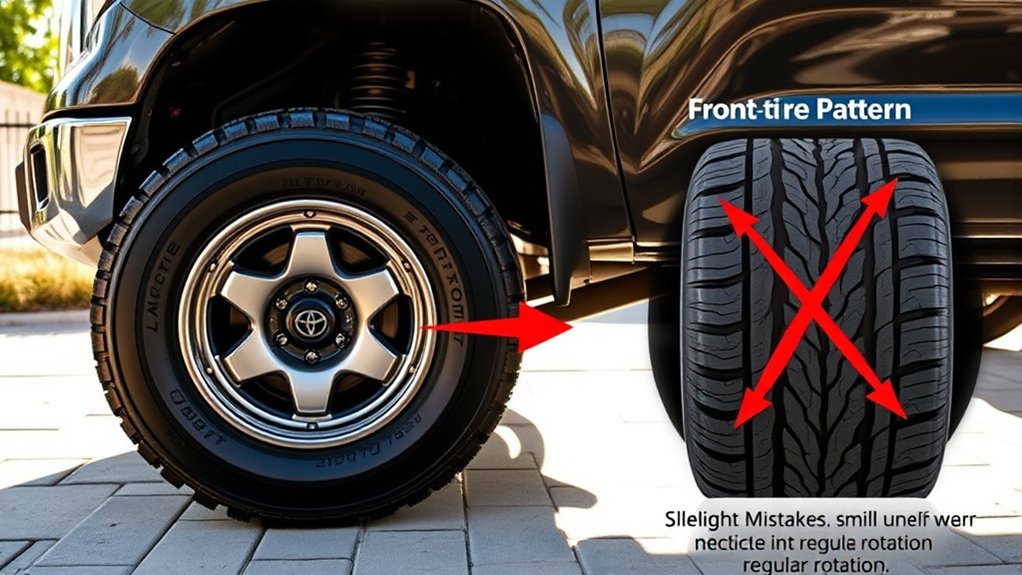
When rotating tires on your Toyota Tundra, it’s crucial to avoid common mistakes that can lead to uneven wear and compromised performance. First, don’t neglect the manufacturer’s recommended rotation pattern; using the modified X-pattern guarantees ideal tire wear distribution. Mark your tires before rotation to maintain their original positions and prevent confusion. After rotating, check the Tire Pressure Monitoring System (TPMS); it may require recalibration to reflect new tire locations. Skipping tire balancing is another mistake—consistent balancing prevents uneven wear and prolongs tire life. Be cautious of tire rotation myths, like the idea that radial tires can only be rotated front to rear on the same side. Cross rotation can be effective when executed correctly. By steering clear of these common rotation mistakes, you’re setting your Tundra up for enhanced performance and longevity.
Tire Health: Importance of Alignment and Pressure Checks
Maintaining proper alignment and regularly checking tire pressure are essential for your Toyota Tundra’s performance and longevity. Misalignment can cause uneven wear, while incorrect pressure can compromise handling and fuel efficiency. By prioritizing these practices, you’ll enhance tire health and overall vehicle safety.
Proper Alignment Practices
- Regular Alignment Checks: Perform checks after any suspension work or if your vehicle pulls to one side.
- Suspension Inspection: Regularly inspect suspension components like shocks and struts to prevent misalignment.
- Professional Assistance: Consult a technician for precise alignment adjustments tailored to your vehicle.
Regular Pressure Monitoring
Regularly monitoring tire pressure is essential for maintaining ideal vehicle performance and safety, as improper inflation can lead to accelerated tire wear and reduced fuel efficiency. Tire Pressure Monitoring Systems (TPMS) are invaluable tools, providing real-time pressure readings that help you keep your tires in peak condition. Under-inflated tires can negatively affect handling and increase the risk of blowouts. It’s vital to adjust tire pressure based on load conditions and driving habits to enhance performance and longevity. Additionally, frequent alignment checks should follow any impact from potholes or curbs, ensuring even wear. By prioritizing tire pressure and alignment, you not only extend tire lifespan but also enhance your driving experience, ensuring safety and efficiency on every journey.
Why Does Tire Rotation Matter for Your Toyota Tundra?
While you might not think about tire rotation often, it plays an essential role in enhancing your Toyota Tundra’s performance and extending tire life. Regular rotations help guarantee even wear, which is critical for maintaining both safety and efficiency. Here’s why tire rotation matters:
- Tire Lifespan: Consistent rotation can greatly prolong the life of your tires by preventing uneven wear patterns.
- Performance: A well-maintained tire set improves handling, traction, and fuel efficiency, important for a heavy vehicle like the Tundra.
- Load Management: The X-pattern rotation helps distribute wear more evenly, especially if you frequently tow or carry heavy loads.
Don’t overlook the importance of regular rotations, typically every 5,000 to 10,000 miles. This, combined with alignment checks, can help you combat rapid front tire wear and keep your Toyota Tundra performing at its best.
Frequently Asked Questions
When to Use X Pattern Tire Rotation?
You should use X-pattern tire rotation when you notice uneven tire wear or frequently tow heavy loads. This method maximizes rotation benefits, ensuring even wear and enhancing your tires’ lifespan and overall performance.
Conclusion
To sum up, regularly rotating your Toyota Tundra’s tires isn’t just a maintenance task; it’s an investment in safety and performance. Whether you opt for the front-to-back or modified X-pattern, each method offers unique advantages that can extend tire life and enhance driving experience. So, why gamble with uneven wear when a simple rotation can guarantee your Tundra rolls smoothly on every journey? Prioritize this essential practice, and your tires will thank you in miles to come.

Related Articles

How Often to Rotate Tires on a Toyota Tundra: Mileage Intervals by Use
To ensure optimal performance and safety for your Toyota Tundra, discover the best mileage intervals for tire rotation and what to watch for.
Read More
Matching Tire Type to Driving Conditions: A Decision Guide for Tundra
A comprehensive guide to selecting the perfect tire for your Toyota Tundra awaits, ensuring optimal performance for any driving condition. Discover your options now!
Read More
When to Upgrade From Stock Tires on a New Tundra: Is It Worth It Early?
Get the insights you need on upgrading stock tires for your new Tundra—discover when it's crucial for safety and performance. Don't miss out!
Read More