Highway Tires vs All-Terrain for a Daily-Commute Truck: Which Saves More?
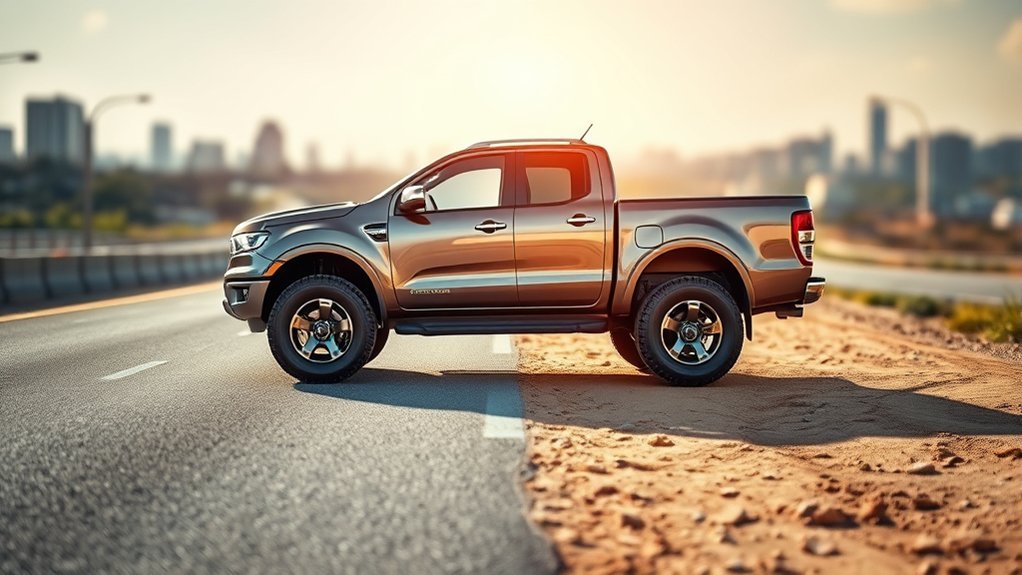
When it comes to daily commuting in your truck, highway tires typically save you more. They provide better fuel efficiency and longer tread life compared to all-terrain tires. The smoother ride and reduced noise enhance comfort on paved roads. While all-terrain tires excel off-road, they wear faster on highways and can lead to higher replacement costs. If you want to make the most economical choice for urban driving, you’ll want to evaluate your specific needs further.
How Do Highway and All-Terrain Tires Compare in Performance?
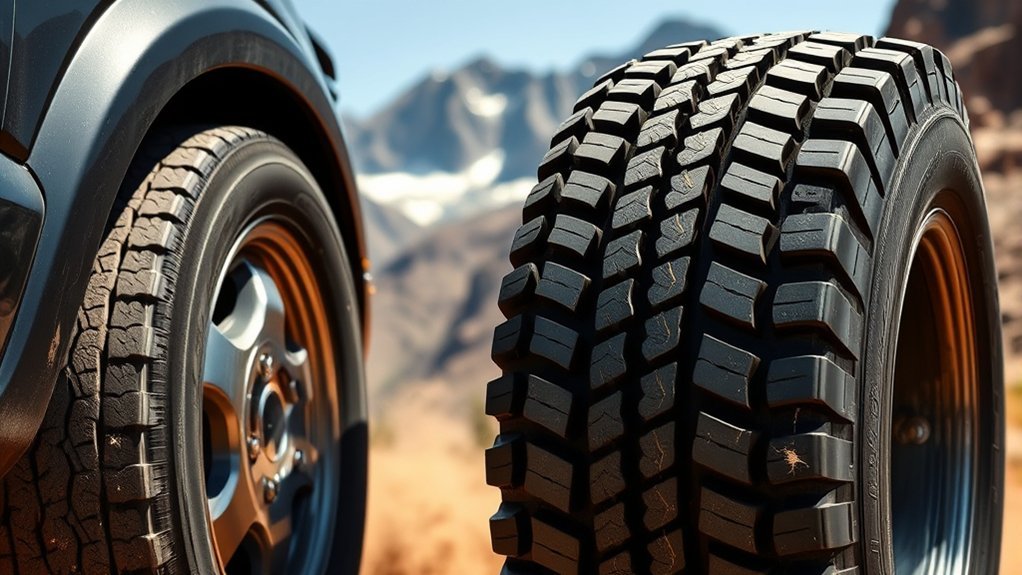
When it comes to performance, how do highway tires stack up against all-terrain tires for trucks? Highway tires excel on paved roads, offering superior traction and handling, which makes your daily commute smoother and more efficient. Their optimized tread design enhances ride comfort, allowing for a quieter, more enjoyable drive. In contrast, all-terrain tires, while versatile for off-road adventures, can feel stiffer and noisier on highways, compromising your ride quality during regular use.
Additionally, highway tires typically provide better fuel efficiency due to their lighter construction, saving you money at the pump. They also perform well in wet conditions, thanks to their specialized grooves that evacuate water effectively. On the other hand, all-terrain tires wear out faster on pavement due to their aggressive tread design, leading to more frequent replacements and increased long-term costs. For daily commuting, highway tires clearly offer a more focused performance advantage.
Understanding Highway Tires and Their Benefits
Highway tires are purpose-built for ideal performance on paved roads, making them a top choice for everyday driving. Their specialized tread design offers several key benefits:
- Enhanced Comfort: With smoother tread patterns, highway tires prioritize noise reduction, ensuring a quieter ride for you and your passengers.
- Fuel Efficiency: Designed to be lighter, these tires improve your miles per gallon (MPG), saving you money on fuel during city and highway commutes.
- Longer Tread Life: Optimized for paved surfaces, highway tires generally last longer, reducing long-term replacement costs and giving you peace of mind.
Furthermore, their design excels in wet conditions, optimizing grooves for better water evacuation and minimizing hydroplaning risks. If you’re focused on a reliable, efficient driving experience, highway tires cater to your daily commuting needs perfectly.
Exploring the Advantages of All-Terrain Tires
How do all-terrain tires elevate your driving experience? They offer versatility, combining off-road capabilities with impressive winter performance. These tires feature aggressive tread patterns that grip unpaved surfaces like dirt and gravel, allowing you to explore freely. Reinforced sidewalls enhance durability, making them resilient against punctures during rough terrain adventures.
Here’s a quick comparison of all-terrain tire benefits:
| Feature | Benefit | Consideration |
|---|---|---|
| Off-Road Capabilities | Excellent traction on diverse terrains | May increase rolling resistance |
| Winter Performance | Snowflake rating for icy conditions | Potentially lower fuel efficiency |
| Year-Round Usability | No need for seasonal tire changes | Might not excel in pure highway travel |
With all-terrain tires, you get freedom from seasonal changes and enhanced safety in unpredictable weather, empowering you to drive confidently wherever the road—or off-road—leads you.
Tire Cost Comparison: Which Saves More?
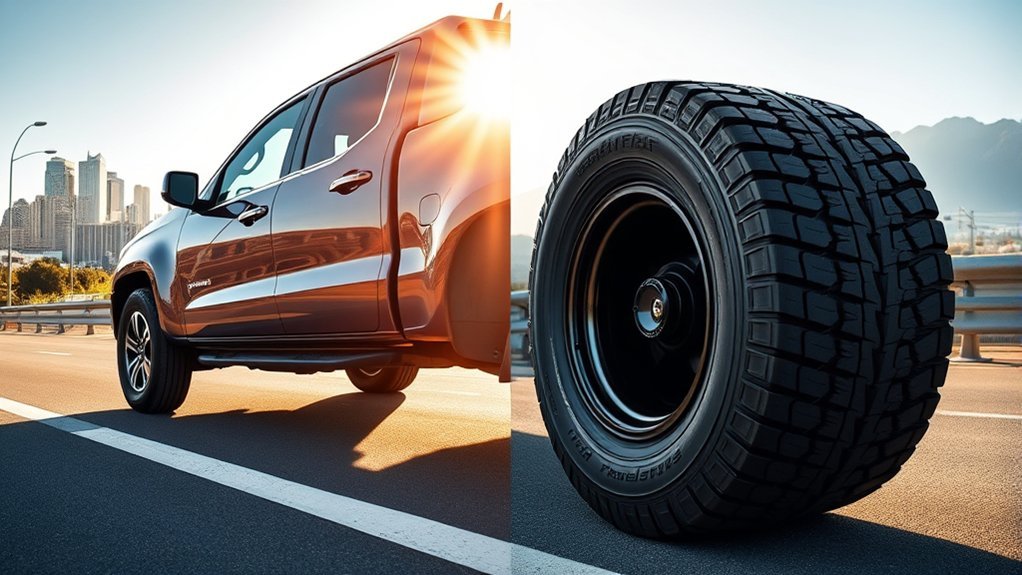
While exploring tire options, understanding the cost implications of highway versus all-terrain tires is essential for making an informed decision. Here’s a quick cost analysis to assess:
- Upfront Costs: Highway tires are generally cheaper to buy, making them budget-friendly for daily commutes.
- Tire Longevity: All-terrain tires can wear out faster on paved roads due to their aggressive tread, leading to more frequent replacements.
- Fuel Efficiency: Highway tires offer better fuel efficiency, reducing long-term fuel costs compared to all-terrain options, which have higher rolling resistance.
Ultimately, if you’re focusing on cost-effectiveness for urban and interstate driving, highway tires usually emerge as the winner. By evaluating these factors, you can choose tires that align with both your budget and driving habits, ensuring a more liberated driving experience.
Which Tire Type Is Best for Your Driving Conditions?
When considering the best tire type for your driving conditions, it’s essential to assess where and how you’ll be driving most often. If your daily commute is primarily on highways or city streets, highway tires are your best bet. They offer superior tire longevity, better fuel efficiency, and a quieter ride, making your daily travels more comfortable.
However, if you find yourself frequently traversing rough terrains or unpaved roads, all-terrain tires might be worth the investment. They provide excellent traction in dirt, gravel, and mud but can wear out faster and hurt your fuel economy on smooth surfaces.
To make an informed choice, evaluate your driving habits. If off-road excursions are rare, you’ll likely benefit more from highway tires. On the other hand, if versatility is key, all-terrain tires can adapt to your varied driving needs, just be ready for potential trade-offs in comfort and efficiency.
Frequently Asked Questions
Do All-Terrain Tires Make MPG Worse?
Yes, all-terrain tires can worsen MPG due to their aggressive tread design and increased rolling resistance. While they offer better traction performance off-road, they often create more road noise and reduce fuel efficiency on highways.
Conclusion
In the tire kingdom, highway tires are the swift gazelles, perfect for smooth roads and daily commutes. Meanwhile, all-terrain tires are the sturdy bears, ready for unpredictable paths. Choosing between them depends on your journey—if you’re mostly on paved routes, the gazelle saves you money and fuel. But if adventure calls, the bear’s versatility might be worth the extra cost. Ultimately, your driving habits chart the course in this tire tale, guiding you to the best choice.

Related Articles

When to Choose LT Tires Over P-Rated for a Tundra: Weight and Use Cases
Understanding when to choose LT tires over P-rated for your Tundra can transform your driving experience—discover the key factors that matter.
Read More
Running All-Terrain Tires Year-Round on a Tundra: Pros and Cons
Learn the crucial pros and cons of running all-terrain tires year-round on your Tundra—your driving experience may never be the same again.
Read More
Seasonal Tire Swap Guide for Toyota Tundra: Summer, Winter, and Year-Round
A comprehensive seasonal tire swap guide for your Toyota Tundra reveals crucial tips for maximizing performance and safety—discover the best practices to keep your truck ready!
Read More