Can You Run Different Size Tires Front and Rear on a Tundra?
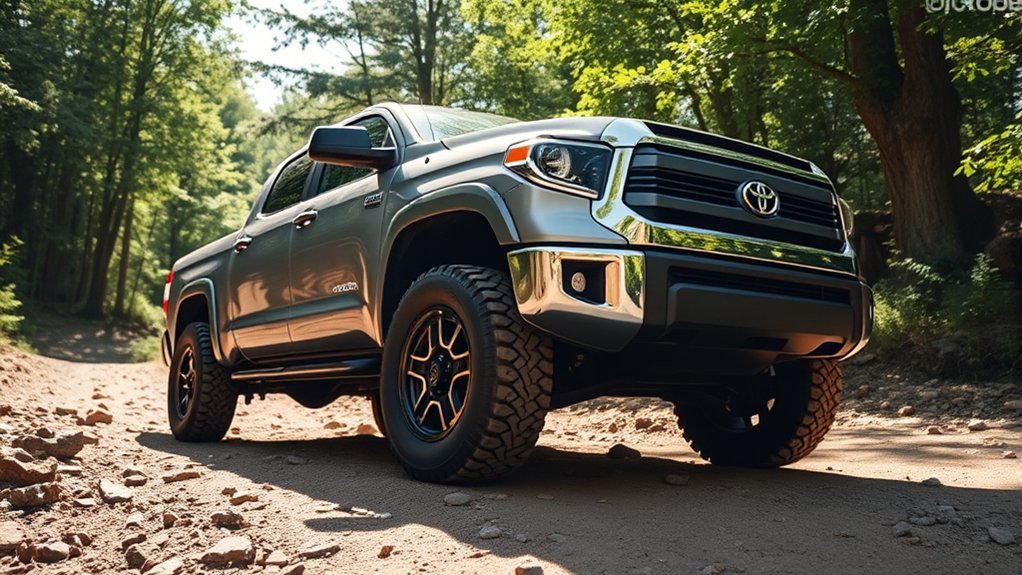
Running different size tires on the front and rear of a Toyota Tundra is usually a bad idea unless Toyota or a qualified tire professional confirms that the setup matches the truck’s required specifications. The risk is highest on 4WD Tundras because mismatched rolling diameters can affect traction systems, handling, and driveline behavior. Even on a 2WD Tundra, tire size, construction, load index, speed rating, tread depth, and air pressure still need to be matched correctly for safe, predictable driving.
Quick Answer
Do not run different size tires on the front and rear of a Toyota Tundra as a normal setup unless the tire placard, owner’s manual, or Toyota-approved fitment specifically allows it. For 4WD models, all four tires should generally match in size, construction, and similar tread depth.
Key Takeaways
- A Tundra’s safest tire setup is the size, load rating, speed rating, and inflation pressure shown on the driver-door tire placard or in the owner’s manual.
- Never mix different tire sizes or constructions on the same axle, except for short-term temporary spare use.
- 4WD Tundras are more sensitive to mismatched tire diameters because the front and rear driveline need tires that rotate at compatible speeds.
- A tire that looks “close enough” may still be wrong if its overall diameter, load index, speed rating, construction, or tread depth is different.
- If you already have mismatched tires installed, avoid 4WD use on high-traction surfaces and have the setup checked before towing, hauling, or driving at highway speed.
Understanding the Risks of Mismatched Tire Sizes
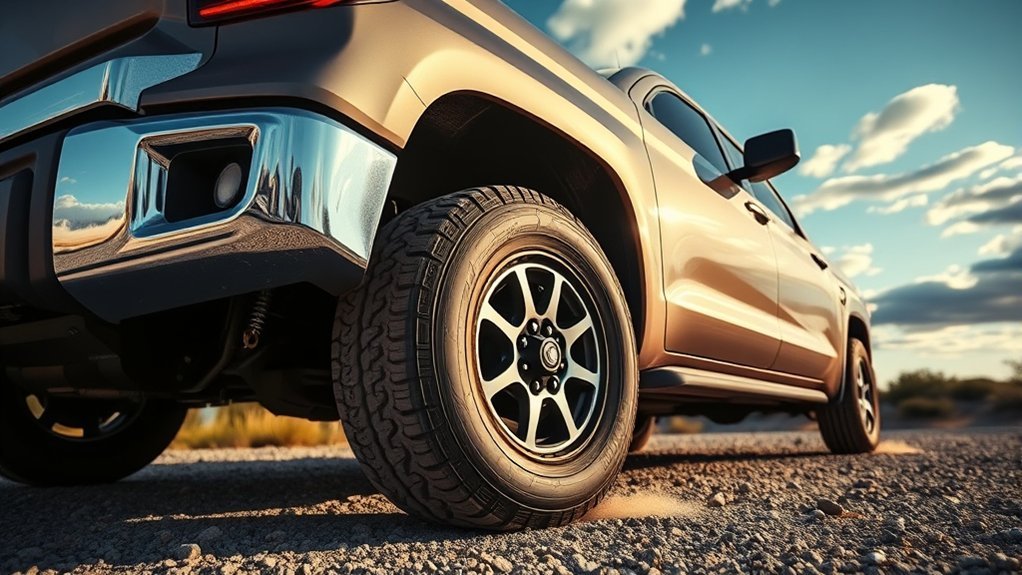
Different size tires can change the way your Tundra steers, brakes, and transfers power to the road. The issue is not just the number printed on the sidewall. A tire mismatch can include a different overall diameter, different construction, different load index, different speed rating, different tread depth, or different tire type.
According to NHTSA tire safety guidance, replacement tires should be the same size as the vehicle’s original tires or another size recommended by the vehicle manufacturer. The U.S. Tire Manufacturers Association also advises drivers not to guess when replacing tires and to use the vehicle label, owner’s manual, or a tire professional.
Warning: Do not treat a tire-size difference as safe just because the truck still drives. Mismatched rolling diameter can create hidden problems with handling, braking stability, traction control, and 4WD driveline behavior before you feel anything obvious from the driver’s seat.
Why Uniformity in Tire Size Matters for Your Tundra
Uniform tire size matters because your Tundra is calibrated around a known tire diameter and wheel-speed relationship. When all four tires are the correct size and similar in tread depth, the truck’s systems can read wheel speed more consistently and the driveline is not forced to fight against tires rotating at different rates.
For the best match, compare all of these items before buying or installing tires:
- Tire size: For example, numbers such as 265/70R18 or 275/65R20 must match the approved Tundra fitment.
- Overall diameter: Two tires with similar sidewall labels can still have slightly different real-world diameters by brand or model.
- Load index or load range: A Tundra is a truck, so the replacement tire must meet or exceed the required load capacity.
- Speed rating: The replacement tire should meet the vehicle and tire manufacturer’s requirements.
- Construction and type: Do not mix radial with bias-ply construction, and avoid mixing all-season, all-terrain, mud-terrain, and winter tires in ways that reduce predictable grip.
- Tread depth: A new tire paired with heavily worn tires may have a larger rolling diameter even if the labeled size is the same.
The Bridgestone/Firestone Replacement Tire Selection Manual recommends selecting replacement tires with the same size, load index, and speed symbol shown on the vehicle tire placard or in the owner’s manual. It also warns that substitute tire sizes can affect ride comfort, handling, and vehicle control.
How Mismatched Tire Sizes Affect Performance
Running mismatched tire sizes on your Tundra can affect performance in several ways. The exact risk depends on the difference in overall diameter, whether the truck is 2WD or 4WD, how worn the tires are, and how the truck is being used.
- Handling can feel less predictable: Different tire heights or tread patterns can change cornering balance and steering response.
- ABS and traction control may react differently: These systems depend on wheel-speed information, so different rolling diameters can make one axle appear to rotate at a different rate.
- Braking stability can suffer: Uneven grip between the front and rear tires may increase instability during emergency braking.
- 4WD driveline strain can increase: A 4WD system works best when all four tires are closely matched in size and tread depth.
- Tire wear can speed up: A mismatched setup can make rotation harder and may create irregular wear patterns.
A one-inch difference is not a universal safety threshold. A better method is to compare the exact approved tire size, measured or published overall diameter, load rating, speed rating, and tread depth. If Toyota does not provide a tolerance for an alternate tire size, the safe move is to ask a Toyota dealer or qualified tire professional before driving on the setup.
4WD vs. 2WD: Mixing Tire Sizes-What You Must Know
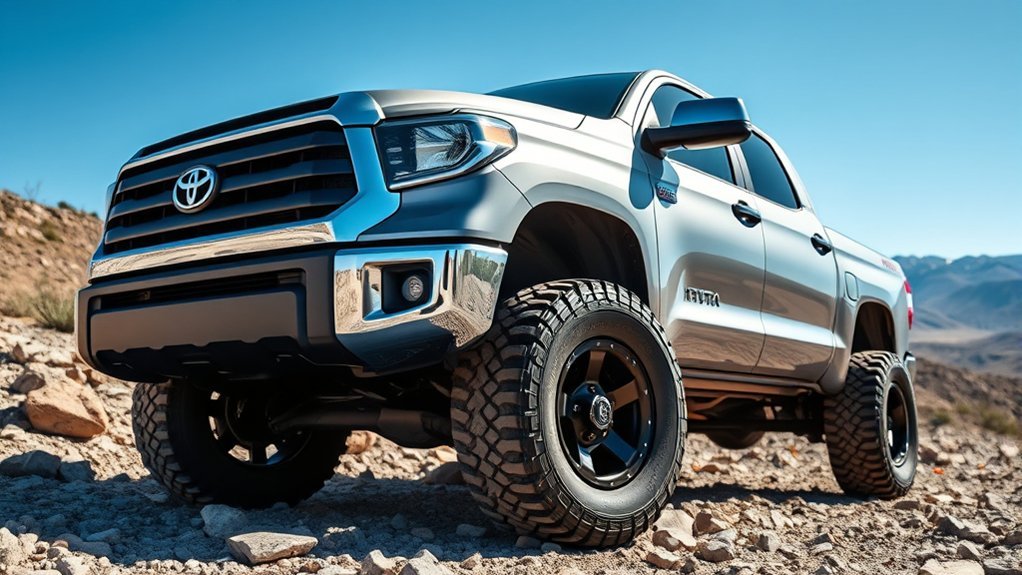
The biggest difference between 4WD and 2WD is how much the front and rear axles depend on each other during operation.
On a 4WD Tundra
Do not run different front and rear tire sizes as a normal setup unless Toyota specifically approves it. Tire-industry guidance says it is particularly important to match all tire sizes and constructions on 4×4 and AWD vehicles unless the vehicle manufacturer specifies otherwise. That is because different rolling diameters can make the front and rear axles fight each other when 4WD is engaged, especially on dry pavement or other high-traction surfaces.
On a 2WD Tundra
A 2WD Tundra may not create the same transfer-case stress as a 4WD truck, but mismatched tire sizes can still affect braking, steering, stability control, tire wear, and load handling. You should still keep the same approved size on all four positions unless a tire professional confirms a safe, legal, and load-rated alternate setup.
Same-Axle Rule
Even when front and rear axle sizes are being discussed, one rule is firm: do not mix different tire sizes or constructions on the same axle, except for temporary spare use. The left and right tires on the front axle should match each other, and the left and right tires on the rear axle should match each other.
Note: A temporary spare is an emergency exception, not a normal tire setup. Follow the spare tire speed, distance, pressure, and 4WD restrictions in your Tundra owner’s manual.
Check the Tundra Tire Placard Before Changing Sizes
Before you install a different size tire, open the driver’s door and check the Tire and Loading Information Label. That placard gives the factory tire size and cold inflation pressure for your specific truck. You can also use the Toyota Tundra owner’s manual tire section for tire inspection and replacement guidance.
Do not rely only on what fits inside the wheel well. A larger tire can clear the fender but still be wrong for load rating, speed rating, braking performance, stability systems, or 4WD use. A tire shop should confirm all of the following before approving a non-stock size:
- Approved wheel diameter and wheel width
- Overall tire diameter compared with the original tire
- Load index or load range
- Speed rating
- Rim compatibility
- Front and rear clearance under turning, compression, and payload
- Effect on speedometer and driver-assistance systems
Identifying Signs of Uneven Tire Wear and Their Consequences
Uneven tire wear can make a mismatch worse. Even if all four tires started as the same size, one worn-out tire can roll slightly differently than a new tire. That is why you should inspect tread depth, sidewalls, and wear patterns regularly.
| Sign of Wear | What It Can Mean | Why It Matters |
|---|---|---|
| One-edge wear | Alignment, suspension, or inflation issue | Can reduce grip and cause the tire to measure differently across the tread |
| Cupping or scalloping | Possible balance, shock, suspension, or rotation issue | Can create noise, vibration, and uneven road contact |
| Center wear | Possible overinflation or load mismatch | Reduces tread life and wet traction |
| Outer-edge wear on both shoulders | Possible underinflation or heavy cornering/load use | Increases heat buildup and can reduce tire durability |
NHTSA says tires are not safe and should be replaced when tread reaches 2/32 inch, and it recommends checking tread monthly when checking tire pressure. For wet roads, towing, off-road driving, or winter conditions, do not wait until the tire is almost bald to start shopping.
What the Pros Say About Mixing Tire Sizes
The professional guidance is simple: match the vehicle manufacturer’s tire specifications unless an approved alternate fitment is confirmed. Bridgestone’s replacement tire guidance says replacement tires should use the same size, load index, and speed symbol shown on the vehicle tire placard or owner’s manual. It also says all tires on a vehicle should be the same size, construction, and speed rating unless the vehicle manufacturer specifies otherwise.
For a Tundra owner, that means a tire that “fits” is not automatically correct. A safe tire must be able to carry the truck’s load, work with the wheel, maintain clearance, and keep the truck’s safety systems operating as intended.
The right replacement tire is not just the one that mounts on the wheel. It is the one that matches the Tundra’s placard, load requirement, rolling diameter needs, and real driving use.
Community Experiences: Real-World Insights on Tire Mixing
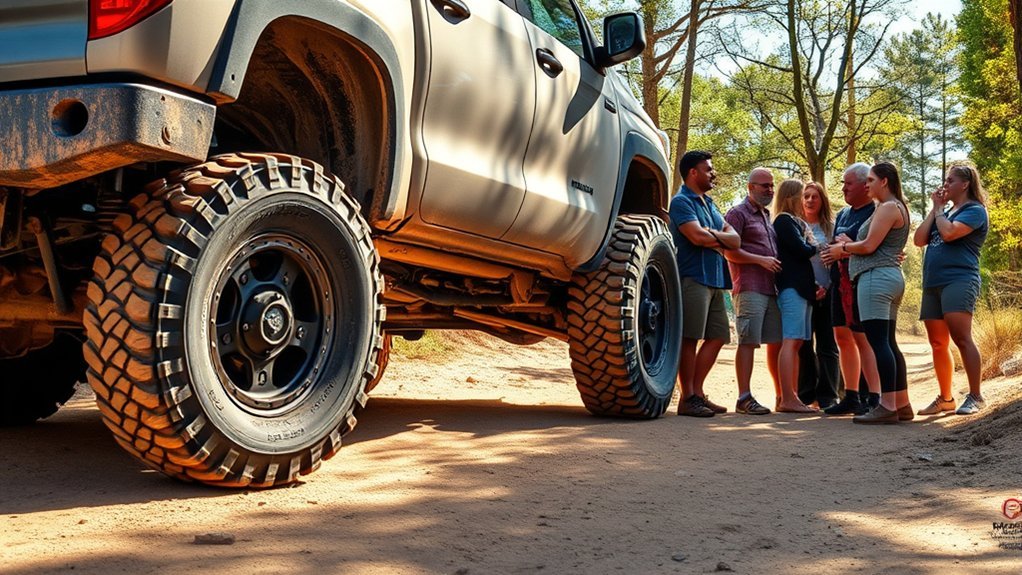
Some Tundra owners report driving short distances with mismatched tire sizes and not noticing an immediate problem. That does not prove the setup is safe. Many tire and driveline problems build slowly, and some only appear during hard braking, towing, rain, off-road driving, or 4WD use.
User Experiences Shared
Real-world reports can be useful for spotting symptoms, but they should not override the tire placard or owner’s manual. Watch for these signs if mismatched tires are already on the truck:
- New vibration after tire installation
- Pulling left or right on a straight road
- ABS, traction control, stability control, or TPMS warnings
- Binding, hopping, or clunking when 4WD is engaged
- Unusual tread wear within the first few thousand miles
- Steering that feels different during braking or lane changes
Performance in Real Situations
A mismatch may feel minor during low-speed 2WD city driving and become a serious problem under load. Towing, hauling, highway heat, emergency braking, wet pavement, gravel, and 4WD engagement all increase the need for a properly matched set of tires.
Pro Tip: If you are replacing only one tire, measure tread depth on the remaining tires first. If the other tires are worn, replacing a pair or all four may be safer than installing one full-depth tire beside three worn tires.
What to Do if Your Tundra Already Has Mismatched Tires
If your Tundra already has different tire sizes front and rear, use this checklist before you keep driving:
- Confirm the tire labels: Write down the full size, load index, speed rating, and tire model from all four tires.
- Check the door placard: Compare your tires to the approved Toyota size and cold PSI.
- Measure tread depth: Check each tire with a tread-depth gauge, not just the penny test.
- Avoid 4WD until verified: If your Tundra is 4WD, do not engage 4H or 4L on dry pavement with mismatched tires.
- Do not tow or haul heavy loads: Wait until a qualified tire professional confirms the setup is safe.
- Schedule an inspection: Ask the shop to check tire size, load rating, wheel compatibility, alignment, and signs of driveline strain.
If the tire shop cannot confirm that the setup is approved for your exact Tundra, return to a matched set of the correct size.
Maintenance Tips for Keeping Your Tires in Check
Good tire maintenance reduces the chance of accidental mismatches and uneven wear. The most important habits are checking cold tire pressure, measuring tread depth, inspecting for damage, and rotating according to the owner’s manual.
Tire Pressure Monitoring
Use the cold PSI on the Tundra’s tire placard. Do not use the maximum PSI molded into the tire sidewall as your normal inflation target. NHTSA recommends checking tire pressure monthly, and it notes that TPMS is not a substitute for regular tire maintenance because the warning usually appears only after a tire is significantly underinflated.
- Check pressure when the tires are cold, before driving or after the truck has been parked for at least three hours.
- Check all four tires and the spare if your Tundra has one.
- Recheck pressure after major temperature swings.
- Use a reliable gauge instead of judging by appearance.
- If the TPMS light flashes and then stays on, have the system inspected.
Regular Tread Depth Checks
Use a tread-depth gauge at least once a month and before long trips. The legal minimum is not always the best safety target, especially in rain, snow, mud, or towing use. Replace tires immediately if treadwear indicators are showing, if tread reaches 2/32 inch, or if you see cracks, bulges, exposed cords, puncture damage, or severe uneven wear.
The 2025 Toyota Tundra Warranty & Maintenance Guide recommends scheduled maintenance every 5,000 miles or six months, whichever comes first, and says tire rotation should follow the owner’s manual while checking for damage and uneven wear.
When to Replace Your Tires?
Replace your Tundra’s tires when they no longer meet safe tread, age, damage, or matching requirements. Do not wait for a blowout, warning light, or visible bald spot.
- Tread is at 2/32 inch: NHTSA says tires are not safe at this tread depth and should be replaced.
- Treadwear bars are flush: Built-in wear indicators mean the tire has reached its replacement point.
- There is visible damage: Replace tires with bulges, deep cuts, exposed cords, sidewall cracking, or repeated air loss.
- The tires are aging out: Some vehicle and tire manufacturers recommend replacement at six to 10 years regardless of treadwear.
- The set no longer matches: If one tire is much newer, taller, or different from the rest, the truck may need a pair or a full set.
- You tow, haul, or drive off-road often: Replace sooner when traction, load capacity, or heat resistance is compromised.
Frequently Asked Questions
Can you run two different size tires front and back on a Tundra?
You should not run different front and rear tire sizes on a Tundra as a normal setup unless Toyota or a qualified tire professional confirms that the exact setup is approved. On 4WD models, all four tires should generally match in size, construction, and similar tread depth.
Is it worse to mix tire sizes on a 4WD Tundra?
Yes. A 4WD Tundra is more sensitive because the front and rear axles need tires with compatible rolling diameters. Mismatched tires can cause binding, traction-control issues, or driveline strain, especially when 4WD is used on high-traction surfaces.
Can I replace only one tire on my Tundra?
Sometimes, but only if the replacement tire matches the same size, model or compatible type, load rating, speed rating, and tread depth closely enough. If the other tires are worn, replacing two or four tires may be safer than adding one new full-depth tire.
Can I drive with different size tires just temporarily?
Temporary spare use is the main exception. Use the spare only as instructed in the owner’s manual and replace it with a matching tire as soon as possible. Avoid 4WD use, towing, heavy loads, and high speeds unless the manual says the temporary setup allows it.
Do tire brands matter if the size is the same?
Yes. Tires with the same size label can still differ in tread pattern, actual diameter, load rating, speed rating, sidewall stiffness, and wet or off-road grip. For the most predictable handling, use four matching tires of the same size, model, and similar tread depth.
Conclusion
For a Toyota Tundra, different size tires front and rear are not a smart everyday setup unless the exact fitment is approved for your truck. The safest choice is a matched set that follows the driver-door tire placard and owner’s manual for size, load rating, speed rating, and cold inflation pressure. This matters even more on 4WD models, where tire diameter differences can affect driveline behavior and stability systems. If your Tundra already has mismatched tires, verify the setup before using 4WD, towing, hauling, or taking a long highway trip.
Sources
- Toyota Owners — 2025 Tundra Tires — supports Toyota-specific tire inspection and replacement guidance.
- Toyota 2025 Tundra Warranty & Maintenance Guide — supports scheduled maintenance, tire rotation, and uneven-wear inspection guidance.
- NHTSA TireWise Tire Safety — supports tire pressure, tread depth, TPMS, rotation, tire-size, and aging guidance.
- U.S. Tire Manufacturers Association — Replacing Tires — supports using the vehicle label, owner’s manual, or tire professional when selecting replacements.
- Bridgestone/Firestone Replacement Tire Selection Manual — supports replacement tire size, load index, speed rating, tire mixing, and 4×4/AWD matching guidance.

Related Articles
Steel-Belted vs Kevlar-Reinforced Sidewalls: Puncture Resistance Compared
Pitting steel-belted durability against Kevlar-reinforced puncture resistance reveals crucial insights; find out which tire best suits your needs.
Read More
What Makes a Tire Good for Snow and Ice? Compound, Tread, and Sipes
Unlock the secrets to optimal winter tires with the perfect blend of compound, tread design, and sipes for unparalleled performance on snow and ice.
Read More
How Tire Rubber Compound Affects Tread Life: Soft vs Hard Explained
Practical insights into tire rubber compounds reveal how softness enhances grip but shortens life—discover which option suits your driving style best.
Read More