
Tubular Tire Guide 2026: Mounting, Pros & Flats
What Is a Tubular Tire?
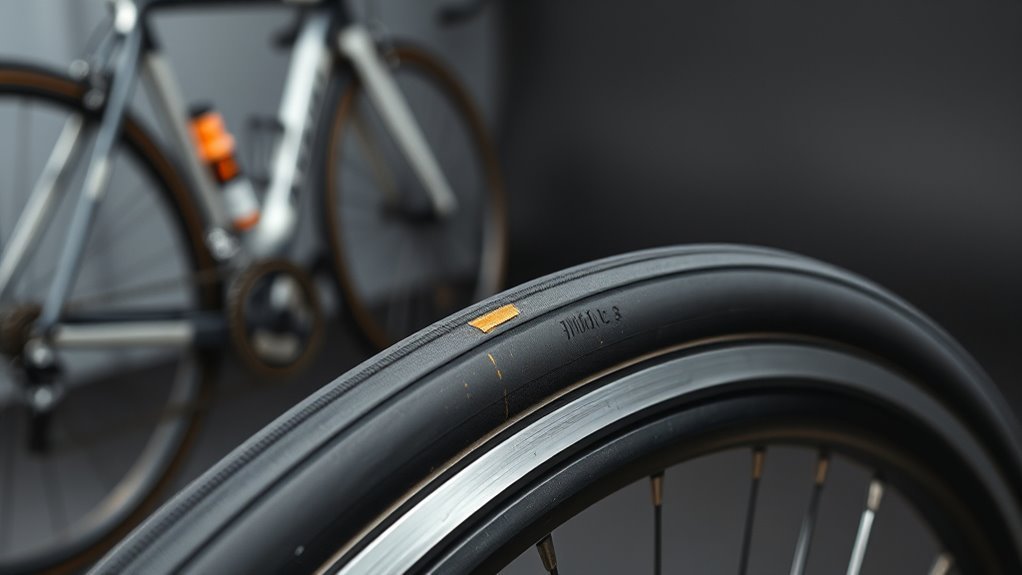
A tubular tire combines the tire casing and inner tube into one sewn unit that you glue to a tubular-specific rim. You gain a light, supple ride and strong cornering feel, but you also take on careful gluing, rim prep, and harder roadside repairs. This guide explains how tubular tires work, how you mount them, and when they make sense over clincher or tubeless tires.
Quick Answer
A tubular tire is a sewn tire-and-tube unit that you glue to a matching rim instead of locking it with beads. It can feel light, smooth, and secure in race use, but it takes more skill to mount and repair than clincher or tubeless tires.
Key Takeaways
- Tubular tires use a sewn casing with the inner tube enclosed inside.
- You must glue or tape tubulars to rims made for tubular tires.
- Tubulars can offer low weight, smooth ride feel, and strong cornering grip.
- Roadside repairs take more time and skill than clincher or tubeless repairs.
- Tubulars suit racing best when performance matters more than convenience.
What a Tubular Tire Is and How It’s Built
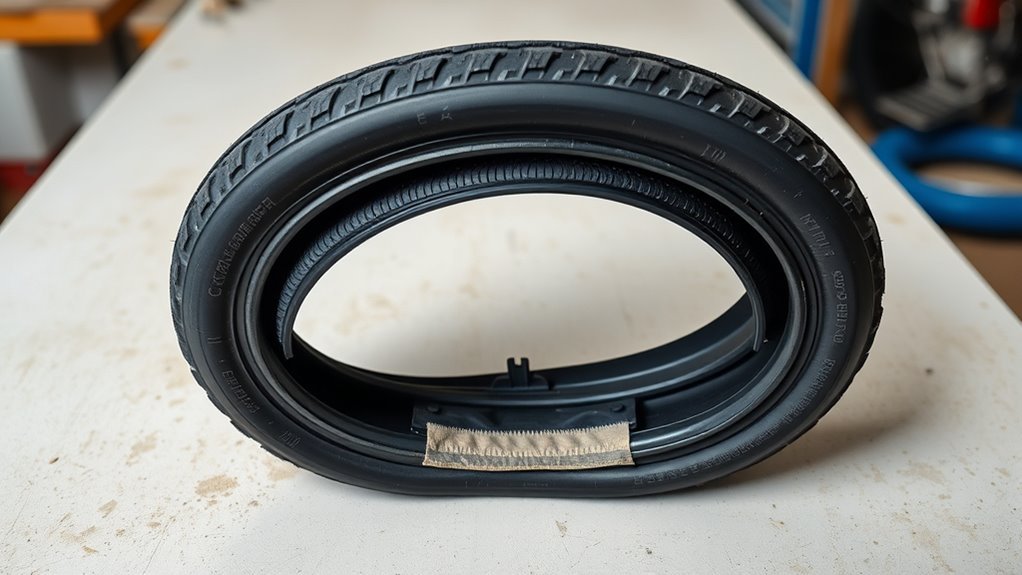
Think of a tubular tire as a single, sewn unit. The inner tube sits inside the tire casing, and the casing closes around it with stitching under the base tape. The finished tire has no separate clincher bead.
You mount the whole tire to a specific rim made for adhesive bonding. That design can reduce rim and tire weight, give you a broad pressure range, and improve cornering feel. The glued bond matters for safety, so you need careful prep and regular checks.
Mounting and Gluing Tubulars Step by Step
Before you start, make sure the rim bed and tire base tape stay clean and dry. Wipe away old glue, dirt, oil, and loose debris before you apply fresh cement. Let each surface dry fully so the adhesive can bond well.
- Prepare the rim and base tape until both surfaces feel clean and dry.
- Inflate the tubular slightly so it holds its shape while you work.
- Apply a thin, even coat of cement to the rim bed and tire base tape.
- Let the first coat dry according to the adhesive maker’s directions.
- Add a second coat to the rim if your cement method calls for it.
- Mount the tire by stretching it over the rim and centering it by hand.
- Inflate the tire, then check that it runs straight without hops or wobbles.
- Inspect the glue line and test the bond before riding hard.
Clean and dry the rim and tape, apply cement with care, mount the tire evenly, inflate it, inspect the glue line, and test the bond.
Warning: Don’t ride a freshly mounted tubular until the adhesive has cured as the cement maker directs.
Tubular Tire Performance: Weight, Rolling Resistance, and Ride Feel
Tubulars can feel quick because the tire, glue, and rim work as one light system. They also remove the hooked bead design used on clincher tires. That can reduce rotating weight, though the exact saving depends on the rim, tire, tube, and glue.
Rolling resistance depends on casing quality, pressure, road surface, and tire width. A high-end tubular can roll fast, but modern tubeless and clincher systems can also perform well. Don’t choose a tubular only because you expect it to beat every other tire type.
The ride feel often stands out most. A supple tubular casing can smooth road buzz and give you confident feedback in corners. You can also tune pressure for race surface, rider weight, and grip needs.
Safety and Flats: Failure Modes and How Tubulars Behave
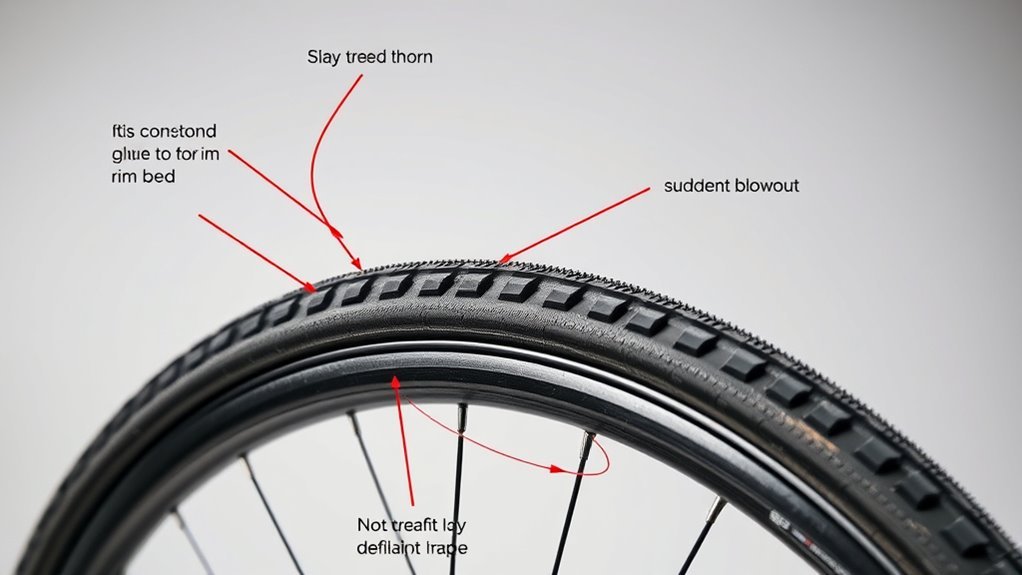
When a tubular loses air, the glued casing can help keep the tire on the rim if the bond stays intact. That can give you more control than a tire that comes loose fast. Still, a poor bond can create real danger, especially in hard cornering or braking.
Check the tire, glue bond, rim surface, and brake track temperature after steep descents or hard braking. Heat can weaken some glue bonds and raise tire pressure. Carbon rims and rim brakes need extra care because heat can build quickly.
- Puncture: Air may escape slowly, and the tire may stay on the rim if the glue bond holds.
- Glue failure: Heat, old cement, or poor prep can weaken the bond.
- Burst: Excess pressure or casing damage can cause sudden failure.
- Poor adhesion: Dirt, oil, wet surfaces, or rushed mounting can reduce safety.
Carry a tubular-specific repair kit, sealant, or a spare pre-glued tubular for emergency rides. Practice a roadside change before race day so you know what to expect.
Choosing Tubular vs Clincher or Tubeless for Racing, Cyclocross, and Gravel
Match your tire system to how you ride. Tubular advantages include low weight, smooth ride feel, and strong cornering support in race settings. Cyclocross racers often value tubulars because they can run low pressures with less risk of pinch flats.
Clinchers suit most everyday riders because they cost less, mount more easily, and simplify flat repairs. Tubeless tires can also run low pressures and seal many small punctures with sealant. For many road and gravel riders, tubeless gives a strong mix of speed, comfort, and repair ease.
| Tire type | Best for | Main trade-off |
|---|---|---|
| Tubular | Racing, cyclocross, track, and riders who accept careful setup | Harder mounting and roadside repair |
| Clincher | Daily riding, training, and simple tube repairs | Greater pinch-flat risk at low pressure |
| Tubeless | Road, gravel, and riders who want sealant protection | Messier setup and sealant upkeep |
How to Maintain Tubular Tires
Inspect your tubulars before each important ride. Look for cuts, loose base tape, dry glue, sidewall wear, and a tire that no longer sits straight on the rim. Replace or re-glue any tire that shifts by hand or shows a broken bond.
Store spare tubulars in a cool, dry place away from direct sun. If you pre-glue a spare, keep it clean and protected so dirt doesn’t weaken the adhesive layer. Check old spares before you trust them in a race.
Pro tip: Mark the mount date on your rim tape or service log so you know when to inspect the glue.
Frequently Asked Questions
What Is Better, a Clincher or a Tubular?
A tubular works better for some race setups because it can feel light, smooth, and secure in hard cornering. A clincher works better for most daily riders because it costs less and repairs more easily on the road.
What Are the Disadvantages of Tube Tires?
Tubular tires cost more, take more skill to mount, and make flats harder to fix during a ride. You also need to inspect the glue bond often, especially after heat, rain, or long storage.
Why Do Pros Use Tubular Tires?
Some pros use tubular tires because they value low weight, cornering feel, and predictable handling during races. Teams also have mechanics, spare wheels, and support cars, which reduces the repair hassle for riders.
Do People Still Use Tubular Tires?
Yes, riders still use tubular tires in racing, cyclocross, track riding, and some gravel setups. Many recreational riders now choose clincher or tubeless tires because they mount and repair more easily.
Can You Ride Home on a Flat Tubular?
You may be able to roll slowly on a flat tubular if the tire stays glued to the rim, but you should stop as soon as it’s safe. Riding far on a flat can damage the tire, rim, and glue bond.
Conclusion
A tubular tire rewards careful setup with a light, smooth, and confident ride. Choose tubulars when race feel and low-pressure grip matter more than quick roadside fixes. Choose clincher or tubeless tires when you want easier repairs and simpler upkeep. Inspect every glue bond before hard riding, and your tubular setup will feel safer and more predictable.
References
- Tubular Tire Gluing — Park Tool
- Tires — Sheldon Brown
- UCI Regulations — Union Cycliste Internationale

Related Articles
What Does THE P Stand For on a Tire? Full Meaning Explained
I’ll explain what the “P” on a tire really means and why it could change how you choose your next set.
Read More
How to Use a Tubeless Tire Repair Kit: Complete Field Guide
Learn how to fix tubeless tire punctures fast with the right kit, because one small mistake can leave you stranded on the trail.
Read More
How to Tell a Tire’s Diameter: Easy Guide to Reading Tire Size
Want to decode tire sidewall numbers and find the right diameter, but wonder what those hidden digits really mean?
Read More