
How to Install Tire Chains on a Toyota Tundra: Front, Rear, or Both?
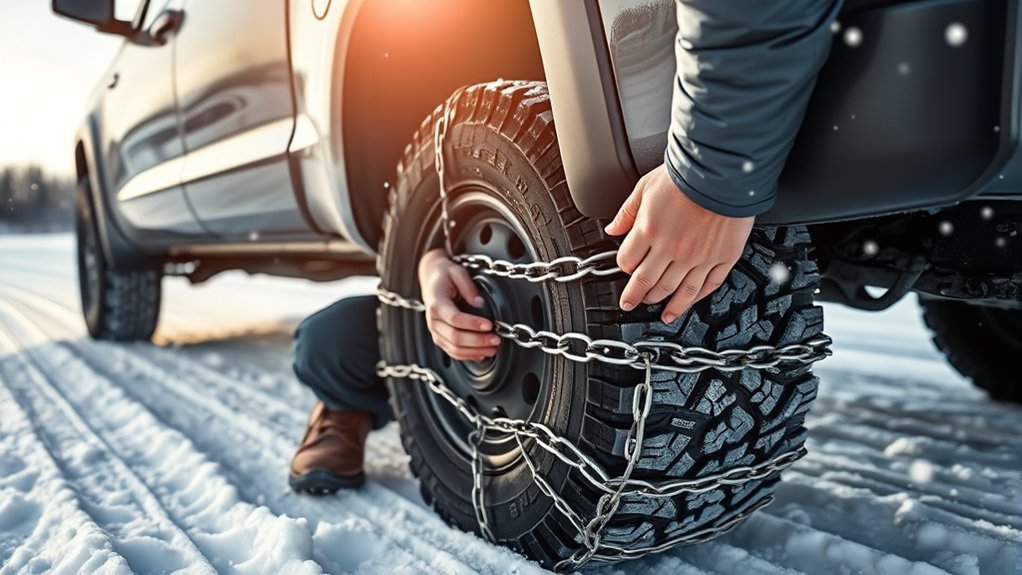
Installing tire chains on a Toyota Tundra starts with one rule: check your exact model year, tire size, drivetrain, and owner’s manual before you buy or mount anything. For most Tundra owners using one pair of chains, the safest default is the rear tires, but front or four-wheel chain setups should only be used when Toyota’s guidance, the chain manufacturer, local law, and wheel-well clearance all allow it.
Quick Answer
For a Toyota Tundra, install one pair of tire chains on the rear tires unless your specific owner’s manual says otherwise. Do not assume front chains are safe; clearance can be tight near steering, brake, and suspension parts. Use front or both-axle chains only if your manual and chain maker approve it.
Key Takeaways
- Use your Toyota owner’s manual as the final authority for chain placement and tire-size restrictions.
- For most Tundras using one pair, rear tire chains are the safest starting point for traction and stability.
- Some Tundra tire sizes and trims may not allow conventional chains, so verify your sidewall tire size before buying.
- Drive slowly with chains installed: follow the chain maker’s limit, posted chain-control speed, or 30 mph, whichever is lower.
- Practice installation at home before you need chains on a dark, snowy shoulder.
At a Glance
| Time Required | 15–30 minutes for your first practice run; about 5–15 minutes per pair once you know the chain design. |
| Difficulty | Easy to moderate, depending on chain type, tire size, snow depth, and roadside conditions. |
| Tools Needed | Correctly sized chains or approved cables, owner’s manual, gloves, flashlight or headlamp, kneeling mat or tarp, and tensioners if your chains require them. |
| Cost | Varies by tire size, chain style, clearance rating, and whether you choose chains, cables, or approved alternatives. |
How to Select and Install Tire Chains on Your Tundra
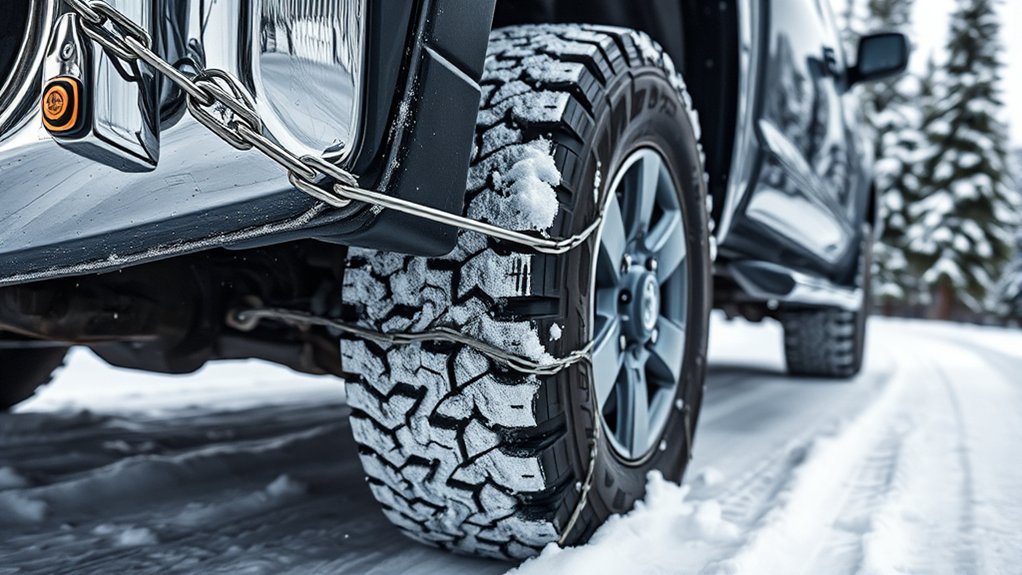
Before you install tire chains on a Toyota Tundra, identify three things: your tire size, your drivetrain, and the chain type approved for your vehicle. The tire size is printed on the tire sidewall, such as 275/65R18 or 285/65R18. Your owner’s manual may limit where chains can be installed, and some tire sizes may not allow conventional chains at all.
Warning: Do not force chains onto a tire size or axle Toyota does not approve. Chains that rub brake lines, suspension parts, fender liners, or steering components can damage the truck and make it unsafe to drive.
For current model-year information, use Toyota’s official manual lookup and match the instructions to your exact Tundra year, trim, and tire size. Toyota’s general guidance is to follow the owner’s manual and place chains or cables on the drive wheels; on 4WD or AWD vehicles, Toyota generally points owners to the rear wheels. Toyota’s Tundra winter-driving guidance also notes that some tire sizes, including 285/65R18 on certain model years, cannot mount tire chains.
Once you confirm chains are allowed, choose chains or cables that list your exact tire size and meet the clearance limits in your manual. If clearance is limited, low-profile cables or state-approved alternative traction devices may be safer than bulky link chains.
[Products Worth Considering]

This car emergency kit keeps essential roadside tools organized in a durable, portable bag so you can respond quickly during common driving emergencies. It includes battery jumper cables, a bright LED headlight, first aid supplies, a tire pressure gauge, and safety essentials like gloves and an emergency poncho. Designed for trunk or storage use, it helps you be prepared for dead batteries, minor malfunctions, and unexpected roadside issues.
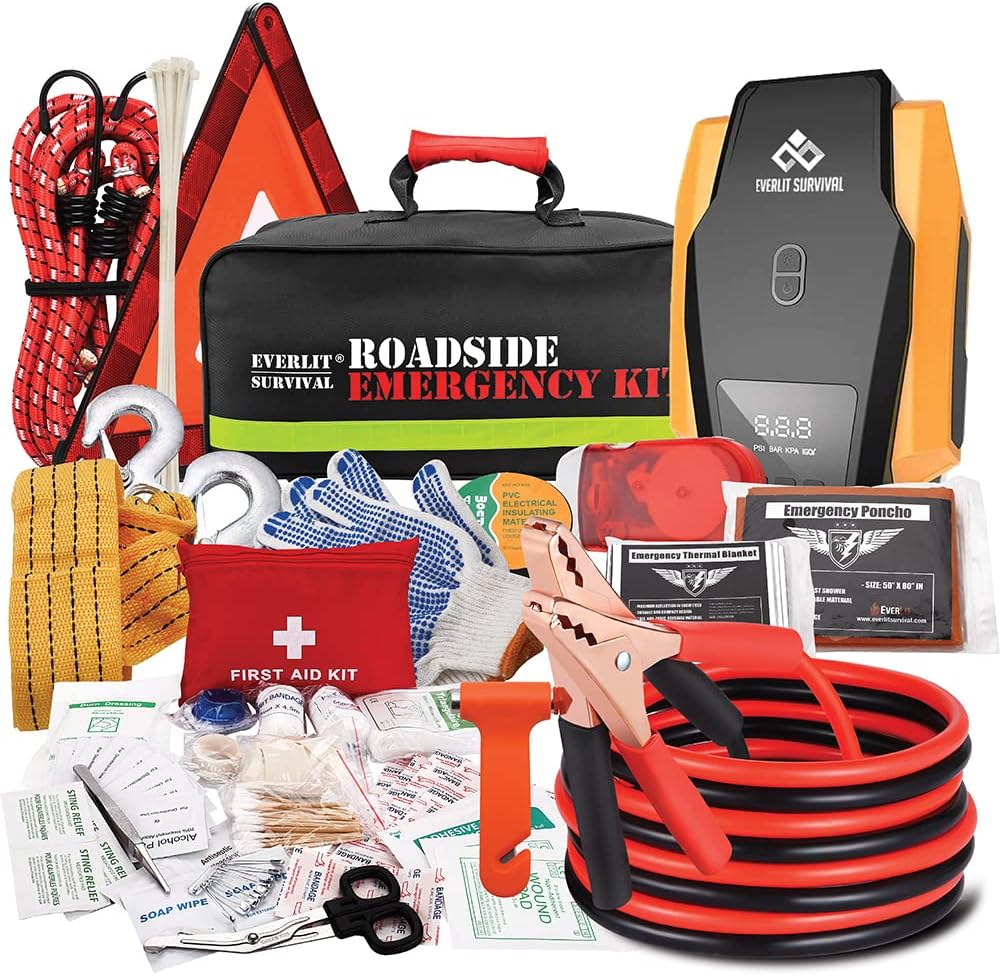
The Everlit Road Guardian emergency kit is designed for roadside breakdowns, combining essential safety gear and roadside tools in one compact bag. It includes a digital 12V auto tire inflator with preset and auto shutoff, plus 12-foot 8-gauge jumper cables to get you moving again. You also get a full 108-piece first aid kit, reflective warning tools, safety gloves, and emergency convenience items for safer travel.

These universal tire valve stem caps help protect valve cores from dust, debris, and moisture while helping maintain stable tire pressure. The corrosion-resistant metal construction and sealed design provide reliable protection in road grime, mud, and winter conditions. Twist-on installation makes them quick to fit on cars, SUVs, trucks, and motorcycles.
Front, Rear, or Both: Which Chain Placement Is Best?
If you are using only one pair of chains on a Tundra, start with the rear tires unless your owner’s manual says something different. The rear tires help push the truck, keep the back end planted, and reduce fishtailing during low-speed winter driving.
| Placement | Use It When | Main Caution |
|---|---|---|
| Rear tires | You are using one pair and your Tundra manual allows chains. | Still check brake, suspension, and fender clearance after installation. |
| Front tires | Only when the owner’s manual and chain maker allow front placement. | Front clearance is often tighter because of steering and brake components. |
| All four tires | Only when your manual, chain maker, and local rules allow it. | Can cause rubbing or drivetrain stress if the setup is not approved. |
Note: Local chain laws can still require you to carry or install traction devices even if you have 4WD. In some areas, approved alternatives such as cables or traction socks may meet the rule when conventional chains are not suitable for your vehicle.
Why Front Chains Are Not the Default Choice
Front chains can improve steering bite on vehicles designed for them, but that does not make them the default choice for a Toyota Tundra. A Tundra’s front wheel wells include steering movement, brake hardware, suspension parts, and fender-liner clearance that can change as the wheels turn.
That means the real question is not, “Will front chains steer better?” The right question is, “Does Toyota allow chains on the front of my exact Tundra, and is there enough clearance at full steering lock?” If the answer is no or unclear, do not use front chains.
| Possible Benefit | Why It Still Needs Caution |
|---|---|
| More steering bite in snow | A rubbing chain can damage steering, brake, or suspension components. |
| More front-end grip while turning | The chain must clear the tire well at full left and full right lock. |
| Added braking grip on packed snow | Chains change handling and stopping distance; drive slowly and avoid sudden inputs. |
Benefits of Rear Chains for Stability and Safety
Rear chains are usually the best fit for a Tundra because they add traction where the truck is designed to push from. On snowy or icy roads, rear chains help the rear tires bite during low-speed starts, hill climbs, and controlled turns.
Rear chains also help reduce fishtailing. A pickup can have a light rear end when the bed is empty, so extra rear traction can make the truck feel more settled. If you carry winter gear, sandbags, or other cargo, secure it low and forward in the bed so it cannot slide during braking or turning.
Pro Tip: Practice installing the chains on your rear tires in your driveway before winter travel. You will learn which fastener goes inside, which side faces the tire, and how much slack is normal before tensioning.
Identify Clearance Issues: Choosing the Right Tire Chains
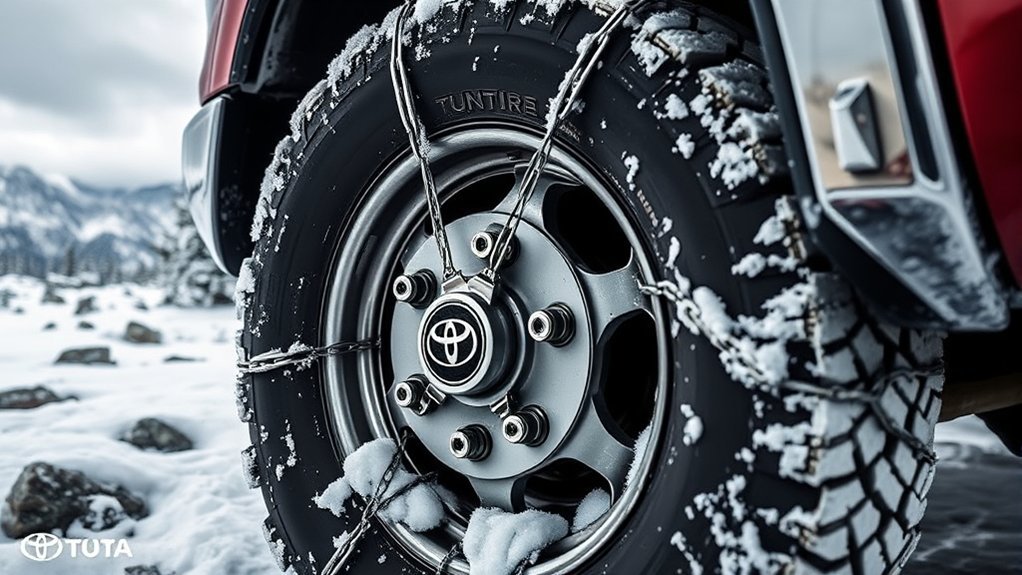
Clearance is the space between the chain and everything around the tire. On a Tundra, check the inside sidewall, brake lines, suspension arms, fender liner, mud flaps, and wheel-well trim. If you are considering front chains, also turn the steering wheel fully left and fully right during a stationary clearance check.
Use this checklist before you drive:
- Confirm tire size: Match the chain package to the exact size printed on your tire sidewall.
- Confirm axle placement: Follow the owner’s manual first, then the chain maker’s instructions.
- Check chain class: If your manual calls for low-clearance chains or cables, do not use bulky ladder chains.
- Inspect for rubbing: After mounting, roll forward slowly, stop, and look for contact marks.
- Retension: Chains should be snug, centered, and free of loose ends that can slap the body or brake parts.
| Clearance Area | What to Check |
|---|---|
| Inner sidewall | Look for contact with brake lines, suspension parts, or inner fender surfaces. |
| Outer sidewall | Make sure hooks, cams, and tensioners do not contact the wheel face or body trim. |
| Front steering arc | Only for front-chain setups: check clearance with the steering turned both directions. |
| Loose ends | Secure excess links so they cannot whip against the truck. |
Step-by-Step Guide: Installing Chains on Rear Tires
These steps apply to many ladder-style chains and cable chains, but your chain’s instructions come first. Some self-tensioning chains, diamond-pattern chains, and low-clearance cables use a different sequence.
Prepare the Truck and Work Area
- Pull completely off the roadway in a safe, level area. Turn on hazard lights.
- Set the parking brake and keep the truck in Park.
- Put on gloves and clear loose snow from the rear tires.
- Lay a tarp or kneeling mat beside the tire if conditions are wet or icy.
- Remove chains from the bag and inspect for broken links, twisted sections, or missing tensioners.
Lay Out and Position the Chains
- Lay each chain flat behind or beside the rear tire with no twists.
- Make sure sharp hook ends or fastener points face away from the tire sidewall when the chain maker specifies it.
- Drape the chain over the top of the tire and center it across the tread.
- Pull the inner side of the chain behind the tire and connect the inside fastener first.
- Connect the outside fastener, then remove as much slack as the chain design allows.
Proper Chain Tensioning Techniques
After the chains are connected, tension them according to the chain maker’s instructions. Some chains use cams, some use rubber adjusters, and some self-tighten as the truck moves. Do not improvise with cords or straps that are not rated for tire-chain use.
| Step | Action | Why It Matters |
|---|---|---|
| 1 | Drive forward slowly about 50–100 feet. | This lets the chains settle around the tire. |
| 2 | Stop in a safe area and recheck tension. | Loose chains can slap, break, or damage the truck. |
| 3 | Secure extra links and confirm the chains are centered. | Centered chains improve traction and reduce rubbing. |
How to Install Chains on Front Tires Safely
Do not install chains on the front tires of a Toyota Tundra unless your exact owner’s manual and chain manufacturer allow it. If front chains are approved for your specific setup, follow the same basic installation steps as the rear, but add a stricter clearance test.
- Install the chains with the truck parked on a flat, safe surface.
- Center and tension the chains exactly as the manufacturer instructs.
- Before driving normally, turn the steering wheel fully left and check for rubbing.
- Turn the steering wheel fully right and check again.
- Roll forward slowly, stop, and inspect for fresh contact marks or loose chain sections.
Warning: If a front chain touches a brake line, control arm, tie rod, fender liner, mud flap, or body trim, remove it. A chain that barely clears while parked may rub when the suspension compresses or the tires turn.
Best Practices for Driving With Tire Chains in Snow
Tire chains are for slow, controlled travel through snow and ice. They are not for normal-speed driving, dry pavement, or aggressive acceleration. With chains installed, your Tundra will vibrate more, steer differently, and need more space to stop.
- Keep speed low: Follow the chain maker’s speed limit, posted chain-control speed, or 30 mph, whichever is lower.
- Do not use cruise control: Keep direct control of throttle and braking.
- Avoid sudden inputs: Accelerate, brake, and steer gradually.
- Stay off bare pavement when possible: Chains wear quickly and can damage the road or truck on dry surfaces.
- Listen for noise: Slapping, grinding, or heavy vibration means you should pull over safely and inspect the chains.
- Remove chains when no longer needed: Continue beyond the end of the chain-control area to a safe pullout before removal.
Chain Laws and Traction Device Rules
Chain laws vary by state, road, weather, and posted signs. For example, Caltrans uses R-1, R-2, and R-3 chain-control levels in mountain areas. Under common R-2 conditions, four-wheel-drive and all-wheel-drive vehicles with snow-tread tires may be exempt from installing chains, but they still must carry traction devices in chain-control areas.
In Washington, approved alternative traction devices may be allowed for vehicles that cannot safely use conventional chains. That matters for Tundra owners with limited clearance or tire sizes that Toyota does not approve for standard chains.
Note: Posted signs and law-enforcement instructions override general advice. Before winter travel, check the transportation department for the state you will drive through.
[Products Worth Considering]

This manual duck head tire changer kit makes tire installation and removal simpler by letting you embed the duck head into the tire with applied pressure. The integrated design and durable steel construction help reduce friction and improve efficiency and safety during use. Suitable for 16–21 inch wheels, it’s convenient for cars, trucks, SUVs, and ATV tires, with 24-hour after-sales support.

Upgrade your vehicle’s style with sparkling rhinestone valve caps that add a unique luxury look. Built with an O-ring seal and rotating thread design, they help prevent air leakage while keeping dust and road grime out. The universal fit works on standard American tire valves for cars, trucks, SUVs, and motorcycles, and installs easily without special tools.

These aluminum alloy tire valve stem caps with an O-ring seal help protect valve stems from corrosion while adding a clean, stylish look to your vehicle. The universal fit works across cars, trucks, motorcycles, bicycles, and more, making them an easy upgrade for everyday driving and off-road use. Installation is quick, and the included four-pack keeps all your tires dressed and protected.
When to Choose Tire Cables Over Chains
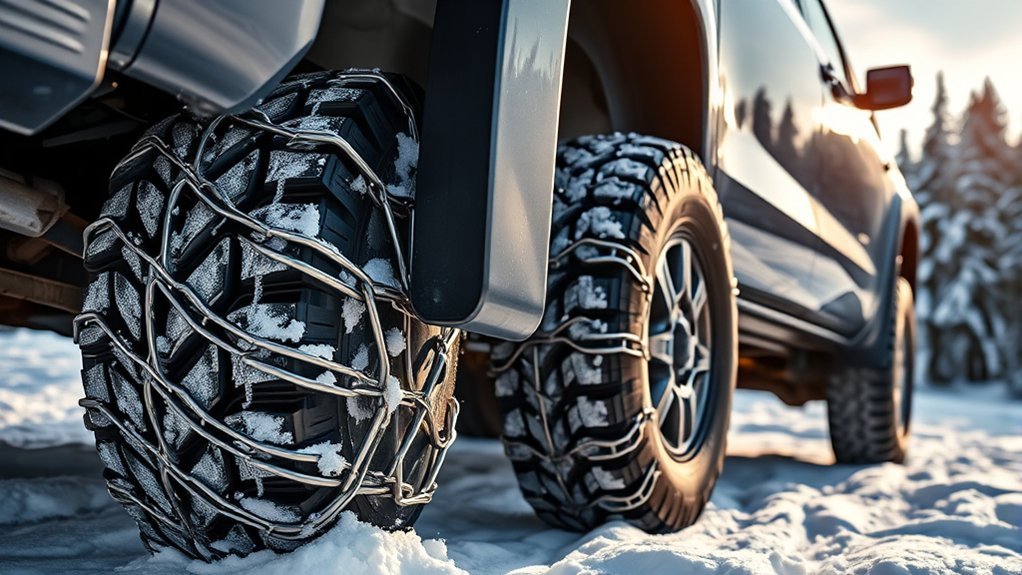
Tire cables are often thinner and lighter than traditional link chains. That can make them useful when your Tundra has limited clearance or when local rules allow approved alternatives. Cables may also be easier to install, store, and remove in an emergency.
Choose cables or low-clearance traction devices when:
- Your owner’s manual warns against bulky chains.
- Your tire size has limited wheel-well clearance.
- You need a lighter emergency traction device for occasional winter travel.
- Your state allows approved alternatives in chain-control areas.
Choose heavy-duty chains only when they are approved for your tire size, axle placement, clearance, and driving conditions. For deep snow, icy grades, or frequent mountain travel, a stronger chain may last longer, but it must still fit safely.
Troubleshooting Common Tire Chain Problems
If the truck feels wrong after installation, stop in a safe place and inspect the chains. Most problems come from loose fit, wrong sizing, twisted chains, or clearance contact.
| Problem | Likely Cause | Fix |
|---|---|---|
| Chain slaps the body | Too much slack or loose excess links | Retension and secure loose ends. |
| Heavy vibration | Chain off-center, twisted, or wrong size | Stop, remove, lay flat, and reinstall correctly. |
| Rubbing inside wheel well | Insufficient clearance | Remove chains and switch to approved low-clearance devices if allowed. |
| Broken cross chain or cable | Wear, high speed, dry pavement, or poor fit | Remove the damaged chain. Do not continue with a broken section hitting the truck. |
User Experiences With Tire Chains for the Tundra
Tundra owners often debate front, rear, or four-wheel chain placement because different trucks, tire sizes, and winter routes create different needs. The safest way to use those experiences is as background, not as a replacement for your manual.
Chain Placement Preferences
Drivers who prefer rear chains usually want better stability, better hill starts, and less fishtailing. That lines up with Toyota’s general rear-wheel guidance for 4WD/AWD chain placement. Drivers who ask about front chains are usually trying to improve steering bite, but front clearance must be verified carefully before trying it.
- Rear chains: Best default for most one-pair Tundra setups.
- Front chains: Only if Toyota and the chain maker allow them for your exact setup.
- Both axles: Possible only when approved and when there is enough clearance on all four corners.
Real-Life Usage Scenarios
For occasional mountain passes, many owners carry chains mainly to meet chain-control requirements and use them only when signs require it. For rural roads, steep icy driveways, or unplowed access roads, owners may use chains more often and should invest in a fit-tested set that is easy to install in poor weather.
| Scenario | Best Approach |
|---|---|
| Mountain highway chain control | Carry approved traction devices and obey posted signs. |
| Steep snowy driveway | Use approved rear chains and drive slowly with steady throttle. |
| Limited clearance tire setup | Use cables or approved alternatives if Toyota and local law allow them. |
| Deep snow on private roads | Check whether a more aggressive approved chain is needed, then verify clearance before use. |
Preparing for Winter: Essential Gear Beyond Tire Chains
Tire chains are only one part of winter readiness. Keep a compact winter kit in the Tundra so you can install, adjust, or remove chains safely when the weather turns.
- Gloves: Waterproof work gloves keep your hands warm and protect them from sharp chain links.
- Headlamp or flashlight: Roadside installation often happens in low light.
- Kneeling mat or tarp: Keeps you out of slush while reaching behind the tire.
- Small brush or scraper: Clears packed snow from the tire and wheel well.
- Reflective vest: Helps other drivers see you at a chain-up area.
- Emergency kit: Include blankets, water, snacks, basic first aid, and a portable jump starter.
How to Store Tire Chains After Winter
After using tire chains, clean them before storage. Road salt and moisture can cause rust, weak links, and sticky fasteners.
- Rinse off snow, mud, and road salt.
- Let the chains dry completely.
- Inspect for worn links, bent hooks, damaged cables, or missing tensioners.
- Apply a light corrosion protectant only if the chain maker allows it.
- Store chains in a labeled bag with gloves and instructions so the kit is ready next winter.
Frequently Asked Questions
Can tire chains be reused after the winter season?
Yes, tire chains can be reused if they are clean, dry, and undamaged. Before storing them, inspect every cross chain, hook, cable, cam, and tensioner. Replace the set if you find broken links, severe rust, bent fasteners, or damaged cables.
How do I know if my chains fit properly?
The chains should match the exact tire size on your sidewall, sit centered across the tread, and fit snugly after tensioning. Drive forward slowly, stop in a safe place, and recheck them. If they slap, rub, or sit far off-center, remove and reinstall them.
Are there specific brands recommended for the Tundra?
Fit matters more than brand. Choose chains or cables that list your exact tire size, meet your owner’s manual clearance requirements, and are rated for your vehicle type. Toyota and transportation agencies generally do not recommend one universal tire-chain brand for every Tundra setup.
What speed should I drive with tire chains installed?
Drive at the chain manufacturer’s speed limit, the posted chain-control speed, or 30 mph, whichever is lower. In many chain-control areas, the posted limit is 25 or 30 mph. Slow down more if the truck vibrates, the road is icy, or visibility is poor.
How do I store tire chains when not in use?
Rinse off salt and grime, dry the chains completely, inspect for damage, and store them in a durable bag. Keep the bag with gloves, a flashlight, tensioners, and the printed instructions so you are not searching for parts during a storm.
Can I put chains on all four tires of a Toyota Tundra?
Only if your owner’s manual, tire-chain manufacturer, and local law allow it. Four-wheel chain setups can add traction, but they can also create clearance problems if the front wheel wells are not approved for chains.
Should I use chains, cables, or tire socks?
Use the traction device your owner’s manual and local chain rules allow. Traditional chains can be stronger, cables may help with limited clearance, and approved alternatives may work for vehicles that cannot safely use chains. Always verify legality before relying on an alternative device.
Conclusion
For most Toyota Tundra owners, the safest answer is simple: use one properly sized pair of chains on the rear tires, then drive slowly and recheck tension after a short distance. Front chains or chains on all four tires should only be used when your exact owner’s manual, tire size, clearance, chain manufacturer, and local laws all support that setup. With the right fit, a practice run, and safe driving habits, tire chains can make winter travel far more controlled.
Sources
- Toyota Owners Manuals and Warranties — current Toyota manual lookup for model-year-specific guidance.
- Toyota 2024 Tundra Winter Driving Tips — rear tire chain guidance and model-specific tire-chain restrictions.
- Toyota Support: Which Tires Do I Put Snow Chains/Cables On? — general Toyota chain-placement guidance by drivetrain.
- Caltrans Chain Controls and Chain Installation — California chain-control levels, posted-chain requirements, and chain-control speed guidance.
- WSDOT Tires and Chains — traction-device and alternative-device guidance for Washington mountain travel.
- TireChain.com Installation Guide — general tire-chain layout, fastening, and tensioning steps.
[Products Worth Considering]

Upgrade your 2024-2026 Tesla Model 3 Highland with REEVAA all-weather mud flaps designed for seamless fit along the original body lines. The set of four delivers strong splash protection against mud, gravel, and road debris while using OEM-grade durable materials. Installation is non-destructive with original hole positions and snap-in clips, and the aerodynamic design helps minimize impact on efficiency.

The GOOLOO A3 3000A 12V jump starter delivers fast, reliable starts for dead vehicles while also providing a built-in 150 PSI cordless tire inflator. It supports gas and diesel engines up to 9.0L/6.5L and includes multiple inflation modes with smart shutoff and an LED display for convenient pressure control. A high-efficiency BMS provides 10 safety protections, and the unit also functions as a flashlight and device-charging power bank.

A portable bicycle repair bag built for on-the-go maintenance, pairing a scalable mini tire pump with a multi-tool, crank and bone wrenches, tire levers, and self-adhesive glueless patches. The included patch set helps you quickly seal punctures using the integrated prep/rasp step, while the waterproof nylon bag keeps tools organized and easy to access. Ideal for road, mountain, and home bike emergencies, repairs, and routine adjustments.

Related Articles
Toyota Tundra Tire and Wheel Package: What to Consider Before Buying
Unlock the secrets to choosing the perfect tire and wheel package for your Toyota Tundra—essential tips await to enhance your ride.
Read More
Do Bigger Tires Void a Toyota Tundra Warranty? Magnuson-Moss Act Explained
Bigger tires might not void your Toyota Tundra warranty, but understanding the Magnuson-Moss Act is crucial—discover how to protect your investment effectively.
Read More
Toyota Tundra Tire Rack Setup: Garage Storage Ideas for Seasonal Sets
Better tire storage for your Toyota Tundra awaits—discover essential tips to maximize space and protect your seasonal sets in the garage!
Read More