
How to Measure Tire Tread Depth: The Penny Test and Beyond
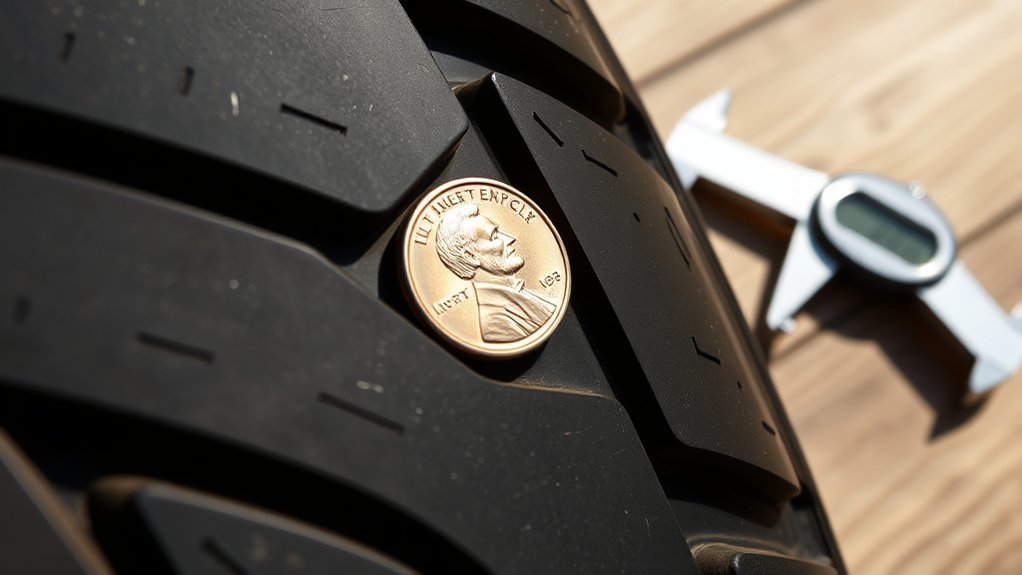
Measuring tire tread depth helps you decide whether your tires still have enough grip for everyday driving, wet roads, and emergency braking. You can do a quick check with a penny, get an earlier wet-weather warning with a quarter, or use a tread depth gauge for the most accurate reading.
Quick Answer
To measure tire tread depth, insert a penny into the deepest groove with Lincoln’s head upside down. If you can see the top of his head, the tire is at or near 2/32 inch and should be replaced. For wet-road safety, also use a quarter or a tread depth gauge and plan replacement around 4/32 inch.
Key Takeaways
- The penny test checks the basic 2/32-inch replacement point, not ideal wet-weather performance.
- Use a quarter or tread depth gauge to catch tires around 4/32 inch, when wet braking and hydroplaning resistance can drop.
- Measure several grooves on each tire and use the lowest reading, because tires often wear unevenly.
- Replace or professionally inspect tires immediately if you see exposed cords, bulges, deep cracks, tread separation, or severe uneven wear.
At a Glance
| Time Required | 5–10 minutes for all four tires |
| Difficulty | Easy |
| Tools Needed | Penny, quarter, tread depth gauge, flashlight, tire pressure gauge |
| Cost | Free with coins; low-cost tread depth gauges are widely available |
Understanding Tire Tread Depth and Its Importance

Tire tread depth is the distance from the top of the tread block to the bottom of the main tread groove. In the United States, tread depth is usually measured in 32nds of an inch. Many new passenger tires start around 10/32 inch to 11/32 inch, while some truck, SUV, all-terrain, and winter tires may start deeper.
Deep enough tread helps the tire move water through its grooves so rubber can stay in contact with the road. As tread wears down, wet braking distance increases, hydroplaning risk rises, and snow traction drops. The National Highway Traffic Safety Administration recommends making sure tire tread is at least 2/32 inch and using the penny test to help identify tires that need replacement.
A tire can pass the penny test and still be weak in heavy rain. Treat 2/32 inch as the minimum replacement point, not the best target for wet-road safety.
Tire Tread Depth Chart: What Your Measurement Means
Use this chart after checking each tire. The safest decision should be based on the lowest tread depth you find on that tire, not the average.
| Tread Depth | What It Usually Means | Recommended Action |
| 7/32 inch or more | Good tread for most normal driving conditions | Keep checking monthly |
| 6/32 inch | Still usable, but winter and heavy-rain performance may begin to decline | Monitor more often before winter or rainy seasons |
| 5/32 inch | Snow traction is reduced compared with deeper tread | Consider replacement if snow-covered roads are common |
| 4/32 inch | Reduced wet traction and longer stopping distances | Plan replacement soon, especially if you drive in rain |
| 3/32 inch | Very little wet-weather safety margin | Replace as soon as possible |
| 2/32 inch or less | At or below the common minimum replacement threshold | Replace the tire now |
Tire Rack advises considering tire replacement at about 4/32 inch if rain and wet roads are a concern and about 5/32 inch if snow-covered roads are a concern.
[Products Worth Considering]

This digital tire pressure gauge combines a sturdy pistol grip inflator with a backlit 0.1 PSI display for quick, accurate readings in any lighting condition. Its 360° swivel gauge and 20" rubber hose make it easy to use and store, while the integrated inflate/deflate trigger and ¼" NPT air inlet provide fast, reliable tire maintenance.

The WORKPRO digital tire pressure gauge with inflator offers precise 0.1 PSI resolution and ±1% accuracy for reliable tire inflation across vehicles and inflatables. Built with heavy‑duty aluminum alloy, brass, and rubber, it resists rust and drops while delivering deflation, inflation, and pressure checking functions. The kit includes valve caps, adapters, a twist‑on chuck, screwdriver, nozzles, needle, seal tape, and a storage bag with batteries, making it a versatile, portable solution for on‑the‑go tire maintenance.

The RYOBI portable air compressor delivers 0.5 CFM at 90 PSI, ideal for quick inflation and small projects. Its 18V battery provides cordless freedom while the 120 PSI rating handles tougher tasks. Compact and lightweight, it fits easily in a toolbox or vehicle, making it perfect for on‑the‑go use. Reliable performance and easy storage make it a go‑to tool for DIY enthusiasts and professionals alike.
How to Perform the Penny Test for Tread Depth
The penny test is the fastest no-tool way to check whether a tire is at or near the 2/32-inch replacement point. It is useful, but it is not a precision measurement and it does not tell you whether the tire is ideal for rain or snow.
[Products Worth Considering]

The Milton 555e digital tire inflator delivers fast, accurate pressure readings with a backlit display and multiple unit options, making tire inflation quick and easy. Its durable 20" EPDM rubber hose and grip‑head chuck provide reliable connection, while the ±1 PSI accuracy ensures precise inflation for cars, bikes, and trucks.

The GOOLOO A6 Gear delivers rapid, cordless inflation with a powerful 21,000 RPM motor and up to 160 PSI, inflating car tires in under a minute. Its 7500mAh battery provides up to 45 minutes of operation and fast Type‑C charging, while preset modes and multi‑unit options ensure precise control for cars, bikes, and balls. Integrated LED flashlight and smart auto shut‑off add safety and convenience for emergencies.
Steps for the Penny Test
- Park safely. Stop on level ground, set the parking brake, and turn the steering wheel if you need better access to the front tires.
- Insert the penny. Place a penny into a main tread groove with Lincoln’s head pointing down into the tread.
- Read the result. If the tread covers the top of Lincoln’s head, the tire is above about 2/32 inch at that spot. If you can see the top of his head, the tire is at or near the replacement point.
- Check multiple spots. Test the inner, center, and outer grooves on each tire. Repeat around the tire if any area looks more worn.
Interpreting Penny Test Results
If the tire fails the penny test anywhere in the main tread grooves, replace it. If it passes the penny test but looks close, use a tread depth gauge for a real measurement. A tire can have 3/32 inch or 4/32 inch of tread and still pass the penny test, but that may not be enough for confident wet-road braking.
Warning: Do not keep driving on a tire just because one groove passes the penny test. If any main groove is at or below 2/32 inch, or if you see exposed cords, bulges, deep cracks, or tread separation, replace the tire or have it inspected before driving farther.
Tips for Accurate Measurement
- Use the most worn area. The lowest tread reading is the one that matters for safety.
- Measure all four tires. Front and rear tires often wear at different speeds.
- Check in good light. Use a flashlight so you can see the base of the grooves and any wear bars.
- Recheck monthly. Tread can wear faster if pressure, alignment, or suspension parts are not right.
Quarter Test for Wet-Weather Safety
The quarter test gives you an earlier warning than the penny test. It helps you spot tread that is near 4/32 inch, a common planning point for replacement if you drive often in rain.
- Insert a quarter into the tread groove with Washington’s head upside down.
- If part of Washington’s head is covered, the tire has more than about 4/32 inch at that spot.
- If the top of Washington’s head is visible, wet-weather traction is reduced and you should plan for replacement soon.
Pro Tip: Use the penny test for the minimum replacement threshold and the quarter test for a more practical wet-weather warning. For the most reliable answer, confirm both with a tread depth gauge.
Alternative Methods for Measuring Tire Tread Depth
Coins are helpful for a quick check, but a gauge and your tire’s built-in wear indicators give you better information. Use more than one method if the tire looks close to the limit.
Visual Wear Indicators
Most tires have tread wear indicator bars molded into the main grooves. Under federal light-vehicle tire standards, treadwear indicators are designed to show visually when a tire has worn to 1/16 inch, which equals 2/32 inch. You can review the rule in 49 CFR § 571.139.
- Find the bars. Look for small raised rubber bridges across the tread grooves.
- Compare the tread height. If the surrounding tread is flush with the bars, the tire is worn out.
- Check several locations. Wear bars may be visible in one part of the tire before another, especially with alignment or inflation problems.
Tread Depth Gauges
A tread depth gauge is the best tool for a precise reading. Most simple gauges measure in both 32nds of an inch and millimeters.
- Place the gauge probe into a main tread groove.
- Push the gauge shoulders flat against the tread blocks.
- Read the measurement.
- Repeat at the inner, center, and outer grooves of each tire.
- Use the lowest reading on each tire when deciding whether replacement is needed.
A digital gauge is easy to read, while a simple probe-style gauge is inexpensive and accurate enough for routine checks when used carefully.
How to Spot Tread Wear Indicators
To spot tread wear indicators, turn the tire so you can see into the grooves, then look for small raised bars that run across the groove. Some tire sidewalls also have small marks, triangles, or letters such as “TWI” pointing toward the indicator locations.
- Look inside the major grooves. The indicators sit between tread ribs, not on the outer sidewall.
- Check whether they are flush. If the tread surface is level with the bar, the tire has reached the replacement point.
- Do not rely on one bar. Inspect several bars around the tire because tread wear may not be even.
Note: Wear bars tell you when a tire is worn to the minimum threshold. They do not tell you whether the tire still has strong wet-road or winter performance.
Indicators Your Tires Need Replacement
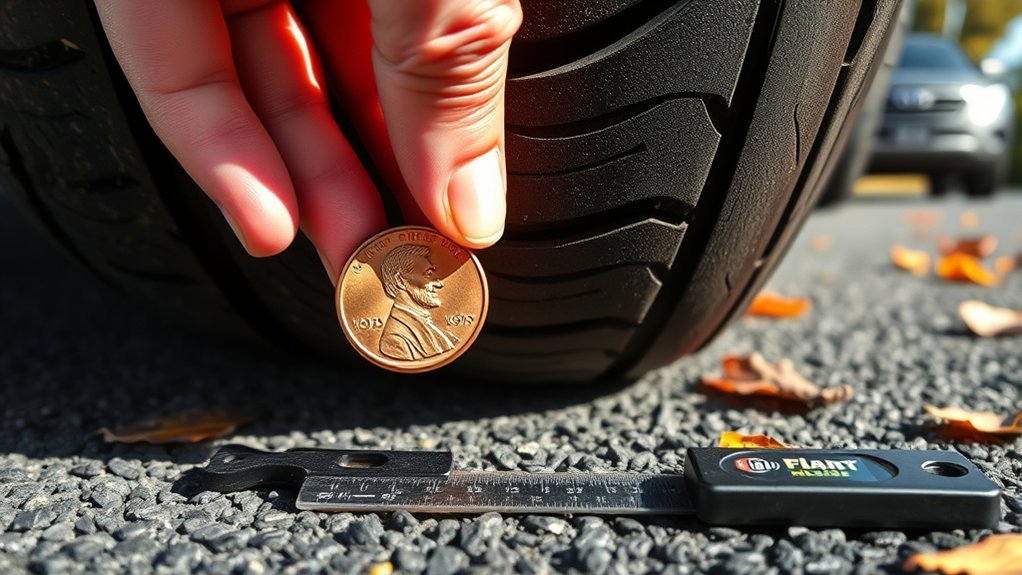
Recognizing when your tires need replacement is essential for road safety. Start with tread depth, then inspect the whole tire.
- Tread is 2/32 inch or less: Replace the tire now.
- Tread is 4/32 inch or less: Plan replacement soon if you drive in rain or on wet roads.
- Tread is about 5/32 inch: Consider replacement before winter if you drive on snow-covered roads.
- Wear bars are flush: The tire has reached the minimum tread threshold.
- Cracks, cuts, bulges, or bubbles: Have the tire inspected immediately, even if tread depth looks acceptable.
- Exposed cords or belt material: Do not drive on the tire except as needed to get off the road safely.
- Vibration or thumping: This can point to tire damage, imbalance, separation, or suspension issues.
- Uneven tread wear: The tire may need rotation, alignment, pressure correction, balancing, or suspension repair.
What Uneven Tread Wear Can Tell You
Uneven wear is not just a tire problem. It often points to something else on the vehicle that needs attention.
- Center wear: Often linked to overinflation or aggressive acceleration.
- Both edges worn: Often linked to underinflation or overloading.
- One edge worn: Often linked to alignment problems.
- Cupping or scalloping: Can point to worn shocks, struts, suspension parts, or wheel balance issues.
- Patchy wear: May come from hard braking, tire imbalance, or damaged components.
If the pattern is severe or appears quickly, have a qualified technician inspect the tires, alignment, suspension, and inflation pressure. Replacing tires without fixing the cause can make the new tires wear out early.
Effective Strategies for Maintaining Tire Tread Depth
Good tire maintenance helps your tread wear evenly and last longer. The NHTSA TireWise guidance recommends checking tire pressure at least once a month when tires are cold and using the vehicle’s doorjamb label or owner’s manual for the correct pressure.
- Check tread monthly. Use a coin test for a quick check and a gauge when tread looks low.
- Check cold tire pressure monthly. Cold means the vehicle has been parked for at least three hours.
- Rotate on schedule. Michelin recommends rotating tires every 5,000 to 7,000 miles as a standard guideline, while following your vehicle manufacturer’s schedule.
- Keep wheels aligned. Alignment problems can quickly wear one edge of the tread.
- Balance tires when needed. Vibration can speed up irregular wear and reduce ride comfort.
- Avoid overloading. Excess weight increases heat and wear.
- Inspect after potholes or curb hits. Impacts can damage belts, sidewalls, and alignment.
Driving Safely With Adequate Tire Tread Depth
Driving with adequate tire tread depth is especially important when roads are wet, snowy, or covered with standing water. Low tread makes it harder for tires to move water away from the contact patch, and that can increase stopping distance and hydroplaning risk.
NHTSA crash research found that tires with 0/32 inch to 2/32 inch tread were much more common among tire-related crash vehicles than tires with deeper tread. The same research found vehicles with tread in the 0/32-inch to 2/32-inch range experienced tire problems in the pre-crash phase about three times more often than vehicles with 3/32 inch to 4/32 inch tread. You can review the report from NHTSA CrashStats.
For most everyday passenger vehicles, use these simple rules: replace at 2/32 inch, plan replacement around 4/32 inch for wet-weather driving, and consider replacement around 5/32 inch before snow season. Reduce speed in heavy rain, leave more following distance, and never use tread depth as an excuse to drive faster than conditions allow.
Special Cases: Winter, EV, and Commercial Vehicle Tires
Not every tire should be judged only by the penny test.
- Winter tires: Snow traction can decline well before 2/32 inch. Many drivers replace winter tires earlier, especially around 5/32 inch, to preserve snow grip.
- Electric vehicles: EVs can be heavier and may wear tires faster depending on torque, weight, tire design, and driving style. Check tread and pressure regularly.
- Commercial vehicles: Tire tread depth rules can differ for trucks, buses, and steer tires. Follow the regulation that applies to the vehicle type and use.
- Directional or staggered tires: Rotation options may be limited. Check the sidewall and owner’s manual before rotating.
- Temporary spare tires: Do not judge them like normal tires. Follow the speed, distance, and pressure limits printed on the spare.
Frequently Asked Questions
How often should I check my tire tread depth?
Check tread depth at least once a month and before long road trips. Also check it after a hard pothole hit, curb impact, or any time you notice vibration, pulling, or uneven wear.
Can tire tread depth affect fuel efficiency?
Yes, but tread depth is only one part of the picture. Tire design, rolling resistance, pressure, alignment, and driving habits also affect fuel use. Underinflated tires can reduce fuel economy and cause faster, uneven wear.
What factors contribute to tire tread wear?
Common causes include underinflation, overinflation, poor alignment, lack of rotation, hard braking, aggressive cornering, heavy loads, worn suspension parts, road hazards, and tire compound design.
Is the penny test accurate for all tire types?
The penny test is useful for checking whether many passenger tires are near the 2/32-inch minimum threshold, but it is not a precision tool. Use a tread depth gauge for exact readings, and follow special guidance for winter, commercial, temporary spare, off-road, or performance tires.
How do weather conditions impact tire tread wear?
Hot pavement, rough roads, heavy rain, snow, and ice can all affect tire performance. Weather also changes the safety margin you need. A tread depth that feels acceptable on dry roads may be weak in heavy rain or snow.
Is 4/32 inch tire tread still safe?
At 4/32 inch, a tire may still be above the common legal minimum, but wet traction is reduced. If you often drive in rain, start planning for replacement at this point instead of waiting for 2/32 inch.
Should I replace one tire or all four?
It depends on tread depth, drivetrain, tire size, and vehicle manufacturer guidance. AWD vehicles often need closely matched tread depths. If only one tire is damaged, ask a tire professional whether one, two, or four tires are needed.
Can I drive if my tire is at 2/32 inch?
A tire at 2/32 inch is at the common minimum replacement threshold and should be replaced. Avoid wet, snowy, or high-speed driving on tires this worn because stopping distance and hydroplaning resistance are reduced.
Conclusion
Measuring tire tread depth is simple, but it can make a major difference in how your vehicle stops, turns, and handles bad weather. Use the penny test to check the 2/32-inch replacement point, the quarter test to watch for 4/32-inch wet-weather caution, and a tread depth gauge when you want the most accurate reading. Check every tire in several spots, use the lowest measurement, and replace tires early when wet, snowy, or uneven wear conditions reduce your safety margin.
Sources
- NHTSA Summer Driving & Road Trip Tips — backs the 2/32-inch tread-depth guidance, penny test, and monthly tire inspection advice.
- NHTSA TireWise — backs cold tire-pressure checks, tire maintenance, and tire-safety context.
- 49 CFR § 571.139 — backs federal treadwear-indicator requirements for light-vehicle tires.
- NHTSA CrashStats: Tire-Related Factors in the Pre-Crash Phase — backs low-tread crash-risk context.
- Tire Rack: How To Tell If You Need New Tires — backs 4/32-inch wet-road and 5/32-inch snow-road replacement guidance.
- Michelin Tire Rotation Guide — backs tire rotation intervals and even-wear maintenance guidance.

Related Articles
How Often to Rotate Tires on a Toyota Tundra: Mileage Intervals by Use
To ensure optimal performance and safety for your Toyota Tundra, discover the best mileage intervals for tire rotation and what to watch for.
Read More
Matching Tire Type to Driving Conditions: A Decision Guide for Tundra
A comprehensive guide to selecting the perfect tire for your Toyota Tundra awaits, ensuring optimal performance for any driving condition. Discover your options now!
Read More
When to Upgrade From Stock Tires on a New Tundra: Is It Worth It Early?
Get the insights you need on upgrading stock tires for your new Tundra—discover when it's crucial for safety and performance. Don't miss out!
Read More