Wheel Backspacing vs Offset: What’s the Difference and How to Measure
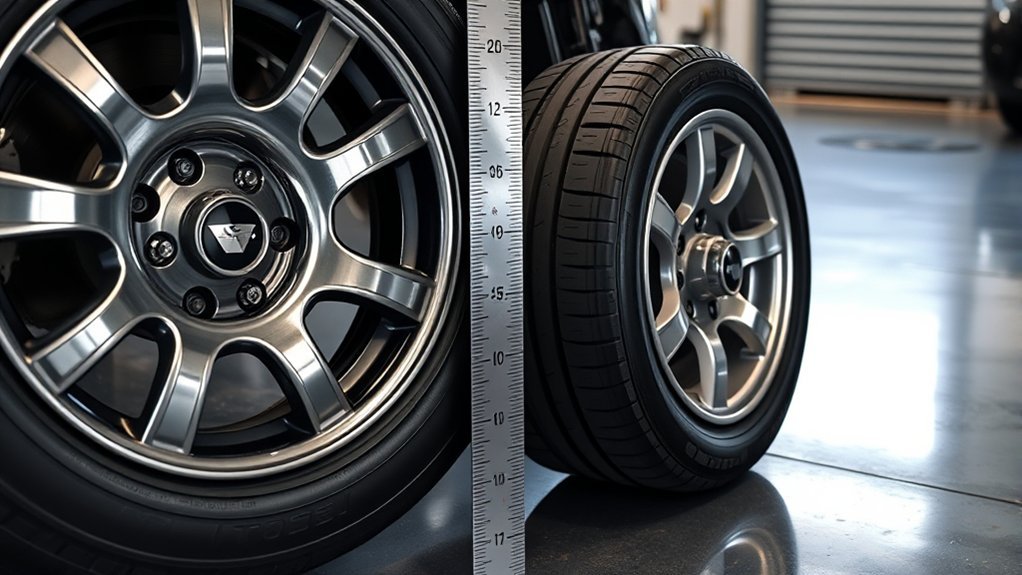
Wheel backspacing and offset are two of the most important wheel fitment numbers because they control where the wheel and tire sit in relation to the fender, brakes, steering parts, and suspension. Get them right and the wheel clears properly. Get them wrong and you may end up with rubbing, poor steering feel, brake interference, or a stance that looks good but does not work well on the road.
Quick Answer
Wheel offset is the distance from the hub mounting surface to the wheel centerline, measured in millimeters. Wheel backspacing is the distance from the hub mounting surface to the inner wheel lip, measured in inches. Backspacing is usually measured with a straightedge; offset is usually read from the wheel stamp or calculated from backspacing.
Key Takeaways
- Offset is measured in millimeters and can be positive, zero, or negative.
- Backspacing is measured in inches and is always a positive distance from the mounting pad to the inner wheel lip.
- Positive offset generally tucks the wheel inward; negative offset generally pushes the wheel outward.
- Do not mix units when converting. Convert offset from millimeters to inches before using it in a backspacing formula.
- Always verify brake, suspension, fender, center bore, bolt pattern, and load-rating compatibility before buying wheels.
At a Glance
| Time Required | 10–20 minutes per wheel |
| Difficulty | Easy to moderate |
| Tools Needed | Straightedge, tape measure or ruler, calculator, flat surface, and the wheel removed from the vehicle |
| Cost | Usually $0–$30 if you already have basic measuring tools |
What Are Wheel Backspacing and Offset?
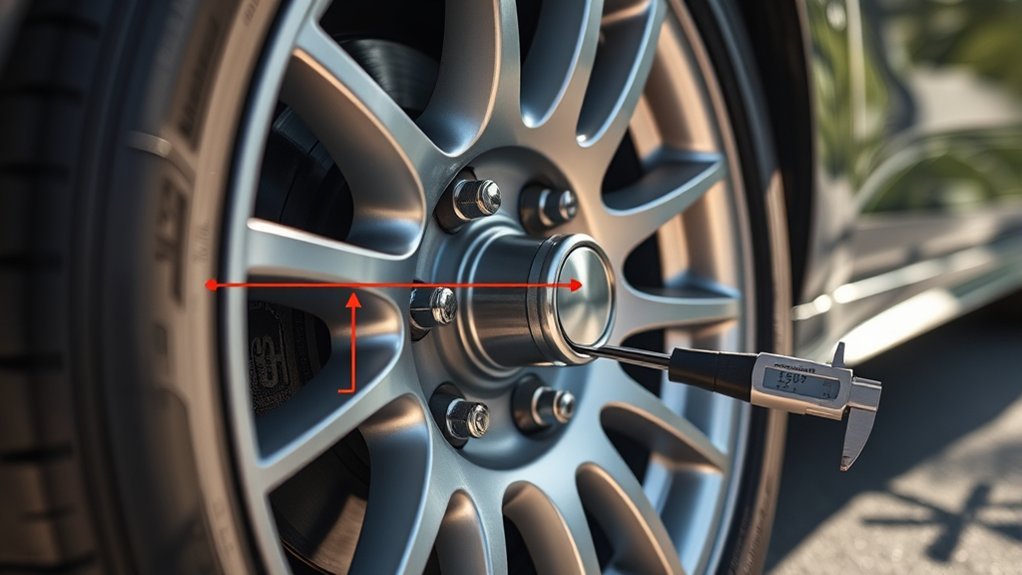
Wheel offset is the distance from the wheel’s hub mounting surface to the wheel’s centerline. It is measured in millimeters and is usually shown as a positive number, zero, or a negative number. Many wheels also mark offset as ET, followed by the offset number in millimeters.
Wheel backspacing is the distance from the hub mounting surface to the inner lip of the wheel. It is usually measured in inches. Backspacing tells you how much of the wheel sits behind the hub, toward the brakes, suspension, and inner wheel well.
The two measurements describe the same fitment relationship from different reference points. Offset starts at the wheel centerline. Backspacing starts at the inner wheel lip. That is why the two numbers are related but not interchangeable.
Note: Advertised wheel width is usually the bead-seat width, not always the full outside lip-to-lip width. Backspacing is measured to the inner lip, so conversion formulas work best when you use the actual measured overall wheel width.
How Offset Position Changes Wheel Fitment
Offset changes how far the wheel and tire sit inward or outward from the hub. The effect is easiest to understand this way:
- Positive offset: The mounting surface is closer to the outside face of the wheel. This usually moves the wheel and tire inward, toward the suspension and brakes.
- Zero offset: The mounting surface lines up with the wheel centerline.
- Negative offset: The mounting surface is closer to the inner side of the wheel. This usually pushes the wheel and tire outward toward the fender.
A lower or more negative offset can create an aggressive stance, but it may also increase fender poke, steering scrub, and the chance of rubbing the fender lip. A higher positive offset may tuck the wheel inward, but too much can reduce inner clearance near the strut, control arm, brake caliper, or wheel well liner.
Warning: Do not choose wheels by appearance alone. A wheel can bolt on and still be unsafe if it rubs the brakes, suspension, fender, steering parts, or body under load or full steering lock.
Key Differences Between Wheel Backspacing and Offset Explained
Backspacing and offset are both wheel-position measurements, but they use different units and different reference points.
| Measurement | Measured From | Unit | Fitment Effect |
|---|---|---|---|
| Backspacing | Hub mounting surface to inner wheel lip | Inches | More backspacing moves more wheel inward; less backspacing moves more wheel outward. |
| Offset | Wheel centerline to hub mounting surface | Millimeters | Positive offset tucks inward; negative offset pushes outward, all else equal. |
| Clearance risk | Inner and outer wheel/tire position | Both specs matter | Wrong specs can cause rubbing on brakes, fenders, liners, or suspension parts. |
How to Measure Wheel Backspacing Accurately
To measure wheel backspacing, remove the wheel and place it face down on a flat surface. Use cardboard, a towel, or another soft surface under the wheel face to avoid scratches.
- Lay the wheel face down. The inside of the wheel should face upward.
- Place a straightedge across the inner wheel lip. Use a board, level, or metal ruler long enough to touch both sides of the wheel lip.
- Measure down to the hub mounting pad. Measure the vertical distance from the bottom of the straightedge to the flat mounting surface that contacts the hub.
- Record the number in inches. This is your backspacing.
- Repeat the measurement. Measure at least twice to make sure the straightedge did not shift.
Pro Tip: If the tire is mounted, the sidewall can get in the way. For the cleanest measurement, measure the bare wheel when possible, or make sure the straightedge is resting on the wheel lip rather than the tire.
Measuring Wheel Offset: Step-by-Step Guide
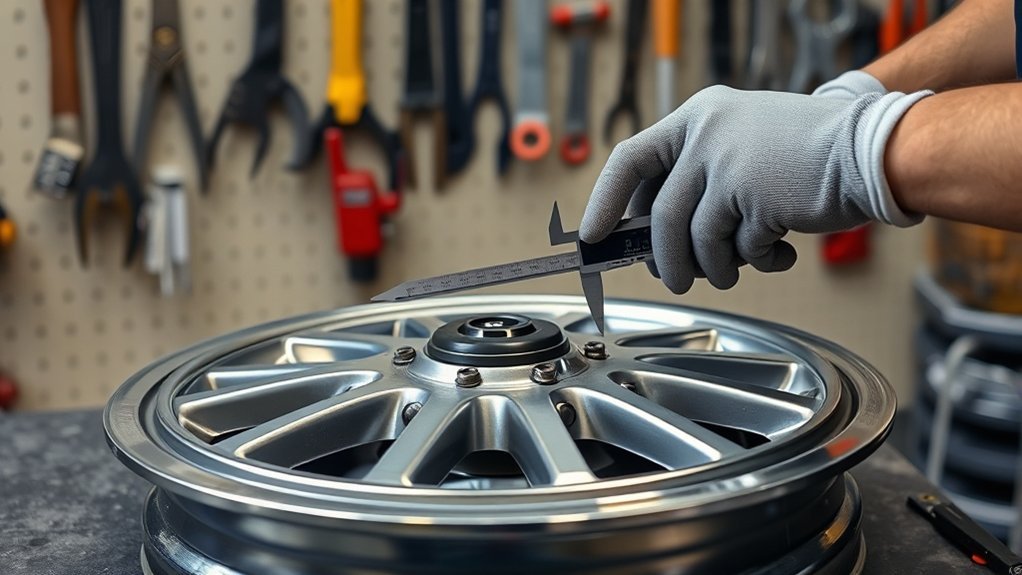
The easiest way to find offset is to look for the stamped specification on the back of the wheel. It may appear as ET35, +35, or a similar marking. If the stamp is missing or unclear, you can calculate offset from measured backspacing and overall wheel width.
- Measure the overall wheel width. Measure the full outside width from outer lip to inner lip, not just the advertised bead-seat width.
- Find the centerline. Divide the measured overall width by 2.
- Measure backspacing. Use the straightedge method above.
- Subtract the centerline from backspacing. This gives offset in inches.
- Convert inches to millimeters. Multiply by 25.4.
Formula: Offset in millimeters = (backspacing in inches − overall wheel width ÷ 2) × 25.4.
For example, if the wheel measures 9 inches overall and the backspacing is 5 inches, the calculation is: (5 − 4.5) × 25.4 = +12.7 mm. That wheel is roughly a +13 offset.
How to Convert Backspacing and Offset Without Mistakes
The biggest mistake is mixing millimeters and inches in the same formula. Offset must be converted to inches before you add it to wheel width for backspacing.
Offset in inches: offset mm ÷ 25.4
Backspacing from offset: backspacing = overall wheel width ÷ 2 + offset in inches
Offset from backspacing: offset mm = (backspacing − overall wheel width ÷ 2) × 25.4
| Example | What It Means | Important Note |
|---|---|---|
| +35 offset | The mounting surface is 35 mm toward the wheel face from the centerline. | 35 mm is about 1.38 inches of positive offset. |
| 4-inch backspacing | The mounting pad is 4 inches from the inner wheel lip. | It is zero offset only if the measured overall wheel width is 8 inches. On many 8-inch nominal wheels, it is more likely a negative offset. |
| 4.5-inch backspacing | The mounting pad is 4.5 inches from the inner wheel lip. | On a wheel measuring 9 inches overall, this is about zero offset. |
Note: If you only know the advertised wheel width, the overall lip-to-lip width is often about 1 inch wider, but that is not a rule for every wheel. Measure the actual wheel when accuracy matters.
Common Mistakes When Choosing Wheel Specifications
Wheel fitment problems usually happen because one measurement is treated as the whole story. Offset and backspacing matter, but they are not the only specs that decide whether a wheel fits.
Misunderstanding Measurement Units
- Using millimeters and inches in the same formula without converting.
- Using advertised wheel width when the formula needs measured overall width.
- Assuming backspacing and offset are the same number.
- Reading a chart without checking how that chart defines wheel width.
Ignoring Suspension and Brake Clearance
A wheel with the right diameter and bolt pattern can still have poor clearance. Check the inside barrel, spokes, brake calipers, struts, control arms, tie rods, and inner fender liners. Front wheels also need to clear while turning left and right at full lock.
| Issue | Possible Result | What to Check |
|---|---|---|
| Too much inward position | Rubbing on strut, control arm, or inner liner | Inner clearance with steering straight and turned |
| Too much outward poke | Fender rub or tire sticking past the body | Outer fender clearance and local road rules |
| Wrong spoke or barrel shape | Brake caliper interference | Caliper template or test fit |
| Wrong center bore or lug seat | Poor mounting or vibration | Hub bore, hub-centric rings, lug nut seat type |
Overlooking Aesthetic Preferences
Fitment also affects how the vehicle looks. Low-offset wheels can create a wider stance, while higher-offset wheels can look more tucked or factory-like. The goal is to balance appearance with safe clearance, correct load rating, and predictable handling.
- Wheels sitting too far inward can look cramped and may reduce inner clearance.
- Excessive outward poke can look aggressive but may rub the fender.
- Different wheel finishes can clash with paint, trim, or brake color.
- A wheel design that looks good in photos may not clear your brake calipers.
Tips for Choosing the Right Wheel Fitment
Start with your vehicle’s factory wheel specs, then compare every change against the original setup. Offset changes are easier to understand when you also compare wheel width and tire size.
- Check the OEM specs. Note factory wheel width, diameter, offset, bolt pattern, center bore, and tire size.
- Compare the new wheel width. A wider wheel changes both inner and outer clearance, even if offset stays the same.
- Check brake clearance. Some wheels have spoke shapes that hit large calipers even when offset looks correct.
- Check tire size. A wider or taller tire may rub even if the wheel itself clears.
- Confirm load rating. The wheel should be rated for your vehicle’s weight and use.
- Test fit before final installation. Turn the steering from lock to lock and inspect clearance under the vehicle.
- Get an alignment after major changes. Wheel and tire changes can reveal or worsen alignment issues.
Pro Tip: When comparing two wheel setups, calculate both inner clearance change and outer poke change. A new wheel can move inward and outward at the same time if it is wider than the original.
Real-World Impact of Wheel Specifications on Vehicle Performance
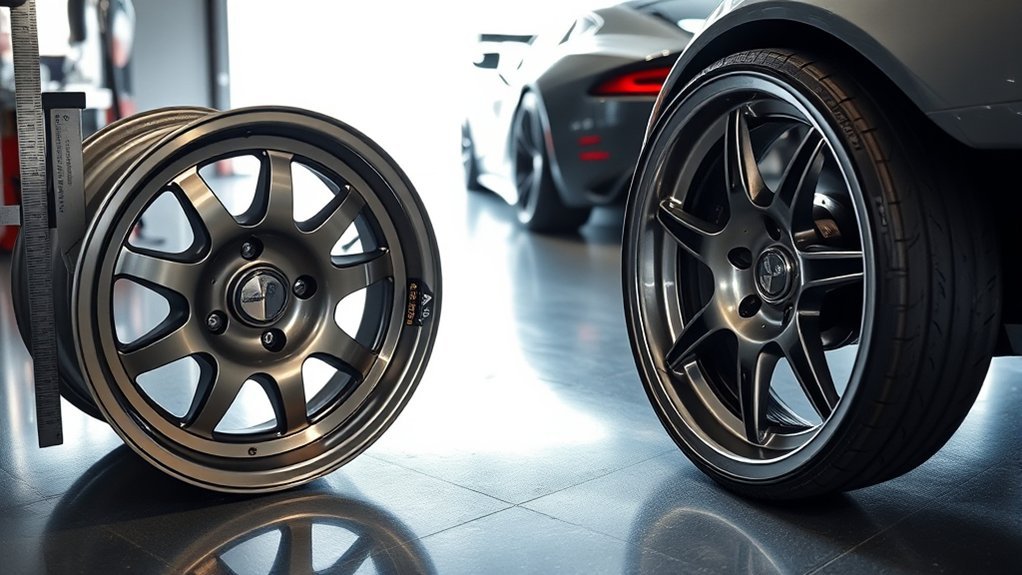
Offset and backspacing can affect more than the way a vehicle looks. They influence track width, steering feel, tire clearance, brake clearance, and how much room the tire has during suspension travel.
- Handling feel: Major offset changes can change scrub radius and steering feedback.
- Clearance: Too much inner or outer movement can cause rubbing during turns, bumps, or heavy loads.
- Brake fitment: Spoke shape and barrel clearance matter as much as offset in some applications.
- Ride quality: Wider wheels and tires can change steering weight, road feel, and tramlining.
- Component stress: Large offset changes may increase leverage on wheel bearings and suspension parts, especially on heavy vehicles or off-road setups.
The safest wheel fitment is not the most aggressive number on paper. It is the setup that clears the brakes, suspension, fenders, and steering range while matching the vehicle’s load and tire requirements.
Frequently Asked Questions
Are wheel offset and backspacing the same thing?
No. They are related, but they are measured from different points. Offset is measured from the wheel centerline to the hub mounting surface in millimeters. Backspacing is measured from the hub mounting surface to the inner wheel lip in inches.
What is 4-inch backspacing in offset?
It depends on the wheel’s measured overall width. If the wheel measures 8 inches lip to lip, 4 inches of backspacing is about zero offset. If the wheel measures 9 inches lip to lip, 4 inches of backspacing is about -13 mm offset because the centerline is 4.5 inches from either lip.
What does +35 offset mean on a rim?
A +35 offset means the wheel’s hub mounting surface is 35 millimeters toward the outside face of the wheel from the centerline. In general, more positive offset tucks the wheel inward, while less positive or negative offset moves the wheel outward.
What would 4.5 inches of backspacing do?
A 4.5-inch backspacing places the hub mounting surface 4.5 inches from the inner wheel lip. On a wheel that measures 9 inches overall, that is about zero offset. On a narrower or wider wheel, the offset will be different, so you need the wheel’s actual measured width to know the final position.
Can offset affect handling?
Yes. Changing offset can change track width, scrub radius, steering effort, and clearance. Small changes are often manageable, but large changes should be checked carefully because they can affect steering feel and increase rubbing or component stress.
Should I use wheel spacers instead of changing offset?
Wheel spacers effectively reduce positive offset and push the wheel outward. They can solve some clearance or stance issues, but they must be high quality, properly sized, hub-centric when required, and installed with correct hardware and torque. For major fitment changes, a correctly specified wheel is usually the cleaner solution.
Conclusion
Wheel backspacing and offset are simple once you separate their reference points. Backspacing measures from the hub mounting surface to the inner wheel lip in inches. Offset measures from the wheel centerline to the hub mounting surface in millimeters. Use both numbers together, keep units consistent, measure actual width when converting, and check every clearance point before buying or installing new wheels.
Sources
- Tire Rack — What Is Wheel Offset? — backs up offset definition, positive/zero/negative offset, and backspacing definition.
- Discount Tire — Wheel Offset & Backspacing — backs up backspacing definition, measuring method, and fitment relationship.
- JEGS — Wheel Offset vs Backspacing — backs up measurement steps, clearance concerns, and related wheel specs.
- JEGS — Wheel Offset Basics for Beginners — backs up offset calculation cautions, handling effects, and nominal-width confusion.

Related Articles
When to Choose LT Tires Over P-Rated for a Tundra: Weight and Use Cases
Understanding when to choose LT tires over P-rated for your Tundra can transform your driving experience—discover the key factors that matter.
Read More
Running All-Terrain Tires Year-Round on a Tundra: Pros and Cons
Learn the crucial pros and cons of running all-terrain tires year-round on your Tundra—your driving experience may never be the same again.
Read More
Seasonal Tire Swap Guide for Toyota Tundra: Summer, Winter, and Year-Round
A comprehensive seasonal tire swap guide for your Toyota Tundra reveals crucial tips for maximizing performance and safety—discover the best practices to keep your truck ready!
Read More