
How to Choose the Right Inner Tube for Any Bike Tire
Last updated: June 2026
A bicycle inner tube that almost fits can still leave you with pinches, leaks, or a valve you can’t inflate. The safest inner tube match comes from three checks: tire size, tube width range, and valve fit. You’ll learn how to read the markings, measure when markings are gone, and choose a tube that fits before you install it.
Quick Answer: Match Tube Diameter, Width, and Valve
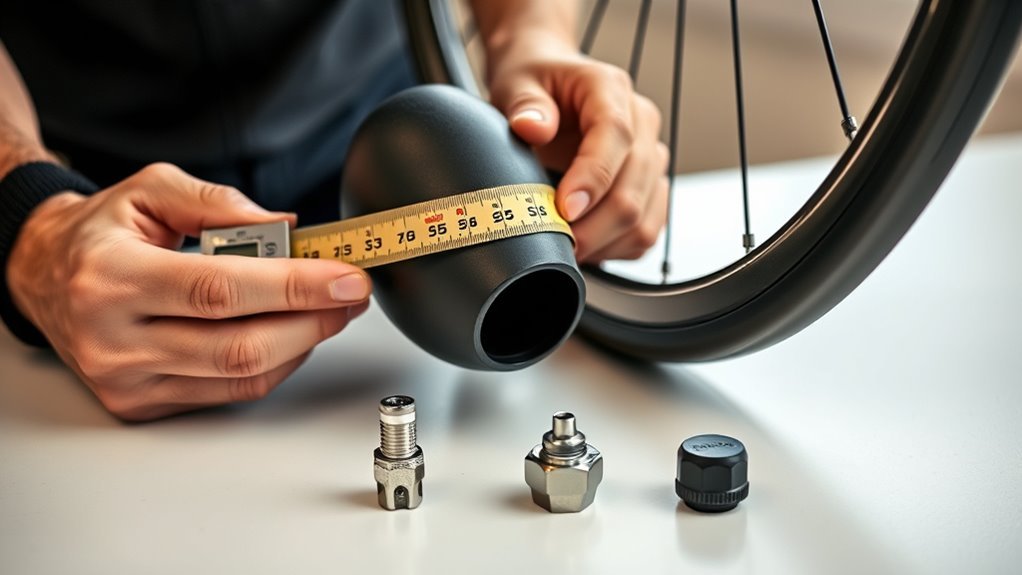
Match an inner tube by checking three things: the tire’s bead-seat diameter, the tire width, and the valve type. Use the ISO/European Tyre and Rim Technical Organisation (ETRTO) code when you can, such as 25-622 or 622×25, because it gives the tire width and bead-seat diameter in millimeters. Pick a tube with the same diameter and a width range that includes your tire width. Then choose a Presta, Schrader, or Dunlop valve that fits your rim hole and pump.
Key Takeaways
- Match the tube diameter to the tire’s ISO/ETRTO bead-seat diameter.
- Choose a tube width range that includes your tire’s marked width.
- Match the valve type to your rim hole and pump before you ride.
- Measure the rim and tire if the sidewall markings have worn off.
- Inflate slowly and check the bead to avoid pinching the tube.
[Products Worth Considering]

This 4-pack kit converts Presta bike valves to standard Schrader valves so you can inflate with any regular pump or air compressor. The solid brass adapters include an O-ring for a tight, leak-proof seal and provide a simple screw-on setup. Compatible with road bikes, mountain bikes, e-bikes, and e-scooters, it’s designed for convenient, everyday carry readiness.

Convert Presta bicycle valves to accept standard Schrader pump nozzles for fast, hassle-free inflation. This kit includes durable brass adapters with leak-resistant connections, plus sports inflation needles and protective valve caps for convenient use on bikes and ball sports equipment.

Tiakia’s mini high-pressure frame pump delivers up to 260 PSI for faster, more efficient inflations with an optimized intake volume. It features a double-head valve design compatible with Schrader and Presta, plus a conversion for Donlop, making it versatile for bikes and many inflatables. The lightweight anodized aluminum build includes a mounting bracket for convenient carry, while the flexible high-pressure hose and IPX4 waterproof body support outdoor use.
What Tools Do You Need to Check Inner Tube Fit?
Estimated time: 5 to 10 minutes.
You don’t need many tools to check tube fit. You need a clear view of the tire sidewall, the old tube or tube box if you still have it, and a pump that fits your valve.
- Use calipers when the rim is exposed — they give the most accurate bead-seat diameter reading directly from the rim bed.
- Use a flexible tape measure to check tire width when the tire is still mounted on the rim.
- Use a valve adapter if your pump does not match the valve type, but note that adapters are not reliable for sustained high-pressure road tire inflation.
[Products Worth Considering]

This PXZBLG bike repair kit helps you tackle common tire and on-the-ride issues with a compact, ride-ready tool collection. It includes a mini tire pump supporting both Presta and Schrader valves, a 16-in-1 bike multitool, tire levers, glueless patches with a plastic box, plus 4mm and 5mm Allen wrenches. A convenient bike bag stores everything so you can mount it on your road bike or mountain bike for lightweight, portable preparedness.
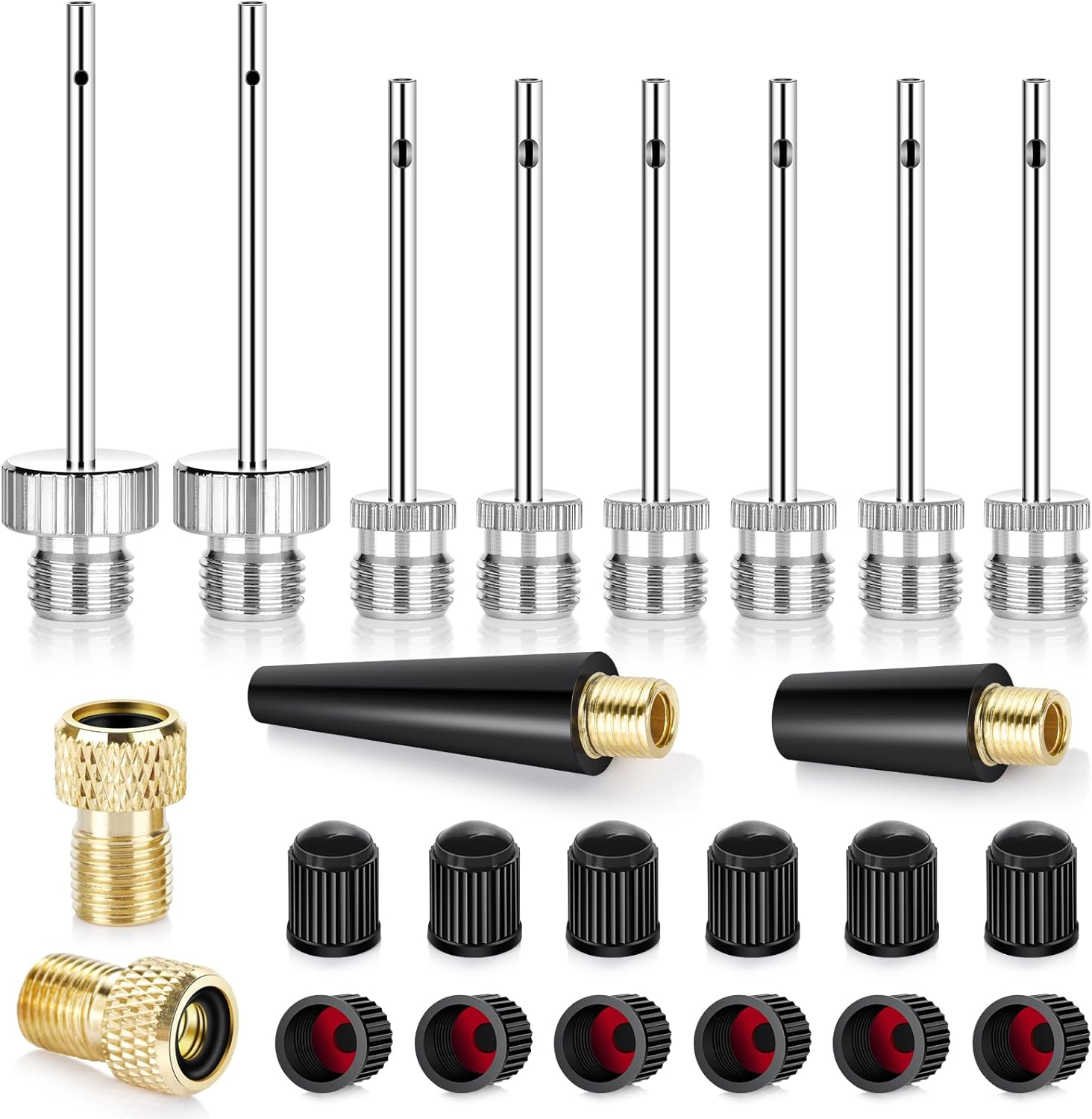
This ball pump needles kit includes brass ball needles for inflating footballs, soccer balls, basketballs, and volleyballs, plus conical nozzles for air mattresses, exercise balls, balloons, and swim rings. It also offers Presta to Schrader valve adapters for easy use with compatible bikes and rideables. The set includes sealed valve caps and a storage case, helping keep your equipment organized and ready to inflate quickly.
How to Read Tire Size Markings and ISO/ETRTO Codes
Read the tire sidewall first. You may see markings such as 700×25c, 26×2.1, 25-622, or 622×25. The ISO/ETRTO number gives the clearest match because it uses millimeters instead of loose inch or French labels.
The first number in the standard 25-622 ETRTO format shows tire width in millimeters. The second number shows bead-seat diameter (BSD), which must match the rim and tube diameter. Some manufacturers reverse the order as 622×25 — this is a shorthand, not the formal ETRTO notation — so look for the larger of the two numbers to identify the BSD before you buy.
- Find the ISO/ETRTO code on the tire sidewall.
- Match the bead-seat diameter to the tube diameter.
- Confirm the tire width falls inside the tube’s printed width range.
For example, a 700×25c road tire usually matches a 25-622 ISO size. A tube marked 700×23/28c or 18/25-622 may fit, depending on its listed width range.
⚠️ Critical: “26 Inch” Refers to Four Different Tube Sizes
The “26 inch” label appears on tires and tubes with at least four distinct bead-seat diameters. Buying by the inch label alone is one of the most common inner tube mistakes. Always confirm the BSD in millimeters before purchasing.
| Marketing Label | BSD | Typical Bike Type |
|---|---|---|
| 26 × 1.75–2.35 | 559 mm | Modern mountain bike |
| 26 × 1⅜ (road) | 571 mm | Older road and sport bikes |
| 26 × 1⅜ (cruiser) | 590 mm | Cruiser and European city bikes |
| 26 × 1 (S-6) | 597 mm | Some older and folding bikes |
29er and 700c Use the Same Tube Diameter
Both 29-inch mountain bike tires and 700c road and gravel tires share a 622 mm bead-seat diameter, so their inner tubes are interchangeable by diameter — only the width range differs. Also note: 27-inch vintage road tires use a 630 mm BSD and are not compatible with 700c or 29-inch tubes despite the similar marketing names.
See the full bike tire size chart for all common BSD values →
Choose the Right Valve Type and Stem Length
Valve choice affects inflation ease, rim fit, and pump compatibility. Schrader valves fit wider rim holes and work with many standard pumps. Presta valves use a narrower rim hole and often appear on road, gravel, and performance wheels.
Dunlop, also called Woods, still appears on some city and utility bikes. Match the valve type to your rim hole first. Then choose a stem that reaches far enough through the rim for easy pump access.
| Valve Type | Rim Hole Diameter | Best Fit |
|---|---|---|
| Schrader | ~8 mm | Wider rim holes and common pumps |
| Presta | ~6.5 mm | Narrower rim holes and high-pressure tires |
| Woods/Dunlop | ~8 mm | Some city, utility, and older bikes |
Deep-section rims need longer valve stems. Shallow rims can use shorter stems, but the valve still needs enough exposed length for your pump head.
Note: A Presta valve can fit some Schrader-drilled rims with the right grommet, but a Schrader valve usually won’t fit a Presta-drilled rim.
Learn more about Presta vs Schrader valves →
How to Measure Your Rim or Tire When Markings Are Missing
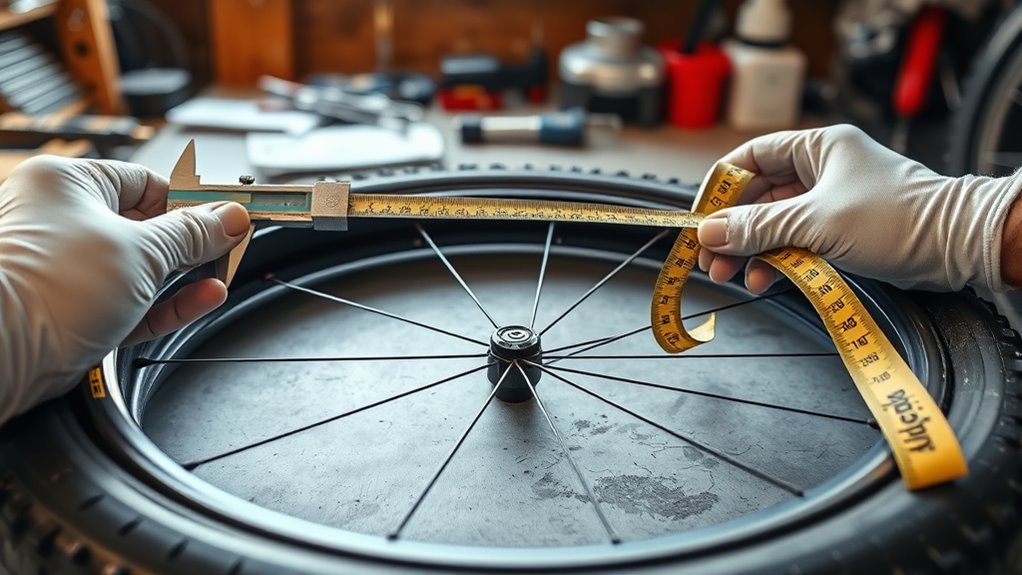
If the tire markings have worn off, measure the wheel before you buy a tube. The most accurate method is to use calipers to measure the rim’s bead-seat diameter directly when the tire is removed.
- Remove the tire if needed, then use calipers to measure the rim bead seat in millimeters — this gives the most reliable BSD and is the preferred method for inner tube sizing.
- Measure tire width across the widest point when the tire sits on the rim.
- Check the rim sidewall or spoke bed for a stamped size marking — many rims carry an ISO designation that confirms the BSD without requiring measurement.
Note: Do not estimate BSD by wrapping a tape around the outside of the tire and dividing by π. This calculation gives the tire’s outer diameter, which includes tread height and is significantly larger than the bead-seat diameter used in ISO/ETRTO sizing. Using this figure will lead you to the wrong tube.
Cross-check your numbers with an ISO/ETRTO size chart before choosing a tube. Accurate rim measurements help you avoid a tube that bunches, stretches too far, or fits the valve hole poorly.
How to Confirm Inner Tube Fit Before Installing
Use this quick check before you mount the tube. It helps you catch the most common size and valve mistakes while the tube still sits in your hand.
- Read the tire sidewall and write down the ISO/ETRTO size.
- Compare the tube label with the tire’s bead-seat diameter.
- Check that the tube width range includes your tire width.
- Match the valve type to the rim hole and your pump.
- Confirm the valve stem reaches past the rim far enough for inflation.
- Add a small amount of air — typically 2–5 PSI — enough to remove wrinkles and give the tube its round shape while leaving it very soft. An over-inflated tube at this stage is the leading cause of installation pinches.
- Seat the tube evenly inside the tire before full inflation. Look for the thin molded line on the tire sidewall to sit consistently above the rim all the way around both sides. An uneven line means the tube or bead is not correctly seated — deflate and re-seat before continuing.
Quick-Fit Checklist and Common Mistakes (Troubleshooting)
Most tube problems start with a size mismatch, a pinched tube, or the wrong valve. Check the tire and rim size, valve type, and tube width range before final inflation. These simple checks prevent many flats and pump problems.
- Don’t assume two inch-labeled tires share the same ISO diameter.
- Don’t force a valve through a rim hole that does not fit.
- Don’t use a tube width range that excludes your tire width.
- Don’t fully inflate until you check both tire beads for even seating.
Warning: Stop inflating if the tire bead lifts off the rim or the tube bulges under the bead.
If the tube loses air after installation, remove one tire bead and inspect the tube. Look for pinch marks, thorn holes, sharp rim tape edges, or cuts in the tire casing. Re-seat the bead, inflate slowly, and check that the valve stands straight.
Learn how to fix a flat bike tire →
Frequently Asked Questions
What Size Inner Tube Do I Need for My Bike?
Find the ISO/ETRTO code on your tire sidewall — for example, 25-622 or 37-559. The second number is the bead-seat diameter, which must match your tube exactly. The first number is tire width; choose a tube whose printed width range includes your tire width. If the sidewall markings have worn off, remove the tire and measure the rim’s bead seat directly with calipers.
Are All 26-Inch Inner Tubes the Same?
No. The “26 inch” label covers at least four different bead-seat diameters: 559 mm (modern MTB), 571 mm (older road bikes), 590 mm (cruiser and European city bikes), and 597 mm (some older and folding bikes). A tube bought by the inch label alone may not fit your rim. Always confirm the BSD in millimeters before purchasing.
Can I Use a 29-Inch Inner Tube in a 700c Tire?
Yes. Both 29-inch mountain bike tires and 700c road and gravel tires share a 622 mm bead-seat diameter, so their inner tubes are interchangeable by diameter. The difference is width range: 29-inch tubes typically cover wider widths (roughly 47–60 mm or 1.9–2.4 inches), while 700c tubes cover narrower widths (roughly 23–40 mm). Choose based on your tire’s width, not just the diameter label.
What Does 700×28/32c Mean?
700×28/32c usually means the tube fits 700c tires in the 28 mm to 32 mm width range. For most 700c road and gravel tires, the matching ISO bead-seat diameter is 622 mm.
Can I Use a 1.75 Tube in a 1.5 Tire?
Yes, you can often use it if the tube’s printed width range includes 1.5 inches. If the tube starts at 1.75 inches, it may bunch inside the tire and raise the chance of a pinch during installation.
Can I Use a Smaller Inner Tube Than My Tire?
A slightly smaller tube can fit if the tube’s width range includes your tire size. A tube that stretches too far may become thin, lose durability, and fail sooner.
What Happens If You Use the Wrong Size Inner Tube?
A tube that is too narrow will over-stretch and may blow out at the seams. A tube that is too wide will bunch inside the tire, creating double layers that pinch between the bead and rim — often causing a flat within the first few miles. A tube with the wrong diameter may not seat on the rim bead at all, making the tire impossible to inflate safely.
How Do I Know If My Rim Needs a Presta or Schrader Valve?
Check the valve hole in the rim and compare it with the old tube. A wider hole (approximately 8 mm) usually fits Schrader, while a narrower hole (approximately 6.5 mm) usually fits Presta. Your pump must also match the valve, or you’ll need an adapter.
Does Valve Stem Length Matter for Bike Tubes?
Yes, stem length matters because the valve must extend past the rim far enough for your pump to grip it. Deep rims need longer stems, while shallow rims can use shorter ones.
Conclusion
The right inner tube fits when its diameter, width range, and valve all match your tire and rim. Start with the ISO/ETRTO code on the tire sidewall, confirm the BSD in millimeters rather than trusting inch labels alone, and verify the valve type and stem length before you install. If the markings have worn off, measure the rim bead seat directly with calipers rather than estimating from outer tire circumference. A careful match gives you a smoother ride and fewer roadside fixes.
For your next step, check our bike tire size chart to confirm your ISO size by wheel type, or read our guide on how to fix a flat bike tire so you’re prepared when you need it most. For an independent reference on all tire sizing standards, Sheldon Brown’s tire sizing guide is the most comprehensive free resource available.

Related Articles
What Does THE P Stand For on a Tire? Full Meaning Explained
I’ll explain what the “P” on a tire really means and why it could change how you choose your next set.
Read More
How to Use a Tubeless Tire Repair Kit: Complete Field Guide
Learn how to fix tubeless tire punctures fast with the right kit, because one small mistake can leave you stranded on the trail.
Read More
How to Tell a Tire’s Diameter: Easy Guide to Reading Tire Size
Want to decode tire sidewall numbers and find the right diameter, but wonder what those hidden digits really mean?
Read More