
4Runner Trailhunter Tire Size and Wheel Specs
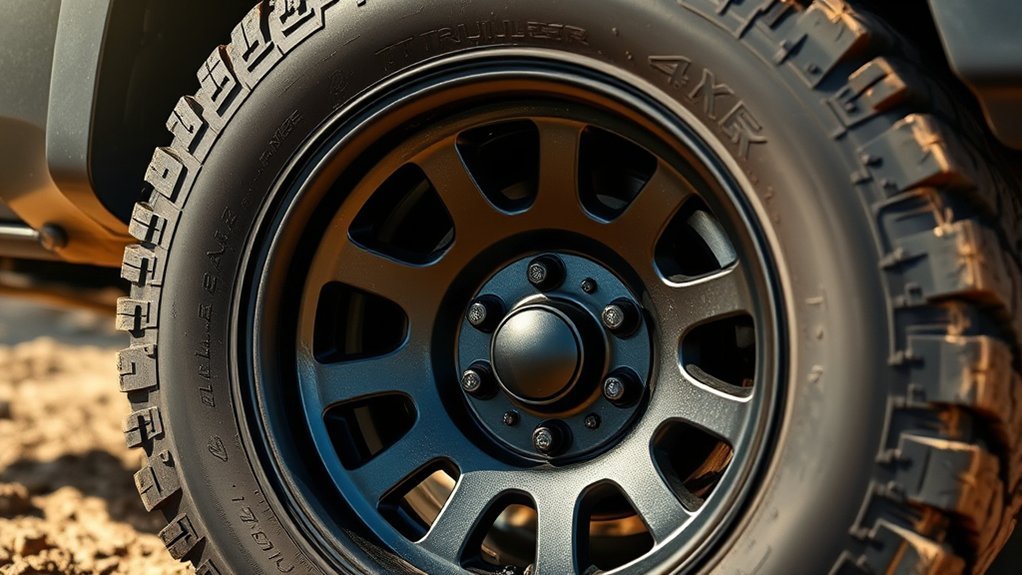
If you are checking the Toyota 4Runner Trailhunter tire size, the key point is simple: the sixth-generation 4Runner Trailhunter uses 33-inch Toyo all-terrain tires on 18-inch bronze-finished wheels from the factory. The commonly listed factory replacement size is 265/70R18. A 285/70R18 tire is a common upgrade size, not the stock 4Runner Trailhunter tire size, and it needs more careful fitment checking.
Quick Answer
The Toyota 4Runner Trailhunter comes with 33-inch Toyo all-terrain tires on 18-inch bronze-finished wheels. For 2025 and 2026 Trailhunter models, tire fitment sources commonly list the factory size as 265/70R18. A 285/70R18 tire is an upgrade size and may need clearance checks.
Key Takeaways
- The stock 4Runner Trailhunter setup is 33-inch Toyo all-terrain tires on 18-inch bronze-finished wheels.
- The factory replacement tire size is commonly listed as 265/70R18, not 285/70R18.
- Published sixth-gen 4Runner fitment data lists a 6×139.7 bolt pattern, M14x1.5 lug thread, 95.1 mm center bore, and 96 ft-lb alloy wheel torque, but you should verify before buying wheels.
- A 285/70R18 tire can work on some Trailhunter setups, but true clearance depends on tire model, wheel offset, alignment, mud flaps, fender liners, and suspension travel.
- Use the driver-door tire placard for road pressure, and reinflate before highway driving if you air down off-road.
Understanding the 4Runner Trailhunter’s Design and Purpose
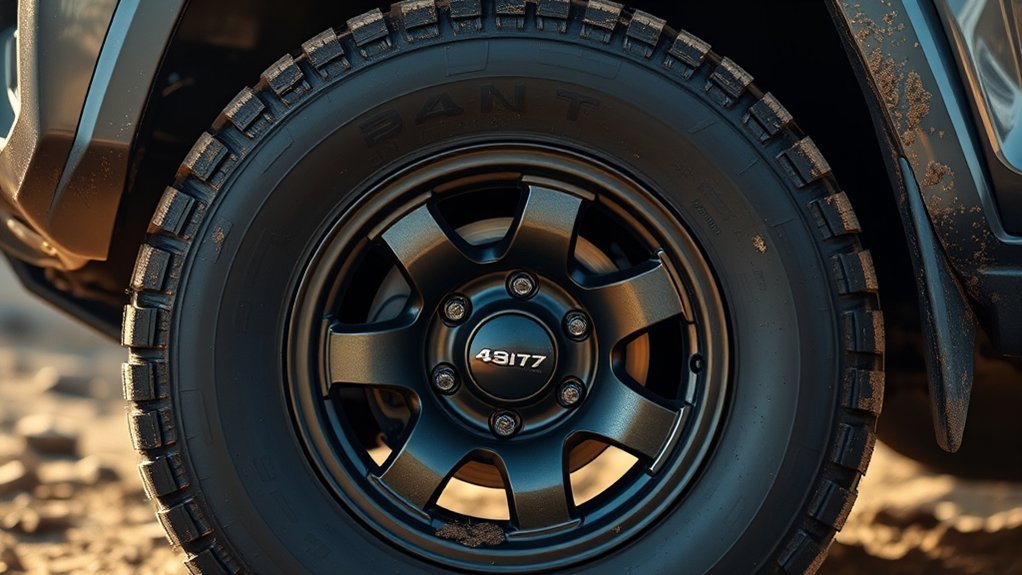
The 4Runner Trailhunter is built as Toyota’s factory overlanding version of the sixth-generation 4Runner. Toyota describes the 2026 4Runner Trailhunter as an i-FORCE MAX model with Old Man Emu shocks, a low-profile high-mount air intake, 33-inch Toyo tires, 18-inch bronze-finished wheels, and an onboard air compressor.
That matters because tire and wheel choices affect more than looks. They change ground clearance, steering clearance, suspension movement, braking feel, gearing feel, fuel economy, and spare-tire planning. The Trailhunter already starts with larger factory tires than many older 4Runner trims, so every upgrade should begin with the stock specs.
Toyota also says the Trailhunter includes a high-clearance front bumper, steel underbody protection, frame-mounted rock rails, and Old Man Emu suspension. Those parts make the Trailhunter more trail-ready from the dealer, but they do not make every larger tire a guaranteed bolt-on fit.
[Products Worth Considering]
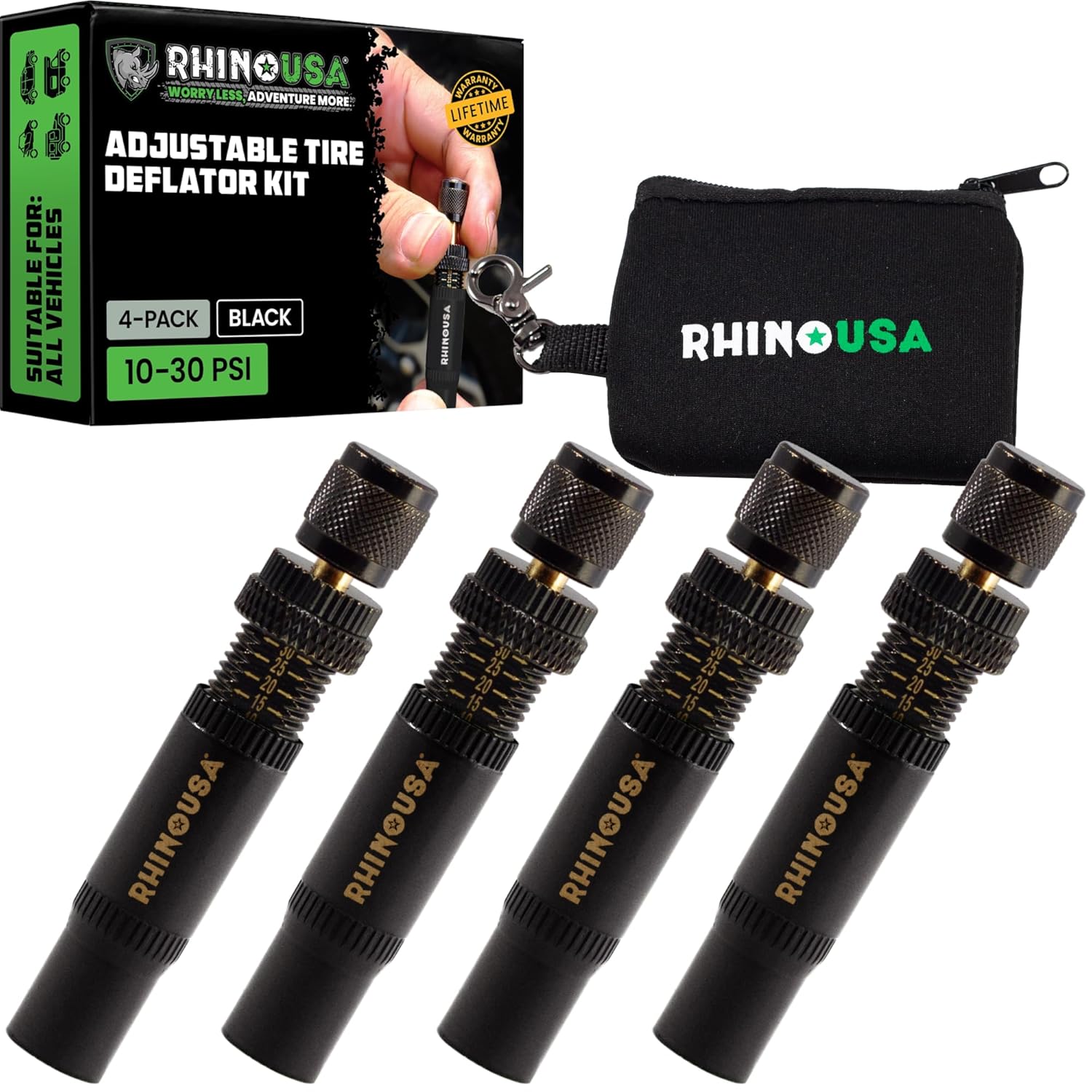
Use the Rhino USA adjustable tire deflators to air down all four tires at once by screwing one deflator onto each valve stem, letting you step away while the tires reach your preset pressure. Each deflator independently adjusts across a 10–30 PSI range with laser-etched indicators for quick setup and verification, making it ideal for beach, sand, and rocky off-road trails.
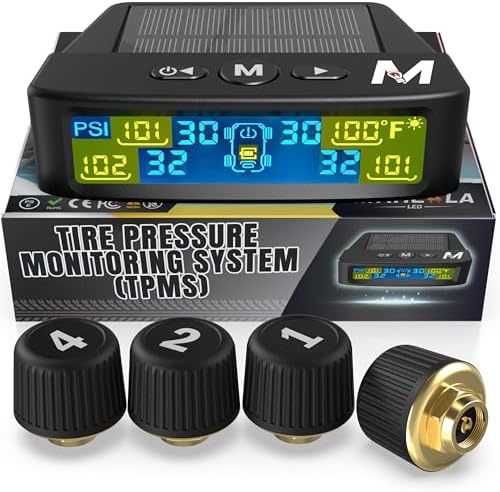
Marcala’s TPMS set of four sensors helps you monitor tire pressure and temperature in real time while driving, with updates every second. The bright color LCD uses auto-dimming for easy viewing, powered by dual solar and USB charging, and offers six alarm modes. Built for trailers, RVs, campers, trucks, and towing setups, the sensors support monitoring 1-4 wheels up to 98 PSI with IP67 waterproof protection.

Camco’s RV wheel chocks with an attached rope help keep your travel trailer securely in place for safer unhitching or parking. This 2-pack is compatible with wheels up to 26-inch diameter and features durable UV-resistant construction for reliable outdoor performance. The rope enables quick, safe removal so you can prepare for your next trip with less hassle.
What Tire Size Comes Standard on the Trailhunter?
The Toyota 4Runner Trailhunter comes with 33-inch Toyo all-terrain tires on 18-inch bronze-finished wheels. Toyota’s 2025 launch information specifically referenced 33-inch Toyo Open Country A/T tires, while Toyota’s 2026 information again lists 33-inch Toyo tires on 18-inch bronze-finished wheels.
For replacement shopping, major tire fitment databases commonly show the 2025 4Runner Trailhunter tire size as 265/70R18. That size is close to 33 inches in overall diameter, depending on the tire model and tread design.
| Spec | 4Runner Trailhunter Factory Setup |
|---|---|
| Factory tire size | 265/70R18, commonly listed for 2025 Trailhunter replacement fitment |
| Factory tire description | 33-inch Toyo all-terrain tire |
| Wheel size | 18-inch bronze-finished alloy wheel |
| Best use | Mixed pavement, trails, overlanding, dirt, gravel, and mild rocky terrain |
| Upgrade warning | 285/70R18 and larger sizes need clearance checks before regular use |
Note: The 4Runner Trailhunter should not be listed as having 285/70R18 Goodyear Wrangler Territory R/T tires from the factory. That tire information is commonly associated with other Toyota Trailhunter content, especially Tacoma references, not the 4Runner Trailhunter factory setup.
What 265/70R18 Means
The size 265/70R18 breaks down into three useful numbers. The first number, 265, is the tire section width in millimeters. The second number, 70, is the sidewall height as a percentage of the width. The final number, 18, means the tire fits an 18-inch wheel.
This is why a 265/70R18 tire can be described as a 33-inch tire even though the sidewall code does not say “33.” Actual tire diameter varies slightly by brand, load range, tread depth, and tire construction. Always compare the tire maker’s published diameter before assuming two tires with similar sizes will fit the same way.
What You Need to Know About Trailhunter Wheel Specs
Wheel specs matter because the wrong wheel can cause vibration, rubbing, unsafe lug engagement, or poor brake and hub fitment. Published sixth-generation 4Runner fitment data lists the basic specs as a 6×139.7 bolt pattern, M14x1.5 lug thread, 95.1 mm center bore, and 96 ft-lb alloy wheel torque. Use these as planning numbers, then confirm with your owner’s manual, dealer, or wheel manufacturer before ordering.
| Wheel Spec | Published Sixth-Gen 4Runner Fitment Data |
|---|---|
| Bolt pattern | 6×139.7 |
| Lug thread | M14x1.5 |
| Center bore | 95.1 mm |
| Alloy wheel torque | 96 ft-lb, according to specialist fitment data |
| Factory wheel style | 18-inch bronze-finished alloy wheel |
Warning: Do not buy wheels based on bolt pattern alone. Older 4Runner wheels may have a different center bore or lug setup. Confirm hub bore, lug seat type, load rating, brake clearance, and torque specs before driving.
Tire Size Recommendations
For most Trailhunter owners, the safest replacement choice is the factory-equivalent 265/70R18 size. It keeps the vehicle close to Toyota’s intended calibration for steering, braking, speedometer behavior, spare-tire fit, and suspension clearance.
A 285/70R18 tire is wider and usually taller than the stock 265/70R18 tire. It can give the truck a fuller stance and a little extra ground clearance, but it also increases the chance of rubbing. Some Trailhunter owners and fitment examples report workable 285/70R18 setups, but the result depends heavily on the exact tire model and wheel offset.
For 34-inch and 35-inch setups, expect more work. Larger tires may need mud flap removal, fender liner adjustment, crash bracket changes, trimming, lift or leveling parts, and careful alignment. If you want full suspension travel off-road, plan more conservatively than you would for a pavement-only build.
Wheel Offset Considerations
Wheel offset controls how far the wheel sits inboard or outboard. A lower offset usually pushes the wheel farther outward. That can improve stance, but it can also move the tire into the mud flap, bumper edge, fender liner, or flare during steering and suspension compression.
A higher positive offset usually keeps the tire tucked in, but too much inboard movement can reduce clearance near suspension parts. This is why offset cannot be judged by one number alone. You also need wheel width, tire width, tire diameter, alignment settings, and real turning clearance.
Pro Tip: Before buying larger tires, check clearance at full steering lock, in reverse, on uneven ground, and with the suspension loaded. A tire that clears in the driveway can still rub on a trail.
Stock vs. Aftermarket Wheels for the Trailhunter
The stock Trailhunter wheels are a smart choice if you want reliable fitment, a factory look, and fewer variables. They already match the vehicle’s brakes, hub, lug hardware, and factory tire package. For many owners, a quality replacement tire in the stock size is the best upgrade.
Aftermarket wheels make sense when you want a different stance, a different wheel diameter, a stronger wheel design, or more tire options. They also create more risk. A wheel that looks great online can still rub, vibrate, stick out too far, or fail to clear the hub correctly.
Stock Wheel Specifications
The Trailhunter’s factory wheel package is designed around the 33-inch tire setup. That means the easiest path is to stay close to the original tire diameter and choose a tire that matches your driving. For daily driving and light overlanding, the factory 265/70R18 size keeps the vehicle predictable.
If you change tire size on the stock wheels, compare the new tire’s measured diameter and section width with the original tire. A 285/70R18 tire is not just “a little wider.” Depending on the model, it can be close to 34 inches tall and may need liner or bracket changes for real trail use.
Aftermarket Wheel Options
Aftermarket wheels can improve appearance and support different tire combinations, but they should be chosen around the tire first. Start with your target tire size, then match wheel width, offset, load rating, hub bore, and brake clearance.
- For stock-size tires: Stay near the factory wheel specs for the least fitment risk.
- For 285-width tires: Choose offset carefully and expect to inspect mud flap, liner, and bracket clearance.
- For 34-inch or larger tires: Budget for more than tires and wheels. You may need alignment work, trimming, suspension changes, or spare-tire planning.
Fitment Considerations
Fitment is not only about tire diameter. A tire with a square shoulder can rub where a rounder tire of the same labeled size clears. An all-terrain tire and a rugged-terrain tire can also measure differently even when the sidewall size is identical.
Before you commit to a larger setup, check these items:
- True tire diameter: Use the tire maker’s spec sheet, not only the sidewall size.
- Section width: Wider tires can contact liners and flares sooner.
- Wheel width and offset: These change the tire’s path during steering.
- Alignment: Caster and toe changes can affect clearance.
- Suspension travel: Off-road compression creates rubbing that may not appear on flat pavement.
- Spare tire fit: Larger spares may not fit the factory location cleanly.
Modifications for Larger Tire Fitment on the Trailhunter
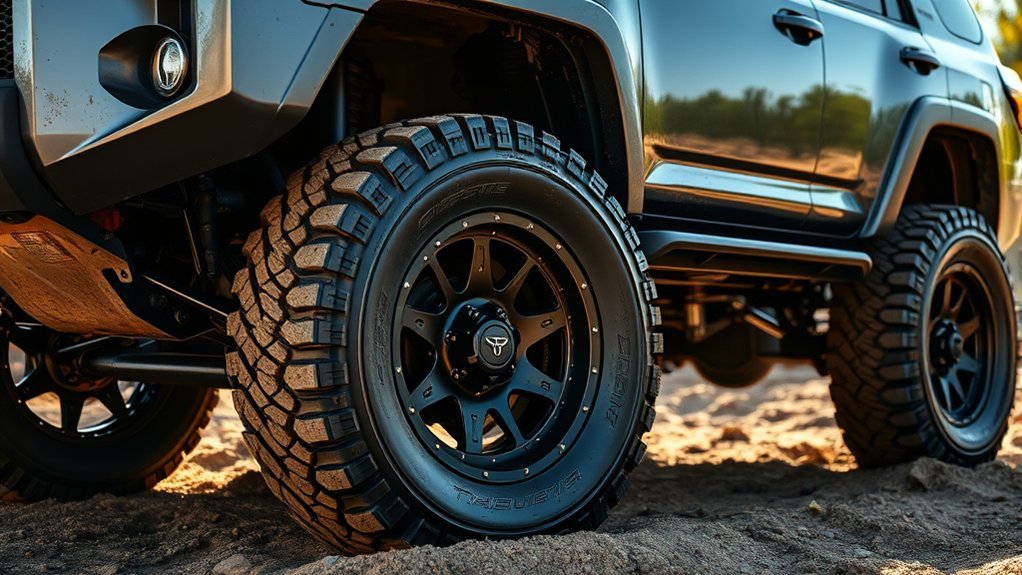
If you want to move beyond the stock 265/70R18 size, inspect the front wheel wells first. The front mud flaps, fender liners, bumper edges, and crash support areas are common contact points on larger tire setups.
Common clearance changes include:
- Removing or changing mud flaps: This is often one of the first places larger tires touch.
- Repinning or adjusting fender liners: Moving the liner forward can create extra room without cutting.
- Checking crash brackets or support plates: Some larger setups may require bracket changes, but this can affect safety-related structure and should not be done casually.
- Trimming plastic carefully: Larger tires may need bumper or flare trimming, especially under compression.
- Realigning after changes: Alignment helps steering feel, tire wear, and clearance.
A 285/70R18 tire can be a reasonable upgrade for some Trailhunter owners, but you should test it with the truck loaded the way you actually use it. If you carry camping gear, recovery gear, a fridge, water, and passengers, the suspension may sit lower and rub sooner.
Warning: Trimming, deleting brackets, or changing crash-related components can affect safety, resale value, and warranty conversations. Use a qualified off-road shop if you are unsure.
The Impact of Wheel Offset on Tire Clearance
Offset changes where the tire sits in the wheel well. A lower offset moves the tire outward. That may help inner clearance, but it can increase contact with the outer fender, mud flap, bumper, or rocker area. A higher offset keeps the tire tucked, but it can reduce inner clearance.
| Offset Direction | What It Usually Does | Fitment Risk |
|---|---|---|
| More positive offset | Keeps the wheel more tucked inward | Possible inner clearance issues if pushed too far inward |
| Moderate offset change | Can improve stance while staying easier to fit | Still depends on tire width and diameter |
| Lower or near-zero offset | Pushes the tire outward for a wider stance | Higher chance of rubbing flares, liners, mud flaps, and bumper edges |
Do not choose offset from a photo alone. Two trucks can run the same tire size and look similar, but one may rub because of a different tire model, wheel width, alignment, or suspension setup.
[Products Worth Considering]

Keep RV, trailer, or truck dual-axle tires protected with waterproof, UV-resistant covers that help guard against sunlight, snow, rust, and dirt. The dual tire covers are easy to install with a rope/bungee fastener for a stable fit that won’t easily slip. Designed for 27–30 inch diameter wheels, they help maintain tire condition through harsh weather.

Camco Trailer Aid Plus tandem tire ramp lifts your trailer for quick, safe tire changes with ample clearance from its 5 1/2-inch lift. It helps you change a flat tire without unloading cargo, making roadside and routine maintenance more efficient. The heavy-duty, waterproof and rustproof polymer design supports up to 15,000 lb and is built for easy portability and storage.
Choosing Tires After Making Modifications
After you modify your Trailhunter, choose tires based on how you actually drive. A heavy-duty all-terrain tire may be tougher on rocky roads, but it can add weight and road noise. A more road-biased tire can ride smoother, but it may give up sidewall strength or mud traction.
For overlanding, pay close attention to load rating and tire weight. A heavier tire can improve durability, but it also adds unsprung weight. That can affect acceleration, braking, steering feel, suspension response, and fuel economy.
Tire Clearance Considerations
Before you finalize a tire size, check clearance in the exact conditions you care about. For a trail-focused Trailhunter, that means full steering lock, reverse, uneven ground, and suspension compression. For a daily driver, also check highway comfort, wet braking, and noise.
- Stock replacement: 265/70R18 is the cleanest choice for factory-like fitment.
- Mild upgrade: 275-width or 285-width tires may work, but they need measurement and test fitting.
- Large upgrade: 34-inch and 35-inch tires need a real build plan, not just tires and wheels.
Recommended Tire Sizes
For most owners, the best tire size depends on the goal:
- Best low-risk replacement: Stay with 265/70R18.
- Best fuller stance without going extreme: Consider a carefully selected 285/70R18, then check liner, mud flap, and bracket clearance.
- Best for serious clearance gains: Consider 34-inch tires only if you accept possible trimming and suspension work.
- Best for show or heavy trail builds: 35-inch tires can be possible on sixth-gen 4Runner builds, but full off-road clearance may require extensive work.
If you drive long highway miles, do not ignore weight, speed rating, wet traction, and road noise. The most aggressive tire is not always the best tire for how you use your 4Runner.
Best Practices for Maintaining Your Trailhunter Tires
Tire maintenance matters even more on a heavier off-road SUV. Bigger tread blocks, extra load, off-road impacts, and airing down can all speed up uneven wear if you do not inspect the tires regularly.
- Use the door-jamb pressure label: Set road pressure according to the vehicle placard, not the number molded on the tire sidewall.
- Check pressure monthly: The National Highway Traffic Safety Administration recommends checking tire pressure and tread regularly.
- Reinflate after airing down: Lower off-road pressure can help on trails, but it is not safe for normal highway speeds.
- Rotate on schedule: Follow Toyota’s maintenance schedule and your tire maker’s warranty requirements.
- Watch tread depth: NHTSA says tires are not safe once tread is worn to 2/32 inch, but off-road and wet-weather performance can drop before that point.
- Inspect after trail use: Look for cuts, sidewall bubbles, missing chunks, punctures, bent wheels, and trapped rocks.
Uneven wear can point to alignment problems, worn suspension parts, incorrect pressure, or an overloaded setup. Fix the cause before installing another expensive set of tires.
Common Questions Before You Change Trailhunter Tires
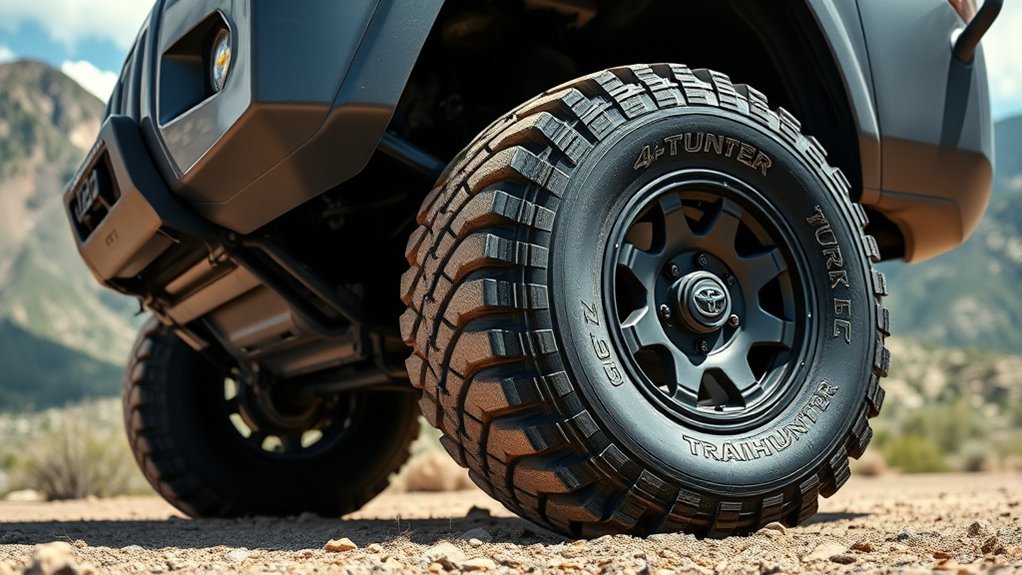
Most Trailhunter tire questions come down to one choice: keep the factory 265/70R18 size for lower risk, or move to a larger tire for more stance and clearance. The larger you go, the more you need to think about rubbing, spare storage, tire weight, alignment, and warranty discussions.
The stock setup is already capable for many trails. Upgrade only when your current tires limit your use, not just because another build looks more aggressive.
User Experiences: Adjusting Tire Sizes for the Trailhunter
Real-world fitment examples show that some Trailhunter owners can run larger tires, but the details matter. A 285/70R18 on stock Trailhunter wheels may clear for some owners during normal steering, yet still need fender liner changes or bracket work when driven hard off-road.
Here are the most useful lessons from owner-style fitment reports:
- Stock-size tires are easiest: 265/70R18 keeps the Trailhunter closest to factory behavior.
- 285/70R18 is not guaranteed: It can fit some setups, but tire model and true diameter matter.
- Offset changes everything: Lower-offset wheels can create a wider stance but often increase outer rubbing.
- Trail use is the real test: A setup that clears on pavement can rub when the suspension flexes.
If you want the least regret, choose the tire first, choose the wheel second, and test-fit before mounting a full set when possible.
Frequently Asked Questions
What tire size comes on the Toyota 4Runner Trailhunter?
The 4Runner Trailhunter comes with 33-inch Toyo all-terrain tires on 18-inch bronze-finished wheels. The commonly listed factory replacement size for the 2025 Trailhunter is 265/70R18.
Does the 4Runner Trailhunter come with Goodyear Wrangler Territory R/T tires?
No. Toyota’s 4Runner Trailhunter information points to Toyo all-terrain tires. Goodyear Territory R/T references are commonly tied to Tacoma Trailhunter information, so they should not be used as the 4Runner Trailhunter factory tire spec.
Can you fit 285/70R18 tires on a 4Runner Trailhunter?
A 285/70R18 tire can fit some Trailhunter setups, especially with careful tire and wheel selection, but it is not the factory size. Check mud flap, fender liner, crash bracket, bumper, and full-lock clearance before assuming it is rub-free.
What size wheels are on the 4Runner Trailhunter?
The 4Runner Trailhunter uses 18-inch bronze-finished alloy wheels from the factory. Published sixth-gen fitment data lists the Trailhunter and TRD Pro with 18×8.5-inch wheels and a +20 offset, but you should verify exact specs before ordering replacements.
Do older 4Runner wheels fit the sixth-gen Trailhunter?
Do not assume they fit. The sixth-generation 4Runner uses M14x1.5 lug hardware and a 95.1 mm center bore in published fitment data. Older wheels may need different hardware, hub-centric rings, machining, or may not be suitable at all.
Is the 4Runner Trailhunter worth it?
The Trailhunter is worth considering if you want a factory-backed overlanding package with Toyo all-terrain tires, Old Man Emu suspension, skid protection, rock rails, a high-mount air intake, and trail-focused equipment. If you only need a daily driver, a lower trim with selected upgrades may cost less.
Conclusion
The Toyota 4Runner Trailhunter already starts with a strong factory tire and wheel setup: 33-inch Toyo all-terrain tires on 18-inch bronze-finished wheels, commonly listed as 265/70R18. That is the number to use when you want a factory-equivalent replacement.
If you want a larger setup, treat 285/70R18, 34-inch, and 35-inch tires as upgrades that need planning. Check the tire’s true dimensions, wheel offset, alignment, liner clearance, mud flap clearance, and suspension movement before driving hard off-road.
The best Trailhunter tire setup is not always the largest one. It is the setup that clears safely, matches your terrain, carries your load, and keeps the truck reliable on the road and on the trail.
Sources
- Toyota USA Newsroom: 2026 Toyota 4Runner — backs 2026 Trailhunter equipment, Toyo tires, 18-inch bronze wheels, OME shocks, and i-FORCE MAX details.
- Toyota USA Newsroom: 2025 Toyota 4Runner reveal — backs Trailhunter launch details, Toyo Open Country A/T tires, OME shocks, lift, rock rails, and skid plates.
- Toyota Trailhunter official page — backs Trailhunter overlanding features, 33-inch tires, 18-inch wheels, high-clearance bumper, rock rails, and OME suspension.
- Continental Tire: 2025 Toyota 4Runner Trailhunter tire fitment — backs the 265/70R18 replacement fitment listing.
- NHTSA TireWise — backs tire pressure checks, tread depth safety, and general tire maintenance guidance.
- ThreePiece.us 6th Gen Toyota 4Runner Wheel & Tire Guide — backs specialist fitment data for bolt pattern, lug thread, center bore, torque, stock wheel notes, and larger tire clearance examples.

Related Articles
When to Switch From All-Season to Winter Tires on a 4Runner
Ineffective all-season tires in cold weather can jeopardize your safety—discover when to make the crucial switch for better traction and handling.
Read More
4Runner Tire Mileage: How Many Miles Should They Last
Curious about how long your 4Runner tires should last? Discover essential tips and factors that influence tire longevity.
Read More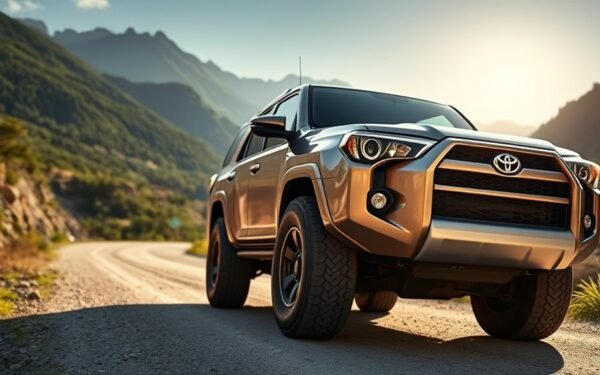
How Long Do Toyota 4Runner Tires Typically Last
How long do Toyota 4Runner tires typically last? Discover the factors that influence tire longevity and essential tips for maintenance.
Read More