
265/70R17 vs 285/70R17: How Much Bigger Is It Really
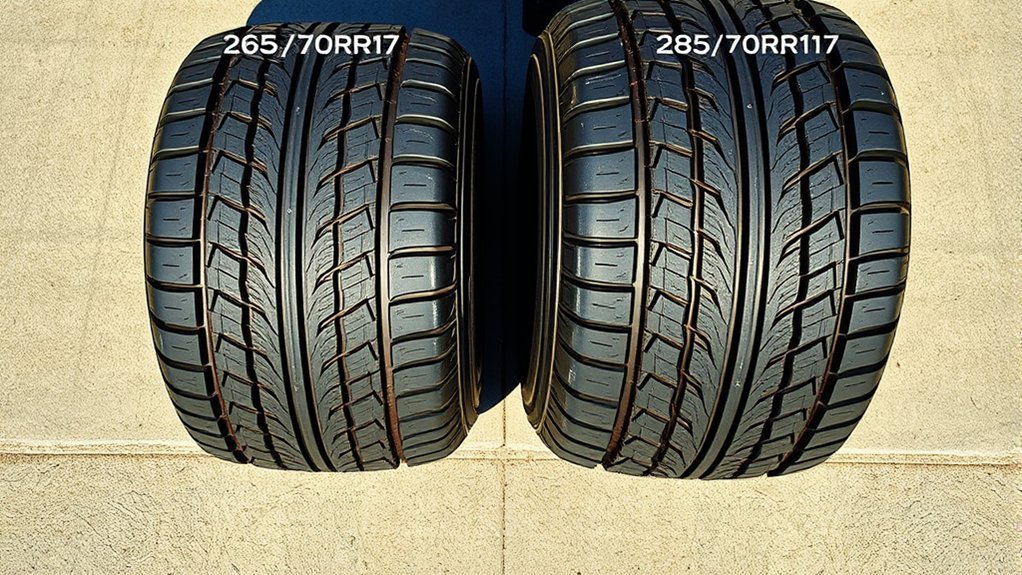
When comparing the 265/70R17 and 285/70R17 tires, the latter is about 0.5 inches wider and taller, with diameters of 31.6 inches and 32.7 inches, respectively. This size difference enhances ground clearance and traction but may lead to rubbing issues during full steering lock. The 285 has a D load rating, supporting heavier loads, while the 265 typically has a C rating. If you’re curious about the implications on performance and efficiency, there’s more to uncover.
What Are the Tire Size Differences Between 265/70R17 and 285/70R17?
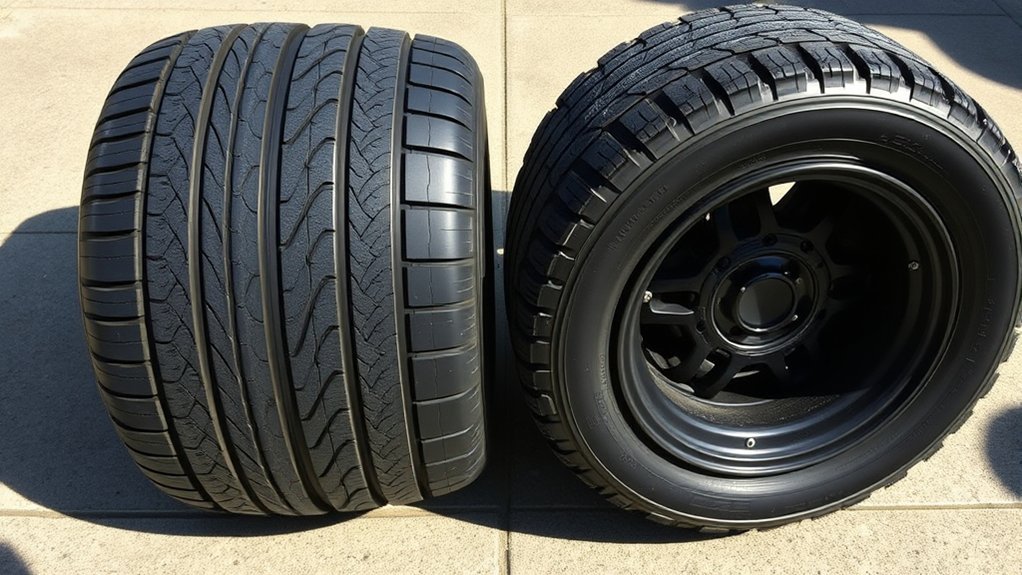
When comparing tire sizes like 265/70R17 and 285/70R17, you’ll notice several distinct differences that can impact performance. The 285/70R17 tire is approximately 0.5 inches wider and taller, leading to a diameter comparison where the 285 measures around 32.7 inches versus 31.6 inches for the 265. This difference in overall diameter can affect your vehicle’s handling and ground clearance.
The section width also reveals a significant disparity: the 285 tire has a width of 285 mm, while the 265 measures 265 mm. This increase in tire width not only enhances grip but may also improve load capacity, as the 285 typically carries a higher load rating. However, keep in mind that the added width can result in lower fuel efficiency due to increased rolling resistance and aerodynamic drag compared to the 265.
What Are the Load Ratings for Each Tire Size?
Understanding the load ratings for tire sizes like 265/70R17 and 285/70R17 is essential for ensuring your vehicle operates effectively under varying conditions. The load capacity of these tires can greatly impact your driving experience, especially when it comes to towing or carrying heavy loads.
| Tire Size | Load Rating | Ply Construction |
|---|---|---|
| 265/70R17 | C | 6-ply |
| 285/70R17 | D | 10-ply |
The 265/70R17 tires typically fall within the C range, while the 285/70R17 tires boast a D rating. This increased ply count in the 285/70R17 enhances its load capacity, making it better suited for heavy-duty applications. By switching to 285/70R17, you’ll experience improved towing and carrying capabilities, along with enhanced stability and handling under heavier loads.
Are There Rubbing or Clearance Issues With These Tire Sizes?
While upgrading to 285/70R17 tires can enhance your vehicle’s performance, it’s vital to take into account potential rubbing and clearance issues that may arise. The 285 tires are about 0.5 inches wider and taller than the 265 size, which can increase rubbing concerns, particularly during full steering lock or off-road driving. Many users have reported that the larger tires may rub against suspension components or fenders, making a clearance check essential before installation.
If your vehicle has a stock suspension, it might handle the 265 tires without issues, but fitting 285 tires often necessitates clearance modifications. In some cases, you may need to add wheel spacers to prevent contact. For vehicles with limited clearance, considering lift kits or other modifications can help you avoid those unwanted rubbing problems. Always prioritize proper fitment to guarantee a smooth, liberated driving experience.
How Does Switching Sizes Affect Vehicle Performance?
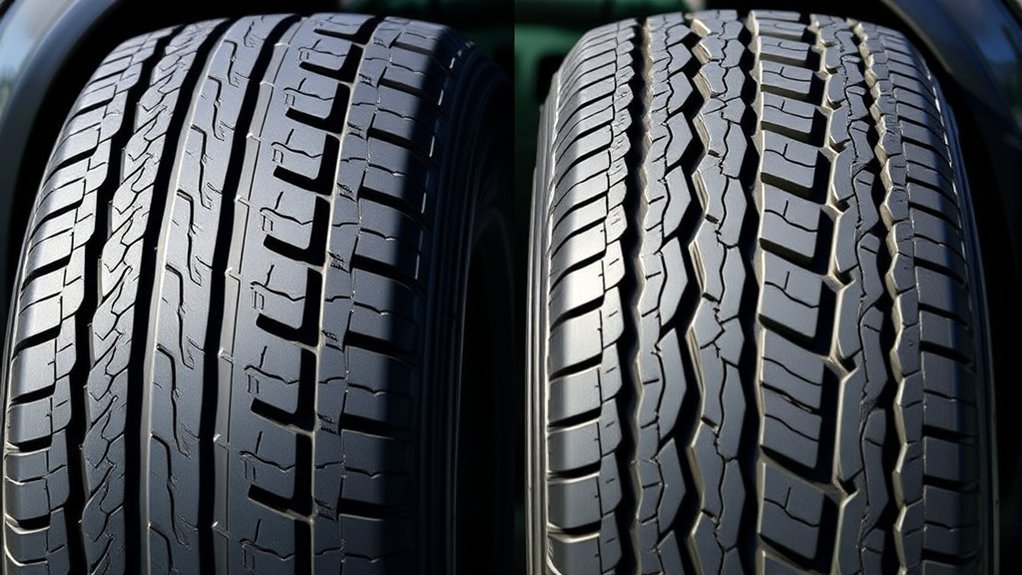
How does switching from 265/70R17 to 285/70R17 tires impact your vehicle’s performance? The increase in overall diameter by about 1 inch enhances ground clearance, but it can also alter vehicle dynamics. The wider section width, now 20 mm more, may improve traction, yet it can lead to increased rolling resistance, affecting your driving experience.
You might notice a more “flighty” feel while driving, which can compromise handling characteristics, especially at higher speeds or during cornering. Additionally, the shift from a C (6-ply) to a D (10-ply) load rating boosts your load capacity, making it beneficial for towing or off-road capabilities. However, this change may also require recalibrating your throttle response to maintain peak performance. Finally, always check your tire pressure, as wider tires can influence how they respond to inflation, impacting safety and handling.
How Does Switching Sizes Affect Fuel Efficiency?
Switching from 265/70R17 to 285/70R17 tires can markedly impact your vehicle’s fuel efficiency due to several factors. You may experience a decrease in fuel economy, with an estimated loss of about 1 MPG. The wider 285 tires increase rolling resistance and add weight, which typically reduces overall miles per gallon. Additionally, these tires generate higher wind resistance, further compromising fuel efficiency, especially during highway driving.
The change in tire width can also alter your vehicle’s aerodynamics, negatively affecting performance at higher speeds. You might notice a “flighty” feeling on the road with the wider tires, necessitating driving adjustments to maintain peak fuel efficiency. To counteract these effects, consider adopting smoother acceleration and braking techniques. By being mindful of your driving habits, you can mitigate some of the fuel efficiency losses associated with switching to 285/70R17 tires.
What Do Users Say About Their Experiences With Each Tire Size?
When you switch from 265/70R17 to 285/70R17 tires, you’ll likely notice improved traction and stability, especially off-road. However, many users also report a slight drop in fuel efficiency and some rubbing issues during sharp turns. While the wider tires enhance your vehicle’s appearance, they can create a “flighty” feeling that some drivers find less desirable.
Performance Differences Noted
Many users have noted significant performance differences between the 265/70R17 and 285/70R17 tire sizes. Here’s what you might experience:
- Traction Improvement: The wider 285 tires enhance grip, especially off-road, offering better performance in challenging conditions.
- Cornering Stability: Many drivers report a solid feeling during turns with the 285 size, although some mention a “flighty” sensation at higher speeds.
- Fuel Efficiency: You may notice a slight decrease in MPG, with some users reporting about a 1 MPG loss due to increased rolling resistance.
Aesthetic Preferences Shared
A lot of drivers find that aesthetic preferences play a significant role in choosing between the 265/70R17 and 285/70R17 tire sizes. Many Jeep Wrangler enthusiasts lean towards the 285/70R17 for its aggressive, robust appearance, creating a commanding stance that enhances off-road capabilities and visual appeal. This bulkier option often provides a “beefed-up” look that many prefer. However, some users note that while the 285/70R17 tires boast a rugged aesthetic impact, they may compromise fuel efficiency due to increased rolling resistance. Conversely, the 265/70R17 offers a sleeker profile, appealing to those who favor a more understated look. Ultimately, the choice balances personal taste with practical performance considerations, reflecting the diverse preferences within the driving community.
Frequently Asked Questions
Is 285 Considered a Wide Tire?
Yes, a 285 tire’s considered wide. This width enhances tire performance, offering superior off-road capability and traction. You’ll find that the increased surface area greatly improves stability and grip in various driving conditions.
Is 285 70R17 a Good Tire Size?
Yes, 285/70R17 is a good tire size. It enhances tire performance with increased traction and stability, especially off-road. In size comparison, it provides better ground clearance, but check for clearance to avoid rubbing.
Conclusion
In summary, choosing between the 265/70R17 and 285/70R17 tires involves more than just size; it affects load capacity, performance, and fuel efficiency. While the 285 offers a wider footprint, which can enhance traction, it may also lead to clearance issues in some vehicles. Isn’t it essential to evaluate how these factors align with your driving needs? Ultimately, understanding these differences will help you make an informed decision for your vehicle’s best performance.

Related Articles
4Runner Scalloped Tire Wear: Causes and Prevention
Neglecting your 4Runner's scalloped tires could cost you more than you think—discover the hidden danger before your next highway drive.
Read More
265/70R17 vs 275/70R17: Size Comparison for 4Runners
Discover the key differences between 265/70R17 and 275/70R17 tires for your 4Runner and see which size will elevate your driving experience.
Read More
4Runner Shimmy at 60 MPH: Tires, Wheels, or Something Else
Fix your 4Runner's 60 mph shimmy by isolating tire, wheel, or driveline culprits with one simple test that reveals where to start.
Read More