
35 Inch Tires on a 4Runner: What Modifications You Need
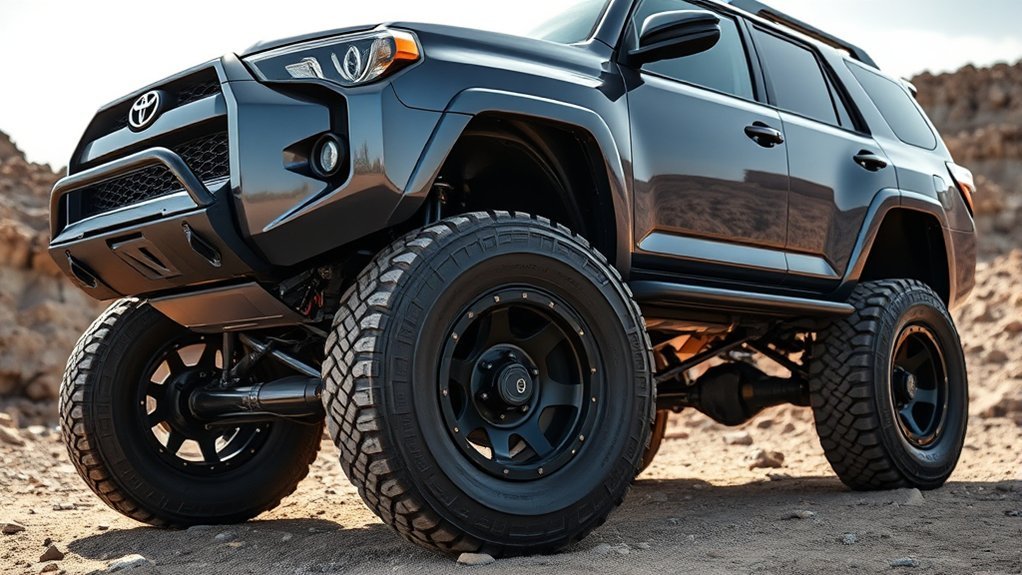
To fit 35-inch tires on your 4Runner, you’ll need key modifications. Start with a minimum 3-inch lift kit, ideally with aftermarket upper control arms for better alignment. You may need to trim fender flares and possibly cut some sheet metal, depending on your wheel offset. Verify your wheels match the 6×139.7 bolt pattern and provide proper backspacing. Addressing these aspects will enhance performance. Stick around, and you’ll discover more about optimizing your setup for off-road adventures.
Preparing Your 4Runner for 35-Inch Tires: Essential Modifications
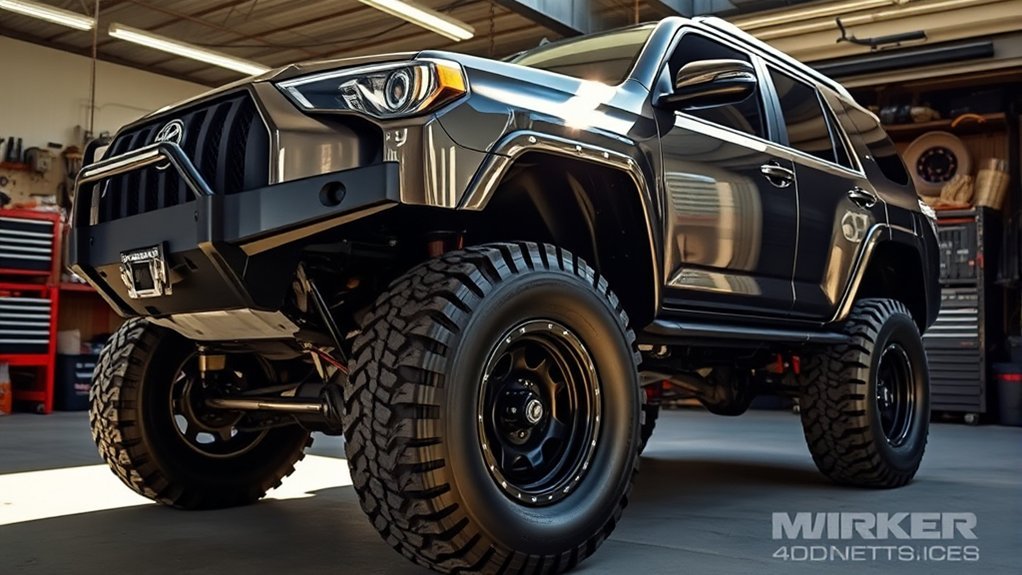
When you’re gearing up to fit 35-inch tires on your 4Runner, several essential modifications are a must to guarantee a smooth and safe ride. Start with suspension upgrades; a lift kit of at least 3 inches is critical for adequate clearance and to prevent tire rubbing. Aftermarket upper control arms (UCAs) are often necessary for lifts over 2.5 inches, making sure your alignment and suspension geometry stay on point.
Trimming fender flares and possibly cutting sheet metal may be required to accommodate those larger tires during full suspension travel. Additionally, consider a differential drop depending on the lift type; this prevents driveline stress and guarantees smooth operation. Finally, maintaining proper offset and backspacing is essential to avoid tire rubbing. A negative offset can give you that aggressive look but may also increase the need for further modifications. Don’t forget to monitor tire pressure for peak performance on and off the road!
What Lift Kit Do You Need for 35-Inch Tires?
To fit 35-inch tires on your 4Runner, you’ll need a lift kit that provides at least 3 inches of elevation, ideally with a combination of a 2.5-inch rear lift and a 3-inch front lift for peak balance. Popular lift kit options like the Radflo 2.5 lift kit offer enhanced clearance and off-road performance. If you’re going over 2.5 inches, aftermarket upper control arms (UCAs) are essential. They maintain proper alignment and prevent caster issues, maximizing your vehicle’s capability.
You might also need a differential drop kit, depending on the lift type, to guarantee driveline alignment and minimize strain. Don’t forget that larger tires may require trimming of the fender flares, bumper, and rocker panels to avoid rubbing during full suspension travel. By choosing the right lift kit, you’ll liberate your 4Runner’s potential and enhance your off-road adventures.
How to Choose Compatible Wheels and Tires for Your 4Runner
After elevating your 4Runner with the right lift kit, the next step is choosing compatible wheels and tires that enhance both performance and aesthetics. Start by confirming your wheels meet the essential wheel specifications: a 6×139.7 bolt pattern and an M14x1.5 nut thread. You’ll also need a center bore of 95.1mm for proper alignment; if your wheels have a larger bore, consider using hub-centric rings.
For 35-inch tires, recommended wheel sizes typically range from 17×8.5 to 17×9, with offsets between +0 and +35 to prevent rubbing issues. When making your tire selection, remember that larger tires may require modifications, such as trimming fender flares, to guarantee ideal clearance and suspension travel. To avoid fitment issues, consult fitment experts or verified services. This way, you can enjoy your 4Runner’s full potential without alignment headaches or rubbing concerns.
How to Trim for 35-Inch Tire Clearance
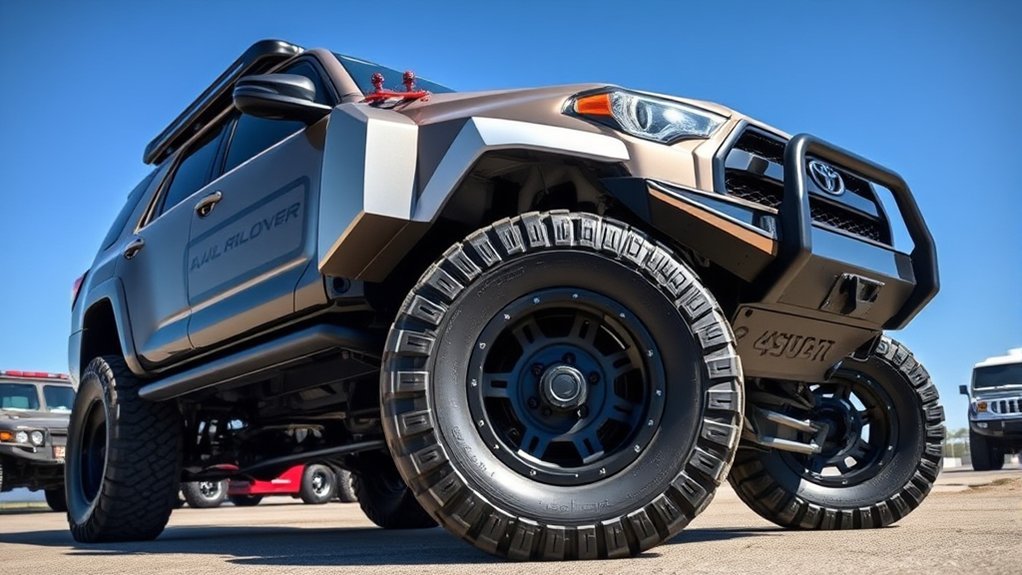
Accommodating 35-inch tires on your 4Runner often requires careful trimming for ideal clearance. Start with fender flare trimming to prevent interference during full suspension travel. You might need to cut some sheet metal beneath the fender flares, especially if you’re using an aggressive wheel offset. This prevents rubbing, ensuring your tires can flex without restriction.
Removing the front air dam is another effective way to enhance clearance and improve approach angles for off-roading. Additionally, adjusting or repinning the front fender liners creates extra space, minimizing contact during turns.
Aligning for Performance With 35-Inch Tires
Once you’ve trimmed for clearance, aligning your 4Runner for 35-inch tires becomes vital for peak performance. To guarantee ideal handling and prevent body mount interference, you’ll want to make caster adjustments that increase the angles to suit your new setup. Installing aftermarket upper control arms (UCAs) is often necessary; they help you achieve the correct alignment and address low caster issues that can arise with larger tires.
With a minimum lift of 3 inches, your suspension components will have better travel, reducing the risk of rubbing during articulation. Regular alignment checks are important, especially if you’re using stock UCAs, to maintain even tire wear and handling stability. Remember, a well-aligned 4Runner not only enhances performance but also liberates your off-road experience, letting you tackle trails with confidence. Keep these adjustments in mind, and your adventures will be smoother and more enjoyable.
Frequently Asked Questions
How Big of Tires Can You Fit on a Stock 4runner?
You can fit up to 33-inch tires on a stock 4Runner, maximizing tire clearance for off-road performance. Larger tires require modifications, so consider your adventure needs and the terrain you’ll tackle before upgrading.
Is 265 or 275 Better for 4runner?
Ah, the eternal debate! For your 4Runner, 275 tires enhance tire performance and handling characteristics, especially off-road. You’ll gain improved stability and traction, but consider potential modifications to optimize fit and functionality. Choose wisely!
Conclusion
In a world where adventure beckons, equipping your 4Runner with 35-inch tires can transform your journey from mundane to magnificent. With the right lift kit, wheel choices, and careful trimming, you’ll soar over obstacles like a mountain goat on a rocky summit. Don’t forget to align your setup for peak performance, ensuring you tackle every trail with confidence. So gear up, hit the road, and let your 4Runner become the chariot of your next great escapade!

Related Articles
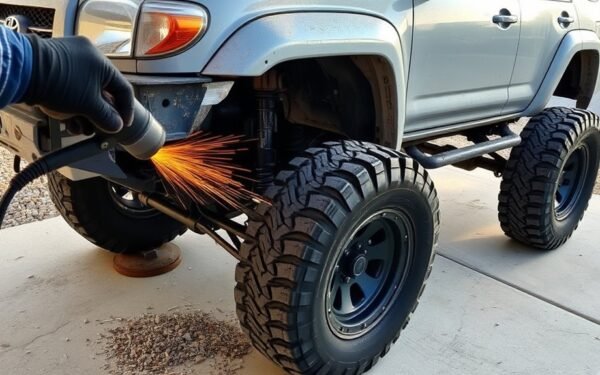
4Runner Fender Trimming for Tire Clearance: A Simple Guide
Discover the one fender modification that lets 33-inch tires fit without a lift—but the cutting technique makes all the difference.
Read More
Can You Run 33 Inch Tires on a 4Runner Without Issues
People often wonder if 33-inch tires can fit a 4Runner smoothly; discover the necessary modifications to ensure a flawless ride.
Read More
What Is a Body Mount Chop on a 4Runner for Bigger Tires
Body mount chop: the irreversible 4Runner mod that unlocks massive tire clearance, but are you ready for what's hidden beneath?
Read More