
7 Ways to Extend the Life of Your 4Runner Tires

Check your 4Runner’s tire pressure monthly—don’t wait for the dashboard light—and maintain 32-35 psi to prevent blowouts and improve fuel efficiency by 3.3%. Rotate your tires every 5,000-8,000 miles, balancing wheels at each rotation to eliminate vibrations and uneven wear. Schedule wheel alignment checks twice yearly, and inspect monthly for dry rot cracks or UV damage. Remove snow tires when temperatures exceed 45°F, and adapt your maintenance routine if you off-road regularly, as rocks and mud accelerate tread degradation. There’s more to maximizing your tire investment than these basics alone.
Check Your 4Runner’s Tire Pressure Monthly (Don’t Wait for the Light)

One of the simplest yet most overlooked maintenance tasks you can perform is checking your 4Runner’s tire pressure every month. Don’t wait for the dashboard warning light—by then, you’ve already lost 25% or more of ideal pressure. Your tires naturally lose approximately 1 psi monthly under standard conditions, and cold weather accelerates this loss considerably.
Maintain your tires between 32 and 35 psi for peak performance. This tire pressure importance cannot be overstated: proper inflation improves fuel efficiency by up to 3.3% and dramatically reduces uneven wear. Underinflation increases stopping distances and creates sluggish steering response—directly compromising your safety and control.
Monthly checks liberate you from costly replacements and dangerous blowouts. You’re not just preserving rubber; you’re reclaiming autonomy over your vehicle’s reliability. Grab a quality digital gauge, check cold tires before driving, and adjust accordingly. This five-minute ritual prevents the gradual degradation that silently destroys tires and drains your wallet.
Rotate Your 4Runner Tires Every 5,000–8,000 Miles
You should rotate your 4Runner’s tires every 5,000–8,000 miles to counteract uneven wear patterns, whether you’re running front-wheel drive or all-wheel drive. Front-wheel drive models concentrate stress on the front axle, accelerating tread degradation, while AWD systems distribute wear differently but still require rotation to balance load cycles. Consistent rotation maximizes tread life by allowing each tire to serve in multiple positions, preventing premature replacement and maintaining traction performance.
Front-Wheel Drive Wear
Since the 4Runner’s front wheels bear the brunt of steering, braking, and engine power delivery, they’ll shed tread faster than your rears if you’re not rotating on schedule. Understanding tire rotation techniques helps you combat this imbalance. You’ll notice aggressive tread wear patterns developing on your front tires—shoulder wear from cornering, center wear from braking torque. These patterns signal you’re losing grip and shortening tire life. By swapping positions regularly, you redistribute these forces across all four tires. Don’t let uneven wear dictate when you replace tires; take control through disciplined rotation. Your 4Runner’s drivetrain demands this attention. Master this practice, and you’ll maximize every mile of rubber while maintaining predictable handling when you need it most.
All-Wheel Drive Impact
Although your 4Runner’s full-time all-wheel drive system distributes power across both axles, it doesn’t guarantee uniform wear—front tires still shoulder heavier loads from steering and braking forces, while rears cope with traction demands and weight transfer dynamics.
Rotate your tires every 5,000–8,000 miles to maximize these all wheel drive advantages:
- Equalized tread wear — swapping positions prevents premature degradation in high-stress zones
- Optimized fuel efficiency — balanced rolling resistance reduces drivetrain strain
- Enhanced stability — consistent grip preserves handling precision on varied terrain
Neglect rotation invites uneven patterns that amplify tire alignment effects, forcing you into costly replacements sooner. Stay proactive—you’re not just preserving rubber; you’re maintaining the freedom to explore without mechanical compromise.
Maximizing Tread Life
Because your 4Runner’s drivetrain configuration places asymmetric demands on each tire, rotation serves as your primary defense against uneven wear patterns. Tire rotation redistributes load across all four positions, ensuring balanced tread depth and maximizing usable rubber. You’ll prevent premature wear by giving drive wheels periodic rest intervals.
| Interval | Pattern | Benefit | Result |
|---|---|---|---|
| 5,000 mi | Front-to-rear | Equalizes wear | Extended tread life |
| 8,000 mi | Cross-rotation | Optimizes traction | Improved fuel efficiency |
| Visual check | Inspect depth | Identifies issues | Early problem detection |
| Document | Log service | Maintains records | Warranty protection |
Rotate every 5,000–8,000 miles without exception. Front tires on front-wheel drive models degrade fastest—you’ll transfer that burden systematically. This disciplined approach liberates you from early replacement costs and performance degradation.
Balance Your 4Runner’s Wheels at Every Rotation
You balance your 4Runner’s wheels at every rotation to eliminate vibrations from weight inconsistencies, protect suspension components from excess strain, and prevent uneven tread wear that shortens tire lifespan. Watch for steering wheel shimmy, floorboard vibration, or irregular wear patterns—these signal imbalance requiring immediate correction. Insist on dynamic balancing with road force measurement, verify weights seat properly on clean mounting surfaces, and recheck balance after any tire repair.
Why Balance Matters
While you’re likely diligent about rotating your 4Runner’s tires, skipping the wheel balancing step means you’re leaving significant performance and longevity gains on the table. Understanding tire balance benefits empowers you to take control of your vehicle’s performance and avoid unnecessary expenses.
Vibration causes stem from minute weight discrepancies across your wheel assembly. These imbalances generate oscillations that transmit through your suspension, creating driver fatigue and mechanical stress.
- Eliminate disruptive vibrations – Balanced wheels deliver a smoother ride, reducing physical strain during long drives.
- Prevent uneven tire wear – Proper distribution prevents premature replacement, maximizing your investment.
- Protect suspension components – Reduced strain prevents costly repairs and extends chassis longevity.
Balance every 5,000–8,000 miles. You’ll improve fuel efficiency by up to 3.3% through decreased rolling resistance. Precision maintenance liberates you from reactive repairs.
Signs of Imbalance
Where exactly does that persistent shimmy originate when you’re cruising down the highway? You’ll feel vibration symptoms through your steering wheel or seat, typically intensifying between 50-70 mph. This steering feedback signals weight distribution problems in your wheels. Don’t dismiss these warnings—they’re your 4Runner’s direct communication about mechanical distress.
Uneven tread wear patterns reveal themselves through irregular tire surfaces, robbing you of thousands of miles. Your vehicle pulls slightly, demanding constant correction. Fuel efficiency drops measurably; you’re burning extra gas fighting instability. These manifestations compound rapidly, transforming minor imbalances into major expenses.
Recognize these indicators early. You’ve got the power to intercept degradation before it escalates. Address imbalance immediately when symptoms appear—your tires’ longevity and your driving freedom depend on swift, decisive action.
Balancing Best Practices
Those vibration symptoms and uneven wear patterns you’ve identified demand a systematic response. You must balance your 4Runner’s wheels at every tire rotation to eliminate wheel weight discrepancies and extend tire longevity.
Follow these balancing techniques:
- Schedule balancing every 5,000–8,000 miles or immediately when vibrations surface—don’t delay intervention.
- Demand precision equipment that detects wheel weight variations as small as ¼ ounce; accept nothing less.
- Monitor fuel efficiency gains post-balancing—reduced drag confirms you’ve eliminated resistance.
You’re reclaiming control from mechanical degradation. Unbalanced tires create drag, accelerate tread wear, and compromise handling. By enforcing strict balancing protocols, you prevent premature replacement and maintain peak performance. Your 4Runner responds to precision—deliver it consistently.
Align Your 4Runner Twice a Year for Even Wear
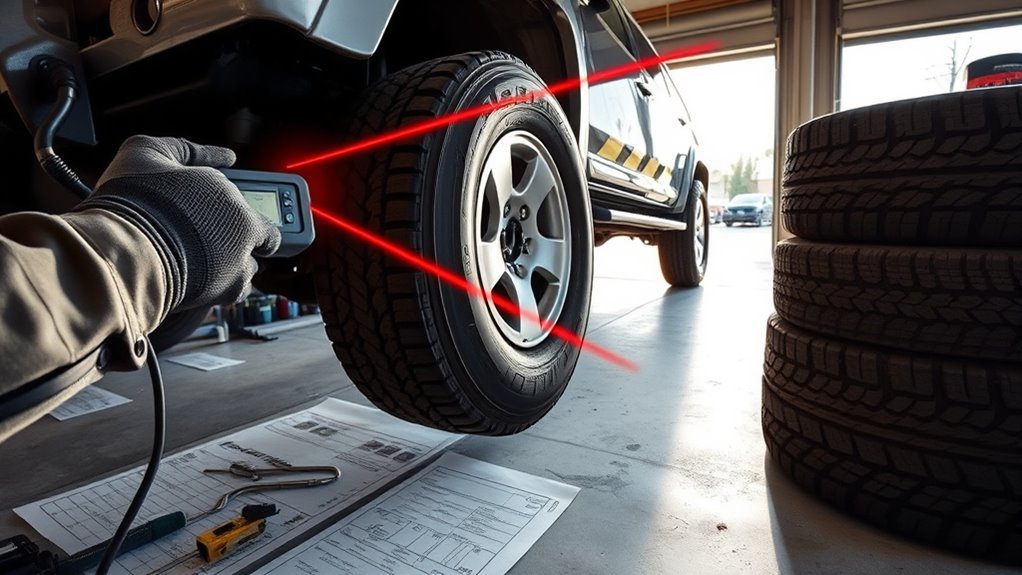
Because your 4Runner’s suspension geometry shifts gradually through normal driving, you’ll want to schedule wheel alignment checks every six months to maintain even tire wear and predictable handling. This proactive rhythm prevents toe-in or toe-out conditions that accelerate tread degradation and sap fuel efficiency.
Alignment benefits compound quickly. You’ll preserve tire integrity, eliminate pulling sensations, and stop steering wheel vibration before it compromises your control. Regular checks also counteract damage from potholes and curb strikes—common common misalignment triggers that silently destroy tread patterns.
The procedure is straightforward: technicians measure camber, caster, and toe angles against Toyota specifications, then adjust suspension components until geometry meets factory tolerances. You’re investing roughly thirty minutes twice yearly to avoid premature replacement costs.
Proper alignment delivers measurable liberation—fewer service stops, extended component life, and unimpeded travel across any terrain you choose. Your tires wear uniformly, your 4Runner tracks true, and you drive with confidence.
How Off-Roading Affects Your 4Runner Tire Life
When you take your 4Runner off-pavement, you’re trading controlled asphalt for terrain that actively works against your tires. Off road conditions accelerate tread degradation through abrasive surfaces, sharp rocks, and unpredictable impacts that pavement simply doesn’t deliver.
Off-pavement driving trades controlled asphalt for terrain that actively works against your tires, accelerating tread degradation through abrasive surfaces and unpredictable impacts.
Here’s how terrain fights back:
- Rock gardens chew sidewalls — jagged edges slice rubber when pressures aren’t optimized for grip versus protection
- Mud and sand grind tread blocks — particles act like sandpaper, wearing aggressive patterns faster than highway miles
- Uneven trails create irregular wear — constant camber changes load tires asymmetrically, creating bald spots you won’t notice until it’s too late
Your tire maintenance protocol must adapt. Drop pressure strategically for traction, but don’t sacrifice sidewall integrity. Inspect immediately after every outing—cuts hide in tread grooves. Rotate every 5,000 miles, not 7,500, because off-road demands redistribute wear violently. Liberation requires vigilance; the trails reward prepared drivers.
When to Pull Your 4Runner’s Snow Tires (And What to Run Next)
Why leave snow tires on too long? You accelerate tread degradation and compromise handling. Snow tire timing matters: pull them when temperatures consistently exceed 45°F. Those deep winter grooves that grip ice shred rapidly on dry pavement, wasting your investment.
Execute your seasonal tire switch promptly. Here’s what you need to track:
| Checkpoint | Action | Threshold |
|---|---|---|
| Temperature | Monitor daily highs | Sustained 45°F+ |
| Tread depth | Measure with gauge | Replace at 4/32″ |
| Tire type | Install summer/all-weather | Immediate post-winter |
Inspect your snow tires during removal. Worn rubber won’t protect you next winter. Mount summer or all-weather tires to restore peak performance and handling precision. This disciplined rotation preserves tread integrity across all sets, maximizing your 4Runner’s capability year-round while liberating you from premature replacement costs and compromised safety.
Spot Dry Rot Early: The 30-Second 4Runner Tire Inspection
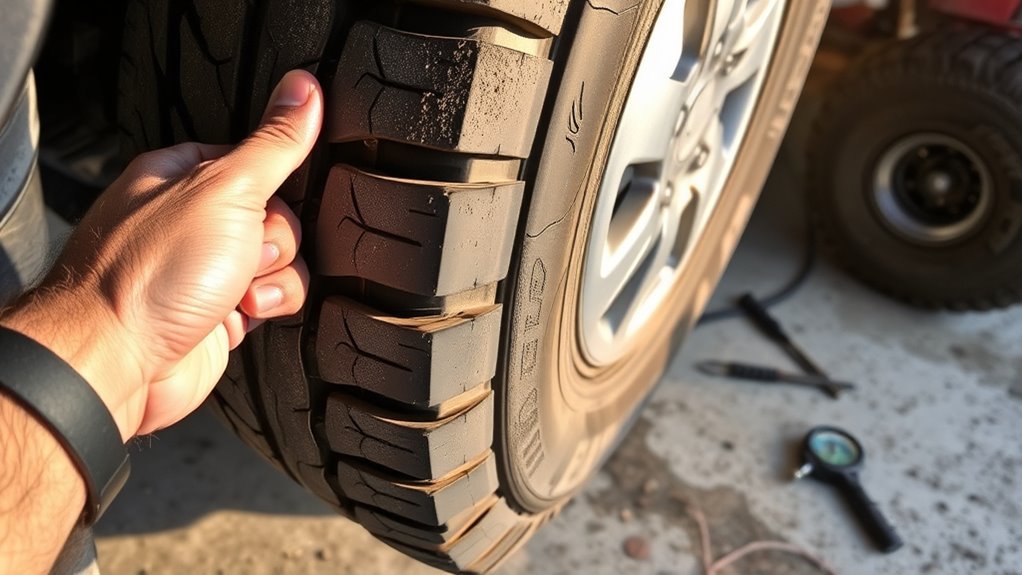
You’ve swapped your snow tires at the right time—now inspect what you’re mounting. Dry rot kills tires silently, but a 30-second tire inspection catches it before you’re stranded. Make this monthly ritual your liberation from blowouts and unexpected failures.
What you’re hunting for:
- Cracks in the sidewall and tread blocks — hairline fractures deepen fast; catch them early.
- Discoloration and rubber hardening — UV and ozone damage turn supple rubber brittle and gray.
- Uneven wear patterns — rotate every 5,000–8,000 miles; this exposes hidden deterioration and extends tire life.
Park out of direct sunlight when possible—UV accelerates drying and cracking. If your 4Runner sits, move it periodically to prevent flat spots where dry rot concentrates. Your vigilance transforms routine maintenance into freedom: the confidence to chase any trail without wondering if your rubber will hold.
Frequently Asked Questions
How Often Should I Replace My 4runner Tires?
Replace your 4Runner tires when tread wear reaches 4/32 inch, typically every 60,000–80,000 miles. You maximize longevity through regular tire rotation and inspections, though harsh driving demands earlier replacement for your safety and freedom on any terrain.
What Can I Do to Make My Tires Last Longer?
You think proper care takes too much time, but neglect costs more. Rotate tires every 5,000 miles, maintain 32–35 psi pressure, check alignment twice yearly, inspect tread depth, adjust driving habits, and swap for seasonal changes—you’ll maximize longevity and reclaim control.
Conclusion
You’ve now got the roadmap to keep your 4Runner’s rubber rolling like a well-oiled telegraph machine—precise, reliable, and built to last. Stick to these seven maintenance protocols, and you’ll maximize tread life while minimizing costly replacements. Your tires are your only contact patch with the trail; treat them with technical diligence, and they’ll carry you through every adventure without fail. Safe travels, and happy wrenching.

Related Articles

What Does a Tire Warranty Cover on a 4Runner
Factory warranties exclude 4Runner tires entirely, but one optional plan covers everything—if you know where to find it.
Read More
How to Jack Up a Toyota 4Runner Safely for Tire Work
Get expert tips on safely jacking up your Toyota 4Runner for tire work—discover crucial steps to ensure your safety and efficiency!
Read More
Can You Drive on a Plugged Tire Long Term Safely
Never trust a plugged tire forever—here's the hidden danger that could blow out without warning.
Read More