How to Maintain TPMS Sensors on a Toyota 4Runner
Maintain your 4Runner’s TPMS sensors by checking tire pressure monthly at 33 psi cold and resetting the system after any tire service. You’ll press and hold the dashboard reset button until the light blinks three times, then drive above 50 mph for ten minutes to recalibrate. Replace sensors at the ten-year mark using Denso or Schrader units, programming them with a Techstream cable or Carista dongle. 2020+ models auto-learn sensor positions after driving 25 mph for ten to thirty minutes. Following these procedures prevents unexpected failures and roadside surprises, with deeper diagnostics and tool comparisons waiting below.
Why Is Your 4Runner TPMS Light Blinking? (Quick Diagnosis)
Why’s that TPMS light blinking on your 4Runner’s dash? You’re facing a sensor malfunction demanding immediate diagnosis. A blinking TPMS light signals system failure, not just low tire pressure. You’ll need to act fast to identify the culprit.
First, check all four tires. If they show consistent pressure—say, 33 psi—with zero visible leaks, you’ve isolated the problem: the sensor system itself. Don’t waste time chasing phantom flats.
Check your tires first—consistent pressure means the sensor system failed, not a flat. Stop chasing phantom leaks.
Grab a diagnostic tool or head to your local tire shop. They’ll pinpoint exactly which TPMS sensor failed. Solid lights indicate persistent issues, often tied to tire pressure drops or faulty sensors—equally urgent.
Your 4Runner’s sensors degrade after roughly ten years. Replace them as a set to prevent cascading failures. Regular maintenance liberates you from roadside surprises and costly emergency repairs. Master this system; don’t let it master you.
How to Reset TPMS After Tire Rotation or Pressure Changes?
You’ve identified the faulty sensor or corrected your tire pressures—now you need to recalibrate the system. Resetting your 4Runner’s TPMS after tire rotation or pressure changes guarantees accurate monitoring and prevents false warnings.
Follow these TPMS troubleshooting tips:
- Inflate all tires to 33 psi cold before starting
- Turn ignition ON without starting the engine
- Press and hold the reset button under the driver-side dashboard until the warning light blinks slowly three times
- Drive above 50 mph for 10 minutes to complete recalibration
This tire pressure maintenance procedure allows sensors to relearn their positions. If the light persists, recheck pressures—no tire should read low. Repeat the reset once pressures verify correct. Proper calibration frees you from dashboard warnings and guarantees your 4Runner monitors accurately, protecting you from dangerous underinflation on every drive.
TPMS Scan Tools: When to DIY vs. Visit Discount Tire
Three diagnostic paths exist when your 4Runner’s TPMS throws persistent codes: grab a Techstream cable for OBDII analysis, invest in a dedicated TPMS scan tool, or roll into Discount Tire for professional scanning.
DIY scanning empowers you with real-time data through Techstream software, revealing battery levels, signal strength, and sensor IDs without shop delays. You’ll identify weak transmitters before total failure and verify replacements immediately.
However, professional diagnostics at Discount Tire eliminate guesswork entirely. Their equipment pinpoints exact failures in seconds, and they’ll reprogram your ECU post-replacement—often gratis. This saves hours troubleshooting incompatible sensors or botched relearn procedures.
Choose DIY scanning when you own multiple Toyotas or crave immediate answers. Opt for professional diagnostics when time matters more than tool investment, or when you’re replacing decade-old sensors as a complete set. Discount Tire’s zero-cost reprogramming typically outweighs buying single-purpose hardware you’ll rarely use.
How to Replace and Program New TPMS Sensors Yourself
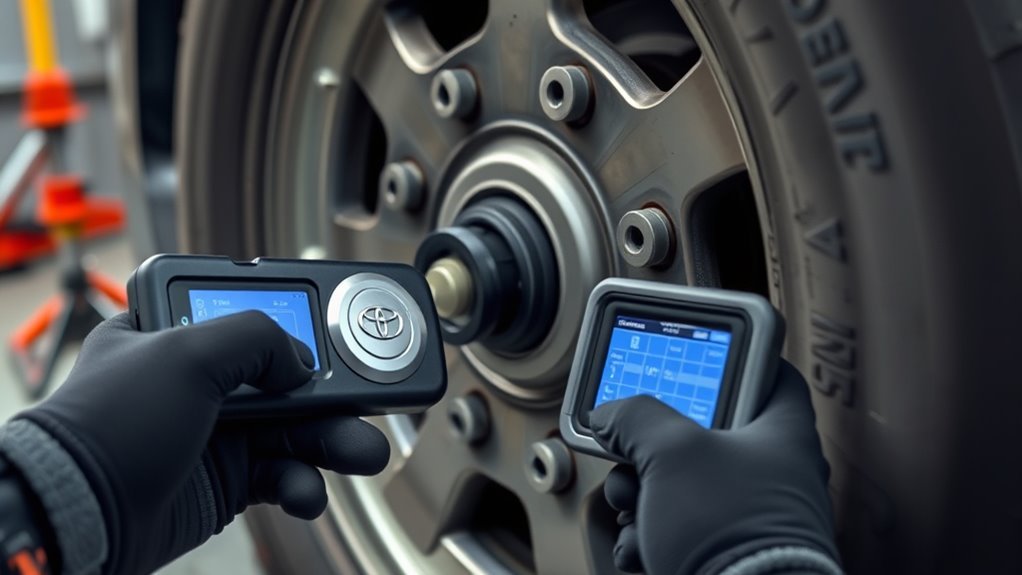
Swap out your 4Runner’s failing TPMS sensors by deflating each tire, breaking the bead, and extracting the old valve-stem unit—then snap in the replacement, reseat the tire, and inflate to 33 psi. You’ve now entered the domain of DIY Sensor Installation, freeing yourself from dealership dependency.
Programming Techniques demand precision. Connect a Techstream diagnostic cable to your OBDII port and reprogram the ECU directly. Alternatively, grab a Carista OBD2 dongle for streamlined, user-friendly programming.
- Choose Denso or Schrader sensors—OEM-grade reliability prevents premature failure
- Inflate all tires to 33 psi before initiating any reset sequence
- Drive 25 mph for 10-30 minutes; the system learns tire positions automatically
- Verify successful calibration through your dash display before concluding
You’ve reclaimed control. No service appointments. No inflated labor charges. Just you, your tools, and a properly monitored 4Runner ready for any terrain.
Do You Need Dealer Recalibration? (2020+ Auto-Learning Explained)
After installing fresh TPMS sensors or rotating your tires, you’re staring at the dashboard wondering if a dealership visit looms. For 2020 and newer 4Runners, you can breathe easy. Your TPMS features auto learning benefits that eliminate manual recalibration entirely.
Drive at 25 mph for 10-30 minutes. The system automatically registers new sensor IDs and maps tire positions. No scan tools. No dealer appointments. Sensor compatibility extends to second wheel sets—users report seamless registration of aftermarket sensors without intervention.
Verify correct position mapping post-rotation by checking the multi-information display matches physical locations. If positions misalign, another drive cycle typically resolves discrepancies.
Consult your owner’s manual for model-specific thresholds. Monitor pressures through the first week after service to confirm reliable operation. You’ve reclaimed control of a procedure dealerships charge for—your 4Runner’s intelligence handles calibration while you drive.
When to Replace All Four TPMS Sensors (10-Year Rule)
- Schedule proactive replacement at the 10-year mark to eliminate guesswork
- Replace all four sensors simultaneously when one fails due to age, ensuring uniform performance
- Coordinate replacement with tire changes—Toyota recommends this alignment for efficiency
- Monitor for warning light patterns—blinking indicates system fault; solid signals low pressure or sensor malfunction
Regular battery assessments during service visits help you track remaining operational life. Take control of your 4Runner’s maintenance schedule rather than reacting to failures.
Frequently Asked Questions
How Long Do Toyota 4runner TPMS Sensors Last?
Your Toyota 4Runner TPMS sensors typically last 5-10 years. You’ll maximize sensor lifespan through proactive maintenance tips: monitor warning lights, check pressure readings regularly, and replace sensors at the decade mark to prevent failures.
Conclusion
You’ve now mastered your 4Runner’s TPMS like a seasoned technician calibrating precision instruments. Keep sensors rotated with tires, relearn systems promptly, and replace decade-old units before they fail silently. Your diligence prevents roadside surprises and maintains Toyota’s engineered safety margins. Treat these sensors as vigilantly as a pilot monitors altimeters—small components commanding critical outcomes. Drive confidently; your tire pressure intelligence remains sharp, responsive, and road-ready.

Related Articles
How to Check Tire Tread Depth on Your 4Runner at Home
Keep your 4Runner safe by learning how to check tire tread depth at home—discover simple methods to ensure optimal performance and safety.
Read More
Nitrogen vs Air in 4Runner Tires: Is There a Real Benefit
Most 4Runner owners wonder if nitrogen tires are worth the hype—and the answer might surprise you.
Read More
How to Reset the TPMS Light on a Toyota 4Runner
Master the simple steps to reset the TPMS light on your Toyota 4Runner and discover what to do if the light remains on.
Read More