
Correct Tire Rotation Pattern for a Toyota 4Runner
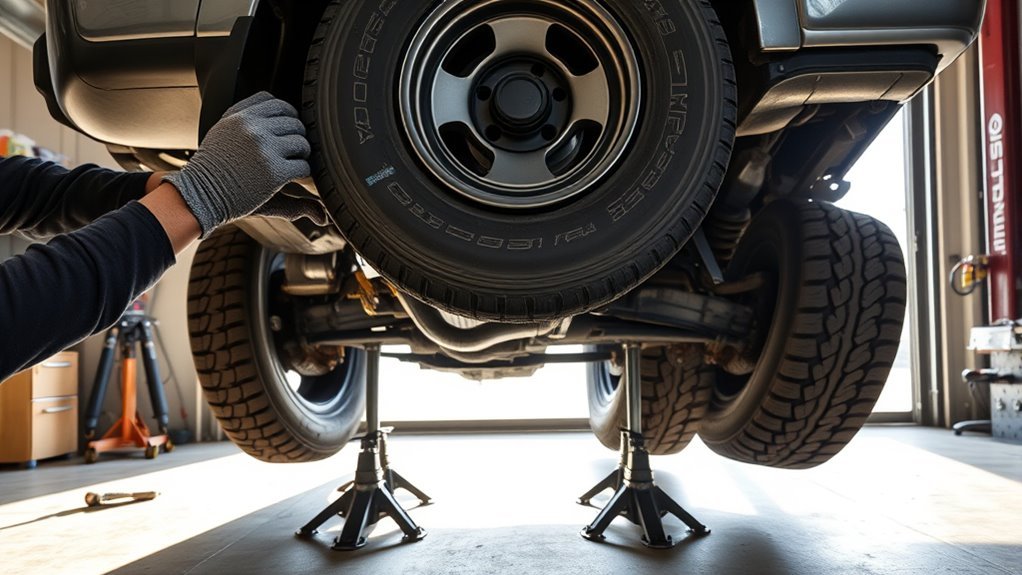
Your 4Runner tire rotation pattern depends on four things: your model year, drivetrain, tire direction, and whether your spare is a matching full-size tire. Do not use one pattern blindly. Start with the tire-rotation diagram in your exact Toyota owner’s manual, then confirm that your tires are the same size, non-directional, and safe to rotate before you lift the truck.
Quick Answer
For a Toyota 4Runner, follow the tire-rotation diagram in your exact owner’s manual first. If your tires are same-size, non-directional, and you are using general tire-industry guidance, RWD and 4WD/AWD patterns differ. Directional tires rotate front-to-back on the same side only. Rotate at Toyota’s 5,000-mile or six-month maintenance interval.
Key Takeaways
- The safest 4Runner tire rotation pattern is the one shown in your exact Toyota owner’s manual, especially on 2025+ models with multiple drivetrain and spare-tire configurations.
- Forward cross is not a universal 4Runner answer. It is commonly used for front-wheel-drive vehicles; 4Runner setups need RWD/4WD/AWD, tire-type, and spare-tire checks.
- Rotate at Toyota’s 5,000-mile or six-month maintenance interval, and inspect sooner after heavy towing, dirt-road use, trail driving, or visible uneven wear.
- If a tire is at or below 2/32 inch tread depth, damaged, cupped, bulged, or mismatched, fix or replace it instead of simply rotating it.
At a Glance
| Time Required | 30–60 minutes at home, or less at a tire shop |
| Difficulty | Moderate DIY job; basic skill with lifting and torquing wheels required |
| Tools Needed | Owner’s manual, wheel chocks, lug wrench, floor jack, jack stands, torque wrench, tire pressure gauge, tread depth gauge or penny |
| Cost | No parts needed if the tires are serviceable; shop cost depends on local labor and whether balancing or TPMS service is needed |
Warning: Never work under or beside a 4Runner supported only by a jack. Use level ground, set the parking brake, chock the wheels that stay on the ground, support the vehicle with jack stands, and tighten lug nuts with a torque wrench to the specification in your exact owner’s manual.
Is It Time to Rotate Your 4Runner Tires? (Reading the Wear Signs)
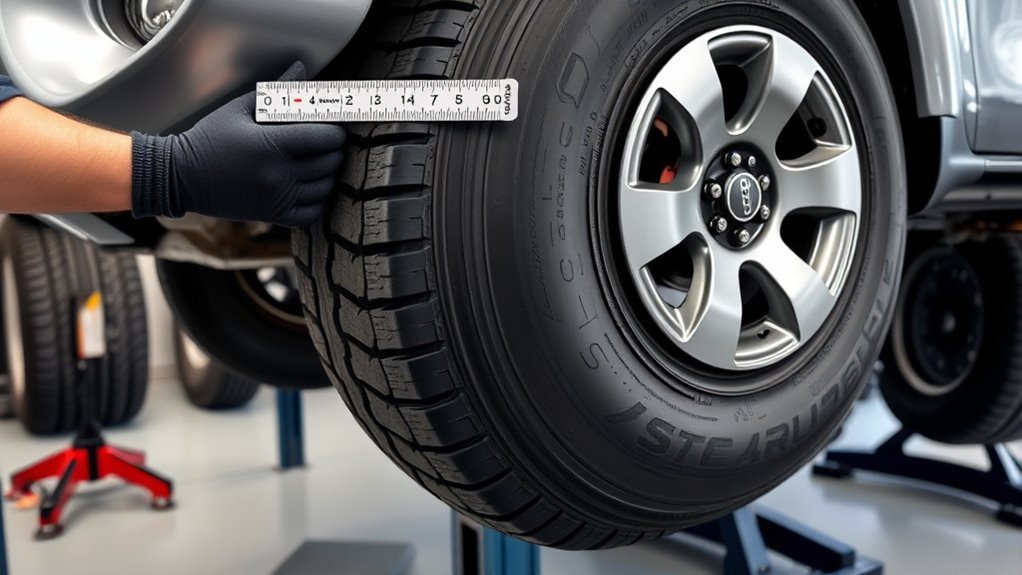
Before you choose a pattern, inspect every tire. Look across the inner edge, center tread, and outer edge. Uneven wear patterns tell you more than mileage alone.
- Feathering can point to alignment trouble.
- Cupping or scalloping can point to worn suspension parts or balance issues.
- Center wear often points to overinflation.
- Both-shoulder wear often points to underinflation.
- One bald spot can mean braking, balance, or suspension problems.
Use a tread depth gauge if you have one. For a quick screen, use the penny test: place a penny into a main tread groove with Lincoln’s head facing down. If the top of Lincoln’s head remains fully visible, the tread is about 2/32 inch or less. At that point, replacement is the priority, not rotation. The National Highway Traffic Safety Administration explains that treadwear indicators are set at the 2/32-inch level because tires rapidly lose traction characteristics when worn that far.
A tire that fails the penny test should be replaced, not moved to another corner of the vehicle.
Also pay attention during a straight, smooth drive. Vibration, steering-wheel shake, or pulling left or right can mean uneven tire wear, wheel imbalance, alignment issues, or a suspension problem. Rotate only after you understand what the tires are telling you.
[Products Worth Considering]

Secure your parked vehicle quickly with AFA Tooling 4T rubber wheel chocks in a 4-pack for two dual-wheel sets. The ribbed design and textured base grip fast without pounding, so you can chock tires on trailers, RVs, ATVs, and work vehicles with confidence. EZ rustproof handles with rope ties keep the pair together for easy placement and removal, while nylon-reinforced rubber stands up to dirt, ice, salt, and harsh weather.

Camco’s RV wheel chocks with an attached rope help keep your travel trailer securely in place for safer unhitching or parking. This 2-pack is compatible with wheels up to 26-inch diameter and features durable UV-resistant construction for reliable outdoor performance. The rope enables quick, safe removal so you can prepare for your next trip with less hassle.

Universal magnetic jack pad with aluminum grooved design to protect vehicle pinch welds during lifting. Durable nylon pad inserts are upgraded and secured with screws to resist damage and keep in place. Designed to fit most single vehicle pinpoint welds for safer, stable jacking when changing tires, repairs, or performing oil changes.
Which 4Runner Tire Rotation Pattern Fits Your Setup?
Your 4Runner’s rotation pattern is not chosen by model name alone. It depends on tire construction, drivetrain, spare-tire setup, and Toyota’s diagram for your year. Toyota’s 2025 4Runner page directs owners to the official manual library, and Toyota maintenance guides state that tires should be rotated according to the Owner’s Manual. Use the Toyota Owners Manuals and Warranties page if you need the correct manual for a newer 4Runner.
Note: If your owner’s manual, tire sidewall, or tire manufacturer gives a different instruction than a generic rotation chart, follow the vehicle manual and tire manufacturer guidance.
| Your setup | Pattern to check first | What it means |
| Same-size, non-directional tires; no spare included | Owner’s manual diagram; general fallback varies by drivetrain | The Tire Industry Association says RWD commonly crosses the front tires to the rear and moves rear tires straight forward, while 4WD/AWD commonly uses a Double X pattern. |
| Directional tires | Front-to-back on the same side | Directional tires have arrows or “rotation” markings and must keep rolling in the same direction unless they are demounted and remounted. |
| Different front and rear tire sizes | Usually side-to-side only, if non-directional | Do not move a staggered-size tire to an axle where it does not belong. |
| Matching full-size spare | Toyota five-tire diagram or tire-industry five-tire pattern | Include the spare only if it matches the road tires in size, type, wheel fitment, load rating, and usable condition. |
The big correction: a forward cross pattern is not automatically the right answer for every 4Runner. Forward cross is commonly used for front-wheel-drive vehicles, while 4Runner models are rear-drive, part-time 4WD, or full-time 4WD depending on trim and year. Your manual’s diagram wins.
How to Rotate 4Runner Tires Safely
Once you know the correct pattern, mark the current positions before removing anything: LF for left front, RF for right front, LR for left rear, RR for right rear, and S for spare if you are using a five-tire rotation.
- Park safely. Use level ground, set the parking brake, and chock the wheels.
- Check tire type. Confirm the tires are same-size, non-directional, or follow the correct directional/staggered rule.
- Loosen lug nuts slightly. Break them loose while the tire is still touching the ground.
- Lift and support the vehicle. Use Toyota-approved lift points and support the 4Runner with jack stands.
- Move the tires. Follow the pattern from the owner’s manual or the correct tire-industry fallback for your setup.
- Inspect while the wheels are off. Look for nails, cuts, cracks, exposed cords, uneven wear, damaged valve stems, and brake issues.
- Hand-start the lug nuts. Avoid cross-threading.
- Snug in a star pattern. Lower the tire enough to prevent spinning, then snug evenly.
- Torque to specification. Use a torque wrench and the wheel-nut torque value listed in your exact Toyota manual for your model year and wheel type.
- Set pressure and register TPMS if needed. Inflate cold tires to the placard pressure, then complete the TPMS/TPWS procedure for your 4Runner.
Pro Tip: Keep a simple tire log with date, mileage, tread depth, pressure, and final wheel position. It helps you spot alignment or suspension problems before they ruin a tire set.
Should You Rotate Your 4Runner’s Full-Size Spare?
Rotate the spare only when it is a matching full-size tire and wheel that your Toyota manual allows in the rotation cycle. A matching spare can help even out tread wear across five tires, but a mismatched spare can create handling, braking, drivetrain, and TPMS problems.
Before including the spare, verify:
- The spare tire size matches the four road tires.
- The wheel fits the same way as the road wheels.
- The tire type, load rating, and tread pattern are compatible.
- The tire is not a temporary-use spare.
- The spare is not too old, cracked, damaged, or severely different in tread depth.
- The TPMS sensor setup is compatible with your model year.
Bridgestone’s tire rotation guide notes that full-size spares can be included in rotation when the setup allows it, and that TPMS relearn may be needed when a full-size spare with a sensor is moved into service.
How to Reset Your 4Runner’s TPMS After Tire Rotation
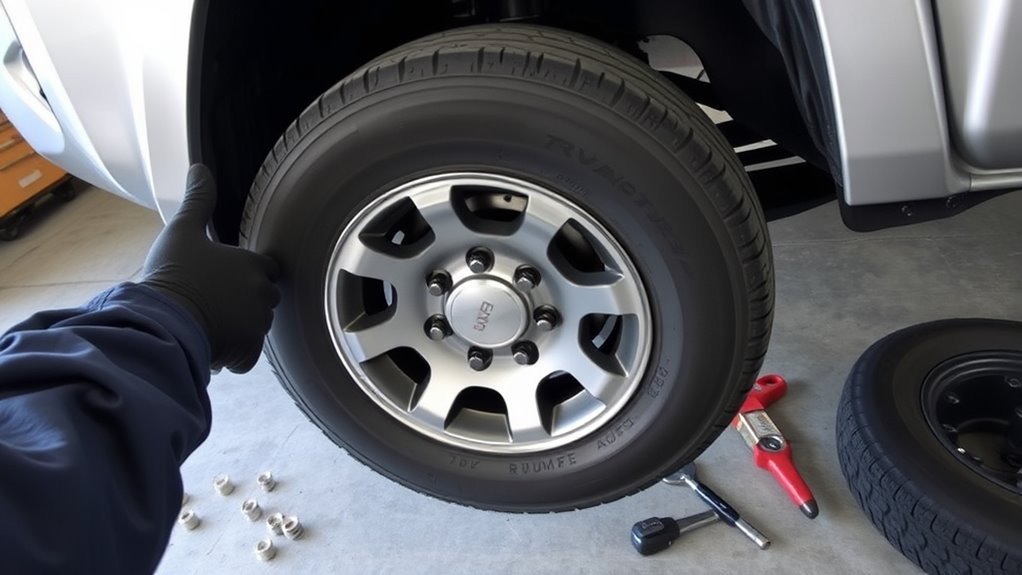
After rotation, set all tire pressures when the tires are cold. Use the pressure on the driver-door placard or the value listed in your owner’s manual, not the maximum pressure molded into the tire sidewall.
Toyota’s system wording varies by year. Some manuals call it TPMS, while others use TPWS or “tire pressure warning system.” Some older 4Runners use a reset or initialization procedure. Newer models may require tire inflation pressure setting and wheel-position registration through the multi-information display.
Use this safe sequence:
- Inflate all road tires, and the spare if included, to the correct cold pressure.
- Open the vehicle settings menu on the multi-information display.
- Find the tire pressure warning, TPWS, tire inflation setting, or wheel-position registration function.
- Follow the prompts in your exact owner’s manual.
- Drive on paved roads at the speed and duration required by your manual so the system can learn the positions.
Toyota’s TPMS support guidance also warns that the tire pressure monitor is not a substitute for checking pressure with a gauge. Treat the dashboard warning as a backup, not your only inspection method.
[Products Worth Considering]

Camco Trailer Aid Plus tandem tire ramp lifts your trailer for quick, safe tire changes with ample clearance from its 5 1/2-inch lift. It helps you change a flat tire without unloading cargo, making roadside and routine maintenance more efficient. The heavy-duty, waterproof and rustproof polymer design supports up to 15,000 lb and is built for easy portability and storage.

The JACO FlowPro Tire Inflator measures, inflates, and airs down tires up to 100 PSI with battery-free operation and ±2% accuracy after calibration. It features a glowing pressure dial for night visibility, a heavy-duty steel build with a hybrid hose, and a precision push-to-inflate thumb trigger. The patented Lightning Air Chuck locks on for a secure seal, and the kit includes quick-connect hardware for easy inline use with your air compressor.
4Runner Tire Rotation Intervals: By Mileage or Condition?
Use Toyota’s maintenance schedule as the anchor: 5,000 miles or six months, whichever comes first. The 2025 4Runner Hybrid Warranty & Maintenance Guide states that Toyota recommends scheduled maintenance every 5,000 miles or six months and shows tire rotation at each 5,000-mile maintenance interval. The 2024 4Runner Warranty & Maintenance Guide also lists tire rotation in the maintenance schedule and says to rotate according to the Owner’s Manual.
Condition still matters. Inspect sooner if you tow, run heavy loads, drive on dirt roads, air down off-road, hit potholes, or see abnormal tread wear. Severe use may not always mean an earlier full rotation, but it does mean earlier inspection.
Use this simple rule:
- Normal commuting: rotate every 5,000 miles or six months.
- Off-road or towing use: inspect after hard trips and rotate sooner if wear is uneven.
- Visible cupping, feathering, or pulling: inspect alignment, balance, suspension, and tire pressure before rotating.
- 2/32 inch tread or visible wear bars: replace the tire instead of rotating it.
Common Mistakes After a 4Runner Tire Rotation
A rotation should make the 4Runner feel smoother and more consistent, not worse. If something feels off, stop and check the basics first.
- TPMS light stays on: recheck cold pressure, confirm the spare if included, and repeat the correct TPMS/TPWS registration procedure.
- Steering wheel shakes: check wheel torque, balance, bent wheels, mud inside the wheel, and tire damage.
- Vehicle pulls after rotation: inspect pressure, alignment, tire wear patterns, and side-to-side tread depth differences.
- Noise gets louder: cupped or chopped tread may become more noticeable after moving tires to a new position.
- Rubbing after upsizing tires: check clearance at full steering lock and suspension compression before assuming the rotation caused the problem.
Frequently Asked Questions
What does Toyota recommend for 4Runner tire rotation?
Toyota maintenance guides point owners to the tire-rotation instructions in the Owner’s Manual and use a 5,000-mile or six-month scheduled maintenance cadence. For the pattern itself, use the diagram for your exact model year, tire setup, and spare configuration.
Is forward cross the correct 4Runner tire rotation pattern?
Not automatically. Forward cross is commonly used for front-wheel-drive vehicles. A 4Runner can be 2WD/RWD, part-time 4WD, or full-time 4WD depending on year and trim, so the correct answer is the Toyota owner’s manual diagram for your exact setup.
Can I rotate directional tires on a 4Runner?
Yes, but keep each tire on the same side of the vehicle and move it front-to-back only. Directional tires have arrows or rotation markings and must continue rolling in the designed direction unless a tire shop demounts and remounts them.
Should I include the full-size spare in my 4Runner tire rotation?
Include the spare only if it is a matching full-size tire and wheel, is in good condition, has compatible tread depth, and your Toyota manual allows a five-tire rotation. Do not include a temporary spare or a mismatched wheel/tire.
Do I need to reset TPMS after rotating 4Runner tires?
Often, yes. Some model years need tire pressure warning initialization, and newer systems may need wheel-position registration so the pressure display matches the new tire locations. Always set cold pressure first, then follow the TPMS/TPWS procedure in your owner’s manual.
Is 265 or 275 better for a 4Runner?
A 265 tire is usually the safer stock-style choice for daily driving, clearance, fuel economy, and fewer fitment issues. A 275 can add footprint and a more aggressive look, but it may affect clearance, weight, speedometer reading, fuel economy, and rotation options depending on wheel offset and suspension setup.
Which 4Runner year has the best towing?
Current 2025+ 4Runner models have the highest published 4Runner towing rating, with Toyota listing a maximum towing capacity of 6,000 pounds when properly equipped. Many earlier fifth-generation 4Runners, including 2021 models, are commonly rated up to 5,000 pounds.
Conclusion
Your 4Runner’s rotation pattern is a maintenance detail worth getting right. Check the manual, confirm the tire type, inspect tread depth, use safe lifting practices, torque the wheels correctly, and complete the TPMS/TPWS procedure when needed. Done on schedule, tire rotation helps preserve even tread wear, stable handling, and confidence on pavement, dirt roads, and trail days.
Sources
- Toyota Owners Manuals and Warranties — official Toyota manual access for 2025 4Runner owners.
- 2025 Toyota 4Runner Hybrid Warranty & Maintenance Guide — Toyota maintenance interval and tire-rotation schedule support.
- 2024 Toyota 4Runner Warranty & Maintenance Guide — Toyota guidance to rotate tires according to the Owner’s Manual and inspect for wear/damage.
- NHTSA tire treadwear indicator interpretation — support for the 2/32-inch treadwear-indicator threshold.
- Tire Industry Association tire rotation guidance — general drivetrain-based rotation pattern guidance.
- Toyota USA Newsroom: 2025 4Runner — current 2025 4Runner drivetrain and towing-capacity details.

Related Articles

When to Switch From All-Season to Winter Tires on a 4Runner
Ineffective all-season tires in cold weather can jeopardize your safety—discover when to make the crucial switch for better traction and handling.
Read More
4Runner Tire Mileage: How Many Miles Should They Last
Curious about how long your 4Runner tires should last? Discover essential tips and factors that influence tire longevity.
Read More
How Long Do Toyota 4Runner Tires Typically Last
How long do Toyota 4Runner tires typically last? Discover the factors that influence tire longevity and essential tips for maintenance.
Read More