
How High Altitude Affects 4Runner Tire Pressure
High-altitude driving can make your 4Runner’s tire-pressure readings confusing, but the tires do not automatically “lose air” just because you climb a mountain. The safer way to handle it is simple: check the tires cold, use the pressure on your driver-door placard or owner’s manual, and treat any TPMS warning as a reason to verify all four tires with a quality gauge.
Quick Answer
For normal road driving, do not subtract PSI just because your 4Runner is at altitude. Set cold tires to the Toyota-recommended pressure on your door placard or owner’s manual. A gauge may read higher at altitude if temperature stays the same, while colder mountain air can lower pressure by about 1 PSI per 10°F.
Key Takeaways
- Altitude lowers outside air pressure, but a tire gauge measures pressure relative to the air around the tire.
- At the same temperature, a sealed tire usually reads higher on a gauge after climbing, not lower.
- Temperature often matters more in real mountain driving: expect roughly 1 PSI change for every 10°F temperature swing.
- For highway use, set cold tires to the pressure on your 4Runner’s tire placard, not to a calculated altitude discount.
- If the TPMS light comes on, check all tires with a gauge instead of assuming altitude caused a false warning.
At a Glance
| Time Required | 5–10 minutes after the tires are cold |
| Difficulty | Easy |
| Tools Needed | Accurate tire-pressure gauge, air compressor or air pump, valve-cap tool if needed |
| Cost | Usually free if you already have a gauge; a good gauge is typically inexpensive |
Does Tire Pressure Go Down at Higher Altitude?
Not by altitude alone. If your 4Runner’s tires are sealed, the amount of air inside the tire stays almost the same as you climb. What changes is the outside atmospheric pressure around the tire. According to NOAA, air pressure decreases as elevation increases because there are fewer air molecules above you.
A tire-pressure gauge measures gauge pressure, also called PSIG. That means it compares the pressure inside the tire to the local outside air. When the outside air pressure drops at altitude, the same sealed tire can show a higher gauge reading, not a lower one, if the tire temperature stays the same.
Altitude changes the pressure reference around the tire. Temperature changes the pressure inside the tire. For real-world driving, check cold pressure instead of chasing an altitude formula.
Why Altitude and Temperature Get Confused
The reason this topic gets messy is that mountain trips usually involve both altitude and temperature. The altitude effect can make a gauge read slightly higher. Colder mountain air can make the tire’s internal pressure lower. Those two effects can partially cancel each other out.
Tire Rack explains that a tire measured at 5,000 feet can read about 2–3 PSI higher than it did at sea level when temperature is held constant. Tire Rack also notes the common rule of thumb that tire pressure changes about 1 PSI for every 10°F change in ambient temperature.
Note: A 4Runner parked overnight in cold mountain weather may show lower pressure in the morning because of temperature, even though altitude by itself would not make the gauge reading drop.
Simple Example at 7,500 Feet
Using a standard atmosphere estimate, outside air pressure at about 7,500 feet is roughly 3.5–3.6 PSI lower than at sea level. If a tire was set to 32 PSI at sea level and then moved to 7,500 feet at the same tire temperature, a gauge could read around 35–36 PSI.
But if the tire also cools by 30–40°F after you arrive in the mountains, that temperature drop can remove roughly 3–4 PSI. That is why the same trip can appear to “gain,” “lose,” or barely change pressure depending on the weather and when you measure.
| Situation | What Usually Happens | Driver Action |
|---|---|---|
| Same temperature, higher altitude | Gauge pressure may read higher | Do not automatically deflate unless cold pressure is above placard spec |
| Colder mountain morning | Pressure may read lower due to temperature | Inflate to the cold placard pressure |
| After highway driving | Pressure reads higher because tires are warm | Recheck after the tires cool |
How to Set Your 4Runner’s Cold Tire Pressure at Altitude
The correct pressure for normal road driving is the cold tire pressure listed by Toyota for your specific 4Runner. Toyota’s public guidance says to check the Specifications section of the owner’s manual or the tire information placard, usually on the driver’s side door post. Toyota and NHTSA both point drivers back to the vehicle placard or owner’s manual rather than the maximum pressure molded into the tire sidewall.
- Let the tires cool. NHTSA defines cold tires as tires that have not been driven on for at least three hours.
- Read your door placard. Use the pressure listed for your exact vehicle, tire size, and load condition.
- Check all four tires with a gauge. Do not rely only on the dash display or TPMS screen.
- Add or release air as needed. Set each tire to the placard pressure while the tire is cold.
- Check the spare. Many drivers forget it until they need it.
- Recheck after a major temperature swing. A cold front, snowstorm, or desert-to-mountain trip can change pressure overnight.
Warning: Do not use a simple “subtract PSI for altitude” rule for highway driving. Running below the manufacturer’s cold inflation pressure can increase heat, tire wear, and handling risk.
[Products Worth Considering]

EVOULTES heavy duty tire inflator with an integrated gauge delivers accurate pressure readings from 10–120 PSI, helping you inflate, deflate, and check tires in one tool. The 16.5-inch extended dual-head air chuck with swivel base reaches hard-to-access dual wheel valves on trucks and RVs. A brass trigger core and side-mounted air release valve make operation smooth, with standard 1/4" NPT threading and quick-connect compatibility for easy setup.
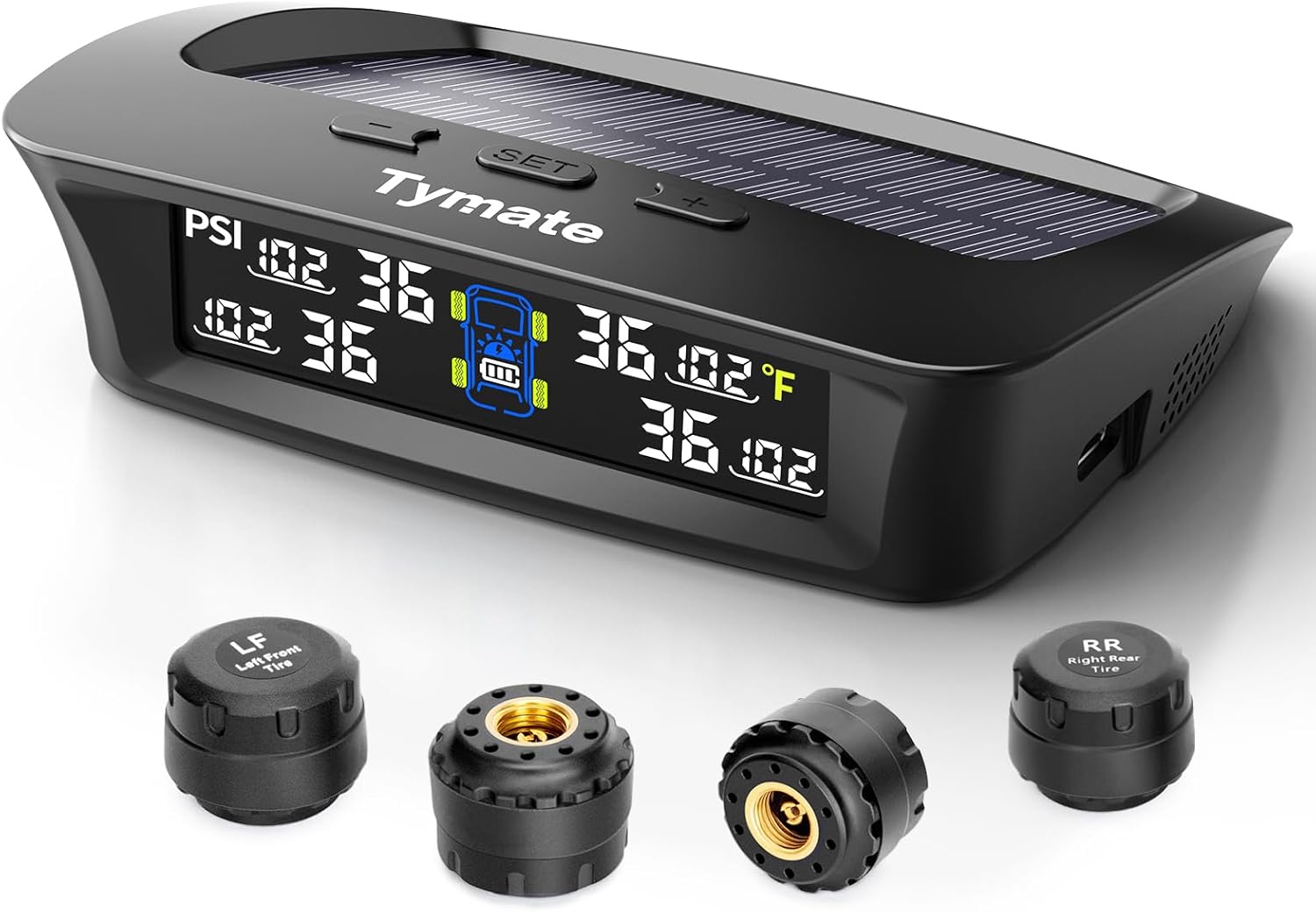
The Tymate TM3 RV TPMS delivers real-time tire pressure monitoring from 0 to 144 PSI with accurate readings and dependable wireless communication. It includes four external sensors with pre-pairing, six alarm modes for rapid leak, pressure extremes, temperature, and signal loss, plus an easy-reference setup for alert thresholds. Solar and USB-C charging help keep the display powered, while the color LCD and adaptive backlight improve visibility for safer driving and towing.

The Fanttik X10 Pro is a cordless portable tire inflator that reaches up to 150 PSI and can inflate an R15 tire in about 35 seconds for quick roadside or home top-ups. With AccuInFlate auto-stop and smart start/stop controls, it helps maintain accurate pressure and frees your hands once the target is reached. A high-visibility digital display and preset modes make it easy to set and monitor inflation for cars, motorcycles, bikes, and balls.
Why Your 4Runner’s TPMS Can Still Warn in the Mountains
Your 4Runner’s TPMS is a warning system, not a replacement for a tire gauge. Toyota says the Tire Pressure Monitor alerts the driver when tire pressure is critically low and that tire pressure should still be checked regularly with a gauge.
Under U.S. 49 CFR 571.138, TPMS requirements are built around warning drivers when one or more tires are significantly underinflated compared with the vehicle manufacturer’s recommended cold inflation pressure. That means a warning light should not be dismissed as “just altitude” until you check the tires.
[Products Worth Considering]

The JACO FlowPro Tire Inflator measures, inflates, and airs down tires up to 100 PSI with battery-free operation and ±2% accuracy after calibration. It features a glowing pressure dial for night visibility, a heavy-duty steel build with a hybrid hose, and a precision push-to-inflate thumb trigger. The patented Lightning Air Chuck locks on for a secure seal, and the kit includes quick-connect hardware for easy inline use with your air compressor.
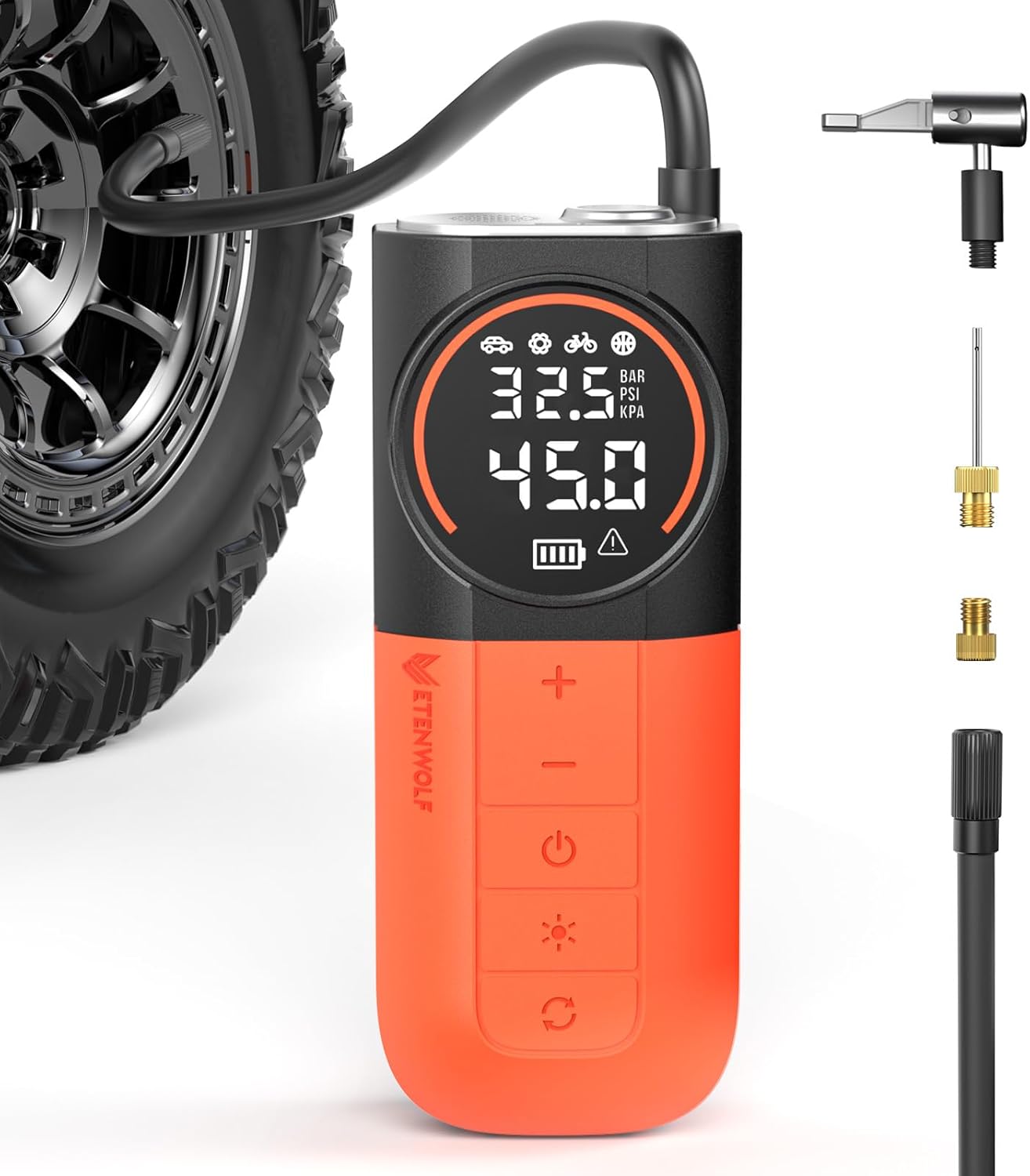
The ETENWOLF S1 cordless tire inflator delivers ultra-fast inflation with up to 160 PSI and a 20 L/min airflow for quicker tire top-offs. Its 5200mAh battery and cooling system support inflating many tires and sports balls on a single charge, while the digital pressure gauge and multi-unit display help you reach the right pressure accurately. With preset modes, pressure memory, an auto-stop feature, and an LED flashlight, it’s built for easy roadside and everyday use.
When the TPMS Warning Is Likely Real
- One tire is several PSI lower than the others.
- The pressure keeps dropping after you add air.
- The warning appears after a cold overnight temperature drop.
- You recently hit a pothole, rock, curb, or trail obstacle.
- The tire has visible damage, a nail, sidewall bulge, or bead leak.
When the Reading May Be Normal Variation
- All tires are close to the placard pressure when checked cold.
- The dash display and manual gauge differ by 1–2 PSI because of rounding or gauge tolerance.
- Pressures rise after driving because the tires are warm.
Pro Tip: Keep one trusted gauge in the glove box and use the same gauge each time. Switching between cheap gauges can make normal differences look like tire problems.
What Pressure Should You Use for Off-Road Driving at Altitude?
Off-road airing down is different from setting highway tire pressure. Many 4Runner owners air down on dirt, rocks, sand, or washboard roads to improve ride comfort and tire contact, but there is no single safe number for every tire, wheel, load, or trail.
For off-road use, start conservatively, reduce pressure only as much as the terrain requires, and drive slowly. Reinflate before returning to highway speeds. If you run aftermarket tires, especially LT-rated tires, follow the tire manufacturer’s load and inflation guidance rather than copying another driver’s PSI.
Warning: Low off-road pressure can increase the chance of debeading, sidewall damage, overheating, or poor emergency handling if used at highway speeds. Always reinflate before pavement driving.
How to Handle Tire Pressure When You Return Home
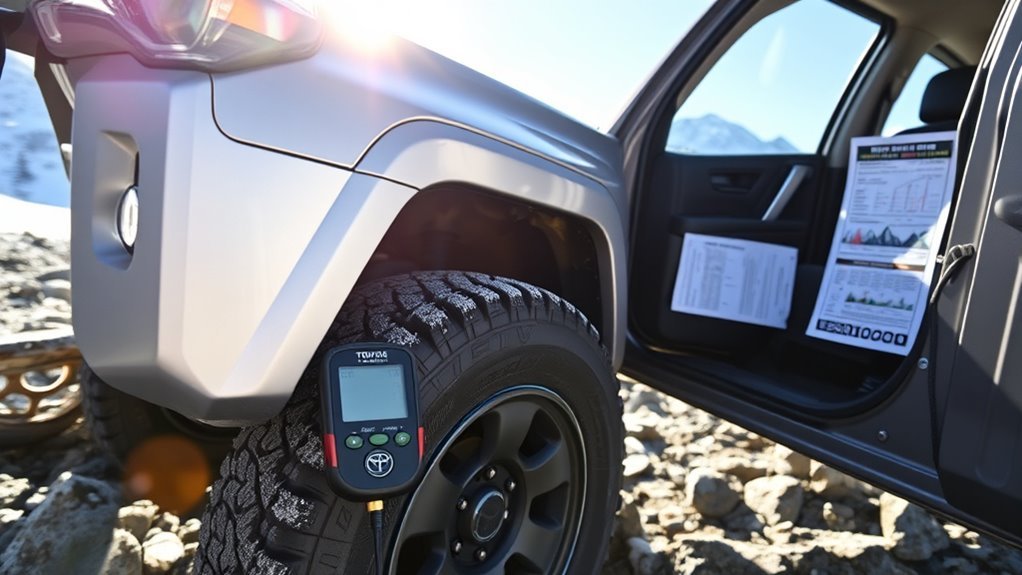
When you descend from the mountains, do not assume the tires are still correct. Warmer low-elevation temperatures can raise tire pressure, and the change in atmospheric pressure can alter what your gauge shows. The fix is the same as before: let the tires cool and set them to the placard pressure.
If you aired down for trails, reinflate before highway driving. If you added air during a cold mountain morning, recheck the next cold morning after you return home. The goal is not to match a sea-level calculation; the goal is to maintain Toyota’s recommended cold inflation pressure for your current vehicle setup.
Why Proper 4Runner Tire Pressure Matters
Correct pressure affects handling, braking, tire wear, ride quality, and fuel economy. FuelEconomy.gov notes that underinflated tires can lower gas mileage by about 0.2% for every 1 PSI drop in the average pressure of all tires, and that properly inflated tires are safer and last longer.
For a heavy SUV like the 4Runner, tire pressure also affects load carrying and heat buildup. That is especially important on long grades, hot pavement, loaded camping trips, and rocky trails where tire damage is more likely.
Frequently Asked Questions
Does tire pressure go down at higher altitude?
Not from altitude alone. At the same temperature, a sealed tire often reads higher on a gauge at higher altitude because outside atmospheric pressure is lower. In real mountain driving, colder temperatures can lower pressure and may offset or overpower the altitude effect.
How much does PSI change per 1,000 feet of altitude?
A common rough estimate is that atmospheric pressure changes by about 0.5 PSI per 1,000 feet near the lower atmosphere, but that does not mean your tire should be set 0.5 PSI lower per 1,000 feet. Tire gauge readings, tire temperature, and cold placard pressure are what matter for safe vehicle setup.
Should I lower my 4Runner’s tire pressure at 7,500 feet?
For normal road driving, no. Set the tires cold to the pressure on your 4Runner’s tire placard or owner’s manual. Only lower pressure intentionally for specific off-road conditions, and reinflate before driving at highway speeds.
Why did my TPMS light come on in the mountains?
The most common reason is colder tire temperature, an actual low tire, a slow leak, or a difference between the TPMS display and your manual gauge. Check every tire cold, including the spare if applicable, and inspect for damage before assuming the warning is harmless.
What PSI should a Toyota 4Runner use?
Use the cold tire pressure on your driver-door tire information placard or the Specifications section of your owner’s manual. The correct number can vary by model year, tire size, trim, and tire setup, so the placard is more reliable than a generic online number.
Can I trust the dashboard tire-pressure display?
Use it as a warning and trend tool, not as your only measurement. Toyota advises checking tire pressure regularly with a gauge. If the dash reading and your gauge differ slightly, use a known-good gauge on cold tires and compare all four tires for an obvious outlier.
Conclusion
Your 4Runner does not need a special low-pressure formula just because you drove to higher elevation. The reliable routine is simple: let the tires cool, read the driver-door placard, check with a good gauge, and adjust to the recommended cold pressure. Altitude affects the outside pressure reference, temperature affects the pressure inside the tire, and TPMS is a warning system that deserves a real check.
For paved-road driving, placard pressure wins. For off-road use, air down only for the terrain, drive slowly, and reinflate before returning to highway speeds.
Sources
- NHTSA TireWise — cold tire pressure, tire placards, and tire-pressure safety checks
- Toyota: What tire pressure is recommended for my vehicle? — Toyota guidance to use the owner’s manual or tire information placard
- Toyota: How does the Tire Pressure Monitor work? — TPMS guidance and why drivers should still use a tire gauge
- Tire Rack: Does Altitude Change Tire Pressure? — gauge-pressure behavior at altitude and temperature rule of thumb
- NOAA: Air Pressure — why atmospheric pressure decreases with elevation
- FuelEconomy.gov: Keeping Your Vehicle in Shape — fuel-economy impact of underinflated tires

Related Articles
When to Switch From All-Season to Winter Tires on a 4Runner
Ineffective all-season tires in cold weather can jeopardize your safety—discover when to make the crucial switch for better traction and handling.
Read More
4Runner Tire Mileage: How Many Miles Should They Last
Curious about how long your 4Runner tires should last? Discover essential tips and factors that influence tire longevity.
Read More
How Long Do Toyota 4Runner Tires Typically Last
How long do Toyota 4Runner tires typically last? Discover the factors that influence tire longevity and essential tips for maintenance.
Read More