
What Is Tire Ply Rating and How It Affects Performance

Tire ply rating tells you how strong a tire is built to be, but it does not usually mean the tire has that exact number of physical layers. On modern tires, ply rating is best understood together with load range, load index, tire size, and your vehicle’s door placard. Getting this right helps your tires carry the correct weight without sacrificing safety, handling, or ride quality.
Quick Answer
Tire ply rating is a strength and load-capacity rating, not a literal count of layers in most modern tires. A 10-ply-rated tire is usually called Load Range E in light-truck and trailer applications, while a 14-ply-rated tire is commonly Load Range G. Always match the tire’s load index, load range, size, and cold inflation pressure to your vehicle placard or owner’s manual.
Key Takeaways
- Ply rating is an old strength scale; modern tires may have fewer physical plies than their ply rating suggests.
- Load range is a broad strength category, while load index is the more specific number that tells you how much one tire can carry when properly inflated.
- A higher ply rating can improve load capacity and stability, but it can also make the ride firmer and may be unnecessary for daily driving.
- The maximum PSI on the tire sidewall is not automatically the correct everyday tire pressure; use the vehicle tire placard or owner’s manual.
- The right tire must meet or exceed your vehicle’s required size, load index, speed rating, and load range without exceeding wheel, valve-stem, axle, or vehicle limits.
What Is Tire Ply Rating and Why It Matters?

Tire ply rating describes a tire’s strength and ability to support weight. Years ago, the number was tied more directly to the actual fabric layers inside the tire. Today, stronger materials and radial tire construction mean a “10-ply rated” tire may not have ten physical plies. Instead, it is engineered to perform at a strength level comparable to the older 10-ply standard.
This matters because tire strength affects load-carrying ability, sidewall stiffness, stability, heat resistance, and durability. A tire that is under-rated for your vehicle or trailer can overheat, flex too much, wear unevenly, or fail under load. A tire that is much heavier-duty than needed may ride harder, weigh more, and cost more without improving the vehicle’s legal or mechanical payload capacity.
For safe tire selection, do not rely on ply rating alone. Compare the tire’s load rating, speed rating, sidewall markings, and manufacturer recommendations before replacing tires.
Tire Ply Rating vs. Load Range vs. Load Index
These three terms are related, but they do not mean the same thing. Understanding the difference makes tire shopping much easier.
| Term | What It Means | Why It Matters |
|---|---|---|
| Ply Rating | An older strength scale, such as 6-ply, 8-ply, 10-ply, 12-ply, or 14-ply equivalent. | Helps describe tire toughness, especially on light-truck, trailer, and commercial tires. |
| Load Range | A letter or service category, such as SL, XL, C, D, E, F, or G. | Shows the tire’s general strength class and maximum load-carrying pressure range. |
| Load Index | A number in the tire service description, such as 91, 104, 121, or 126. | The most specific way to identify how much weight one tire can carry when properly inflated. |
Note: Load range and ply rating do not replace the load index. Two tires can have the same load range but different load capacities because tire size, construction, and load index also matter.
What Is Tire Load Range?
Tire load range is a classification that describes a tire’s strength and its ability to carry weight at a specified pressure. On many light-truck and trailer tires, the load range appears as a letter such as C, D, E, F, or G. On many passenger tires, you may instead see Standard Load (SL), Extra Load (XL), Reinforced, or High Load (HL).
Federal tire-marking rules require tires to show important information on the sidewall, including maximum load rating and maximum permissible inflation pressure. For LT tires, the sidewall also includes the load-range letter. You can read more in 49 CFR § 571.139.
Tire Load Range Categories
The chart below gives common ply equivalents and typical maximum load-carrying air pressures. These pressures are not a recommendation for daily driving. Your correct cold inflation pressure comes from the vehicle tire placard, owner’s manual, or tire/load table for your exact application.
| Load Designation | Common Ply Equivalent | Typical Max Load-Carrying Pressure | Common Use |
|---|---|---|---|
| SL | 4-ply rated | Up to 36 PSI | Many passenger cars, sedans, coupes, and crossovers |
| XL / Reinforced | 4-ply rated | Up to 42 PSI | Heavier passenger vehicles, some SUVs, performance vehicles, and some EVs |
| C | 6-ply rated | Often up to 50 PSI | Light trucks, vans, and some trailers depending on size and load index |
| D | 8-ply rated | Often up to 65 PSI | Towing, hauling, vans, and trailers that need more capacity than Load Range C |
| E | 10-ply rated | Often up to 80 PSI | Heavy-duty pickups, work vans, towing, hauling, and many LT tires |
| F | 12-ply rated | Often up to 95 PSI | Heavier trailers, commercial use, and higher-capacity LT applications |
| G | 14-ply rated | Often up to 110 PSI | Heavy trailers, RVs, commercial hauling, and demanding high-load service |
Warning: Do not inflate a tire to the maximum sidewall PSI just because the tire can handle it. For normal driving, use the vehicle manufacturer’s recommended cold tire pressure on the driver-door placard or in the owner’s manual unless a qualified tire professional or official load-inflation table says otherwise.
Importance of Load Range
Load range matters because it helps determine whether a tire can safely support the vehicle, passengers, cargo, trailer tongue weight, and road conditions it will face. A tire with too little capacity can overheat and fail. A tire with more capacity than needed may be safe when properly fitted, but it does not increase the vehicle’s GVWR, GAWR, payload rating, towing rating, or wheel rating.
That means a Load Range E tire can be a smart choice for a pickup that tows or hauls regularly, but it may be unnecessary on a commuter crossover if the original equipment tires call for SL or XL tires with a specific load index.
Determining Appropriate Load Range
To choose the correct load range, start with the vehicle—not the tire rack. Check the tire and loading information label on the driver’s doorjamb, then confirm the same information in the owner’s manual. The placard lists the original tire size and recommended cold inflation pressure, and it also identifies the vehicle’s occupant and cargo capacity.
Next, choose replacement tires that meet or exceed the required load index, size, speed rating, and load range. If you tow, haul tools, carry a slide-in camper, or use a trailer, also check axle ratings, trailer tire ratings, wheel pressure ratings, and valve-stem ratings.
At a Glance
| Time Required | 5–10 minutes to check the placard, sidewall, and owner’s manual |
| Difficulty | Easy for basic replacement; moderate if towing, hauling, or changing tire type |
| Tools Needed | Vehicle placard, owner’s manual, tire sidewall, tire pressure gauge, and load-index chart |
| Cost | $0 to check; tire cost depends on size, brand, load range, and application |
Tire Ply Ratings and Load Capacity Explained
Tire load capacity is not determined by ply rating alone. The actual carrying capacity comes from the tire size, load index, load range, inflation pressure, and whether the tire is used in single or dual configuration. This is why two tires with the same ply rating can carry different amounts of weight.
For example, a Load Range E tire is often called a 10-ply tire, but an LT tire in one size may have a different maximum load than a different-size Load Range E tire. Always read the exact sidewall service description and compare it with the manufacturer’s load chart or vehicle placard.
The safest tire is not always the tire with the highest ply rating. It is the tire that matches the vehicle’s required size, load index, speed rating, load range, wheel capacity, and inflation specification.
Where to Find Tire Ply Ratings on Your Tires
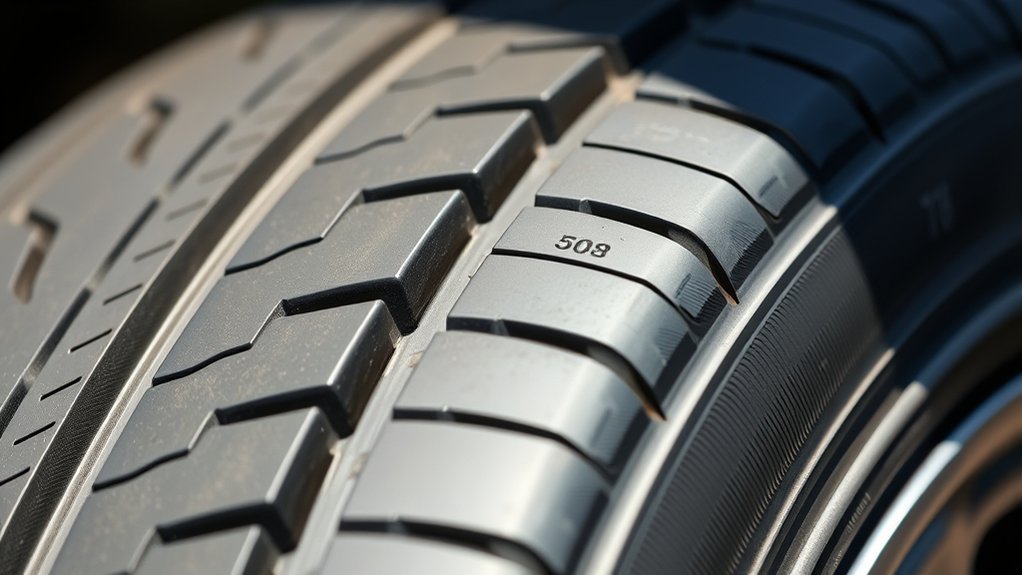
You can usually find load range, load index, tire size, construction type, and speed rating molded into the tire sidewall. The exact format depends on the tire type.
| Example Sidewall Marking | What to Notice |
|---|---|
| 205/55R17 91V | Passenger tire example. “91” is the load index and “V” is the speed rating. |
| LT265/70R17 121/118R Load Range E | Light-truck example. “Load Range E” is the 10-ply equivalent, while 121/118 shows single/dual load index values. |
| ST205/75R15 Load Range D | Trailer tire example. “ST” means special trailer, and Load Range D is commonly an 8-ply equivalent. |
| XL or Reinforced | Passenger tire marking showing extra load capacity compared with a standard-load tire of the same size. |
You can also find the required tire size, load rating, and cold inflation pressure on the driver-side tire placard and in the owner’s manual. The vehicle tire placard is one of the most important references because it reflects what the vehicle was engineered to carry.
Debunking Myths About Tire Ply Ratings
Many tire-ply myths come from older bias-ply terminology. Here are the most common misunderstandings.
- Myth: A 10-ply tire always has ten physical layers. Modern tires often use fewer but stronger layers. The rating is an equivalent strength category, not always a literal layer count.
- Myth: More ply rating always means better performance. Higher load range can help with heavy loads, but it can also create a firmer ride, add weight, and reduce comfort when the vehicle does not need it.
- Myth: Load range tells the full load capacity. Load range is only part of the answer. The exact load index and tire size determine the real weight capacity.
- Myth: The maximum sidewall PSI is the correct daily PSI. The correct daily pressure is normally the vehicle manufacturer’s recommended cold pressure, not simply the tire’s maximum pressure.
- Myth: Upgrading tire ply rating increases payload. Stronger tires do not increase the vehicle’s GVWR, axle ratings, suspension capacity, brake capacity, hitch rating, or wheel capacity.
Choosing the Right Ply Rating for Your Vehicle
Use this process before buying replacement tires, especially if you tow, haul cargo, drive a work truck, or run a trailer.
- Check the tire placard first. Look on the driver’s doorjamb for the original tire size, load information, and recommended cold inflation pressure.
- Read the owner’s manual. Some vehicles list alternate tire sizes, towing pressures, winter tire notes, or special load instructions.
- Match or exceed the required load index. The load index is the specific capacity number, so do not replace tires with a lower rating than the manufacturer requires.
- Choose the correct tire type. Passenger tires, XL tires, HL tires, LT tires, and ST trailer tires are not interchangeable just because the sizes look similar.
- Account for real-world load. Include passengers, cargo, tools, accessories, tongue weight, water tanks, camper weight, and trailer load.
- Check wheels and valve stems. Higher load-range tires may require higher pressure, and the wheel and valve stem must be rated for that pressure.
- Keep all tires compatible. Avoid mixing sizes, load ranges, construction types, or speed ratings unless the vehicle manufacturer specifically allows it.
- Ask a tire professional for towing or commercial use. Heavy loads need correct axle-by-axle capacity, not guesswork.
Best Ply Rating by Vehicle Type
The right choice depends on the vehicle and how it is used:
- Passenger cars and crossovers: Usually use Standard Load, XL, or manufacturer-specified passenger tires. Do not switch to LT tires unless the vehicle maker or a qualified tire professional recommends it.
- SUVs and EVs: May require XL, reinforced, or HL tires because of higher curb weight, battery weight, or performance needs.
- Pickup trucks and work vans: Often use LT tires with Load Range C, D, or E, depending on payload and towing needs.
- Heavy towing and commercial hauling: May require Load Range E, F, or G, but the tire, wheel, axle, and trailer ratings must all match the job.
- Trailers and RVs: Use trailer-rated tires such as ST tires where required. Trailer tires should be selected by axle rating, trailer placard, actual loaded weight, and tire size.
- Off-road vehicles: A higher load range may improve toughness, but it can also reduce ride comfort and traction if the tire is too stiff for the vehicle weight and terrain.
Pro Tip: If you tow, weigh the loaded vehicle and trailer on a certified scale. Compare the axle weights with the tire load ratings and the vehicle’s GAWR. This is more reliable than guessing from trailer size alone.
How Ply Ratings Affect Your Tire’s Performance

Ply rating affects performance in several ways, but the result depends on the tire design and the vehicle.
- Load capacity: Higher load range usually supports higher loads within the same tire size family, but the load index gives the exact capacity.
- Sidewall stiffness: Heavier-duty tires often have stiffer sidewalls, which can improve stability under load but make the ride firmer when empty.
- Heat control: A properly rated and properly inflated tire flexes less under load, helping reduce heat buildup.
- Puncture resistance: Heavier-duty tires may resist cuts and impacts better, especially in work, trailer, and off-road use.
- Handling and braking: The wrong tire can affect steering feel, braking distance, and ride comfort, even if it technically fits the wheel.
- Fuel economy: Heavier or more aggressive tires can increase rolling resistance and weight, which may reduce fuel economy or EV range.
Ensuring Safety With the Right Ply Ratings
The safest tire setup is the one that matches the vehicle’s intended load and use. That means the tire must meet the correct size, load index, speed rating, load range, and pressure requirement, while staying within the limits of the wheels, axles, suspension, brakes, and vehicle rating.
Optimal Load Capacity
To estimate whether a tire can handle your load, start with the load index for each tire. Multiply the load capacity per tire by the number of tires on that axle, then compare it with the axle rating and real loaded weight. For trailers and dual-rear-wheel trucks, use the correct single or dual load rating shown by the manufacturer.
Never assume that a higher ply rating automatically makes the whole vehicle safer to overload. Tires are only one part of the load system. The axle, wheel, brakes, hitch, frame, and suspension must also be rated for the load.
Preventing Tire Failures
Preventing tire failure starts with correct tire selection and continues with maintenance. Check cold tire pressure at least monthly, inspect tread and sidewalls for damage, rotate tires when recommended, and replace tires that are worn, damaged, aged out, or recalled. NHTSA’s TireWise safety guidance recommends checking pressure when tires are cold and using the vehicle’s tire information label or owner’s manual for the correct pressure.
Warning: Overloading, underinflation, mismatched tires, worn tread, or damaged sidewalls can lead to heat buildup, tread separation, blowouts, and loss of control. If a tire loses pressure, vibrates, bulges, cracks, or shows exposed cords, have it inspected before driving farther.
How to Use Tire Ratings for Smart Choices
When comparing tires, use the following order of importance:
- Vehicle placard and owner’s manual: Start with the manufacturer’s required tire size, load rating, speed rating, and cold pressure.
- Tire size: The tire must fit the wheel and vehicle safely.
- Load index: Match or exceed the required capacity.
- Load range / ply rating: Choose the right strength category for the vehicle and job.
- Speed rating: Match or exceed the required rating unless the manufacturer allows an exception, such as certain winter tires.
- Application: Match the tire to passenger, LT, ST trailer, commercial, off-road, or EV use.
- Pressure compatibility: Confirm the wheel and valve stem can handle the pressure required for that tire and load.
This approach prevents the two most common mistakes: buying a tire that is too weak for the load, or buying an overly stiff tire because “more ply” sounds automatically better.
Frequently Asked Questions
What are 10-ply tires called now?
In most light-truck and trailer tire contexts, a 10-ply-rated tire is called Load Range E. It does not always have ten physical plies; it is built to a 10-ply-equivalent strength rating.
Is a 14-ply tire better than a 12-ply tire?
A 14-ply-rated tire, commonly Load Range G, is stronger than a 12-ply-rated tire, commonly Load Range F, for heavy-load applications. It is not automatically better for every vehicle because it may ride firmer, cost more, require higher pressure, and still cannot increase the vehicle’s rated payload or towing capacity.
Does a higher ply rating mean the tire carries more weight?
Usually, a higher load range or ply rating allows more carrying capacity within a comparable tire size, but the exact capacity comes from the tire’s load index and manufacturer load table. Always compare the actual load index, not just the ply rating.
Can I use a higher ply tire than my vehicle came with?
Sometimes, but it must match the correct size, load index, speed rating, wheel rating, and pressure requirements. A higher ply tire may be useful for towing or hauling, but it can also make the ride harsher and does not increase the vehicle’s legal payload, axle rating, or towing rating.
Where do I find the correct tire load rating for my vehicle?
Check the tire and loading information label on the driver’s doorjamb, then confirm the details in the owner’s manual. You can also read the tire sidewall for the current tire’s size, load index, speed rating, load range, and maximum load information.
What is the difference between load range and load index?
Load range is a broad tire strength category, such as C, D, E, F, or G. Load index is a specific number that corresponds to the maximum weight one tire can carry when properly inflated. For exact tire capacity, the load index is more precise.
Conclusion
Tire ply rating is a helpful shortcut, but it should never be the only number you use when choosing tires. Modern tire safety depends on the full picture: tire size, load index, load range, speed rating, inflation pressure, vehicle placard, and actual load. A 10-ply Load Range E tire can be ideal for some trucks and trailers, while a standard or XL passenger tire may be the safer and better-riding choice for many cars and SUVs.
Before buying, check the sidewall, driver-door placard, and owner’s manual. If you tow, haul, or run near your vehicle’s weight limits, confirm the numbers with a qualified tire professional. The right tire is not always the stiffest or highest-rated tire; it is the tire that safely matches the job.
Sources
- NHTSA TireWise — tire pressure, maintenance, tread, blowout, and tire safety guidance.
- 49 CFR § 571.139 via Cornell Law School Legal Information Institute — federal tire marking requirements, including maximum load, maximum inflation pressure, and LT tire load-range markings.
- Michelin: Tire Load Rating & Speed Rating Explained — load index, speed rating, sidewall markings, placard use, and replacement tire guidance.
- Discount Tire: Load Range vs. Load Index — common load-range, ply-rating, and max load-carrying pressure chart.
- Les Schwab: Understanding Tire Ply Ratings and Load Range — modern ply-rating meaning, load range, and tire selection basics.
- Tire Rack: How Do I Read My Tire Placard? — vehicle placard location, load capacity, OE tire size, and cold inflation pressure guidance.

Related Articles

When to Switch From All-Season to Winter Tires on a 4Runner
Ineffective all-season tires in cold weather can jeopardize your safety—discover when to make the crucial switch for better traction and handling.
Read More
4Runner Tire Mileage: How Many Miles Should They Last
Curious about how long your 4Runner tires should last? Discover essential tips and factors that influence tire longevity.
Read More
How Long Do Toyota 4Runner Tires Typically Last
How long do Toyota 4Runner tires typically last? Discover the factors that influence tire longevity and essential tips for maintenance.
Read More