
What Does the DOT Code on Your Tires Mean
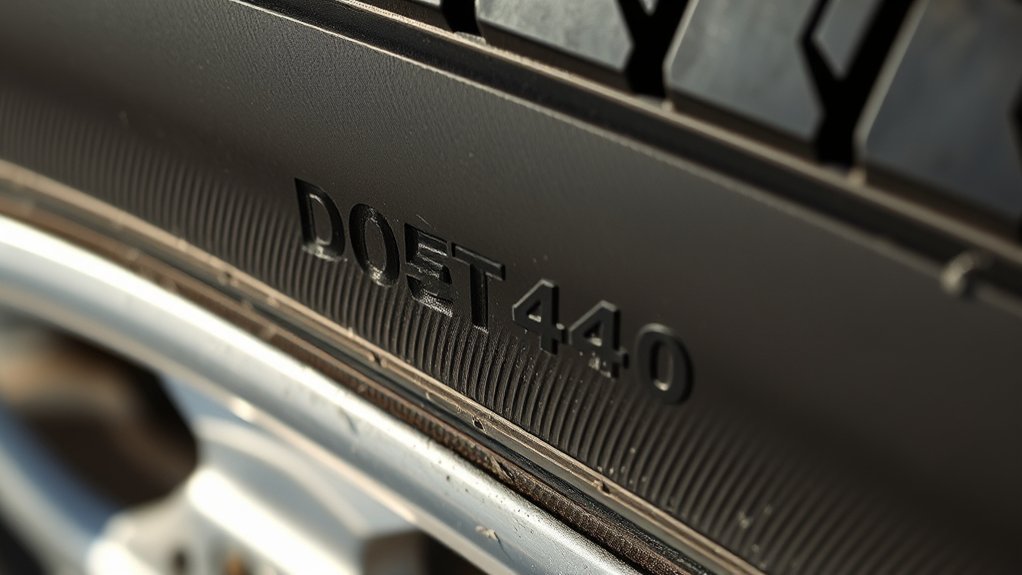
The DOT code on a tire is the tire’s identification number. It helps you confirm that the tire was built to applicable U.S. safety standards, record the tire for recalls, and find the tire’s manufacture date. The most important part for most drivers is the final four digits: they show the week and year the tire was made.
Quick Answer
To read a tire DOT code, find the letters “DOT” on the sidewall, then look for the full Tire Identification Number. The last four numbers are the date code: the first two show the manufacture week, and the last two show the year. For example, 3520 means week 35 of 2020.
Key Takeaways
- The DOT symbol means the tire manufacturer certifies the tire meets applicable Federal Motor Vehicle Safety Standards.
- The last four digits of the DOT Tire Identification Number show the tire’s manufacture week and year.
- The full DOT/TIN may appear on only one side of the tire, so check both sidewalls.
- Tire age is only one safety factor. Also check tread depth, cracking, bulges, punctures, pressure, vibration, and your vehicle or tire manufacturer’s guidance.
- Register new tires and keep the DOT/TIN recorded so manufacturers can contact you if a tire recall is issued.
At a Glance
| Time Required | 2–5 minutes per tire |
| Difficulty | Easy |
| Tools Needed | Flashlight, phone camera, and a tire pressure gauge for routine maintenance |
| Cost | Free for a visual check; professional inspection cost varies by shop |
What Is the DOT Code and Why Does It Matter for Safety?

The DOT code is part of the tire’s Tire Identification Number, often shortened to TIN. Under federal tire identification rules, the DOT symbol is a certification that the tire conforms to applicable Federal Motor Vehicle Safety Standards. You can read the rule in 49 CFR §574.5.
For drivers, the DOT/TIN matters because it can help with three safety tasks:
- Checking tire age: the final four digits show the week and year of manufacture.
- Tracking recalls: the DOT/TIN identifies the tire for registration and recall notices.
- Confirming basic compliance: the DOT symbol shows the tire was marked as meeting applicable U.S. safety standards.
The DOT code is not a quality rating, tread-depth measurement, or tire “expiration date.” It is one important clue in a larger safety check.
Warning: Do not keep driving on a tire just because the DOT date looks acceptable. Replace or professionally inspect any tire with bulges, exposed cords, deep sidewall cuts, cracking, repeated air loss, severe uneven wear, or new vibration while driving.
[Products Worth Considering]

EVOULTES heavy duty tire inflator with an integrated gauge delivers accurate pressure readings from 10–120 PSI, helping you inflate, deflate, and check tires in one tool. The 16.5-inch extended dual-head air chuck with swivel base reaches hard-to-access dual wheel valves on trucks and RVs. A brass trigger core and side-mounted air release valve make operation smooth, with standard 1/4" NPT threading and quick-connect compatibility for easy setup.

The AstroAI 2 pack air chucks provide a heavy-duty, closed-flow locking design that helps keep air flowing during inflation while securely attaching to the valve stem. Built with 250 PSI rated brass components and compatible with Schrader valves, they feature 1/4" female NPT threads for a wide fit with common inflators. The straight tip and locking clip make filling tires and monitoring pressure more convenient.

The JACO FlowPro Tire Inflator measures, inflates, and airs down tires up to 100 PSI with battery-free operation and ±2% accuracy after calibration. It features a glowing pressure dial for night visibility, a heavy-duty steel build with a hybrid hose, and a precision push-to-inflate thumb trigger. The patented Lightning Air Chuck locks on for a secure seal, and the kit includes quick-connect hardware for easy inline use with your air compressor.
How to Find the DOT Code on Your Tires
Finding the DOT code usually takes only a quick sidewall inspection. Look near the rim on the tire sidewall for the letters DOT, followed by a group of letters and numbers.
- Park safely on level ground and set the parking brake.
- Look at the outside sidewall first, near the rim.
- Find the letters “DOT.” The code after those letters is the Tire Identification Number.
- Check the other sidewall if you only see a short or partial code. The full TIN may be molded on only one side.
- Record the final four digits or take a photo so you can check the tire’s age later.
The National Highway Traffic Safety Administration advises buyers to check the DOT Tire Identification Number and look on both sides because the full TIN may not appear on both sidewalls.
Pro Tip: If the full code is on the inner sidewall and is hard to read, use your phone camera with flash, turn the steering wheel for better access on front tires, or ask a tire shop to read it during rotation.
Breaking Down the DOT Code: Manufacturer, Plant, and Date Info
Modern DOT/TIN formatting is more structured than many older guides suggest. For current new tires, the TIN contains a plant code, manufacturer code, and date code. Older tires still on the road may show older 10–12 or 12-character formats, so do not panic if your in-service tire does not look exactly like a brand-new example.
| TIN group | Current new-tire format | What it means |
|---|---|---|
| DOT symbol | DOT | Certification mark for applicable U.S. safety standards |
| Plant code | 3 symbols | Identifies the tire plant assigned by NHTSA |
| Manufacturer code | 6 symbols | Identifies manufacturer-controlled tire characteristics or brand-owner information |
| Date code | 4 numbers | Shows the week and year the tire was manufactured |
Example format: DOT 1A2 ABCDEF 3520. In that example, the date code is 3520, meaning the tire was manufactured in the 35th week of 2020.
Note: Older tires may have a two-symbol plant code or a shorter TIN. That does not automatically mean the tire is fake, but it does mean you should rely on the final date code and a professional inspection if the tire is older or the format is unclear.
DOT Code vs. Tire Size Code

The tire’s DOT/TIN and its tire size marking are not the same thing. The DOT/TIN identifies the tire for safety, recall, plant, manufacturer, and date-code purposes. The tire size marking tells you whether the tire fits your vehicle.
A common tire size looks like 205/55 R16:
- 205 = tire width in millimeters
- 55 = aspect ratio, or sidewall height as a percentage of width
- R = radial construction
- 16 = wheel diameter in inches
To choose the correct replacement size, check the vehicle owner’s manual or the Tire and Loading Information Label on the driver’s door edge or doorjamb. NHTSA recommends using those vehicle-specific sources when selecting replacement tire size.
Tire Size Code Breakdown
The tire size affects handling, ride comfort, load capacity, braking, and speedometer accuracy. Replacing tires with a different size without manufacturer approval can affect stability control, anti-lock braking, drivetrain components, and fender clearance.
Importance of Tire Size
The right tire size helps the tire carry the intended load at the correct pressure and keeps the vehicle operating as designed. If you are unsure about plus-sizing, load ratings, speed ratings, or whether one tire can be replaced instead of a full set, ask a qualified tire professional.
Decoding Tire Age: The Last Four Digits Explained
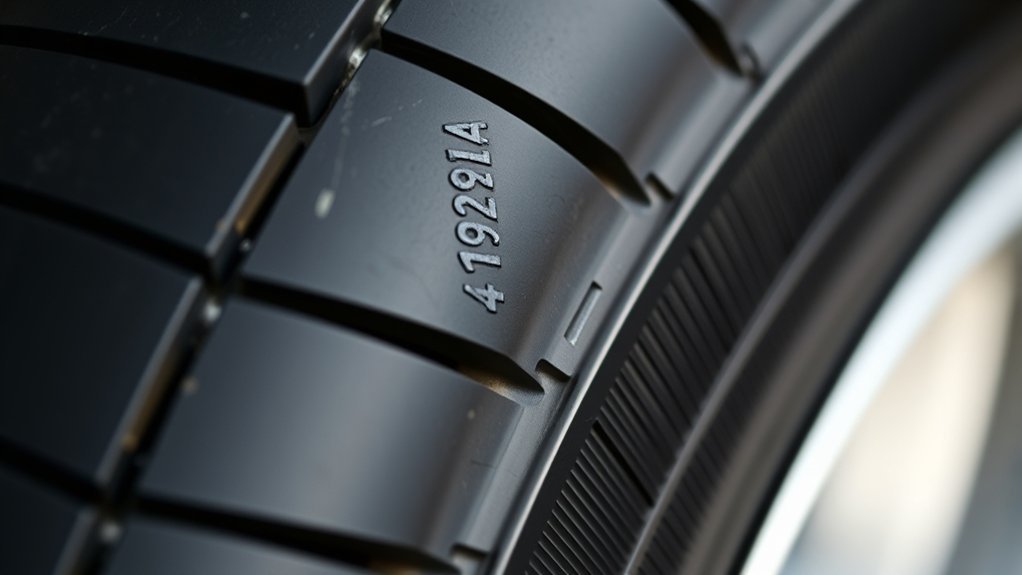
The final four digits of the DOT/TIN are the date code. The first two numbers show the week of manufacture, and the last two numbers show the year.
| Date code | Meaning | Age note |
|---|---|---|
| 3520 | 35th week of 2020 | Check condition and manufacturer guidance |
| 0109 | First full calendar week of 2009 | Too old for normal service |
| 2613 | 26th week of 2013 | Too old for normal service |
| 3-digit code | Pre-2000 tire date format | Replace; the tire is decades old |
For tires made after 1999, the four-digit format is the standard date-code format. If you find only a three-digit date code, the tire was made before 2000 and is far beyond normal service life.
Why Tire Age Matters for Safety
Tires age even when they have plenty of tread. Heat, sunlight, oxygen, ozone, storage conditions, underinflation, overloading, and impact damage can all affect the rubber and internal structure. That is why a tire can look acceptable but still need professional inspection or replacement.
NHTSA says tire service-life recommendations vary depending on the vehicle and tire manufacturer. Major tire manufacturers commonly recommend routine inspections, closer professional inspection after about five years, and replacement by ten years from the manufacture date even if the tire appears usable. Always follow the more conservative guidance from your vehicle owner’s manual, tire manufacturer, or tire professional.
[Products Worth Considering]

The Fanttik X10 Pro is a cordless portable tire inflator that reaches up to 150 PSI and can inflate an R15 tire in about 35 seconds for quick roadside or home top-ups. With AccuInFlate auto-stop and smart start/stop controls, it helps maintain accurate pressure and frees your hands once the target is reached. A high-visibility digital display and preset modes make it easy to set and monitor inflation for cars, motorcycles, bikes, and balls.

This portable cordless tire inflator delivers fast, efficient inflation for cars, motorcycles, bikes, and sports balls with a digital pressure gauge. Use the one-click PSI preset with auto shut-off for accurate, hands-free topping to your target pressure up to 150 PSI. It’s compact and rechargeable with a built-in emergency LED light plus valve adapters and accessories for quick, ready-to-go use.
Recommended Tire Age Timeline
| Tire age | What to do |
|---|---|
| 0–4 years | Check pressure monthly, inspect tread and sidewalls, rotate as recommended, and replace sooner if worn or damaged. |
| 5 years | Begin regular professional age-related inspections if recommended by your tire or vehicle manufacturer. |
| 6–9 years | Use extra caution. Follow manufacturer guidance, inspect often, and replace if there is cracking, bulging, vibration, repeated air loss, or reduced wet grip. |
| 10+ years | Replace, including spare tires, unless your tire or vehicle manufacturer requires an earlier replacement. |
| Unknown age | Do not guess. Have a tire professional inspect the tire and help identify the full DOT/TIN. |
Effects of Rubber Degradation
Aging rubber can harden, crack, lose flexibility, and reduce grip. Internal damage may not be visible from the outside. Replace a tire immediately if you see a sidewall bulge, exposed cords, deep cracks, tread separation, or damage from driving while flat.
A tire with deep tread can still be unsafe if it is old, damaged, underinflated, overloaded, or affected by internal deterioration.
Additional Information on Tire Sidewalls
Tire sidewalls include more than the DOT/TIN. You may also see the brand, model, tire size, load index, speed rating, maximum load, maximum inflation pressure, construction details, and Uniform Tire Quality Grading information.
- Load index: tells how much weight the tire can carry when properly inflated.
- Speed rating: shows the speed category for which the tire is rated under specific conditions.
- Maximum inflation pressure: is not the same as your vehicle’s recommended tire pressure.
- UTQG grades: compare treadwear, traction, and temperature resistance for many passenger tires sold in the United States.
For everyday inflation, use the vehicle placard or owner’s manual, not the maximum pressure molded on the tire sidewall.
Tire Registration and Recalls
The DOT/TIN is also important after you buy new tires. Manufacturers use tire registration information to contact owners if a tire recall is issued. You can register new tires through the tire manufacturer, dealer, or registration resources from the U.S. Tire Manufacturers Association.
You can also check tire and vehicle recalls through NHTSA’s recall lookup tools. Keep a photo or written record of each tire’s DOT/TIN, especially if you rotate tires, buy used tires, or store seasonal tire sets.
When Should You Talk to Tire Experts?
Talk to a tire professional if you cannot find the full DOT/TIN, the tire is five or more years old and due for inspection, or you notice anything unusual while driving.
Get help quickly if you see:
- Sidewall cracks, cuts, bubbles, or bulges
- Tread separation or exposed cords
- Uneven wear across the tread
- Repeated low tire pressure
- Vibration, pulling, thumping, or new road noise
- A tire date code that is missing, unreadable, or only three digits
Also ask a professional before buying used tires. A used tire may have hidden impact damage, poor repair history, unknown storage conditions, or an age that makes it unsafe even if the tread looks deep.
Frequently Asked Questions
Can I use tires without a DOT code?
For normal public-road use in the United States, do not use a tire that lacks required DOT marking. The DOT symbol and Tire Identification Number help confirm safety-standard certification, identify the tire, and support recall tracking. Some specialty racing, agricultural, or off-road-only tires may be marked differently and should only be used for their intended purpose.
How often should I check my DOT code?
Check and record the DOT/TIN when you buy tires, buy a used car, buy used tires, rotate seasonal tire sets, or inspect an older spare. You do not need to decode the date every month, but you should check tire pressure monthly and inspect tread and sidewalls regularly.
What if my DOT code is worn off?
Check the opposite sidewall first because the full TIN may be on only one side. If the code is damaged, unreadable, or missing from both sides, have a tire professional inspect the tire. Do not rely on an unknown-age tire for long trips, high speeds, heavy loads, or severe weather.
Are there different DOT codes for each tire brand?
Yes. The TIN includes plant and manufacturer-controlled information that can vary by tire maker, plant, brand owner, and tire line. Consumers usually do not need to decode every internal symbol. The final four-digit date code is the part most drivers need for age checks.
Does the DOT code affect tire warranty claims?
It can. Warranty terms vary by manufacturer, but the DOT/TIN can help verify the tire, production date, and whether it falls within a recall or warranty period. Keep your purchase receipt, tire registration, and a clear photo of each tire’s DOT/TIN.
Do spare tires have DOT codes and age limits?
Yes. Full-size and compact spare tires age even when they are rarely used. Check the spare’s DOT/TIN, pressure, sidewall condition, and vehicle manual. Replace an old or damaged spare before you need it in an emergency.
Is a tire unsafe as soon as it turns six years old?
Not always. Six years is a common point where many drivers should be more cautious and follow manufacturer guidance closely. Some tires may need replacement earlier due to damage, tread wear, or manufacturer rules. Others may remain serviceable after inspection, but many manufacturers recommend replacement by ten years at the latest.
Can I check tire age before buying used tires?
Yes, and you should. Find the full DOT/TIN, decode the final four digits, and reject tires that are too old, cracked, repaired poorly, unevenly worn, or missing readable markings. A deep tread does not prove a used tire is safe.
Conclusion
Knowing how to read a tire’s DOT code gives you a quick way to check tire age, record tires for recalls, and make smarter replacement decisions. Look for the full DOT/TIN on the sidewall, decode the final four digits, and use that date along with tread depth, visible condition, pressure, driving feel, and manufacturer guidance. When in doubt, let a qualified tire professional inspect the tire before you trust it on the road.
Sources
- NHTSA TireWise — tire maintenance, tire labeling, pressure checks, tire-related safety information, and recalls.
- NHTSA Tire Buyers’ FAQ — DOT Tire Identification Number, last-four-digit date code, tire size, and sidewall guidance.
- 49 CFR §574.5 Tire Identification Requirements — federal TIN structure, DOT symbol, plant code, manufacturer code, and date code rules.
- Bridgestone Replacement Guidance — tread checks, professional inspection after five years, and replacement guidance for ten-year-old tires.
- Continental Tire Maximum Service Life Guidance — routine inspections, tire aging factors, and ten-year replacement guidance.
- U.S. Tire Manufacturers Association Tire Registration — why registering tires and keeping the DOT/TIN helps with recall notifications.

Related Articles

When to Switch From All-Season to Winter Tires on a 4Runner
Ineffective all-season tires in cold weather can jeopardize your safety—discover when to make the crucial switch for better traction and handling.
Read More
4Runner Tire Mileage: How Many Miles Should They Last
Curious about how long your 4Runner tires should last? Discover essential tips and factors that influence tire longevity.
Read More
How Long Do Toyota 4Runner Tires Typically Last
How long do Toyota 4Runner tires typically last? Discover the factors that influence tire longevity and essential tips for maintenance.
Read More