
Pros and Cons of Running Bigger Tires on a 4Runner
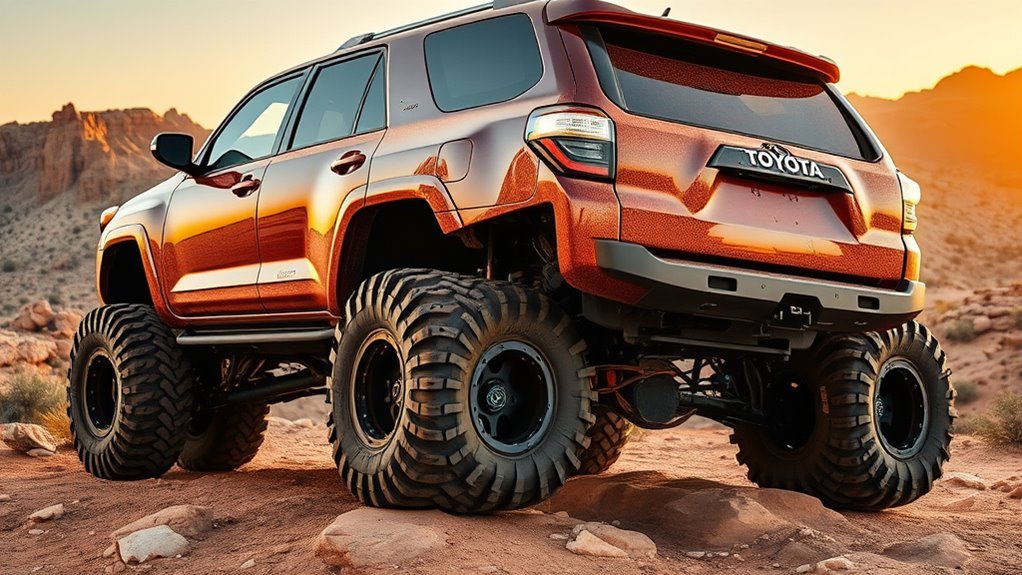
Choosing bigger tires for a Toyota 4Runner can transform the way it looks and drives, but tire size is never just a cosmetic choice. Diameter, width, wheel offset, load index, tire weight, lift height, caster, and trimming all decide whether the upgrade feels clean or turns into constant rubbing. This guide focuses mainly on the 2010–2024 fifth-gen 4Runner, then notes where 2025+ sixth-gen models differ.
Quick Answer
For most 2010–2024 4Runners, 265/70R17 is the no-hassle stock size, 275/70R17 is the easiest mild upgrade, and 285/70R17 is the common “bigger but still practical” choice with possible trimming. True 33s and 35s need more planning, especially for wheel offset, caster, body-mount clearance, speedometer error, and gearing.
Key Takeaways
- 265/70R17 is the safe factory baseline for many fifth-gen 4Runners with 17-inch wheels.
- 275/70R17 adds mild height and stance with the least drama on most stock-height fifth-gen trucks.
- 285/70R17 is about 32.7 inches nominally, not a true 33, and may need mud-flap removal, fender-liner push, trimming, or alignment changes.
- 33-inch and 35-inch tires can require lift, trimming, body-mount work, bumper clearance, speedometer correction, and sometimes re-gearing.
- Load index matters more than the C or E letter alone. Never install tires with less load capacity than your vehicle requires.
At a Glance
| Time Required | 30–60 minutes to compare sizes and inspect clearances; several hours to a full day if trimming, alignment, lift parts, or speedometer calibration are needed. |
| Difficulty | Easy for 265/70R17 and many 275/70R17 setups; moderate for 285/70R17; advanced for true 33s, 35s, body-mount chops, and re-gearing. |
| Tools Needed | Tire-size calculator, tape measure, flashlight, chalk or painter’s tape, torque wrench, jack and stands for inspection, alignment printout, and a qualified tire or 4×4 shop for major modifications. |
| Cost | About $900–$1,800 for four all-terrain tires, plus mounting/balancing. Add roughly $100–$250 for alignment, $1,000–$3,500+ for quality lift parts, and much more if gears, bodywork, or custom fabrication are required. |
Before You Buy: Know Your 4Runner Generation
The most common 4Runner tire-size advice online is written for the 2010–2024 fifth-generation 4Runner. That matters because the 2025+ sixth-generation 4Runner rides on a different platform and has different wheel and tire packages.
For 2024 fifth-gen models, Toyota listed P265/70R17 tires on several 17-inch wheel trims and P245/60R20 tires on 20-inch wheel trims. For current sixth-gen models, Toyota’s 2026 4Runner information lists 33-inch Toyo Open Country A/T III tires on TRD Pro and Trailhunter.
Note: If you own a 2025+ 4Runner, do not blindly follow fifth-gen body-mount and trimming advice. Use your exact trim, factory wheel offset, and tire placard as the starting point.
[Products Worth Considering]

The ROCKBROS LED Screen Mini Bike Pump Pro offers fast, automatic inflation up to 120 PSI with a clear digital gauge, making tire maintenance effortless. Its compact, pocket‑size design and cordless operation let you carry it anywhere, while the dual Presta and Schrader valve compatibility ensures versatility for road, mountain, and e‑bikes. The built‑in battery provides up to 200 seconds of continuous use and recharges in just 25 minutes via USB‑C. A multi‑color battery indicator and protective silicone guard add convenience and durability.

The VIAIR 400P EF is a 12V portable air compressor designed for off‑road trucks and SUVs, delivering fast, high‑performance inflation for up to 35‑inch tires. Its upgraded head improves heat dissipation and reduces noise, while a 5‑in‑1 hose and dual‑compartment bag add convenience. Versatile power options and a stable I‑Beam sand tray make it ideal for rugged terrain and heavy‑duty use.

The Evjeal portable tire inflator delivers rapid, hassle‑free inflation for cars, motorcycles, bicycles and sports balls, infl a high‑capacity battery and auto shut‑off for precise pressure control. Its digital LCD and bright LED light provide real‑time readings and nighttime visibility, while the built‑in power bank lets you charge devices on the go, making it an essential travel companion.
What Fits Stock? 4Runner Tire Sizes From 265 to 275 Without Lifting
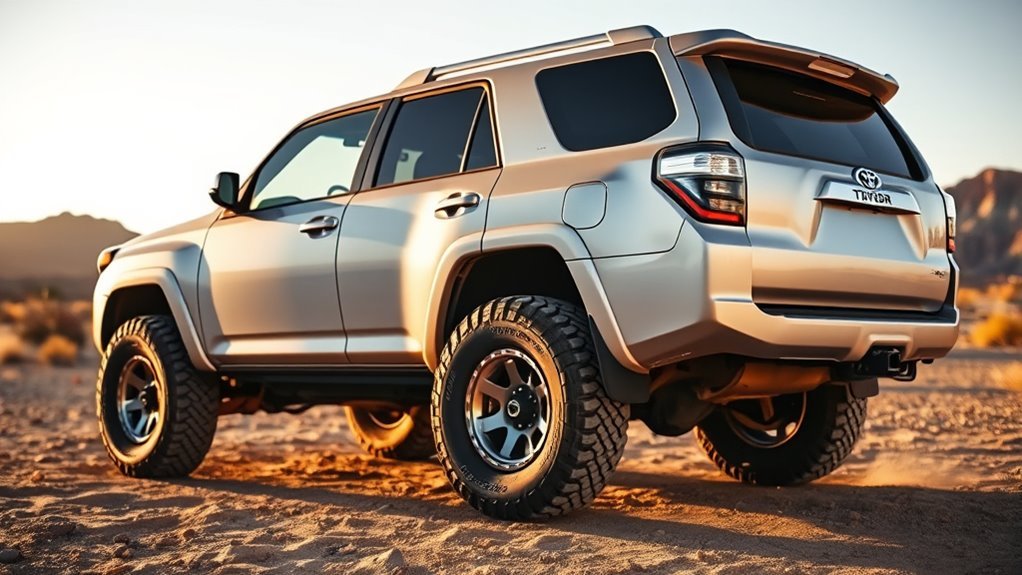
If you want a clean tire upgrade without touching the suspension, start with the factory size and move up slowly. On many 2010–2024 4Runners with 17-inch wheels, the factory baseline is 265/70R17. That size is about 31.6 inches tall nominally and gives the best chance of no rubbing, stock-like fuel economy, and normal steering feel.
Moving to 275/70R17 is the easiest mild upgrade. It is about 32.2 inches tall nominally, adding about 0.55 inch of total diameter and about 0.28 inch of radius compared with 265/70R17. That small gain gives you a little more ground clearance and a fuller wheel well without forcing you deep into supporting modifications.
Most 275/70R17 setups on factory-style wheels clear with little trouble, but every 4Runner is slightly different. Mud flaps, fender liners, wheel offset, tire tread shoulder shape, worn suspension bushings, and alignment all affect rubbing at full steering lock.
Pro Tip: Compare the tire manufacturer’s measured diameter and approved rim-width range before buying. A “285/70R17” from one brand may measure slightly taller, wider, or squarer than another.
[Products Worth Considering]

The BLACK+DECKER 20V Cordless Inflator offers versatile power options—120V AC, 12V car, and 20V battery—to inflate tires, sport balls, and large inflatables quickly. Its...
4Runner Tire Size Comparison Chart
The table below uses common nominal tire-size math. Real tires vary by brand, tread depth, load range, inflation, and measuring rim width, so use this as a planning guide rather than a final clearance guarantee.
| Tire Size | Nominal Diameter | Change vs. 265/70R17 | Speedometer Effect at 60 mph | Typical Fifth-Gen Fitment Notes |
| 265/70R17 | 31.6 in. | Baseline | 60.0 mph actual | Factory size for many 17-inch fifth-gen trims; best for daily driving and zero drama. |
| 275/70R17 | 32.2 in. | +0.55 in. diameter | About 61.0 mph actual | Best mild upgrade; usually stock-suspension friendly with possible minor liner or mud-flap adjustment. |
| 285/70R17 | 32.7 in. | +1.10 in. diameter | About 62.1 mph actual | Common upgrade; often needs fender-liner push, mud-flap removal, trimming, caster adjustment, or lift depending on setup. |
| 295/70R17 | 33.3 in. | +1.65 in. diameter | About 63.1 mph actual | Aggressive fit; expect lift, trimming, offset planning, and possible body-mount clearance work. |
| 285/75R17 | 33.8 in. | +2.22 in. diameter | About 64.2 mph actual | True 33-plus territory; plan on lift, trimming, alignment work, and possible gearing discussion. |
| 35×12.50R17 | About 35.0 in. | +3.39 in. diameter | About 66.4 mph actual | Major build size; usually requires lift, body-mount chop, trimming, wheels, gearing, and spare-tire planning. |
The tire-diameter formula is simple: sidewall height multiplied by two, plus wheel diameter. You can also use a trusted tire calculator, but always confirm the tire maker’s published specs for the exact tire you plan to buy.
How to Check Clearance Before Trimming
Do this before you order tires, and repeat it after installation. It takes time, but it saves you from cutting parts you did not need to cut.
- Confirm your factory size. Check the tire placard on the driver-side door jamb, your current tire sidewall, and the owner information for your trim.
- Check wheel specs. Width and offset can create rubbing even when the tire diameter looks safe on paper.
- Inspect common rub points. Look at the front mud flaps, front fender liner, body mount, bumper edge, upper control arm, and sway bar area.
- Test full lock both ways. Turn the wheel fully left and right while parked, then inspect clearances with a flashlight.
- Test reverse and compression. Some 4Runners rub only while reversing, braking, turning into a driveway, or flexing off road.
- Mark contact points. Use chalk or painter’s tape before trimming so you remove only what is needed.
- Align after major changes. More positive caster can help pull the tire away from the rear of the front wheel well, but it must stay within a safe alignment range.
Warning: Never choose a tire with a lower required load capacity than your 4Runner needs. Use the door-jamb placard, tire manufacturer specs, and a qualified tire professional. Tire changes can affect handling, braking, speedometer accuracy, odometer accuracy, TPMS behavior, and warranty coverage.
285/70R17 and 33-Inch Tires: Minor Trims vs. Lift Requirements
The 285/70R17 is one of the most popular fifth-gen 4Runner upgrades because it looks aggressive without jumping all the way into a dedicated 35-inch build. It is about 32.7 inches tall nominally, so it is often called a 33, but it is not the same as a 285/75R17 or 33×12.50 tire.
On a conservative wheel offset, 285/70R17 tires may need only mud-flap removal, fender-liner push, or light trimming. On wider wheels or negative-offset wheels, the same tire may rub the bumper, liner, body mount, or fender edge much sooner. Offset can make a tire feel larger because it swings the tread through a wider arc during steering.
A 2-inch to 3-inch lift helps vertical clearance and approach angles, but lift height alone does not erase rubbing. During turning and compression, the tire still moves toward the rear of the front wheel well. That is why some lifted 4Runners still need trimming while some carefully aligned, stock-wheel setups clear better than expected.
The tire size is only half the story. Wheel offset, caster, tread shape, and how hard you use the suspension decide whether a 4Runner tire upgrade clears cleanly.
Calculate Your MPG Loss, Speedometer Error, and Power Drop Before Going Bigger
Bigger tires usually add weight, rolling resistance, and rotational inertia. That can reduce fuel economy and make the 4Runner feel slower, especially with heavy all-terrain or mud-terrain tires. The exact MPG loss is not the same for every build, so treat any fixed number as a rough estimate.
Use three calculations before buying:
- Speedometer change: New tire diameter ÷ old tire diameter. If your speedometer shows 60 mph on 285/70R17 tires, your actual speed is roughly 62 mph compared with a 265/70R17 baseline.
- Effective gear ratio: Current axle ratio × old tire diameter ÷ new tire diameter. Taller tires make the effective ratio numerically lower, which softens acceleration.
- Restore-ratio estimate: Current axle ratio × new tire diameter ÷ old tire diameter. This shows the axle ratio needed to feel closer to stock again.
For example, if a fifth-gen 4Runner with a 3.73 axle ratio moves from 31.6-inch tires to 35-inch tires, the effective ratio feels closer to about 3.37. That is why many serious 35-inch builds discuss 4.56 or 4.88 gears. For mild 275/70R17 or 285/70R17 upgrades, re-gearing is usually not the first move; tire weight, driving style, and terrain matter more.
Track your real fuel economy for two tanks before the tire swap and two tanks after. Use the same route and driving style if possible. That gives you a real number for your 4Runner instead of a forum guess.
35-Inch Tires: Body Mount Chop, Re-Gearing, and 3+ Lift Needs
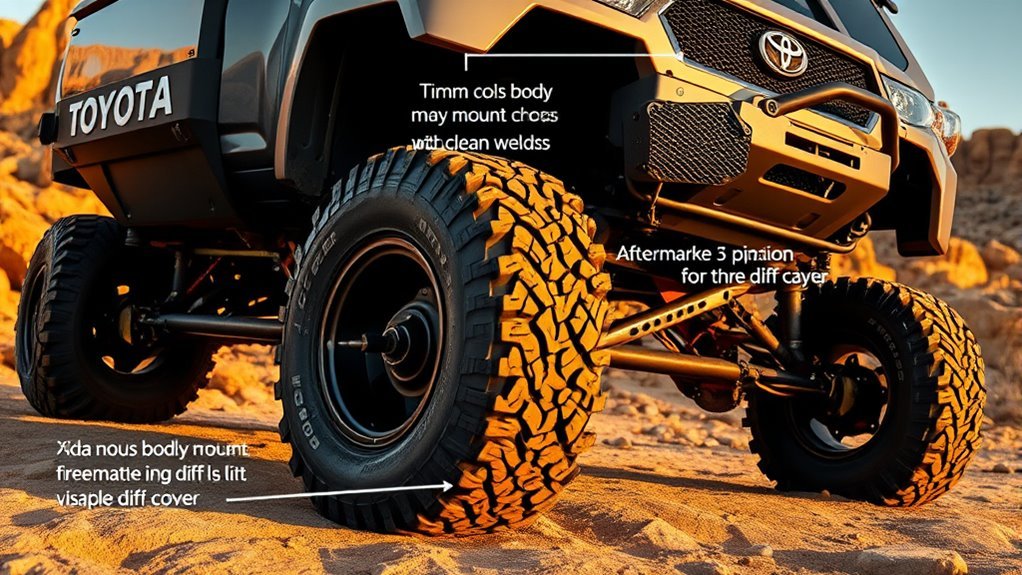
Stepping up to 35-inch tires is a different level of commitment. You are no longer choosing a simple tire upgrade; you are building around the tire. The reward is more ground clearance, more sidewall, a bigger footprint, and a dominant trail stance. The cost is weight, complexity, trimming, and more stress on factory driveline parts.
Most fifth-gen 35-inch builds need several supporting changes:
- Suspension lift: A quality 3-inch range suspension setup is common, but it must be installed and aligned correctly. Cheap height alone can create poor ride quality and bad geometry.
- Body-mount clearance: The body mount can become a contact point with large tires, especially during full-lock turns. A body-mount chop should be done by someone who can cut, plate, weld, seal, and protect the area correctly.
- Bumper and fender trimming: Front bumper corners, liners, mud flaps, and pinch areas may need reshaping or trimming.
- Wheel and offset planning: Low-offset wheels can improve stance but often increase rubbing. Conservative offset usually clears better.
- Re-gearing discussion: Taller, heavier tires reduce effective gearing. Re-gearing helps restore throttle response and can reduce transmission hunting on hills.
- Spare-tire plan: A full-size 35 may not fit cleanly in the factory spare location. Plan for a rear carrier or another secure spare solution.
Do not treat 35s as a weekend tire-only decision. Budget for the whole system: tires, wheels, lift, alignment, trimming, bodywork, gears, speedometer correction, spare mounting, and possible brake or driveline upgrades.
Wheel Offset, 20-Inch Wheels, and Spare Tire Fitment
Two 4Runners can run the same tire size and have totally different rubbing results because the wheels are different. A tire on a wheel with more negative offset sits farther outward. That wider stance looks strong, but it can push the tire into the bumper and fender liner during turns.
Factory-style offsets usually keep the tire tucked in better. More aggressive aftermarket offsets can require more trimming even with the same diameter. If your goal is the least rubbing, do not shop tire size without checking wheel width and offset.
If your 4Runner came with 20-inch wheels, remember that the tire sizes are different even when the overall diameter is similar. A P245/60R20 is close in height to a 265/70R17, while sizes such as 275/60R20 or 285/55R20 change width, sidewall, and clearance in different ways. The same clearance-check process still applies.
The spare tire also deserves attention. A slightly larger spare may fit under the cargo area, but a true 33 or 35 can be tight or impossible depending on tire width, tread, inflation, hitch setup, and underbody space. Test the spare before you need it on a trail.
C-Rated or E-Rated: Match Your Tire Construction to Actual Use
Every tire choice demands a trade-off between capability and daily comfort. The right answer is not always the heaviest tire. Start with load index, then compare load range, tire weight, sidewall strength, tread design, and ride quality.
A C-load or lighter-duty all-terrain can be the better match for a daily-driven 4Runner that sees gravel roads, snow, sand, and mild trails. It usually weighs less than an E-load version of the same tire, which helps ride comfort, acceleration, braking feel, and fuel economy.
An E-load tire makes more sense when the build is heavy or the terrain is sharp. If you run steel armor, drawers, a roof rack, water, tools, recovery gear, towing load, or rocky trails, the stiffer construction and stronger sidewalls can be worth the added weight and firmer ride.
Do not choose E-rated tires just because they sound tougher. A stiff, heavy tire on a mostly stock daily driver can make the 4Runner ride harsher and feel slower. At the same time, do not choose a lighter tire if it lacks the load capacity your vehicle requires. Use the tire placard, the tire manufacturer’s load tables, and guidance from a qualified tire shop.
Best 4Runner Tire Size by Use Case
The best tire size is the one that matches how you actually drive, not the most extreme setup you can imagine.
- Daily driver: Stay with 265/70R17 or choose a light 275/70R17 all-terrain. You keep comfort, mileage, and easy fitment.
- Daily plus weekend trails: 275/70R17 is the sweet spot for many owners. It adds stance and clearance without turning the truck into a project.
- Balanced overland build: 285/70R17 works well when paired with thoughtful wheel offset, alignment, and light trimming. Watch tire weight if you drive long highway miles.
- Dedicated trail build: True 33s or 35s make sense when you are ready for lift, trimming, armor, recovery gear, gearing, and spare-tire changes.
- Heavy towing or hauling: Focus on load index, inflation, heat control, and braking before focusing on diameter.
Common 4Runner Tire Upgrade Mistakes
- Assuming lift height fixes all rubbing. It does not. Offset, caster, and tire width still matter.
- Ignoring tire weight. A heavier tire can hurt acceleration, braking feel, and MPG more than a small diameter change.
- Buying by size name only. Check actual measured diameter, tread width, and approved rim width.
- Skipping alignment. Caster and toe can make or break a 285/70R17 setup.
- Forgetting the spare. A tire you cannot carry safely is not trail-ready.
- Dropping load capacity. Never install a tire that does not meet the load needs of the vehicle.
- Skipping recalibration. Larger tires can make the speedometer read low and the odometer record fewer miles than actually driven.
Frequently Asked Questions
What size tires are good for a 4Runner?
For many 2010–2024 4Runners, 265/70R17 is best for stock daily driving, 275/70R17 is the easiest mild upgrade, and 285/70R17 is the common balanced off-road upgrade. True 33s and 35s need more planning, trimming, and supporting modifications.
Is 265 or 275 better for a 4Runner?
Choose 265/70R17 if you want the lowest-risk factory feel. Choose 275/70R17 if you want a slightly taller tire, fuller stance, and a bit more ground clearance without jumping into major trimming or drivability trade-offs.
Can I fit 285/70R17 tires on a stock 4Runner?
Sometimes, but it depends on tire model, wheel offset, alignment, mud flaps, fender liners, and suspension condition. Many owners need at least a fender-liner push, mud-flap removal, light trimming, or alignment work to clear 285/70R17 tires cleanly.
Do I need a lift for 33-inch tires on a 4Runner?
Often, yes, but lift height is not the only factor. A 285/70R17 is about 32.7 inches and may clear with minor work. A larger 285/75R17 or 33×12.50 setup usually needs lift, trimming, careful offset, and a good alignment.
How much MPG will I lose with bigger 4Runner tires?
There is no fixed number. A mild 275/70R17 upgrade may be barely noticeable, while heavy 285s, true 33s, or 35s can produce a clear MPG drop. Tire weight, tread pattern, pressure, roof load, gearing, and driving speed all matter.
Are C-rated or E-rated tires better for a 4Runner?
C-rated or lighter-duty tires are usually better for comfort and daily driving. E-rated tires are better for heavy builds, sharp rocks, towing, and hauling. Always check load index first; the tire must meet or exceed the load capacity your 4Runner requires.
Will a larger spare tire fit under a 4Runner?
Some mild upgrades may fit in the factory spare location, but true 33s and 35s can be difficult or impossible depending on tire width, tread, inflation, hitch parts, and underbody clearance. Test-fit the spare before you travel off road.
Does this tire guide apply to the 2025+ 4Runner?
Only partly. The 2025+ sixth-gen 4Runner has a different platform and different factory wheel/tire packages. Use this guide for general tire-size concepts, but confirm fitment for your exact 2025+ trim before buying.
Conclusion
Your 4Runner becomes a different machine with every tire size jump. A 265 keeps it simple. A 275 adds useful stance with low risk. A 285 brings real trail presence but demands closer attention to clearance. True 33s and 35s move the build into lift, trimming, gearing, spare-tire, and speedometer territory. Choose the footprint that matches the terrain you actually drive, then build around it with clean measurements instead of guesswork.
Sources
- Toyota 2024 4Runner eBrochure — factory fifth-gen wheel and tire sizes by trim.
- Toyota USA Newsroom: Fifth and Sixth Generation 4Runner — generation split and 2025+ platform context.
- Toyota 2026 4Runner — current-generation TRD Pro and Trailhunter 33-inch tire reference.
- Tire Rack: How to Calculate Tire Dimensions — tire diameter math and measured-size caution.
- Tire Rack: Load Ranges and Ply Ratings — load range and replacement tire load-capacity guidance.
- NHTSA TireWise — tire safety, tire ratings, and consumer tire information.

Related Articles
4Runner Pulls to One Side: Is It a Tire or Alignment Issue
Which culprit—tire defect or caster angle—is secretly sabotaging your 4Runner's straight-line stability?
Read More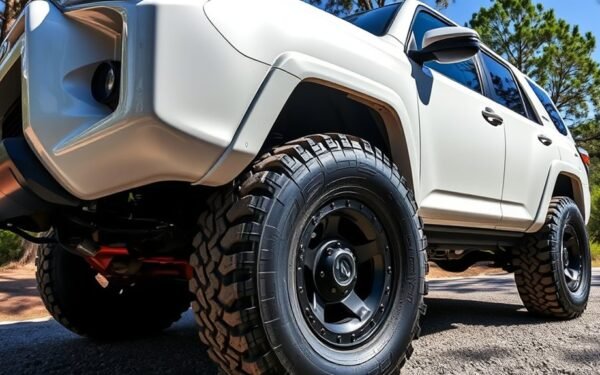
Biggest Tire That Fits a Stock 4Runner Without a Lift
Curious about the largest tire you can fit on a stock 4Runner without a lift? Discover essential tips for the perfect fit!
Read More
4Runner Vibration After New Tires: Troubleshooting Steps
One critical step most 4Runner owners skip could reveal why your new tires still shake—discover it before your next highway trip.
Read More