
Toyota Camry All-Season Tires Explained: What They Can and Can’t Do

All-season tires are often a practical choice for a Toyota Camry because they balance quiet-road comfort, wet traction, tread life, and light-snow capability. They work best when your winters are mild and roads are usually cleared. If you regularly drive on ice, packed snow, or through sustained freezing weather, all-weather or dedicated winter tires provide a better safety margin.
Quick Answer
All-season tires are a good fit for most Toyota Camry drivers in moderate climates. Choose a tire that matches the size, load index, and speed rating on the driver-side door placard. For frequent snow, ice, or prolonged cold, use 3PMSF-rated all-weather tires or a complete set of winter tires.
Key Takeaways
- All-season tires suit commuting, highway travel, rain, and occasional light snow.
- They cannot match dedicated winter tires on ice, packed snow, or deep snow.
- Camry tire size and ratings vary by model year, trim, wheel package, and drivetrain.
- An M+S marking is not the same as verified severe-snow performance; look for the 3PMSF symbol when winter traction matters.
- Check cold tire pressure monthly, inspect the tread and sidewalls, and follow the maintenance schedule for rotation.
What You Need to Know About All-Season Tires for Your Camry
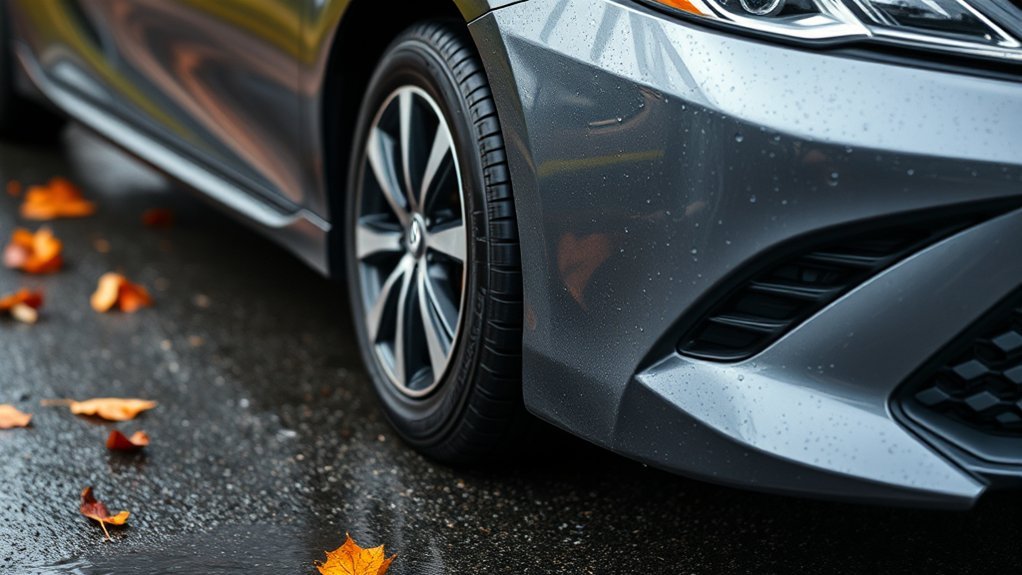
All-season tires use tread patterns and rubber compounds designed to provide balanced performance across dry roads, rain, and light winter conditions. Their grooves can help move water away from the contact patch, but no tire can eliminate hydroplaning. Speed, tread depth, tire pressure, and standing-water depth still affect control.
For a Camry, fitment matters as much as the tire category. Toyota has used different wheel and tire combinations across model years and trims. Check the Tire and Loading Information label on the driver-side door jamb before buying. Match the listed size and choose a load index and speed rating that meet or exceed the vehicle’s original requirements.
Many all-season tires carry an M+S marking. That marking is based mainly on tread-design criteria and does not confirm performance through a standardized severe-snow traction test. A tire with the Three-Peak Mountain Snowflake, or 3PMSF, symbol has passed a defined snow-traction test. Some all-weather tires carry this symbol while remaining suitable for year-round use.
Note: The pressure molded on a tire’s sidewall is its maximum permitted pressure for the stated load, not the recommended pressure for your Camry. Use the cold-pressure specification on the vehicle placard.
[Products Worth Considering]

EVOULTES heavy duty tire inflator with an integrated gauge delivers accurate pressure readings from 10–120 PSI, helping you inflate, deflate, and check tires in one tool. The 16.5-inch extended dual-head air chuck with swivel base reaches hard-to-access dual wheel valves on trucks and RVs. A brass trigger core and side-mounted air release valve make operation smooth, with standard 1/4" NPT threading and quick-connect compatibility for easy setup.

This portable cordless tire inflator delivers up to 160 PSI with fast 17 L/min airflow to help you quickly top up tires and get back on the road. It features dual power mode, running on a 21V rechargeable battery or a 12V DC adapter for convenient roadside use. An automatic shut-off with digital pressure gauge helps prevent overinflation, and a built-in LED light improves visibility in low-light conditions.

The JACO FlowPro Tire Inflator measures, inflates, and airs down tires up to 100 PSI with battery-free operation and ±2% accuracy after calibration. It features a glowing pressure dial for night visibility, a heavy-duty steel build with a hybrid hose, and a precision push-to-inflate thumb trigger. The patented Lightning Air Chuck locks on for a secure seal, and the kit includes quick-connect hardware for easy inline use with your air compressor.
Benefits of Choosing All-Season Tires
A well-matched all-season tire can make everyday Camry ownership simple and predictable. The main benefits include:
- Year-round convenience in moderate climates: You can avoid seasonal tire changes when temperatures and snowfall remain manageable.
- Balanced wet and dry performance: Quality models are designed for commuting, highway driving, and normal rain conditions.
- Comfort-focused options: Touring all-season tires often prioritize a quiet ride, smooth response, and long-distance comfort.
- Broad availability: All-season models are widely offered in the sizes and ratings used across Camry trims.
- Multiple performance choices: You can select comfort-oriented touring tires, fuel-efficient designs, or performance all-season tires with sharper steering response.
The trade-off is that each design favors different goals. A tire optimized for long tread life may feel less responsive than a performance model. A tire with stronger snow capability may create more road noise or give up some warm-weather precision. Compare tested wet braking, ride comfort, noise, snow traction, and warranty terms instead of relying only on an “all-season” label.
Drawbacks of All-Season Tires in Severe Weather
All-season tires are compromises by design. They remain useful across a broad range of normal conditions, but they do not provide the specialized rubber compounds and tread features used by dedicated winter tires. Their limits become most noticeable on ice, packed snow, deep snow, and during prolonged cold.
Warning: Do not assume AWD, traction control, or an M+S marking makes an all-season tire suitable for severe winter roads. These systems can help the car move, but braking and cornering still depend heavily on available tire grip.
Performance in Extreme Conditions
Cold weather changes tire behavior. Around 45°F, or 7°C, is a useful planning point for comparing seasonal tires, not a universal on-off limit. As temperatures fall, conventional all-season compounds can become less flexible. Dedicated winter tires are designed to remain pliable in cold conditions and use tread features that improve grip in snow and slush.
Summer tires sit at the opposite end of the spectrum. They are optimized for warm dry and wet roads, but they should not be used in snow or ice. For a Camry driven through four distinct seasons, the best choice depends on how often you face freezing temperatures and untreated winter roads.
Reduced Traction on Ice
Ice exposes one of the biggest all-season tire weaknesses. Conventional all-season tread and compounds generally cannot match a true winter tire’s braking and cornering performance on slick surfaces. Even a 3PMSF rating verifies traction on a standardized snow test, not complete mastery of glare ice.
If freezing rain, black ice, or packed snow is common in your area, a full set of winter tires is the safer seasonal setup. Install the same tire type on all four wheels so the front and rear axles respond consistently during braking and emergency maneuvers.
Limited Deep Snow Handling
Deep snow requires space in the tread to bite, clear snow, and maintain forward traction. Standard all-season tires usually have less aggressive winter-focused tread than dedicated snow tires. As a result, they may spin more easily, take longer to stop, or struggle to maintain steering control when snow becomes deep or compacted.
Drivers who see occasional light snow on plowed streets may still be comfortable with a capable all-season tire. Drivers who regularly encounter unplowed roads, mountain travel, or heavy snowfall should consider a 3PMSF-rated all-weather tire at minimum, with dedicated winter tires offering the strongest cold-season performance.
All-Season vs. Winter, All-Weather, and Summer Tires

Each tire category is designed around a different performance range. The table below shows the practical differences without treating temperature as a rigid guarantee.
| Tire Type | Best Use | Main Limitation |
|---|---|---|
| All-Season | Moderate climates, dry and wet roads, and occasional light snow | Reduced capability on ice, packed snow, and deep snow |
| All-Weather | Year-round use where stronger snow performance is needed; look for 3PMSF | May not equal a dedicated winter tire on ice or in severe conditions |
| Winter | Sustained cold, snow, slush, and icy winter travel | Faster wear and softer handling in warm weather; requires seasonal changes |
| Summer | Warm-weather dry and wet grip, braking, and responsive handling | Not designed for snow, ice, or freezing conditions |
Performance in Various Conditions
On warm dry pavement, performance all-season tires can provide responsive handling, while touring models usually favor comfort and noise control. In rain, tread design, compound quality, remaining tread depth, and correct inflation all affect braking and hydroplaning resistance.
In light snow, some all-season tires provide usable traction, but performance varies widely by model. A 3PMSF-rated all-weather tire offers verified severe-snow traction and can be a sensible one-set solution for drivers with moderate winters. A dedicated winter tire remains the strongest choice for repeated ice, deep snow, and long periods of cold weather.
Temperature Suitability Comparison
The commonly used 45°F threshold helps drivers decide when winter or summer tires may move outside their preferred operating range. It should not be treated as a precise limit for every tire. Road temperature, precipitation, tire model, tread depth, and driving conditions all matter.
- All-season tires: Designed for a broad range of moderate conditions, including light cold-weather use.
- All-weather tires: Built for year-round use with verified snow traction when marked 3PMSF.
- Winter tires: Designed to stay flexible and provide better winter grip as temperatures remain near or below 45°F.
- Summer tires: Designed for warm conditions and unsuitable for snow, ice, or freezing weather.
How to Confirm the Right Camry Tire Size and Rating
Do not choose tires based only on the words “Toyota Camry.” Tire specifications can vary by model year, trim, wheel package, and market. Use this process before ordering:
- Read the driver-side door placard. Record the front and rear tire size, recommended cold pressure, and seating or load information.
- Check the owner’s manual. Confirm whether your Camry has any model-specific rotation, replacement, or spare-tire instructions.
- Match the load index. Do not install a tire with a lower load-carrying rating than the original specification.
- Match the speed rating. Use the original rating or a suitable equivalent approved for the vehicle and your driving conditions.
- Confirm wheel compatibility. The tire must be approved for the wheel width and diameter fitted to the car.
- Keep the set consistent. Four matching tires provide the most predictable handling. Avoid mixing seasonal categories across axles.
UTQG treadwear, traction, and temperature grades can help compare some passenger tires, but they do not replace independent braking tests or vehicle-specific fitment. Treadwear warranties also vary by model and include conditions such as rotation records, alignment, and proper inflation. A warranty mileage figure is not a promise that every driver will achieve that distance.
Maintenance Tips for All-Season Tires
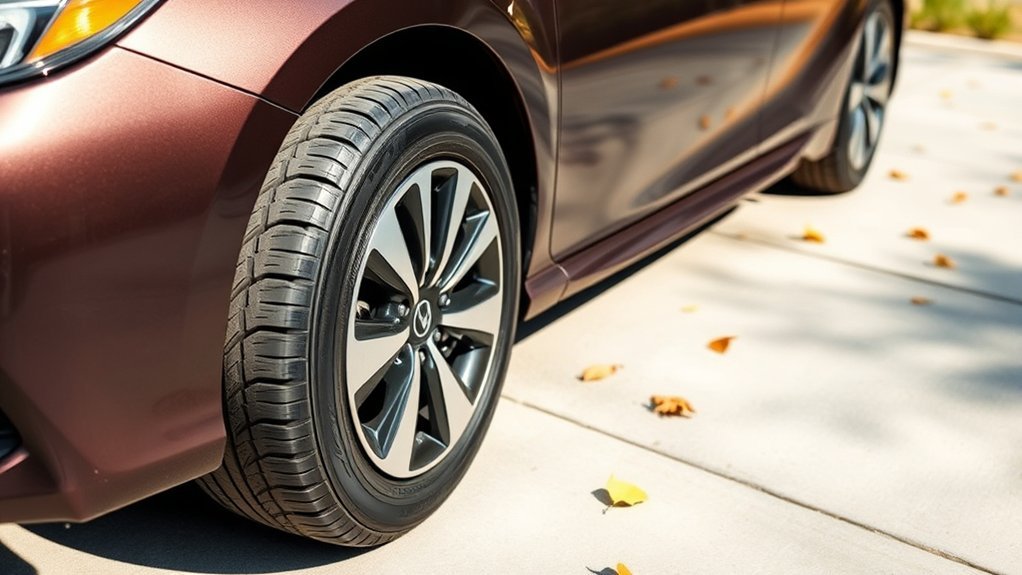
Regular maintenance helps your Camry’s tires wear evenly and retain predictable grip. Use the vehicle placard and owner’s manual as your primary references.
- Check pressure monthly: Follow NHTSA tire-pressure guidance and measure all tires when cold, meaning the car has been parked for at least three hours. Check before long trips and during major temperature changes.
- Do not rely only on TPMS: The warning light normally appears after a tire is already significantly underinflated. A handheld gauge catches smaller changes sooner.
- Rotate on schedule: Follow Toyota’s vehicle-specific rotation guidance and the tire manufacturer’s warranty requirements. NHTSA gives 5,000 to 8,000 miles as a general interval when the vehicle manufacturer recommends rotation.
- Inspect tread depth: Replace a tire when it reaches 2/32 inch of tread, the U.S. minimum cited by NHTSA, or sooner if damage, irregular wear, or poor wet-weather performance makes continued use unsafe.
- Inspect the sidewalls: Cuts, cracks, bulges, exposed cords, repeated pressure loss, or impact damage require professional inspection.
- Correct alignment problems: Feathering, one-sided wear, steering pull, or an off-center steering wheel can indicate alignment or suspension issues.
- Check tire age: Read the final four digits of the DOT code for the manufacturing week and year. Follow the tire and vehicle manufacturers’ age-based inspection and replacement guidance.
Pro Tip: Keep a simple record of pressure checks, rotations, alignments, and repairs. It helps you spot recurring wear patterns and may be required to support a treadwear-warranty claim.
[Products Worth Considering]

The AstroAI L7 Air Tire Inflator refills car tires quickly with up to 150PSI max pressure and a fast 1-minute inflation claim. It includes 5 preset modes for car, motorcycle, bicycle, balls, and manual use, along with an auto shutoff to help prevent overinflation. Designed for convenience, it features a digital gauge with unit switching, a top LED light with multiple modes, and USB-C/USB ports for backup power.

This tire repair kit provides fast emergency puncture repair without removing the tire from the rim, helping you get back on the road quickly. Its screw plug system is designed for punctures in both tread and sidewall and includes a complete patch plug tool set with essential accessories. A portable storage bag makes it easy to carry for cars, trucks, SUVs, motorcycles, and heavy-duty applications.
Selecting All-Season Tires for Your Driving Style
The best Camry tire depends on where you drive, how much you value comfort, and which weather conditions you cannot avoid. Use the table as a starting point, then compare test results for the exact models available in your size.
| Driving Style or Need | Features to Prioritize |
|---|---|
| Daily Commuter | Quiet ride, wet braking, comfort, predictable handling, and treadwear warranty terms |
| Long-Distance Traveler | Highway stability, low noise, wet traction, durability, and broad service availability |
| Performance-Oriented Driver | Responsive steering, dry and wet braking, cornering grip, and the correct speed rating |
| Frequent Rain | Independent wet-braking results, hydroplaning resistance, and strong performance as tread wears |
| Occasional Light Snow | Proven light-snow traction; consider 3PMSF-rated all-weather tires for extra capability |
| Severe Winter Travel | A complete set of dedicated winter tires rather than conventional all-season tires |
When All-Weather Tires Make More Sense
All-weather tires can bridge the gap between conventional all-season and dedicated winter tires. Models carrying the 3PMSF symbol have passed a standardized snow-traction test and are designed for year-round use. They can suit Camry drivers who face meaningful winter weather but do not want to store and swap two tire sets.
They still involve compromises. A dedicated winter tire usually provides better ice and severe-winter performance, while a comfort-focused all-season tire may ride more quietly or last longer. Choose all-weather tires when snow capability is a priority, but winter conditions are not severe enough to justify a separate winter set.
Frequently Asked Questions
What are the downsides of all-season tires?
All-season tires trade specialized performance for versatility. They usually provide less grip than winter tires on ice and deep snow, and less warm-weather precision than summer tires. Performance also varies widely between models, so the category label alone does not show how well a tire brakes or handles.
Are all-season tires safe in snow?
They can be suitable for occasional light snow on maintained roads, but conventional all-season tires are not the best choice for ice, packed snow, or deep snow. Look for the 3PMSF symbol when verified snow traction matters, or use dedicated winter tires for severe conditions.
How often should Toyota Camry tires be rotated?
Follow the maintenance guide for your Camry’s model year and the tire manufacturer’s warranty terms. NHTSA gives 5,000 to 8,000 miles as a general interval when rotation is recommended, but your vehicle-specific schedule and rotation pattern take priority.
How do I find the correct tire pressure for my Camry?
Read the Tire and Loading Information label on the driver-side door jamb and check the owner’s manual. Measure pressure when the tires are cold. Do not use the maximum pressure printed on the tire sidewall as the vehicle’s recommended setting.
Should I replace two tires or all four?
Four matching tires provide the most consistent handling. When only two tires are replaced, many tire manufacturers recommend installing the new pair on the rear axle to reduce oversteer risk. Ask a qualified installer to confirm the correct approach for your Camry, especially if it has AWD.
Conclusion
All-season tires are a sensible choice for many Toyota Camry owners, especially commuters in moderate climates who value year-round convenience, wet-road confidence, comfort, and tread life. Their limits appear when roads become icy, snow grows deep, or cold weather lasts for long periods.
Start with the tire placard, match the original size and ratings, and choose a tire whose tested strengths fit your real driving conditions. Maintain cold pressure, tread depth, rotation, and alignment. When winter traction is a regular concern, step up to 3PMSF-rated all-weather tires or a complete winter set rather than expecting a conventional all-season tire to do every job.
Sources
- NHTSA TireWise: Tire Safety Ratings and Awareness — tire selection, pressure, tread depth, rotation, damage inspection, and replacement guidance.
- NHTSA Winter Weather Driving Tips — cold-pressure changes, winter inspection, and snow-tire guidance.
- Toyota Tire Rotation Guide — vehicle-specific rotation schedules and wear considerations.
- Michelin: Summer vs. Winter vs. All-Season Tires — seasonal tire differences and cold-weather performance.
- Michelin: Tire Markings Explained — M+S, 3PMSF, DOT date codes, load index, speed rating, and tread indicators.
- Michelin Tire 101 — matching tire sets, replacement placement, fitment, and tire-care basics.

Related Articles

Toyota Camry Tire Traction in Ice and Snow: A Practical Winter Driving Guide
Learn essential tips for maximizing tire traction on ice and snow in your Toyota Camry, ensuring your winter driving is safe and confident. Discover more now!
Read More
Do Toyota Camry Tires Need Snow Chains? When They Help and When They Don’t
How do snow chains enhance your Toyota Camry's winter driving safety, and when should you avoid using them? Discover the essential details inside!
Read More
When to Replace Winter Tires on a Toyota Camry: Tread Depth & Age Guide
Keep your Toyota Camry safe by knowing when to replace winter tires; learn crucial tips on tread depth and age that could save your life.
Read More