
Asymmetric vs. Symmetric Tires for Toyota Camry: Tread Pattern Differences
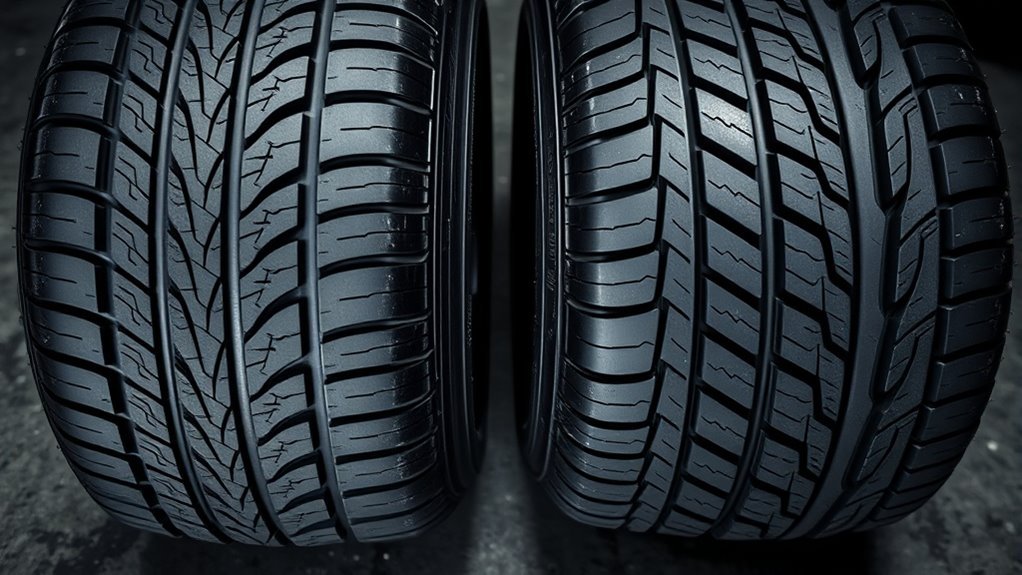
If you drive a Toyota Camry, the choice between symmetric tires and asymmetric tires comes down to how you drive, where you drive, and how much maintenance simplicity you want. Symmetric tires usually suit quiet commuting, easy rotation, and even wear. Asymmetric tires often add better wet-road control and sharper steering, especially when the tire is properly mounted and matched to your Camry’s size, load rating, and speed rating.
Quick Answer
For most Toyota Camry drivers, symmetric tires are a smart choice for low-cost commuting, quiet ride comfort, and simple rotation. Choose asymmetric tires if you often drive in rain, want sharper steering, or prefer a more responsive feel. Either way, correct size, load rating, tire pressure, and tread depth matter more than tread pattern alone.
Key Takeaways
- Symmetric tires use the same tread pattern across the tire, which helps with even wear, quiet driving, and flexible rotation.
- Asymmetric tires use different inner and outer tread zones to balance wet-road evacuation with dry-road cornering grip.
- Asymmetric tires must be mounted correctly if the sidewall is marked “outside” or “inside.”
- Do not choose by tread pattern alone. Check your Camry’s tire size, load index, speed rating, pressure label, and owner’s manual.
- For snow and ice, a true winter tire matters more than whether the tread is symmetric or asymmetric.
Symmetric vs. Asymmetric Tires for a Camry
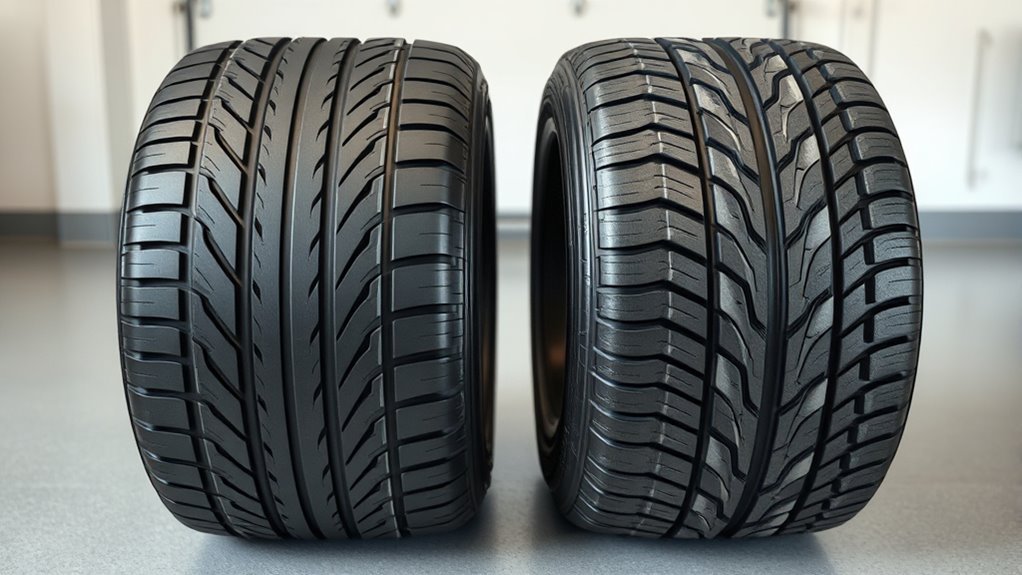
When you compare symmetric and asymmetric tires for a Toyota Camry, think of the choice as simple durability versus tuned performance. A symmetric tread has the same pattern across the full width of the tire. That makes it easy to rotate, predictable in normal driving, and often more affordable.
An asymmetric tread uses different inner and outer sections. The inner tread often has more grooves to move water away, while the outer shoulder is usually firmer for cornering and steering response. This can make the Camry feel more controlled in rain and more precise on dry roads.
The best choice is not always the most expensive tire. A well-rated symmetric tire can be better than a cheap asymmetric tire. Compare the specific tire model, not just the tread pattern.
| Best choice | Choose this tire type | Why it fits |
| Daily commuting | Symmetric | Quiet ride, even wear, easier rotation, and usually lower cost. |
| Frequent rain | Asymmetric | Inner grooves can help move water while the outer shoulder supports control. |
| Sharper handling | Asymmetric | Stiffer outer tread blocks can improve steering feel and cornering support. |
| Lowest upkeep | Symmetric | More rotation flexibility can help manage wear on a front-wheel-drive Camry. |
| Snow and ice | Winter tire | Winter compound and snow rating matter more than symmetric or asymmetric layout. |
[Products Worth Considering]

Monitor tire tread wear with a smart, color-coded depth gauge that shows clear condition ranges at a glance. The bar is range marked for fast, easy readings, helping you maintain safer traction and performance. Each gauge is portable with a pocket clip, and the set includes 20 units for daily use and sharing.

Keep your tires properly inflated with this analog VONDIOR tire pressure gauge, designed for fast, easy readings without batteries. The swiveling, two-axis hose and large glow dial help you measure at any tire angle with instant visibility. Built with a protective rubber shield, it supports durable, low-maintenance use for cars and trucks.

The SAFELIFE dial tire tread depth gauge measures tread depth in 1/32 inch increments with clear, easy-to-read 2-inch dial face. Color zones using a traffic light system help you quickly judge whether tread is low, marginal, or ample for safer driving. Built with a durable zinc cast body and a metal detect probe for precise, comfortable use across cars, motorcycles, trucks, and buses.
How Symmetric Tires Perform
Symmetric tires use the same tread design across the tire. This gives your Camry a steady contact pattern, predictable road feel, and simpler tire rotation. That matters because front-wheel-drive cars often wear front tires faster than rear tires.
You may notice these benefits:
- stable grip on dry pavement
- quiet rolling at city and highway speeds
- simple rotation patterns
- even tread wear when pressure and alignment are correct
- good value for normal commuting
Symmetric tires are a practical choice if you drive mostly on paved roads, keep normal speeds, and want long life without paying for extra performance features. The trade-off is that some symmetric designs do not channel heavy rain as well as a good asymmetric or directional tire.
How Asymmetric Tires Perform
Asymmetric tires divide the tread into zones. The inner section is usually built to help with water evacuation. The outer shoulder is usually firmer to support cornering and steering response. On a Camry, that can make the car feel more secure in rain and more precise during lane changes or curved highway ramps.
This does not mean every asymmetric tire is automatically better. Tire compound, tread depth, UTQG traction grade, inflation pressure, age, and the exact model all matter. A worn premium tire can still perform poorly, and a fresh touring tire with strong wet ratings may be the better buy for normal driving.
Wet and Dry Grip
In wet conditions, asymmetric tires often have inner grooves and channels that help move water away from the contact patch. This can reduce the chance of hydroplaning when the tire is in good condition and properly inflated.
On dry roads, the outer shoulder can support a firmer contact patch when you turn. That can improve steering feel compared with many basic symmetric touring tires.
For wet-road safety, also check the tire’s traction rating. The National Highway Traffic Safety Administration explains that tire traction grades relate to stopping ability on wet pavement.
Cornering Stability Benefits
When you take a corner, the outer shoulder of an asymmetric tire carries much of the side load. Wider or stiffer outer tread blocks can help the Camry feel more planted. This is most noticeable during quick lane changes, curved freeway ramps, and wet turns.
Symmetric tires can still corner safely when they are high quality, properly inflated, and not worn out. The difference is that asymmetric tires are often designed with more focus on mixed wet and dry control.
How Tread Patterns Affect Handling
Tread pattern affects how a tire clears water, how the tread blocks flex, how much road noise you hear, and how the tire responds when you steer. But tread pattern is only one part of the tire. Rubber compound, tire construction, sidewall stiffness, tread depth, and pressure all change how the tire feels.
Wet-Weather Grip
Wet grip depends on three things working together: enough tread depth, water channels that can move water, and a rubber compound that stays grippy in the temperature range you drive in. NHTSA says tires should be replaced when tread is worn down to 2/32 of an inch, and tread should be checked at least monthly when you check tire pressure.
- Asymmetric tires often help in rain because of dedicated inner water channels.
- Symmetric tires can still work well if they have strong wet ratings and enough tread depth.
- Low tread depth increases stopping distance and hydroplaning risk.
- Underinflation can hurt safety, wear, and fuel economy.
- Winter tires are the better choice for severe snow and ice.
Warning: Do not mix random tread patterns, sizes, load ratings, or speed ratings on your Camry. At minimum, keep matching tires on the same axle, and follow Toyota and tire-manufacturer guidance for your exact model year.
Cornering Stability
Cornering stability improves when the tire has enough tread, correct pressure, strong sidewall control, and tread blocks that do not flex too much under load. Asymmetric tires often help here because the outer shoulder is designed for lateral support.
| Tread type | Cornering behavior | Rotation note |
| Symmetric | Predictable and balanced for normal driving. | Usually the most flexible rotation option. |
| Asymmetric | Often sharper in turns and stronger in mixed wet/dry use. | Can often rotate normally if non-directional, but “outside” must stay outside. |
| Directional | Often strong in water evacuation when facing the correct direction. | Usually limited to front-to-rear rotation on the same side unless remounted. |
Which Tread Matches Your Driving?
Choose the tread pattern based on your real driving, not the most aggressive marketing claim. A Camry is usually used for commuting, family driving, highway travel, and mixed weather. That means comfort, braking, tread life, and wet control often matter more than sporty steering feel.
Choose symmetric tires for simple, quiet commuting. Choose asymmetric tires when rain grip and steering response matter more.
- Choose symmetric tires if you want lower cost, quiet operation, and easy rotation.
- Choose asymmetric tires if you drive often in rain or want a firmer steering feel.
- Choose winter tires if you regularly drive in snow, ice, or freezing temperatures.
- Choose by specific tire model, not tread pattern alone.
- Check owner guidance before changing size, load index, or speed rating.
[Products Worth Considering]

Measure tire tread depth quickly and accurately with this LUMITECO dial gauge that reads in 1/32" increments up to 14/32". The color-coded green/yellow/red zones make it easy to judge tire wear and know when replacement is needed. A rugged, compact design with a protective pouch helps keep the gauge ready for use on cars, trucks, motorcycles, and more.

These aluminum alloy tire valve stem caps with an O-ring seal help protect valve stems from corrosion while adding a clean, stylish look to your vehicle. The universal fit works across cars, trucks, motorcycles, bicycles, and more, making them an easy upgrade for everyday driving and off-road use. Installation is quick, and the included four-pack keeps all your tires dressed and protected.

Accurately measure tire tread depth with a calibrated gauge marked from 0 to 1 inch in 1/32 inch increments. The color-coded bar helps you quickly identify tread condition ranges, supporting safe driving for trucks, motorcycles, automobiles, and passenger vehicles.
Wet Weather, Noise, and MPG
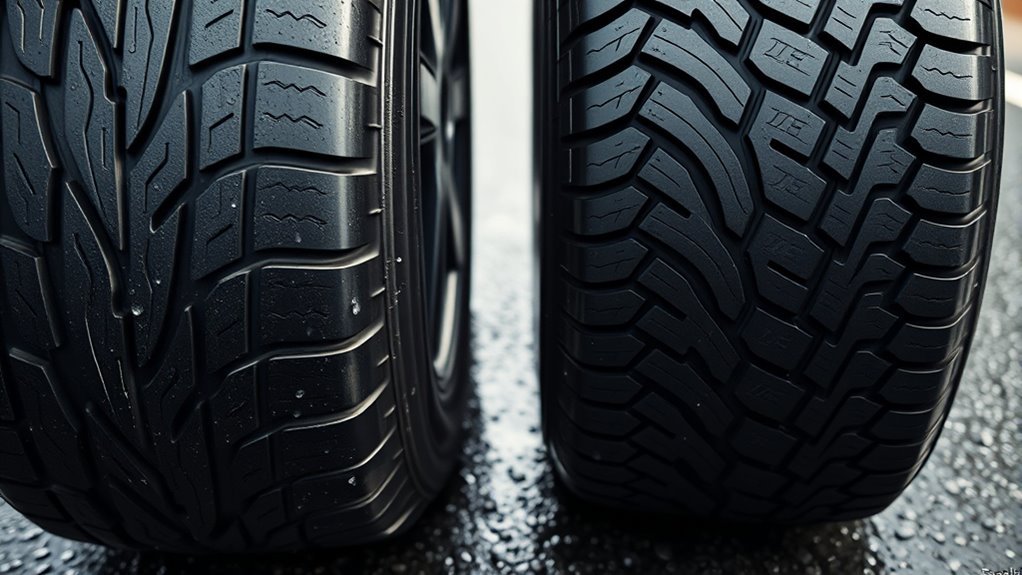
In rain, asymmetric tires often have an advantage because the tread can be tuned for two jobs at once: water movement on the inner side and dry-road support on the outer side. That can help your Camry feel more controlled when roads are wet.
Noise is less predictable. Some symmetric touring tires are very quiet. Some asymmetric tires also use varied tread block spacing to reduce highway hum. The best way to judge noise is to compare the exact tire model’s road-noise reviews and test results.
Fuel economy is also model-specific. Do not assume an asymmetric tire will automatically improve MPG. Rolling resistance depends on the tire’s compound, construction, size, inflation pressure, and load. NHTSA notes that proper tire pressure affects fuel consumption and tire life, so pressure checks matter no matter which tread pattern you buy.
Camry Tire Shopping Tips
Before buying tires for a Toyota Camry, confirm the basics. NHTSA recommends checking the owner’s manual or the Tire and Loading Information Label for the correct tire size. Toyota also provides model-specific manuals through its Toyota Owners manuals page.
- Match the tire size shown on your Camry’s tire label or owner’s manual.
- Match or exceed the required load index and speed rating unless Toyota or a tire professional says otherwise.
- Check whether the tire is symmetric, asymmetric, directional, or directional-asymmetric.
- For asymmetric tires, make sure the “outside” sidewall faces outward after mounting.
- For directional tires, make sure the rotation arrow points the correct way.
- Compare UTQG treadwear and traction grades where available.
- Check tire pressure at least monthly when tires are cold.
- Replace tires when tread reaches 2/32 inch, or sooner if wet grip becomes poor.
- Check for tire recalls through NHTSA recalls.
Pro Tip: When comparing two tires, do not stop at “symmetric” or “asymmetric.” Compare wet traction, treadwear warranty, road-noise reviews, rolling-resistance or fuel-efficiency information, and whether the tire is rated for the weather you actually drive in.
Note: Many asymmetric tires are not directional. That means they may still rotate from side to side as long as the outside sidewall remains outside. Directional tires are different because they must roll in the arrow-marked direction.
Frequently Asked Questions
What are the disadvantages of asymmetric tires?
Asymmetric tires can cost more, and they must be mounted correctly if the sidewall is marked “outside” or “inside.” Some models may also have less rotation flexibility if they are both asymmetric and directional. They are not a replacement for winter tires in severe snow or ice.
Does it matter if your tires have different tread patterns?
Yes. Mixing different tread patterns, brands, sizes, or wear levels can change braking, steering, and wet-road grip. If you cannot replace all four tires, keep matching tires on the same axle and ask a qualified tire professional what is safe for your Camry.
What are the three main types of tire tread pattern?
The three common tread pattern types are symmetric, asymmetric, and directional. Symmetric tires use the same pattern across the tire. Asymmetric tires use different inner and outer zones. Directional tires are designed to roll in one direction and usually have arrows on the sidewall.
Are asymmetric tires better for a Toyota Camry?
They can be better if you want stronger wet-road control and sharper steering. For normal commuting, a high-quality symmetric touring tire may be quieter, cheaper, and easier to maintain. The best tire depends on the exact model, ratings, tread depth, and your local weather.
Can you rotate asymmetric tires on a Camry?
Usually, yes, if the tire is asymmetric but not directional. The outside sidewall must remain facing outward. If the tire is directional, rotation is usually front-to-rear on the same side unless the tire is removed from the wheel and remounted.
Conclusion
For a Toyota Camry, symmetric tires make the most sense if you want quiet commuting, lower cost, easy rotation, and predictable wear. Asymmetric tires are worth considering if you drive often in rain or want sharper steering and stronger cornering support. The safest choice is the tire that fits your Camry correctly, has enough tread, carries the right load and speed rating, and matches your real driving conditions.
Sources
- NHTSA TireWise — tire size, tire ratings, pressure, tread depth, rotation, fuel consumption, and tire safety guidance.
- Toyota Owners Manuals and Warranties — model-specific Toyota owner manual lookup.
- NHTSA Recalls — tire and vehicle recall lookup.
[Products Worth Considering]

These universal tire valve stem caps help protect valve cores from dust, debris, and moisture while helping maintain stable tire pressure. The corrosion-resistant metal construction and sealed design provide reliable protection in road grime, mud, and winter conditions. Twist-on installation makes them quick to fit on cars, SUVs, trucks, and motorcycles.

Upgrade your Toyota’s wheels with durable aluminum alloy valve stem caps that help protect valve cores from corrosion and direct exposure to road grime, clay, water, and snow. Rubber rings improve sealing to help prevent air leakage and maintain stable tire pressure for safer driving. These caps are easy to install or remove without tools and add a unique, stylish look to your car.
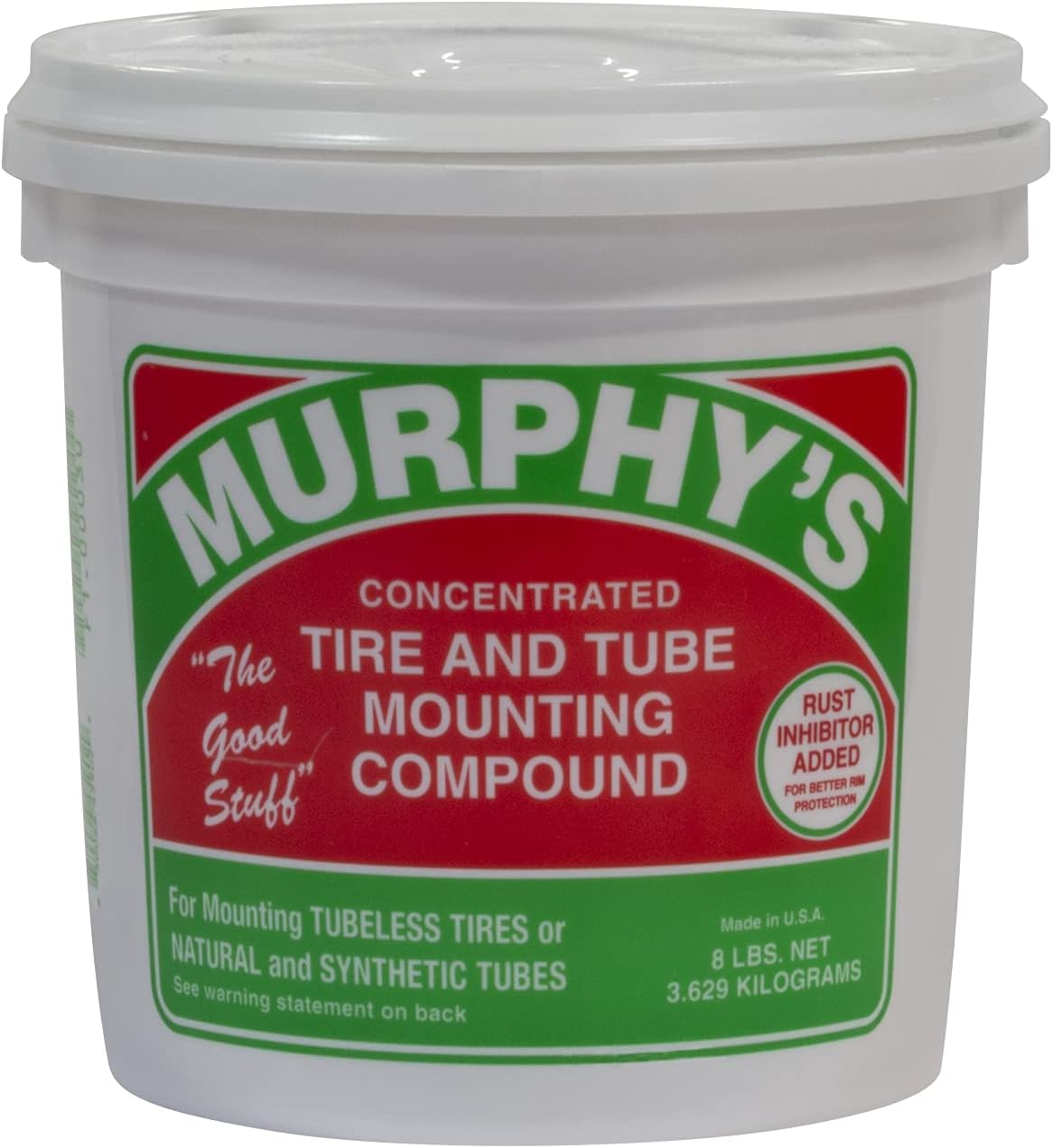
A concentrated tire and tube mounting compound designed to help simplify mounting rubber tires and tubes on passenger, semi truck, construction, and OTR applications. Its ultra-thick formula packs beads effectively and includes rust inhibitors to help protect against corrosion during use.

Related Articles

Toyota Camry All-Season Tires Explained: What They Can and Can’t Do
In exploring Toyota Camry all-season tires, discover their benefits and limitations—are they really the right choice for your driving needs?
Read More
Toyota Camry Tire Traction in Ice and Snow: A Practical Winter Driving Guide
Learn essential tips for maximizing tire traction on ice and snow in your Toyota Camry, ensuring your winter driving is safe and confident. Discover more now!
Read More
Do Toyota Camry Tires Need Snow Chains? When They Help and When They Don’t
How do snow chains enhance your Toyota Camry's winter driving safety, and when should you avoid using them? Discover the essential details inside!
Read More