
How to Protect Toyota Camry Tires From UV Damage and Cracking
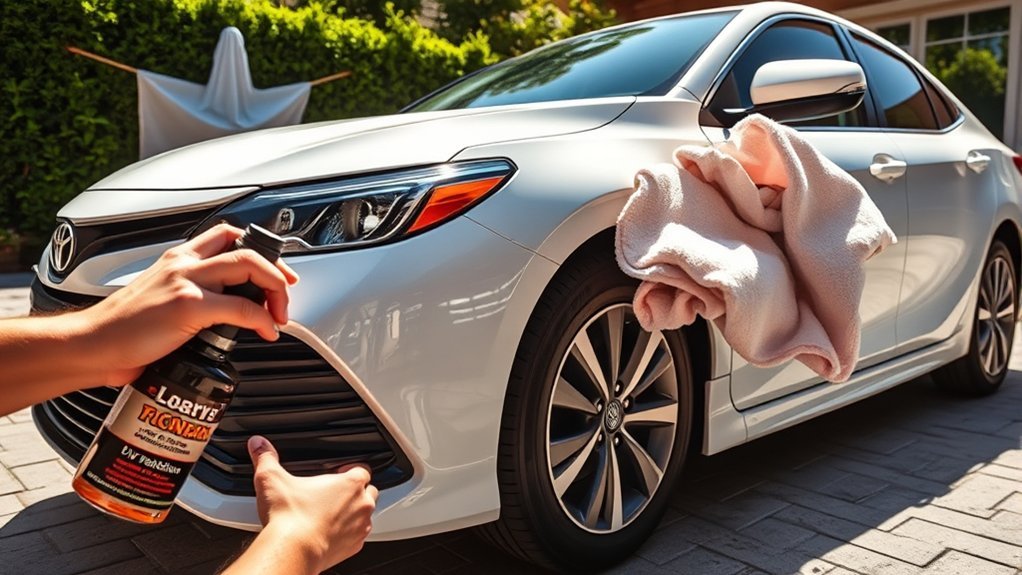
To protect your Toyota Camry tires from UV damage and cracking, regularly apply a high-quality tire protectant to create a moisture-retaining barrier. Park in shaded areas whenever possible, and use tire covers for long-term storage to block harmful UV rays. Maintain proper tire pressure to reduce stress and inspect your tires for signs of deterioration, like cracking or color change. By following these strategies, you can enhance your tires’ lifespan and performance, ensuring safer drives ahead.
Tire Maintenance Tips for Longevity
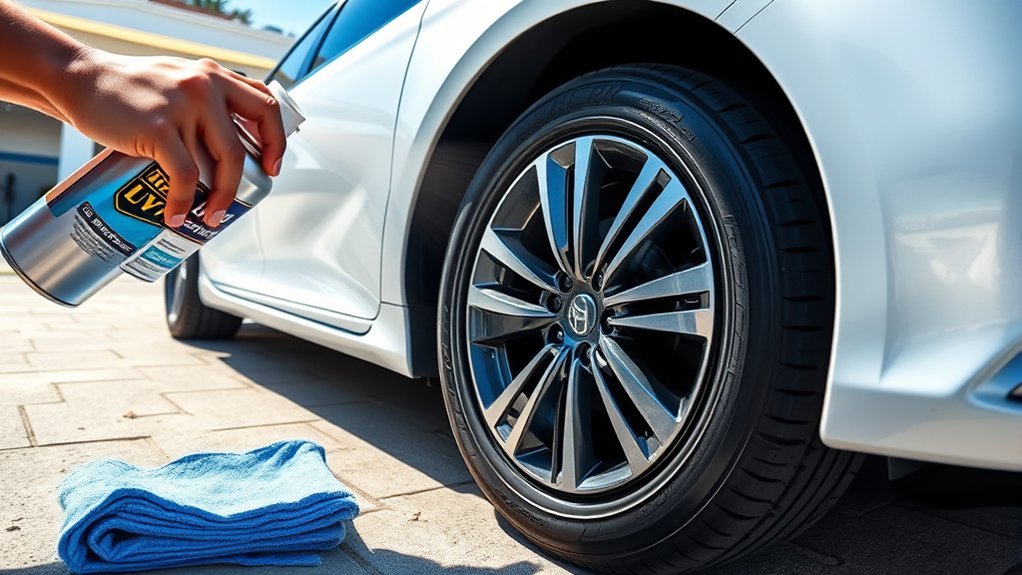
To guarantee your Toyota Camry’s tires last as long as possible, it’s essential to establish a regular maintenance routine. Start with tire rotation every 6,000 to 8,000 miles to promote even wear. This practice not only extends tire life but enhances handling and safety. Next, conduct regular pressure checks to maintain ideal inflation levels. Proper tire pressure prevents stress on the rubber, which can lead to cracking and deterioration over time. Additionally, apply a high-quality tire protectant every 4-8 weeks to shield against harmful UV rays and retain moisture in the rubber, helping to prevent dry rot. Don’t forget to park in shaded areas or use tire covers when your vehicle’s not in use; this minimizes direct sunlight exposure and slows down aging. Regularly inspect your tires for visible cracks or rough textures and address any issues immediately to guarantee your safety on the road.
How UV Rays Affect Your Tires
UV rays can greatly degrade your tires, causing the rubber to dry out and develop cracks, which increases the risk of blowouts. In sunny climates, this exposure accelerates aging, compromising structural integrity and making it harder to maintain proper tire inflation. To combat this, regular inspections and additional UV protection measures are essential for preserving your tires’ performance and safety.
UV Radiation Effects
Tires are vulnerable to the damaging effects of ultraviolet (UV) radiation, which can lead to significant deterioration over time. Prolonged UV exposure causes rubber to dry out, resulting in cracks and dry rot that compromise tire integrity. This deterioration can drastically shorten your tire lifespan, especially in sunny climates where heat amplifies UV effects. As tires age, visible cracks along sidewalls and tread become pronounced, signaling severe wear. Although manufacturers use carbon black to absorb UV rays, this protective feature diminishes over time. Here’s a breakdown of UV effects:
| Effect | Description |
|---|---|
| Drying Out | Rubber loses moisture, leading to brittleness. |
| Cracking | Visible fissures form, risking safety. |
| Reduced Lifespan | Accelerated aging cuts longevity. |
| Performance Issues | Deteriorated tires affect handling. |
| Maintenance Needs | Regular care is essential for protection. |
Aging and Deterioration Factors
As your Toyota Camry’s tires age, various factors contribute to their deterioration, particularly impacting safety and performance. UV radiation is a leading culprit, breaking down tire composition and increasing brittleness, which can lead to cracking. Prolonged exposure to sunlight accelerates this process, especially in sunny climates, where environmental impact plays a significant role.
To mitigate these effects, consider the following:
- Monitor for visible cracks on sidewalls and tread.
- Use UV protectants to shield tires from harmful rays.
- Store tires indoors or cover them when not in use.
- Regularly inspect tire condition to guarantee safety.
Signs of Cracking and Deterioration in Tires
Cracks and deterioration in your tires can greatly compromise your vehicle’s safety. Look for visible cracks along the sidewalls or tread, which often signal dry rot from prolonged UV exposure. A rough or brittle texture on the tire surface indicates advanced aging, reducing flexibility and increasing the risk of failure. If you notice your tires changing color from black to gray, that’s a sign of rubber breakdown due to oxidation and UV rays.
Perform regular tire inspections to catch small cracks or grooves early, as these suggest weakening structural integrity. Additionally, watch for ozone cracking, particularly in urban areas where UV radiation is high. This deterioration can accelerate due to environmental stressors. Addressing these signs promptly can help maintain your tires’ performance and longevity, ensuring a safer driving experience in your Toyota Camry. Always prioritize tire health to enhance your vehicle’s overall safety.
Effective UV Protection Strategies to Prevent Tire Damage
To protect your Toyota Camry’s tires from harmful UV rays, consider implementing several effective strategies that can greatly extend their lifespan. By being proactive, you can prevent damage and keep your tires in prime condition.
- Apply a High-Quality Tire Protectant: Use products like 303® Aerospace Protectant to form a moisture-retaining barrier against UV rays.
- Regularly Park in the Shade: Whenever possible, choose shaded areas to minimize direct sunlight exposure, slowing down the aging process.
- Use Tire Covers for Long-Term Parking: Invest in tire covers to block UV rays and shield your tires from environmental factors.
- Monitor and Maintain Tire Pressure: Keep your tires properly inflated to reduce stress on the rubber, minimizing cracking risks.
Choosing Tire Protectants for UV Defense
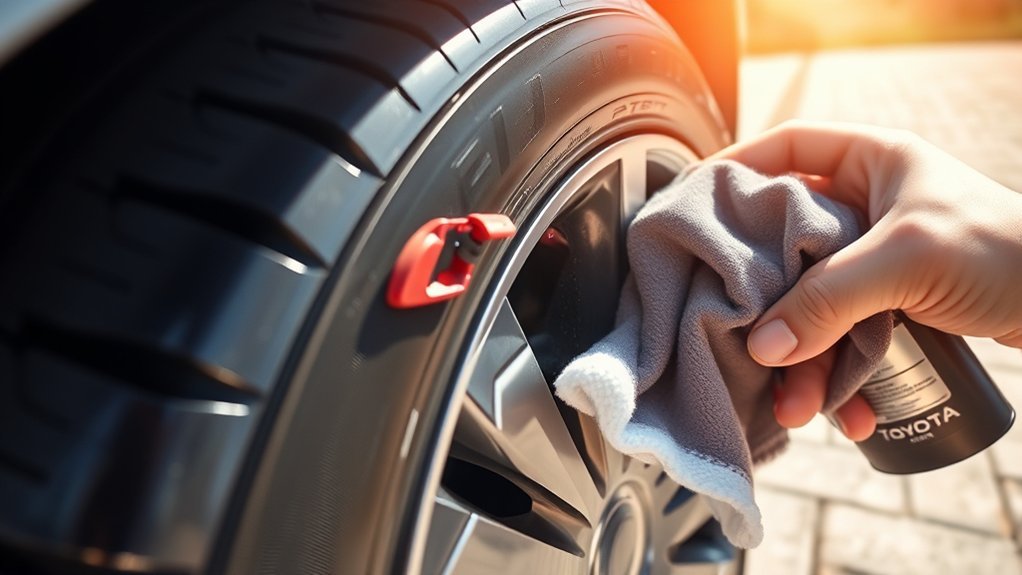
When selecting tire protectants for UV defense, it’s essential to evaluate products specifically designed to shield your tires from sun damage. Opt for high-quality protectants that contain silicone or other UV-blocking agents, ensuring effective UV defense options. Regular application is key; aim to apply these protectants every 4-8 weeks, as their protective benefits diminish with continued exposure to sunlight.
Additionally, choose protectants that help retain moisture in the rubber, preventing dry rot and extending your tires’ lifespan. Before purchase, verify compatibility with your Toyota Camry’s tires, since some products may not suit certain rubber compounds. Always read labels carefully for specific application instructions to maximize coverage and protection. By making informed choices about tire protectants, you empower yourself to maintain your tires’ integrity, ensuring safer and more efficient driving while liberating your vehicle from the damaging effects of UV exposure.
Storage Tips to Shield Tires From Damage
To effectively shield your tires from damage during storage, always use tire covers to protect against UV rays and environmental elements. Additionally, store your tires in a shaded area to minimize exposure to direct sunlight, which can lead to cracking and deterioration. These simple steps can greatly extend the lifespan of your tires and maintain their performance.
Use Tire Covers
Using tire covers is a critical step in safeguarding your Toyota Camry’s tires from environmental damage. These covers shield your tires from harmful UV rays, greatly reducing the risk of dry rot and cracking. To maximize their effectiveness, consider the following:
- Choose breathable tire cover materials to maintain tire moisture.
- Utilize seasonal cover usage to adapt to changing weather conditions.
- Ensure a proper fit to prevent dirt and debris buildup that can trap heat.
- Regularly inspect and clean your tire covers for ideal protection.
Investing in high-quality tire covers during long-term storage, especially in sunny climates, can extend the lifespan of your tires and keep them healthy for the road ahead.
Store In Shade
Storing your Toyota Camry in a shaded area can drastically reduce the risk of tire damage caused by UV exposure. The shade benefits are clear: it minimizes direct sunlight, a primary factor in rubber deterioration and cracking. Employing effective parking strategies, like choosing garages or parking under trees, not only protects your tires from harmful rays but also stabilizes temperature fluctuations that accelerate degradation. Additionally, consider using tire covers for extra protection during long-term parking. Regularly check your tires for early signs of UV damage, ensuring timely maintenance or replacement. To further enhance tire lifespan, apply a high-quality tire protectant. These proactive measures collectively safeguard your investment, granting you peace of mind on the road.
Indicators That It’s Time to Replace Your Tires
Recognizing the key indicators that it’s time to replace your Toyota Camry tires is essential for maintaining safety and performance. Ignoring tire replacement signs can lead to dangerous situations on the road. Here are critical signs to watch for:
Recognizing when to replace your Toyota Camry tires is crucial for safety and optimal performance on the road.
- Visible Cracking: Cracks along the sidewalls or tread indicate advanced deterioration.
- Brittle Texture: Tires that feel hard and inflexible suggest significant aging.
- Color Change: A shift from black to gray signals UV damage and oxidation.
- Tread Wear Indicators: If tread depth is below 2/32 of an inch, it’s time for new tires.
Being proactive about these indicators not only enhances your tire safety importance but also guarantees a smoother driving experience. Don’t wait until it’s too late—check your tires regularly to keep your Camry performing at its best.
When to Seek Professional Tire Help
Even after identifying the signs that it’s time to replace your tires, knowing when to seek professional help is equally important. If you notice severe cracking or dry rot on your Toyota Camry’s tires, don’t hesitate—seek a tire evaluation immediately to prevent blowouts. Persistent issues like uneven wear or loss of air pressure, despite regular maintenance, warrant consulting a professional for deeper insight into underlying problems.
When in doubt about your tires’ overall health, visiting a tire specialist for a thorough inspection can provide valuable professional advice and recommend necessary repairs or replacements. If your tires are over ten years old, even with adequate tread, it’s wise to get a professional assessment to evaluate UV damage and aging impacts. Regular professional inspections can catch early signs of deterioration, ensuring your tires remain safe and reliable for your driving needs.
Frequently Asked Questions
How Often Should I Apply Tire Protectant?
You should apply tire protectant every 4 to 6 weeks. Regularly check for UV damage signs, like cracks or fading. These tire maintenance tips help extend tire life and enhance performance, keeping your ride safe and smooth.
Can I Use Any Protectant on My Tires?
You can’t use just any protectant on your tires. Choose products specifically designed for tire maintenance, focusing on UV damage prevention. These guarantee maximum protection, prolonging tire life and enhancing performance while keeping your ride safe.
Does Tire Protectant Affect Traction?
Yes, tire protectants can affect traction stability. While they enhance tire longevity, excessive application may create a slippery surface, compromising grip. Always follow manufacturer instructions for balanced protection without sacrificing performance on the road.
Are There Specific Brands Recommended for UV Protection?
Like a shield against the sun, quality UV protection products such as 303 Aerospace Protectant and Meguiar’s Endurance can enhance tire longevity. Incorporate these tire maintenance tips, and you’ll keep your tires in top condition.
Can I Apply Protectant to Wet Tires?
You shouldn’t apply protectant to wet tires. For ideal tire maintenance, confirm they’re dry first. Wet surfaces can prevent proper adhesion, reducing protection against UV exposure and potentially compromising the longevity of your tires.
Conclusion
To keep your Toyota Camry’s tires in prime condition, remember: maintain them regularly, protect them from UV rays, and store them properly. By being proactive, you can prevent cracking, extend tire life, and guarantee safety on the road. Regular checks and timely replacements are essential for performance. Stay vigilant, stay informed, and stay safe—your tires deserve the best care to keep you rolling smoothly. Prioritize protection and you’ll prioritize performance.

Related Articles

Toyota Camry Tire Noise While Driving: What Each Sound Means
Grab the meaning behind your Toyota Camry’s tire noise while driving—each sound hints at a different problem, and the clues may surprise you.
Read More
How to Clean Brake Dust From Toyota Camry Wheels Without Damaging Them
Discover effective methods to clean brake dust from your Toyota Camry wheels without damage and uncover tips for long-lasting shine and protection.
Read More
Toyota Camry Steering Wheel Shaking: Tire Balance and Alignment Causes
Keen to stop your Toyota Camry steering wheel shaking? Discover the tire balance and alignment causes behind the wobble before it gets worse.
Read More