
Toyota Camry Donut Spare Tire Use Guide: Speed Limits, Distance & Tips
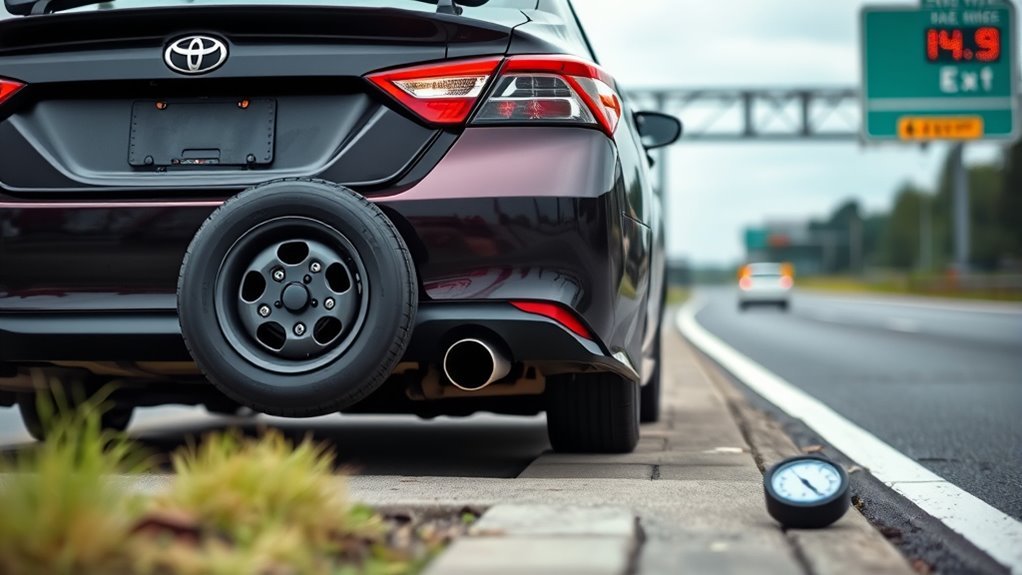
A Toyota Camry donut spare tire is a compact temporary spare, not a normal replacement tire. It is meant to help you get off the road safely and reach a tire shop, dealer, or safe repair location. Before driving on it, check the pressure, inspect the tire for damage, keep your speed low, and plan the shortest practical route.
Quick Answer
A Toyota Camry donut spare tire should be used only as a temporary emergency tire. Do not exceed 50 mph, use the common 50-mile rule as a conservative planning limit, and replace it with a standard road tire as soon as possible. Many Camry compact spares require about 60 PSI, but always confirm the exact pressure on your vehicle label, spare tire, or owner’s manual.
Key Takeaways
- A Camry donut spare is for short-term emergency use only, not commuting, highway trips, towing, or daily driving.
- Toyota’s compact-spare guidance says not to drive over 50 mph with a compact spare installed.
- Check the spare with a tire gauge before using it because many compact spares are not monitored by TPMS.
- Replace the spare immediately if it has cracks, bulges, tread separation, major wear, or will not hold pressure.
- Use the DOT date code to check age, and do not rely on an old spare just because it looks unused.
At a Glance
| Time Required | About 10–20 minutes to install if conditions are safe, plus a short drive to a repair shop |
| Difficulty | Basic, but only if the car is on a hard, flat, safe surface away from traffic |
| Tools Needed | Camry jack, jack handle, wheel nut wrench, wheel lock key if equipped, tire pressure gauge, and gloves if available |
| Cost | No cost to use the spare you already have; tire repair, replacement, or a new spare varies by tire size and shop |
Warning: Do not change a tire on a busy shoulder, soft ground, a slope, or anywhere the car may be hit by traffic. Turn on the hazard lights, move to a safe level area if possible, set the parking brake, and call roadside assistance if the location is unsafe.
What Is a Toyota Camry Donut Spare Tire?
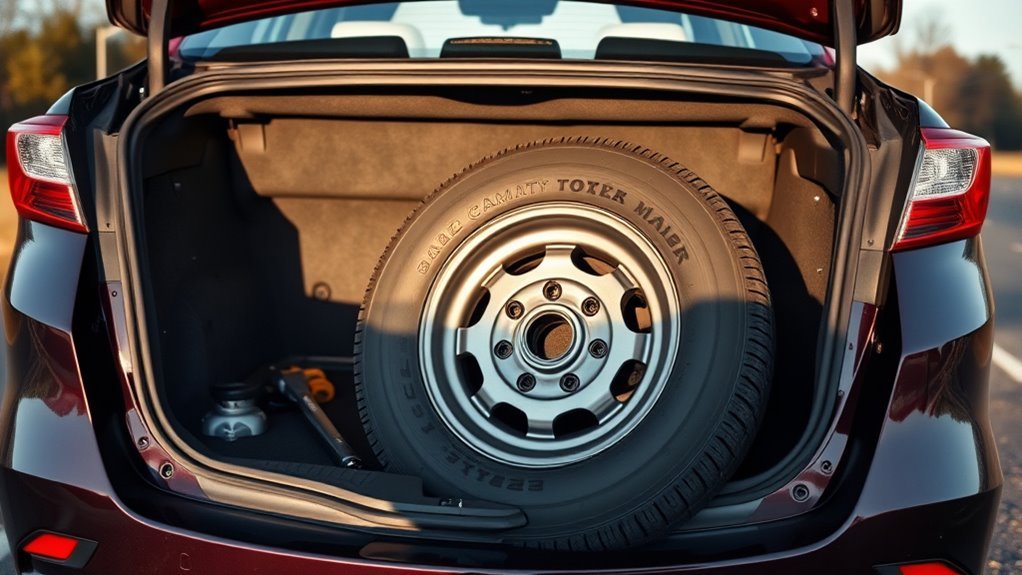
A Toyota Camry donut spare tire, also called a compact spare or temporary spare, is a smaller emergency tire designed to get your car to a safe repair location after a flat. Toyota describes its temporary spare as a compact replacement wheel and tire assembly for short-term driving while a regular tire is being serviced.
The main advantages are simple: it saves trunk space, weighs less than a full-size spare, and gives you a way to keep moving after a flat. The tradeoff is that it has less tread width, less load and heat capacity for sustained driving, and different handling than your normal Camry tires. That is why you should treat it as emergency equipment, not as a normal road tire.
Note: Some Camry model years and trims may have different spare-tire equipment, tire sizes, or repair kits. Always check the tire label, spare tire sidewall, and owner’s manual for your exact vehicle.
[Products Worth Considering]

This portable cordless tire inflator delivers up to 160 PSI with fast 17 L/min airflow to help you quickly top up tires and get back on the road. It features dual power mode, running on a 21V rechargeable battery or a 12V DC adapter for convenient roadside use. An automatic shut-off with digital pressure gauge helps prevent overinflation, and a built-in LED light improves visibility in low-light conditions.

The JACO FlowPro Tire Inflator measures, inflates, and airs down tires up to 100 PSI with battery-free operation and ±2% accuracy after calibration. It features a glowing pressure dial for night visibility, a heavy-duty steel build with a hybrid hose, and a precision push-to-inflate thumb trigger. The patented Lightning Air Chuck locks on for a secure seal, and the kit includes quick-connect hardware for easy inline use with your air compressor.

This roadside assistance kit helps drivers and passengers in urgent situations after an accident or breakdown, providing practical support while waiting for help. It includes a lightweight, compact tire inflator for fast inflation of standard vehicle tires, plus reinforced jumper cable protection for safer handling. Ideal for winter weather, road trips, camping, and travel, with everything stowed neatly in a trunk bag.
How Far Can You Drive on a Donut Spare Tire?
You should drive only as far as needed to reach a tire shop, Toyota dealer, or safe repair location. A common compact-spare rule is the 50/50 rule: drive no more than about 50 miles and no faster than 50 mph. Use that distance as a conservative planning limit unless your Camry owner’s manual or spare-tire label gives different instructions.
The reason is safety. A donut spare is smaller and narrower than your regular tire, so it can heat up faster, wear faster, and reduce traction if you keep driving. It can also change wheel-speed readings and affect Toyota safety systems. Replace it with a repaired or matching standard road tire as soon as possible.
Pro Tip: Before driving, search for the closest open tire shop or Toyota service center and choose a low-speed route. Avoid highways, steep grades, heavy traffic, and long detours when possible.
How Fast Can You Drive on a Donut Spare Tire?
Do not drive faster than 50 mph with a Toyota Camry compact spare installed. Toyota’s owner guidance for the 2025 Camry states not to drive at speeds over 50 mph or 80 km/h when a compact spare tire is installed.
Stay below that limit even if the car feels stable. The spare’s narrow tread and temporary construction can reduce grip during lane changes, hard braking, pothole impacts, and emergency maneuvers. Drive smoothly, leave extra following distance, and avoid cruise control or driver-assist reliance while the spare is installed.
A donut spare is not a “finish the trip” tire. It is a “get to help safely” tire.
Toyota Camry Donut Spare Tire Safety Tips
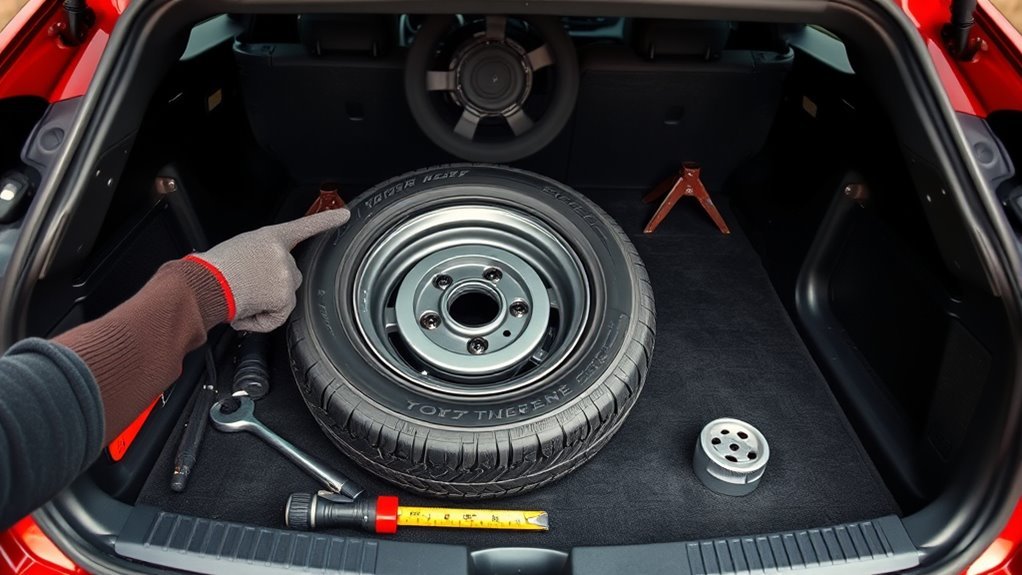
Before you use a Toyota Camry donut spare tire, make safety your first step. Park on a hard, flat surface, turn on the hazard lights, set the parking brake, shift to Park, and keep passengers away from traffic. Do not crawl under a vehicle supported only by the jack.
Then check the spare itself:
- Confirm the correct pressure with a tire gauge. Many Camry compact spares are around 60 PSI, but the exact number on your label, spare, or manual is the one to follow.
- Inspect both sidewalls for cracks, cuts, bubbles, bulges, and dry rot.
- Look for tread separation, exposed cords, severe wear, or puncture damage.
- Make sure the wheel is not bent and the spare seats flat against the hub.
- Use the correct Toyota jack points and tighten the lug nuts in a crisscross pattern after lowering the car.
After the spare is installed, drive gently. Avoid sudden acceleration, abrupt steering, sudden braking, and sharp turns. Toyota also advises replacing the compact spare with a standard tire as soon as possible.
Check the Spare Tire Pressure and TPMS Limitations
Do not assume your Camry will warn you if the donut spare is low. Toyota’s 2025 Camry owner guidance says the compact spare is not equipped with a tire pressure warning valve and transmitter, so low inflation pressure of the spare tire will not be indicated by the tire pressure warning system. It also notes that the tire pressure warning light may remain on after the compact spare replaces a flat tire.
That means a manual tire gauge matters. Toyota also recommends checking tire inflation pressure regularly and reminds owners not to forget the spare in its tire inflation pressure guidance. As a habit, check the spare at least monthly and before long trips.
What Systems Can Be Affected by a Camry Donut Spare?
A compact spare can change wheel speed readings because it is not the same size and construction as the normal road tire. Toyota warns that when the compact spare is attached, vehicle speed may not be detected correctly and several systems may not operate correctly, including ABS, brake assist, VSC, TRAC, EPS, tire pressure warning system, blind spot monitoring, rear cross-traffic alert, cruise control, parking assist features, camera/navigation functions, and other driver-assist systems depending on equipment.
On Camry models with AWD or E-Four, Toyota also warns that compact-spare use may negatively affect drivetrain components if the system cannot be used fully. Keep the drive short, avoid aggressive throttle, and replace the compact spare with a standard tire quickly.
Warning: Do not use more than one compact spare at the same time, and do not use a Camry compact spare on another vehicle. Compact spares are vehicle-specific emergency equipment.
When Should You Replace Your Donut Spare Tire?
Replace your Toyota Camry donut spare tire immediately if it has visible damage, severe wear, sidewall cracks, bubbles, blisters, tread separation, exposed cords, a bent wheel, or if it will not hold the recommended pressure. Do not use a spare that looks damaged, even for a short drive.
Age matters too. The DOT Tire Identification Number on the sidewall tells you when the tire was made. The last four digits show the week and year of manufacture. For example, a code ending in 2519 means the tire was made in the 25th week of 2019.
There is no single age rule that fits every spare because storage heat, humidity, use, and tire construction all matter. The U.S. Tire Manufacturers Association says service and storage conditions vary widely, so regular inspection is important. As a conservative practice, start paying closer attention once a spare is 5 years old, have it inspected by a tire professional, and replace it by 10 years at the latest unless Toyota or the tire maker recommends sooner. Bridgestone specifically recommends replacing tires more than 10 years old, including the spare, even if they appear new.
[Products Worth Considering]

This AUTOWN flat tire repair kit is designed for quick, reliable puncture repairs using a plug kit and spiral probe tool to simplify installation. Built for durability and safe handling, it offers strong adhesion and flexibility to help maintain tire air tightness. With a portable storage case and a multi-vehicle approach, it’s suitable for cars, motorcycles, ATVs, tractors, lawn mowers, RVs, jeeps, and trucks.

This portable cordless tire inflator delivers fast, efficient inflation for cars, motorcycles, bikes, and sports balls with a digital pressure gauge. Use the one-click PSI preset with auto shut-off for accurate, hands-free topping to your target pressure up to 150 PSI. It’s compact and rechargeable with a built-in emergency LED light plus valve adapters and accessories for quick, ready-to-go use.
How to Store and Maintain a Camry Donut Spare
Store the spare in the original trunk well or designated storage area with the hold-down hardware secured. Keep it clean, dry, inflated, and away from chemicals, petroleum products, standing water, and unnecessary heat exposure. Also keep the jack, jack handle, wheel nut wrench, and wheel lock key in their proper locations so you are not stranded with a good spare and missing tools.
Use this simple maintenance routine:
- Check spare pressure monthly and before road trips.
- Inspect the sidewall and tread every time you check pressure.
- Confirm the DOT date code once a year.
- Make sure the jack and wrench are still in the vehicle.
- Replace the spare if it has aged out, will not hold pressure, or shows damage.
Does a Donut Spare Fit All Toyota Camry Trims?
No. You should not assume one Toyota Camry donut spare fits every year, trim, brake package, hybrid model, or AWD model. Wheel diameter, bolt pattern, hub fitment, brake clearance, overall tire diameter, and storage-space design can vary by generation and equipment.
Before buying a replacement spare, verify fitment by VIN, model year, trim, wheel size, and brake package. A Toyota dealer or official Toyota parts lookup can help confirm the correct compact spare assembly. Toyota’s parts description also emphasizes matched Toyota dimensions and wheel/hub specifications, which is important for safe fit.
Driving in Rain, Snow, or Ice on a Donut Spare
You can drive carefully in rain on a donut spare if you must, but traction and braking are reduced. Slow down, increase following distance, avoid standing water, and do not make sharp steering inputs. A compact spare has less tread width and grip than a standard road tire.
In snow or ice, be even more cautious. Toyota’s 2025 Camry guidance notes that for vehicles with 16-inch tires, if a front tire is flat on a snow- or ice-covered road and tire chains are needed, the compact spare should be installed on a rear wheel, then the rear tire moved to the front for chain use. Follow your exact owner’s manual because this detail can vary by model and equipment.
What to Do After Driving on the Spare
Once you reach a repair shop or safe destination, replace the compact spare with a standard road tire as soon as possible. Ask the shop to inspect the flat tire, check the wheel for damage, torque the lug nuts to the correct specification, and confirm the TPMS is working properly after the standard tire is repaired or replaced.
If the donut spare was driven too far, driven above 50 mph, overheated, damaged, or heavily worn, do not put it back into storage as if it is still reliable. Have it inspected or replaced.
Frequently Asked Questions
Does a Camry donut spare affect ABS or traction control?
Yes. A compact spare can change wheel-speed readings, so systems such as ABS, brake assist, VSC, TRAC, EPS, cruise control, blind spot monitoring, rear cross-traffic alert, TPMS, and some camera or driver-assist features may not operate normally. Drive slowly and replace the spare with a standard tire quickly.
Can you rotate a donut spare between wheels?
No, not like a normal tire rotation. A donut spare is temporary emergency equipment. In some specific snow, ice, or tire-chain situations, your owner’s manual may tell you to place the compact spare on a rear wheel and move another tire, but that is a temporary safety procedure, not regular rotation.
Is the donut spare safe in rain or snow?
It can be used carefully in rain or snow only when necessary, but traction is reduced. Slow down, avoid sudden braking and steering, skip high-speed roads if possible, and replace the spare as soon as you can. In snow or ice, follow your Camry manual closely, especially if tire chains are involved.
How do you store a donut spare properly?
Store it in the Camry’s original spare-tire well or designated storage area, secured with the factory hold-down hardware. Keep it clean, dry, correctly inflated, and away from chemicals or standing water. Check pressure monthly and inspect for cracks, bulges, and age-related damage.
Does a donut spare fit all Toyota Camry trims?
No. Fitment can vary by model year, trim, wheel size, brake package, hybrid equipment, and AWD/E-Four setup. Before buying a replacement spare, confirm the correct part by VIN or ask a Toyota parts department to verify wheel, tire, hub, and brake clearance compatibility.
Why does the TPMS light stay on after installing the spare?
On many Camry compact spares, the spare does not have the tire pressure warning valve and transmitter used by the normal wheels. If the tire pressure warning light was on before the spare was installed, it may stay on until the standard tire is repaired or replaced and the system is reset according to the manual.
Can you drive on a Toyota Camry donut spare for a week?
No. Even if the spare still holds air, it is not intended for a week of normal driving. Use it only for a short, cautious trip to a repair location. Daily driving on a compact spare can reduce traction, affect vehicle systems, and increase wear or heat buildup.
Conclusion
You can count on a Toyota Camry donut spare tire only as a short-term emergency fix. Keep your speed at or below 50 mph, use the 50-mile rule as a conservative planning limit, check the spare pressure manually, and avoid hard braking, sharp steering, highways, and long trips. If the spare is cracked, worn, old, underinflated, or unable to hold pressure, do not use it. Replace it with a repaired or matching standard tire as soon as possible.
Sources
- Toyota Owners: 2025 Camry “If you have a flat tire” — compact spare speed limit, TPMS limitations, system warnings, and temporary-use guidance
- Toyota Owners: Tire inflation pressure — tire pressure check interval and spare-pressure reminder
- Toyota Genuine Parts: Temporary Spare Tire — short-term mobility and matched Toyota fitment details
- NHTSA TireWise — tire maintenance, pressure, tire safety, and labeling guidance
- NHTSA Tire Buyers’ FAQ — DOT Tire Identification Number and tire date-code guidance
- Bridgestone Tire Replacement Guidance — spare tire age and 10-year replacement guidance

Related Articles

Toyota Camry All-Season Tires Explained: What They Can and Can’t Do
In exploring Toyota Camry all-season tires, discover their benefits and limitations—are they really the right choice for your driving needs?
Read More
Toyota Camry Tire Traction in Ice and Snow: A Practical Winter Driving Guide
Learn essential tips for maximizing tire traction on ice and snow in your Toyota Camry, ensuring your winter driving is safe and confident. Discover more now!
Read More
Do Toyota Camry Tires Need Snow Chains? When They Help and When They Don’t
How do snow chains enhance your Toyota Camry's winter driving safety, and when should you avoid using them? Discover the essential details inside!
Read More