
How to Put on a Spare Tire on a Toyota Camry: Step-by-Step Instructions
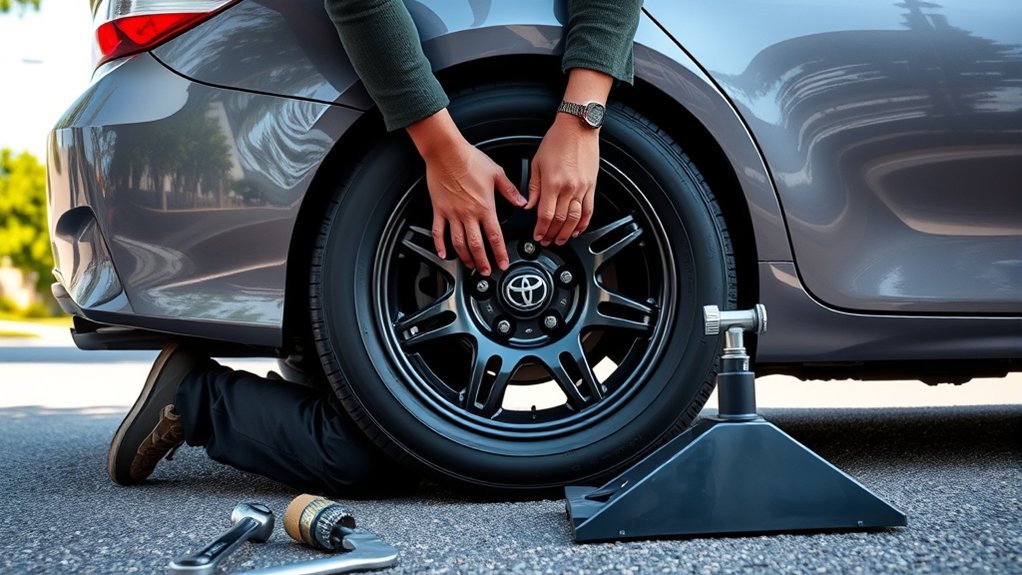
A flat tire on your Toyota Camry can feel stressful, but the basic spare-tire process is simple when the car is parked safely and you use the right tools. The key is to loosen the lug nuts before lifting the car, place the jack only at the approved jack point, install the spare evenly, and drive slowly to a repair shop.
Quick Answer
To put a spare tire on a Toyota Camry, park on level ground, turn on the hazards, set the parking brake, loosen the lug nuts slightly, raise the car at the correct jack point, remove the flat tire, mount the spare, hand-tighten the nuts, lower the car, then tighten the nuts in a crisscross pattern.
Key Takeaways
- Only change a tire if you can park on solid, level ground away from traffic.
- Loosen the lug nuts before lifting the Camry so the wheel does not spin in the air.
- Use the jack point shown in your Camry owner’s manual; never crawl under a car supported only by a jack.
- Tighten the lug nuts in a crisscross pattern and have them checked with a torque wrench as soon as possible.
- A temporary spare is for short, careful driving only—go directly to a tire shop or service center.
At a Glance
| Time Required | About 20–30 minutes in a safe location |
| Difficulty | Beginner to moderate |
| Tools Needed | Spare tire, jack, lug wrench, wheel wedges, flashlight, gloves, tire pressure gauge, and wheel lock key if equipped |
| Cost | Usually $0 if your spare and tools are already in the car |
Why You Should Know How to Change a Tire

Knowing how to change a tire helps you handle a flat without waiting helplessly for roadside assistance. It is especially useful in parking lots, driveways, rural areas, or places where help may take a long time to arrive.
That said, safety comes first. If the Camry is close to fast traffic, on a narrow shoulder, on a hill, on soft dirt, or in poor visibility, do not try to change the tire yourself. Call roadside assistance instead.
Warning: Never change a tire where passing traffic could hit you, and never crawl under a vehicle supported only by the factory jack. The jack is for lifting the vehicle long enough to change the tire—not for working under the car.
Gather Your Tools and Supplies for Tire Change
Before you begin, check your Toyota Camry owner’s manual for the exact tool locations and jack points for your model year. Many Camry models store the spare tire, jack, and lug wrench under the trunk floor, but the layout can vary by year and trim. Toyota’s official manual library is the best place to confirm details for your exact car: Toyota Owners Manuals & Warranties.
| Item | Purpose | Safety Check |
|---|---|---|
| Spare Tire | Temporarily replaces the flat tire | Confirm it is inflated and not cracked, bulging, or badly aged |
| Jack | Lifts the vehicle | Use only on solid, level ground and at the approved jack point |
| Lug Wrench | Loosens and tightens wheel nuts | Make sure it fits the Camry’s lug nuts |
| Wheel Wedges | Helps prevent rolling | Place them against the tires opposite the flat |
| Flashlight | Improves visibility | Check batteries before long trips |
| Tire Pressure Gauge | Checks spare tire pressure | Use the pressure listed on the tire label, placard, or owner’s manual |
| Wheel Lock Key | Removes locking lug nuts if equipped | Keep it with the spare tools |
Note: The correct tire pressure is the vehicle manufacturer’s recommended cold pressure, which is usually found on the driver-side door placard or in the owner’s manual. The National Highway Traffic Safety Administration recommends checking all tires, including the spare, at least once a month.
[Products Worth Considering]

Universal magnetic jack pad with aluminum grooved design to protect vehicle pinch welds during lifting. Durable nylon pad inserts are upgraded and secured with screws to resist damage and keep in place. Designed to fit most single vehicle pinpoint welds for safer, stable jacking when changing tires, repairs, or performing oil changes.

This spare tire tool kit is designed for the 2004 to 2018 Ford F-150 to help you loosen and tighten wheel lug nuts and manage the spare tire and provided jack functions from underneath the vehicle. It includes the lug nut wrench and extension pieces plus a convenient storage carrying case for organized transport. The jack itself is not included.

This 4-in-1 tire valve core removal tool helps you deflate, unblock, and remove or install valve cores quickly for easier tire repair. The multifunction design also supports re-taping damaged threads and reaming inside the valve stem for smoother service. Included as a 2-pack, it’s compact for convenient carry and works for cars, bicycles, and motorcycles.
Before You Start: Secure the Camry
Take a minute to set up safely before touching the lug nuts. Pull as far from traffic as possible, turn on the hazard lights, shift to Park, turn the vehicle off, and set the parking brake. Ask passengers to stand away from traffic and away from the car.
- Park on firm, level pavement whenever possible.
- Set the parking brake.
- Place wheel wedges in front of and behind the tire diagonally opposite the flat tire.
- Remove the spare tire, jack, lug wrench, and any wheel lock key from the trunk.
- Check that the spare tire is inflated and safe to use.
Loosening Lug Nuts and Safely Lifting the Vehicle
Before lifting the vehicle, use the lug wrench to loosen the lug nuts by turning them counterclockwise while the flat tire is still on the ground. Loosen each nut about ¼ to ½ turn. Do not remove them yet.
[Products Worth Considering]

EVOULTES heavy duty tire inflator with an integrated gauge delivers accurate pressure readings from 10–120 PSI, helping you inflate, deflate, and check tires in one tool. The 16.5-inch extended dual-head air chuck with swivel base reaches hard-to-access dual wheel valves on trucks and RVs. A brass trigger core and side-mounted air release valve make operation smooth, with standard 1/4" NPT threading and quick-connect compatibility for easy setup.

This roadside assistance kit helps drivers and passengers in urgent situations after an accident or breakdown, providing practical support while waiting for help. It includes a lightweight, compact tire inflator for fast inflation of standard vehicle tires, plus reinforced jumper cable protection for safer handling. Ideal for winter weather, road trips, camping, and travel, with everything stowed neatly in a trunk bag.
Proper Tool Usage
Fit the lug wrench fully onto each lug nut before applying pressure. Use steady force rather than jerky movements. If a lug nut is stuck, try pressing down carefully with your foot while keeping your balance, but do not jump on the wrench. If the nuts will not loosen, call roadside assistance instead of risking injury or tool damage.
Pro Tip: Break the lug nuts loose while the tire is still touching the ground. Once the wheel is in the air, it can spin, making the nuts much harder to loosen.
Safe Vehicle Lifting
Place the jack under the correct jack point listed in your Camry owner’s manual. On many Camry models, the jack points are reinforced areas along the lower body near the wheels, but you should verify the exact location for your year and trim before lifting.
Crank the jack slowly until the flat tire is about six inches off the ground. Make sure the car stays stable as it rises. If the jack tilts, sinks, or shifts, lower the vehicle and reset it before continuing.
Removing the Flat Tire and Installing the Spare Tire
Now that the Camry is safely lifted, remove the loosened lug nuts completely and place them somewhere they will not roll away. Pull the flat tire straight toward you. If it sticks to the hub, gently rock it from side to side until it loosens.
Tools and Equipment Needed
For a clean spare-tire installation, keep these items within reach:
- Spare tire: Make sure the valve stem faces outward when mounted.
- Lug nuts: Keep them clean and do not coat them with oil or grease.
- Lug wrench: Use it for snugging the nuts, then get a torque check as soon as possible.
- Owner’s manual: Use it to confirm jacking points, spare-tire limits, and wheel-nut torque for your exact Camry.
Step-by-Step Removal Process
- Remove each loosened lug nut by hand or with the lug wrench.
- Set the lug nuts in a pocket, cup holder, or small container so they do not roll away.
- Pull the flat tire straight off the wheel hub.
- Move the flat tire out of the work area, but do not leave it where it can roll into traffic.
- Lift the spare tire onto the hub, lining up the holes with the wheel studs.
Proper Spare Tire Installation
Push the spare tire fully against the hub. Thread each lug nut by hand first. This helps prevent cross-threading, which can damage the wheel studs. Once all nuts are hand-started, snug them lightly with the lug wrench in a crisscross pattern. Do not fully tighten them while the tire is still in the air.
Warning: Do not use oil, grease, or anti-seize on the wheel studs or lug nuts unless Toyota specifically instructs it for your vehicle. Lubricated threads can change clamping force and may lead to over-tightening or wheel damage.
Tightening Lug Nuts and Lowering the Vehicle

Lower the Camry until the spare tire touches the ground and cannot spin, but before the full weight of the car is on the tire. Use the lug wrench to tighten the lug nuts in a crisscross or star pattern. This helps seat the wheel evenly against the hub.
Once the nuts are snug, lower the vehicle completely and remove the jack. Tighten the lug nuts again in the same crisscross pattern. For a 2025 Toyota Camry Hybrid, Toyota lists wheel nut torque at 76 ft-lbf (103 N·m), but you should confirm the correct torque for your exact model year in the owner’s manual or with a Toyota service center.
A lug wrench can get you safely moving, but a torque wrench is the right tool for final tightening. Have the lug nuts torqued to specification as soon as possible after installing the spare.
What to Do After Changing Your Tire?
After the spare is installed, do not treat the car as fully repaired. A spare tire is usually a temporary solution to get you to a safe repair location.
- Check the spare tire pressure: Use a gauge and follow the tire label, door placard, or owner’s manual. Compact spares often need higher pressure than standard tires.
- Store the flat tire and tools: Put the jack, lug wrench, wheel wedges, and flat tire back in the trunk so nothing moves around while driving.
- Drive cautiously: If you are using a temporary or donut spare, stay at or below the speed and distance limits printed on the tire or listed in your manual. A common rule is no more than 50 mph and about 50 miles.
- Expect possible TPMS behavior: Depending on the year and trim, the tire pressure warning may stay on until the regular wheel and tire are repaired and reinstalled.
- Go directly to service: Have the flat tire repaired or replaced, and have the spare removed as soon as practical.
Note: Do not use a temporary spare for everyday driving. It is smaller, less durable, and not designed to match the braking, steering, or handling of your regular tire.
Spare Tire Maintenance for Your Camry
Your spare tire needs maintenance even if you never use it. Check it before long trips and at least once a month when you check your other tires. Look for low pressure, cracks, bulges, punctures, or dry rot.
You should also check the DOT tire identification number on the sidewall. The last four digits show the week and year the tire was made. For example, a code ending in “2521” means the tire was made in the 25th week of 2021. If the spare is six to 10 years old, follow the tire and vehicle manufacturer’s replacement guidance, and do not rely on it if it shows damage or will not hold pressure.
When Not to Change the Tire Yourself
Changing a tire is not always the safest choice. Call roadside assistance if:
- The flat tire is on the traffic side of the vehicle and you cannot move to a safer spot.
- The car is on a steep slope, soft shoulder, mud, gravel, or ice.
- The jack will not sit flat and stable.
- The lug nuts are damaged, rounded, or stuck.
- The spare tire is flat, cracked, bulging, missing, or badly aged.
- You cannot find the wheel lock key for locking lug nuts.
- You feel unsafe for any reason.
Frequently Asked Questions
How do I know when to replace my spare tire?
Replace the spare if it has cracks, bulges, punctures, exposed cords, severe dry rot, or if it cannot hold the correct pressure. Also check the DOT date code. Many tire and vehicle manufacturers recommend replacing tires once they reach six to 10 years old, even if the tread looks unused.
Can I drive on a spare tire long-term?
No. A temporary or donut spare is meant only to get you to a safe repair location. Follow the speed and distance limits printed on the spare or listed in your owner’s manual. If no stricter limit is shown, a common rule is to stay under 50 mph and avoid driving more than about 50 miles.
What tools should I keep in my Camry for tire emergencies?
Keep a properly inflated spare tire, jack, lug wrench, wheel wedges, flashlight, gloves, reflective triangles, tire pressure gauge, and a wheel lock key if your Camry uses locking lug nuts. A compact emergency kit with a first-aid kit and phone charger is also smart.
How do I check tire pressure on my spare?
Use a tire pressure gauge on the spare’s valve stem when the tire is cold. Compare the reading with the pressure listed on the tire, the driver-side door placard, or your owner’s manual. Do not guess by looking at the tire because underinflation is hard to see.
Is it safe to change a tire on a slope?
No. A slope increases the chance that the Camry will roll or slip off the jack. Move to a flat, solid location before changing the tire. If you cannot do that safely, call roadside assistance.
Where is the spare tire in a Toyota Camry?
On many Camry models, the spare tire and tools are under the trunk floor or deck mat. The exact layout can vary by model year and trim, so check your owner’s manual if you do not see the spare immediately.
Why is my tire pressure light still on after installing the spare?
Some spare tires do not have the same tire pressure monitoring sensor as the regular wheel. The warning may stay on until the original tire is repaired or replaced and reinstalled. Check the spare pressure manually and follow your owner’s manual.
Conclusion
Putting a spare tire on a Toyota Camry is manageable when you work slowly, use the correct jack point, and keep safety first. Loosen the lug nuts before lifting, mount the spare straight onto the hub, tighten the nuts in a crisscross pattern, and drive carefully to a repair shop. Keep your spare inflated, inspect it regularly, and verify your Camry’s exact instructions in the owner’s manual so you are ready before a flat tire happens.
Sources
- Toyota Owners Manuals & Warranties — official owner’s manual source for Camry tool locations, jack points, and model-year instructions
- Toyota 2025 Camry Hybrid: If You Have a Flat Tire — official Toyota flat-tire procedure and wheel-nut torque reference
- NHTSA TireWise — tire pressure, tire aging, tread, spare-tire awareness, and tire safety guidance
- AAA: How to Change a Tire in 11 Easy Steps — roadside tire-change safety and step-by-step guidance
- AAA Club Alliance: How Far Can You Really Drive on a Spare Tire? — temporary spare tire speed and distance limits

Related Articles

Toyota Camry All-Season Tires Explained: What They Can and Can’t Do
In exploring Toyota Camry all-season tires, discover their benefits and limitations—are they really the right choice for your driving needs?
Read More
Toyota Camry Tire Traction in Ice and Snow: A Practical Winter Driving Guide
Learn essential tips for maximizing tire traction on ice and snow in your Toyota Camry, ensuring your winter driving is safe and confident. Discover more now!
Read More
Do Toyota Camry Tires Need Snow Chains? When They Help and When They Don’t
How do snow chains enhance your Toyota Camry's winter driving safety, and when should you avoid using them? Discover the essential details inside!
Read More