
Toyota Camry Tire Size Explained: How to Read Your Sidewall Numbers
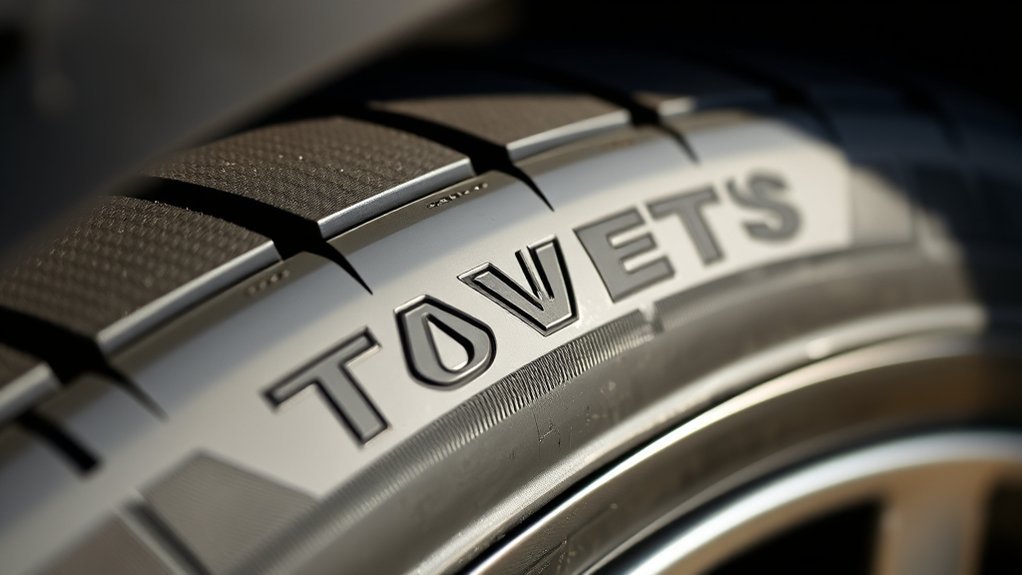
Reading your Toyota Camry’s tire size is easier once you know what each number on the sidewall means. Use the tire code to understand the tire’s width, sidewall height, construction, wheel diameter, load index, and speed rating—but use your Camry’s driver-side door label or owner’s manual as the final authority before buying replacements.
Quick Answer
To read a Toyota Camry tire size, break the sidewall code into parts: width in millimeters, aspect ratio, radial construction, wheel diameter, load index, and speed rating. For the correct replacement size, check the driver-side door-jamb Tire and Loading Information Label first, then confirm it in your owner’s manual.
Key Takeaways
- A size like 215/55R17 means 215 mm wide, 55% aspect ratio, radial construction, and a 17-inch wheel diameter.
- The tires currently on your Camry may not be the factory-correct size, so always verify the door-jamb tire label before ordering.
- Load index and speed rating must meet or exceed Toyota’s listed requirements for your exact year, trim, and wheel package.
- Do not use the maximum pressure printed on the tire sidewall as your recommended tire pressure; use the vehicle placard instead.
At a Glance
| Time Required | 5–10 minutes |
| Difficulty | Easy |
| Tools Needed | Tire sidewall, driver-side door label, owner’s manual, and a tire pressure gauge if checking PSI |
| Cost | $0 to read the tire size; tire inspection is often free or low-cost at a tire shop |
Understanding Tire Types for Your Toyota Camry
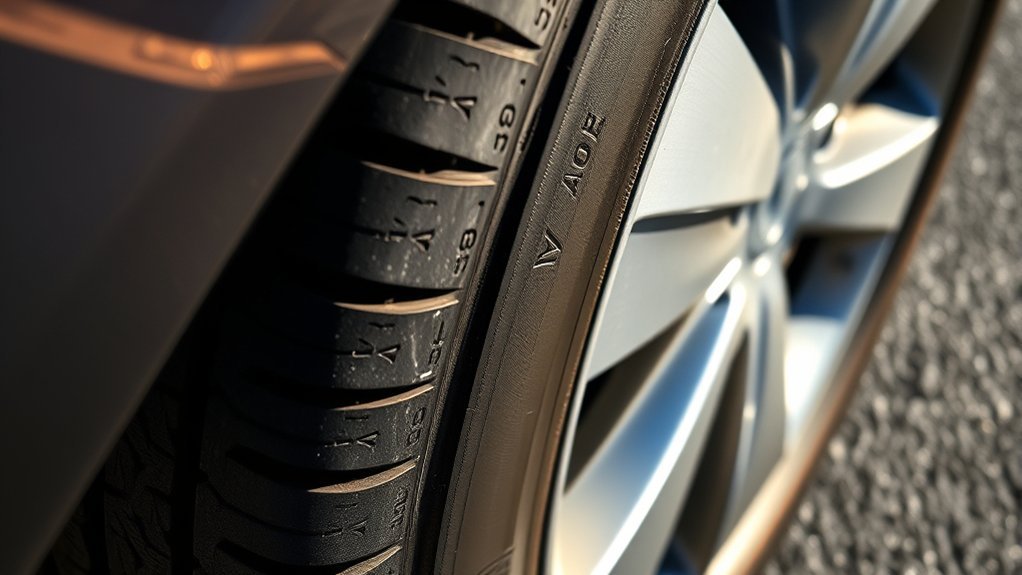
Most Toyota Camry models use passenger-car tires. You may see a tire size that starts with P, such as P215/55R17, or a metric size with no letter, such as 215/55R17. Both styles are common on passenger vehicles. The important part is matching the size, load index, and speed rating listed for your exact Camry.
Tire type also depends on climate and driving conditions. NHTSA’s TireWise guidance notes that all-season tires can handle a variety of road conditions, winter tires are more effective than all-season tires in deep snow, and summer tires are not designed for freezing temperatures, snow, or ice.
Note: A tire marked T at the beginning is usually a temporary spare tire size. Do not use a compact spare as a normal replacement tire.
[Products Worth Considering]

EVOULTES heavy duty tire inflator with an integrated gauge delivers accurate pressure readings from 10–120 PSI, helping you inflate, deflate, and check tires in one tool. The 16.5-inch extended dual-head air chuck with swivel base reaches hard-to-access dual wheel valves on trucks and RVs. A brass trigger core and side-mounted air release valve make operation smooth, with standard 1/4" NPT threading and quick-connect compatibility for easy setup.

This portable cordless tire inflator delivers up to 160 PSI with fast 17 L/min airflow to help you quickly top up tires and get back on the road. It features dual power mode, running on a 21V rechargeable battery or a 12V DC adapter for convenient roadside use. An automatic shut-off with digital pressure gauge helps prevent overinflation, and a built-in LED light improves visibility in low-light conditions.

The JACO FlowPro Tire Inflator measures, inflates, and airs down tires up to 100 PSI with battery-free operation and ±2% accuracy after calibration. It features a glowing pressure dial for night visibility, a heavy-duty steel build with a hybrid hose, and a precision push-to-inflate thumb trigger. The patented Lightning Air Chuck locks on for a secure seal, and the kit includes quick-connect hardware for easy inline use with your air compressor.
Where to Find the Correct Toyota Camry Tire Size
The most reliable place to find your Camry’s correct tire size is the Tire and Loading Information Label on the driver-side door edge or door post. This label is tied to your vehicle’s original wheel package and lists the approved tire size and cold tire pressure. You can also confirm the information in your Toyota Owners manual.
The tire sidewall is useful, but it only tells you what is currently installed. If a previous owner installed a different size, the sidewall may not match Toyota’s original specification. Use the sidewall to decode what you have, then verify the correct replacement size against the door label before buying.
Warning: Do not choose a tire only because it fits the wheel. The overall diameter, load index, speed rating, and clearance must also be correct for your Camry.
How to Decode Tire Width for Your Camry
The tire width is the first three-digit number in the size code. In 215/55R17, the 215 means the tire is about 215 millimeters wide from sidewall to sidewall. In 235/45R18, the tire is about 235 millimeters wide.
Wider tires can provide a larger contact patch, but they are not automatically better. A wider tire can change steering feel, road noise, rolling resistance, ride comfort, and clearance. For a Camry, the best choice is usually the size Toyota approved for your trim and wheel diameter.
Understanding Tire Aspect Ratios for Your Camry
The aspect ratio is the number after the slash. In 215/55R17, the 55 means the sidewall height is 55% of the tire width. You can estimate sidewall height with this formula:
| Formula | Tire width × aspect ratio ÷ 100 |
| Example | 215 × 55 ÷ 100 = 118.25 mm sidewall height |
Importance of Aspect Ratio
Aspect ratio affects comfort, handling, and wheel protection. A higher aspect ratio gives the tire a taller sidewall, which can help absorb bumps. A lower aspect ratio gives the tire a shorter sidewall, which can sharpen steering response but may create a firmer ride.
Impact on Handling
Lower-profile tires can feel more responsive during cornering, but they may also be easier to damage on potholes because there is less sidewall between the wheel and the road. Taller sidewalls can feel smoother during daily commuting, especially on rough pavement.
Selecting the Right Ratio
Do not change aspect ratio by itself. Tire width, aspect ratio, and wheel diameter work together to create the tire’s overall diameter. If the overall diameter changes too much, your speedometer, odometer, clearance, traction control, and ride quality can be affected.
Pro Tip: When comparing alternate tire sizes, keep the overall diameter close to the original size and have a tire professional verify clearance before installing.
Why Tire Construction Matters for Your Camry
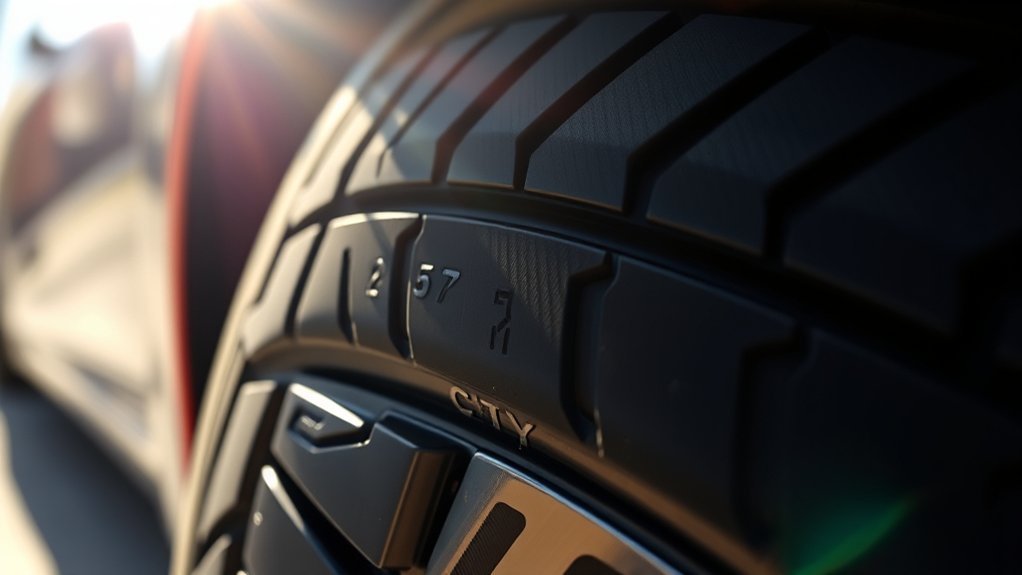
The letter R in a tire size means radial construction. For example, 215/55R17 is a radial tire made for a 17-inch wheel. Radial tires are the standard construction for modern passenger cars because they support good tread life, handling, and ride comfort.
Here is a simple comparison of common tire categories:
| Tire Category | Best For | Trade-Off |
|---|---|---|
| All-season | Everyday commuting in mild to moderate conditions | Not as strong as winter tires in deep snow |
| Winter | Snow, ice, and very cold weather | Faster wear in warm weather |
| Summer | Warm-weather grip and steering response | Not for freezing temperatures, snow, or ice |
| Performance | Sharper handling on sport-oriented trims | May ride firmer or wear faster |
Ensuring the Right Wheel Diameter for Your Camry
The wheel diameter is the number after the construction letter. In 215/55R17, the 17 means the tire fits a 17-inch wheel. In 235/45R18, the tire fits an 18-inch wheel.
This number must match the wheel installed on your Camry. A 17-inch tire will not fit an 18-inch wheel, and an 18-inch tire will not safely mount on a 17-inch wheel. If you are changing wheel size, you need a matching tire size that keeps the overall diameter, load index, and speed rating within safe limits.
- Use the wheel diameter shown on your tire placard when staying with factory wheels.
- Confirm brake and suspension clearance before changing wheel size.
- Replace all four tires with the same size unless Toyota specifically lists a staggered setup, which is not typical for a Camry.
- Ask a qualified tire shop to verify any plus-size setup before installation.
[Products Worth Considering]
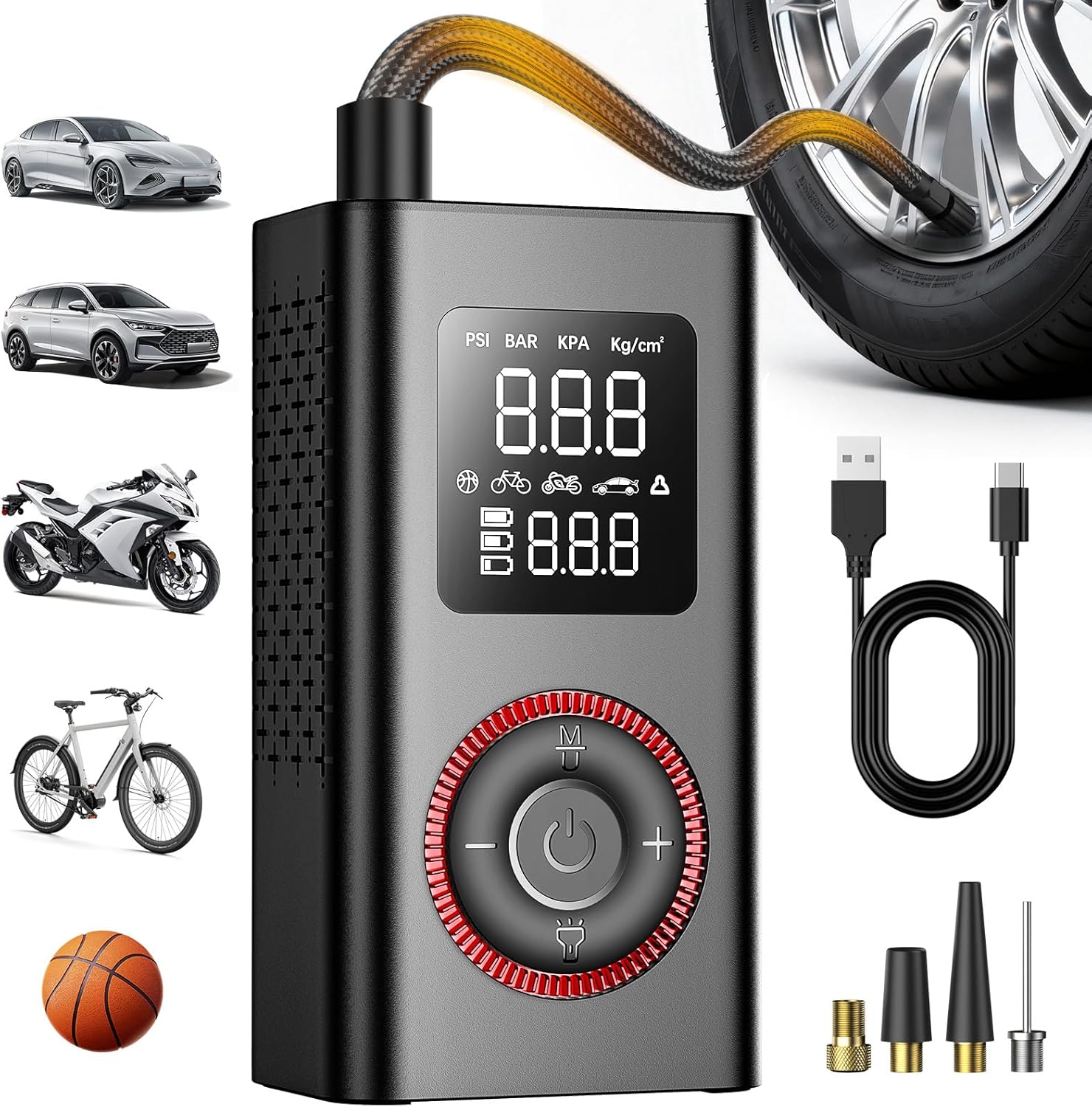
This portable tire inflator delivers fast, efficient inflation with a maximum 150 PSI rating and accurate pressure control for cars, motorcycles, bikes, and more. It features preset modes with automatic shutoff to help prevent overinflation, plus a real-time digital gauge and bright LED light for roadside use. Powered by a rechargeable 6000mAh battery with Type-C charging and a USB output, it’s also useful as an emergency power source for devices.

This portable cordless tire inflator delivers fast, efficient inflation for cars, motorcycles, bikes, and sports balls with a digital pressure gauge. Use the one-click PSI preset with auto shut-off for accurate, hands-free topping to your target pressure up to 150 PSI. It’s compact and rechargeable with a built-in emergency LED light plus valve adapters and accessories for quick, ready-to-go use.

Made Specifically 17" X 7" Grey Alloy Wheel Rim Fit for 2015 2016 2017 Toyota Camry Models. Not a Generic Aftermarket Wheel for Multiple Models
How to Interpret Load Index for Your Tires
The load index is the number after the tire size. In a code such as 215/55R17 94V, the 94 is the load index. It tells you how much weight each tire can carry when properly inflated. A tire with too low a load index can overheat, deform, wear early, or fail under load.
Understanding Load Index Values
Load index values are not direct pounds. They are codes that correspond to a weight rating. For example, a load index of 95 equals about 690 kg, or about 1,521 lb, per tire at the correct pressure according to Bridgestone’s load index chart.
Importance of Proper Rating
When replacing Camry tires, choose a load index that meets or exceeds the rating listed for your vehicle. Do not go lower just because the tire is cheaper or available. Also remember that load capacity depends on correct inflation, so low pressure reduces safety even if the tire’s printed load index looks adequate.
Warning: The combined weight of passengers and cargo must stay within the limit on your Camry’s Tire and Loading Information Label. Tires cannot make the car safe to overload.
What Speed Ratings Mean for Your Camry’s Performance
The speed rating is the letter after the load index. In 215/55R17 94V, the V is the speed rating. It represents the tire’s tested speed capability under controlled conditions, not a recommendation to drive at that speed. Bridgestone explains that speed ratings are based on lab testing and can be affected by inflation, wear, vehicle condition, road conditions, and damage.
Common passenger-car speed ratings include:
- S = up to 112 mph / 180 km/h
- T = up to 118 mph / 190 km/h
- H = up to 130 mph / 210 km/h
- V = up to 149 mph / 240 km/h
- W = up to 168 mph / 270 km/h
Always choose a speed rating that meets or exceeds Toyota’s specification for your exact Camry. Mixing speed ratings across tires can also affect handling consistency.
When Was Your Tire Made? Understanding Manufacturing Dates?

Your tire’s age is shown in the DOT Tire Identification Number, also called the TIN. The last four digits show the week and year the tire was made. For example, 4618 means the tire was manufactured in the 46th week of 2018. NHTSA recommends checking this date when buying tires and knowing the vehicle or tire manufacturer’s recommended replacement timeframe.
Tire service life depends on heat, storage, use, inflation, damage, and manufacturer guidance. NHTSA notes that service-life recommendations vary by vehicle and tire manufacturer, and many tire manufacturers recommend discontinuing use at 10 years from the date of manufacture because of aging concerns. If a tire is cracked, bulging, punctured, repeatedly losing air, or worn out, replace it sooner.
Note: The full DOT/TIN may appear on only one side of the tire. If you do not see the date code, check the other sidewall.
Cold Tire Pressure vs. Sidewall Maximum Pressure
Your Camry’s recommended tire pressure is not the same as the maximum pressure molded into the tire sidewall. The recommended cold tire pressure is listed on the door-jamb label and in the owner’s manual. The sidewall maximum is the highest pressure permitted for that tire, not the best pressure for your car.
FuelEconomy.gov says proper tire inflation can improve gas mileage by 0.6% on average and up to 3% in some cases, while under-inflation can reduce gas mileage by about 0.2% for every 1 psi drop in the average pressure of all tires.
Check tire pressure when the tires are cold, ideally before driving or after the car has been parked for several hours. Use a reliable tire pressure gauge and adjust to the pressure shown on your Camry’s label.
Essential Tips for Selecting Tires for Your Toyota Camry
Selecting the right tires for your Toyota Camry is not just about matching one number. Use this quick checklist before you buy:
- Confirm the size: Match the driver-side door label and owner’s manual.
- Match the wheel diameter: The final number in the tire size must match your wheel size.
- Meet or exceed load index: Never install tires with a lower load rating than Toyota specifies.
- Meet or exceed speed rating: Use a rating that matches the original requirement for your trim.
- Choose the right season: Use winter tires for deep snow and summer tires only in warm-weather conditions.
- Check the DOT date: Avoid old stock when buying new tires, and inspect aging tires regularly.
- Replace in sets when possible: Four matching tires help keep ride, braking, and handling consistent.
If you are considering a non-factory tire size, ask a tire professional to verify overall diameter, rim width, load capacity, speed rating, and clearance. That extra check helps prevent rubbing, speedometer error, uneven wear, and poor handling.
[Products Worth Considering]

MICHELIN DEFENDER2 TIRE—The MICHELIN Defender2 tire is our longest-lasting tire[1] – completely redesigned to offer increased tread life, this all-season tire also delivers stopping power so you can drive with confidence even in bad weather conditions


Lateral siping on the outer blocks is designed to maximize cornering performance and control in hydroplaning situations
Frequently Asked Questions
How do I read my tire size on my sidewall?
Find the size code molded into the tire, such as 215/55R17 94V. The first number is width in millimeters, the second number is aspect ratio, R means radial construction, the next number is wheel diameter in inches, 94 is the load index, and V is the speed rating.
What’s better, 33 or 35 tires?
Neither is a normal Toyota Camry replacement size. The 33-inch vs. 35-inch discussion usually applies to trucks and off-road vehicles. For a Camry, follow the tire size on the driver-side door label or Toyota owner’s manual instead of choosing oversized tires.
Can I use a different tire size on my Camry?
Sometimes, but only if the alternate size keeps the overall diameter, load index, speed rating, rim width, and clearance within safe limits. Have a qualified tire shop verify fitment before installing a non-original size.
Where is the correct tire pressure for a Toyota Camry?
Look at the Tire and Loading Information Label on the driver-side door edge or door post. Use the cold tire pressure listed there, not the maximum pressure printed on the tire sidewall.
How old is too old for Camry tires?
Check the DOT/TIN date code and follow Toyota’s and the tire manufacturer’s service-life guidance. Many tire makers recommend removing tires from service by 10 years from the manufacture date, but damaged, cracked, worn, or poorly maintained tires should be replaced sooner.
Conclusion
Once you understand the tire code, reading your Toyota Camry’s tire size becomes simple. The width, aspect ratio, construction, wheel diameter, load index, speed rating, and DOT date all give you useful information, but the driver-side door label remains the best source for the correct replacement size and cold tire pressure. Choose tires that match Toyota’s specifications, keep them properly inflated, and check age and wear regularly for a safer, smoother ride.
Sources
- Toyota Owners Digital Manual — model-specific tire information and owner manual reference.
- NHTSA TireWise — tire types, tire ratings, and correct tire-size source guidance.
- NHTSA Tire Buyers’ FAQ — DOT/TIN date code and tire label guidance.
- NHTSA New Tire Purchase Letter — monthly pressure checks, tire service-life guidance, rotation, and tread checks.
- FuelEconomy.gov Gas Mileage Tips — proper tire pressure and fuel economy impact.
- Bridgestone Tire Speed Rating Guide — speed rating meaning and controlled-condition limitations.

Related Articles

Toyota Camry All-Season Tires Explained: What They Can and Can’t Do
In exploring Toyota Camry all-season tires, discover their benefits and limitations—are they really the right choice for your driving needs?
Read More
Toyota Camry Tire Traction in Ice and Snow: A Practical Winter Driving Guide
Learn essential tips for maximizing tire traction on ice and snow in your Toyota Camry, ensuring your winter driving is safe and confident. Discover more now!
Read More
Do Toyota Camry Tires Need Snow Chains? When They Help and When They Don’t
How do snow chains enhance your Toyota Camry's winter driving safety, and when should you avoid using them? Discover the essential details inside!
Read More