
How Long Do Hyundai Sonata Tires Last? Miles & Years Explained
Hyundai Sonata tire life depends on the tire type, treadwear grade, road conditions, alignment, inflation, rotation habits, climate, and how the car is driven. Mileage is useful for planning, but the safer rule is simple: replace the tires when the tread is too low, the tire is too old, or you see damage.
Quick Answer
Hyundai Sonata tires commonly last about 30,000 to 70,000 miles, with many drivers planning around 50,000 miles. Replace them sooner if tread reaches 2/32 inch, wear is uneven, sidewalls are cracked or bulging, cords show, vibration changes, or the tires reach about 6 years of service.
Key Takeaways
- Mileage is only an estimate; tread depth, age, and visible damage decide when tires must be replaced.
- Use the cold PSI on your Sonata’s driver-side door-jamb label, not a generic number or the tire sidewall maximum.
- Rotate Sonata tires every 7,500 miles or sooner if irregular wear appears.
- Replace tires at 2/32 inch of tread, and consider replacing earlier if you often drive in heavy rain.
- Hyundai’s vehicle warranty generally does not cover the tires themselves; original tires are usually handled by the tire manufacturer’s warranty.
At a Glance
| Time Required | About 5 minutes once a month, plus before long trips. |
| Difficulty | Easy for pressure and tread checks; professional help is best for bulges, vibration, alignment, or uneven wear. |
| Tools Needed | Tire pressure gauge, tread depth gauge or penny, flashlight, and your Sonata’s tire label on the driver-side door pillar. |
| Cost | Usually free if you already own a gauge; about a few dollars for a basic tread depth gauge. |
Understanding the Average Lifespan of Hyundai Sonata Tires
A realistic planning range for Hyundai Sonata tires is about 30,000 to 70,000 miles. Some performance tires may wear closer to the lower end, while long-wearing touring or all-season tires may last longer when they are properly inflated, rotated, balanced, and aligned.
Still, no mileage number is a guarantee. A tire with 25,000 miles can be unsafe if it is damaged or badly worn. A tire with plenty of tread can also age out. The U.S. Tire Manufacturers Association explains that service life depends on use, storage, inflation pressure, load, speed, temperature, impacts, and road-hazard damage.
Mileage gives you a rough estimate, but tread depth, age, pressure history, and visible damage decide whether a Sonata tire is still safe.
For most Sonata owners, the best approach is to inspect tires monthly and track three things: tread depth, age, and wear pattern. This gives you a much better answer than mileage alone.
[Products Worth Considering]

EVOULTES heavy duty tire inflator with an integrated gauge delivers accurate pressure readings from 10–120 PSI, helping you inflate, deflate, and check tires in one tool. The 16.5-inch extended dual-head air chuck with swivel base reaches hard-to-access dual wheel valves on trucks and RVs. A brass trigger core and side-mounted air release valve make operation smooth, with standard 1/4" NPT threading and quick-connect compatibility for easy setup.

This portable cordless tire inflator delivers up to 160 PSI with fast 17 L/min airflow to help you quickly top up tires and get back on the road. It features dual power mode, running on a 21V rechargeable battery or a 12V DC adapter for convenient roadside use. An automatic shut-off with digital pressure gauge helps prevent overinflation, and a built-in LED light improves visibility in low-light conditions.

The JACO FlowPro Tire Inflator measures, inflates, and airs down tires up to 100 PSI with battery-free operation and ±2% accuracy after calibration. It features a glowing pressure dial for night visibility, a heavy-duty steel build with a hybrid hose, and a precision push-to-inflate thumb trigger. The patented Lightning Air Chuck locks on for a secure seal, and the kit includes quick-connect hardware for easy inline use with your air compressor.
Signs Your Hyundai Sonata Tires Are Wearing Out
Sonata tires usually give warning signs before they become unsafe. Look at all four tires, including the inner and outer tread edges, because uneven wear may hide on the inside shoulder.
| Tire Condition | What It Means | What To Do |
|---|---|---|
| Tread at 2/32 inch | The tire has reached the minimum unsafe-wear point. | Replace the tire. Use a tread depth gauge or the penny test. |
| Uneven tread wear | Pressure, alignment, balance, suspension, or missed rotation may be causing irregular wear. | Have alignment, balance, and suspension checked. |
| Cracks, cuts, or sidewall bulges | The tire may be aging, damaged, or structurally unsafe. | Do not ignore it. Have the tire inspected immediately. |
| Vibration or pulling | The tire may be out of balance, damaged, unevenly worn, or affected by alignment problems. | Schedule a tire and alignment inspection. |
| Fabric or cord visible | The tire is no longer safe to drive on. | Replace it before driving normally. |
Warning: Do not keep driving normally on a tire with a bulge, exposed cord, deep crack, severe vibration, or very low tread. These signs can point to structural damage or loss of traction. Use a spare or roadside service if the tire looks unsafe.
Critical Factors Affecting Hyundai Sonata Tire Longevity
Two Hyundai Sonata drivers can buy the same tire and get very different mileage. The difference usually comes down to tire type, tire pressure, rotation habits, alignment, driving style, climate, and road conditions.
Tire Type and Treadwear Rating
Tire type has a major effect on how long Sonata tires last. All-season touring tires usually prioritize comfort and tread life. Performance or summer tires often trade some tread life for sharper handling and grip. Winter tires are built for cold-weather traction and should not be treated like year-round warm-weather tires.
When comparing tires, check the NHTSA tire safety ratings and UTQG treadwear grade. A higher treadwear grade generally means the tread should take longer to wear down under controlled comparison testing, but it is still not a promise that every driver will get a specific mileage.
Driving Conditions and Road Surface
Stop-and-go city driving, rough pavement, potholes, gravel, heat, and frequent hard braking can shorten tire life. Smooth highway driving is often easier on tread, but long high-speed trips still require proper pressure and load control.
Weather matters too. Heat can accelerate tire aging, while rain, snow, and ice make good tread depth more important. If you often drive in heavy rain, do not wait until the tire is completely at the 2/32-inch limit before shopping for replacements.
Alignment, Balance, and Suspension
If your Sonata pulls to one side or one tire edge wears faster than the rest, the issue may not be the tire itself. Poor alignment, worn suspension parts, or an out-of-balance wheel can destroy good tires early.
Note: A new tire will not fix an alignment problem. If your old tires wore unevenly, correct the cause before or during tire replacement so the new set does not wear the same way.
Top Tire Maintenance Strategies to Extend Longevity
Good tire maintenance does not make tires last forever, but it can prevent early wear and reduce the risk of tire failure. NHTSA reports that poor tire maintenance, including low pressure and missed rotation, can contribute to flats, blowouts, or tread separation.
Check Tire Pressure Monthly
Check all four tires when they are cold, meaning the car has been parked long enough for the tires to cool. Hyundai recommends using a good tire pressure gauge because radial tires can look properly inflated even when they are low.
Use the cold tire pressure listed on the Sonata’s driver-side door-jamb tire label or owner’s manual. Do not use the maximum pressure molded into the tire sidewall as your normal target.
- Park the car and let the tires cool.
- Find the recommended PSI on the tire label at the driver-side center pillar.
- Press a gauge firmly onto the valve stem.
- Add air if the tire is low, or release air if it is overfilled.
- Recheck with the gauge and reinstall the valve cap.
NHTSA says proper tire pressure affects safety, durability, and fuel use. It also notes that TPMS warnings are not a replacement for monthly pressure checks because the warning light may not appear until a tire is significantly underinflated.
Rotate Tires on Schedule
Hyundai recommends rotating tires every 12,000 km or 7,500 miles, or sooner if irregular wear develops. Rotation helps spread wear more evenly between the front and rear tires.
During rotation, also check tire balance, uneven wear, sidewall damage, bumps, bulges, and exposed cord. If any of those problems appear, the tire may need repair, replacement, or professional inspection.
Monitor Tread Depth
Tread depth affects stopping, steering, and wet-road grip. The legal minimum in many places is based around 2/32 inch, but that is the last safe-use threshold, not the best time to start planning.
The easiest checks are:
- Tread depth gauge: The most accurate low-cost option.
- Penny test: Place a penny into the tread with Lincoln’s head upside down. If you can see the top of Lincoln’s head, the tire is at or near replacement depth.
- Treadwear bars: When the raised wear bars become level with the tread, the tire is worn out.
Pro Tip: Measure tread depth in several grooves across each tire. If the inside edge is much lower than the outside edge, you may have an alignment or suspension problem even if the tire looks fine at a glance.
How Driving Habits Impact Hyundai Sonata Tire Life
Driving style can add or subtract thousands of miles from tire life. Smooth inputs help the tread wear evenly. Aggressive inputs create heat and friction, which wear the rubber faster.
- Hard acceleration: Scrubs the driven tires and can speed up front-tire wear.
- Hard braking: Creates extra heat and can cause uneven wear or flat spotting.
- Fast cornering: Loads the outside shoulders and may wear tire edges early.
- Pothole impacts: Can damage belts, sidewalls, wheels, and alignment.
- Overloading: Builds heat and stress inside the tire.
Short trips can also make maintenance easier to forget. Even if you drive low mileage, tires still age, lose air over time, and can crack from heat and sunlight exposure.
When to Replace Your Hyundai Sonata Tires
Replace Hyundai Sonata tires when any of these conditions apply:
- The tread reaches 2/32 inch.
- The treadwear indicator bars are level with the tread.
- The tire has cracks, bulges, cuts, exposed cord, or repeated air loss.
- The car vibrates, pulls, or handles differently after a tire impact.
- Wear is uneven and cannot be corrected safely.
- The tires are about 6 years old, even if tread remains.
Hyundai states that tires degrade over time even when they are not used and recommends replacing tires after 6 years of normal service. Hot climates and frequent heavy loading can speed up aging.
When replacing tires, choose the same size, load rating, and type recommended for your Sonata. Hyundai also recommends replacing the two front or two rear tires as a pair because replacing only one tire can affect handling.
[Products Worth Considering]

This compact capsule-style tire repair kit helps you quickly fix punctures and plug flats with minimal effort. The rugged stainless steel shell protects the contents for reliable roadside use, while the simple plug assembly makes repairs fast and tool-free. Suitable for motorcycles, cars, ATVs, UTVs, and even mountain bikes.

Blackline Blackout is a water-based trim and tire dressing that restores rubber, vinyl, and plastic with a rich satin, blackout look. Its no-sling formula dries quickly and helps prevent messy transfer onto paint. The coating repels water and offers UV protection to help prevent fading, cracking, and discoloration for a clean, long-lasting finish.
How to Estimate How Much Tire Life Is Left
You can estimate remaining tire life with a simple tread-depth check. Measure the tread depth now, then measure again after a few thousand miles. If the tread dropped from 8/32 inch to 7/32 inch over 6,000 miles, you are using about 1/32 inch every 6,000 miles. Since 2/32 inch is the minimum replacement point, that tire has about 5/32 inch of usable tread left, or roughly 30,000 miles at the same wear rate.
This is only an estimate. Tire wear may speed up if alignment changes, pressure drops, driving becomes more aggressive, or the tire develops damage.
Does Hyundai Sonata Tire Warranty Cover Replacement?
Hyundai’s new-vehicle warranty generally does not cover the tires themselves. Hyundai’s warranty booklet lists tires as excluded from the Hyundai New Vehicle Limited Warranty and points owners to the separate tire manufacturer’s warranty.
That means a defect such as a manufacturing-related separation may be handled by the tire brand, while normal tread wear, punctures, pothole damage, curb damage, and poor maintenance are usually not free replacements. Keep tire receipts, rotation records, pressure records, and photos if you need to make a tire warranty claim.
Frequently Asked Questions
How long do factory tires last on a Hyundai Sonata?
Factory tires on a Hyundai Sonata often last somewhere around 30,000 to 60,000 miles, but the actual number depends on tire brand, trim, driving style, road surface, pressure, alignment, and rotation history. Check tread depth and tire age instead of relying only on mileage.
Does Hyundai replace Sonata tires for free?
Usually, no. Normal tire wear is the owner’s responsibility. Original tires are typically warranted directly by the tire manufacturer, not Hyundai’s new-vehicle warranty. A Hyundai dealer may help identify the tire brand and warranty process, but free replacement depends on the tire maker’s terms and the cause of the problem.
What tread depth is unsafe for Hyundai Sonata tires?
Tires should be replaced at 2/32 inch of tread. If you often drive in heavy rain, it is smart to shop earlier because wet-road traction drops as tread gets shallow. Use a tread depth gauge for the most accurate check.
How often should I rotate Hyundai Sonata tires?
Rotate Hyundai Sonata tires every 7,500 miles or sooner if irregular wear appears. Rotation helps equalize tread wear, but it will not fix low pressure, poor alignment, worn suspension parts, or damaged tires.
Should I replace all four Sonata tires at once?
If all four tires are worn similarly, replacing the full set gives the most balanced handling. If only two need replacement, replace them as a pair and use the same size, type, and load rating recommended for the vehicle. Avoid replacing just one tire unless a tire professional confirms it is safe for your tread-depth situation.
Conclusion
Hyundai Sonata tires do not expire at one exact mileage. Many drivers can plan around 30,000 to 70,000 miles, but the real replacement point comes from tread depth, tire age, damage, pressure history, alignment, and driving conditions. Check pressure monthly, rotate every 7,500 miles, measure tread depth, and replace tires that are worn, damaged, uneven, or about 6 years old. Those small checks help your Sonata ride, stop, and handle the way it should.
Sources
- NHTSA TireWise — tire pressure, tread depth, tire ratings, maintenance, and tire-safety guidance.
- Hyundai Owner’s Manual: Check Tire Inflation Pressure — cold tire pressure and gauge-check instructions.
- Hyundai Owner’s Manual: Tire Rotation — 7,500-mile rotation guidance and abnormal wear warnings.
- Hyundai Owner’s Manual: Tire Replacement — treadwear indicators, pair replacement, same-size guidance, and 6-year service-life warning.
- U.S. Tire Manufacturers Association: Tire Facts — tire service life, tire aging, DOT date code, storage, and maintenance factors.
- Hyundai Owner’s Handbook & Warranty Information — tire warranty exclusion and separate tire-manufacturer warranty guidance.

Related Articles

Danger of Using Summer Tires in Winter on a Hyundai Sonata
Potentially perilous, using summer tires in winter on your Hyundai Sonata can compromise safety—discover the hidden dangers that await you on icy roads.
Read More
Can You Mix Nitrogen and Air in Hyundai Sonata Tires? Answered
Discover the implications of mixing nitrogen and air in your Hyundai Sonata tires—are the benefits worth the risks? Explore the answer inside!
Read More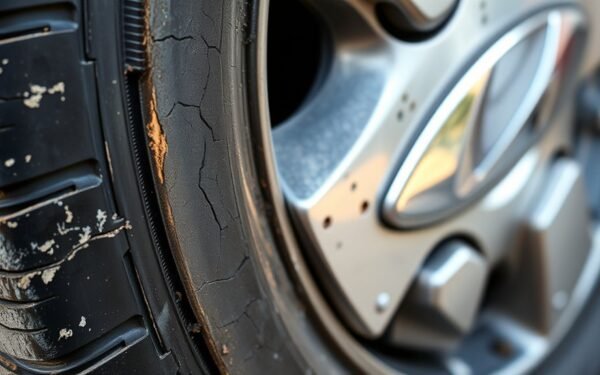
How to Tell If Hyundai Sonata Tires Are Too Old to Use Safely
Understand how to assess the age of your Hyundai Sonata tires and discover crucial signs of deterioration that could compromise your safety on the road.
Read More