
Hyundai Sonata Alignment Keeps Going Out of Spec: Why & Fix
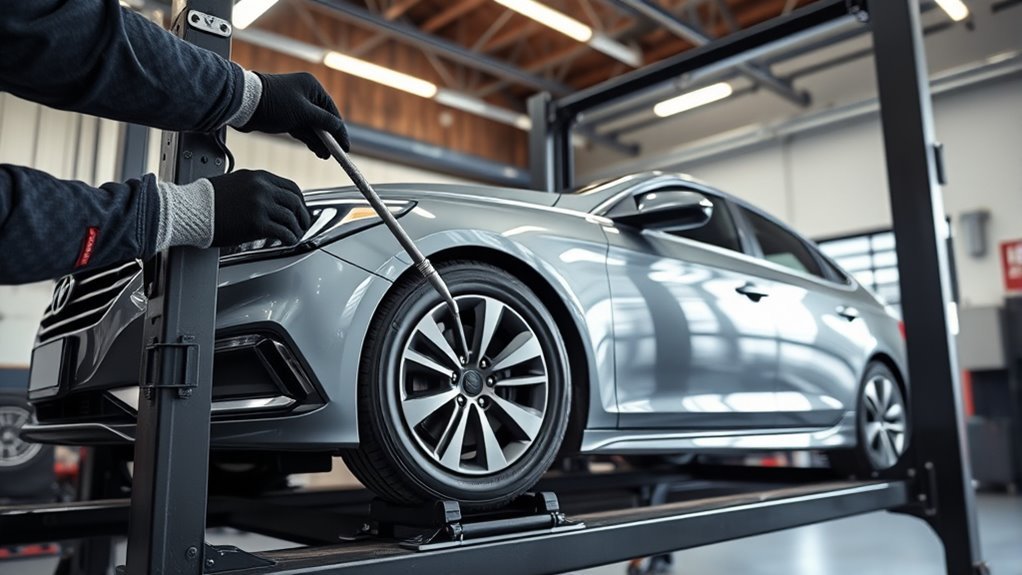
If your Hyundai Sonata’s alignment keeps going out of spec, the problem is usually not the alignment machine itself. The common causes are uneven tire pressure, tire pull, worn steering or suspension parts, bent components from pothole impacts, seized adjusters, or a previous alignment that did not correct all four wheels and the thrust angle. A proper diagnosis starts with the tires, then moves to the suspension, steering, and alignment printout.
Quick Answer
Your Hyundai Sonata’s alignment may keep going out because something is moving, worn, bent, loose, or incorrectly set. Check tire pressure and tire wear first, then inspect tie rods, ball joints, control-arm bushings, struts, rear links, and adjuster bolts before paying for another alignment.
Key Takeaways
- A Sonata that pulls, wears tires on one edge, or has an off-center steering wheel needs more than a quick toe adjustment.
- Low tire pressure, tire conicity, road crown, brake drag, and crosswinds can mimic an alignment problem.
- Worn bushings, tie rods, ball joints, struts, and rear suspension links must be repaired before alignment readings will stay stable.
- Ask for a before-and-after alignment printout showing camber, caster, toe, and thrust angle.
- Hyundai recommends rotating tires every 12,000 km or 7,500 miles, or sooner if irregular wear develops.
At a Glance
| Time Required | 15 minutes for basic tire checks; 60–90 minutes for a professional four-wheel alignment; longer if parts need repair |
| Difficulty | Easy for tire inspection; professional level for alignment adjustments and suspension diagnosis |
| Tools Needed | Tire-pressure gauge, tread-depth gauge, flashlight, torque wrench, jack stands for inspection, and a professional alignment rack |
| Cost | Often about $100–$220 for alignment service; Sonata-specific estimates can be around $145–$213 before taxes, fees, and related repairs |
Warning: Do not keep driving on tires with visible cords, sidewall bulges, deep cuts, or a strong pull that makes the car hard to control. If you inspect underneath the vehicle, never rely on a jack alone; support the Sonata securely with jack stands on level ground.
Understanding the Importance of Wheel Alignment for Your Sonata

Wheel alignment sets the tire angles so the car tracks straight, the steering wheel stays centered, and the tires contact the road evenly. On a Hyundai Sonata, the alignment printout usually focuses on toe, camber, caster, and thrust angle. If one of these is out of range, the car may pull, wander, vibrate, or wear tires unevenly.
Hyundai’s owner information says tire rotation helps equalize tread wear and recommends rotating tires every 12,000 km or 7,500 miles, or sooner if irregular wear develops. During rotation, Hyundai also recommends checking balance, uneven wear, damage, tire pressures, and wheel-nut torque.
Alignment is not just a comfort issue. Poor alignment and poor tire maintenance can shorten tire life, reduce fuel economy, and make the Sonata less stable in emergency maneuvers. The National Highway Traffic Safety Administration also notes that proper tire maintenance, including rotation, balance, and alignment, can help tires last longer.
[Products Worth Considering]

EVOULTES heavy duty tire inflator with an integrated gauge delivers accurate pressure readings from 10–120 PSI, helping you inflate, deflate, and check tires in one tool. The 16.5-inch extended dual-head air chuck with swivel base reaches hard-to-access dual wheel valves on trucks and RVs. A brass trigger core and side-mounted air release valve make operation smooth, with standard 1/4" NPT threading and quick-connect compatibility for easy setup.

This portable cordless tire inflator delivers up to 160 PSI with fast 17 L/min airflow to help you quickly top up tires and get back on the road. It features dual power mode, running on a 21V rechargeable battery or a 12V DC adapter for convenient roadside use. An automatic shut-off with digital pressure gauge helps prevent overinflation, and a built-in LED light improves visibility in low-light conditions.

The JACO FlowPro Tire Inflator measures, inflates, and airs down tires up to 100 PSI with battery-free operation and ±2% accuracy after calibration. It features a glowing pressure dial for night visibility, a heavy-duty steel build with a hybrid hose, and a precision push-to-inflate thumb trigger. The patented Lightning Air Chuck locks on for a secure seal, and the kit includes quick-connect hardware for easy inline use with your air compressor.
Common Signs Your Hyundai Sonata Needs Wheel Alignment
You may need an alignment check if the Sonata shows one or more of these symptoms:
| Sign | What It Usually Means | What To Do |
|---|---|---|
| Pulling to one side | Low tire pressure, tire pull, brake drag, road crown, or alignment angle difference | Check tire pressure first, then request a road test and alignment inspection |
| Off-center steering wheel | Toe or thrust angle may be incorrect, especially after suspension work | Ask for a four-wheel alignment and steering wheel centering |
| Inner or outer edge tire wear | Camber or toe may be out of spec, or a suspension part may be bent or worn | Inspect tires and suspension before replacing tires |
| Feathered or saw-tooth tread | Toe is often incorrect, or tires have not been rotated soon enough | Schedule rotation, balance check, and alignment diagnosis |
| Steering vibration | Wheel balance, tire damage, bent wheel, or loose steering part may be involved | Do not assume alignment alone will fix it; check balance and tire condition |
Alignment Terms You Should Know
You do not need to be a technician to understand the printout. These four terms explain most Sonata alignment problems:
- Toe: Whether the tires point slightly inward or outward when viewed from above. Incorrect toe is a common cause of fast, feathered tire wear.
- Camber: Whether the top of the tire leans inward or outward. Too much negative or positive camber can wear one shoulder of the tire.
- Caster: The forward or rearward tilt of the steering axis. A caster difference from side to side can contribute to pull.
- Thrust angle: The direction the rear wheels point compared with the centerline of the vehicle. If thrust angle is off, the steering wheel can sit crooked even after the front toe is adjusted.
Hyundai alignment service information explains that drift or pull can come from tire pressure, camber, caster, thrust angle, tire characteristics, vehicle load, road crown, brake drag, and crosswinds. That is why a good shop checks more than the front toe setting.
Common Causes of Wheel Alignment Issues
When your Hyundai Sonata keeps losing alignment, look for the cause in this order:
- Incorrect tire pressure: A low front tire can make the car drift toward that side. Check pressures when the tires are cold and use the tire label on the driver’s door jamb or the owner’s manual.
- Tire wear or tire pull: A tire can cause pull because of internal construction, conicity, uneven wear, or damage. Rotating tires side to side may change the direction of the pull, which helps confirm a tire-related issue.
- Road crown and wind: Most roads slope slightly for drainage, and crosswinds can push the car. Test on a flat road in both directions before blaming the alignment.
- Brake drag: A sticking caliper or dragging brake can pull the Sonata to one side and create heat or odor near one wheel.
- Worn steering parts: Loose tie rods, ball joints, or rack components allow toe to change while driving.
- Worn suspension parts: Control-arm bushings, struts, mounts, rear links, and lateral arms can shift under load and knock the alignment out.
- Bent parts from impacts: Potholes, curb hits, collisions, and improper jacking can bend a wheel, control arm, knuckle, strut, or rear link.
- Seized adjusters: Rusted rear toe or camber adjusters can prevent a shop from setting the angles correctly.
- Incomplete alignment: A quick front-end toe adjustment may not fix a thrust-angle or rear-toe issue.
Note: Alignment specifications vary by Sonata model year, trim, wheel size, suspension design, and market. Always have the shop use the correct vehicle profile and current service information for your exact car.
How Worn Suspension Parts Affect Alignment
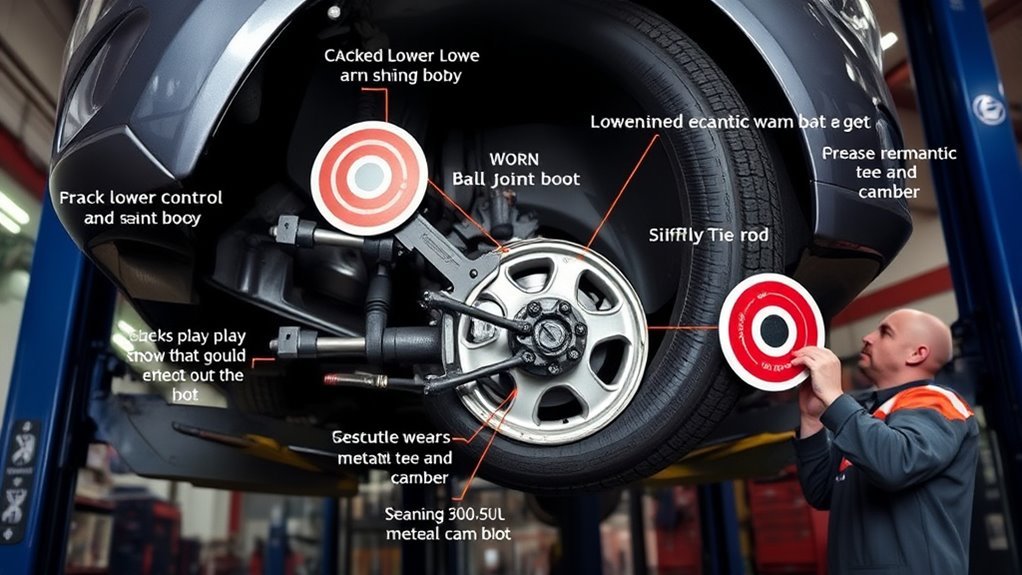
Worn suspension parts can make a fresh alignment fail quickly because the wheel angles change as soon as the car is loaded, braked, or driven over bumps. If the alignment rack shows the car in spec but the Sonata still pulls on the road, something may be shifting under real driving force.
| Component | How It Affects Alignment | Common Symptom |
|---|---|---|
| Tie rods | Allow toe to change while steering or braking | Wandering, feathered tire wear, loose steering |
| Control-arm bushings | Let the wheel move backward, forward, or sideways under load | Clunking, pull during braking, uneven wear |
| Ball joints | Change camber and toe as the wheel moves | Knocking noise, loose feel, rapid tire wear |
| Struts and strut mounts | Affect ride height, camber, caster, and steering return | Bouncing, noise over bumps, uneven shoulder wear |
| Rear links and adjusters | Change rear toe, rear camber, and thrust angle | Crooked steering wheel, rear tire wear, dog-tracking feel |
Diagnosing Alignment Problems in Your Sonata
Use this checklist before paying for repeated alignments:
- Check tire pressures cold. Set all four tires to the pressure shown on the driver’s door-jamb tire label or in your owner’s manual.
- Inspect tread depth and wear pattern. Compare inner, center, and outer tread. More wear on one shoulder points toward camber or toe trouble.
- Look for tire damage. Replace any tire with exposed cord, bulges, sidewall cuts, or severe irregular wear.
- Rotate tires if due. Hyundai recommends rotation every 7,500 miles or sooner if irregular wear develops.
- Road-test on a flat road. Test in both directions to reduce the effect of road crown and wind.
- Check for brake drag. After a short drive, one unusually hot wheel can suggest a sticking brake.
- Inspect steering and suspension. Look for loose tie rods, worn bushings, leaking struts, bent arms, damaged wheels, and rusted adjusters.
- Get a four-wheel alignment printout. Do not accept “it is aligned” without before-and-after numbers.
Pro Tip: Keep every alignment printout. If the same angle goes out of spec again, the repeated pattern can point to a bent part, worn bushing, seized adjuster, or incorrect repair.
What Your Alignment Printout Should Show
A good printout shows the starting numbers, the final numbers, and the factory range for your exact Sonata. Ask the shop to review these items with you:
- Front toe: Both sides should be within specification, and the steering wheel should be centered.
- Rear toe: Rear toe affects thrust angle and steering-wheel position.
- Camber: Out-of-range camber can mean worn, bent, or shifted suspension parts.
- Caster: A side-to-side caster difference can contribute to pull.
- Thrust angle: A near-zero thrust angle helps the vehicle track straight.
- Setback or SAI warnings: These can suggest bent parts after a curb hit or pothole impact.
If camber or caster is not adjustable on your model and it is outside the factory range, the correct repair may be replacing or repairing the damaged part rather than forcing the adjustment.
[Products Worth Considering]

This AUTOWN flat tire repair kit is designed for quick, reliable puncture repairs using a plug kit and spiral probe tool to simplify installation. Built for durability and safe handling, it offers strong adhesion and flexibility to help maintain tire air tightness. With a portable storage case and a multi-vehicle approach, it’s suitable for cars, motorcycles, ATVs, tractors, lawn mowers, RVs, jeeps, and trucks.
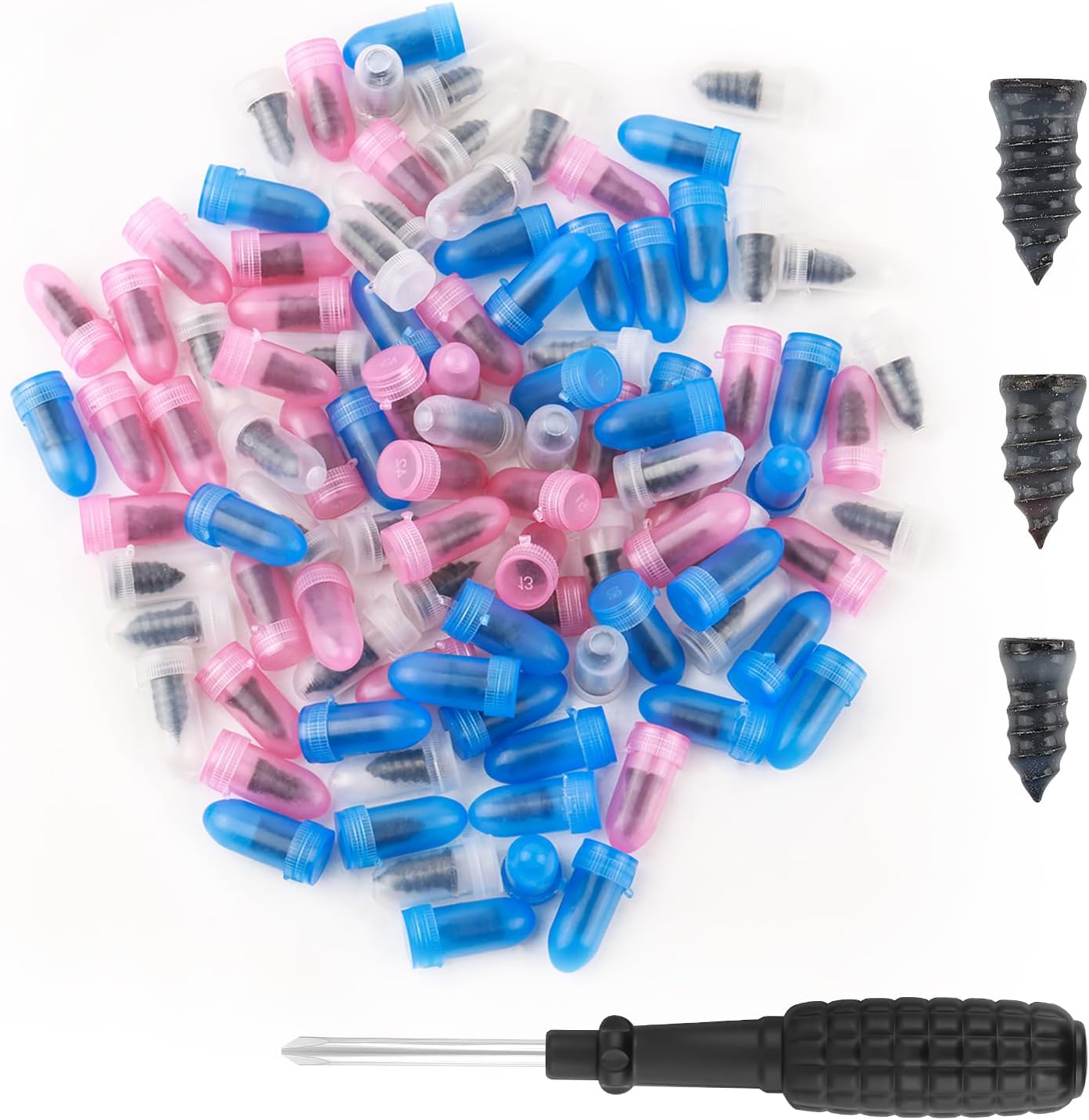
This 100-piece tire repair screw plug kit provides a fast, self-service solution for punctures on the road. Choose the correct plug size, insert it into the break, and screw it in to help seal the puncture and temporarily restore tire pressure. Thickened threads and rubber-wrapped plugs improve bite and sealing while remaining compact and easy to carry.
Solutions for Alignment Issues
The right fix depends on what moved, wore out, or was set incorrectly. Start with the cheapest and most common causes, then move toward parts replacement only when testing supports it.
Common Causes Identified
- Tire pressure or tire condition: Correct pressure, rotate tires, balance wheels, and replace damaged tires before blaming suspension parts.
- Loose or worn steering parts: Replace worn tie rods, ball joints, or steering components before alignment.
- Worn suspension bushings: Replace cracked, separated, or loose bushings that let the wheel move under load.
- Bent components: Repair or replace bent control arms, knuckles, struts, wheels, or rear suspension links.
- Seized adjusters: Replace rusted eccentric bolts, links, or hardware that prevent the shop from setting rear toe or camber.
- Limited factory adjustment: Use camber bolts or adjustable arms only when the technician confirms they fit your Sonata, the existing parts are not bent or worn, and factory adjustment is not enough.
Recommended Repair Strategies
For a Sonata that keeps going out of spec, the best repair strategy is:
- Fix tire problems first. A bad tire can mimic bad alignment and waste diagnostic time.
- Repair loose or worn parts before alignment. An alignment cannot hold if bushings, joints, or links move.
- Replace damaged hardware. If an adjuster is seized, the shop cannot set the angle accurately.
- Request a four-wheel alignment. Rear toe and thrust angle matter, even on a front-wheel-drive Sonata.
- Ask whether steering-position calibration applies. Some Hyundai alignment procedures call for steering-position calibration on vehicles with motor-driven power steering after alignment work.
- Recheck after a hard impact. Potholes and curb strikes can bend parts or knock settings out immediately.
The Role of Professional Alignment Services
A professional alignment service does more than turn tie rods. The technician should inspect the tires, confirm tire pressures, check for loose steering and suspension parts, set the vehicle on a level calibrated rack, center the steering wheel, and adjust all available angles in the correct order.
When booking the service, ask these questions:
- Will you inspect steering and suspension before adjusting the alignment?
- Will I receive a before-and-after printout?
- Will you check rear toe and thrust angle, not just front toe?
- Will the alignment rack use the correct Sonata year, trim, and wheel-size profile?
- If an angle cannot be adjusted, will you identify the part or hardware preventing correction?
- Will you road-test the car after the alignment?
If the shop says the Sonata is “within spec” but the vehicle still pulls, ask for the printout and a road test. “In spec” does not always mean the left and right sides are balanced well enough to prevent drift.
Preventive Measures for Proper Wheel Alignment
Preventive maintenance helps your Sonata stay aligned longer and protects the tires from early wear.
| Measure | Why It Helps |
|---|---|
| Rotate tires every 7,500 miles or sooner if irregular wear develops | Helps equalize tread wear and reveals early tire problems |
| Check tire pressure monthly | Low or uneven pressure can cause pull and abnormal wear |
| Inspect after pothole or curb impacts | Hard impacts can bend wheels, struts, control arms, or rear links |
| Replace worn parts before alignment | The alignment will not hold if suspension or steering parts are loose |
| Save alignment printouts | Repeated changes in the same angle help identify the root cause |
Why Does Your Sonata’s Alignment Keep Going Out of Spec?
Your Sonata’s alignment keeps going out of spec because the wheel angles are changing after the shop sets them. That usually happens for one of five reasons:
- A part is worn: Bushings, tie rods, ball joints, struts, or rear links are allowing movement.
- A part is bent: A pothole, curb hit, or collision changed the suspension geometry.
- An adjuster is seized or slipping: The shop may not be able to lock the setting properly.
- The tires are misleading the diagnosis: Tire pull, conicity, low pressure, or irregular wear can feel like bad alignment.
- The previous alignment was incomplete: Front toe may have been adjusted without correcting rear toe, thrust angle, or steering wheel position.
Do not keep buying alignments without a diagnosis. If the same tire shoulder keeps wearing or the same alignment angle keeps moving, the car needs inspection and repair, not just another adjustment.
Frequently Asked Questions
Why does my alignment keep getting messed up?
Your alignment keeps getting messed up because something is changing the wheel angles after the adjustment. Common causes include low tire pressure, damaged tires, worn tie rods, worn control-arm bushings, weak struts, bent suspension parts, seized adjusters, or a previous alignment that did not correct the rear wheels and thrust angle.
How much is an alignment for a Hyundai Sonata?
A Hyundai Sonata wheel alignment often costs about $100–$220, depending on location, shop type, and whether related repairs are needed. RepairPal’s Sonata-specific estimate is about $145–$213 before taxes, fees, and related repairs.
Should I get an alignment after installing new tires?
Yes, it is smart to check alignment when installing new tires, especially if the old tires had inner-edge wear, outer-edge wear, feathering, cupping, or the steering wheel was off center. New tires can wear quickly if the old alignment problem remains.
Can bad tires make my Sonata pull even if the alignment is correct?
Yes. Tire conicity, ply steer, uneven wear, belt damage, or different tire pressures can make the car pull even when the alignment numbers are within specification. A technician may rotate tires during diagnosis to see whether the pull changes direction.
Can I fix Sonata alignment at home?
You can check tire pressure, inspect tread wear, look for visible damage, and document symptoms at home. Actual wheel alignment requires a calibrated alignment rack and should be done by a qualified shop, especially when camber, caster, rear toe, or thrust angle is involved.
Conclusion
If your Hyundai Sonata’s alignment keeps drifting out of spec, do not treat the alignment as the only problem. Start with tire pressure and tire condition, then check for road-test factors, brake drag, worn steering parts, worn suspension bushings, bent components, seized adjusters, and rear thrust-angle issues. A good shop should inspect the car first, provide a before-and-after printout, correct all adjustable angles, and explain any angle that cannot be brought into specification. That approach protects your tires, improves handling, and keeps the Sonata safer to drive.
Sources
- Hyundai Owner Manual — Tire Rotation — backs Hyundai’s tire rotation interval, tire wear inspection, pressure, balance, and wheel-nut torque guidance.
- Hyundai Manuals & Warranties — official Hyundai owner-resource hub for model-specific manuals and warranty information.
- NHTSA TireWise — backs tire safety, tire maintenance, pressure, rotation, balance, alignment, and tire-life guidance.
- NHTSA-hosted Hyundai Alignment Specifications Bulletin — backs drift/pull factors including tire pressure, camber, caster, thrust angle, tires, weight, road crown, brake drag, and crosswinds.

Related Articles

Danger of Using Summer Tires in Winter on a Hyundai Sonata
Potentially perilous, using summer tires in winter on your Hyundai Sonata can compromise safety—discover the hidden dangers that await you on icy roads.
Read More
Can You Mix Nitrogen and Air in Hyundai Sonata Tires? Answered
Discover the implications of mixing nitrogen and air in your Hyundai Sonata tires—are the benefits worth the risks? Explore the answer inside!
Read More
How to Tell If Hyundai Sonata Tires Are Too Old to Use Safely
Understand how to assess the age of your Hyundai Sonata tires and discover crucial signs of deterioration that could compromise your safety on the road.
Read More