
Hyundai Sonata Still Vibrating After Road Force Balance? Read This
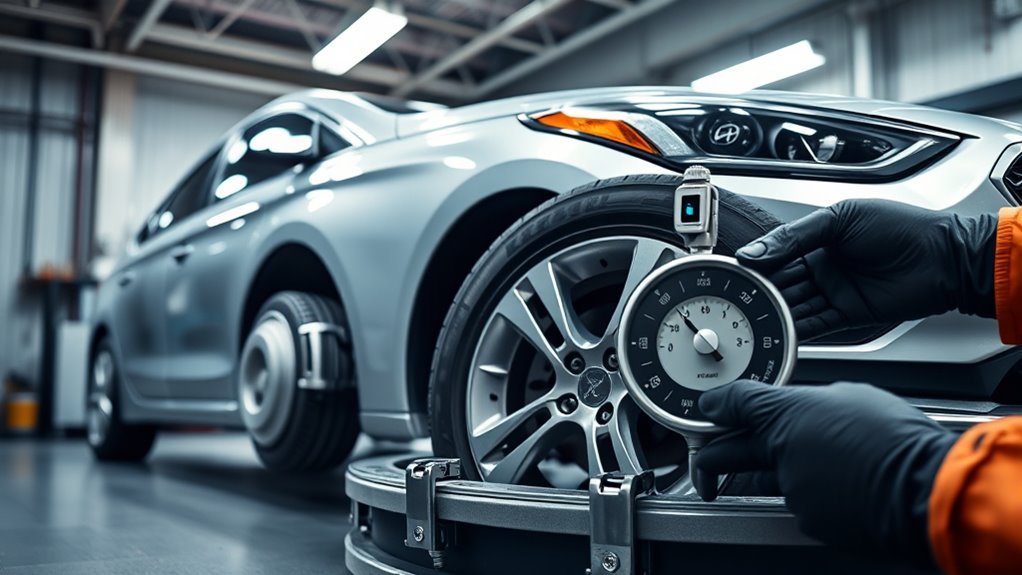
If your Hyundai Sonata still vibrates after a road force balance, the tire-and-wheel assembly may not be the only problem. A road force balancer can catch issues a basic spin balance may miss, but it cannot fix worn suspension parts, bent wheels, hub runout, brake pulsation, loose wheel hardware, or drivetrain vibration. Start with the simple safety checks first, then work through the symptoms in a logical order.
Quick Answer
A Hyundai Sonata can still vibrate after a road force balance if the tire has excessive road force, the wheel is bent, the hub has runout, lug nuts are unevenly torqued, suspension parts are worn, a CV axle is shaking under load, or brake components are causing pulsation. Ask for the road-force readings and inspect the vehicle beyond the tires.
Key Takeaways
- A road force balance is a diagnostic balance, not a cure for every speed-related vibration.
- If the steering wheel shakes, start with front tire/wheel, hub, brake, and front suspension checks.
- If the seat or floor vibrates, check rear tire/wheel assemblies, rear suspension, and drivetrain-related causes.
- If the vibration appears mainly during acceleration, a CV axle, inner CV joint, engine mount, or drivetrain issue becomes more likely.
- Stop driving and get help if the vibration is severe, gets worse quickly, follows a tire bulge, or comes with grinding, pulling, or loose-wheel symptoms.
At a Glance
| Time Required | 15 minutes for basic checks; 1–2 hours for a professional vibration diagnosis |
| Difficulty | Easy for tire-pressure and visual checks; moderate to advanced for suspension, hub, brake, and axle diagnosis |
| Tools Needed | Tire-pressure gauge, tread-depth gauge, torque wrench, flashlight, road-force balancer printout, dial indicator for runout checks |
| Cost | Free to check pressure and visible damage; usually shop labor for road-force recheck, runout measurement, suspension inspection, or axle diagnosis |
Warning: Do not keep driving at highway speed if the vibration is severe, a tire has a bulge or exposed cord, the vehicle pulls hard, you hear grinding, or you suspect loose lug nuts. Slow down safely and have the Sonata inspected before continuing.
What a Road Force Balance Can and Cannot Fix
A standard wheel balance corrects uneven weight distribution in the tire-and-wheel assembly. A road force balance goes further by pressing a load roller against the tire to simulate road contact and measure how the tire and wheel behave under load. Hunter Engineering describes Road Force equipment as a diagnostic system that can identify vibration issues standard balancers may not detect: Hunter Road Force wheel balancing.
That makes road-force balancing useful, but it does not rule out every cause. Your Sonata can still shake if the assembly has too much runout, the wheel is bent, the tire has internal uniformity issues, the hub face is dirty, the lug nuts were tightened unevenly, the brake rotor has lateral runout, or the suspension and drivetrain have wear.
Note: Ask the shop for the road-force and wheel-runout readings for each tire position. “Balanced” is less useful than knowing which assembly has the highest road force and whether force matching was performed.
Common Causes of Vibration in Your Hyundai Sonata

When a Hyundai Sonata still vibrates after road-force balancing, the best next step is to match the symptom to the system. A vibration that changes with road speed is usually different from a shake that changes with engine RPM, braking, or acceleration load.
| Where You Feel It | Most Likely Areas to Check |
| Steering wheel shake at speed | Front tires, front wheels, wheel balance, road force, front hub runout, front suspension, brake rotor runout |
| Seat or floor vibration | Rear tires, rear wheels, rear suspension, rear hub/bearing, exhaust contact, drivetrain vibration |
| Vibration mainly while accelerating | CV axles, inner CV joints, engine/transmission mounts, drivetrain movement |
| Pulsation while braking | Brake rotors, brake pad deposits, hub runout, caliper issues |
| Shake at idle or in Park | Engine misfire, engine mounts, charging or sensor issue, not usually tire balance |
The most common areas to inspect are tire pressure, tire condition, wheel runout, road-force readings, lug nut torque, suspension wear, wheel bearings, brakes, and CV axles. Hyundai also recommends monitoring tire pressure and even tire wear because incorrect inflation can reduce tire life and affect handling and stopping ability: Hyundai tire care and maintenance.
Start With the Simple Checks First
Before replacing parts, do these quick checks. They often catch the problem without guesswork.
- Check cold tire pressure. Use the driver-door placard for your exact Sonata, not the number printed on the tire sidewall. NHTSA’s TireWise guidance also stresses tire maintenance, labeling, and safe tire care: NHTSA TireWise.
- Inspect tread and sidewalls. Look for cupping, feathering, flat spots, bubbles, cuts, cracks, uneven wear, or a separated belt.
- Confirm wheel lug nut torque. Use the torque specification for your exact model year and wheel. Many recent Sonata manuals list a wheel lug nut torque range around 79–94 lbf-ft, but always verify the number in your owner’s manual or service information. Hyundai’s official manuals are available through MyHyundai manuals and warranties.
- Check that the wheels are seated cleanly. Rust, dirt, or debris between the hub and wheel can create runout even when the tire balances correctly.
- Review the road-force balance results. Ask whether any tire required force matching, whether any wheel was bent, and whether any assembly remained borderline after balancing.
Pro Tip: Rotate the suspected front tire-and-wheel assembly to the rear and road test again. If the vibration moves from the steering wheel to the seat or floor, the tire/wheel assembly is still suspect.
Identifying Symptoms of Vibration Issues
Pay attention to when the vibration starts, where you feel it, and what changes it. This matters more than the exact speed number alone.
- Vibration at a narrow highway speed range: Often points to tire balance, road force, wheel runout, or a bent wheel.
- Vibration that gets stronger during acceleration: Look closely at inner CV joints, axles, engine mounts, and drivetrain movement.
- Vibration while braking: Check brake rotor runout, pad deposits, caliper movement, and hub condition.
- Vibration that changes while turning: Inspect wheel bearings, CV joints, tires, and suspension load points.
- Vibration at idle or while parked: Tire balance is not the cause. Check engine smoothness, mounts, misfires, or charging-system-related idle problems.
Write down the speed, road surface, temperature, gear, acceleration level, and whether the steering wheel or seat shakes more. A technician can use that information to avoid replacing good parts.
Inspecting Components: What to Check First
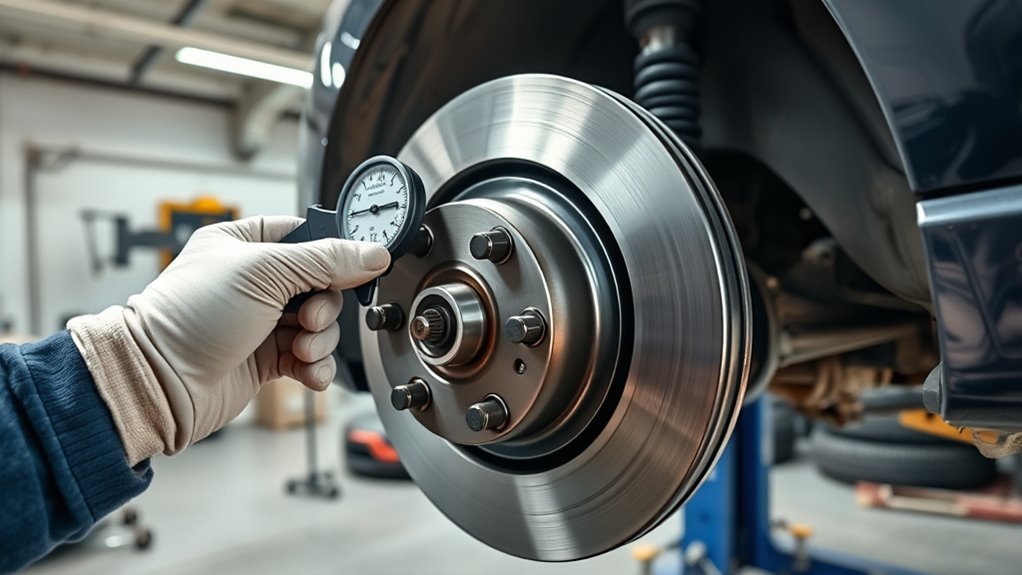
Use this order to keep the diagnosis practical. Start with the parts that are easiest to verify and most likely to create a speed-related shake.
Tire Balance and Road Force Verification
Recheck the balance on a quality machine and ask for a road-force test if the shop only performed a standard spin balance. A road-force machine can identify tire stiffness variation, wheel runout, and tire/wheel matching issues that a standard balance may miss.
Ask the shop these questions:
- What was the road-force value for each tire-and-wheel assembly?
- Was force matching performed by rotating the tire on the wheel?
- Did any wheel show radial or lateral runout?
- Did the machine flag a tire pull or conicity issue?
- Were the wheels mounted on the balancer with the correct centering method?
Wheel Runout, Hub Runout, and Bent Wheels
A wheel can be balanced and still be out of round. A bent wheel, excessive radial runout, or lateral runout can create a shake that weights alone cannot fix. A technician can measure the wheel and hub with a dial indicator. If the wheel is bent, repair or replacement is usually more effective than repeated balancing.
Lug Nut Torque and Wheel Seating
Improper lug nut torque can cause poor wheel seating, rotor distortion, and unsafe wheel attachment. Lug nuts should be tightened in the correct pattern with a calibrated torque wrench, not just hammered on with an impact gun. Always use the specification for your exact Sonata year and trim.
Suspension System Inspection
Worn suspension components can make a small tire or wheel vibration feel much worse. Inspect control arm bushings, ball joints, tie rod ends, struts, strut mounts, sway bar links, and alignment angles. Cupped tire wear often points to worn dampers, poor alignment, or loose suspension parts.
If the Sonata wanders, clunks, pulls, or has uneven tire wear along with vibration, do not stop at balancing. A suspension and alignment inspection should come next.
Wheel Bearing Condition
A worn wheel bearing may create humming, growling, roughness, or vibration. The sound may change when the vehicle’s weight shifts during a lane change or gentle turn. A technician should check for play, roughness, hub runout, and bearing noise with the vehicle safely lifted.
Warning: Never crawl under a vehicle supported only by a jack. Use proper jack stands on a level surface, or have a qualified shop inspect the suspension, hub, and axle components.
How Tire Quality Affects Vibration Levels
Tire quality, construction, storage condition, age, and correct fitment all affect ride smoothness. A tire can be new and still have a uniformity issue, flat spot, or road-force problem. A tire can also be the wrong match for the vehicle if the size, load index, speed rating, or inflation pressure does not match the Sonata’s requirements.
Choose tires that match the original equipment size and specifications listed on the driver-door placard or owner’s manual. When replacing tires, also check the tire date code and recall status. NHTSA explains that tires are regulated safety equipment and provides tire-buying and maintenance resources through TireWise.
Tire Composition and Uniformity
Even a small variation in stiffness around the tire can be felt as a shake on a sensitive vehicle. That is the reason road-force testing matters: it checks how the tire behaves under load, not only whether the assembly has equal weight distribution.
Brand and Fitment Considerations
Do not choose a tire by brand name alone. Look for the correct size, load index, speed rating, tread pattern, warranty support, and road-force result after installation. A reputable tire installed poorly can still vibrate, while a properly matched and road-force-checked tire usually gives the best chance of a smooth ride.
Why You Should Check Your Suspension Components
The suspension controls how the tire stays in contact with the road. If bushings, joints, or struts are worn, the vehicle may amplify a vibration that would otherwise be minor. This is why a Sonata can feel worse after new tires if old suspension parts were already weak.
- Control arm bushings: Cracks, softness, or separation can allow unwanted wheel movement.
- Ball joints and tie rod ends: Looseness can create shimmy, wandering, or uneven tire wear.
- Struts and mounts: Weak damping can cause cupping, bouncing, and repeated tire contact changes.
- Alignment: Incorrect toe, camber, or caster can create tire wear that becomes vibration.
Suspension checks are especially important if the vibration appeared after hitting a pothole, curb, or road debris.
Diagnosing Driveshaft and Axle Problems
Because most Hyundai Sonata models are front-wheel drive, CV axles are a key part of the vibration diagnosis. A worn inner CV joint often shows up more under acceleration than during steady cruising. A worn outer CV joint is more likely to click or pop during tight turns, although symptoms can overlap.
| Component | Signs of Trouble | Recommended Action |
| Inner CV joint | Shake mainly during acceleration or climbing | Inspect axle play, boots, grease leaks, and joint wear |
| Outer CV joint | Clicking or popping during tight turns | Inspect boot condition and replace axle if joint is worn |
| Engine/transmission mounts | Thump, shake, or movement when shifting from Park to Drive | Inspect mount rubber and excessive drivetrain movement |
| Wheel bearing or hub | Humming, growling, play, or runout | Measure runout and replace damaged hub/bearing assembly |
Brake and Rotor Issues That Feel Like Vibration
If the Sonata feels smooth while cruising but shakes or pulses while braking, the issue is not tire balance. Brake rotor lateral runout, thickness variation, pad deposits, sticking calipers, or hub runout can create brake pedal pulsation and steering wheel shake.
A proper brake diagnosis should include rotor thickness, rotor runout, hub face cleanliness, caliper slide movement, pad condition, and wheel bearing condition. Replacing rotors without checking hub runout can allow the problem to return.
Electrical and Engine-Related Problems That Can Feel Like Vibration
Electrical problems are not the first place to look for a vibration that appears only at a certain road speed after tire balancing. However, engine-related problems can feel like vibration if the shake happens at idle, in Park, or when engine RPM changes while vehicle speed stays the same.
Consider engine or electrical diagnosis when you notice:
- Rough idle at a stoplight
- Check engine light or stored misfire codes
- Shake that follows engine RPM instead of road speed
- Battery or charging warning lights
- Engine movement from worn mounts
In that case, the next step is a scan for diagnostic trouble codes, misfire data, engine mount inspection, and charging-system test. But if the vibration appears at the same road speed on smooth pavement, keep the focus on tires, wheels, hubs, suspension, brakes, and axles first.
Tips for Choosing the Right Tires to Minimize Future Vibrations
The best tire choice for a Sonata is not simply the cheapest option or the most familiar brand. Use the tire size, load index, speed rating, and inflation pressure listed for your vehicle. If you are changing wheel size, make sure the replacement tire has the correct overall diameter, load capacity, and clearance.
- Use the correct size and rating. Match the driver-door placard and owner’s manual.
- Check the date code. Avoid old stock that may have been stored poorly.
- Inspect before installation. Look for sidewall damage, bead damage, or obvious irregularities.
- Request road-force balancing. This is especially helpful if the Sonata has been sensitive to vibration before.
- Ask for force matching if needed. Rotating the tire on the rim can lower the road-force value on some assemblies.
- Recheck after break-in. If the vibration changes after a few hundred miles, ask the shop to recheck balance and road force.
A tire can be “balanced” and still vibrate if the wheel is bent, the tire has force variation, the hub has runout, or worn suspension parts are amplifying the shake.
When to Get a Professional Vibration Diagnosis
Get a professional diagnosis if the vibration remains after pressure checks, road-force verification, and visual inspection. Ask for a technician who can perform a road test and measure tire/wheel runout, hub runout, brake rotor runout, suspension looseness, and axle movement.
Bring these details with you:
- The speed range where the vibration starts and stops
- Whether it is felt in the steering wheel, seat, floor, or brake pedal
- Whether it changes during acceleration, coasting, braking, or turning
- Recent tire, wheel, brake, suspension, or axle work
- Any pothole, curb impact, or accident history
- The road-force balance printout, if available
This information helps the shop diagnose the root cause instead of repeatedly rebalancing tires that may not be the main problem.
Conclusion
If your Hyundai Sonata is still vibrating after a road force balance, do not assume the balance was useless or that the tires are automatically bad. Road-force balancing is only one part of vibration diagnosis. Start with tire pressure, visible tire damage, wheel seating, and lug torque. Then review the road-force readings, check wheel and hub runout, inspect suspension and wheel bearings, and look at CV axles, brakes, and engine-related causes based on when the vibration happens.
The fastest path to a smooth ride is a symptom-based diagnosis: road-speed vibration points one direction, acceleration vibration points another, braking pulsation points another, and idle shake points away from the tires entirely.
Frequently Asked Questions
Why does my car still vibrate after balancing and alignment?
Balancing corrects uneven weight in the tire-and-wheel assembly, and alignment corrects wheel angles. Your Sonata can still vibrate if the tire has excessive road force, the wheel is bent, the hub or brake rotor has runout, lug nuts are unevenly torqued, suspension parts are worn, or a CV axle shakes under load.
Can balanced tires still vibrate?
Yes. A tire can be weight-balanced and still vibrate because of road-force variation, internal tire stiffness variation, a bent wheel, wheel runout, hub runout, tire damage, or poor wheel seating. That is why road-force readings and runout checks matter.
Why is my Hyundai Sonata vibrating at highway speed?
Highway-speed vibration often comes from tires, wheels, balance, road force, bent rims, hub runout, or worn suspension. If the steering wheel shakes, start with the front assemblies. If the seat or floor shakes, check rear assemblies and drivetrain-related causes.
Can excessive road force cause vibration?
Yes. Excessive road force means the tire-and-wheel assembly may not roll smoothly under load, even if the weight balance is correct. A shop may reduce it by force matching the tire to the wheel, but a tire or wheel may need replacement if readings remain too high.
Is alignment the same as tire balancing?
No. Balancing corrects the tire-and-wheel assembly so it rotates smoothly. Alignment adjusts suspension angles so the tires point and contact the road correctly. A Sonata with poor alignment may wear tires unevenly, and that uneven wear can later cause vibration.
What should I ask the tire shop after a road force balance?
Ask for the road-force value for each wheel, whether any tire was force matched, whether any wheel had radial or lateral runout, whether the wheels were centered correctly on the machine, and whether the highest-reading assembly was moved away from the steering axle.
Sources
- Hyundai Tire Care and Maintenance — supports tire-pressure, tread-wear, handling, and stopping-distance maintenance guidance.
- MyHyundai Manuals and Warranties — official place to verify exact Sonata owner-manual specifications by model year.
- NHTSA TireWise — supports tire safety, buying, labeling, and maintenance guidance.
- Hunter Engineering Road Force Wheel Balancers — explains road-force balancing and diagnostic load-roller vibration testing.

Related Articles

Danger of Using Summer Tires in Winter on a Hyundai Sonata
Potentially perilous, using summer tires in winter on your Hyundai Sonata can compromise safety—discover the hidden dangers that await you on icy roads.
Read More
Can You Mix Nitrogen and Air in Hyundai Sonata Tires? Answered
Discover the implications of mixing nitrogen and air in your Hyundai Sonata tires—are the benefits worth the risks? Explore the answer inside!
Read More
How to Tell If Hyundai Sonata Tires Are Too Old to Use Safely
Understand how to assess the age of your Hyundai Sonata tires and discover crucial signs of deterioration that could compromise your safety on the road.
Read More