
Hyundai Sonata Tires in Freezing Temperatures: What You Need to Know
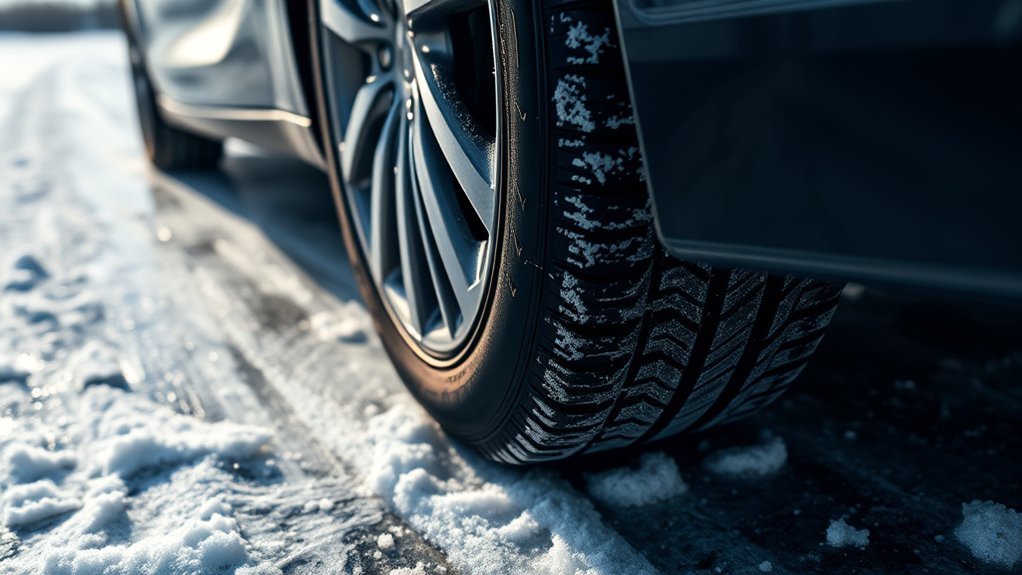
Winter tires can make your Hyundai Sonata feel much more secure when the temperature drops, especially on snow, slush, ice, and cold wet pavement. The key is choosing the right size, installing four matching tires, checking tread depth before the season starts, and keeping the pressure set to the cold PSI listed on your Sonata’s driver-side tire placard.
Quick Answer
Switch your Hyundai Sonata to winter tires when daily temperatures stay near or below 45°F (7°C), especially if you drive in snow, ice, slush, or freezing rain. Choose four matching tires with the Three-Peak Mountain Snowflake symbol, the correct Sonata tire size, and the proper load and speed rating.
Key Takeaways
- Winter tires work best when temperatures consistently fall below 45°F (7°C) because their rubber stays more flexible in cold weather.
- Always confirm your Sonata’s exact tire size on the driver-side door placard or in the owner’s manual before buying.
- For winter driving, plan replacement before tread gets too low; about 5/32 inch is a better snow-safety planning point than waiting for the 2/32 inch minimum.
- Snow Mode can help traction control respond differently, but it is not the same thing as four-wheel drive or all-wheel drive.
At a Glance
| Time Required | 15–30 minutes to confirm size and compare tires; 45–90 minutes for professional mounting, balancing, and installation. |
| Difficulty | Easy to choose with the placard; professional installation is recommended for mounting and balancing. |
| Tools Needed | Tire pressure gauge, tread-depth gauge, owner’s manual or door placard, and a qualified tire shop for mounting/balancing. |
| Cost | Varies by tire size, brand, speed rating, local labor, and whether you buy a separate winter wheel set. |
Why Winter Tires Are Essential for Your Hyundai Sonata
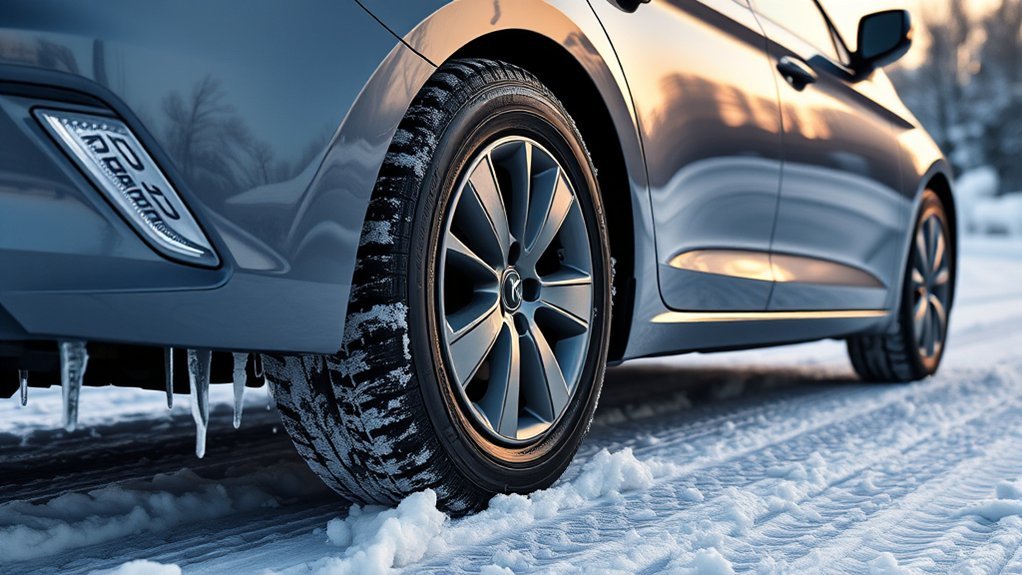
When temperatures consistently drop below 45°F (7°C), winter tires become a smart safety upgrade for your Hyundai Sonata. Their rubber compound is designed to stay more flexible in cold weather, while their tread pattern uses grooves and small biting edges called sipes to grip snow and slush more effectively.
That matters because the tire is the only part of your Sonata touching the road. Even if your Sonata has stability control, traction control, anti-lock brakes, or Snow Mode, those systems still depend on the grip available at the tires. Winter tires give those systems more grip to work with in cold conditions.
Warning: Do not install only two winter tires on a Hyundai Sonata. Mixing winter tires with all-season tires can create uneven grip between the front and rear axles, making the car harder to control in an emergency stop or turn.
[Products Worth Considering]

This car emergency kit keeps essential roadside tools organized in a durable, portable bag so you can respond quickly during common driving emergencies. It includes battery jumper cables, a bright LED headlight, first aid supplies, a tire pressure gauge, and safety essentials like gloves and an emergency poncho. Designed for trunk or storage use, it helps you be prepared for dead batteries, minor malfunctions, and unexpected roadside issues.

Milton S-921 pencil tire pressure gauge helps you maintain optimal tire pressure for passenger cars with accurate readings in PSI and kPa. It features a built-in deflator valve for convenient pressure adjustments, plus a single chuck head and nylon indicator bar for easy use on the go. Built from durable plated brass and designed for reliable performance, it’s a practical road trip and cold-weather maintenance tool.

The Continental Grand Prix 5000 is an allround road bike tire engineered for faster rolling, improved ride comfort, and enhanced puncture protection. It features a Vectran Breaker cut-protection layer, Lazer Grip micro-profile tread for confident cornering control, and Active Comfort Technology to damp vibration for smoother rides. BlackChili compound optimizes grip and speed for everyday performance and long-lasting confidence.
Winter Tires vs. All-Season Tires
All-season tires are built to handle a wide range of mild conditions, but they are a compromise. Winter tires are built for cold-weather grip. If you regularly drive through snow, ice, freezing rain, or cold slush, winter tires are the safer choice.
| Feature | Winter Tires | All-Season Tires |
|---|---|---|
| Cold-weather rubber | Stays more flexible in low temperatures | Can stiffen as temperatures fall |
| Snow and slush traction | Deeper grooves and more biting edges | Moderate capability in light snow |
| Best use | Cold climates, frequent snow, ice, mountain roads | Mild climates and mostly clear roads |
| Warm-weather use | Not ideal; wears faster in warm weather | Better for spring, summer, and fall driving |
If your area has mild winters but occasional cold snaps, a set of all-weather tires with the Three-Peak Mountain Snowflake symbol may be a reasonable year-round compromise. If your Sonata regularly sees snow-packed roads, icy mornings, or steep winter grades, dedicated winter tires are still the stronger option.
Look for the Three-Peak Mountain Snowflake Symbol
When shopping, look for the Three-Peak Mountain Snowflake symbol on the tire sidewall. This symbol means the tire meets specific snow-traction performance requirements for severe snow conditions. Do not rely on “M+S” alone as proof that a tire is a true winter performer.
Note: A tire can fit your wheel and still be the wrong choice if the load index, speed rating, or winter traction rating does not match your Sonata’s needs. Confirm all three before buying.
How to Know When to Switch to Winter Tires
The best time to install winter tires is before the first storm, not during it. Use these signs to time the switch:
- Temperature: Install winter tires when daily temperatures consistently stay near or below 45°F (7°C).
- Forecast: Switch early if snow, ice, freezing rain, or repeated overnight freezes are expected.
- Tread depth: For snow driving, start planning replacement around 5/32 inch of remaining tread. Do not wait for the 2/32 inch minimum if you depend on winter traction.
- Travel plans: Install winter tires before mountain trips, ski trips, rural winter drives, or long highway travel through snow belts.
Switch back to all-season or summer tires once temperatures are consistently above 45°F (7°C). Driving on winter tires in warm weather can increase wear and reduce crisp handling.
Check Your Sonata’s Tire Size Before Buying
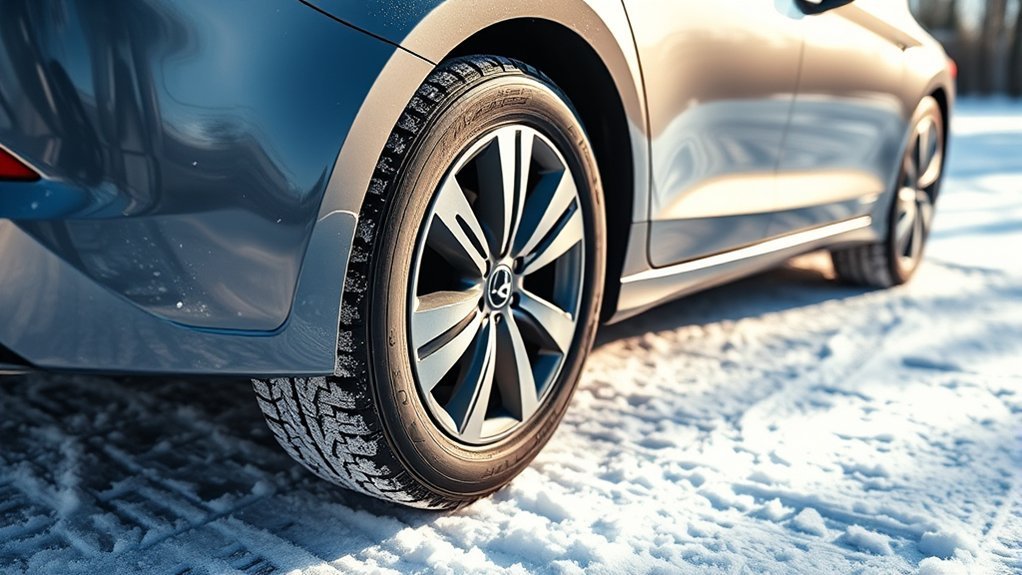
The right winter tire for your Hyundai Sonata starts with the correct size. Check the Tire and Loading Information Label on the driver-side doorjamb, then match the tire size, load index, and speed rating. You can also confirm the recommended size in the owner’s manual.
For example, Hyundai’s 2025 Sonata specifications list several tire sizes depending on trim, including 205/65R16, 215/55R17, 235/45R18, and 245/40R19. The 2025 Sonata Hybrid is listed with 215/55R17 tires. Your own Sonata may differ by model year, trim, wheel package, or replacement wheels, so always use your vehicle’s placard as the final authority.
| What to Check | Why It Matters |
|---|---|
| Tire size | Keeps the tire compatible with the wheel, suspension, brakes, speedometer, and ABS/traction systems. |
| Load index | Ensures the tire can safely carry the vehicle and passenger/cargo load. |
| Speed rating | Keeps the tire appropriate for the Sonata’s road-speed capability and handling expectations. |
| 3PMSF symbol | Confirms the tire is rated for severe snow service. |
| Tread depth | Determines how well the tire can move slush, bite into snow, and resist hydroplaning. |
Pro Tip: If you plan to keep the Sonata for several winters, ask about a dedicated winter wheel set. It can make seasonal swaps faster and reduce repeated mounting stress on the tires.
Choosing the Best Winter Tires for Your Hyundai Sonata
The best winter tire depends on your climate, driving style, and wheel size. Instead of choosing by brand name alone, match the tire type to the conditions you face most often.
| Winter Tire Type | Best For | What to Watch |
|---|---|---|
| Studless ice and snow tires | Most Sonata drivers in cold, snowy, icy regions | May feel softer on dry pavement than all-season tires |
| Performance winter tires | Drivers who want sharper dry-road handling in cold weather | Usually not as strong as studless ice/snow tires on deep snow or glare ice |
| Studded winter tires | Severe ice where studs are legal and useful | Can be noisy, restricted by local laws, and rougher on pavement |
| All-weather tires with 3PMSF | Mild winters and drivers who do not want seasonal swaps | A compromise; not the same as a dedicated winter tire in harsh conditions |
For most Hyundai Sonata owners who face real winter weather, a studless 3PMSF-rated winter tire is the best balance of grip, comfort, and everyday usability. Choose the size listed for your car, buy a full set of four, and have them mounted and balanced by a qualified shop.
[Products Worth Considering]
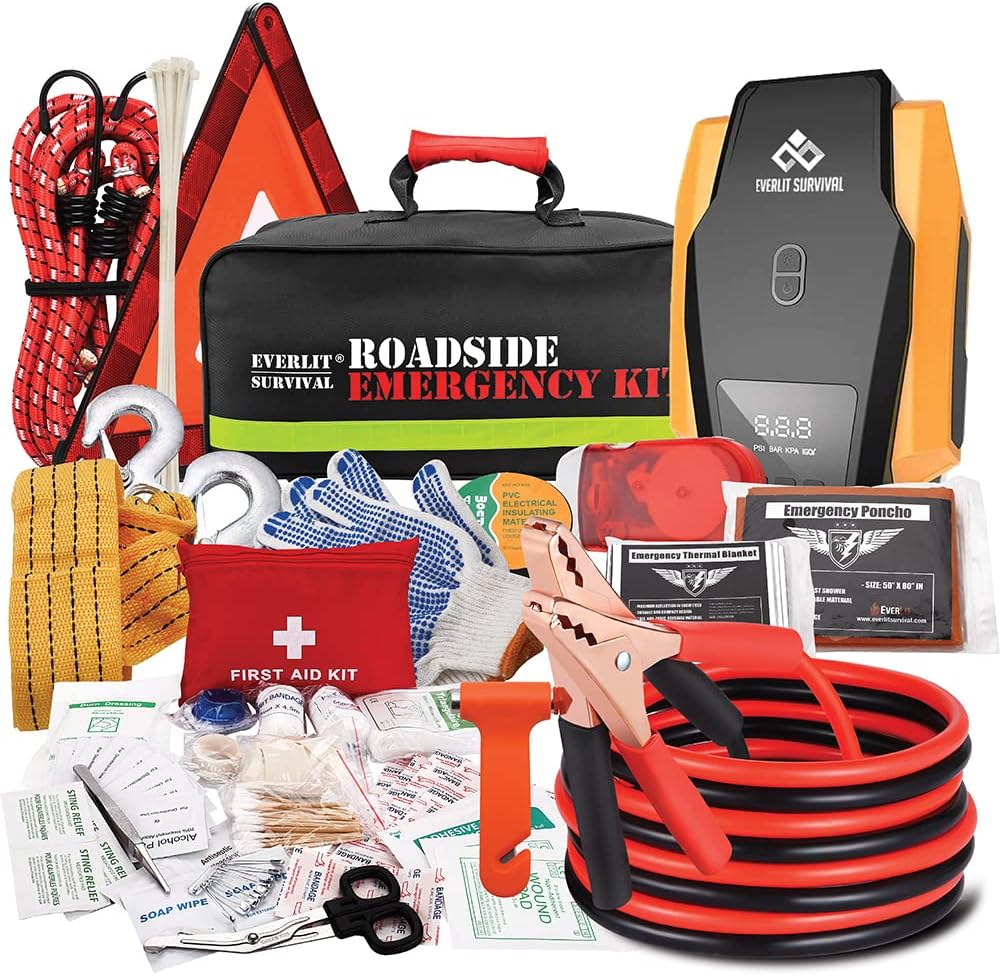
The Everlit Road Guardian emergency kit is designed for roadside breakdowns, combining essential safety gear and roadside tools in one compact bag. It includes a digital 12V auto tire inflator with preset and auto shutoff, plus 12-foot 8-gauge jumper cables to get you moving again. You also get a full 108-piece first aid kit, reflective warning tools, safety gloves, and emergency convenience items for safer travel.

Measure tire tread depth quickly and accurately with this LUMITECO dial gauge that reads in 1/32" increments up to 14/32". The color-coded green/yellow/red zones make it easy to judge tire wear and know when replacement is needed. A rugged, compact design with a protective pouch helps keep the gauge ready for use on cars, trucks, motorcycles, and more.

Measure tyre tread depth precisely with a digital gauge that reads in both MM and inches, helping you monitor safe driving conditions. The large LCD screen is easy to operate, and the compact tool fits for cars, trucks, and motorcycles. It provides high accuracy with a 0-25.4mm range and includes a 1-year warranty for added peace of mind.
Tread Depth, Pressure, and Maintenance
Winter tires only work well if they are in good condition. Check tread depth, tire pressure, sidewalls, and age before each winter season.
- Tread depth: For snow use, replace or plan replacement around 5/32 inch. Tires at 2/32 inch should be replaced and are not a safe winter target.
- Pressure: Check pressure when tires are cold, meaning the car has been parked for at least three hours. Use the PSI listed on the Sonata’s placard, not the maximum PSI on the tire sidewall.
- Cold-weather PSI drop: Tire pressure can fall as temperatures drop, so check it after major cold snaps and at least monthly.
- Sidewall condition: Replace tires with bulges, deep cuts, exposed cords, cracking, or repeated air loss.
- Rotation: Rotate tires at the interval recommended in your owner’s manual or by your tire professional, especially if you notice uneven wear.
- Storage: Store off-season tires in a cool, dry, dark place away from direct sunlight, motors, solvents, and heat sources.
Good winter traction is not just about buying winter tires once. It depends on correct size, enough tread depth, proper cold inflation pressure, and even wear across all four tires.
Essential Preparations for Safe Winter Driving in Your Hyundai
Winter tires are the biggest traction upgrade, but your Sonata also needs basic cold-weather preparation before the first storm.
- Check tire pressure and tread: Use a pressure gauge and tread-depth gauge. Recheck pressure after big temperature swings.
- Inspect wipers and washer fluid: Install winter-grade wiper blades if needed and fill with winter-rated washer fluid that can handle your local low temperatures.
- Test the battery: Cold weather is hard on weak batteries. Have the battery tested before winter if it is older or slow to crank.
- Check lights: Clean snow and road film from headlights, taillights, brake lights, and turn signals.
- Pack an emergency kit: Include a blanket, gloves, flashlight, phone charger, jumper cables or booster pack, first-aid kit, scraper, small shovel, warning triangles, water, and snacks.
- Know local chain and stud rules: If you travel through mountain passes, check whether tire chains, cables, or studs are required or restricted. Follow Hyundai owner’s manual guidance for your exact wheel and tire size.
What About Hyundai Sonata Snow Mode and AWD?
Snow Mode can help the vehicle respond more gently on slippery roads by adjusting systems such as throttle response, transmission behavior, traction control, or all-wheel-drive logic where equipped. However, Snow Mode is not the same thing as four-wheel drive, and it does not replace winter tires.
Drivetrain also depends on the Sonata trim and model year. For example, Hyundai’s 2025 Sonata specifications list FWD or AWD for the 2.5L SEL configuration, FWD for the 2.5T N Line, and FWD for the Hybrid. If your Sonata is front-wheel drive, Snow Mode does not turn it into AWD. If your Sonata has HTRAC AWD, winter tires still matter because AWD helps you accelerate, but tires are what help you stop and steer.
Note: AWD can help a Sonata get moving in snow, but it cannot create grip on its own. Braking and cornering still depend heavily on tire traction.
Frequently Asked Questions
Do I need to add air to my tires when it’s cold?
Often, yes. Tire pressure drops as temperatures fall, so check your Sonata’s tire pressure when the tires are cold and inflate to the PSI shown on the driver-side door placard. Do not use the maximum PSI molded on the tire sidewall as your target.
Is Hyundai Snow Mode four-wheel drive?
No. Snow Mode is a drive setting, not a drivetrain. Your Sonata is either front-wheel drive or, on certain newer trims, available with HTRAC all-wheel drive. Snow Mode can help manage traction, but it does not replace winter tires.
Can I use two winter tires instead of four on a Hyundai Sonata?
No. Use four matching winter tires. Installing only two can create a grip imbalance between the front and rear of the car, which can make the Sonata harder to control during braking, turning, or sudden lane changes.
What tread depth is safe for winter tires?
For snow driving, start planning replacement around 5/32 inch of remaining tread. Tires at 2/32 inch should be replaced, but that minimum is not a good target for winter traction.
Are all-weather tires good enough for a Hyundai Sonata in winter?
They can be good enough in mild winter areas if they carry the Three-Peak Mountain Snowflake symbol. For frequent ice, deep snow, mountain roads, or very cold climates, dedicated winter tires usually provide better cold-weather grip.
How do I find the correct winter tire size for my Sonata?
Open the driver’s door and read the Tire and Loading Information Label on the doorjamb. Match the tire size, load index, speed rating, and cold PSI listed there. If your car has aftermarket wheels, ask a tire professional to confirm fitment.
Conclusion
Winter tires are one of the most useful safety upgrades for a Hyundai Sonata in cold climates. Install four matching 3PMSF-rated tires when temperatures consistently fall near or below 45°F (7°C), confirm the correct size on the door placard, and check tread depth and cold tire pressure throughout the season. Snow Mode and AWD can help, but they cannot replace the grip that proper winter tires provide.
Sources
- NHTSA TireWise — tire pressure, tread depth, TPMS, and tire safety maintenance.
- Hyundai 2025 Sonata Specifications & Features — Sonata drivetrain and tire-size examples by trim.
- Continental Tires: Tires for Winter — 45°F/7°C winter-tire timing and winter tire compound explanation.
- Transport Canada: Using Winter Tires — Three-Peak Mountain Snowflake symbol and winter tire guidance.
- Tire Rack: When Should Tires Be Replaced? — tread-depth replacement guidance for snow, wet, and dry conditions.
- Goodyear: Tire Pressure During Cold Weather — cold-weather tire pressure changes.
[Products Worth Considering]

The SAFELIFE dial tire tread depth gauge measures tread depth in 1/32 inch increments with clear, easy-to-read 2-inch dial face. Color zones using a traffic light system help you quickly judge whether tread is low, marginal, or ample for safer driving. Built with a durable zinc cast body and a metal detect probe for precise, comfortable use across cars, motorcycles, trucks, and buses.

The Topeak SmartGauge D2 delivers precise digital tire pressure readings for bikes, motorcycles, and sports equipment up to 250 psi (17 bar). Its rotating SmartHead works with both Presta and Schrader valves, so you can check pressure quickly without adapters. The LCD display makes it easy to read results in psi, bar, or kg/cm² with an included CR2032 battery for immediate use.

This tire inflator with pressure gauge delivers long-lasting performance with a durable rubber-protected gauge and sturdy build. The longer hose and 360 swivel air chuck help you seal the valve securely and keep your hands free while measuring, inflating, or deflating. It’s battery-free for reliable use and provides ±2 PSI accuracy in the mid-range for most typical tires, with universal compatibility for 1/4 NPT compressor outputs.

Related Articles

Danger of Using Summer Tires in Winter on a Hyundai Sonata
Potentially perilous, using summer tires in winter on your Hyundai Sonata can compromise safety—discover the hidden dangers that await you on icy roads.
Read More
Can You Mix Nitrogen and Air in Hyundai Sonata Tires? Answered
Discover the implications of mixing nitrogen and air in your Hyundai Sonata tires—are the benefits worth the risks? Explore the answer inside!
Read More
How to Tell If Hyundai Sonata Tires Are Too Old to Use Safely
Understand how to assess the age of your Hyundai Sonata tires and discover crucial signs of deterioration that could compromise your safety on the road.
Read More