
Causes of Cupped Tires on a Toyota RAV4
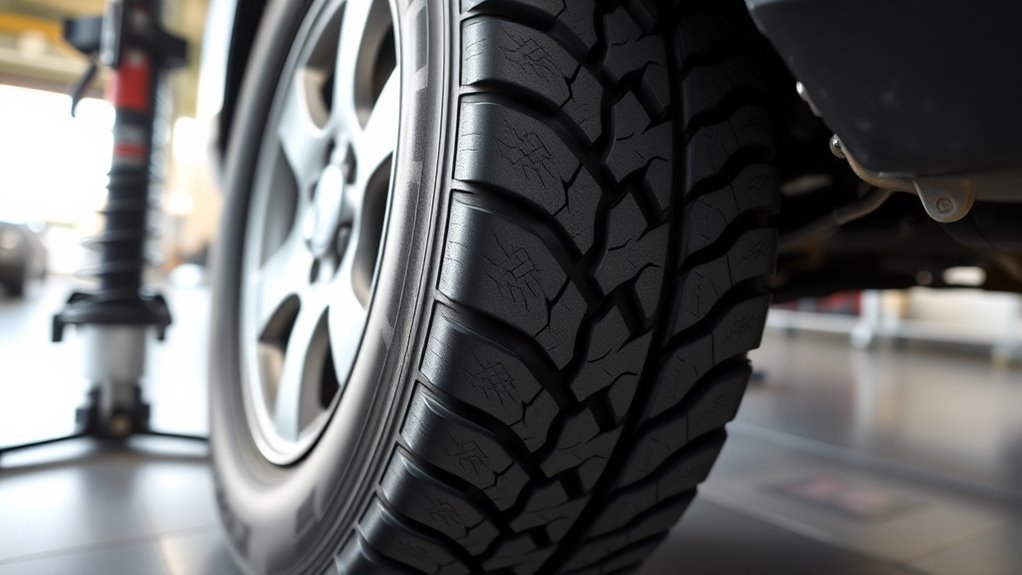
Cupped tires on a Toyota RAV4 usually mean the tire is not keeping smooth, even contact with the road. The most common causes are worn shocks or struts, loose suspension or steering parts, wheel imbalance, poor alignment, skipped tire rotations, or incorrect tire pressure. The tire tread itself may not return to normal, so the safest fix is to diagnose the cause first, then decide whether the affected tire can stay in service or needs replacement.
Quick Answer
Toyota RAV4 tire cupping is uneven, scalloped tread wear caused by repeated bouncing, vibration, or uneven road contact. Start by checking tire pressure, tread depth, rotation history, wheel balance, alignment, and suspension parts. Fix the root cause before installing new tires, or the new set can cup again.
Key Takeaways
- Cupping looks like scooped or wavy low spots around the tread, often with humming noise or vibration.
- The biggest checks are suspension, wheel balance, alignment, tire pressure, and rotation history.
- Toyota’s RAV4 maintenance schedule commonly includes tire rotation at 5,000-mile or 6-month intervals; always confirm the schedule for your exact model year.
- Replacing tires without fixing the cause can make the same wear pattern come back.
- Do not ignore strong vibration, pulling, bulges, exposed cords, or tread at the wear bars.
At a Glance
| Time Required | 10–15 minutes for a basic tire check; longer if a shop inspects alignment, balance, and suspension |
| Difficulty | Easy for visual checks; professional inspection recommended for alignment, balance, and suspension faults |
| Tools Needed | Tire-pressure gauge, tread-depth gauge or penny, flashlight, service records, and a qualified tire/alignment shop when symptoms are present |
| Cost | A basic visual check is free; repair cost varies by whether the RAV4 needs balancing, alignment, suspension repair, or tire replacement |
What Is Tire Cupping and Why Should You Care?
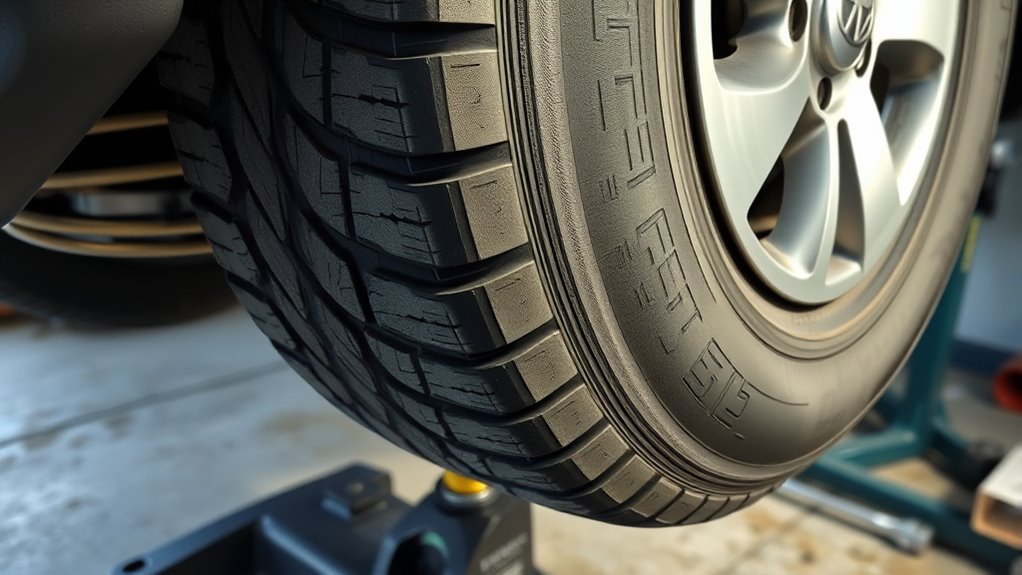
Tire cupping, also called scalloping, is an irregular tread-wear pattern where parts of the tire look scooped out every few inches. Instead of a smooth, even surface, the tread develops alternating high and low spots. Bridgestone describes tire cupping as scooped-out areas around the tread, and Firestone notes that it can look like worn patches every three to four inches around the tire circumference.
You should care because cupping is not just a cosmetic tire problem. It can create humming or roaring tire noise, vibration through the steering wheel or seat, reduced ride comfort, and less predictable handling. It also tells you something else may be wrong with the tire, wheel, alignment, steering, or suspension system.
Warning: Do not keep driving normally if your RAV4 has strong vibration, sudden pulling, exposed cords, sidewall bulges, a tire losing air, or tread worn to the wear bars. Slow down, avoid highway speeds when possible, and have the tire inspected before continuing long-distance driving.
[Products Worth Considering]

EVOULTES heavy duty tire inflator with an integrated gauge delivers accurate pressure readings from 10–120 PSI, helping you inflate, deflate, and check tires in one tool. The 16.5-inch extended dual-head air chuck with swivel base reaches hard-to-access dual wheel valves on trucks and RVs. A brass trigger core and side-mounted air release valve make operation smooth, with standard 1/4" NPT threading and quick-connect compatibility for easy setup.

The JACO FlowPro Tire Inflator measures, inflates, and airs down tires up to 100 PSI with battery-free operation and ±2% accuracy after calibration. It features a glowing pressure dial for night visibility, a heavy-duty steel build with a hybrid hose, and a precision push-to-inflate thumb trigger. The patented Lightning Air Chuck locks on for a secure seal, and the kit includes quick-connect hardware for easy inline use with your air compressor.

This portable cordless tire inflator delivers up to 160 PSI with fast 17 L/min airflow to help you quickly top up tires and get back on the road. It features dual power mode, running on a 21V rechargeable battery or a 12V DC adapter for convenient roadside use. An automatic shut-off with digital pressure gauge helps prevent overinflation, and a built-in LED light improves visibility in low-light conditions.
Signs of Tire Cupping in Your RAV4 and Next Steps
The most obvious sign of tire cupping is an uneven, wavy tread surface. Run your hand lightly across the tread blocks when the vehicle is parked safely and the tires are cool. A healthy tire usually feels fairly even. A cupped tire may feel like small dips, ridges, or “hills and valleys.”
Common symptoms include:
- Humming, roaring, or rhythmic tire noise that gets louder with speed
- Steering-wheel vibration, especially when the front tires are affected
- Seat or floor vibration, especially when the rear tires are affected
- A RAV4 that pulls, drifts, or feels unsettled on smooth roads
- Visible scooped patches on the inner edge, outer edge, or across the tread
- Uneven tread depth from one area of the tire to another
If you notice these signs, do not start by buying tires blindly. First check pressure, tread depth, rotation history, balance, alignment, and suspension. If the tire is deeply cupped or noisy even after the cause is fixed, replacement may be the only practical way to restore a smooth ride.
Top Causes of Tire Cupping in Toyota RAV4s
Cupping happens when the tire repeatedly hits the road with uneven force. On a Toyota RAV4, the usual causes are the same core issues seen on many crossovers: suspension movement, wheel vibration, alignment error, pressure problems, and skipped maintenance.
- Worn shocks, struts, bushings, ball joints, or steering parts: Worn parts can let the wheel bounce or move too much, creating uneven pressure on the tread.
- Unbalanced tire and wheel assemblies: If weight is not evenly distributed around the wheel, the tire can vibrate as it spins and wear unevenly.
- Wheel misalignment: Incorrect toe, camber, or other suspension angles can make the tire scrub or carry load unevenly.
- Incorrect tire pressure: Underinflation or overinflation changes the tire’s contact patch and can speed up irregular wear.
- Skipped tire rotations: Front and rear tires do different jobs, so leaving them in one position too long can let small wear patterns become major ones.
- Road impacts or bent wheels: A hard pothole or curb hit can affect balance, alignment, wheel shape, or suspension parts.
- Tire condition: Old, damaged, unevenly worn, mismatched, or poorly maintained tires are more likely to show irregular wear.
How Misalignment Leads to Tire Cupping
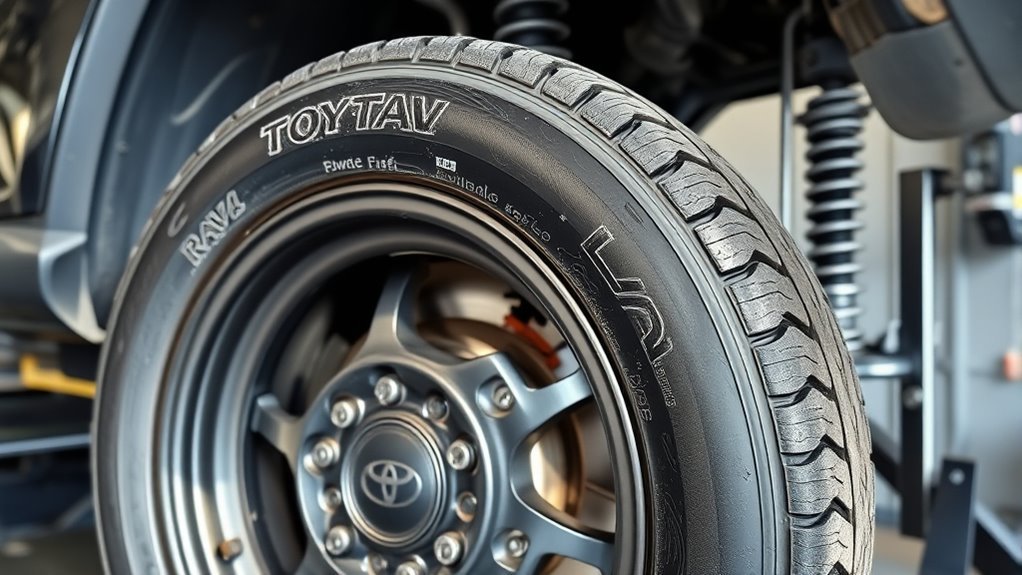
Wheel alignment controls how the tires sit against the road. If the toe or camber angle is out of specification, the tire may scrub, drag, or carry too much load on one part of the tread. Over time, that uneven contact can contribute to scalloping, feathering, edge wear, or other irregular patterns.
Alignment problems often show up as pulling to one side, an off-center steering wheel, uneven shoulder wear, or a RAV4 that feels nervous after a pothole or curb impact. If these signs appear, schedule an alignment check rather than waiting for the next routine service.
Note: Tire rotation and wheel alignment are not the same service. Rotation moves tires to different positions. Alignment adjusts suspension angles so the tires meet the road correctly.
Alignment, Balance, Suspension, or Pressure: How to Tell the Difference
Several problems can feel similar from the driver’s seat. Use this table as a starting point, not a final diagnosis.
| Clue | Likely Area to Check | What to Do |
| Steering wheel vibrates at certain speeds | Front wheel balance, tire damage, or bent wheel | Have the front tire/wheel assemblies inspected and balanced. |
| Seat or rear floor vibrates | Rear wheel balance or rear tire wear | Inspect rear tires for cupping and rebalance if needed. |
| Vehicle pulls or steering wheel sits off-center | Alignment or tire pull | Check tire pressure first, then schedule an alignment inspection. |
| Cupping returns after rotation or balancing | Shocks, struts, bushings, ball joints, or steering linkage | Ask for a full suspension and steering inspection. |
| Both shoulders or center of tread wear faster | Tire pressure or load issue | Set cold PSI to the driver-door placard and inspect tires monthly. |
Why Regular Tire Maintenance Is Key to Preventing Cupping
Regular tire maintenance helps small wear differences stay small. Toyota’s RAV4 maintenance guide commonly lists tire rotation at 5,000 miles or 6 months and again at 10,000 miles or 12 months. Check the guide for your exact model year, trim, drivetrain, and driving conditions, because severe service can change what needs inspection.
Pressure matters too. The correct PSI is not the maximum number printed on the tire sidewall. Use the cold tire pressure on your RAV4’s driver-door placard or owner’s manual. NHTSA recommends checking tire pressure at least once a month, and it explains that a cold tire is one that has not been driven on for at least three hours.
Pro Tip: Keep a small tread-depth gauge and tire-pressure gauge in the glove box. Checking all four tires monthly is faster than replacing a set of tires early because a small pressure, balance, or suspension problem went unnoticed.
[Products Worth Considering]
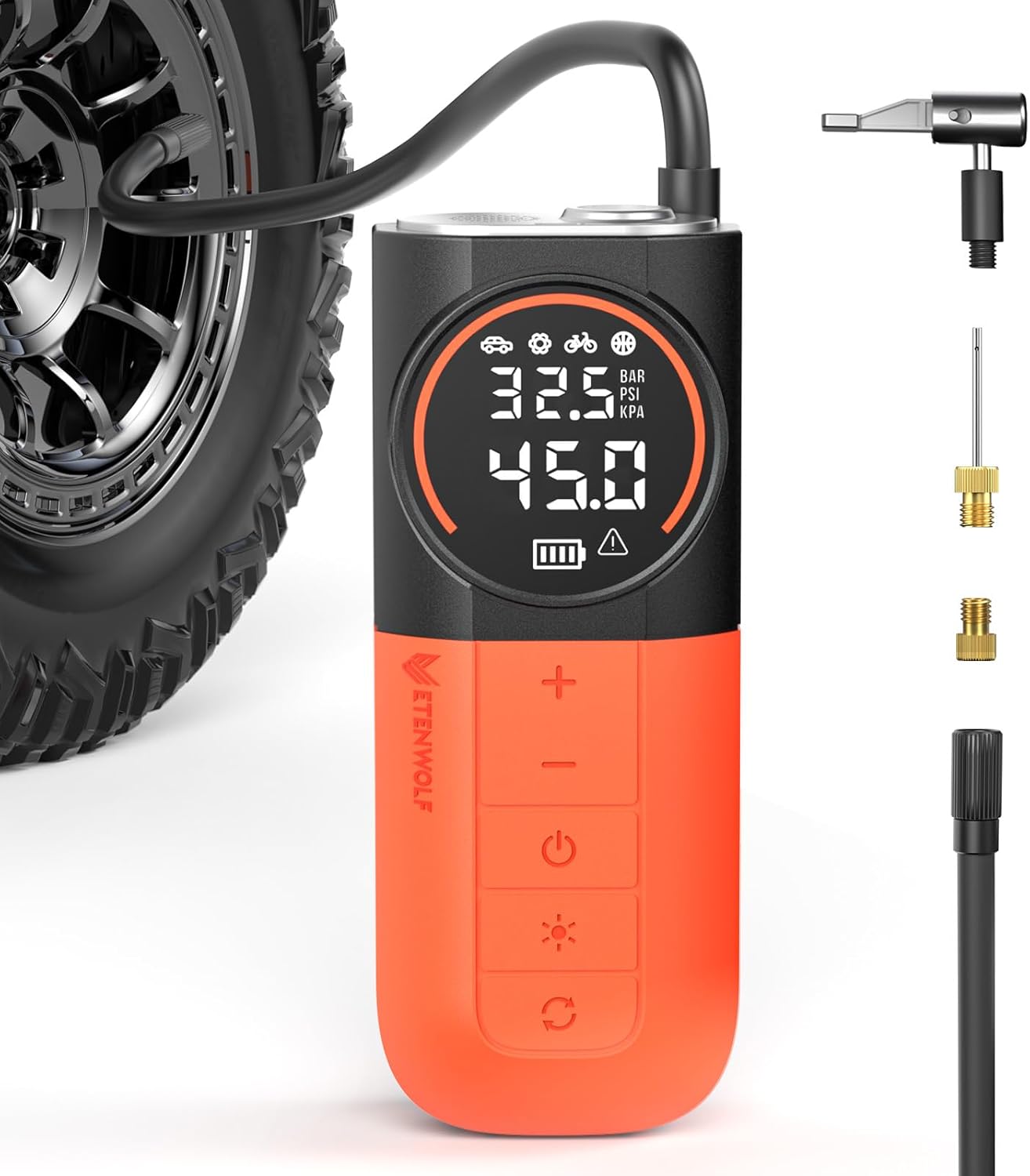
The ETENWOLF S1 cordless tire inflator delivers ultra-fast inflation with up to 160 PSI and a 20 L/min airflow for quicker tire top-offs. Its 5200mAh battery and cooling system support inflating many tires and sports balls on a single charge, while the digital pressure gauge and multi-unit display help you reach the right pressure accurately. With preset modes, pressure memory, an auto-stop feature, and an LED flashlight, it’s built for easy roadside and everyday use.

This roadside assistance kit helps drivers and passengers in urgent situations after an accident or breakdown, providing practical support while waiting for help. It includes a lightweight, compact tire inflator for fast inflation of standard vehicle tires, plus reinforced jumper cable protection for safer handling. Ideal for winter weather, road trips, camping, and travel, with everything stowed neatly in a trunk bag.
How to Prevent Tire Cupping on a Toyota RAV4
The best prevention plan is simple: keep the tire, wheel, alignment, and suspension working together. Do these checks in order.
1. Rotate the Tires on Schedule
Rotate your tires according to the Toyota maintenance schedule for your RAV4. For many RAV4 maintenance guides, the interval is every 5,000 miles or 6 months. Rotation helps even out the different wear loads created by steering, braking, drivetrain layout, and vehicle weight distribution.
After rotation, pay attention to new noise or vibration. If a tire becomes louder in a new position, it may already have uneven wear that was less noticeable before.
2. Check Alignment When Symptoms Appear
You do not need to guess about alignment. Have it checked if your RAV4 pulls, the steering wheel is off-center, the tires show one-sided wear, or the vehicle recently hit a pothole or curb hard. Alignment is also worth checking after suspension repairs or when installing a new set of tires if the old tires wore unevenly.
3. Inspect Suspension and Steering Components
Worn shocks, struts, bushings, ball joints, tie rods, and related steering parts can let the wheel move more than it should. That movement can make the tire bounce or scrub, which may create cupping. Ask a qualified technician to inspect for looseness, leaks, worn rubber, bent parts, and uneven ride height.
4. Balance Tires and Check for Bent Wheels
If vibration appears after a tire rotation, tire installation, pothole hit, or wheel service, have the tire and wheel assembly balanced. A bent wheel, damaged tire belt, or missing wheel weight can mimic or worsen cupping symptoms.
5. Set Cold Tire Pressure Correctly
Check tire pressure when the tires are cold and set each tire to the PSI shown on the RAV4’s tire placard. Do not use the sidewall maximum as the target pressure. Recheck pressure before long trips, when temperatures change sharply, and any time the tire-pressure warning light comes on.
6. Measure Tread Depth and Watch the Wear Bars
Use a tread-depth gauge if possible. A tire at 2/32 inch of tread is at the common wear-bar replacement threshold and should be replaced. In rain or heavy highway driving, it is smarter to plan replacement before the tire reaches the minimum, especially if the wear is uneven.
Can You Fix Cupped Tires, or Do They Need Replacement?
You can often fix the cause of tire cupping, but you cannot put missing tread rubber back on the tire. That distinction matters. A shop may correct the alignment, balance the wheels, replace worn suspension parts, or set the correct tire pressure, but a badly cupped tire may still make noise because the tread surface is already uneven.
Use this rule of thumb:
- Mild cupping with good tread depth: Fix the cause, rotate or rebalance if appropriate, and monitor the tire closely.
- Moderate cupping with noise or vibration: Fix the cause and ask whether the tire is still safe to run.
- Deep cupping, exposed cords, bulges, cracking, or low tread: Replace the tire after the root cause is corrected.
What Not to Do When Your RAV4 Tires Are Cupping
- Do not replace tires before diagnosis. New tires can cup again if worn shocks, bad balance, or alignment issues remain.
- Do not ignore a vibration that gets worse with speed. That can point to balance, tire damage, or wheel damage.
- Do not inflate to the sidewall maximum. Use the cold PSI on the RAV4 placard or owner’s manual.
- Do not assume all tire noise is a wheel bearing. Cupped tires can create a roaring sound that is easy to confuse with bearing noise.
- Do not mix severely different tires on the same axle. Size, construction, and tread mismatch can affect stability and wear.
Frequently Asked Questions
What is the most common cause of cupping tires on a Toyota RAV4?
The most common causes are worn suspension or steering parts, wheel imbalance, misalignment, skipped tire rotations, and incorrect tire pressure. On a RAV4, start with tire pressure and rotation history, then have the balance, alignment, shocks, struts, bushings, ball joints, and tie rods inspected.
How do you get rid of cupping on tires?
First, fix the cause: correct tire pressure, rotate if appropriate, balance the wheels, align the vehicle, and repair worn suspension or steering parts. The tread that has already worn away will not grow back, so a severely cupped tire may still need replacement.
What is the difference between scalloped tires and cupped tires?
Scalloped tires and cupped tires usually mean the same thing. Both describe a tread pattern with uneven dips or scooped areas around the tire. Drivers often notice a humming sound, a rougher ride, or vibration before they see the tread pattern clearly.
How serious is tire cupping?
Tire cupping can be serious because it may reduce ride comfort, increase noise, and point to a suspension, balance, alignment, or tire-pressure problem. Mild cupping should be inspected soon. Strong vibration, pulling, bulges, exposed cords, or very low tread should be treated as urgent.
Will an alignment fix cupped tires?
An alignment can fix one possible cause of cupping, but it will not restore tread that is already worn unevenly. If the real cause is worn shocks, loose steering parts, wheel imbalance, or incorrect tire pressure, alignment alone will not solve the problem.
Can I drive my RAV4 with cupped tires?
Light cupping may be drivable for a short time if tread depth, tire structure, and handling are still safe, but it should be inspected. Avoid high-speed or long-distance driving if the tire is noisy, vibrating, pulling, damaged, or near the tread-wear bars.
Conclusion
Cupped tires on a Toyota RAV4 are a warning sign, not just a tire-noise annoyance. Check the tire pressure, tread depth, rotation history, wheel balance, alignment, and suspension before replacing tires. Once the root cause is fixed, decide whether the affected tire is still safe or whether replacement is the better option. Staying ahead of rotations, monthly pressure checks, and suspension inspections will help your RAV4 ride smoother and protect the next set of tires from the same uneven wear.
Sources
- Bridgestone: Tire Cupping — Causes, Problems and Prevention — supports tire-cupping definition, causes, prevention, and repair limitations.
- Firestone Complete Auto Care: How to Fix Tire Cupping — supports symptoms, causes, and replacement guidance.
- Toyota 2023 RAV4 Warranty & Maintenance Guide — supports RAV4 tire-rotation maintenance intervals.
- Toyota Owners: RAV4 Tire Inflation Pressure — supports using Toyota tire-pressure guidance for RAV4 tires.
- NHTSA Tire Safety Brochure — supports monthly pressure checks, cold tire pressure, and tire-safety maintenance.
- eCFR 49 CFR § 570.9 — Tires — supports tire inspection and tread-depth safety standards.

Related Articles

Toyota RAV4 TPMS Reset: Easy Steps That Work
Unlock the secrets to resetting your Toyota RAV4's TPMS effortlessly—discover the essential steps to ensure your tires are always safe.
Read More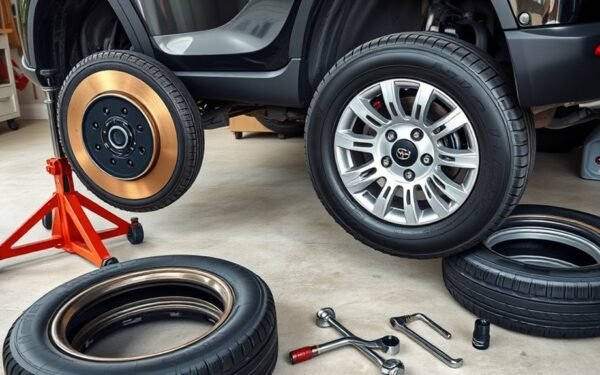
Toyota RAV4 Tire Rotation: DIY Steps & Pattern
Take control of your Toyota RAV4's tire maintenance with our simple DIY rotation guide—discover the best steps for optimal performance and longevity!
Read More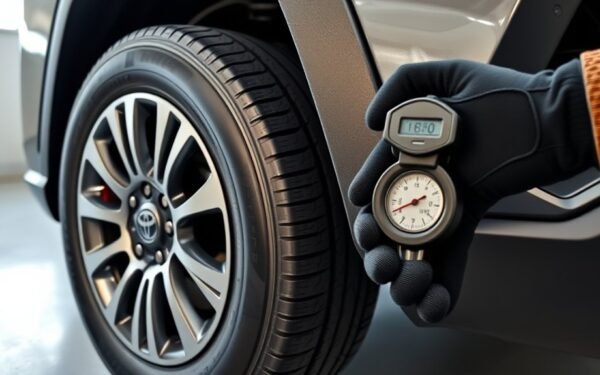
Mix Tire Brands on a Toyota RAV4? Expert Guide
Keeping your RAV4 safe? Learn when mixing tire brands risks traction, ABS/TCS and AWD damage — and what exact matches you must insist on.
Read More
One Comment